Original Article
EXPLORING THE THERAPEUTIC POTENTIAL OF VISUAL ARTS: A NON-VERBAL LANGUAGE FOR EXPRESSING EMOTIONS IN ART THERAPY
|
Dr. Anuj
Kumar Singh Rathaur 1* 1 Independent Researcher,
Ex- Senior Research Fellow Department of Fine Arts, Aligarh Muslim
University, Aligarh, India |
|
|
|
ABSTRACT |
||
|
This research study explores the therapeutic function of visual arts as a non-verbal form of emotional expression within art therapy. As a form of psychotherapy utilizing the creative possibilities of visual art, art therapy aims to facilitate emotional exploration and promote healing. This study examines the efficacy of visual arts as a means of non-verbal emotional communication in therapeutic contexts by analyzing case studies, experimental data, and theoretical frameworks. It investigates how cultural and individual differences influence creative expression and its impact on emotional transmission. Additionally, the study explores the outcomes of employing art therapy methods across diverse demographics, including children, adolescents, adults, and elderly individuals, within both clinical and non-clinical settings. Ultimately, this research study seeks to deepen our understanding of the therapeutic potential of visual arts, particularly regarding their capacity for emotional expression and healing in mental health contexts. Keywords: Visual Arts, Non-verbal Communication,
Emotions, Art Therapy, Therapeutic Techniques |
||
INTRODUCTION TO ART THERAPY: A COMPREHENSIVE OVERVIEW
Art therapy is a therapeutic approach that employs different art forms to facilitate self-expression and discovery Xu et al. (2021). The premise is rooted in the notion that engaging in the artistic process may facilitate the restoration of health, individual development, and general welfare. Art therapists collaborate with clients across many age groups, diverse origins, and varying capacities, facilitating the expression of their ideas, emotions, and life encounters via artistic creativity. Art therapy enables people to transcend the constraints of language and convey their thoughts and emotions in a more instinctive and genuine way, without relying on verbal communication American Art Therapy Association. (2013).
The history and evolution of art therapy in education may be traced back to its use with pupils with physical and mental illnesses, as it has been employed in Britain and the United States for several years. Initially, art therapy was used in the school system to assist pupils with special needs. With the development of the art therapy sector, its capacity for healing in educational environments gained more acknowledgement. Art therapy in educational settings has been discovered to provide avenues for children with special needs to address barriers that hinder their academic achievement Alter-Muri (2017) Regev (2023).
The visual arts, including painting, drawing, sculpture, and photography, provide a potent means for people to convey their feelings and experiences in the context of art therapy, hence presenting significant therapeutic possibilities. Creating art enables individuals to manifest their inner world, providing structure and embodiment to thoughts and emotions that may otherwise be challenging to articulate verbally American Art Therapy Association. (2013), Bordonaro, G. P. W., Cherry and Stallings (2015). Art therapy enables persons with special needs to participate in a non-verbal mode of communication that may improve their emotional intelligence, self-awareness, and general state of being.
Art therapy has shown significant potential in treating children who have experienced trauma Eaton et al. (2007). Studies have shown that art therapy is an efficient approach to assisting children who have had traumatic experiences in managing their emotions, cultivating coping mechanisms, and facilitating the process of recovery.
AN EXAMINATION OF THE HISTORICAL SIGNIFICANCE OF VISUAL ARTS IN THE CONTEXT OF HEALING
Using visual arts as a therapeutic instrument is not a novel notion. Across different historical periods, many societies have acknowledged the therapeutic efficacy of visual arts. For instance, ancient civilizations like the Egyptians and Greeks used art in the context of healing rites and ceremonies.
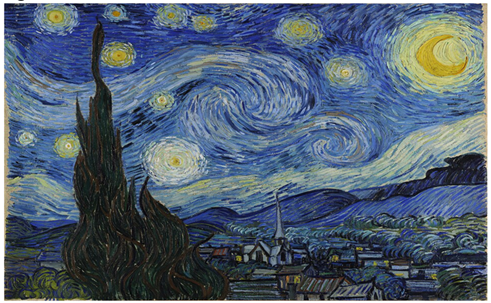
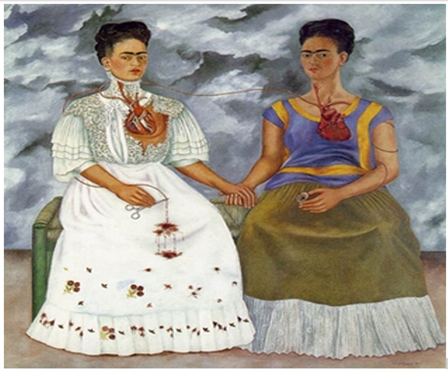
Ancient Egyptians used art as a therapeutic modality to establish a connection with the divine and facilitate the restoration of physical and mental well-being. These ancient cultures believed art could access spiritual energies and foster equilibrium and concord within a person Kenya (2016) Publications - American Art Therapy Association. (2017). Furthermore, the Greeks also acknowledged the medicinal benefits of visual arts Eaton et al. (2007). They believed art could stimulate cognition, elicit emotions, and foster self-contemplation and introspection. Art throughout the Renaissance was seen as a therapeutic instrument for persons grappling with emotional suffering or mental disease. Artists like Frida Kahlo and Vincent van Gogh used their work as a medium for self-expression and catharsis, enabling them to delve into their feelings and experiences nonverbally.
|
Figure 1 |
|
|
|
Figure 1 Vincent
van Gogh – Starry Night (1889) |
THE ADVANTAGES AND USES OF ART THERAPY IN THE FIELD OF EDUCATION
Art therapy is not just used in therapeutic settings but has also been included in educational programs to foster emotional well-being and personal development. Integrating art therapy into educational environments has shown advantages for students with special needs Bordonaro et al. (2015). Shostak et al. Eaton et al. (2007) suggest that using art therapy in schools might assist children with special needs overcome challenges and enhance their academic achievements Bordonaro et al. (2015) Art therapy in school has been discovered to enhance social connection, promote better learning behaviors, foster proper emotional development, and boost empathy and personal well-being. Moreover, art therapy in educational institutions may be customized to cater to individual student's distinct developmental requirements and correspond with their academic and behavioral goals.
THE USE OF ART THERAPY AS A MEANS OF EXPRESSING AND EXPLORING EMOTIONS
Art therapy offers people a means of expressing feelings and experiences via non-verbal communication. Non-verbal communication enables people to transcend the constraints of language speech and delve into profound depths of self-awareness and emotional processing. It is especially beneficial for persons who have challenges in verbal communication or have trouble recognizing and articulating their emotions. By using several artistic forms, people may visually and symbolically delve into their emotions, ideas, and experiences Xu et al. (2021). This enables the manifestation of intricate or conceptual emotions that could pose challenges when conveyed via spoken language. The therapeutic efficacy of visual arts in art therapy resides in aiding the articulation of feelings and experiences that may be challenging to explain via verbal communication Bosgraaf et al. (2020).
Art therapy is also effective in addressing internal issues. Through active participation in the creative process, people can express and investigate their internal conflicts through the art they create. Externalization helps people understand their problems, see recurring patterns, and strive towards resolution Regev and Cohen-Yatziv (2018). Art production enables people to get a fresh perspective on their internal conflicts and cultivate a feeling of autonomy and mastery over their emotions and encounters. The act of expressing and investigating internal problems via artistic means might be especially advantageous for persons who struggle with self-injurious tendencies or have had traumatic experiences. Art therapy is beneficial for persons who struggle with emotional expression or tend to conceal their ideas and feelings using language Coiner and Kim (2011), Feen-Calligan (2009). The author provided a case study demonstrating the efficacy of art psychotherapy in assisting a teenage girl who was engaging in self-harming behavior Riley (2001).
|
Figure 1
|
|
Figure 2 Frida
Kahlo – The Two Fridas (1939) |
Art therapy may effectively diminish people's apprehension about revealing their feelings and vulnerabilities Eaton et al. (2007). By sketching or producing art, people may progressively develop a greater sense of ease in expressing themselves and communicating their inner thoughts and emotions. Engaging in artistic endeavors offers a protective barrier against intense emotions, enabling people to examine and manage their encounters without experiencing excessive distress or susceptibility Hu et al. (2021). The art's ability to create a sense of distance may be particularly advantageous for persons who have undergone trauma or struggle with trust issues Schouten et al. (2014). Art serves as a non-verbal means for people to express themselves in a manner that is less risky and intimidating than direct verbal interaction Regev and Cohen-Yatziv (2018).
THE ADVANTAGES OF ART THERAPY IN EDUCATIONAL ENVIRONMENTS
Art therapy has the potential to be advantageous in educational environments in addition to its therapeutic advantages Eaton et al. (2007). Art therapy enables students to investigate and articulate their feelings, ideas, and experiences via non-verbal means. This may be especially beneficial for kids who may have challenges in verbal communication or have trouble articulating themselves in conventional classroom environments (source: "Art Therapy in the Schools" A Position Paper of the American Art Therapy Association. (2013). By integrating art therapy into educational settings, children may develop enhanced self-awareness, emotional control, and problem-solving abilities. Moreover, art therapy offers a method for children and adolescents to articulate and deal with their feelings linked to traumatic experiences Bordonaro et al. (2015).
Art therapy plays a significant role in the treatment of depression, which is an intricate and varied mental health disorder impacted by variables, including family dynamics and cultural influences. Art therapy has shown efficacy in the treatment of depression, especially among teenagers who may have challenges in vocally articulating their concerns and feelings. Studies have shown that art therapy may be beneficial for persons suffering from depression by offering a secure means of expressing their feelings and fears. Art therapy enables people to investigate their emotions and experiences by engaging in the creative process, promoting self-expression, introspection, and emotional recovery Cohen-Yatziv (2018).
The Therapeutic Potential of Visual Arts in Trauma Recovery Traumatic events may significantly affect people, often resulting in challenges in articulating and comprehending feelings. Art therapy is essential in trauma healing since it offers a non-verbal means for people to express and deal with their feelings. Visual arts enable people to depict their ideas, emotions, and trauma-associated experiences, facilitating a profound comprehension and connection to their emotional recovery process Bosgraaf et al. (2020).
NON-VERBAL EXPRESSION: THE EMOTIONAL LANGUAGE IN ART
The visual arts have been widely acknowledged as a potent means of non-verbal communication. They possess the capacity to convey emotions, sensations, and inner ideas that could be hard to articulate. Art therapy uses non-verbal language to enable the expression and investigation of emotions. Producing art gives people a medium to convey and articulate their feelings without being entirely dependent on spoken words. This mode of communication, which does not involve spoken words, is especially advantageous for individuals who face challenges in expressing themselves verbally. These challenges may arise from difficulties recognizing or articulating emotions, unease with verbal communication, or a tendency to conceal their thoughts and feelings Hu et al. (2021), Xu et al. (2021).
METHODOLOGY FOR INVESTIGATING THE ROLE OF VISUAL ARTS IN THERAPY
Various study approaches may be used to investigate the therapeutic possibilities of visual arts in art therapy. Art therapy's efficacy in addressing depression or trauma may be assessed via the use of quantitative research methodologies, such as surveys or questionnaires, to collect data. Similarly, using qualitative research approaches, such as conducting interviews or analyzing case studies, may provide a more profound comprehension of the experiences and perspectives of those engaged in art therapy. Combining these study methodologies may enhance one another and provide a complete comprehension of the therapeutic capacity of visual arts in art therapy Dalley (1980), Slayton et al. (2010).
CASE STUDIES ON ART THERAPY: THE PROCESS OF HEALING VIA CREATIVE EXPRESSION
Multiple studies have examined the efficacy of art therapy in the treatment of trauma. A case study was conducted on a teenage girl who was engaging in self-harming behaviour. The author's use of art psychotherapy facilitated the adolescent's expression and processing of her emotions, resulting in a decrease in self-harming tendencies. The findings emphasise the ability of art therapy to offer an alternative form of expression that enhances therapeutic communication for individuals who face challenges in verbal communication or have difficulty in recognizing and articulating their emotions Losinski et al. (2016) John (1986), Regev and Cohen-Yatziv (2018).
A separate study focused on the utilization of art therapy as a modality for addressing children who have experienced trauma. The research determined that art therapy effectively treated traumatized youngsters in diverse settings. Art therapy provides a secure and non-intimidating means for children to communicate their ideas and feelings, aiding in their psychological healing Avrahami (2006), Pifalo (2006), Lyshak et al. (2007).
Art therapy provides a multitude of advantages for persons who have undergone trauma, mainly via the use of visual voice. An additional advantage is the capacity to provide a visual representation for those who have experienced trauma. Artistic expression allows people to effectively encapsulate and detach themselves from the distressing encounters of trauma Gantt and Tinnin (2009) Campbell et al. (2016).
EXAMINING THE THERAPEUTIC EFFECTS OF VISUAL ARTS’ INTERVENTIONS
Various research has examined the therapeutic effects of visual arts treatments in art therapy. This research has examined many clinical groups, including cancer patients, those managing different medical illnesses, mental health clients, incarcerated individuals, the elderly, and individuals who have undergone trauma. These research findings have consistently shown favorable therapeutic effects, such as heightened emotional expression, greater self-esteem, improved coping abilities, and alleviated symptoms of psychological distress Bosgraaf et al. (2020), Hu et al. (2021).
THE ROLE OF ART AS A UNIVERSALLY UNDERSTOOD MEANS OF PROMOTING EMOTIONAL WELL-BEING
Art therapy offers a means for people to communicate their feelings, ideas, and experiences without using words. This is particularly beneficial for persons who have challenges in verbal communication or face difficulties in recognizing and articulating their emotions. Art therapy enables people to access their feelings and experiences, offering a secure means of expressing and communicating themselves Psychology.org. (2022), Shukla et al. (2022).
Art therapy utilizes visual arts as a global language to effectively promote emotional well-being, providing a distinct method for enhancing emotional well-being. This non-verbal language enables people to overcome the constraints of verbal communication and convey their feelings, ideas, and experiences more straightforwardly and genuinely Uttley et al. (2015), Uttley et al. (2015).
THE PROSPECTS OF VISUAL ARTS IN THERAPEUTIC APPLICATIONS
The outlook for incorporating visual arts into therapeutic approaches is quite favorable. Art therapy is gaining recognition as a significant and successful treatment for people of all ages and backgrounds. Ongoing research is investigating the possibilities of visual arts in different therapeutic environments and among different groups of people. This encompasses the use of art therapy inside educational institutions to tackle mental health concerns among children, particularly trauma, by promoting social abilities and active engagement in counselling and support Regev and Cohen-Yatziv (2018), Bosgraaf et al. (2020), Xu et al. (2021).
Furthermore, the progress in technology and digital media has expanded the potential for art therapy. Virtual reality art therapy enables participants to participate in immersive and interactive creative experiences, augmenting the therapeutic process. Practitioners in art therapy must be updated on recent research discoveries and novel methodologies to keep pace with this discipline's evolving and expanding nature Xu et al. (2021). Doing so will consistently uphold art therapy as a potent and advantageous therapeutic choice for persons pursuing emotional well-being and recovery. Art therapy has shown encouraging outcomes in facilitating emotional expression, bolstering self-esteem, augmenting coping abilities, and alleviating symptoms of psychiatric distress. Nevertheless, it is crucial to acknowledge that more investigation and assessment are required to comprehensively comprehend the therapeutic capacity of visual arts in art therapy Xu et al. (2021), Losinski et al. (2016).
DIFFICULTIES AND FACTORS TO TAKE INTO ACCOUNT IN ART THERAPY RESEARCH
Although the therapeutic benefits of visual arts in art therapy are well acknowledged, there are still obstacles and factors to consider when undertaking research in this domain. Several problems arise, such as the comparatively small sample sizes and the restricted quantity of qualitative research accessible. The limited generalizability of findings necessitates care when interpreting the results. Furthermore, the inherent subjectivity of art and the personalized character of the therapeutic process provide challenges in quantifying and assessing the results of art therapy. Moreover, there is a want for additional standardized evaluation instruments and outcome measures that can accurately represent the distinct advantages and results of art therapy. An additional crucial factor to consider in art therapy research is the need for a wide range of viewpoints that are inclusive and varied Slayton et al. (2010), Coiner and Kim (2011), Tibbetts (1995).
Researchers may ensure the applicability of the advantages and efficacy of art therapy to persons from various cultural origins and identities by enrolling a variety of participants Uttley et al. (2015). ## Implications for the Profession of Art Therapy The investigation into the healing capabilities of visual arts in art therapy has significant implications for the whole profession Regev and Cohen-Yatziv (2018). The research studies on the effectiveness of art therapy for different groups provide valuable insights and data to endorse visual arts as a non-verbal means of expressing emotions in art therapy. The results of this study may provide valuable insights and direction for art therapists when working with diverse groups of clients, guaranteeing the use of the most suitable and impactful therapies Bosgraaf et al. (2020).
CONCLUSION
In conclusion, art therapy has demonstrated significant
potential in facilitating communication of emotions and coping with
psychological discomfort through a non-verbal medium. Visual arts-based
therapeutic approaches have effectively explored internal realms, encouraged
self-expression, and aided the healing process across various therapeutic
groups. Integrating technological advancements, such as virtual reality, opens
new avenues for therapeutic exploration. Collaboration between academics and
practitioners is crucial to advance the field and explore the therapeutic
possibilities offered by visual arts. Art therapy has shown promise in
enhancing the psychological well-being of individuals with mental illness,
providing a unique and expressive platform for those facing challenges in
verbal communication. While acknowledging the growing evidence supporting art
therapy's effectiveness, it is important to recognize limitations in current
research, including small sample sizes and the need for more qualitative
exploration of subjective experiences. Despite these constraints, a deeper
understanding of the profound impact of art in therapy can lead to the
development of novel methods and inclusive treatments, ultimately improving
accessibility and efficacy for individuals from diverse cultural backgrounds.
ACKNOWLEDGMENTS
None.
REFERENCES
Alter-Muri, S. (2017). Art Education and Therapy Strategies for Autism Spectrum Disorder Students. Art Education, 70(5), 20–25. https://doi.org/10.1080/00043125.2017.1335536
American Art Therapy Association. (2013). Art Therapy in the Schools [Position paper]. https://www.tandfonline.com/doi/abs/10.1080/07421656.1985.10758776
American Art Therapy Association. (2017). Publications.
Avrahami, D. (2006). Visual art Therapy’s Unique Contribution in the Treatment of Post-Traumatic Stress Disorders. Journal of Aggression, Maltreatment and Trauma, 6(4), 5–38. https://doi.org/10.1300/J229v06n04_02
Bordonaro, G. P. W., Cherry, L., and Stallings, J. W. (2015). The Role of Art Therapists in Maximizing the Mental Health and Potential of Learners with Special Needs. In Advances in Special Education (19–45). https://doi.org/10.1108/S0270-40132015000030B009
Bosgraaf, L., Spreen, M., Pattiselanno, K., and van Hooren, S. (2020). Art Therapy for Psychosocial Problems in Children and Adolescents: A Systematic Narrative Review. Frontiers in Psychology, 11, Article 584685. https://doi.org/10.3389/fpsyg.2020.584685
Campbell, M., Decker, K. P., Kruk, K., and Deaver, S. P. (2016). Art Therapy and Cognitive Processing Therapy for Combat-Related PTSD: A Randomized Controlled Trial. Art Therapy, 33(4), 169–177. https://doi.org/10.1080/07421656.2016.1226643
Cohen-Yatziv, L. (2018). Effectiveness of Art Therapy with Adult Clients in 2018—What Progress Has Been Made? Frontiers in Psychology, 9.
Coiner, J., and Kim, K. H. (2011). Art Therapy, Research, and Evidence-Based Practice [Review of the book by A. Gilroy]. Journal of Creativity in Mental Health, 6(3), 249–254. https://doi.org/10.1080/15401383.2011.607081
Dalley, T. (1980). Assessing the Therapeutic Effects of Art: An Illustrated Case Study. The Arts in Psychotherapy, 7(1), 11–17. https://doi.org/10.1016/0197-4556%2880%2990034-9
Eaton, L. G., Doherty, K. L., and Widrick, R. M. (2007). A Review of Research and Methods used to Establish Art Therapy as an Effective Treatment Method for Traumatized Children. The Arts in Psychotherapy. https://doi.org/10.1016/j.aip.2007.03.001
Feen-Calligan, A. H. (2009). AATA at 40: Reflecting on the Past, Constructing the Future. Art Therapy, 26(3), 98–99. https://doi.org/10.1080/07421656.2009.10129369
Gantt, L., and Tinnin, L. W. (2009). Support for a Neurobiological view of Trauma with Implications for Art Therapy. The Arts in Psychotherapy, 36(3), 148–153. https://doi.org/10.1016/j.aip.2008.12.005
Hu, J., Zhang, J., Hu, L., Yu, H., and Xu, J. (2021). Art Therapy: A Complementary Treatment for Mental Disorders. Frontiers in Psychology, 12, Article 686005. https://doi.org/10.3389/fpsyg.2021.686005
John, P. A. (1986). Art Education, Therapeutic Art, and Art Therapy: Some Relationships. National Art Education Association, 39(1), 14-16.
Kenya, B. (2016). Art Therapy. In Encyclopedia of Child and Adolescent Development.
Losinski, M., Hughey, J. K., and Maag, J. W. (2016). Therapeutic Art: Integrating the Visual Arts into Programming for Emotional and Behavioral Disorders Students. Beyond Behavior, 25(1), 27–34. https://doi.org/10.1177/107429561602500105
Lyshak-Stelzer, F., Singer, P., Patricia, St. J., & Chemtob, C. M. (2007). Art Therapy for Adolescents with Posttraumatic Stress Disorder Symptoms: A Pilot Study. Art Therapy, 24(4), 163–169. https://doi.org/10.1080/07421656.2007.10129474
Pifalo, T. (2006). Art Therapy with Sexually Abused Children and Adolescents: Extended Research Study. Art Therapy, 23(4), 181–185. https://doi.org/10.1080/07421656.2006.10129337
Psychology.org. (2022). What is Art Therapy?
Regev, D. (2023). Special Issue: Arts Therapies with Children and Adolescents—Editorial. Children, 10(1), 110. https://doi.org/10.3390/children10010110
Regev, D., and Cohen-Yatziv, L. (2018). Effectiveness of Art Therapy with Adult Clients in 2018—What Progress Has Been Made? Frontiers in Psychology, 9, Article 1531. https://doi.org/10.3389/fpsyg.2018.01531
Riley, S. (2001). Art Therapy with Adolescents. Western Journal of Medicine, 175(1), 54. https://doi.org/10.1136/ewjm.175.1.54
Schouten, K. A., de Niet, G. J., Knipscheer, J. W., Kleber, R. J., and Hutschemaekers, G. (2014). The Effectiveness of art Therapy in the Treatment of Traumatized Adults. Trauma, Violence, and Abuse, 16(2), 220–228. https://doi.org/10.1177/1524838014555032
Shukla, A., Choudhari, S. G., Gaidhane, A., and Zahiruddin, Q. S. (2022). Role of Art Therapy in Promoting Mental Health: A Critical Review. Cureus. https://doi.org/10.7759/cureus.28026
Slayton, S. C., D'Archer, J., and Kaplan, F. F. (2010). Outcome Studies on the Efficacy of Art Therapy: A Review of Findings. Art Therapy, 27(3), 108–118. https://doi.org/10.1080/07421656.2010.10129660
Tibbetts, T. J. (1995). Art Therapy at the Crossroads: Art and Science. Art Therapy, 12(4), 257–260. https://doi.org/10.1080/07421656.1995.10759175
Uttley, L., Scope, A., Stevenson, M., Rawdin, A., Buck, E. T., Sutton, A., Stevens, J., Kaltenthaler, E., Dent-Brown, K., and Wood, C. (2015). A Systematic Review and Economic Modelling of the Clinical Effectiveness and Cost-Effectiveness of Art Therapy Among People with Non-Psychotic Mental Health Disorders. Health Technology Assessment, 19(18), 1–120. https://doi.org/10.3310/hta19180
Uttley, L., Stevenson, M., Scope, A., Rawdin, A., and Sutton, A. (2015). The Clinical and Cost-Effectiveness of Group art Therapy for People with Non-Psychotic Mental Health Disorders: A Systematic Review and Cost-Effectiveness Analysis. BMC Psychiatry, 15(1). https://doi.org/10.1186/s12888-015-0528-4
Xu, M., Meng, M., and Hou, Y. (2021). Theoretical Orientation and Educational Application of Visual Art Therapy. https://doi.org/10.1145/3456887.3457499
 This work is licensed under a: Creative Commons Attribution 4.0 International License
© Granthaalayah 2014-2025. All Rights Reserved.