ShodhKosh: Journal of Visual and Performing ArtsISSN (Online): 2582-7472
|
|
Sustainable Evolution of Non-Heritage Crafts: Cross-border Integration of Leizhou Cattail and Green Materials in Design Practice
Xiaopu Zhang 1 , Chanoknart Mayusoh
2
, Chanoknart Mayusoh
2 , Akapong Inkuer
3
, Akapong Inkuer
3 , Permsak Suwannatat
4
, Permsak Suwannatat
4
1 Doctoral Student of Philosophy Program
in Visual Arts and Design, Faculty of Fine and Applied Arts, Suan Sunandha
Rajabhat University, Thailand
2 Advisor
in Visual Arts and Design, Faculty of Fine and Applied Arts, Suan Sunandha
Rajabhat University, Thailand
3Visual Arts and Design,
Faculty of Fine and Applied Arts, Suan Sunandha Rajabhat University, Thailand
4 Program in Creative Arts
Department, Faculty of Fine and Applied Arts Chulalongkorn University, Thailand
|
|
|
ABSTRACT |
|
|
This study
focuses on the Leizhou cattail weaving technique
under the perspective of green design and explores its sustainable
transformation path and cultural and creative product practice in the
contemporary context. Through the integration of traditional craftsmanship
and environmentally friendly materials, the study responds to the needs of
Generation Z users for products with functional, aesthetic and cultural
values, and promotes the green transformation and living inheritance of
intangible cultural heritage skills. Using a combination of literature
review, questionnaire survey, field observation, material experimentation and
design practice, the study systematically analyses the historical basis and
ecological characteristics of cattail weaving and evaluates its potential for
integration with a variety of green materials in terms of structure and
visual expression. The design experiments were carried out using a creative
notebook as a vehicle to construct a product proposal that integrates the
aesthetics of craftsmanship and the concept of environmental protection. The
results show that the composite application of cattail with reused materials
such as bamboo fibre, recycled webbing and waste
packaging materials performs well and has high application value. The study
verifies the non-heritage design path based on user-orientation and material
experimentation, and proposes a replicable green innovation model to provide
theoretical support and practical reference for the contemporary expression
and market transformation of non-heritage crafts. |
|||
|
Received 28 March 2026 Accepted 29 April 2026 Published 07 May 2026 Corresponding Author Xiaopu Zhang, DOI 10.29121/shodhkosh.v7.i1.2026.7860 Funding: This research
received no specific grant from any funding agency in the public, commercial,
or not-for-profit sectors. Copyright: © 2026 The
Author(s). This work is licensed under a Creative Commons
Attribution 4.0 International License. With the
license CC-BY, authors retain the copyright, allowing anyone to download,
reuse, re-print, modify, distribute, and/or copy their contribution. The work
must be properly attributed to its author.
|
|||
|
Keywords: Leizhou Cattail
Weaving, Intangible Cultural Heritage, Green Materials, Sustainable Design,
Cultural and Creative Industries |
|||



1. INTRODUCTION
In the context of
the deepening of the global sustainable development strategy, the concept of
green design has been increasingly integrated into the cultural and creative
industries and the preservation of intangible cultural heritage Ghazali et al. (2023). As a traditional handicraft
that combines ecological wisdom and craft aesthetics, Leizhou cattail weaving
skill not only carries a deep regional cultural memory, but also has natural
material characteristics such as renewable and non-polluting, which lays a good
foundation for its green transformation Thyavihalli et
al. (2019). However, in the face of the multiple demands of Generation Z
consumers for functionality, aesthetics, and cultural values, the technique
still faces multiple challenges in terms of material adaptation, design
language, and market communication Dragolea et al.
(2023).
In recent years,
the extensive use of green materials in product design has provided a new path
for the contemporary expression of traditional crafts. Researchers have been
trying to combine green materials such as bamboo fibre, bio-based materials and
recyclable materials with traditional handicrafts, exploring design methods
that give equal weight to eco-friendliness and cultural expression Li and Gao (2024). Meanwhile, Generation Z, as the core group
of current cultural consumption, has a strong sense of green consumption and
cultural identity, and puts forward higher demands on the environmental
attributes and cultural connotations of non-heritage products Zheng et
al. (2023). In this context, there is an urgent need
to construct a new paradigm for sustainable innovation of NRHs from the
perspective of multi-dimensional linkage of ‘craft-material-design-user’ Van Kesteren et al. (2007).
This study takes Leizhou cattail weaving technique as an entry point,
systematically investigates its historical origin, ecological characteristics
and craft structure, and evaluates the suitability of various green materials
(e.g., bamboo fibre, recycled webbing, discarded packaging materials, etc.) for
weaving and carries out fusion design practice on the basis of literature
analysis, user research and material experiments. The research aims to build a
non-heritage design path that is centred on the application of green materials
and guided by users' needs, to respond to the contemporary market demand for
green cultural products, to promote the contemporary expression and industrial
transformation of non-heritage crafts in the sustainable design system, and to
provide theoretical support and practical basis for the green development and
youthful dissemination of traditional handicrafts.
2. Research
Objectives
This research aims to analyse the current situation and problems of the sustainable inheritance of Leizhou cattail weaving wisdom, to clarify the guiding ideology, and to design and develop innovative cattail weaving products by integrating the wisdom of traditional craftsmanship with green materials.
3. Literature Review
3.1. Research on the Cultural Value of
Leizhou Cattail Weaving Craft
As an important intangible cultural heritage of Guangdong Province, Leizhou Cattail Weaving carries profound historical and regional cultural values. Through the combing of historical documents, local records, ethnographic data and research papers related to intangible heritage, it can be seen that cattail weaving embodies the unique ecological environment utilisation wisdom of the Leizhou region.
Literature shows that cattail weaving products in cattail mats, cattail clothing items, cattail furniture, cattail food packaging, cattail cultural creative products, etc., are mostly used in the design and development of rural life scenes, with their simple shapes and diverse patterns, and have a strong local style. In recent years, researchers have begun to systematically elaborate the craft from multiple perspectives, such as cultural identity, social value, and educational heritage. Figure 1 shows the keyword co-occurrence network analysis diagram in China Knowledge Network (CNKI).
Figure 1

Figure 1 Keyword Co-Occurrence Network Analysis Diagram
Source: Author
3.2. Current status of research on the
sustainable and innovative development of Leizhou cattail weaving
With the continuous advancement of ecological civilisation and the concept of non-heritage living heritage, Leizhou cattail weaving is gradually transforming from traditional household utensils to cultural and creative products, tourism souvenirs, and eco-packaging. In the literature, researchers generally point out that cattail itself has ecological properties such as renewable, natural and non-polluting, which provides a natural material basis for its sustainable transformation Tung (2012). In recent years, some scholars have introduced the concepts of ‘green design’ and ‘circular economy’ into the development of NRL products Geissdoerfer et al. (2017), proposing the integration of cattail grass with modern green materials (e.g., PLA, recycled plastics, and natural dyes) to enhance the functionality of the products Geissdoerfer et al. (2017). to enhance product functionality and market competitiveness. In addition, some local universities and design organisations have also carried out the joint project of ‘Creative Design + Sustainable Design’ based on bushy grass, trying to integrate the traditional craft with modern visual language, functional structure, and environmental protection concepts, and to expand the application scenarios of bushy grass in modern life.
Existing research results mainly focus on the following aspects: (1) redesign of product function and aesthetic value; (2) introduction of ecological materials and processing improvement; (3) environmentally friendly packaging in the industrial chain; (4) construction of sustainable brand story and non-heritage culture dissemination path.
Generally speaking, the research on sustainable innovation of Leizhou cattail weaving is still in the exploratory stage, and lacks a systematic evaluation model and a mature green material integration path, so in the future, it is still necessary to study from multiple dimensions, such as ‘material science’, ‘design practice’, and ‘market feedback’. In the future, it is still necessary to carry out integrated research from ‘material science’, ‘design practice’, ‘market feedback’ and other dimensions.
In order to present a clearer picture of the development path of Leizhou cattail weaving under the framework of sustainable design, this paper constructs a logic model of cattail product innovation based on the existing research results, combining the core elements of traditional craftsmanship, application of green materials, product redesign, and market adaptation Figure 2. Starting from traditional craftsmanship, the model promotes the reconstruction of product structure and aesthetics through the introduction of green materials, and ultimately faces the diversified application scenarios in the modern consumer market, providing a theoretical framework and path reference for future convergent innovation.
Figure 2

Figure 2 Model Diagram of Product Innovation of Bushels Under Perspective of Sustainable Design
Source: Author
3.3. Overview of Research Hot Spots of
Green Materials in Sustainable Process and Product Design
In recent years, the research of green materials in sustainable process and product design has gradually formed a diversified and integrated development trend. From the results of the keyword co-occurrence analysis of the literature in the Web of Science database in the past five years, it can be seen that the research mainly focuses on three hot directions, as shown in Figure 3.
First of all, material type and ecological performance research is one of the core contents of the current research. Keywords such as ‘green materials’, “biodegradable”, ‘bio-based materials’, ‘natural fibers’, ‘bamboo fiber’, etc. appear frequently, reflecting the fact that researchers pay special attention to the types of materials that are eco-adaptive, biodegradable and resource renewable El-Sayed and Youssef (2023) El-Sayed and Youssef (2023). For example, polylactic acid (PLA), biocomposites, and nanocellulose are widely used in biopackaging, construction, and textiles, which not only meet the requirements of degradability, but also have good mechanical properties and interfacial adaptability Sayed et al. (2024). Secondly, the design and reuse of sustainable materials has become an important direction of research. Keywords such as ‘sustainable materials’, ‘recycled materials’, "circular economy ‘, ’recycled materials‘, ’circular economy‘, and ’renewable resources" appear frequently, indicating that research is no longer limited to the materials themselves, but focuses on their full life cycle management and systematic redesign Jain et al. (2024). Academics generally emphasise the regenerative capacity of green materials and their role in “closed-loop ecosystems”, promoting a shift from a linear to a circular economy model for traditional processes Guan et al. (2021). Thirdly, the fusion of materials and traditional processes is also gaining attention. The words ‘material innovation’, ‘eco-friendly’, ‘low carbon’, ‘green packaging’, ‘green packaging’, and ‘low carbon’ appear in the word cloud, ‘green packaging’, ‘sustainable design’ and other keywords appear in the word cloud, showing that academics are trying to integrate green materials into the innovative design of traditional handicrafts, such as weaving, packaging, cultural and creative products and other fields (Lavania et al. fields Lavania et al. (2023). This kind of research not only continues the cultural connotation of traditional crafts, but also meets the dual demands of modern consumers for environmental protection and aesthetics Zhang et al. (2022).
Figure 3

Figure 3 Hot Word Cloud of Green Materials Research
Source: Author
4. Research Methodology
Step 1: Traditional craft value excavation and literature analysis. Focusing on the historical origins, pattern characteristics and technical forms of Leizhou's cattail weaving, a systematic analysis was carried out by means of literature research, field observation, field visits and semi-structured interviews. The research covered four towns, namely Shentang, Taiping, Yangjia and Longmen, and summarised the feasible paths for the integration of craftsmanship differences and materials through regional product comparisons and expert interviews. The interview outlines were tested for content validity (CVI=1.00), and the information obtained was coded thematically to provide a theoretical basis for subsequent research.
Step 2: Quantitative research on green consumption behaviour of Generation Z. A structured questionnaire was designed for the Generation Z group aged 18-30 in Guangzhou, covering five modules: demographic characteristics, environmental attitudes, product preferences, price sensitivity and consumption intentions. The questionnaire was reviewed by experts and pre-tested, and 527 valid questionnaires were collected with good reliability and validity (Cronbach's α=0.978; KMO=0.972; Bartlett p<0.001). A combination of online random sampling and offline supplementation was used to analyse the driving mechanisms and constraints of Generation Z's green consumption behaviour.
Step 3: Green material screening and knitting suitability experiment. Based on the theory of green design, material experience and life cycle assessment (LCA), an assessment system covering environmental protection, processing suitability, aesthetic performance and structural stability was constructed, and after screening more than ten types of materials, five types of representative green materials were selected to carry out standardised knitting experiments. The experiments used both straight and twill techniques, unified material specifications and operating procedures, and comprehensively evaluated aesthetics, functionality and suitability through the Likert scale and subjective feedback to systematically analyse the feasibility of each material combination.
Step 4: Product design conception and preliminary verification. Combined with user feedback and experimental results, we carry out the exploration of cultural and creative product design, selecting the notebook as the design carrier, and integrating the cattail weaving and green materials for the structure and pattern design. The design process is based on the material performance test, combining the traditional craft language and modern aesthetic needs, through the effect diagram to show the application of different material combinations, preliminary verification of its visual performance, functionality and cultural suitability of the integration potential, to provide a basis for the subsequent development of product design.
5. Research Results
5.1. Mining the value of traditional Leizhou
cattail craft and literature analysis
5.1.1.
Literature Research: Cultural Value of Cattail Weaving and Research
Status of Green Materials
As a provincial intangible cultural heritage
of Guangdong, Leizhou cattail weaving contains deep
historical and regional cultural values, and is widely used in the fields of
mats, clothing, furniture and packaging, with distinctive local styles and
practicality in life. In recent years, academics have systematically explored
its cultural identity, educational heritage and social functions. Meanwhile,
the research on green materials in sustainable design continues to increase,
mainly focusing on the ecological performance of materials, biodegradable and
recycling mechanisms, as well as the integration and innovation of green
materials and traditional craftsmanshi The research
constructs an innovation model based on the synergistic development of
traditional weaving techniques and green materials, proposes to promote the
reconstruction of product structure and aesthetics with ecological materials,
and provides a theoretical basis and practical path for the transformation of
traditional crafts into modern cultural and creative products.
5.1.2.
Sample Observation: Product Evolution and Market Adaptation Analysis
Four representative areas, namely Shentang Town, Taiping Town, Yangjia
Town and Longmen Town, are selected to analyse the evolution characteristics
and adaptation paths of bushel grass weaving products in terms of design
styles, material combinations, functional positioning and consumer groups under
different market orientations through on-site observation and field visits.
According to the observation results, the products in different regions show
multiple trends in style expression, such as geometric simplicity, totem
anthropomorphism, modern splicing and exquisite portability; the material has
expanded from single bushel to composite materials such as metal, leather,
colourful thread and cloth; and the consumer group has extended from local
tourists to urban white-collar workers and overseas buyers, which has
demonstrated a stronger ability to stratify the market. However, there are
still problems such as the convergence of design languages and the shallow
expression of cultural connotations, and the overall innovativeness and
recognition of the products in many places need to be improved Table 1.
Table 1
|
Table 1 Summary and Analysis of Observational Data |
||||
|
Dimension |
Shentang Town: Huapu Lighting |
Yangjia Town: Zurong Handcraft
Workshop |
Taiping Town: Craft Stalls/Workshops |
Longmen Town: Gucheng
Scenic Area Handcraft Spot |
|
Product Style |
|
|
|
|
|
Design Style |
Geometric layering, minimalist style |
Patchwork and diverse, modern eclectic |
Totemic imitation, cultural symbolism |
Delicate and portable, practical |
|
Materials |
Cattail + metal |
Cattail + leather + tassels/fabric |
Pure cattail |
Cattail + colored threads + beads |
|
Consumer Group |
Overseas design buyers, high-end consumers |
Urban youth with unique style, white-collar
workers |
Local residents and tourists |
Cultural enthusiasts, tourism consumers |
|
Innovation Value |
Strong design sense, integration of modern
decorative aesthetics |
Fusion of traditional and trendy elements, novel
cultural tone |
Prominent regional culture, strong symbolism |
Combination of local cultural symbols and
delicate craftsmanship |
|
Source:
Author |
||||
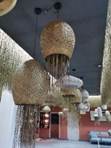


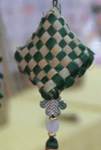
At the same time, through the process
observation of the production sites of traditional workshops and new studios,
we systematically compare the technical path and efficiency performance of each
link of ‘raw material - design - weaving - shaping - packaging’. The results
show that the traditional units are purely handmade. The results show that the
traditional workshops continue their empirical skills by hand, which is
flexible but less standardised, while the emerging workshops have introduced
dehumidifying equipment, fixed frames and composite materials to improve
operational efficiency and consistency of the finished product. In terms of
design mechanism and market response, some of the new teams have established a
modular and serialised product system, and combined with e-commerce,
customisation and cultural tourism channels to form a
positive feedback, reflecting the initial trend of transition from
‘experience-driven’ to ‘structural optimisation’ Table 2. On the whole, the Leizhou
bushy grass weaving products have taken shape in terms of material expansion,
style extension and market expansion, and are moving from traditional skills to
a new stage of modern design and technology integration.
Table 2
|
Table 2 Summary and Analysis of Observational Data |
||
|
Stage |
Traditional Workshops |
Emerging Design Studios |
|
Weaving Method |
Fully handcrafted |
Handcrafted + semi-automated |
|
Material Use |
Single cattail |
Cattail + diverse materials |
|
Design Style |
Traditional patterns |
Modular + trendy symbols |
|
Production Efficiency |
Long cycle, low standard |
Optimized process, improved efficiency |
Source: Author
5.1.3.
Semi-structured Interviews: Expert Insights on the Integration of
Craftsmanship and Green Materials
In order to explore in depth
the practical basis and development path of the integration of Leizhou cattail weaving and green materials, this study
conducted semi-structured interviews with six experts (designers, non-genetic
inheritors, researchers and governmental stakeholders), focusing on the topics
of material application, design innovation, market status and policy support.
The interview outlines were evaluated by CVI, and the scores of each dimension
were 1.00, with good content validity. The results show that green materials
have not yet been systematically applied to the practice of bushy weaving,
which is mainly limited by material suitability, appearance coordination and
difficulty of access. Although some designers try to introduce foreign materials
to enrich product performance, the application of green materials is still in
the preliminary exploration stage. In terms of design innovation, it is
difficult to balance aesthetics and functionality, and product forms tend to be
the same. At the policy level, the existing support focuses on the protection
of non-heritage and lacks specific guidance on green integration. At the same
time, experts generally believe that the integration mechanism of ‘green
materials - traditional crafts - modern design’ should be constructed, and
school-enterprise co-operation, platform construction and practical projects
such as ‘non-heritage in school’ should be promoted to form a sustainable
development path. In the meantime, experts generally agreed that a mechanism for
the integration of ‘green materials, traditional crafts and modern design’
should be established, and school-enterprise co-operation, platform
construction and practical projects such as ‘non-heritage in school’ should be
promoted.
Table 3
|
Table 3 Thematic Summary of Expert Interviews |
||
|
Primary Theme |
Secondary Theme (Code Label) |
Summary Viewpoints |
|
Craft Status |
Craft inheritance |
Weaving mainly practiced by older generations; youth lack motivation
to inherit. |
|
Market situation |
Market leans toward cultural and tourism products; serious product
homogenization. |
|
|
Design Innovation |
Design integration |
Attempts to combine traditional craft with new materials; green
material use still limited. |
|
Eco design barriers |
Challenges in applying eco-materials in terms of adaptability and
aesthetics. |
|
|
Material Selection |
Material selection criteria |
Selection focuses on touch and elasticity; based on traditional
experience. |
|
Material practice |
Eco-materials mostly in trial phase, limited by cost and access. |
|
|
Government Support |
Gov policy awareness |
Current policy emphasizes heritage protection; lacks clear support for
green integration. |
|
Gov policy demand |
Suggestions include promoting 'heritage in schools' and 'green
workshops'. |
|
|
Future Development |
Future innovation path |
New products should integrate aesthetics and functionality to attract
younger markets. |
|
Eco material potential |
Biodegradable fibers and other green materials show potential for
cattail integration. |
|
Source: Author
5.2. Consumer research and empirical
study implementation of grass weaving products for Generation Z in Guangzhou
City
5.2.1.
Questionnaire Design and Data Reliability
In order to gain an in-depth understanding
of the knowledge, attitude and purchasing behaviour of Guangzhou's Generation Z
consumers towards woven grass products, so as to provide an empirical basis for
the design and marketing of green woven grass products, this questionnaire
survey, with young people between the ages of 18 and 30 years old in Guangzhou
as the main target, covers four major parts: (1) demographic characteristics;
(2) attitudes towards environmentally friendly consumption; (3) knowledge and
satisfaction of woven grass products; (4) Price acceptance and consumption
willingness. The questionnaire adopts a 5-point Likert scale and matrix
multiple choice questions to ensure quantitative expression and
multi-dimensional coverage of the data. A total of 527 valid samples were
obtained through random sampling of online questionnaires, covering various
universities in Guangzhou and the social youth population. In terms of sample
structure, the proportion of respondents aged 18-22 reached 72.87%, women
accounted for 54.27%, the student group was dominant, accounting for 74.38%,
and 66.03% of the respondents had a monthly income of less than 2,000 yuan,
which made the samples highly compatible with the portrait of Generation Z's
green consumption and research on the needy population. In order to verify the
measurement quality of the questionnaire, this study carried out reliability
and validity tests on the data. the Cronbach's alpha coefficient was 0.978,
indicating that the questionnaire has a very high internal consistency; the KMO
value was 0.972, and the result of the Bartlett's spherical test was
significant (p < 0.001), so the structural validity was good, and the data
were suitable for factor analysis, which met the reliability standard of academic
research. The data is suitable for factor analysis and meets the reliability
standard of academic research.
Table 4
|
Table 4 Reliability and Validity Analysis |
||
|
Indicator |
Value |
Judgment Standard |
|
Sample Size |
528 |
>200 considered good |
|
Number of Items |
51 |
>30 is favorable for factor analysis |
|
Cronbach’s α |
0.978 |
>0.9 Excellent, >0.8 Good |
|
KMO Value |
0.972 |
>0.9 Excellent |
|
Bartlett's Test p-value |
0.000 (Significant) |
<0.05 Significant |
Source: Author
5.2.2.
Research Results and Analysis
The
research shows that Generation Z consumers generally have strong environmental
awareness, 73.24% agree that environmentally friendly products have a positive
effect on the environment, and 59.58% believe that environmental consumption is
a personal responsibility. 40.04% pay attention to the environmental attributes
of the products on their own initiative, and 41.94% are willing to adjust their
consumption methods, but only 38.33% are willing to pay a higher price, which
reflects a contradiction between environmental protection concepts and price
sensitivity. This reflects the contradiction between the recognition of
environmental protection concept and price sensitivity.
In
terms of product awareness, consumers are concerned about ‘material durability’
(77.22%), ‘multi-functionality’ (75.52%) and ‘fashionable design’ (69.64%), and
72% are concerned about ‘environmental protection’. 69.64%), and 72.1%
recognised the product's ‘expression of cultural innovation’, while 41.37% were
concerned about the ‘traceability of carbon footprint’. In the scale, ‘material
durability’ (4.05 points) and “multifunctionality” (4.03 points) are the top
scores, and ‘cultural innovation’ is 3.93 points. In terms of satisfaction,
‘aesthetics’ (3.82) and “practicality” (3.83) were rated highly, while
‘cost-effectiveness’ was slightly lower, suggesting that pricing needs to be
optimised.
Consumers
have high expectations for ‘modern aesthetic design’ (70.02%) and ‘material
durability’ (70.58%), while “functionality” (68.88%) and ‘functionality’
(68.88%) have high expectations. 68.88%) and ‘integration of non-heritage
culture’ (67.93%). In the actual experience, the scores of ‘colour richness’
(3.67), ‘functional diversity’ (3.74) and ‘environmental certification mark’
(3.79) are low, indicating that the design details and green transparency still
need to be improved. This indicates that design details and green transparency
need to be improved.
In
terms of price perception, 45.83% think the price and value ‘generally match’,
21.02% think ‘do not match’, 50.38% can accept 5-10% green premium, 33.71%
clearly do not accept. 81.63% preferred ‘green premium’, 81.63% preferred
‘green premium’, 81.63% preferred ‘green premium’, 81.63% preferred ‘green
premium’. 81.63% prefer products under 100 RMB, showing that they are price
sensitive and value for money. Information channels are mainly social media
(53.41%), e-commerce platforms (45.26%) and brick-and-mortar shops (39.4%), but
online trust is on the low side, with only 41.1% believing that the content of
the social media is credible, and that brick-and-mortar experiences and
recommendations from friends and family are more trusted.
In
terms of behavioural willingness, 47.16% have a neutral attitude towards future
purchases, 39.02% have a clear willingness to buy, and 47.15% are willing to
recommend the product, which is higher than the willingness to buy, reflecting
the potential of word-of-mouth communication. 51.51% accept the green premium,
and nearly half of them approve of the existing purchasing channels, which lays
the foundation of the green transformation of straw products.
Table 5
|
Table
5 Gen Z Consumers’
Attention, Satisfaction, and Improvement Needs on Eco-Friendly Cattail
Products |
||
|
Category |
Indicator |
Average Score |
|
Product Attention |
Material durability Multifunctional usability Fashionable design Cultural innovation Carbon footprint traceability |
4.05 4.03 3.87 3.93 3.80 |
|
Satisfaction |
Aesthetic appeal Practicality Cost performance Material texture Creative expression |
3.82 3.83 3.77 3.80 3.82 |
|
Improvement Needs |
Modern aesthetic design Material durability Functional diversity Integration of intangible heritage |
3.89 3.91 3.87 3.89 |
|
Actual Performance |
Color richness Functional diversity Eco-label certification |
3.67 3.74 3.79 |
Source: Author
5.3. Experimental Study on Integration
of Eco-friendly Materials and Dandelion Weaving
5.3.1.
Screening of Dandelion and Green Materials
This study introduces the theories of green
design, material experience and life cycle assessment (LCA) at the sample
selection stage as the theoretical basis for the screening and assessment of
environmentally friendly materials. Among them, the green design theory focuses
on the environmental friendliness and cultural continuity of the whole life
cycle of the product; the material experience theory emphasises the
comprehensive perception of the material at the level of tactile sensation,
aesthetics and cultural significance; and the LCA method evaluates the
environmental impact of the material from the perspective of ecological load.
Under this framework, we initially screened out the types of materials that are
compatible with cattail weaving, including plant fibres, natural materials,
recycled materials, synthetic biomaterials and recycled waste materials. After
combining green attributes, processing suitability and visual harmony, five
types of materials were selected for the experiment: bamboo fibre, waste
webbing, straws, waste plastic woven bags and packaging nets. Bamboo fibre is
delicate and strong, and matches the colour tone and weaving performance of
cattail; waste webbing is colourful and flexible, which is conducive to
enhancing the visual performance; straws are lightweight and waterproof, which
is suitable for three-dimensional composition design; and used woven bags and
packaging nets are tear-resistant and structurally stable, which helps to
enhance the durability of the products. Other alternative materials such as
straw fibre, corn husk, recycled paper fibre and biodegradable plastics were
not included in the experiment due to their lack of strength or poor processing
suitability.
5.3.2.
Fabrication Process of the Weaving Experiment
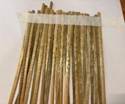
The experiment was divided into four stages:
stage 1, material and tool preparation. Dry treated bushes were selected as the
base, combined with bamboo fibres, discarded webbing, straws, used plastic
woven bags and discarded packaging nets, and all materials were processed
according to uniform standards for size and hardness. Auxiliary tools include
scissors, white paper and textured paper for material positioning and fixing.
The second stage, warp arrangement and fixing. The bushes were arranged on the
white paper according to the preset pattern, and the two ends were fixed with
textured paper to form a stable warp thread structure. The number and spacing
of warp threads are set according to specifications to ensure sample
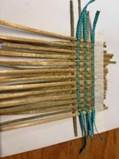
consistency. In the third stage, weft weaving operation. Adopting the
interlaced weaving method of straight and twill, all kinds of environmental
protection materials were interspersed between the warp threads of the bushes,
and their suitability for weaving was tested one by one. During the process,
the focus is to observe the coordination of tension, smoothness of operation,
and material breakage or entanglement. Stage 4: Weaving completion and surface
adjustment. The structure of the sample is trimmed to ensure a smooth and tight
surface, optimising the visual and tactile effects. The specific process and
corresponding steps are detailed in Table 6.
|
Table 6 Weaving Experiment: Process and Illustration Mapping |
|||
|
Stage No. |
Stage Name |
Operation Description |
Illustration No. |
|
1 |
Material Preparation |
Prepare cattail, eco-friendly materials,
scissors, masking tape, paper, etc.; standardize material size |
|
|
2 |
Warp Setup |
Arrange cattail according to the pattern and fix
with masking tape into warp structure |
|
|
3 |
Weft Weaving |
Insert eco-materials into the warp using
traditional techniques to test adaptability |
|
|
4 |
Product Adjustment |
Trim and adjust the structure to enhance flatness
and tactile quality |
|
|
Source: Author |
|||


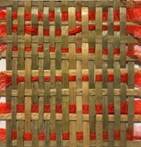
5.3.3. Samples of Weaving Experiment
Results
In order to
systematically evaluate the integration effect of the five types of green
materials and the cattail weaving process, the experiment was carried out under
uniform conditions to produce samples (20cm × 20cm), using both straight and
twill techniques, with all combinations based on natural cattail, and at least
two samples were produced for each group of materials. The various materials
show different characteristics in terms of structural stability, visual
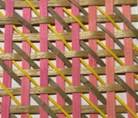
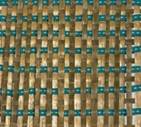
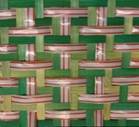
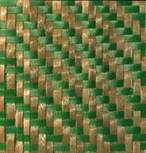
performance and process suitability. The bamboo fibre has a firm structure and
good texture; the waste webbing is colourful and decorative; the straws show a
strong sense of line and creativity; the plastic woven bag is stable and
durable with industrial aesthetics; and the packaging mesh shows a transparent
and decorative effect, which is suitable for light structural applications, and
the samples of the weaving results are shown in Table 7.
Table 7
|
Table 7 Weaving Outcomes: Material Samples |
||||
|
No. |
Eco-friendly
Material Used |
Weaving
Method |
Fabric
Effect |
Visual
Outcome |
|
1 |
Bamboo
fiber + cattail |
Plain
+ twill |
Tight
structure, natural sheen, enhanced texture |
|
|
2 |
Discarded
ribbon + cattail |
Plain |
Colorful,
flexible, decorative |
|
|
3 |
Straws
+ bamboo fiber + cattail |
Plain |
Innovative
form, strong lines, showcases reuse potential |
|
|
4 |
Recycled
plastic woven bag + cattail |
Twill |
Sturdy,
lightweight, presents an eco-industrial aesthetic |
|
|
5 |
Discarded
mesh wrap + cattail |
Plain |
Light
and translucent, suitable for lighting and storage structures |
|
|
Source: Author |
||||
5.3.4.
Comprehensive Evaluation of Sample Weaving Experiment Results
The evaluation system covers the dimensions
of aesthetics, function, durability, cost and fit, and combines the Likert
five-point scale with subjective feedback for quantitative and qualitative
analysis. The evaluation indicators include visual aesthetics, colour
integration, texture performance, functional support, physical durability and
cost. To ensure that the results are objective and reliable, 5 to 10 design
students and teachers were invited to participate in the scoring. The results
show that bamboo fibre is outstanding in terms of aesthetics and structural
stability, with high overall suitability; waste plastic woven bags have
excellent stability and high overall scores; and waste packaging nets have
relatively low scores in terms of structure and aesthetics. The evaluation
results of each material are detailed in Table 8.
Table 8
|
Table 8 Designer/Student
Evaluation Results (5-Point Likert Scale) |
|||||
|
Material No. |
Eco-friendly Material |
Avg. Aesthetic Score |
Avg. Structural Stability |
Avg. Adaptability |
Overall Evaluation (Mean) |
|
1 |
Bamboo fiber |
4.8 |
4.6 |
4.4 |
4.6 |
|
2 |
Discarded ribbon |
4.3 |
3.2 |
3.5 |
3.7 |
|
3 |
Straw |
3.5 |
3 |
3.4 |
3.3 |
|
4 |
Recycled plastic woven
bag |
4.4 |
4.2 |
4.3 |
4.3 |
|
5 |
Discarded mesh wrap |
3.2 |
3 |
3.3 |
3.2 |
Source: Author
Based on the
scoring results and user feedback, there is a clear difference in the weaving
performance of the five categories of green materials. Bamboo fibre is
excellent in aesthetics and functionality, with natural luster
and delicate texture, strong structural stability, good dyeing performance, and
is suitable for high-strength product design, but it is costly and hard. Waste
webbing is colourful, decorative and comfortable to hold, suitable for visual
expressive design; however, the splicing stability is insufficient and it is
not suitable for load-bearing structures. Straws have unique forms and creative
potential, but their fit and ease of processing are weak, so they should be
used in conjunction with structural materials. Waste plastic woven bags are
lightweight, strong and colourful, with good structural stability, suitable for
large-area applications, and have good practicality and visual performance,
although their environmental attributes are slightly lower. Waste packaging
nets have strong permeability and light texture, with certain decorative
effects, but limited support and durability, suitable for use as auxiliary
materials. Overall, bamboo fibre and plastic woven bags are suitable for
structural products, webbing and straws are suitable for creative design
direction, and packaging nets can be used as visual supplementary materials.
The experimental results provide empirical support for the material selection
and process optimisation of green woven straw products.
5.4. Productisation Attempts for Integration of
Non-heritage Crafts and Green Materials
Based on the previous comprehensive research
results of questionnaire survey, field observation and material experiments,
the design practice focuses on the functionality, aesthetics and cultural
expression needs of Generation Z for environmentally friendly grass weaving
products. According to the results of the research, the target group is
generally concerned about the sustainability of the material and aesthetic
expression, and attaches importance to the integration of traditional
craftsmanship and modern design, which provides a clear direction for product
development.
The design of the notebook is based on an
environmentally friendly composite material made of coffee grounds and a
plant-based binder, which has a good texture and natural properties. The hollowed out area is embedded with a composite weaving
material of bamboo fibre and cattail, a combination that shows good structural
and visual adaptability in the experiment, reflecting the organic fusion of
traditional techniques and modern materials. The binding adopts a replaceable
core and wire binding process, enhancing the cycle of use and the possibility
of personalisation. The overall design is synergistic in structure, material
and cultural expression, which initially verifies the feasible path of
integrating non-heritage crafts and green materials, and provides a practical
basis for the contemporary expression and market transformation of related
products, as shown in Figure 4.
Figure 4

Figure 4 Eco-Friendly Notebook Design
Source: Author
On this basis, a
matching bookmark is further designed. The outer layer is made of
environmentally friendly coffee grounds recycled paper, which has a natural
texture and good environmental attributes; the inner layer is embedded with a
pattern woven by combining cattail and recycled materials, which continues the
design logic of ‘non-heritage crafts + green materials’ in the laptop products.
The bookmark realises the lightweight transformation of traditional
craftsmanship in form and function, and enhances the overall consistency and
cultural recognition of the product series, as shown in Figure 5.
Figure 5

Figure 5 Eco-Friendly Bookmark Design
Source: Author
In addition,
exclusive environmental labels are designed for the series of products,
labelling the ecological characteristics of the cattail material and the
background of Leizhou's non-heritage, emphasising the
value of the products in green transformation and cultural heritage, and aiming
to direct consumers' attention to the contemporary expression of the concept of
sustainable design and traditional craftsmanship, as shown in Figure 6.
Figure 6

Figure 6 Eco-Label Design
Source: Author
6. Conclusions and Discussion
This study
focuses on the green transformation and innovative application of Leizhou bushy grass weaving, and systematically explores
the integration path between non-heritage crafts and sustainable materials.
Through literature analysis, questionnaire research, material experiments and
product design practice, the study responds to the design demands of
contemporary consumers, especially Generation Z, for greenness, functionality,
aesthetics and cultural values, and explores the contemporary expression of traditional
crafts in a green context. The study draws the following main conclusions:
1)
This
study identifies the multi-dimensional demands of Generation Z consumers for
material environmental friendliness, aesthetic expression and cultural identity
in the consumption of cultural and creative products, and emphasises that
non-heritage products should achieve green transformation and cultural
regeneration in the context of the new era.
2)
The
experimental results show that, as a traditional natural material, cattail has
good ecological performance and visual characteristics, especially when used in
combination with green materials such as bamboo fibre, it can improve the
structural stability and aesthetic value, showing good potential for
application.
3)
The
design practice takes the notebook as a carrier, and constructs a product
programme integrating traditional craftsmanship, green materials and modern
design language, effectively balancing practicality and cultural expression,
and verifying the feasibility of the design path based on user research and
material experimentation guidance.
4)
This
research constructs a replicable green innovation design paradigm for
non-heritage crafts, emphasising user demand as the guide, material experiment
as the support, and cultural inheritance as the kernel, which provides the
practical basis and theoretical support for the contemporary expression and
market transformation of the non-heritage craft of straw weaving.
ACKNOWLEDGMENT
Researcher would like to express her sincere to the thesis advisor, Asst. Prof. Dr. Chanoknart Mayusoh for her invaluable help and constant encouragement throughout the course of this research. In addition, the researcher has to give thanks to all lecturers for their assistance: Asst. Prof. Dr. Akapong Inkuer and Asst. Prof. Dr. Pisit Puntien. At the same time, the researcher gratefully thanks to Miss Sasanant Rattanapornpisit, Mr. Chat Sukarin, Miss Vistha Chintaladdha, Miss Kanyanee Phangsua, etc. for their strong support.
Finally, the researcher would like to express her gratitude to Suan Sunandha Rajabhat University School of Fine and Applied Arts for their support in all aspects.
CONFLICT OF INTERESTS
None.
REFERENCES
Dragolea, L.-L., Butnaru, G. I., Kot, S., Zamfir, C. G., Nuţă, A.-C., Nuţă, F.-M., Cristea, D. S., and Ştefănică, M. (2023). Determining Factors in Shaping the Sustainable Behavior of Generation Z Consumer. Frontiers in Environmental Science, 11, 1096183. https://doi.org/10.3389/fenvs.2023.1096183
El-Sayed, S. M., and Youssef, A. M. (2023). Eco-Friendly Biodegradable Nanocomposite Materials and their Recent Use in Food Packaging Applications: A Review. Sustainable Food Technology, 1(2), 215–227. https://doi.org/10.1039/D2FB00021K
Geissdoerfer, M., Savaget, , Bocken, N. M. , and Hultink, E. J. (2017). The Circular Economy—A New Sustainability Paradigm? Journal of Cleaner Production, 143, 757–768. https://doi.org/10.1016/j.jclepro.2016.12.048
Ghazali, I., Abdul-Rashid, S. H., Dawal, S. Z. M., Irianto, I.,
Herawan, S. G., Ho, F.-H., Abdullah, R., Abdul Rasib, A. H., and Padzil, N. W.
S. (2023). Embedding Green Product Attributes
Preferences and Cultural Consideration for Product Design Development: A
Conceptual Framework. Sustainability, 15(5), 4542.
https://doi.org/10.3390/su15054542
Guan, Q.-F., Yang, H.-B., Han, Z.-M., Ling, Z.-C., Yin, C.-H., Yang, K.-, Zhao, Y.-X., and Yu, S.-H. (2021). Sustainable Cellulose-Nanofiber-Based Hydrogels. ACS Nano, 15(5), 7889–7898. https://doi.org/10.1021/acsnano.1c01247
Jain, A., Sarsaiya, S., Gong, Q., Wu, Q., and Shi, J. (2024). Bioresources from Biowaste for Advancing Manufacturing of Packaging Materials with Modern Circular Economy Towards a Sustainable Approach. Environment, Development and Sustainability. https://doi.org/10.1007/s10668-024-05734-8
Lavania, S., Mehta, J., Bhardwaj, , Tripathi, A., Gupta, N., and Gupta, (2023). Biocomposites: Prospects and Manifold Applications for Human and Environmental Sustainability. ECS Journal of Solid State Science and Technology, 12(3), 037002. https://doi.org/10.1149/2162-8777/acbe17
Li, J., and Gao, M. (2024). Art Design of Non-Heritage Cultural and Creative Products Based on the Concept of Sustainability. International Journal of Information System Modeling and Design (IJISMD), 15(1), 1–14. https://doi.org/10.4018/IJISMD.349881
Sayed, M. M., Mousa, H. M., El-Shazly, A. H., Zkria, A., Yoshitake, T., and ElKady, M. (2024). Novel Post-Heat Treatment Green Biodegradable PLA@SiO2 Nanocomposite Membrane for Water Desalination. Journal of Environmental Chemical Engineering, 12(6), 114378. https://doi.org/10.1016/j.jece.2024.114378
Thyavihalli Girijappa, Y. G., Mavinkere Rangappa, S., Parameswaranpillai, J., and Siengchin, S. (2019). Natural Fibers as Sustainable and Renewable Resource for Development of Eco-Friendly Composites: A Comprehensive Review. Frontiers in Materials, 6, 226. https://doi.org/10.3389/fmats.2019.00226
Tung, F.-W. (2012). Weaving with Rush: Exploring Craft-Design Collaborations in Revitalizing a Local Craft. International Journal of Design, 6(3).
Van Kesteren, I. E. H., Stappers, J., and De Bruijn, J. C. M. (2007). Materials in Products Selection: Tools for Including User-Interaction in Materials Selection. International Journal of Design, 1(3).
Zhang, K., Zhu, L., Li, H., Zheng, M., Zhang, J., Zheng, Y., and Zheng, R. (2022). From Corn Husks to Scalable, Strong, Transparent Bio-Plastic Using Direct Delignification-Splicing Strategy. Advanced Sustainable Systems, 6(5), 2100495. https://doi.org/10.1002/adsu.202100495
Zheng, Y., Wang, S., and Bi, D. (2023). Exploratory Study on the Consumption Motives of Generation Z Non-Heritage Products Based on MEC Model. Tourism Management Technology Economy, 6(2), 12–20. https://doi.org/10.23977/tmte.2023.060202
|
|
 This work is licensed under a: Creative Commons Attribution 4.0 International License
© ShodhKosh 2026. All Rights Reserved.