ShodhKosh: Journal of Visual and Performing ArtsISSN (Online): 2582-7472
|
|
Empathetic Transcreation: A "Double Diamond + DEGV" Driven Framework for Digital Innovation in Intangible Cultural Heritage
Xiaomei Gao 1, Chanoknart Mayusoh 2, Akapong Inkuer 3, Permsak Suwannatat 4
1 Doctoral
Student of Philosophy Program in Visual Arts and Design, Faculty of Fine and
Applied Arts, Suan Sunandha Rajabhat University, Thailand
2 Advisor
in Visual Arts and Design, Faculty of Fine and Applied Arts, Suan Sunandha
Rajabhat University, Thailand
3 Visual Arts and Design, Faculty of Fine and Applied Arts, Suan
Sunandha Rajabhat University, Thailand
4 Program in Creative Arts Department, Faculty of Fine and Applied Arts
Chulalongkorn University, Thailand
|
|
|
ABSTRACT |
|
|
In the digital
transmission of Intangible Cultural Heritage (ICH) to youth audiences, a
significant challenge arises from an "emotional disconnect," caused
by a mismatch between profound cultural connotations and modern aesthetic
contexts. To address this issue, this study, guided by Cultural Translation
Theory, innovatively constructs a systematic "DEGV" design
methodology within the macro-framework of the Double Diamond model. Using the
design of a blind box series for Shanghai's Fengcheng Woodcarving ICH as a
case study, this methodology employs tools such as the Analytic Hierarchy
Process (AHP) to deconstruct the abstract process of cultural transcreation
into a series of transparent and controllable practical steps. The results
demonstrate that the "Story Empathy" design scheme, which employs
narrative empathy as its core strategy, significantly outperforms other
schemes across key dimensions, including cultural empathy and emotional
value. The core contribution of this research is the provision of a replicable
"Double Diamond + DEGV" design framework aimed at "empathetic
transcreation." This framework offers an effective pathway that combines
theoretical depth with practical operability to resolve the problem of
emotional connection in the digital preservation of ICH. |
|||
|
Received 28 February 2026 Accepted 29 March 2026 Published 07 May 2026 Corresponding Author Xiaomei
Gao, s65584948010@ssru.ac.th DOI 10.29121/shodhkosh.v7.i1.2026.7856 Funding: This research
received no specific grant from any funding agency in the public, commercial,
or not-for-profit sectors. Copyright: © 2026 The
Author(s). This work is licensed under a Creative Commons
Attribution 4.0 International License. With the
license CC-BY, authors retain the copyright, allowing anyone to download,
reuse, re-print, modify, distribute, and/or copy their contribution. The work
must be properly attributed to its author.
|
|||
|
Keywords: Intangible Cultural Heritage, Cultural
Transcreation, DEGV Methodology, Empathetic Design, Design Methodology |
|||



1. INTRODUCTION
As a living carrier of national wisdom and emotion, Intangible Cultural Heritage (ICH) faces a crisis of "emotional disconnect" with younger generations in its contemporary transmission. On one hand, there is a traditional culture in urgent need of revitalization. On the other, trend-driven cultural phenomena, exemplified by blind boxes, have precisely captured the youth's strong demand for emotional value and cultural belonging iiMedia Research (2022). This contrast between cultural heritage transmission and market demand highlights the urgency and necessity of emotionally-driven transcreation of ICH.
However, an examination of current ICH cultural and creative practices reveals that many attempts remain at the level of superficial symbol replication. This results in products that are "corporeal but soulless" , failing to effectively connect with youth audiences.This "path deficit" in design stems from the common problems of "cultural misinterpretation" and the absence of a systematic design methodology. Therefore, the core question of this research is: How can a scientific, systematic, and replicable path be established to accurately transcreate the deep cultural value of ICH into emotional value that can be perceived, empathized with, and recognized by contemporary youth?
In response to this question, this study uses the design of a blind box series for Shanghai's Fengcheng Woodcarving ICH as a case study to achieve the following core objectives: first, to construct an ICH digital innovation framework oriented toward "empathetic transcreation" by integrating the Double Diamond model and the DEGV methodology; second, to empirically validate the framework's effectiveness in balancing cultural authenticity, design innovation, and youth emotional resonance using tools such as AHP, AI generation, and the Semantic Differential method; and third, to ultimately distill a replicable practical path that can systematically enhance the emotional value of ICH cultural and creative products.
2. Research Objectives
This research aims to construct a design methodology for digital innovation in ICH centered on cultural transcreation, using a blind box design for Shanghai's "Fengcheng Woodcarving" as a case study. This paper focuses on four key areas "ICH digitalization," "cultural transcreation," "the Double Diamond model," and "blind box youth culture" to identify the achievements and limitations of existing research and lay the theoretical foundation for a new research framework.
3. Literature Review
Limitations of ICH Digitalization Practices: A significant portion of current digitalization practices remains confined to the superficial "datafication" of cultural symbols. This leads to cultural products that, while "corporeal," are "soulless," failing to establish an emotional connection with young audiences Zhu (2022). This exposes a missing path from "symbol replication" to "emotional transcreation".
Limitations of Cultural Translation Theory: Cultural Translation Theory posits that cultural transmission is not a simple replication of information but a process of re-coding and re-creation of cultural symbols in a new context Bhabha (1994). In the field of ICH innovation, designers do not merely transport traditional symbols; they transcreate the deep cultural connotations of ICH into forms and narratives that contemporary youth can perceive, understand, and empathize with. Current research lacks the operationalization of this theory into a systematic framework and concrete methods that can guide ICH innovation practice, resulting in a gulf between theory and practice.
Limitations of the Double Diamond Model: The classic design process represented by the Double Diamond model, proposed by the British Design Council (2005), provides macro-level guidance for innovation but has been criticized for its high level of generalization. Academics critique it for oversimplifying the non-linear and dynamic complexity of design practice, offering only a "What" stage division without revealing the "How." Practitioners point out that it is an "empty framework" lacking a specific toolkit. There is an urgent need for an embedded, more operable "micro-methodology" to fill its core and address the unique challenges of ICH cultural transcreation.
Blind Boxes and Youth Culture: The youth culture market, exemplified by blind boxes, shows that young people are not indifferent to cultural substance but rather crave modern expressions and social attributes that resonate with them emotionally Park et al. (2022), Tang (2021). This reveals a significant market gap: an effective "translation bridge" is needed between the ICH domain, with its rich repository of stories but outdated expressions, and the youth market, which desires deep emotional experiences.
In summary, existing research lacks an integrated framework that combines Cultural Translation Theory with the Double Diamond model and a concrete set of operational tools to systematically address the "emotional disconnect" in the digital preservation of ICH. To fill this gap, this study proposes the construction of an integrated "Double Diamond + DEGV" framework. This framework uses the classic Double Diamond model as its "skeleton" and embeds a DEGV methodology - comprising specific tools and steps as its "flesh and blood." The goal is to provide a structurally clear, path-defined, scientific, and operable systematic solution for the "empathetic transcreation" of ICH.
4. Research Methodology
This study adopts a mixed-methods approach, combining qualitative and quantitative research to construct an integrated design framework. The framework utilizes the Double Diamond model proposed by the British Design Council (2005) as its macro-level process Figure 1 to ensure the systematic nature and direction of the innovation process.
Figure 1
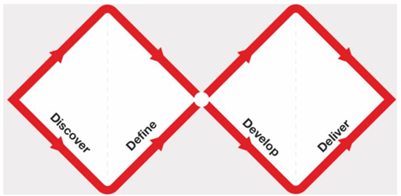
Figure 1 The Double Diamond Model Proposed by the British Design Council
Source: The
Double Diamond, Design Council
To compensate for the limitations of the Double Diamond model its "macro-level vagueness" and lack of specific operational tools this study innovatively constructs and embeds a micro-level practical methodology named "DEGV" Figure 2. This embedded methodology serves as a concrete "pathway manual" for applying theory to practice. It consists of four core stages: Decoding culture, Evaluating weights, Generating prototypes, and Validating effects. The DEGV methodology deconstructs the abstract process of cultural transcreation into a series of executable tasks and integrates various research tools. The "Decoding" stage employs content analysis and semi-structured interviews. The "Evaluating" stage uses the Analytic Hierarchy Process (AHP) to determine design strategies,Because it can effectively transform multidimensional and vague qualitative goals (such as emotions and storytelling) in design into quantifiable and clear hierarchical weights, it is suitable for the design strategy decision-making stage in the early stage of this study; The "Generating" stage leverages Artificial Intelligence for rapid prototyping. Finally, the "Validating" stage uses the Semantic Differential method and the Likert scale for scientific evaluation of the design outcomes.
Figure 2
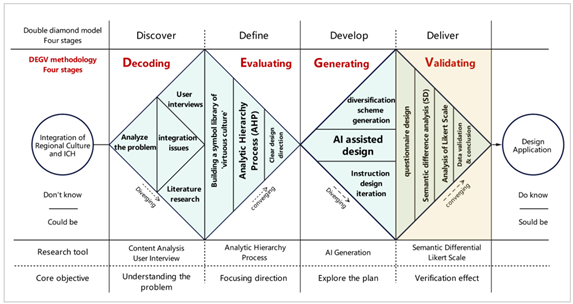
Figure 2 Technical Roadmap of the DEGV Methodology Driven by
the Double Diamond Model
Source: Author
(2025)
By integrating the DEGV methodology with the Double Diamond model, this research aims to transform the design process from an ambiguous artistic creation into a transparent, controllable, and evaluable scientific process, systematically addressing unique challenges of ICH cultural transcreation.
5. Research Results
Case Study: the Cultural Transcreation of “Virtuous Culture” in Fengcheng Woodcarving This study uses the design of a blind box series integrating Shanghai's Fengcheng Woodcarving ICH with the local "Virtuous" Culture as a case study. This empirical process aims to validate the feasibility and effectiveness of the proposed framework in a real-world design context.
5.1. D (Decoding): Decoding and Translational Mapping of Symbol of "Virtuous Culture"
To deeply understand the connotations of "Virtuous culture", this study employed a dual-method approach. First, content analysis of historical documents and local gazetteers was conducted to systematically construct the cultural context. Second, to capture a contemporary youth perspective, semi-structured interviews were conducted with eight experienced consumers of cultural and creative products.
Guided by semiotic theory, the collected information was refined to construct a transcreation mapping table Table 1, which presents the core analytical results of the "Decoding" stage. This table selects representative cultural symbols to clearly demonstrate how abstract cultural concepts can be transformed into concrete, operable design elements.
For example, as shown in Table 1, the historical figure "Yu Zhaoyue" is decoded from his core story of "guarding the dyke against the wind." This story is transcreated into "translatable design elements" such as a "Q-version official cartoon figure holding engineering drawings" and further defined by a "design application strategy" of "focusing on the narrative moment to evoke user empathy." This process established a solid cultural and emotional foundation for the subsequent prototype generation.
Table 1
|
Table 1 "Virtuous Culture" Core Symbol Decoding and Design Transcreation Mapping |
|||
|
Cultural Dimension |
Core Cultural Symbol |
Translatable Design Elements |
Design Application Strategy |
|
Figures, Stories, Ideological Origins |
Yu Zhaoyue: A historical figure who led the people with
tenacious will to build a sea dyke. |
Visual Image: Q-version official cartoon style, holding
engineering drawings, standing against the wind. |
Narrative Scene Construction: Focus on the narrative moment of "guarding
the dyke against the wind" to evoke user empathy for the spirit of
"perseverance" and "serving the people." |
|
Yan Zi (Yan Yan): A sage of the Confucian school who brought
Confucian culture to the Jiangnan region, initiating education. |
Emotional Expression: A resolute yet kind expression, a sense of
dynamic scenery. |
Cultural Core Restoration: Emphasize the cultural symbolism of
"wisdom" and "education" to shape the product's classical
and scholarly cultural foundation. |
|
|
Abstract Symbols: Scrolls, ink brushes, a guqin, a lecturing
posture. |
|||
|
Visual Style: Elegant, dignified, scholarly. |
|||
|
Visual Culture, Folk Arts, Techniques |
Colors of Jiangnan water towns: Cyan, dark gray, gray, and white, derived from
architecture and sky reflections. |
Color System: A primary palette of low-saturation gray-blue and
white. |
Establish the Aesthetic Tone: Create a tranquil and elegant overall visual
atmosphere consistent with the restrained temperament of "Xian
Culture." |
|
Fengcheng Woodcarving: A Shanghai municipal ICH with unique carving
techniques and patterns. |
Material Texture: Wood carving texture, rammed-earth wall texture. |
Integration of Core Features: Retain a perceptible wood carving texture in the
Q-version design to ensure that design innovation does not detach from the
ICH's essence. |
|
|
Craftsmanship Features: The texture of wooden materials, visible carving
marks, traditional decorative motifs like plum, orchid, bamboo, and
chrysanthemum. |
|||
|
Source: Author (2025) |
|||
5.2. E (Evaluating): AHP Weight Assessment of Design Strategies
To scientifically determine the priority of design strategies, this stage employed the Analytic Hierarchy Process (AHP) to assess the weights of core design criteria affecting user acceptance.
1) AHP
Model Construction
The AHP hierarchical model constructed for this study includes one goal layer (A) and one criterion layer (B) :
Goal Layer (A): To enhance the overall acceptance of the "Virtuous culture" themed blind box among young users.
Criterion Layer (B): Based on theoretical research and user insights, four core evaluation criteria were established: B1-Cultural Story Appeal, B2-Character Design Uniqueness, B3-Emotional Resonance Strength, and B4-Social Sharing Value.
2) Data
Collection and Calculation
15 respondents (including 5 experts from design/cultural fields and 10 experienced blind box collectors) were invited to perform pairwise comparisons of the four criteria using Saaty's 1-9 scale via a questionnaire. The 15 valid questionnaire responses were aggregated using a geometric mean to construct the final judgment matrix Table 2. From this matrix, the weight vector (W) for each criterion was calculated, and a consistency check was performed.
Table 2
|
Table 2 Criterion Layer Judgment Matrix and Weight Calculation Results |
|||||
|
Criterion |
B1 (Story) |
B2 (Uniqueness) |
B3 (Resonance) |
B4 (Social) |
Weight Vector (W) |
|
B1 |
1 |
3 |
1/5 |
5 |
0.291 |
|
B2 |
01-Mar |
1 |
1/5 |
3 |
0.144 |
|
B3 |
3 |
5 |
1 |
7 |
0.485 |
|
B4 |
1/5 |
1/5 |
1/7 |
1 |
0.080 |
|
Total |
1.000 |
||||
|
Note: Matrix data are the
results after geometric averaging. The square root method was used for weight
calculation. Source: Author (2025) |
|||||
3) Weight
Calculation and Consistency Check
The core data for the weight calculation and consistency check are as follows:
Weight Vector (W):
W = [0.291(B1), 0.144(B2), 0.485(B3), 0.080(B4)]^T
Consistency Check:
Maximum Eigenvalue λ max = 4.156
Consistency Index CI=(λ max−n)/(n−1) = (4.156−4)/3 = 0.052
Random Consistency Index RI (for a 4th-order matrix) = 0.90
Consistency Ratio CR = CI/RI = 0.052/0.90 ≈ 0.058
Since CR = 0.058 < 0.1, the judgment matrix passed the consistency test, indicating that the participants' judgments have acceptable logical consistency and the weight results are reliable.
Interpretation of Results
Figure 3
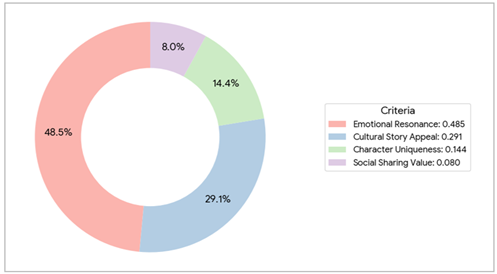
Figure 3 AHP Quantitative Data Pie Chart
Source: Author
(2025)
The quantitative results of the AHP Figure 3 clearly indicate the core direction for the design: "Emotional Resonance Strength" (W=0.485) is the most important criterion, with a weight far exceeding the others. The second most important is "Cultural Story Appeal" (W=0.291). This data-driven conclusion provided a clear and unequivocal strategic directive for the subsequent creative generation phase: the design must prioritize serving the goals of "evoking emotion" and "telling a good story".
5.3. G (Generating): AI-Assisted Prototype Generation Practice
Using "Yu Zhaoyue," a representative figure of "Virtuous culture", as an example, the goal of the prototype generation stage was to "encode" the AHP-determined design strategy into concrete visual schemes. The study employed Artificial Intelligence image generation tools as a means of rapid prototyping. The AI prompts were not based on imagination but were a direct translation of the AHP results.
Guided by the AHP strategy, three stylistically different design schemes were generated, each attempting to respond to the priorities of "emotion" and "story":
Figure 4
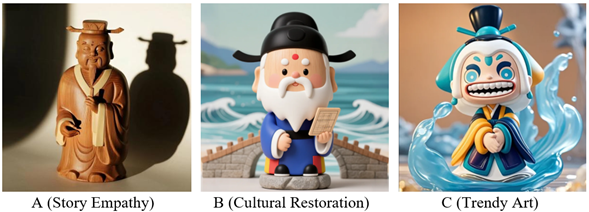
Figure 4 Three Styles of Woodcarving Blind Box Schemes
Generated by AI
Source: Author
(2025)
1) Scheme A (Cultural Restoration): A traditional blind box figure of an ancient Chinese scholar-official. He holds a scroll with a serene expression. A full-body portrait with detailed wood carving texture is visible, creating a dignified and classical feel that faithfully restores traditional woodworking craftsmanship Figure 4A.
2) Scheme B (Story Empathy): A Q-version cartoon blind box of an ancient Chinese official with a head-to-body ratio of approximately 1:1, giving it cute characteristics. The figure is placed in an environment, standing on a stone dyke against the wind while holding an engineering drawing. The expression is resolute and kind. The scene features dramatic lighting and a wood carving texture with smoothly rounded carved parts Figure 4B.
3) Scheme C (Trendy Art): An abstract and artistic woodcarving toy blind box. The attire combines vinyl-like materials, inspired by ancient Chinese scholars. It features a minimalist style with flowing lines symbolizing wind and water, and bold color blocks reflecting a trendy art style Figure 4C.
5.4. V (Validating): Quantitative Validation of Transcreation Effect
To scientifically evaluate the transcreation effect of the three schemes, a questionnaire survey was administered to 120 young target users. The questionnaire included two established psychological measurement tools:
· Semantic Differential (SD) Method: This method measures users' perceptual cognition and emotional associations with the design schemes. The study designed a 7-point scale (4 as neutral) comprising 12 pairs of bipolar adjectives. It emphasized emotional dimension pairs such as "Story - rich - Thin," "Warm - Cold," and "Healing - Depressing." The selection of these 12 adjective pairs was primarily based on Osgood's semantic differential theory and tailored to the specific objectives of this research. We first conducted a preliminary screening based on the theory's three core emotional dimensions: Evaluation (e.g., "Interesting - Boring"), Potency (e.g., "Dignified - Lively"), and Activity (e.g., "Static - Dynamic"). Subsequently, to align with the evaluation needs of cultural products and emotional design, we added pairs targeting specific dimensions such as narrativity ("Story - rich - Thin"), emotional temperature ("Warm - Cold"), and healing sensation ("Healing - Depressing"). The final vocabulary was fine-tuned through a pre-test with 5 target users to ensure it was easy to understand and could effectively capture users' perceptual cognition of the design schemes.
· Likert Scale: This method measures users' attitudes, emotional responses, and behavioral intentions toward the design schemes. The study designed a 5-point scale (1=Strongly Disagree, 5=Strongly Agree) with a total of 12 items across 4 dimensions: Cultural Empathy, Emotional Value, Aesthetic Preference, and Purchase and Social Intention. For example, an item for the "Cultural Empathy" dimension was "The story behind this character resonates with me," while an item for the "Emotional Value" dimension was "Owning this character would make me feel happy and fulfilled".
1) SD
Semantic Differential Method Analysis Results
The radar chart Figure 5 visually displays the differences in user perceptual cognition among the three schemes. Scheme B's mean scores on positive emotional dimensions such as "Story-rich," "Warm," and "Healing" were significantly higher than those of Schemes A and C. Scheme A scored higher on traditional perceptual dimensions like "Dignified" and "Classical," while Scheme C scored notably higher on the "Modern" dimension.
Figure 5
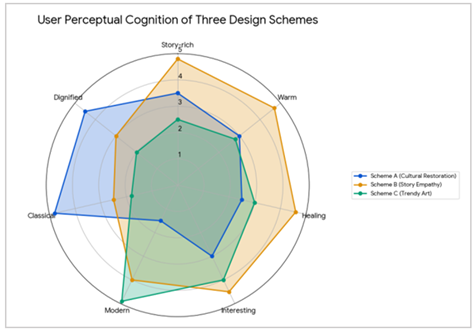
Figure 5 Semantic Profile Plot of the Three Schemes on Emotional Dimensions
Source: Author
(2025)
The results of the SD method visually validated our design intent. Scheme B successfully created an image rich in narrative and emotional warmth on a perceptual level, which is highly consistent with our "empathetic transcreation" goal.
2) Likert
Scale Analysis Results
To test whether the differences in user attitudes toward the three schemes were statistically significant, a one-way analysis of variance (ANOVA) was conducted using SPSS software Table 3.
Table 3
|
Table 3 Mean Values and ANOVA Results of the Likert Scale Dimensions |
|||||
|
Measurement |
Scheme A Mean |
Scheme B Mean |
Scheme C Mean |
F-value |
P-value |
|
Dimension |
(Significance) |
||||
|
Cultural Empathy |
3.35 |
4.58 |
2.91 |
25.67 |
< 0.001 |
|
Emotional Value |
2.82 |
4.45 |
3.33 |
28.14 |
< 0.001 |
|
Aesthetic Preference |
3.19 |
4.25 |
3.81 |
15.23 |
< 0.001 |
|
Purchase and Social Intention |
2.75 |
4.33 |
3.2 |
29.55 |
< 0.001 |
|
Note: N=120, mean values are
scores on a 5-point scale. A p-value < 0.05 indicates a statistically
significant difference. Source: Author (2025) |
|||||
Descriptive Statistics: The data clearly show that Scheme B's average score was far superior to the other two schemes across all four core dimensions. This was particularly true for "Cultural Empathy," the dimension of greatest focus for this study, where Scheme B (M=4.58) scored significantly higher than Scheme A (M=3.35) and Scheme C (M=2.91) Figure 6.
Figure 6
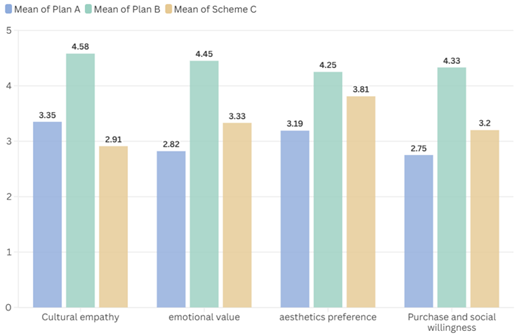
Figure 6 Likert Scale Analysis Results Bar Chart
Source: Author (2025)
Reliability and Validity Analysis: To test the reliability and effectiveness of the Likert scale in this study, we conducted reliability and validity analysis.
The reliability analysis results showed that the Cronbach's alpha coefficient of the overall scale containing 12 items was 0.91,this indicates that the scale has excellent internal consistency. The reliability coefficients of each dimension scale are also within the ideal range: cultural empathy (α=0.88), emotional value (α=0.85), aesthetic preference (α=0.82), and purchase and social willingness (α=0.90). All alpha values are significantly higher than the commonly recommended threshold of 0.70, demonstrating the reliability of the measurement tool used in this study.
In addition, to test the construct validity of the scale, exploratory factor analysis (EFA) was conducted in this study. The results showed that the KMO value was 0.89 (>0.7), and the Bartlett sphericity test result was significant (p<0.001), making it suitable for factor analysis. The four common factors ultimately extracted are highly consistent with the predetermined four dimensions (cultural empathy, emotional value, aesthetic preferences, purchasing and social willingness), with a cumulative variance explanatory power of 76.5%. This proves that the scale has good construct validity and can accurately measure the core concept to be studied.
Analysis of Variance (ANOVA): The p-values for all dimensions were less than 0.001, reaching a level of extreme significance. This indicates that the differences in user evaluation scores among the three schemes were real and not due to random error, thus being statistically significant. Post-hoc multiple comparisons further revealed that the scores for Scheme B were significantly higher than those for Schemes A and C.
Correlation Analysis: To further explore the deep relationships between various dimensions, especially to verify the core logic of the "empathetic translation" strategy - that emotional connections can drive behavioral intentions, this study conducted Pearson correlation analysis on the four dimensions scores of Scheme B (the highest scoring scheme).
Table 4
|
Table 4 Pearson Correlation Analysis Results Between Dimensions of Scheme B (N=120) |
||||
|
Dimension |
1. Cultural empathy |
2. Emotional value |
3. Aesthetic preferences |
4. Purchase intention |
|
1. Cultural empathy |
1 |
|||
|
2. Emotional value |
.82 |
1 |
||
|
3. Aesthetic preferences |
.65 |
.71 |
1 |
|
|
4. Purchase intention |
.78 |
.75 |
.68 |
1 |
|
Note: Significant correlation at
the 0.01 level (double tailed) Source: Researcher (2025) |
||||
As shown in Table 4, there is a significant positive correlation between all dimensions (all p-values<0.01). Among them, we focus on the following points:
Figure 7
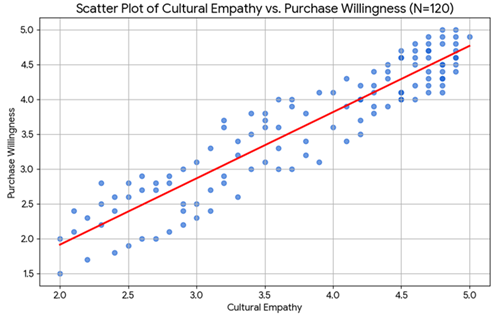
Figure 7 Scatter Plot of Correlation Between "Cultural Empathy" and "Purchase and Social Willingness"
Source: Author
(2025)
There is a strong positive correlation between "cultural empathy" and "purchasing and social willingness" (r=0.78, p<0.001). This provides strong data support for the core hypothesis of this study: when users develop deep empathy at the cultural and storytelling levels, their willingness to purchase and share also significantly increases.
The "emotional value" is also highly correlated with "purchase and social willingness" (r=0.75, p<0.001), once again confirming the core role of emotional experience in driving consumer behavior.
There is also a strong positive correlation between "cultural empathy" and "emotional value" (r=0.82, p<0.001), indicating that successful cultural story translation is a key prerequisite for stimulating users' positive emotional value.
To present this relationship more intuitively, Figure 7 presents the linear relationship between the two key variables of "cultural empathy" and "purchase and social willingness" in the form of a correlation scatter plot.
This series of validation processes completed the "closed loop" of the entire framework. It was not merely an evaluation of the design schemes but also a test of the fidelity of the entire transcreation process. From a semiotic perspective, the D (Decoding) stage was the decoding of the source culture's "signified" (meaning); the G (Generating) stage was the creation of a new "signifier" for this "signified" (the visual image of Scheme B); and the V (Validating) stage, using the SD method and Likert scale, tested whether the target audience could successfully decode the researcher's intended "signified" (e.g., story-richness, warmth, emotional resonance) from this new "signifier." The quantitative data prove that Scheme B was a successful practice of symbolic transcreation.
6. Conclusions and Discussions
6.1. Conclusions
This study addresses the emotional communication dilemma faced by Intangible Cultural Heritage in its digital transmission. Guided by Cultural Translation Theory, it has successfully constructed and preliminarily validated an ICH digital innovation design framework that integrates the Double Diamond model with the DEGV methodology. The core contributions of this paper can be summarized on three levels: theoretical, methodological, and practical.
6.1.1. Theoretical Contribution
The study operationalizes the macro-level "Cultural Translation" theory by introducing "empathetic transcreation" as a core objective. By integrating cultural ecology and semiotics as analytical tools, it forms a practical theoretical system that focuses on the creation of emotional value, combining a macro-level perspective with micro-level tools.
6.1.2. Methodological Contribution
The research constructs DEGV, a clear and executable micro-level practical path, and seamlessly integrates it with the classic Double Diamond model, providing a systematic "operating path" for ICH innovative design. The study details how various research tools - such as AHP, AI generation, the SD method, and the Likert scale - work in concert at different stages of the framework to transform the design process from an ambiguous artistic creation into a transparent, controllable, and evaluable scientific process.
6.1.3. Practical Contribution
Through the case study of a woodcarving blind box integrating Shanghai's Fengcheng Woodcarving ICH with Shanghai Fengxian's "Virtuous culture" ,the study empirically demonstrates that "empathetic transcreation" is the key strategy for connecting ICH with contemporary youth. The research clearly indicates that capturing and amplifying "narrative moments" to evoke emotional resonance is a more effective transcreation path than simply replicating traditional forms. The success of Scheme B provides a data-validated paradigm that can serve as a reference for future ICH innovation practices.
6.1.4. Limitations and Future Research
The innovative framework and methodology of this study offer important practical implications for cultural institutions, designers, and relevant policymakers, providing a systematic toolkit for reducing innovation uncertainty and increasing project success rates. However, some limitations exist, which point the way for future research. First, the sample sizes in the case study (N=8, N=15, N=120) are relatively limited; the framework needs to be tested and optimized with larger, real-world user groups. Second, this study lacks a physical prototyping and multi-round iteration phase. Future research could incorporate rapid prototyping and agile development methods to make the validation process more aligned with real-world product development cycles.
Future research could focus on testing and optimizing this methodology with larger user groups in the following areas: First, cross-category application, Applying this framework to other types of ICH, such as music, dance, and festivals, to explore transcreation models for different cultural forms. Second, cross-media exploration, Combining emerging media like virtual reality, augmented reality, and interactive games to explore how to create more immersive and emotionally profound digital ICH experiences. Third, long-term effect studies, Tracking the long-term market performance and sustained impact on user cultural identity of products developed based on this framework.This will allow ancient cultural wisdom to achieve a truly vibrant, "living" inheritance through sympathetic resonance with young minds.
6.2. Discussions
The empirical process of this study not only validated a specific design scheme but, more importantly, provided a solid foundation for evaluating the effectiveness of the proposed mixed-methodology framework, analyzing its internal mechanisms, and considering its broader implications.
6.2.1. The Effectiveness of the Double Diamond-DEGV Framework as a Systematic Path for "Cultural Transcreation"
The practical application in this study fully demonstrates how the DEGV methodology transforms the abstract theory of "cultural transcreation" into a step-by-step, operable, and evaluable practical process. From the theory-guided decoding in the D stage, to the data-driven strategy formulation in the E stage, the strategy-guided creative generation in the G stage, and finally the scientifically quantified closed-loop effect evaluation in the V stage, this methodology successfully provides a structurally clear and logically rigorous solution for the complex and uncertain problem of ICH innovative design. By using an interlocking set of tools, it makes the "invisible" design process transparent to the greatest extent possible, ensuring that design decisions are no longer solely reliant on intuition but are built on a solid foundation of theory, data, and user feedback. This also proves that the framework has significant value as a systematic "operating path" for guiding ICH innovation and reducing the risk of failure.
6.2.2. In-depth Analysis of the Cultural Transcreation Mechanism in the Case Study
An in-depth analysis of Scheme B, the most successful scheme in the case study, reveals that the core mechanism for achieving "empathetic transcreation" lies in the principle of "the form changes, but the spirit remains" . The key strategy was to capture and visualize a "narrative moment".
The "change in form" is reflected in Scheme B's adoption of a Q-version, anime-style cartoon design, which is far removed from the traditional form of woodcarving. This formal "departure" is not a sign of disrespect for tradition but an active effort to approach and engage in dialogue with the aesthetic context of the target youth audience. It is the prerequisite for transcreation to occur.
The "spirit remaining" is demonstrated by the fact that Scheme B did not hollowly illustrate abstract concepts like "integrity" or "diligence." Instead, it precisely captured the scene of "Yu Zhaoyue guarding the dyke against the wind," a moment of dramatic tension and emotional impact. It solidified the character's spiritual core—resilience and service to the people—into a "moment" full of dynamism and emotional tension. What users see is not a static, didactic symbol, but an active, story-driven subject capable of evoking empathy.
It is this combination of "maximum openness" in form and "most precise adherence" in conveying the spiritual core that constitutes the essence of "empathetic transcreation." For the digital regeneration of ICH, conveying a "story" that can inspire emotional resonance is far more important than replicating a "traditional" form.
6.2.3. The Dual Role of AI in the Cultural Transcreation Process
This study highlights the complex role that Artificial Intelligence plays in the cultural transcreation process. On one hand, AI serves as an efficient "transcreation encoder," capable of rapidly and diversely translating the abstract strategic intentions established by the designer in the E stage (via AHP) into concrete visual schemes (requiring precise prompts). This greatly enhances the divergent efficiency of the "Develop" stage in the Double Diamond model. On the other hand, designers must be wary of the potential risk of "aesthetic homogenization." That is, the generated results may carry a subtle, universal "AI aesthetic" that could weaken the design's uniqueness and the recognizability of the specific culture.
Therefore, the role of AI is not to replace the designer but to place higher demands on them. The designer's core competency must shift from pure form-giving ability to the ability of "strategic definition, precise instruction design, and critical curation." Designers must master AI to make it serve specific cultural transcreation goals.
CONFLICT OF INTERESTS
None.
ACKNOWLEDGMENTS
Researcher would like to express her sincere to the thesis advisor, Asst. Prof. Dr. Chanoknart Mayusoh for her invaluable help and constant encouragement throughout the course of this research. In addition, the researcher has to give thanks to all lecturers for their assistance: Asst. Prof. Dr. Akapong Inkuer and Asst. Prof. Dr. Pisit Puntien. At the same time, the researcher gratefully thanks to Miss Sasanant Rattanapornpisit, Mr. Chat Sukarin, Miss Vistha Chintaladdha, Miss Kanyanee Phangsua, etc. for their strong support.
Finally, the researcher would like to express her gratitude to Suan Sunandha Rajabhat University School of Fine and Applied Arts for their support in all aspects.
REFERENCES
Bhabha, H. K. (1994). The Location of Culture. Routledge.
British Design Council. (2005). The Double Diamond: A Universally Accepted Depiction of the Design Process. Design Council.
Dorst, K. (2011). The Core of “Design Thinking” and its Application. Design Studies, 32(6), 521–532. https://doi.org/10.1016/j.destud.2011.07.006
Fang, Y. (2023). A Study on Cultural and Creative Design Based on Cultural Translation: A Case Study of the Blind Box Design with the Boy Image from Woodblock New Year Pictures [Master’s Thesis, Hubei Institute of Fine Arts]. China National Knowledge Infrastructure.
iiMedia Research. (2022). 2022 China Interest-Based Consumption Trend Insight White Paper.
Luo, Y. X., and Zhang, J. (2023). AI Yingyong yu Miaoxiu Feiyi Chuangxin Sheji de Tedian ji Celüe
Yanjiu [A Study on the Characteristics and Strategies of AI Application in the
Innovative Design of Miao Embroidery as Intangible Cultural Heritage]. Yishu yu
Sheji (Lilun) [Art and Design (Theory)], (12), 118–120.
Nessler, D. (2016). Cultivating Design Thinking in Practice Through Evidence-Based
Frameworks. Journal of Design, Business and Society, 2(2), 151–170.
Park, S., Li, W., and Chen, Y.
(2022). Emotional Engagement Through Cultural
Translation: Blind Box Consumption as Youth Identity Expression. Journal of
Youth Studies, 25(3), 321–339.
Rafiq, A. M. (2024). Protection of Intangible Cultural Heritage and Cultural Analysis. Revista de Gestão e Secretariado, 16(2), 46–51.
Saaty, T. L. (1980). The Analytic Hierarchy Process: Planning, Priority Setting, Resource Allocation. McGraw-Hill. https://doi.org/10.21236/ADA214804
Shanghai Fengxian District
“Fengxian Culture Annals” Compilation Committee. (2018). Fengxian Culture Annals. Shanghai Joint Publishing.
Tang, F. (2021). Bridging the Gap: Intangible Cultural Heritage in the Age of
Experience Economy. International Journal of Cultural Studies, 24(5), 731–749.
Zhang, W. (2022). Research on the Digital Communication Model of the Willow Weaving
Craft in the Huaihe River Basin Based on Cultural Translation [Master’s Thesis,
Anhui University]. China National Knowledge Infrastructure.
Zhang, W. (2023). The Connotation and Roots of Fengxian’s Regional Culture. Shoucang [Collections], (7), 172–176.
Zhang, X. M., and You, W. Y. (2024). A Practical Study on the Design Strategy of Rural Intangible Cultural Heritage Brands Based on Intelligent Semantic Analysis. Baozhuang Gongcheng [Packaging Engineering], 45(12), 333–341.
Zhou, Y., Liu, Y., Shao, Y., and Chen, J. (2025). Fine-Tuning Diffusion Models to Create New Kite Designs for the Revitalization and Innovation of Intangible Cultural Heritage. Scientific Reports, 15(1), Article 92225. https://doi.org/10.1038/s41598-025-92225-z
Zhu, X. (2022). 6 [Master’s Thesis, Jiangnan University]. China National Knowledge Infrastructure.
|
|
 This work is licensed under a: Creative Commons Attribution 4.0 International License
© ShodhKosh 2026. All Rights Reserved.