ShodhKosh: Journal of Visual and Performing ArtsISSN (Online): 2582-7472
|
|
Affective-Functional-Morphological Tripartite Mapping: a Kansei Engineering Study of Police Drones
Zhe Liu 1 , Chanoknart Mayusoh 2
 , Akapong Inkuer 3
 , Permsak Suwannatat 4
1 Doctoral
Student of Philosophy Program in Visual Arts and Design, Faculty of Fine and
Applied Arts, Suan Sunandha Rajabhat University, Thailand
2 Advisor
in Visual Arts and Design, Faculty of Fine and Applied Arts, Suan Sunandha
Rajabhat University, Thailand
3 Visual Arts and Design, Faculty of
Fine and Applied Arts, Suan Sunandha Rajabhat University, Thailand
4 Program in Creative Arts Department,
Faculty of Fine and Applied Arts Chulalongkorn University, Thailand
|
|
|
ABSTRACT |
|
|
A
techno-semantic imbalance is prevalent in current police drones, stemming
from a structural decoupling between their functional platform and symbolic
form. When consumer-grade drones are retrofitted for police missions, their
design semantics fail to effectively encode "law enforcement
authority". This leads to the diminished efficacy of what Bourdieu
termed "symbolic violence", Bourdieu (1991) causing a systemic loss of symbolic deterrence. The cognitive
paradox between this "residual civilian DNA" and the
"deterrent signifier" required by police work is the core design
challenge to be solved. Guided by Value-Sensitive Design (VSD) principles,
this study constructs an integrated Kansei Engineering framework to balance
the tripartite needs of law enforcement authority, public sense of security,
and psychological deterrence. The study builds and validates this framework
through a three-stage "Emotion-Function-Form" mapping mechanism.
First, the Kano model is used to analyze the non-linear structure of users'
affective needs, identifying emotional-layer requirements. Second, a Quality
Function Deployment (QFD) matrix translates these abstract affective demands
into functional-layer engineering design elements. Finally, the Semantic
Differential (SD) method provides closed-loop validation by assessing the
semantic effectiveness of the resulting design form. Empirical results
demonstrate the framework's validity. The Kano analysis identifies "a
bionic form with dynamic tension" as a key attractive attribute (Better
coefficient = 0.69). In the SD evaluation, the prototype demonstrated
significant differences from commercial drones on the metrics of
"authoritativeness" and "professionalism," while keeping
"threat perception" within a preset threshold, thus precisely
calibrating the semantic boundaries. This research proposes and substantiates
an "Emotion-Function-Form Triadic Mapping Model." Through its three-stage
Kano-QFD-SD mechanism, it offers a systematic paradigm for designing
professional equipment with high perceptual impact. Furthermore, it provides
an operational pathway for translating abstract ethical principles, such as
"minimum necessary deterrence," into quantifiable engineering
constraints, offering significant methodological implications for responsible
technological innovation. |
|||
|
Received 28 February 2026 Accepted 30 March 2026 Published 07 May 2026 Corresponding Author Zhe Liu, s65584948035@ssru.ac.th DOI 10.29121/shodhkosh.v7.i1.2026.7854 Funding: This research
received no specific grant from any funding agency in the public, commercial,
or not-for-profit sectors. Copyright: © 2026 The
Author(s). This work is licensed under a Creative Commons
Attribution 4.0 International License. With the
license CC-BY, authors retain the copyright, allowing anyone to download,
reuse, re-print, modify, distribute, and/or copy their contribution. The work
must be properly attributed to its author.
|
|||
|
Keywords: Police Drone, Kansei Engineering, Value Sensitive
Design (VSD), Affective Semantics, Design Framework |
|||



1. INTRODUCTION
In the context of the burgeoning low-altitude economy and digital innovation, the design of police drones faces a profound challenge: striking a balance between "legible authority" and "perceived militarization." On one hand, their morphology, often indistinguishable from commercial drones, weakens the authority and deterrence essential for a law enforcement tool, creating a "techno-semantic imbalance." Physical form serves as a non-verbal medium for conveying intent and authority Simpson (2020), and current forms are rendered ineffective by their failure to communicate clear law enforcement symbols. On the other hand, public perception of drone applications is complex and contradictory St-Louis et al. (2024). Citizens require drones to exhibit necessary authority for critical missions like search and rescue, yet they are wary of any "militarized" appearance that could suggest excessive surveillance or incite community antagonism.
The root of this dilemma lies in the traditional "function-form mechanical superposition" design model, which neglects the profound impact of morphology on public psychology and social semantics, revealing a significant methodological gap. This paper, therefore, addresses a core question: How can the subjective affective needs of stakeholders (such as a sense of authority and non-threat) be systematically translated into objective, verifiable engineering specifications to design a responsible police drone that strikes a delicate balance between functionality, authority, and public acceptance?
To address this, the study poses three sub-questions:
1) Need Identification and Classification (RQ1): What is the hierarchy of affective needs among police drone stakeholders, and how can the Kano model be utilized to classify and weight them?
2) Need Translation and Specification (RQ2): How can these weighted affective needs be systematically translated into prioritized engineering specifications to resolve the "techno-semantic imbalance"?
3) Design Validation and Evaluation (RQ3): To what extent can a prototype designed through this process be empirically verified to achieve preset semantic goals, such as being "authoritative but not aggressive"?
By integrating the Kano model, Quality Function Deployment (QFD), and the Semantic Differential (SD) method, this paper proposes a data-driven, closed-loop design framework to answer these questions. It will detail the theoretical foundations, research methodology, empirical results, and theoretical and practical implications, concluding with a summary and outlook for future research.
2. Research Objectives
This study aims to address the "technology-semantics imbalance" in police drone design. Its core objective is to construct and validate an innovative "Affective-Functional-Morphological (AFM) Triadic Mapping Model." By integrating the Kano model, Quality Function Deployment (QFD), and Semantic Differential (SD), this model systematically translates abstract affective needs into quantifiable engineering specifications. It ultimately verifies whether the design achieves the preset semantic goal of being "authoritative but not aggressive," thus forming a complete data-driven design loop.
3. Literature Review
This research is situated at the intersection of Quality Function Deployment (QFD), Value Sensitive Design (VSD), and Human-Drone Interaction (HDI).
First, regarding the translation of affective needs, integrating the Kano model Kano et al. (1984) into the QFD framework Hauser and Clausing (1988) is a common technique for optimizing the handling of non-linear user satisfaction. However, a significant challenge long associated with this integrated approach is the excessive subjectivity in weight assignment, which can compromise the objectivity of the translation results Ishak et al. (2020). This study builds upon this foundation by not only innovatively introducing the Semantic Differential method for back-end validation to achieve a closed loop from subjective feeling to engineering parameters Schütte et al. (2004) but, more importantly, by proposing a new weighting formula to address the subjectivity challenge, aiming to enhance the systematicity and objectivity of decision-making.
Second, in the realm of ethical value integration, while VSD provides a theoretical framework for embedding human values into technology Friedman et al. (2003), Van den Hoven (2013), the field has long faced a significant "operationalization gap." This gap refers to the difficulty of effectively translating abstract values like "fairness" or "privacy" into concrete, quantifiable, and verifiable technical specifications. The integrated framework proposed in this study offers a systematic solution to bridge this gap. It provides a clear path for quantifying and embedding ethical principles like "minimum necessary deterrence" into the design process, thus furnishing a practical methodology for responsible innovation Stilgoe et al. (2013).
Finally, HDI research confirms that drone morphology significantly influences public perception and acceptance Mirza et al. (2021), Wögerbauer et al. (2024). Furthermore, studies have shown that it is feasible to shape specific semantics (e.g., approachability) through design La et al. (2020), providing solid empirical support for the core hypothesis of this study.
3.1. Theoretical Foundation and Research Framework
This study is theoretically grounded in Kansei Engineering (KE), which aims to translate users' subjective affective impressions into objective design parameters Nagamachi (1995). To achieve a systematic operationalization of KE, an innovative integrated workflow was constructed. It begins by using the Kano model to move beyond the linear assumptions of user satisfaction, classifying and weighting the non-linear characteristics of needs to provide more precise inputs for the House of Quality (HoQ) in Quality Function Deployment (QFD) Hauser and Clausing (1988). QFD then translates these weighted needs into engineering characteristics with clear priorities. Finally, the Semantic Differential (SD) method Osgood et al. (1957) is employed to quantitatively evaluate the affective imagery of the prototype, thereby verifying the design output and closing the design loop.
This framework can also be viewed as an operational extension of Donald Norman's three levels of emotional design Norman (2004). Norman divides the design experience into visceral, behavioral, and reflective levels. This study's framework, through a data-driven approach, systematically maps high-level "reflective" goals (e.g., "embodying professional authority," a construct of social identity and meaning) to "visceral" design elements that elicit direct sensory experiences (e.g., a " Wedge angle," a visual form that evokes a sense of speed and power). The "behavioral" level of functional realization (e.g., effective law enforcement) serves to connect the two.
The primary innovation lies in the integration of three classic methods into a logically coherent, data-driven, closed-loop Kansei Engineering workflow Figure 1. The output of the Kano model serves as the input for QFD; the output of QFD guides prototype design; and the prototype is then validated through SD analysis. This framework aims to overcome the limitations of using a single method and to systematically execute KE principles. Based on this, the following hypotheses are proposed:
· H1: The drone prototype designed using this framework will be perceived as significantly more "professional" and "authoritative" than commercial drones.
· H2: The key design characteristics prioritized by the QFD process will significantly enhance the perceived deterrence of the prototype.
· H3: The final prototype will achieve a balanced position on the "threatening-harmless" semantic dimension, with its deterrent effect situated between that of military and commercial drones, thereby validating the principle of "minimum necessary deterrence."
Figure 1
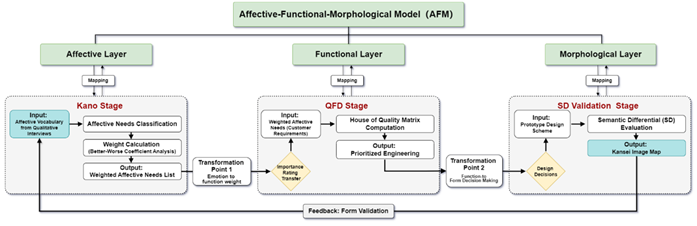
Figure 1 From Affective Mining to Morphological Validation: The Kano-QFD-SD Integrated Design Framework
Source: Author
Figure 1 Note: The process flows from left to right, showcasing a systematic Kansei Engineering design framework centered on the "Affective-Functional-Morphological Tripartite Mapping Model." It integrates Kano, QFD, and SD methods to build a closed-loop process from user "affective mining" to product "morphological validation." Conversion Point 1 represents the translation of weighted affective needs into QFD inputs, and Conversion Point 2 represents the translation of QFD's prioritized engineering outputs into specific design features.)
4. Research Methodology
This study employs a sequential, integrated mixed-methods framework combining Kano, QFD, and SD. Qualitative interview data on user affective needs are first quantified and ranked using the Kano model, then translated into engineering specifications via QFD, and finally, the resulting prototype's design imagery is empirically tested using the SD method to ensure a data-driven, closed-loop design process.
1) Stage
1: Needs Hierarchy Analysis with the Kano Model
This stage aimed to identify and prioritize key affective needs for police drones. First, semi-structured interviews were conducted with 10 key stakeholders (front-line police officers, technical experts, and ordinary citizens) to collect operational pain points, functional expectations, and "affective vocabulary." Based on the interview findings, a Kano questionnaire was designed and distributed online to 400 participants selected through stratified sampling across five urban districts in Shanghai, yielding 385 valid responses. A standard Kano evaluation matrix was used to classify each design attribute (Attractive (A), One-dimensional/Performance (O), Must-be (M), Indifferent (I), and Reverse (R)), and Better-Worse coefficients were calculated to quantify their impact on satisfaction.
2) Stage
2: Needs Translation and Technical Prioritization via QFD
Through Quality Function Deployment (QFD), the user affective needs identified in the first stage were translated into technical characteristics with clear priorities. When constructing the House of Quality (HoQ), the customer needs ("Whats") were assigned objective, data-driven weights using the Better-Worse coefficient method instead of subjective allocation. Based on the number of users who classified each attribute in the Kano questionnaire, the satisfaction improvement index (Better/SII) and dissatisfaction decrease index (Worse/DDI) were calculated. Combined with user self-rated importance (Imp), the final QFD weight was determined using the formula:
WQFD = Imp×max(SII,∣DDI∣)
This formula is designed to maximize the potential impact on user emotion during the exploratory design phase, prioritizing needs that have the greatest influence on user affect. After populating the HoQ with these weights, a cross-disciplinary team identified corresponding measurable engineering parameters ("Hows"), evaluated and filled the relationship matrix between "Whats" and "Hows," and assessed the correlation matrix among the parameters. Finally, matrix computations yielded the overall importance of each technical characteristic, providing a clear and objective priority ranking for technical development.
3) Stage
3: Prototype Semantic Validation with the SD Method
Based on the QFD outputs, a prototype was designed and its effectiveness was validated from multiple dimensions, including semantics, functionality, and user acceptance. A 3D model was created focusing on the high-priority technical characteristics. Fifty participants were recruited to rate renderings of the prototype, a commercial drone, and a military drone using a 7-point bipolar adjective scale. Concurrently, 10 front-line police officers and 4 design and engineering experts used a 5-point Likert scale to evaluate the prototype's perceived professionalism, deterrent effect, and functional usability. Statistical tests were used to compare scores and validate the hypotheses, and the Likert scale data were analyzed. This study adhered to ethical guidelines; all participants provided informed consent, and all data were anonymized.
5. Research Results
This section objectively presents the core findings from the three-stage research methodology, reporting the empirical data from the analysis of user affective needs to the semantic positioning of the final prototype.
5.1. Strategic Insights into Needs: Kano Model Analysis
The Kano analysis of 385 questionnaires not only identified user needs but also revealed their non-linear value structure. The results show that some functions, such as flight stability and standard police livery, are "Must-be" attributes that users take for granted. Fulfilling them merely prevents dissatisfaction and does not create satisfaction. Other functions, such as endurance, are "Performance" attributes, where satisfaction is directly proportional to performance.
The most significant discovery in this stage was the identification of "Attractive" attributes that generate surprise and delight. "Bionic and dynamic form" and "modular payload interface" stood out in this category. This finding has crucial strategic implications: the breakthrough in design lies not merely in optimizing existing functions but in creating unanticipated, high-value experiences through innovative form language and functional extensibility. As shown in Figure 2, the strategic positioning of each need is clear, providing a data-driven priority order for subsequent design decisions.
Table 1
|
Table 1 Kano Attribute Classification and Better-Worse
Coefficients for Key Police Drone Design Features |
|||||||
|
Feature |
Attractive (A) |
Perfor mance (O) |
Must-be (M) |
Indifferent (I) |
Primary Attribute |
Better Coefficient
(Satisfaction) |
Worse Coefficient
(Dissatisfaction) |
|
Basic Flight Stability |
5.7% |
26.2% |
55.8% |
11.7% |
Must-be (M) |
0.32 |
-0.85 |
|
High Endurance (>45
min) |
11.7% |
51.4% |
28.0% |
7.8% |
Performance (O) |
0.63 |
-0.80 |
|
Modular Payload
Interface |
40.3% |
31.2% |
14.3% |
13.0% |
Attractive (A) |
0.71 |
-0.44 |
|
Bionic and Dynamic
Form (e.g., eagle, shark) |
46.8% |
22.1% |
5.2% |
23.9% |
Attractive (A) |
0.69 |
-0.27 |
|
Red and Blue Pulse
Warning Lights |
15.6% |
45.5% |
32.5% |
6.0% |
Performance (O) |
0.61 |
-0.78 |
|
Low-Noise Design |
24.7% |
41.6% |
22.9% |
10.4% |
Performance (O) |
0.66 |
-0.64 |
|
Standard Blue and
White Police Livery |
8.6% |
38.4% |
42.1% |
10.4% |
Must-be (M) |
0.47 |
-0.81 |
|
Note: Data based on 385 valid questionnaires. A
higher Better coefficient indicates greater potential to increase
satisfaction. A higher absolute value for the Worse coefficient indicates
more severe dissatisfaction if the feature is absent. Source: Author |
|||||||
Figure 2
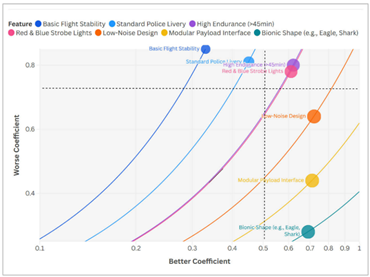
Figure 2 Kano Model Scatter Plot of Strategic Value for Police Drone Design Features
Source: Author
(Figure 2 Note: This Kano model scatter plot classifies the strategic value of various police drone design features into quadrants based on two dimensions: "Potential to increase Satisfaction" (horizontal axis) and "Importance of Removing Dissatisfaction" (vertical axis)).
5.2. Precise Design Navigation: QFD Prioritization
The Quality Function Deployment (QFD) matrix systematically translated the affectively weighted needs from the Kano analysis into specific, prioritized engineering characteristics. The core conclusion from this analysis is that the design focus should shift from a traditional competition over hardware performance to the deliberate shaping of a perceived image imbued with professional deterrence.
As shown in the House of Quality in Figure 3, "Visible Functional Modules," which strongly correlates with "Sense of Professionalism and Trust," received the highest engineering priority. This was closely followed by "Dynamic Shaping," which is tightly linked to the need for "Enhanced Deterrence." This signifies an important design paradigm shift: strengthening the drone's audiovisual symbolic elements (such as dynamic form, specialized modules, and lighting/sound equipment) is the most effective way to respond to users' core affective demands.
Figure 2
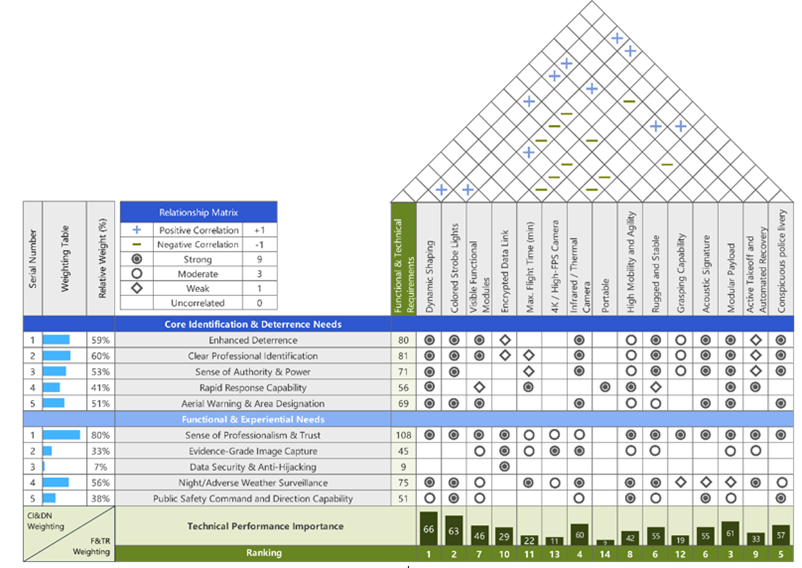
Figure 3 Design Decision Matrix (House of Quality) Integrating Kano and QFD Methods
Source: Author
(Figure 3 Note: This figure illustrates how user needs are translated into engineering metrics. The left side shows user needs weighted by the Kano model, while the top lists specific technical characteristics. The symbols in the center of the matrix (, ○, ◊) represent the strength of the relationship between them. The "Technical Performance Importance" scores and "Ranking" at the bottom are the key outputs, quantifying the development priority of each technical characteristic and providing a clear, data-driven basis for subsequent design decisions.)
5.3. Multi-dimensional Evaluation of the Prototype
Based on the engineering priorities established by QFD, a prototype was designed and fabricated. To eliminate potential confounding variables, all stimuli (the prototype, a commercial drone, and a military drone) were rendered in a consistent style. The prototype incorporated key elements such as a wedge-shaped fuselage, a silver-blue matte finish, and enhanced warning lights, aiming to achieve the preset semantic goal of being "professional, authoritative, but not overly threatening." Subsequent multi-dimensional evaluations confirmed the effectiveness of this design Figure 4.
Figure 3
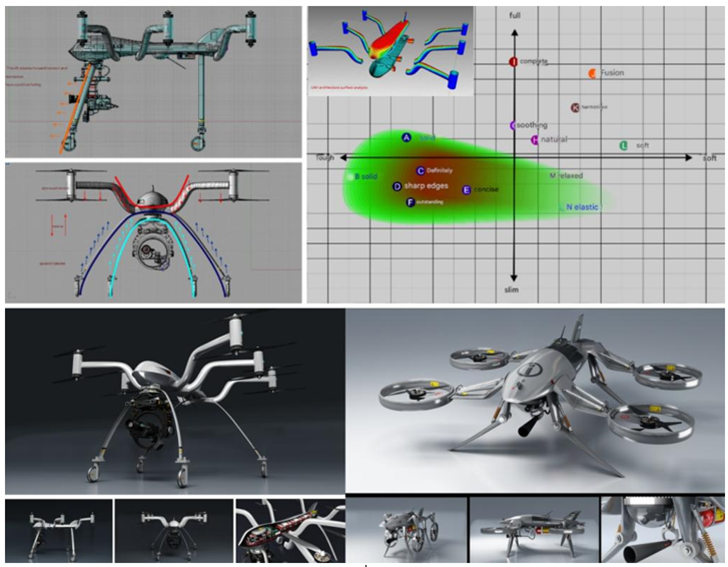
Figure 4 3D Simulation Design Practice of the Police Drone
Source: Author
(Figure 4 Caption: The 3D digital model and material rendering of this police drone were created using industrial design software, based on the technical parameters from Quality Function Deployment (QFD) and integrating multidisciplinary theories such as bionic design, product semantics, and engineering.)
1) Successful
Shaping of Semantic Imagery
The Semantic Differential (SD) evaluation Figure 5, Figure 6 reveals that the prototype projects a distinct semantic profile, significantly differentiating it from commercial and military drones. It is perceived as "professional" and "authoritative," which supports H1. Crucially, on the "perceived threat" dimension, the prototype strikes a delicate balance, positioned between aggressive military and benign commercial drones. This finding substantiates the ethical principle of "minimum necessary deterrence," as the design embodies a required law enforcement deterrent while avoiding an aggressive appearance that might provoke public anxiety, thereby supporting H3.
Figure 5
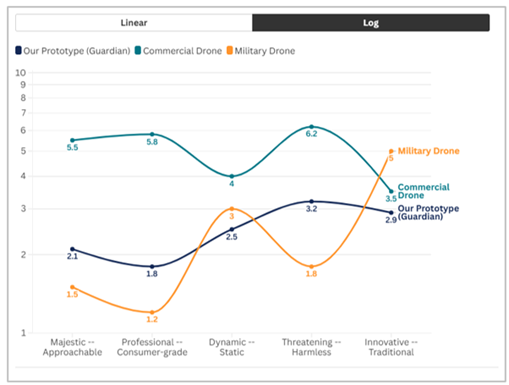
Figure 5 Comparative Analysis of Semantic Imagery Profiles of the Prototype and Competitors
Source: Author
Figure 6
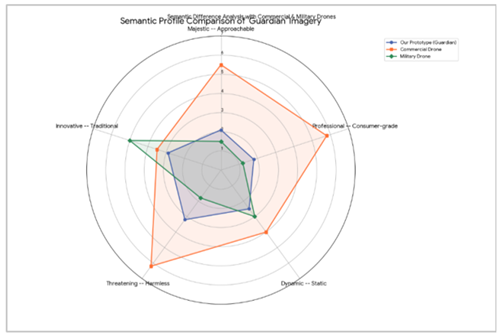
Figure 6 Radar Chart Comparison of Semantic Imagery Profiles
Source: Author
(Figure 6 Note: Through semantic differential analysis (including a line graph and a radar chart), this figure compares the perceived image of the study's prototype with those of commercial and military drones.)
2) Key
Morphological Effects
To further validate the guiding role of QFD, a quantitative analysis of key morphological elements was conducted Figure 7. The results confirmed that the 22° wedge-shaped body was significantly superior to a flat design in shaping a sense of authority and deterrence. Similarly, the combination of sharp, angular lines and a dark matte finish had a much higher perceived deterrence than a combination of rounded lines and a light-colored finish. This provides robust support for H2, demonstrating that the framework can effectively identify and guide the key design decisions that truly impact user perception.
Figure 7
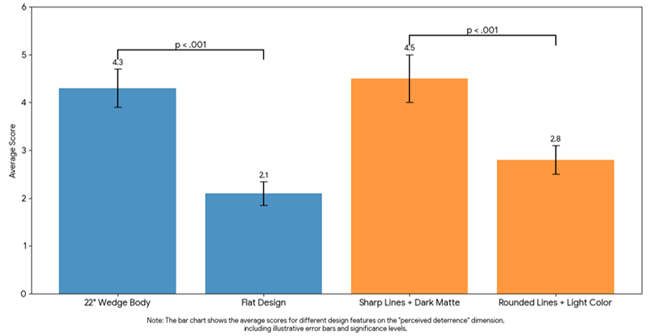
Figure 7 Comparative Impact of Key Morphological Elements on Perceived Deterrence
Source: Author
(Figure 7 Note: The bar chart displays the average scores of different design schemes on the "perceived deterrence" dimension. Error bars represent the standard error, and the significance level of the difference between groups is also indicated.)
3) Expert
and User Feedback
Finally, an evaluation panel consisting of 10 police officers and 4 design experts gave the prototype high marks. Over 80% of the officers believed the design "successfully combined professionalism with deterrence," awarding it high scores for "perceived professionalism" (4.6/5) and "deterrent effectiveness" (4.4/5). This positive feedback from end-users and domain experts provides the final qualitative confirmation of the entire design framework's effectiveness and practical value.
6. Conclusion
In response to the design challenge faced by sensitive equipment like police drones, which must balance functionality, deterrence, and public acceptance, this study successfully developed and validated an "Affective-Functional-Morphological" tripartite mapping model that integrates Kano, QFD, and SD methods. The core contribution of this research is twofold. Theoretically, it elevates abstract "affect" to a quantifiable design dimension alongside form and function, providing a new paradigm for professional equipment design. Practically, it offers a transparent, traceable, data-driven methodology and innovatively demonstrates how to operationalize ethical principles like "minimum necessary deterrence" into specific engineering constraints, providing a concrete and feasible solution for responsible technological innovation.
6.1. Deepening and Expanding Future Research
The findings of this study open several forward-looking avenues for future exploration:
1) Theoretical Integration and Contextual Expansion: A key future direction is the deep integration of this framework with Affordance Theory to systematically investigate how different morphologies "afford" different behavioral interpretations, such as surveillance, assistance, or deterrence. This theoretical lens would be particularly crucial in specific community policing contexts, where the semantic design goal might shift from "deterrence" to "approachability" and "transparency." This could also lead to critical research on perceptual differences among diverse communities (e.g., varying by ethnicity or the history of police-community relations).
2) Methodological Deepening and Innovation: To pursue greater scientific rigor, future research could be enhanced in two ways. First, within the framework, more sophisticated decision-making tools such as the Fuzzy Analytic Hierarchy Process (Fuzzy AHP) or Conjoint Analysis could be introduced to optimize the objectivity of weight assignment. Second, in the validation phase, neuro-aesthetic methods like electroencephalography (EEG) or eye-tracking could be employed. These tools would capture subconscious affective responses through objective physiological indicators that go beyond subjective scales, pushing the research to the forefront of the field.
7. Discussions
This section delves into the theoretical, practical, and strategic implications of the research findings, aiming to elevate a strong study into a scholarly contribution with broader impact.
1) Theoretical
Contribution: Evolution of the "Affective-Functional-Morphological"
Tripartite Mapping Model
The core theoretical contribution of this research is the proposal and validation of the "Affective-Functional-Morphological Tripartite Mapping Model" (AFM Model), which elevates user "affect" to a quantifiable design dimension on par with function and form. This model serves as a significant supplement and operational extension to Norman (2004) three levels of emotional design.
While Norman's model astutely delineates the visceral, behavioral, and reflective levels, scholars have noted that despite its powerful explanatory capacity, it lacks clear operational guidance on how to systematically bridge the gap between the high-level "reflective" plane (meaning, culture, self-image) and the low-level "visceral" plane (perception, appearance) Tractinsky (2018). The AFM model provides a tangible bridge for this gap. Through a structured tool like QFD, it explicitly maps abstract social meanings from the "reflective level" (e.g., "enhanced deterrence") onto specific morphological features that trigger "visceral level" perceptions (e.g., "a 22° fuselage wedge angle"). Table 2 This ability to translate abstract values into quantifiable engineering decisions operationally connects the value-transmission pathway in Norman's theory, offering an innovative paradigm for the design of high-perception professional equipment.
Table 2
|
Table 2 Correspondence Between AFM Model, Norman Levels, and Related Design Elements |
|||
|
Norman Level |
AFM Mapping Mechanism |
Morphological Elements and Parameters |
Neurocognitive Evidence |
|
Visceral Layer |
Visual triggering of biological aggression
metaphor |
• 22° wedge front angle |
↑ Amygdala activation intensity |
|
(↑
deterrence perception) |
|||
|
• Dark matte coating |
|||
|
(↑ threat perception) |
|||
|
Behavioral Layer |
Operational trust via functional affordance |
• Integrated payload bay |
↓ Prefrontal cortex working memory load |
|
(↑ professional credibility) |
|||
|
• Force feedback reduction
for rapid deployment |
|||
|
(↓
operational complexity) |
|||
|
Reflective Layer |
Institutional authority via "symbolic
violence" |
• Asymmetric ridges |
Bourdieu's symbolic violence theory validation |
|
(↑ authority rating, SD method) |
|||
|
• Police-specific color
spectrum |
|||
|
(↑ legitimacy perception) |
|||
|
Source: Author |
|||
2) Practical
Implications: A Systematic Framework as a Value-Technology Translation Tool
This framework provides an operable implementation path for Value Sensitive Design (VSD) theory. VSD emphasizes the integration of human values into technological design Friedman et al. (2003) but has long faced the methodological challenge of translating abstract value principles into concrete technical specifications Van den Hoven (2013). This framework serves as a powerful tool that can efficiently and transparently translate preset values into technical specifications.
It must be clarified that this framework is not a tool for resolving the upfront "value negotiation and trade-offs" but focuses on the "last mile" problem within the VSD process - from "design principles" to "technical implementation." Once core values like "minimum necessary deterrence" are established through prior ethical deliberation, this framework provides a transparent, traceable, and data-driven method to systematically translate them into verifiable engineering specifications. This methodological contribution ensures that ethical considerations are not a mere "patch" applied late in the process but are instead a computable variable embedded in the core of the design. This is not only a concrete practice of responsible innovation Stilgoe et al. (2013) but also a response to ethical concerns about "persuasive technology," ensuring that design, while guiding public perception, avoids devolving into "dark patterns" that create unnecessary fear or anxiety Gray et al. (2018).
3) Strategic Implications: The Design
Framework as a Dynamic Strategic Management System
The value of this study's Kano-QFD-SD framework extends far beyond a single development cycle; it functions as a "dynamic strategic management system" for product iteration. The Kano model reveals the lifecycle evolution of user needs: today's "Attractive" attributes evolve into tomorrow's "Performance" attributes and eventually become "Must-be" attributes Shen et al. (2000).
An organization or agency can periodically apply this framework to track the migration paths of key user needs across different attribute categories. By comparing Kano diagrams over time, managers can clearly visualize market evolution and proactively allocate RandD resources to features that promise the highest marginal return on user satisfaction. This approach not only solves the problem of "how to design" a product but also answers the strategic question of "how it should evolve in the future," elevating design methodology to the level of strategic management.
4) Psychological
and Semiotic Interpretation of Form: The Underlying Mechanisms of Perceived
Authority
The morphological effectiveness discovered in this study (e.g., the deterrent power of a wedge angle) is not an isolated phenomenon but is deeply rooted in the fundamental principles of Gestalt psychology and design semiotics. According to Gestalt psychology, sharp, angular shapes are subconsciously associated with concepts of threat and power (e.g., a predator's teeth); the "wedge angle" in this study leverages this cognitive mechanism to evoke a sense of authority. Concurrently, from a design semiotics perspective, the drone's sharp form is a powerful "signifier" that, through cultural encoding, points to "signified" concepts such as power, speed, and professionalism. The well-known "bouba/kiki effect" also corroborates, from a cross-modal cognition standpoint, the intrinsic link between sharpness and qualities like seriousness and precision. Therefore, this research contributes by revealing the cognitive and semiotic foundations behind effective design, deeply integrating engineering practice with principles of human cognition.
CONFLICT OF INTERESTS
None.
ACKNOWLEDGMENTS
Researcher would like to express his sincere to the thesis advisor, Asst. Prof. Dr. Chanoknart Mayusoh for her invaluable help and constant encouragement throughout the course of this research. In addition, the researcher has to give thanks to all lecturers for their assistance: Asst. Prof. Dr. Akapong Inkuer and Asst. Prof. Dr. Pisit Puntien. At the same time, the researcher gratefully thanks to Miss Sasanant Rattanapornpisit, Mr. Chat Sukarin, Miss Vistha Chintaladdha, Miss Kanyanee Phangsua, etc. for their strong support.
Finally, the researcher would like to express his gratitude to Suan Sunandha Rajabhat University School of Fine and Applied Arts for their support in all aspects.
REFERENCES
Bourdieu, P. (1991). Language and symbolic power (G. Raymond and M. Adamson, Trans.).
Polity Press.
Friedman, B., Kahn, P. H., and Borning, A. (2002). Value sensitive design: Theory and methods (Technical Report 02-12-01). University of Washington, Department of Computer Science and Engineering.
Gray, C. M., Kou, Y., Battles, B., Hoggatt, J., and Toombs, A. L. (2018, April). The Dark Patterns Side of UX Design. In Proceedings of the 2018 CHI Conference on Human Factors in Computing Systems (1–14). https://doi.org/10.1145/3173574.3174108
Hauser, J. R., and Clausing, D. (1988). The House of Quality. Harvard Business Review, 66(3), 63–73.
Ishak, A., Ginting, R., Suwandira, B., and Malik, A. F. (2020). Integration of Kano Model and Quality Function Deployment (QFD) to Improve Product Quality: A Literature Review. IOP Conference Series: Materials Science and Engineering, 1003(1), 012025. https://doi.org/10.1088/1757-899X/1003/1/012025
Kano, N., Seraku, N., Takahashi, F., and Tsuji, S. (1984). Attractive Quality and Must-Be Quality. Journal of the Japanese Society for Quality Control, 14(2), 147–156.
La Delfa, J., Baytaş, M. A., Patibanda, R., Ngari, H., Khot, R. A., and Mueller, F. (2020, April). Drone Chi: Somaesthetic Human-Drone Interaction. In Proceedings of the 2020 CHI Conference on Human Factors in Computing Systems (1–13). https://doi.org/10.1145/3313831.3376786
Mirza, D., Szafir, A., and Szafir, D. (2021, March). Aerial Flight Paths for Communication: How Participants Perceive and Intend to Respond to Drone Movements. In Proceedings of the 2021 ACM/IEEE International Conference on Human-Robot Interaction (16–23). https://doi.org/10.1145/3434073.3444645
Nagamachi, M. (1995). Kansei Engineering: A New Ergonomic Consumer-Oriented Technology for Product Development. International Journal of Industrial Ergonomics, 15(1), 3–11. https://doi.org/10.1016/0169-8141(94)00052-5
Norman, D. A. (2004). Emotional Design: Why we Love (or Hate) Everyday Things. Basic Books.
Osgood, C. E., Suci, G. J., and Tannenbaum, P. H. (1957). The Measurement of Meaning. University of Illinois Press.
Saaty, T. L. (1980). The Analytic Hierarchy Process: Planning, Priority Setting, Resource Allocation. McGraw-Hill. https://doi.org/10.21236/ADA214804
Schütte, S., Eklund, J., Axelsson, J. R., and Nagamachi, M. (2004). Concepts, Methods and tools in Kansei Engineering. Theoretical Issues in Ergonomics Science, 5(3), 214–231. https://doi.org/10.1080/1463922021000049980
Shen, X. X., Tan, K. C., and Xie, M. (2000). An Integrated Approach to Innovative Product Development Using Kano’s Model and QFD. European Journal of Innovation Management, 3(2), 91–99. https://doi.org/10.1108/14601060010298435
Simpson, R. (2020). Officer Appearance and Perceptions of Police: Accoutrements as
Signals of Intent. Policing: A Journal of Policy and Practice, 14(1), 243–257.
St-Louis, M. B., Starr, E. M., and Walby, K. (2024). Public Perceptions of Police use of Drones in Canada. Policing: An International Journal, 47(2), 263–277.
Stilgoe, J., Owen, R., and Macnaghten, P. (2013). Developing a Framework for Responsible Innovation. Research Policy, 42(9), 1568–1580. https://doi.org/10.1016/j.respol.2013.05.008
Tontini, G. (2007). Integrating the Kano Model and QFD for Designing new Products. Total Quality Management and Business Excellence, 18(6), 599–612. https://doi.org/10.1080/14783360701349351
Tractinsky, N. (2018). The Usability and Aesthetics of HCI. In The Wiley Handbook of Human Computer Interaction (361–386). Wiley.
Van den Hoven, J. (2013). Value Sensitive Design and Responsible Innovation. In Responsible innovation 1 (75–83). Springer. https://doi.org/10.1002/9781118551424.ch4
Wögerbauer, E. M., Von Castell, C., Welsch, R., and Hecht, H. (2024). Preferred Distance in Human-Drone Interaction. Vision, 8(4), 59. https://doi.org/10.3390/vision8040059
|
|
 This work is licensed under a: Creative Commons Attribution 4.0 International License
© ShodhKosh 2026. All Rights Reserved.