ShodhKosh: Journal of Visual and Performing ArtsISSN (Online): 2582-7472
|
|
Transforming Traditional and Native Forms into Contemporary Visual Language
Dr. Ganesh Urala
H.G. 1
 ,
Dr. Shree Kant 2
,
Dr. Shree Kant 2
1 Manipal
School of Architecture and Planning, Manipal Academy of Higher Education,
Manipal, Karnataka 576104, India
2 Institute
of Design, Nirma University Sarkhej Gandhinagar Highway, Ahmedabad 382481,
Gujarat, India
|
|
|
ABSTRACT |
|
|
Continuity in
Indian art is rooted in the ongoing transformation of traditional and native
visual forms into contemporary practices. In a global and pluralistic
context, Indian contemporary art reinterprets indigenous imagery, rituals,
materials, and iconography to create new artistic expressions. Although
contemporary art is not a direct copy of tradition, there remains ambiguity
regarding how traditional forms operate as metaphors within contemporary
artistic language, and how strong traditional references may sometimes
overshadow personal expression. This study examines the historical
relationship between art, ritual, mythology, nature, and everyday life,
alongside a qualitative visual analysis of selected contemporary sculptural
practices. Using contextual and comparative approaches, it investigates how
traditional images are translated into contemporary visual language. The
study demonstrates that traditional imagery functions primarily as metaphor
rather than literal representation, communicating meaning at personal,
experiential, and conceptual levels. Ritual practices and native forms
significantly influence artists in constructing their own visual poetry,
shaping distinct artistic languages grounded in cultural memory. The
continuity in Indian contemporary sculpture thus lies in the transformative
use of tradition as a conceptual and metaphorical tool that enables
individual expression while sustaining cultural roots. Future research may
explore region-specific and ritual-based practices to further understand how
artists negotiate the balance between inherited tradition and individual
creativity. |
|||
|
Received 18 February 2026 Accepted 10 March
2026 Published 29 April 2026 Corresponding Author Dr. Ganesh Urala H.G., ganesh.urala@manipal.edu
DOI 10.29121/shodhkosh.v7.i5s.2026.7720 Funding: This research
received no specific grant from any funding agency in the public, commercial,
or not-for-profit sectors. Copyright: © 2026 The
Author(s). This work is licensed under a Creative Commons
Attribution 4.0 International License. With the
license CC-BY, authors retain the copyright, allowing anyone to download,
reuse, re-print, modify, distribute, and/or copy their contribution. The work
must be properly attributed to its author.
|
|||
|
Keywords: Indian Contemporary Sculpture, Tradition as
Metaphor, Ritual and Art, Iconography, Cultural Continuity |
|||



1. INTRODUCTION
Indian art has historically evolved through a sustained and dynamic dialogue between tradition and innovation Kapur (2000), Mitter (2001). From prehistoric rock art and early terracotta cultures to classical temple sculpture, mural traditions, and diverse folk practices, Indian visual culture has remained deeply intertwined with ritual, mythology, nature, and everyday life Coomaraswamy (1956), Flood (1996). Artistic production in India was never conceived as an autonomous aesthetic activity; rather, it functioned as an integral component of social organization, spiritual belief, and cultural transmission Coomaraswamy (1956), Vatsyayan (1997). This intrinsic embeddedness within lived experience enabled Indian art to sustain continuity across centuries while continuously transforming its visual language in response to changing historical and cultural contexts Mitter (2001), Kumar (1997).
In the context of contemporary art particularly sculpture continuity does not imply the repetition, revival, or stylistic imitation of traditional forms. Instead, it emerges through processes of reinterpretation, abstraction, fragmentation, and conceptual translation Kapur (2000), Kumar (1997). Contemporary Indian artists operate within a globalized visual and intellectual environment shaped by modernism, postmodern discourse, and transnational exchanges Kapur (2000). Yet, their engagement with indigenous traditions reflects an ongoing negotiation between inherited cultural memory and present-day artistic concerns Mitter (2001), Guha-Thakurta (1992). Traditional images, motifs, ritual practices, and material vocabularies thus become points of departure rather than fixed destinations, enabling artists to construct new visual meanings rooted in cultural familiarity Jain (1998).
The continuation of tradition in contemporary artistic practice can be understood across multiple interrelated levels formal, conceptual, symbolic, and material Vatsyayan (1997). In sculpture, this often involves transforming traditional iconography, ritual objects, architectural fragments, craft processes, and mythological references into contemporary forms that resonate with modern sensibilities Kumar (1997), Sinha (2009). Concepts such as sacredness, ritual movement, cosmology, belief systems, and community memory are not abandoned; instead, they are recontextualized to address contemporary experiences such as identity, displacement, modernization, political anxiety, and social change Kapur (2000), Flood (1996). This transformation allows tradition to remain relevant without becoming static or nostalgic Mitter (2001).
A critical issue within this discourse is the persistent misconception that contemporary art either rejects tradition in favor of Western modernity or blindly imitates inherited forms in the name of cultural authenticity Kapur (2000), Guha-Thakurta (1992). In reality, Indian contemporary art demonstrates a far more complex and layered relationship with tradition. Rather than functioning as a literal source, tradition often operates as a metaphorical and conceptual language Kumar (1997). The degree to which tradition is internalized and transformed depends largely on the artist’s personal engagement with cultural context Jain (1998). Artists rooted in specific regional, ritual, or craft environments often carry forward an embodied knowledge absorbed through observation, participation, and lived experience that enables continuity without direct imitation Coomaraswamy (1956), Vatsyayan (1997).
Furthermore, contemporary iconography in Indian art does not necessarily rely on overt or recognizable religious imagery. Instead, it frequently emerges through fragmented forms, abstracted symbols, material choices, surface treatments, spatial configurations, and performative gestures that evoke traditional associations at subconscious or experiential levels Kapur (2000), Kumar (1997). This shift from direct representation to metaphorical and conceptual expression marks a significant evolution in Indian sculptural practice, aligning it with broader contemporary art discourse while retaining indigenous sensibilities Mitter (2001).
This paper examines the continuation and transformation of traditional forms and concepts within contemporary Indian sculpture, with specific reference to the works of Manjunath Kamath, Tallur L. N., and Balan Nambiar. Through figure-based and contextual analysis of their practices, the study explores how tradition is translated into contemporary visual language one that sustains cultural continuity while enabling individual artistic expression and critical engagement with the present National Gallery of Modern Art (n.d.), Lalit Kala Akademi (n.d.).
This study adopts a qualitative research methodology grounded in art-historical inquiry, visual analysis, and contextual interpretation. The research is primarily based on the close examination of selected works by contemporary Indian artists whose practices engage critically with traditional, ritual, and indigenous visual forms. Sculptural and mixed-media works exhibited in national and international exhibitions, museum collections, biennales, and gallery presentations constitute the core visual material for analysis. These artworks are examined through detailed observation of formal elements such as material choice, scale, surface treatment, construction methods, spatial configuration, and viewer interaction, with particular attention to how these elements reference or transform traditional visual languages.
Visual analysis is supported by a figure-based comparative approach, in which contemporary artworks are juxtaposed with traditional references such as temple sculptures, folk and miniature paintings, ritual objects, performance traditions, and craft artifacts. This method enables a nuanced understanding of visual continuity and transformation, allowing the study to trace how inherited forms, symbols, and material processes are reconfigured within contemporary contexts. Figures included in the study function as analytical tools rather than illustrative supplements, facilitating direct visual comparison and interpretative depth.
In addition to primary visual analysis, the research draws upon a range of secondary sources, including exhibition catalogues, artist statements, curatorial essays, recorded lectures, and documented interviews. Informal discussions with artists and practitioners further contribute to understanding the conceptual motivations, cultural influences, and personal philosophies shaping their work. Scholarly texts on Indian art history, ritual studies, anthropology, and contemporary art theory provide the theoretical framework necessary to contextualize the analysis.
A contextual approach situates the artworks within broader historical, cultural, and ritual environments, examining how traditions such as temple iconography, folk practices, mandala systems, and craft processes inform contemporary artistic strategies. Comparative analysis is employed across selected artists to identify convergences and divergences in their engagement with tradition, particularly in treating it as metaphor rather than replication.
The study emphasizes interpretative and analytical understanding over empirical measurement. By correlating visual evidence with cultural context and theoretical perspectives, the methodology enables an in-depth exploration of how continuity in Indian contemporary sculpture is sustained through transformation, reinterpretation, and conceptual negotiation rather than stylistic repetition.
3. Results and Discussion
3.1. Tradition as Metaphor in Contemporary Indian Sculpture
The results of the visual and contextual analysis clearly indicate that contemporary Indian sculpture does not operate as a linear or stylistic continuation of traditional imagery. Instead, tradition undergoes a process of transformation in which its conceptual essence, symbolic resonance, and experiential depth are translated into contemporary visual languages Desai (2003), Kapur (1997). Traditional forms do not appear as complete, intact images; rather, they function as fragments, references, structures, or metaphors that enable artists to communicate multilayered meanings relevant to contemporary contexts Dalmia (2001).
In this sense, traditional imagery functions much like a linguistic system. Just as words can be rearranged to form new meanings without losing their semantic roots, traditional forms act as visual vocabularies that artists reorganize to construct new narratives Elkins (2003). Through this metaphorical use, tradition remains culturally resonant while avoiding rigid historicism Kapur (1997). Figures included in this study demonstrate that continuity is achieved not through repetition but through reconfiguration Desai (2003).
The analysis further reveals that continuity becomes sustainable when artists internalize tradition through lived experience rather than through conscious imitation Ingold (2000). Artists who grow up within ritualistic, craft-based, or culturally dense environments often absorb visual sensibilities, material knowledge, and symbolic meanings intuitively. This embodied knowledge resurfaces in their artistic practice in abstracted or transformed ways Bourdieu (1990). Such internalization allows tradition to flow organically into contemporary forms without the need for literal quotation or nostalgic revival Dalmia (2001).
Moreover, the results indicate that contemporary Indian iconography often avoids overt religious symbolism. Instead, it emerges through subtle visual cues fragmented forms, rhythmic structures, material choices, surface treatments, and spatial arrangements that evoke traditional associations at subconscious or experiential levels Elkins (2003), Archer (1959). This shift from representational to metaphorical engagement marks a significant evolution in Indian sculptural practice, aligning it with global contemporary art discourse while remaining rooted in indigenous cultural frameworks Desai (2003)
3.2. Sculptural Practice of Manjunath Kamath
The sculptural practice of Manjunath Kamath demonstrates how tradition can function as a conceptual anchor rather than a visual template Kamath (2015). His works draw from a wide range of Indian cultural sources, including temple sculpture, folk narratives, Jain and Buddhist iconography, and architectural relief traditions Goswamy (2003). However, these references rarely appear as complete or intact forms. Instead, Kamath employs fragmentation as a primary strategy to negotiate continuity and transformation Dalmia (2001).
Figure 1
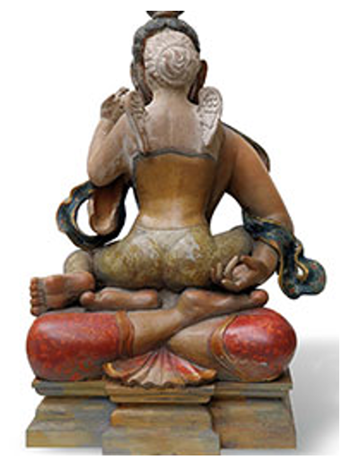
Figure 1 Artist: Manjunath Kamath, Title: Malechavilasi, Size: 61x43x23 cms, Medium: Coloured Terracotta, Year: 2018, Image curtesy: Gallery Latitude28.
Figure 2

Figure 2 Artist: Manjunath Kamath, Title: here and there,
Size: 61x43x23 cms, Medium: painted Terracotta, Year: 2019, Image curtesy:
Architecuraldigest.in.
Figure 3
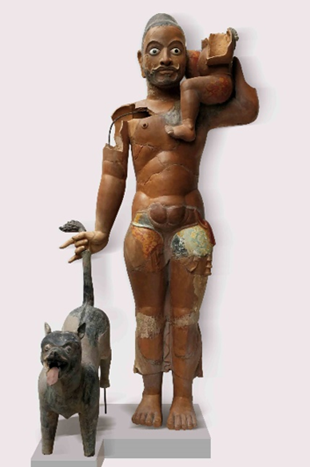
Figure 3 Artist: Manjunath Kamath, Title: Swanapani, Medium: painted Terracotta, Year: 2019, Image curtesy: Sakshi gallery mumbai.
Figure 4
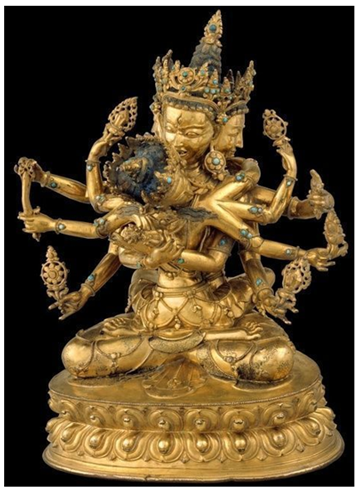
Figure 4 Tibetan art, Vajrayana Buddhism, bronze, 15th
century, Rubin Museum of art, Tibet.
Figure 5

Figure 5 Artist: Manjunath Kamath, Title: Vahana, Medium: painted Terracotta, Year: 2014, Image Curtesy: Galleryespace Mumbai.
In several works (see Figure 1, Figure 2, and Figure 3), Kamath incorporates broken or partial sculptural elements that recall traditional idols, relief figures, and ritual objects. When juxtaposed with traditional references such as temple façade sculptures or Buddhist bronzes Figure 4, these fragments reveal a deliberate refusal to restore wholeness Dehejia (1997). The incomplete image retains its symbolic charge while simultaneously opening space for reinterpretation. Fragmentation thus becomes a metaphor for cultural memory suggesting survival, adaptation, and renewal rather than loss Kapur (1997).
Kamath’s use of materials further reinforces this conceptual approach. Terracotta and metal, materials historically associated with worship, ritual, and craft traditions, are employed in ways that preserve their tactile and symbolic qualities Jain (2010). However, through recomposition and recontextualization, these materials are freed from their original ritual functions. Figures illustrating his terracotta works Figure 5 show how surface treatment, scale, and painted textures recall folk and temple traditions while functioning within a contemporary sculptural language Kamath (2015).
Another significant aspect of Kamath’s practice is narrative construction through assemblage. His sculptures often consist of multiple small elements arranged in a single spatial field, resembling visual storytelling traditions found in temple reliefs and folk art Goswamy (2003). When compared with traditional narrative relief panels, Kamath’s works reveal continuity in compositional logic but not in iconographic rigidity Elkins (2003). The narrative becomes open-ended, allowing viewers to construct meaning through association rather than prescribed symbolism Archer (1959).
The results indicate that Kamath’s approach sustains continuity by preserving the original cultural value of images while transforming their function. Rather than treating tradition as a closed historical archive, he allows it to operate as a living, evolving presence within contemporary visual culture Desai (2003), Dalmia (2001).
3.3. Ritual and Material Transformation in Balan Nambiar
The sculptural language of Balan Nambiar emerges directly from ritual consciousness and performative traditions of coastal Karnataka and Kerala Nambiar (2008). The analysis shows that his work is not merely inspired by ritual performances such as Theyyam, Bhuta Kola, Nagamandala, or Kalarippayattu, but structurally shaped by their movement, rhythm, and spatial dynamics Kothari (2012).
Figure 6

Figure 6 Teyyam from Kannur, Kerala
Figure 7
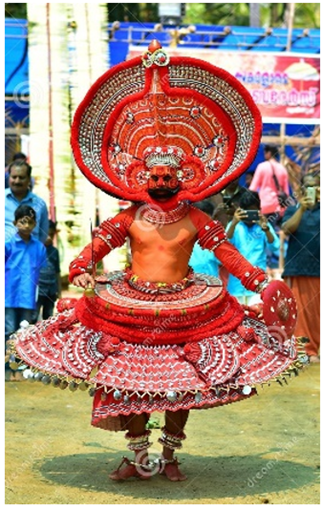
Figure 7 Teyyam from Kannur, Kerala
Figure 8
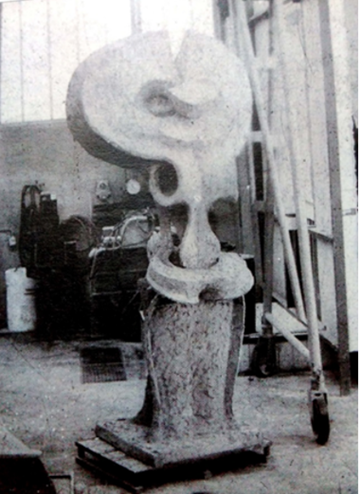
Figure 8 Balans Work
Figure 9
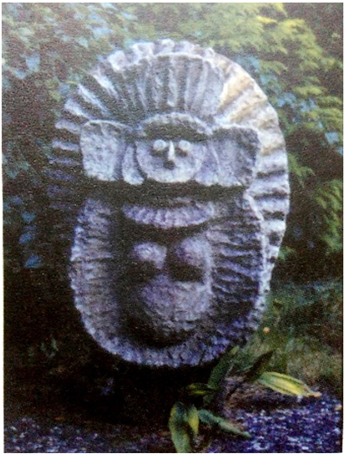
Figure 9 Balans Work
Figures documenting ritual performances Figure 6 and Figure 7 juxtaposed with Nambiar’s sculptural works Figure 8 and Figure 9 reveal striking parallels in form and energy. The dynamic expansion and contraction of ritual costumes, the centrifugal movement of the body, and the rhythmic repetition of gestures are translated into sculptural planes, curves, and spatial trajectories Schechner (2003). Rather than depicting ritual figures, Nambiar abstracts their kinetic essence Nambiar (2008).
Figure 10

Figure 10 Sri Chakra with Mirror Image, Stainless Steel, 2010,
30cm (h).
Figure 11
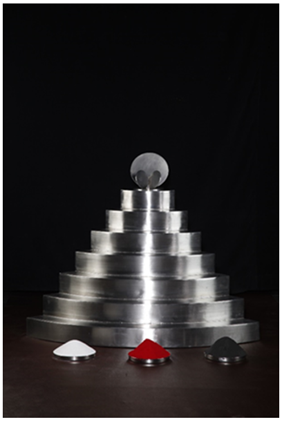
Figure 11 Poothara, 2010, Stainless Steel,
87cm (H).
A key result of the study is the artist’s deliberate choice of industrial materials such as mild steel and stainless steel. This material shift introduces a conceptual tension between the ephemeral nature of ritual performance and the permanence of sculptural form Malraux (1978). In works such as Sri Chakra with Mirror Image and Poothara Figure 10 and Figure 11, mandala geometry and ritual symbolism are embedded within metal structures, creating a dialogue between spiritual tradition and modern industrial reality Kramrisch (1976).
Mandala systems play a crucial role in Nambiar’s visual language. The circular and radial compositions observed in his works mirror ritual diagrams used for meditation and cosmic representation Vatsyayan (1993). However, the translation into metal disrupts the traditional sacred temporality of these forms. The resulting sculptures invite contemplation while asserting their presence as contemporary objects Malraux (1978). The mirror surfaces and reflective qualities further engage the viewer, transforming ritual symbolism into an experiential encounter Schechner (2003).
The results also reveal that Nambiar’s work sustains continuity not through iconographic clarity but through embodied memory Kothari (2012). The rhythm, movement, and spatial awareness derived from ritual practice inform his sculptural decisions intuitively. This approach allows ritual traditions to survive as abstract energies rather than literal images, reinforcing the idea of tradition as metaphor Desai (2003), Kapur (1997).
3.4. Conceptual Engagement with Wooden Deities in Tallur L. N.
Tallur L. N.’s practice represents a critical and multilayered engagement with tradition, particularly South Indian wooden deity traditions and local ritual practices Tallur (2014). The results show that Tallur does not merely reference traditional forms; instead, he interrogates their meanings, functions, and relevance within contemporary society Hall (1996).
Figure 12
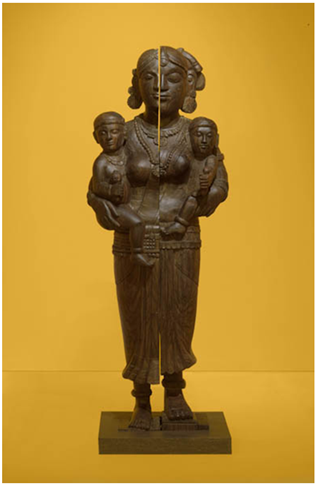
Figure 12 Title: Colonial Sisters, Artist: Tallur L N. 2008, Material: Rose Wood, Size: 160x60x52 cm Collection: M+Museum, Hong Kong Photo Credit: https://naturemorte.com/artists/lntallur/
Figure 13
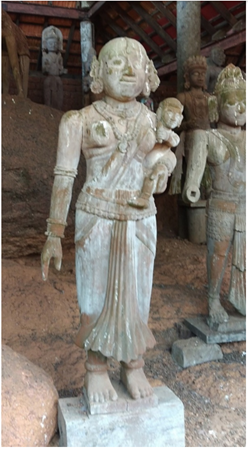
Figure 13 Title: Mother goddess(amma) Artist: Unknown,
Province: coastal Karnataka, Material: Wood, Size: 160x60x52 cm, Collection:
Heritage Village, Manipal. Photo Credit: Self.
Figure 14
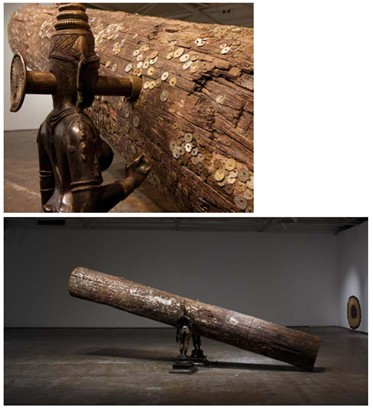
Figure 14 Title: Chrematophobia, Artist: Tallur L N. 2010, Material: wood, two bronze sculpture and nailed coins, Size: 500x200x300 cm(approx), Photo Credit: http://tallur.com/
In works where Tallur borrows the visual language of wooden idols such as proportions, textures, and frontal iconicity figures Figure 12 juxtaposed with traditional wooden deities Figure 13 reveal formal similarities Beach (1992). However, these similarities are disrupted through context, material alteration, or conceptual framing. The traditional deity form is relocated from a sacred environment into gallery or museum spaces, immediately altering its meaning and function Tallur (2014).
In other works, Tallur moves beyond formal quotation to engage with the underlying concepts associated with wooden deities, such as faith, fear, devotion, protection, and collective belief Hall (1996). Works like Colonial Sisters Figure 12 demonstrate this dual strategy. By commissioning two halves of the sculpture from different craft traditions and aligning them symmetrically, Tallur creates a contemporary metaphor for cultural hybridity, colonial history, and fragmented identity Ray (1986). When juxtaposed with a traditional mother goddess figure Figure 13, the transformation becomes evident Beach (1992).
Tallur’s use of everyday objects and ritual practices further strengthens his metaphorical engagement with tradition. In interactive installations such as Chrematophobia and Password Figure 14, ritual beliefs surrounding wealth, purification, and bodily inscription are recontextualized using modern materials and technologies Kakar (1981). These works mock, critique, and reflect upon the persistence of belief systems in a rapidly modernizing society Hall (1996).
Figure 15
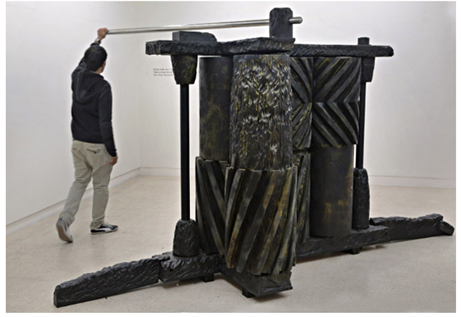
Figure 15 Title: Do or Die (Karma yoga2), Artist: Tallur L N. 2013, Material: wood, Steel, Charcoal, paint.C,
Size: 70X80X45 cm, Photo Credit: http://tallur.com/
Figure 16
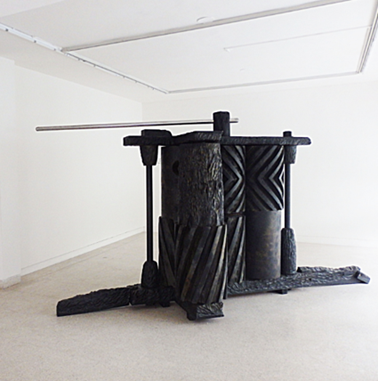
Figure 16
Another important result is Tallur’s narrative strategy. His works often resemble contemporary folk tales layered, ironic, and embedded with political satire Ray (1986). Figures documenting functional objects such as sugarcane juice extractors Figure 15 juxtaposed with Tallur’s sculptural reinterpretations Figure 16 demonstrate how mundane objects become metaphors for karma, labor, and social ethics Kakar (1981). The transformation of functional tools into conceptual artworks highlights how locality and lived experience shape visual language Tallur (2014).
Tallur’s background in museology is evident in his meticulous attention to display, documentation, and historical reference. His works function as miniature archives, where tradition, history, and contemporary critique coexist Hall (1996). The results indicate that his practice sustains continuity by allowing tradition to be questioned, dismantled, and reconstructed rather than preserved unquestioningly Desai (2003), Dalmia (2001).
3.5. Comparative Observations and Synthesis
Across the practices of Kamath, Nambiar, and Tallur, the results reveal a shared conceptual approach despite differences in material, form, and intent Desai (2003), Kapur (1997). Tradition consistently functions as a metaphorical framework rather than a visual template. Figures across sections demonstrate that continuity is achieved through abstraction, fragmentation, material transformation, and conceptual recontextualization Dalmia (2001), Archer (1959).
While Kamath emphasizes fragmentation and narrative assemblage, Nambiar translates ritual energy into abstract form, and Tallur employs satire and conceptual critique Kamath (2015), Nambiar (2008), Tallur (2014). Together, these practices illustrate that Indian contemporary sculpture sustains cultural continuity by transforming inherited visual cultures into living, evolving languages Desai (2003).
The figure-based analysis confirms that tradition in contemporary Indian art is neither static nor nostalgic. Instead, it operates as a dynamic, generative force that enables artists to negotiate identity, memory, belief, and contemporary reality Kapur (1997), Elkins (2003). This transformation-based continuity allows Indian art to remain rooted while actively engaging with global contemporary discourse Archer (1959).
4. Conclusion
This study establishes that continuity in Indian contemporary sculpture is not sustained through imitation or stylistic preservation but through processes of transformation, reinterpretation, and conceptual translation. Traditional imagery, ritual practices, and native visual forms continue to inform contemporary sculptural practices by functioning as metaphorical and experiential resources rather than as fixed models to be reproduced. The findings clearly demonstrate that tradition in contemporary Indian art operates as a living system of ideas, memories, and embodied knowledge that artists actively negotiate in response to present-day concerns.
The sculptural practices of Manjunath Kamath, Balan Nambiar, and Tallur L. N. exemplify distinct yet interconnected approaches to engaging with tradition. Kamath’s strategy of fragmentation and reassembly reveals how historical imagery can be activated through incompleteness, allowing the past to exist as a reflective and critical presence within contemporary space. Nambiar’s transformation of ritual performance and mandala traditions into industrial materials demonstrates how spiritual and kinetic energies can be translated into modern sculptural forms without losing their meditative and symbolic resonance. Tallur’s engagement with South Indian wooden deity traditions highlights how belief systems, collective memory, and social structures can be recontextualized to question faith, power, and identity within contemporary discourse.
Across these practices, tradition emerges not as a visual end product but as an underlying conceptual framework. The artists internalize tradition through lived cultural experience, ritual familiarity, and material memory, enabling continuity to flow intuitively rather than through conscious revivalism. This internalization allows traditional forms to be abstracted, fragmented, or materially transformed while retaining their symbolic potency. Consequently, continuity in Indian contemporary sculpture is revealed as an evolving dialogue between past and present, sacred and secular, permanence and impermanence.
CONFLICT OF INTERESTS
None.
ACKNOWLEDGMENTS
None.
REFERENCES
Archer, W. G. (1959). India and Modern Art. George Allen and Unwin.
Beach, M. (1992). The Symbolic Image in Indian Art. Oxford University Press.
Bourdieu, P. (1990). The Logic of Practice. Stanford University Press. https://doi.org/10.1515/9781503621749
Coomaraswamy, A. K. (1956). The Transformation of Nature in Art. Dover Publications.
Dalmia, Y. (2001). The Making
of Modern Indian Art: The Progression of an Idea. Oxford University Press.
Dehejia, V. (1997). Indian Art. Phaidon Press.
Desai, V. (2003). Tradition and Change in Indian Art. National Book Trust.
Elkins, J. (2003). Visual studies: A Skeptical Introduction.
Routledge.
Flood, G. (1996). An Introduction to Hinduism. Cambridge University Press.
Goswamy, B. N. (2003). Indian Painting: Essence and Expression.
Roli Books.
Guha-Thakurta,
T. (1992). The Making of
a New “Indian” Art: Artists, Aesthetics
and Nationalism in Bengal. Cambridge University Press.
Hall, S. (1996). Cultural Identity and Diaspora. In P. Mongia (Ed.), Contemporary Postcolonial theory
(110–121). Arnold.
Ingold, T. (2000). The Perception of the Environment: Essays on Livelihood,
Dwelling and Skill. Routledge.
Jain, J. (1998). Indian Popular Culture: The Conquest of the
World as Picture. National Handicrafts and Handlooms Museum.
Jain, J. (2010). Handmade in India:
Crafts of India. Roli Books.
Kakar, S. (1981). The Inner World: A
Psycho-Analytic Study of Childhood
and Society in India. Oxford University Press.
Kamath, M. (2015). Exhibition Writings and Artist Statements. Lalit Kala Akademi.
Kapur, G. (1997). Contemporary Indian Art and the
Postcolonial Discourse. Tulika Books.
Kapur, G. (2000). When was Modernism:
Essays on Contemporary
Cultural Practice in India. Tulika Books.
Kothari, R. (2012). Ritual Traditions of South India. Penguin
India.
Kramrisch, S. (1976). The Hindu
Temple. Motilal Banarsidass.
Kumar, R. S. (1997). Santiniketan: The Making of a Contextual Modernism. National Gallery of Modern Art.
Lalit Kala Akademi. (n.d.). Exhibition Catalogues and Artist Monographs.
Malraux, A. (1978). The Voices of Silence. Princeton University Press.
Mitter, P. (2001). Indian Art. Oxford University Press.
Nambiar, B. (2008). Sculpture, Ritual and Movement: Exhibition
Catalogue Essays. Lalit Kala Akademi.
National Gallery
of Modern Art. (n.d.). Contemporary Indian Sculpture Exhibition Catalogues.
Ray, N. R. (1986). An Approach to Indian Art. Publications Division.
Schechner, R. (2003). Performance Theory. Routledge. https://doi.org/10.4324/9780203361887
Sinha, A. J. (2009). Imagining Architects: Creativity in the Religious
Monuments of India. University of Delaware Press.
Tallur, L. N. (2014). Artist Statements
and Exhibition Catalogues. Nature Morte.
Vatsyayan, K. (1993). The Concept of Space in Indian Art. Indira Gandhi National Centre for
the Arts.
Vatsyayan, K. (1997). The Square and the Circle of the Indian Arts. Roli Books.
|
|
 This work is licensed under a: Creative Commons Attribution 4.0 International License
© ShodhKosh 2026. All Rights Reserved.