ShodhKosh: Journal of Visual and Performing ArtsISSN (Online): 2582-7472
|
|
Influence of Electronic Word of Mouth (e-WoM) on Audience Intentions in Performing Arts Events
Dr. Dipti Jain 1
 ,
Dr. Felisiya M. 2
,
Dr. Felisiya M. 2 ,
Shipra Bhutani Uppal 3
,
Shipra Bhutani Uppal 3 ,
Dr. Bhupinderpreet Bedi 4
,
Dr. Bhupinderpreet Bedi 4 ,
Dr. Shantanu Kumar Sahu 5
,
Dr. Shantanu Kumar Sahu 5 ,
Dr. Tridisha Bayan 6
,
Dr. Tridisha Bayan 6
1 Associate
Professor, Centre for Management Studies, Gitarattan International Business
School (GIBS), Affiliated to Guru Gobind Singh Indraprastha University, Dwarka,
India
2 Assistant
Professor, School of Management, Vel Tech Rangarajan Dr. Sagunthala R&D
Institute of Science and Technology, Avadi, Chennai 600056, India
3 Assistant Professor, Centre for Management Studies, Gitarattan
International Business School (GIBS), Affiliated to Guru Gobind Singh
Indraprastha University, Dwarka, India
4 Associate Professor, School of Management Studies, CGC University,
Mohali, Jhanjeri 140307, Punjab, India
5 Associate Professor, MBA Department, Hindustan Institute of Management
and Computer Studies, Farah, Mathura, India
6 Assistant Professor, Faculty of Commerce and Management, Assam Downtown
University, India
|
|
|
ABSTRACT |
|
|
The swift
development of online platforms has changed how viewers receive and appraise
information, and electronic word of mouth (eWOM) has become an important
element of consumer behavior. Although the effect of eWOM has been studied
extensively in other areas including e-commerce and tourism, its role in
influencing the intentions of the audience in the performing arts industry
has received little focus. This research paper seeks to conceptually analyze
how the eWOM affects the audience intention towards performing arts events
through the combination of important theoretical insights, such as the
Information Adoption Model (IAM), Theory of Planned Behavior (TPB) and
Elaboration Likelihood Model (ELM). The proposed framework determines core
dimensions of eWOM, credibility, quality, volume, and valence, as having a
significant impact on information adoption, trust, and perceived value, which
ultimately impact the audience intention. Also, social media involvement has
been discussed as a moderating variable, which increases the effectiveness of
eWOM. The research article adds to the body of knowledge by expanding the
scope of eWOM research to the relatively new field of performing arts and
giving practitioners valuable information on how they can capitalize on
digital communication strategies to build their audience. The results provide
a base on which empirical studies and strategic decision-making in the
cultural and creative industries can be pursued in the future. |
|||
|
Received 13 February 2026 Accepted 04 April 2026 Published 11 April 2026 Corresponding Author Dr. Dipti
Jain, diptii.jaiin@gmail.com DOI 10.29121/shodhkosh.v7.i4s.2026.7522 Funding: This research
received no specific grant from any funding agency in the public, commercial,
or not-for-profit sectors. Copyright: © 2026 The
Author(s). This work is licensed under a Creative Commons
Attribution 4.0 International License. With the
license CC-BY, authors retain the copyright, allowing anyone to download,
reuse, re-print, modify, distribute, and/or copy their contribution. The work
must be properly attributed to its author.
|
|||
|
Keywords: eWOM, Performing Arts, Audience Intention, Social
Media Engagement, Consumer Behavior |
|||



1. INTRODUCTION
1.1. Growth of Digital Platforms
The advent and blistering development of digital platforms have fundamentally changed the environment of communication and exchange of information. The use of social media networks, online review sites, and digital communities has also made users to be in a position to create, share and access content in real time thus transforming consumer behavior. Among the greatest consequences of such a digital transformation is the emergence of the electronic word of mouth (eWOM), which can be defined as the spread of opinions, experiences, and evaluations via online platforms. Compared to the traditional communication, eWOM is more reachable, accessible, and permanent, which makes it an extremely powerful source of information among consumers Ismagilova et al. (2020), Dwivedi et al. (2021) . Consequently, people are gradually turning to online communications and social media content in forming perceptions and making judgments.
1.2. Importance of the Performing Arts Sector
The performing arts industry which comprises theatre, music, dance and other live cultural performances is critical in maintenance of cultural heritage as well as social cohesion. It is also a major contributor to economic development through tourism, employment and creative industries. Nevertheless, the industry is becoming more competitive due to the emergence of digital entertainment options and shifting consumer tastes and preferences. As this environment changes, performing arts organizations are forced to implement new measures to increase visibility and viewership. The digital platforms have become the necessary component of the promotional and communication strategies that allow organizations to connect with a larger audience and establish meaningful relations Kim and Gupta (2012), Liao et al. (2025).
1.3. Role of eWOM in Influencing Audience Decisions
The electronic word of mouth has become an imperative factor in consumer decision making in different fields. Online reviews, ratings and recommendations play a major role in the perceptions, trust and behavioral intentions. Information credibility, quality, valence, and volume are some of the factors that determine the effectiveness of the eWOM and influence consumer attitudes and decrease the uncertainty Filieri and McLeay (2020), Zhang et al., (2021). In addition, the ability to influence the eWOM through engagement with the social media increases the persuasive strength of the same since it fosters interaction and sharing of information (Shareef et al., 2021).
eWOM is even more powerful in the context of the performing arts events when the experience is immaterial and cannot be assessed before the consumption. The experiences and opinions posted by others are usually relied on by the potential audiences to evaluate the quality and value of the performances thus influencing their intention to attend.
2. LITERATURE REVIEW
2.1. Concept and Evolution of Electronic Word of Mouth (eWOM)
The eWOM is any positive or negative information that is stated by the potential, actual or former consumer about a product or service and is shared with a large number of individuals through the internet. As digital platforms have developed, eWOM has become a prevailing communication medium that has had a massive impact on consumer behavior. In contrast to the classic word of mouth, eWOM is described by its superior reach, permanence, accessibility, and allows consumers to get extensive information before taking decisions Ismagilova et al. (2020), Cheung and Thadani, (2020).
The growing deployment of social media and the development of online communities has also enhanced the expansion of eWOM and made it an essential part of a contemporary marketing strategy. Research indicates that consumers find eWOM to be more credible and believable than the content created by the firm, which makes it more effective at influencing the decision-making Hennig-Thurau et al., (2020), Dwivedi et al. (2021).
2.2. Dimensions of eWOM
There are important dimensions of eWOM that determine its effectiveness, such as credibility, quality, quantity (volume), and valence of information. Credibility is defined as how trustworthy and expert the source of information is, which has a large impact on consumer trust and information adoption Filieri and McLeay (2020). Quality information that is accurate, relevant, and comprehensive builds confidence among decision-makers with the consumers.
The number of reviews is also a determining factor as more the reviews the more popular and reliable they are, thus affecting perceptions of consumers Zhang et al., (2021). Furthermore, there is the issue of valence, which is the presence or absence of the positive or negative character of reviews, and it directly influences consumer attitudes and intentions of behavior. The presence of positive reviews is likely to drive a purchase or participation intentions, and negative reviews can drive potential consumers away Park and Lee (2008), Chen and Xie (2020).
2.3. eWOM and Consumer Behavioral Intentions
Great literature has provided a good relationship between eWOM and consumer behavioral intentions. Behavioral intention is the probability of an individual behavior, which can be the purchase of a product or attending an event. eWOM can affect these intentions by creating attitudes, perceptions, and trust.
The studies suggest that online reviews play a crucial role in helping consumers to minimize the uncertainty and perceived risk, especially in those cases when a product or service cannot be evaluated directly Jalilvand et al., (2020), Nofal et al. (2022). Moreover, the Information Adoption Model implies that the utility and believability of eWOM play a major role in influencing information adoption, which subsequently impacts on behavioral intentions Erkan and Evans (2020). The recent literature also points out that eWOM participation and activity strengthen the intention to act among consumers, which makes it a vital contributor to decision-making Ghosh et al. (2025).
2.4. Role of Social Media in Amplifying eWOM
The eWOM effect has been greatly enhanced through social media sites because of the speed of information sharing and interactive exchange between users. Facebook, Instagram, and YouTube are the platforms that can be used to share the experiences, reviews, and recommendations, thus impacting a large number of users.
The use of social media by likes, sharing and commenting improves the visibility and credibility of eWOM and makes it more convincing. Moreover, social commerce settings incorporate eWOM into the buying behavior, which means that consumers can receive peer reviews directly on the online platforms Hajli (2020), Alalwan (2021). This integration enhances the power of eWOM on consumer decision making and elucidates the significance of eWOM in online marketing plans.
2.5. eWOM in Tourism and Event Contexts
The role of eWOM has been much researched in the context of tourism and event management, where the choice made by consumers greatly relies on information and experiences posted by other people. Online reviews and ratings are also important in forming the perception and decision making of the tourists in terms of traveling Marine-Roig and Huertas (2020), Kim and Gupta (2012).
Eventually, eWOM is used to inform the prospective attendees about the quality, experience, and value of events in an effort to affect their intention to attend. As an example, it has been demonstrated that eWOM has a profound effect on the involvement and attendance of the audience during cultural and entertainment events Liao et al. (2025). In addition, it has been found that online review helpfulness and ratings influence consumer perceptions and decision-making in experiential situations Filieri et al. (2021), Li et al., (2020).
2.6. Mediating Factors: Trust, Perceived Value, and Emotional Influence
Trust, perceived value and emotional responses are some of the factors that tend to mediate the relationship between eWOM and behavioral intentions. Trust is a key factor that defines the level of acceptance and action by consumers about eWOM information. Trustworthy and consistent reviews increase intentions, which consequently affect credibility Filieri and McLea (2020), Kim and Gupta (2012).
The effects of eWOM on decision making are also mediated by perceived value, which is the scope of consumer on the benefits and costs of a product or a service. Positive eWOM increases perceived value, which results in an increase in behavioral intentions. Moreover, the impact of emotional influence, including enjoyment, excitement, and social influence, enhances the effect of eWOM on consumer behavior Anastasiei et al. (2025), Dospinescu et al., (2024) as well.
3. RESEARCH GAP
The current body of research on electronic word of mouth (eWOM) has mainly focused on the areas of e-commerce, tourism, and hospitality, and the authors have focused on the intentions to purchase, but rarely have they addressed the behavior of the audience in terms of culture and experience Jalilvand et al. (2012), Marine-Roig and Huertas (2020). Hundreds of studies have revealed that eWOM affects consumer decision-making processes, attitudes, and purchase intentions across digital platforms Ismagilova et al. (2020), Dwivedi et al. (2021), but these studies do not pay much attention to such areas as the performing arts, where consumption is an experience, intangible, and emotion-based. Although information credibility, usefulness, and emotional expression are the main determinants that have been studied in literature to affect consumer response towards eWOM Filieri (2015), Kim and Gupta (2012), there is a lack of studied focus on how the variables influence consumer response in the context of art and culture. Moreover, new studies emphasize the role of trust, perceived value, and the use of social media in influencing behavioral intentions Hajli (2015), Harrigan et al. (2021), although the particular impact of these factors in determining audience intentions in performing arts is not well studied yet. Most recent publications also highlight that the nature of eWOM processes can be context-dependent because of inconsistencies in the involvement, emotional appeal, and expectations of experience Liao et al. (2025), Ngo et al. (2024). Thus, it is evident that a specific conceptual framework that specifically explores the role of eWOM in shaping the intentions of the audience in the performing arts sector is required to fill these knowledge gaps and build upon the current literature.
4. THEORETICAL FRAMEWORK
The current research has foundations in the existing behavioral and communication theories that describe the ways in information processing and intention formation in digital space and the Information Adoption Model (IAM), Theory of Planned Behavior (TPB), and Elaboration Likelihood Model (ELM) are used to address the role of electronic word of mouth (eWOM) in influencing audience intentions in performing arts events. The Information Adoption Model describes the processes of judgment and acceptance of online information in terms of its perceived usefulness and credibility Erkan and Evans (2016), Filieri (2015) that are especially important in experience-based settings like performing arts where reviewing and getting recommendations help reduce uncertainty Chen and Xie (2008), Cheung and Thadani (2012) . It has been empirically found that eWOM attributes like quality, credibility, and involvement play a crucial role in information adoption and behavioral intentions Ghosh et al. (2025), Ngo et al. (2024). Based on this, the Theory of Planned Behavior describes the translation of adopted information into intention by attitudes, subjective norms, and perceived behavioral control Jalilvand et al. (2012) with eWOM modulating these antecedents by affecting perceptions, trust, and social influence Ismagilova et al. (2020), Hajli (2015). Peer opinion and normative effects delivered through eWOM are especially important in socially motivated consumption contexts such as performing arts Kuriakose (2023). Besides, the Elaboration Likelihood Model will help in understanding how individuals process eWOM by central and peripheral routes based on the level of involvement where elaborating arguments and informational content lead to decision-making via the central route whereas peripheral cues like rating, visuals, and popularity would lead to judgment under low involvement condition Filieri et al. (2021), Park and Lee (2008). Also, the emotional tone and content peculiarities of eWOM will further influence consumer judgment and reactions Kim and Gupta (2012), Akram et al. (2021) . Together, the combination of IAM, TPB, and ELM provides a holistic framework of how the information about eWOM is assessed, processed, and converted into behavioral intentions, which is closely supported by previous research indicating the great importance of eWOM influence on consumer decision-making in digital settings Dwivedi et al. (2021), Liao et al. (2025), Ngo et al. (2024).
5. PROBLEM STATEMENT AND OBJECTIVES
The growing use of electronic word of mouth (eWOM) in digital platforms has drastically changed the way consumers decide on their purchases; but its functions in influencing audience intentions in performing arts sector is under-researched. The eWOM studies published have mostly been centered on e-commerce, retail, and tourism, and purchase intentions and online consumer behavior Cheung and Thadani (2012), Ismagilova et al. (2020) have also been highlighted, whereas cultural and experiential areas such as performing arts, where consumption is subjective, emotional, and intangible, have received relatively little attention (Marine-Roig In this case, online reviews, social media communication, and peer recommendations play a significant role in helping the people involved to minimize uncertainty and shape expectations towards performances. Nevertheless, the overall understanding of the impact of eWOM dimensions, including credibility, quality, and valence, on the perceptions of audiences, trust, and involvement in performing arts settings is insufficient Filieri (2015), Ngo et al. (2024). Moreover, the psychological and relational mediating factors are under-researched in this field, such as trust and perceived value Hajli (2015), Kim and Gupta (2012). Hence, the proposed research seeks to conceptually analyse the role of eWOM on audience intentions in performing arts events, and to create a rich framework of identifying important dimensions of eWOM as well as mediating variables like trust and perceived value, to make significant theoretical contributions and practical implications of improving audience engagement in the performing arts sector.
6. METHODOLOGY
The conceptual research design chosen in the present study is a broad review and synthesis of the available literature sources regarding electronic word of mouth (eWOM), consumer behavior, and audience intention. Peer-reviewed articles and academic resources were searched and examined in a systematic way to determine the main constructs, relationships, and theoretical backgrounds Cheung and Thadani (2012), Dwivedi et al. (2021). The research incorporates the well-known theoretical frameworks, such as the Information Adoption Model (IAM), Theory of Planned Behavior (TPB), and Elaboration Likelihood Model (ELM), which are popular to understand the effects of online information on attitudes and behavioral intentions Erkan and Evans (2016), Zhang et al. (2014). The dimensions of eWOM credibility, quality, volume, and valence have been identified as key variables based on previous studies that have proven their strong influence on information adoption and consumer decision-making Filieri (2015), Park and Lee (2008), Ngo et al. (2024). Also, such constructs as trust, perceived value, and social media use are included since they have been identified to be significant in influencing behavioral intentions in online settings Hajli (2015), Harrigan et al. (2021), Ismagilova et al. (2020) . These variables are rationally connected to the intention of the audience in the context of the performing arts, where experiential consumption, as well as the social influence, is the most important Kuriakose (2023), Liao et al. (2025). The proposed conceptual model and propositions are therefore based on a theoretical reasoning and complemented by previous empirical results giving a substantial basis to empirical validation in the future.
7. CONCEPTUAL MODEL
The current research will propose a detailed conceptual framework to explore the role of electronic word of mouth (eWOM) in shaping the intentions of the audience during a performing arts event by incorporating central constructs based on previous literature and with theoretical underpinning of Information Adoption Model (IAM), Theory of Planned Behavior (TPB), and Elaboration Likelihood Model (ELM). Its model recognizes eWOM dimensions as the driving forces, uses mediator variables to elaborate the mechanism of influence, and uses a moderator variable to encompass contextual dynamics in online space.
7.1. eWOM as an Independent Construct
Electronic word of mouth (eWOM) is theorized as a multidimensional measure, which includes credibility, quality, volume and valence of online information. Credibility is an expression of the reliability and authority of the source of information, quality is an expression of relevance and comprehensiveness of information, volume is an expression of the number of reviews as a social sign of approval, and valence is an expression of the tone of bad or good reviews. All these dimensions have a cumulative effect on the way the audience perceives and judgments of the online content concerning events in performing arts. According to previous research, eWOM credibility and quality boost consumer confidence and the usefulness of information, and positive valence reinforces positive attitudes and behavioral intentions Filieri (2015), Park and Lee (2008), Ngo et al. (2024).
7.2. Information Adoption as a Core Mechanism
The model also includes adoption of information as one of the main mechanisms that eWOM manipulates in terms of affecting audience intentions. According to Information Adoption Model (IAM), one is more inclined to adopt information that he or she perceives to be useful and credible. In such cases as the performing arts when experiences are intangible, and can neither be judged beforehand, making decisions based on online reviews becomes the primary way of information gathering in the audience. Empirical studies affirm that perceived usefulness and credibility of eWOM need a substantial positive impact on information adoption, which subsequently impacts behavioral intentions Erkan and Evans (2016), Cheung and Thadani (2012).
7.3. Mediating Role of Trust and Perceived Value
The model also incorporates trust and perception of value as mediating variables that describe the translation of eWOM to audience intentions. The importance of trust in online contexts is that it decreases the level of doubt and enhances reliance on peer-created content. Reliable and consistent eWOM builds trust, thereby boosting behavioral intentions Hajli (2015), Ismagilova et al. (2020). The perceived value is the judgment of the audience to the value of the benefits of attending a performing arts event compared to the cost and effort. Positive eWOM helps to boost perceived value through emphasizing on quality, uniqueness, and emotional appeal of performances, which will elevate the chances of participation Kim and Gupta (2012).
7.4. Audience Intention as the Dependent Variable
The word audience intention is used to describe the chances of people attending or participating in performing arts events. Based on the Theory of Planned Behavior (TPB), intention is viewed as a direct predictor of actual behavior and is determined by attitudes, subjective norms, and perceived behavioral control. The audience intention in this study is influenced by the integration of the eWOM, information adoption, trust, and perceived value. Since performing arts are experiential, it is important that the audience decisions are highly reliant on external sources of information, especially eWOM Jalilvand et al. (2012).
7.5. Moderating Role of Social Media Engagement
Social media engagement is a moderating variable used in the model and it determines the strength of the relationship between eWOM and the intention of the audience. Social media involvement involves, liking, sharing, commenting and interacting with the content, which increase the eWOM visibility and credibility. An increased level of engagement enhances the influencing effect of eWOM by exposing more individuals and strengthening the social influence, enhancing its effect on behavioral intentions Harrigan et al. (2021), Dwivedi et al. (2021).
7.6. Overall Model Explanation
In general, the developed conceptual model recommends that the dimensions of eWOM credibility, quality, volume, and valence have direct and indirect effects on audience intentions via information adoption, trust, and perceived value. The social media involvement also mediates these relationships by facilitating the eWOM reach and efficacy. The model offers a comprehensive view of the impact of digital communication on audience behavior within the performing arts industry and it offers an organized framework to be used in the future to empirically validate it.
Figure 1
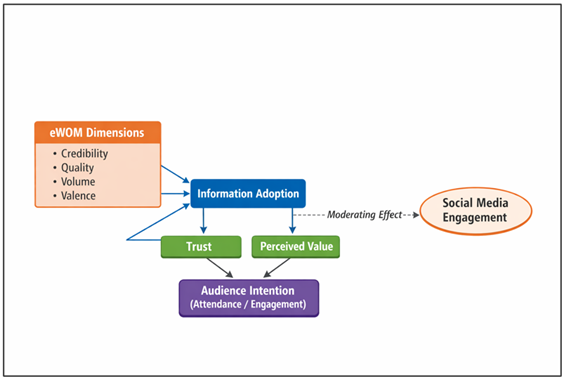
Figure 1 Conceptual Model of Ewom Influence on Audience Intentions in Performing Arts Events
8. HYPOTHESES DEVELOPMENT
8.1. Hypotheses Table
|
H. No. |
Construct Relationship |
Hypothesis Statement |
Theoretical Support |
|
H1 |
eWOM Credibility →
Audience Intention |
eWOM credibility positively
influences audience intention toward performing arts events. |
IAM, TPB |
|
H2 |
eWOM Quality →
Information Adoption |
eWOM quality positively
affects information adoption by audiences. |
IAM |
|
H3 |
eWOM Volume → Audience
Intention |
eWOM volume positively
influences audience intention through perceived popularity. |
ELM |
|
H4 |
eWOM Valence →
Audience Intention |
Positive eWOM valence
significantly enhances audience intention to attend events. |
TPB |
|
H5 |
eWOM → Information
Adoption |
eWOM positively influences
information adoption among potential audiences. |
IAM |
|
H6 |
Information Adoption →
Trust |
Information adoption
positively influences trust in performing arts events. |
IAM |
|
H7 |
Trust → Audience
Intention |
Trust positively influences
audience intention to attend performing arts events. |
TPB |
|
H8 |
Information Adoption →
Perceived Value |
Information adoption
positively enhances perceived value of performing arts events. |
IAM |
|
H9 |
Perceived Value →
Audience Intention |
Perceived value positively
influences audience intention toward performing arts events. |
TPB |
|
H10 |
eWOM → Trust
(Mediated) |
Trust mediates the
relationship between eWOM and audience intention. |
IAM |
|
H11 |
eWOM → Perceived Value
(Mediated) |
Perceived value mediates the
relationship between eWOM and audience intention. |
IAM |
|
H12 |
Social Media Engagement
(Moderator) |
Social media engagement
moderates the relationship between eWOM and audience intention. |
ELM |
The hypotheses provide a collective account of the effects of various dimensions of eWOM on the intention of the audience to attend performances in the performance art events.The hypotheses collectively explain how different dimensions of eWOM influence audience intention in performing arts events. The eWOM credibility, quality, volume and valence are supposed to directly affect the perceptions and intention to attend by the audience. Good information that is reliable increases the adoption of information that also impacts trust and value. Trust will decrease uncertainty levels of experiential services and perceived value will enhance the appeal of the event, which will result in the development of stronger audience intention. Moreover, eWOM will have an indirect effect on the intention via these mediating variables. This relationship is also enhanced through social media involvement that increases the scope and power of eWOM, which in turn moderates its effect on the behaviour of the audience.
9. DISCUSSION
The current research throws emphasis on the increased importance of electronic word of mouth (eWOM) in shaping the intentions of the audience in performing arts industry. The proposed conceptual framework is that eWOM dimensions, such as credibility, quality, volume, and valence, are important elements in influencing perception and decision-making among the audience. Following the existing literature, high-quality and credible information leads to an increase in information adoption, which is one of the vital ways in which the audience processes and evaluates the information related to events Filieri and McLeay (2020), Erkan and Evans (2020).
The research also highlights the mediating effect of trust and perceived value as to enhancing the relationship between eWOM and audience intention. When it comes to the field of performing arts, where experiences are intangible and cannot be gauged in advance, trust emerges to be a paramount element of minimizing uncertainty and the decision to participate. On the same note, perceived value improves the appeal of events by demonstrating the experiential and emotional value of events Kim and Gupta (2012), Hajli (2020).
In addition, the moderating effect of the social media engagement indicates the growing significance of the digital interaction in enhancing the influence of the eWOM. Online reviews become more noticeable and convincing on platforms that facilitate interactions with the user by allowing them to like, share, and comment. Increased activity enhances the power of eWOM through exposure and social influence. On balance, the framework offers an in-depth insight into the effects of digital communication on the behavior of the audience and expands the eWOM research to an otherwise understudied area of performing art.
10. IMPLICATIONS AND LIMITATIONS
10.1. Theoretical Implications
This research will add to the current literature by extending the use of eWOM theories to the performing arts industry, which is comparatively under-researched. The research incorporates the Information Adoption Model (IAM), Theory of Planned Behavior (TPB) and Elaboration Likelihood Model (ELM), and provides a complex theoretical model that describes the processing, evaluation and translation of online information to intentions of the audience.
Moreover, the mediating variables, which include trust and perceived value, give more information about the psychological processes of consumer behavior in experiential and cultural settings. The addition of the social media interactions as a moderator variable also adds to the theoretical knowledge of the amplifying effects of eWOM interaction. All in all, the research fills the gaps between the literature on marketing, consumer behavior, and cultural studies.
10.2. Managerial Implications
Practically, the results can be useful to performing arts organizations, event managers, and marketers. To start with, companies need to discuss the possibilities of improving the credibility and quality of online content, inviting genuine audience feedback and ensuring a certain degree of transparency in the communication process. Positive eWOM may be used strategically to create trust and impact on the audience.
Second, it is necessary to be an active user of social media platforms to enhance visibility and interaction because the more people engage with eWOM, the greater the impact. Digital campaigns, influencer partnerships, and interactive content are some of the strategies that may be used successfully to draw and keep audiences.
Third, the perceived value can be boosted by pointing out the experience and emotional benefits of performances in online advertisements, which will prompt attendance. Efficient management of eWOM can thus be used as a very potent instrument of audience growth, competition placement and long term sustainability of the performing arts industry.
10.3. Limitations
The study has some limitations despite its contributions. To begin with, the study is conceptual rather than empirically validated, which narrows down the generalization of the suggested associations. Second, the research is concerned with general performing arts situations without differentiating one form of performance, e.g., theatre, music, or dance, that may result in a different effect on audience behavior.
Third, the model fails to consider demographic or cultural differences, which might influence the perception and reaction of individuals to eWOM. Moreover, the dynamic character of digital channels and technologies can also affect the topicality of some variables in the future. Such constraints give chances to the future studies and test the model empirically, investigate particular situations, and include more variables to gain a more in-depth insight.
11. CONCLUSION AND FUTURE SCOPE
This paper offers a theoretical insight into the way electronic word of mouth affects audience intentions of performing arts events. Defining the major dimensions of eWOM and the roles of information adoption, trust, perceived value, and social media engagement, the study provides a detailed framework that explains the decision-making process of the audience in a digital environment. The results underscore the need to utilize online platforms in increasing engagement and participation of the audience in the performing arts industry. The study has limitations of being conceptual and not validated with empirical evidence. The proposed model can be tested in future researches in a quantitative or mixed-method research to validate the relationships between the variables. Also, new research can be conducted on cross-cultural distinctions, particular performing art, or how modern technologies, including artificial intelligence and virtual reality, can influence eWOM and audience behavior. It is also possible to broaden the scope to comparative/longitudinal studies to gain a more in-depth understanding of the changing audience trends in the digital era.
CONFLICT OF INTERESTS
None.
ACKNOWLEDGMENTS
None.
REFERENCES
Achmad, G. N., Fitriansyah, F., Lesmana, D., and Yudaruddin, R. (2024). The Impact of Social Media on Online Shopping Behavior of Gen Z Consumers in Time of COVID-19 Pandemic: The Moderating Role of Celebrity Endorsements. WSEAS Transactions on Business and Economics, 21, 266–279. https://doi.org/10.37394/23207.2024.21.24
Agrawal, S. R., and Mittal, D. (2022). Optimizing Customer Engagement Content Strategy in Retail and E-Tail: Available on Online Product Review Videos. Journal of Retailing and Consumer Services, 68, 102966. https://doi.org/10.1016/j.jretconser.2022.102966
Akram, U., Junaid, M., Zafar, A. U., Li, Z., and Fan, M. (2021). Online Purchase Intention in Chinese Social Commerce Platforms: Being Emotional or Rational? Journal of Retailing and Consumer Services, 63, 102669. https://doi.org/10.1016/j.jretconser.2021.102669
Alalwan, A. A. (2018). Investigating the Impact of Social Media Advertising Features on Customer Purchase Intention. International Journal of Information Management, 42, 65–77. https://doi.org/10.1016/j.ijinfomgt.2018.06.001
Anastasiei, B., Dospinescu, N., and Dospinescu, O. (2024). Individual and Product-Related Antecedents of Electronic Word-of-Mouth. Aslib Journal of Information Management, 78(4). https://doi.org/10.1108/AJIM-04-2024-0353
Anastasiei, B., Dospinescu, N., and Dospinescu, O. (2025). Beyond Credibility: Understanding the Mediators Between Electronic Word-of-Mouth and Purchase Intention. arXiv. https://doi.org/10.48550/arXiv.2504.05359
Chen, Y., and Xie, J. (2008). Online Consumer Review: Word-of-Mouth as a New Element of Marketing Communication Mix. Management Science, 54(3), 477–491. https://doi.org/10.1287/mnsc.1070.0810
Cheung, C. M. K., and Thadani, D. R. (2012). The Impact of Electronic Word-of-Mouth Communication: A Literature Analysis and Integrative Model. Decision Support Systems, 54(1), 461–470. https://doi.org/10.1016/j.dss.2012.06.008
Chu, S.-C., and Kim, Y. (2015). Determinants of Consumer Engagement in Electronic Word-of-Mouth (eWOM) in Social Networking Sites. International Journal of Advertising, 30(1), 47–75. https://doi.org/10.2501/IJA-30-1-047-075
Dwivedi, Y. K., Ismagilova, E., Hughes, D. L., Carlson, J., Filieri, R., Jacobson, J., Jain, V., Karjaluoto, H., Kefi, H., Krishen, A. S., Kumar, V., Rahman, M. M., Raman, R., Rauschnabel, P. A., Rowley, J., Salo, J., Tran, G. A., and Wang, Y. (2021). Setting the Future of Digital and Social Media Marketing Research: Perspectives and Research Propositions. International Journal of Information Management, 59, 102168. https://doi.org/10.1016/j.ijinfomgt.2020.102168
Edrees, M. (2025). The Impact of Electronic Word of Mouth on Consumer Purchase Intention in Saudi Arabia E-Commerce Fashion Market: Exploring Trends, Credibility, and Social Media Influence. International Review of Management and Marketing, 15(5), 323–333. https://doi.org/10.32479/irmm.19997
Erkan, I., and Evans, C. (2016). The Influence of eWOM in Social Media on Consumers' Purchase Intentions: An Extended Approach to Information Adoption. Computers in Human Behavior, 61, 47–55. https://doi.org/10.1016/j.chb.2016.03.003
Filieri, R. (2015). What Makes Online Reviews Helpful? A Diagnosticity-Adoption Framework to Explain Informational and Normative Influences in e-WOM. Journal of Business Research, 68(6), 1261–1270. https://doi.org/10.1016/j.jbusres.2014.11.006
Filieri, R., Lin, Z., Pino, G., Alguezaui, S., and Inversini, A. (2021). The Role of Visual Cues in eWOM on Consumers' Behavioral Intention and Decisions. Journal of Business Research, 135, 663–675. https://doi.org/10.1016/j.jbusres.2021.06.055
Ghosh, T., Shanta, S. E., and Alim, M. A. (2025). Customers' Perceived eWOM, eWOM Involvement, and Purchase Intention in Social Media Marketing: An Extension of Information Adaptation Model. Cogent Business and Management. https://doi.org/10.1080/23311975.2025.2534526
Hajli, N. (2015). Social Commerce Constructs and Consumer's Intention to Buy. International Journal of Information Management, 35(2), 183–191. https://doi.org/10.1016/j.ijinfomgt.2014.12.005
Harrigan, P., Daly, T. M., Coussement, K., Lee, J. A., Soutar, G. N., and Evers, U. (2021). Identifying Influencers on Social Media. International Journal of Information Management, 56, 102246. https://doi.org/10.1016/j.ijinfomgt.2020.102246
Hidayah, R. T., Adriansyah, I., and Utami, E. M. (2024). The Influence of TikTok eWOM on Purchase Intentions for The Originote Skincare Products. ASEAN International Journal of Business, 3(2), 141–153. https://doi.org/10.54099/aijb.v3i2.1017
Ismagilova, E., Slade, E. L., Rana, N. P., and Dwivedi, Y. K. (2020). The Effect of Electronic Word of Mouth Communications on Intention to Buy: A Meta-Analysis. Information Systems Frontiers, 22(5), 1203–1226. https://doi.org/10.1007/s10796-019-09924-y
Jalilvand, M. R., Samiei, N., Dini, B., and Yaghoubi Manzari, P. (2012). Examining the Structural Relationships of Electronic Word of Mouth, Destination Image, Tourist Attitude Toward Destination and Travel Intention: An Integrated Approach. Journal of Destination Marketing and Management, 1(1–2), 134–143. https://doi.org/10.1016/j.jdmm.2012.10.001
Kim, J., and Gupta, P. (2012). Emotional Expressions in Online User Reviews: How They Influence Consumers' Product Evaluations. Journal of Business Research, 65(7), 985–992. https://doi.org/10.1016/j.jbusres.2011.04.013
Kuriakose, J. A. (2023). Influence of Electronic Word of Mouth (eWOM) on Consumer Purchase Decisions: A Study With Reference to Kottayam District, Kerala. ShodhKosh: Journal of Visual and Performing Arts, 4(2). https://doi.org/10.29121/shodhkosh.v4.i2.2023.6162
Kusawat, P., and Teerakapibal, S. (2022). Cross-Cultural Electronic Word-of-Mouth: A Systematic Literature Review. Spanish Journal of Marketing - ESIC. Advance online publication. https://doi.org/10.1108/SJME-06-2021-0116
Lestari, A. A., Abi, Y. I., and Hanila, S. (2026). The Influence of Electronic Word of Mouth (e-WOM) and Price on the Purchase Intention of Generation Z Consumers in the TikTok Shop Marketplace. Journal of Management, Economics, and Accounting, 5(1). https://doi.org/10.37676/jmea.v5i1.1006
Liao, J., Yang, L., and Wang, N. (2025). Which Direction Will Electronic Word-of-Mouth (eWOM) Choose? Dance Drama eWOM's Spatiotemporal Characteristics and Influencing Factors. Journal of Retailing and Consumer Services, 82, 104122. https://doi.org/10.1016/j.jretconser.2024.104122
Marine-Roig, E., and Huertas, A. (2020). How Safety Affects Destination Image Projected Through Online Travel Reviews. Journal of Destination Marketing and Management, 18, 100469. https://doi.org/10.1016/j.jdmm.2020.100469
Maru, C., and Vijay, T. S. (2024). The Relationship Between Electronic Word of Mouth and Brand: A Systematic Review and Future Research Agenda. International Journal of Consumer Studies, 48(2). https://doi.org/10.1111/ijcs.13017
Ngo, T. T. A., Bui, C. T., Chau, H. K. L., and Tran, N. P. N. (2024). Electronic Word-of-Mouth (eWOM) on Social Networking Sites (SNS): Roles of Information Credibility in Shaping Online Purchase Intention. Heliyon, 10(11), e32168. https://doi.org/10.1016/j.heliyon.2024.e32168
Ngo, T. T. A., Vuong, B. L., Mỹ, D., Nguyen, T. T., Tam, T. M., and Nguyen, Q. K. (2024). The Impact of eWOM Information in Social Media on the Online Purchase Intention of Generation Z. Cogent Business and Management, 11(1), 2316933. https://doi.org/10.1080/23311975.2024.2316933
Nofal, R., Bayram, P., Emeagwali, O. L., and Al-Mu'ani, L. (2022). The Effect of eWOM Source on Purchase Intention: The Moderation Role of Weak-Tie eWOM. Sustainability, 14(16), 9959. https://doi.org/10.3390/su14169959
Park, D.-H., and Lee, J. (2008). eWOM Overload and Its Effect on Consumer Behavioral Intention Depending on Consumer Involvement. Electronic Commerce Research and Applications, 7(4), 386–398. https://doi.org/10.1016/j.elerap.2007.11.004
Rustianingsih, S., and Setyawan, A. A. (2025). Pengaruh Electronic Word of Mouth (eWOM) Terhadap Brand Attitude Dan Purchase Intention Pada Produk Scarlett Whitening. Jurnal Maksipreneur Manajemen Koperasi dan Entrepreneurship, 14(2), 568–580. https://doi.org/10.30588/jmp.v14i2.1574
Shareef, M. A., Mukerji, B., Dwivedi, Y. K., Rana, N. P., and Islam, R. (2019). Social Media Marketing: Comparative Effect of Advertisement Sources. Journal of Retailing and Consumer Services, 46, 58–69. https://doi.org/10.1016/j.jretconser.2017.11.001
Sharma, R., Singh, P., and Kumar, A. (2025). Exploring the Undercurrents in Affiliate eWOM: Interaction of Cosmetic and Functional Homophily Through a Mixed-Methods Approach. Australian Journal of Management. Advance online publication. https://doi.org/10.1177/03128962251355314
Sunarjo, W. A., and Nurhayati, S. (2025). Decoding Consumer Decisions: How eWOM, Brand Image, and Trust Shape Purchase Intentions in the Digital Era. BIS Economics and Business, 2, V225022. https://doi.org/10.31603/biseb.268
Tabassum, S., Khwaja, M. G., and Zaman, U. (2020). Can Narrative Advertisement and eWOM Influence Generation Z Purchase Intentions? Information, 11(12), 545. https://doi.org/10.3390/info11120545
Zhang, K., Zhao, S. J., Cheung, C. M. K., and Lee, M. K. O. (2014). Examining the Influence of Online Reviews on Consumers' Decision-Making: A Heuristic-Systematic Model. Decision Support Systems, 67, 78–89. https://doi.org/10.1016/j.dss.2014.08.005
|
|
 This work is licensed under a: Creative Commons Attribution 4.0 International License
© ShodhKosh 2026. All Rights Reserved.