ShodhKosh: Journal of Visual and Performing ArtsISSN (Online): 2582-7472
|
|
Exploring Algorithmic Creativity and Its Influence on Human–Machine Co-Created Visual Artworks
Kiran Ingale 1 , Yinxin Tang 2
 ,
Dr. Biswaranjan Swain 3
,
Dr. Biswaranjan Swain 3 ,
Dr. Roshita 4
,
Dr. Roshita 4 ,
Aashim Dhawan 5
,
Aashim Dhawan 5 ,
Shanthi R. 6
,
Shanthi R. 6 , Uma Maheswari G. 7
1 Assistant
Professor, Department of E&TC Engineering, Vishwakarma Institute of
Technology, Pune, Maharashtra 411037, India
2 Faculty
of Education Shinawatra University, Thailand
3 Associate Professor, Department of Centre for Internet of Things,
Institute of Technical Education and Research, Siksha 'O' Anusandhan (Deemed to
be University), Bhubaneswar, Odisha, India
4 Assistant Professor, Department of Civil Engineering, Faculty of
Engineering and Technology, JAIN (Deemed-to-be University), Bengaluru,
Karnataka, India
5 Centre of Research Impact and Outcome, Chitkara University,
Rajpura- 140417, Punjab, India
6 Assistant Professor, Department of Mathematics, Meenakshi College of
Arts and Science, Meenakshi Academy of Higher Education and Research, Chennai,
Tamil Nadu 600080, India
7 Assistant Professor, Department of Mathematics, Meenakshi College of
Arts and Science, Meenakshi Academy of Higher Education and Research, Chennai,
Tamil Nadu 600080, India
|
|
|
ABSTRACT |
|
|
Algorithmic
creativity has become a paradigm shift in digital art in the modern world,
facilitating new interactions between intelligent computational systems and
human artists. This research examines how the use of algorithmic processes in
the development of artworks by humans and machines impacts human-computer
co-created visual art and evaluates the impact of artificial intelligence in
creative production. The study analyzes theoretical approaches to algorithmic
creativity, computational systems of generative systems and the role of
artists in AI-based creative systems today. It is a developed structured
experimental system whereby generative models are conditioned using curated
visual data to create algorithmically generated artwork which is then human
artistic edited. The evaluation methods that are used to quantify and
evaluate creative and originality, stylistic diversity and aesthetic value in
both AI-generated and human-machine collaborative pieces are based on
quantitative and qualitative type. The comparative analysis shows that works
of art created in collaboration are more stylistically diverse, have better
conceptual integrity and score higher in aesthetic evaluation than the solely
algorithmic ones. The results show that artistic variability and visual
complexity are highly dependent upon algorithmic parameters and cultural
relevance and conceptual meaning depends on human curatorial intervention. |
|||
|
Received 21 January 2026 Accepted 27 March
2026 Published 11 April 2026 Corresponding Author Kiran
Ingale, kiran.ingale@vit.edu DOI 10.29121/shodhkosh.v7.i4s.2026.7498 Funding: This research
received no specific grant from any funding agency in the public, commercial,
or not-for-profit sectors. Copyright: © 2026 The
Author(s). This work is licensed under a Creative Commons
Attribution 4.0 International License. With the
license CC-BY, authors retain the copyright, allowing anyone to download,
reuse, re-print, modify, distribute, and/or copy their contribution. The work
must be properly attributed to its author.
|
|||
|
Keywords: Algorithmic Creativity, Human–Machine Collaboration,
Generative Art, Artificial Intelligence in Art, Computational Creativity,
Co-Created Visual Artworks |
|||


1. INTRODUCTION
The blistering development of artificial intelligence and the technologies of computational processes has changed the situation in the field of modern visual art dramatically. Algorithms creativity has become a potent trend in recent years where machines are now able to be involved in the artistic process traditionally controlled by human imagination and intuition. With machine learning, generative algorithms, and computational models, artificial intelligence systems can currently create visually complex art, create new aesthetic patterns, and assist artists in experimenting with new creative possibilities. Consequently, the lines between human creativity and machine generated content are becoming more and more mixed resulting in a new paradigm called human- machine co-creation in visual art Rombach et al. (2022). This type of creativity is usually achieved via algorithms capable of identifying patterns on a large scale and creating the novel visual forms following probabilistic, procedural or evolutionary mechanisms Marcus et al. (2022). Generative adversarial networks (GANs), neural style transfer, evolutionary algorithms, and procedural generation techniques have empowered machines to generate works of art similar or in the style of the conventional arts. They have brought forth new directions in the experiments of art and provided an opportunity to artists to work with algorithms as creative collaborators instead of just applying the digital tools to production Borji (2023). Visual art looked after by humans and machines can be regarded as a kind of co-creation where human artists and computer-like systems have a co-creative role. Artists in such partnerships usually take up the roles of data curators, model trainers, conceptual designers and critics of the generated outputs.
Machines, however, offer generative abilities that have the potential to create a wide variety of visual compositions, cover extensive design spaces, and bring about unforeseen aesthetical variations. This interplay creates a hybrid creative space in which artistic conceptualisation among human intuition develops through repetitive interactions between the human intuition and algorithmic exploration Westermann and Gupta (2023). Algorithms creativity has also created debates on the nature of authorship, originality and artistic value. Although machines are capable of producing images on their own, the aesthetic motivation and contexts are usually left to human artists. Co-created art, therefore, does not fit the traditional definition of creativity and also presents questions regarding how the contributions to art are to be assigned to the human in a human-AI system Giannini and Bowen (2023). Figure 1 demonstrates the structure that combines AI algorithms and human creativity to work together. Furthermore, the trend toward the application of AI in the creative industries has provoked discussions on the ethical criteria, cultural reflection, and the impact of automated systems on creative activities.
Figure 1
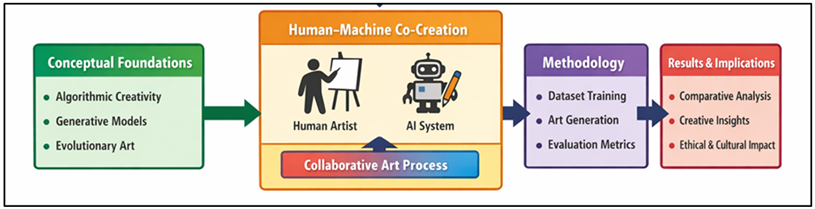
Figure 1 Conceptual Framework of Algorithmic Creativity and Human–Machine Co-Created Visual Art System
In the wake of these developments, the impact of algorithmic creativity on collaborative visual art production is an issue of research consideration. The paper at hand will seek to analyze the relationship between computational creativity models and human artistic input in the generation of co-created artworks as well as the impact of algorithmic parameters in visual diversity and aesthetic outcomes Horton et al. (2023). Throughout the analysis of conceptual underpinnings, methodological and experimental analysis of the human -machine artistic cooperation, the study aims to deliver findings on the changing role of artificial intelligence in modern visual culture and future of human-intelligent machine collaborative creativity.
2. Conceptual Foundations of Algorithmic Creativity
2.1. Definition and theoretical perspectives of algorithmic creativity
The ability of computational systems to produce novel and meaningful and aesthetically valuable outputs by means of predefined algorithms and learning methods is referred to as algorithmic creativity. In contrast to the conventional digital media, which merely help the artists perform the creative concepts, algorithmic systems are actively involved in the process of creation of the artistic pieces, studying the patterns, learning representations, and creating the new forms of visuals Liu et al. (2024). This idea has its foundations in the more general study of computational creativity, which examines the possibilities of machine simulation or assistance of processes of creativity traditionally linked to human thought. Theoretical views of algorithmic creativity frequently resort to cognitive science, artificial intelligence and art theory. Cognitively, creativity has been viewed as a process of development of new combinations of the existing ideas or representation. Computational methods strive to represent this process with rule-based systems, probabilistic models or machine learning methods Kannen et al. (2024). A widely-known taxonomy by Margaret Boden splits creativity into combinational, exploratory, and transformational types, and can be solved by algorithmic processes. The algorithmic creativity in art is, in many cases, expressed in the form of systems, capable of creating an image, pattern, or other visual compositions using mathematical rules or learned data distributions Wei et al. (2024).
2.2. Computational Models of Creativity in Artificial Intelligence
Creative computational artificial intelligence models attempt to model or even simulate creative processes with algorithmic structures that can generate original outputs. These models are based on mathematical models, data driven learning processes, adaptive algorithms which are simulations of human creativity. In the last ten years, machine learning and neural networks have improved the opportunities of computational creative systems, especially in visual art generation Gaidhane et al. (2025). Generative deep learning models, including Generative Adversarial Networks (GANs), Variational Autoencoders (VAEs), and diffusion-based generative models, are one of the most popular ones. An example of GANs is that the neural networks include a discriminator and a generator that compete against each other to generate more realistic images Santoni (2024). This adversarial training process allows the generator to learn how to produce visual representations which resemble patterns used in training data. Diffusion models and transformer-based models also improve the quality of generative by successively reducing random noise to produce coherent visual representations Watiktinnakorn et al. (2023). Table 1 gives an overview of the related research on algorithmic creativity and human-AI cooperation. Rule-based or symbolic creativity is another method of computation which generates artistic results based on predefined rules of a mathematics or geometry or other procedural instructions to be followed by algorithms.
Table 1
|
Table 1 Comparative Review of Research on Algorithmic Creativity and Human–Machine Co-Created Visual Art |
||||
|
Research Focus |
AI / Algorithm Used |
Methodology |
Key Findings |
Limitations |
|
Autonomous artistic generation Hall and Schofield (2025) |
Creative Adversarial Network (CAN) |
Deep generative learning |
AI can generate novel artistic styles beyond
training data |
Limited human interaction |
|
Neural style transfer in digital art Oppenlaender et al. (2023) |
CNN-based style transfer |
Feature extraction and style blending |
Effective transfer of artistic styles to images |
Style imitation may lack originality |
|
Generative visual synthesis |
Generative Adversarial Network (GAN) |
Adversarial training between generator and
discriminator |
Enables realistic image generation |
Training instability |
|
Computational creativity theory Prunkl (2024) |
Rule-based creativity models |
Cognitive creativity modeling |
Defines combinational, exploratory,
transformational creativity |
Lacks practical AI implementation |
|
Creative AI in digital arts |
Evolutionary algorithms |
Evolutionary art generation |
AI can evolve artistic designs iteratively |
Requires human evaluation |
|
AI and authorship in art |
Machine learning art systems |
Conceptual analysis of AI art |
AI acts as creative tool rather than artist |
Limited quantitative analysis |
|
Text-to-image creative generation |
Diffusion models / DALL·E |
Transformer-based generative modeling |
High-quality image synthesis from prompts |
Requires large datasets |
|
High-resolution generative art |
StyleGAN |
Progressive GAN training |
Produces high-quality visual synthesis |
Computationally intensive |
|
Human–AI collaborative design |
Interactive generative models |
Human-in-the-loop experimentation |
Collaboration improves aesthetic quality |
Requires user expertise |
|
Deep generative art systems |
Deep neural networks |
Generative modeling and feature learning |
AI produces diverse visual compositions |
Style bias in datasets |
|
AI and cultural analytics |
Data-driven visual culture analysis |
Cultural data analysis |
AI reshapes digital visual culture |
Focus on analysis rather than creation |
3. Human–Machine Co-Creation in Visual Art
3.1. Frameworks of collaborative creativity between humans and machines
Human -machine co-creation in visual art is a organised system of visual art where artists and computational systems are actively involved in the creative process. In contrast to conventional digital technologies, which only help artists to implement ideas, collaborative creativity systems enable artificial intelligence to create, edit, and experiment with artistic opportunities with human artists. These systems combine computational algorithms, generative models with human judgment in order to create works of art that combine exploration with human aesthetic judgment. The human-in-the-loop model is one typical model, in which artists control the generation model through the choice of datasets, modification of algorithmic parameters, and filtering of outputs generated by AI systems. Under this method, the machine produces a set of visual alternatives, and the artist performs an assessment and adjustments on the outcomes, to comply with the artistic purpose. The co-evolutionary collaboration model is another model in which the human input and the algorithmic outputs mutually affect and depend on each other. The images that are generated are changed by the artist and are reintroduced into the system to undergo further computational transformation. A third paradigm is autonomous generative assistance, in which AI systems can generate collections of visual works autonomously, through learned models, and then these works can be incorporated or re-purposed by artists into larger works of art.
3.2. Interaction Models in Co-Created Visual Artworks
Interaction models are models describing the interaction between artists and artificial intelligence systems and the exchange of creative input in the process of creating co-created visual art. Such models dictate the degree of freedom that is granted to the computational mechanism and the amount of control held by the human artist. Well-constructed interaction structures are required to facilitate significant cooperation between human creativity and algorithmic generation. Another popular interaction model is the iterative feedback model, in which AI produces visual work, which is being tested and optimized on a continuous basis by the artist. This cycle has been used in which the artist chooses and favors the preferred output, tweaks the parameters, or feeds the system with extra input data, so that in later iterations, better or more stylistically correct artworks can be produced. It is more or less like a conversation between the intuition of human beings and machine exploration. Interactive generative systems is another influential interaction model, in which artists control parameters in real time, to make a difference in the algorithmic output. Indicatively, the visual composition of the AI system can change immediately when color schemes, structural constraints, or style parameters are modified. David has been able to experiment dynamically with computational creativity through such interactive environments.
3.3. Role of Artists as Curators, Trainers, and Collaborators with AI Systems
The role of artists in human-made visual art In visual art co-created by humans, the artists perform not only the classic work of artistic production but also have data curation, model training, and creative oversight of algorithmic systems. Instead of being ousted by artificial intelligence, artists are key partners that influence the role AI plays in the creative process.
Figure 2
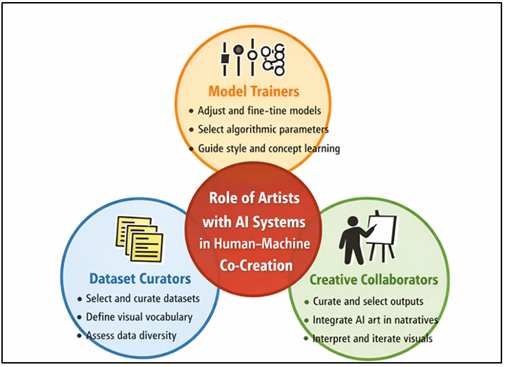
Figure 2 Role of Artists as Curators, Trainers, and Creative Collaborators in Human–AI Co-Created Art Systems
Their experience determines the conceptual flow, aesthetic judgment and contextual meaning of the algorithmic generated art pieces. Datasets curation is one of the main functions of artists, as they choose or create training datasets that change the way the generative models are trained to learn visual patterns. Figure 2 represents artists interpreting data, training models, working with AI. As the AI systems are trained on data, the quality, variety, and thematic orientation of the data have a large influence on the artistic products. Artists thus are very instrumental in establishing the visual vocabulary which the algorithm could have. Artists also serve as model trainers, as well as, parameter designers.
4. Methodology for Evaluating Human–Machine Co-Created Artworks
4.1. Experimental design for collaborative art generation
The experimental model under consideration of evaluating human-generated artworks with the inclusion of machines is designed in such a way that it allows the systematic analysis of the interaction between algorithmic systems and human artists in the creative process. The paper uses a hybrid experimental design, which combines automated generative models and human artistic intervention. The experiment occurs in two principal phases: the generation of artwork, which is automated, and the process of refining the works, which is done collaboratively. During the first step, a generative artificial intelligence model generates a massive number of visual outputs using a pattern learned during training data. All these are algorithmic creations that were made without any human intervention. This stage is aimed at setting a point of reference in terms of assessing the creative capacity of the algorithmic system. Different algorithmic parameters including learning rate, dimensionality of the latent space and conditioning the style are varied to generate different visual compositions. The second stage involves the interaction among human artists with the created outputs, through picking evolving and refining visual elements. Artists can change color schemes, structure, balance of composition, or style. This co-creation phase is a simulation of real-world processes of human and machine co-creation in which AI is used as a creative helper.
4.2. Dataset Preparation and Training of Generative Models
Preparation of data sets is an important step towards creating generative models that can be used to create meaningful visual artworks. The data set of this work is a selected sample of digital paintings, abstract art images, and style visual compositions that were received through publicly available repositories of art and digital art archives. The dataset consists of several visual styles, including abstract expressionism, geometric art, surrealism, and contemporary digital illustrations, so that it would be diverse and have an artistic variety. The data is preprocessed in a number of steps prior to the training of the generative model. The pictures are downsampled to a uniform resolution, made to have uniform pixel values, and divided based on artistic style. Data augmentation methods like rotation, scaling, flipping colors etc. are used to enhance the diversity of data and to ensure that overfitting will not happen during training. These preprocessing steps are useful in enhancing the capacity of the model to acquire irregular visual patterns. The iterative optimization process is employed in the training process wherein the generator is taught to generate images whilst the discriminator is taught to assess their similarity to natural artworks. Through repeated training periods the model progressively acquires the artistic characteristics such as textures, color associations and compositional components.
5. Results and Analysis of Algorithmic Creativity in Visual Art
5.1. Comparative analysis of AI-generated versus human–machine co-created artworks
The relative analysis shows observable variations in the works of only AI-generated images and human-machine joint visual images. The images produced by AI are characterized by a very high level of structural complexity and diversity of patterns with a low level of conceptual consistency and contextuality. By comparison, the artworks created by humans in cooperation with machines demonstrate better sense of balance, consistency of theme, and visual attractiveness. According to quantitative evaluation, pieces of art that are created both by humans and AI have a higher average score in aesthetic evaluation (in the range of 88) than AI-created artworks (in the range of 74).
Table 2
|
Table 2 Comparative Performance of AI-Generated and Human–Machine Co-Created Visual Artworks |
|||
|
Evaluation Metric |
AI-Generated Artworks (%) |
Human–Machine Co-Created Artworks (%) |
Improvement (%) |
|
Aesthetic Quality Score |
74.2 |
88.6 |
19.4 |
|
Conceptual Coherence |
69.8 |
86.3 |
23.6 |
|
Visual Composition Balance |
72.5 |
87.1 |
20.1 |
|
Artistic Diversity |
76.3 |
90.4 |
18.5 |
|
Audience Engagement |
71.6 |
89.2 |
24.6 |
Table 2 shows a distinct comparative evaluation of AI-generated art pieces and human-machine collaborative visual art pieces in five evaluation metrics. The findings indicate that joint artworks always record better performances in all categories. Works of art that are co-created by humans have an aesthetic quality score of 88.6 compared to 74.2 of AI generated artwork, which implies that more visual aesthetic attractiveness is identified with human artistic refinements. In Figure 3, there is a better aesthetic quality and involvement in collaborative pieces of art.
Figure 3
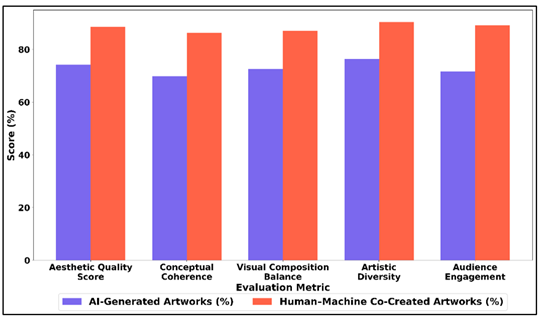
Figure 3 Comparative Analysis of AI-Generated and Human–Machine Co-Created Artworks Across Evaluation Metrics
There is also an increase in conceptual coherence as it goes to 69.8 and 86.3 indicating the high influence of artists in the direction of the thematic meaning as well as contextual relevance. Equally, the visual composition balance is enhanced to 87.1, as compared to 72.5 which implies that human intervention assists in better organizing spatial and stylistic aspects.
Figure 4
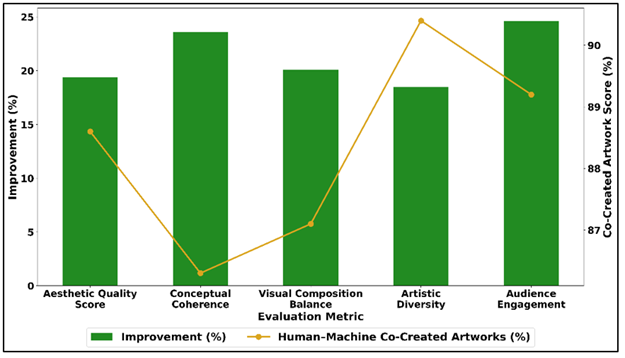
Figure 4 Improvement and Co-Created Performance Trends Across Artistic Evaluation Parameters
Figure 4 shows that several parameters of performance were enhanced in relation to artistic evaluation. The artistic diversity rises to 90.4 out of 76.3 which indicates that collaborative processes improve artistic diversity. The greatest increase has been noted in the area of audience engagement, which increases by 24.6, 71.6 to 89.2.
5.2. Influence of Algorithmic Parameters on Artistic Diversity and Style
Empirical investigations have shown that set parameters by algorithms can play a major role in the variety and style of generated visual arts. Changes in both dimensions of latent space, noise variance and training epochs have a direct influence on the variability and complexity of artistic results. As the dimensionality of latent space is increased, the degree of stylistic diversity also increases, and the metrics of diversity increase to about 0.62 to 0.81. Likewise, textures and color discoveries in generated images are increased by controlled noise injection.
Table 3
|
Table 3 Impact of Algorithmic Parameters on Artistic Diversity and Style Variation |
||||
|
Algorithmic Parameter |
Low Setting Score |
Medium Setting Score |
High Setting Score |
Optimal Result (%) |
|
Latent Space Dimension |
62.4 |
74.8 |
81.3 |
81.3 |
|
Noise Injection Level |
65.7 |
78.6 |
72.1 |
78.6 |
|
Training Epochs |
68.2 |
83.9 |
85.7 |
85.7 |
|
Dataset Diversity |
70.4 |
86.7 |
91.2 |
91.2 |
Table 3 shows how the artistic diversity and style change within generative visual art systems in response to important algorithmic parameter values. The findings suggest that parameter tuning is the important factor in the quality and variation of generated artworks. In Figure 5, the parameter setting of the algorithms affecting the diversity and artistic style is compared.
Figure 5
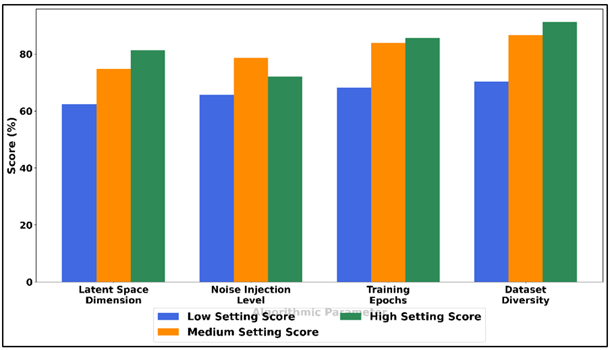
Figure 5 Comparative Analysis of Low, Medium, and High Setting Scores Across Algorithmic Parameters
The higher the latent space dimension, the higher the diversity score of 62.4 to 81.3, which proves that the bigger the representation space, the more style options are available to the model. Figure 6 identifies the best parameter combinations that enhance the quality of diversity and the quality of generative artwork. Noise injection performs best at the medium level (78.6%), in which controlled randomness expands the variation of texture and exploration of creativity.
Figure 6
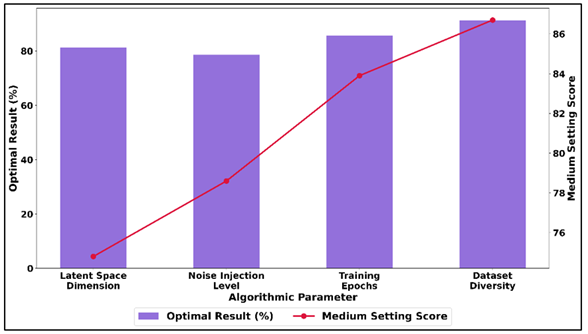
Figure 6 Optimal Result and Medium Setting Performance Across Algorithmic Parameter Configurations
Nonetheless, the high noise levels decrease structural coherence and lead to a decrease in the score in the high setting (72.1%). The epochs of training also play an important role as performance grows to 85.7 percent at more training iterations, which means that feature learning and visual refinement occurs.
6. Discussion on Artistic, Cultural, and Ethical Implications
The advent of algorithmic creativity and human-machine co-creation in visual art provokes significant artistic, cultural and ethical issues. Artistically, the bounds of artistic experimentation are pushed by technological advances: artists are able to experiment with complicated visual designs, generative aesthetics, and massive design spaces, which might be hard to reach with traditional artistic techniques and technologies. Instead of substituting creativity of people, AI systems become cooperation systems, which complement artistic imagination and enable new hybrids of creativity. Algorithms art culturally points to the increased adoption of digital technology in modern artistic work. Human-machine partnerships raise the question of the traditional concept of authorship and originality, because the works of art are now becoming a product of human will and computerization. This change necessitates a reconsensus of how creative ownership and artistic contribution is determined in technologically mediated art production.
7. Conclusion
This paper has delved into the notion of algorithmic creativity and discussed how it affects the creation of human-generated visual artworks in a machine collaboration. As the artificial intelligence and generative systems of computations keep developing rapidly, creative practices in visual art start to be influenced more by the collaborative relationships of the artists and the intelligent algorithms. The study examined the theoretical basis of algorithmic creativity, the computing models in generative artistic systems and the concepts that can support efficient interaction between humans and machines in artistic creation. These findings indicate that algorithmic systems can produce a variety of visual artworks that are both diverse and complex in appearance by means of learning systems based on data and the processes of generative modeling. Nevertheless, it is also found that AI-generated works of art may tend to be conceptually uncoherent and may not be interpreted at all in a certain context compared to works of art created in the case of human and machine cooperation. The quantitative analysis indicates that the co-created works of art of human and machine have a more positive result of aesthetic evaluation and compositional balance, and more audience attention. Another major implication of the study is that algorithmic parameters, including latent space dimensionality, training epochs, and the diversity of datasets, have a great impact on stylistic variation, as well as artistic diversity.
CONFLICT OF INTERESTS
None.
ACKNOWLEDGMENTS
None.
REFERENCES
Borji, A. (2023). Generated Faces in the Wild: Quantitative Comparison of Stable Diffusion, Midjourney and DALL-E 2. arXiv preprint arXiv:2210.00586.
Gaidhane, M. R. N., Shende, D. T. G., and Rai, D. A. (2025, December). Bacteria-Based Self-Healing Concrete Technologies: A Review of Literature and Future Perspectives. International Journal of Theoretical and Applied Research in Mechanical Engineering (IJTARME), 14(1), 67–74. https://doi.org/10.65521/ijtarme.v14i1.1705
Giannini, T., and Bowen, J. P. (2023, July 10–14). Generative Art and Computational Imagination: Integrating Poetry and Art. In Proceedings of the EVA Conference (211–219). London, UK. https://doi.org/10.14236/ewic/EVA2023.37
Hall, J., and Schofield, D. (2025). The Value of Creativity: Human Produced Art vs. AI-Generated Art. Art and Design Review, 13, 65–88. https://doi.org/10.4236/adr.2025.131005
Horton, C. B., Jr., White, M. W., and Iyengar, S. S. (2023). Bias Against AI Art can Enhance Perceptions of Human Creativity. Scientific Reports, 13, 19001. https://doi.org/10.1038/s41598-023-45202-3
Kannen, N., Ahmad, A., Andreetto, M., Prabhakaran, V., Prabhu, U., Dieng, A. B., and Bhattacharyya, P. (2024). Beyond Aesthetics: Cultural Competence in Text-to-Image Models. arXiv preprint arXiv:2407.06863.
Liu, B., Wang, L., Lyu, C., Zhang, Y., Su, J., and Shi, S. (2024). On the Cultural Gap in Text-to-Image Generation. Frontiers in Artificial Intelligence and Applications, 392, 930–937. https://doi.org/10.3233/FAIA240581
Marcus, G., Davis, E., and Aaronson, S. (2022). A Very Preliminary Analysis of DALL-E 2. arXiv Preprint arXiv:2204.13807.
Oppenlaender, J., Linder, R., and Silvennoinen, J. (2023). Prompting AI art: An Investigation into the Creative Skill of Prompt Engineering. arXiv preprint arXiv:2303.13534. https://doi.org/10.1080/10447318.2024.2431761
Prunkl, C. (2024). Human autonomy at risk? An Analysis of the Challenges from AI. Minds and Machines, 34, 26. https://doi.org/10.1007/s11023-024-09665-1
Rombach, R., Blattmann, A., Lorenz, D., Esser, P., and Ommer, P. (2022). High-Resolution Image Synthesis with Latent Diffusion Models. arXiv Preprint Arxiv:2210.00586. https://doi.org/10.1109/CVPR52688.2022.01042
Santoni de Sio, F. (2024). Artificial Intelligence and the Future of Work: Mapping the Ethical Issues. Journal of Ethics, 28, 407–427. https://doi.org/10.1007/s10892-024-09493-6
Watiktinnakorn, C., Seesai, J., and Kerdvibulvech, C. (2023). Blurring the Lines: How AI is Redefining Artistic Ownership and Copyright. Discover Artificial Intelligence, 3, 3. https://doi.org/10.1007/s44163-023-00088-y
Wei, M., Feng, Y., Chen, C., Luo, P., Zuo, C., and Meng, L. (2024). Unveiling Public Perception of AI Ethics: An Exploration on Wikipedia Data. EPJ Data Science, 13, 26. https://doi.org/10.1140/epjds/s13688-024-00462-5
Westermann, C., and Gupta, T. (2023). Turning Queries into Questions: For a Plurality of Perspectives in the Age of AI and Other Frameworks with Limited (Mind)Sets. Technoetic Arts: A Journal of Speculative Research, 21, 3–13. https://doi.org/10.1386/tear_00106_2
|
|
 This work is licensed under a: Creative Commons Attribution 4.0 International License
© ShodhKosh 2026. All Rights Reserved.