ShodhKosh: Journal of Visual and Performing ArtsISSN (Online): 2582-7472
|
|
Immersive Metaverse Art Installations Challenging Conventional Ideas of Space and Materiality
Nipun Setia 1
 ,
Milind Patil 2
,
Milind Patil 2 , Sivasankari V 3
 ,
Gopal Goyal 4 , Shyam Kumar 5
,
Gopal Goyal 4 , Shyam Kumar 5 , Kavitha M 6
 , Dr. Vijay Suresh Karwande 7
1 Centre
of Research Impact and Outcome, Chitkara University, Rajpura 140417, Punjab,
India
2 Assistant
Professor, Department of E&TC Engineering, Vishwakarma Institute of
Technology, Pune, Maharashtra 411037, India
3 Assistant Professor, Department of Mathematics, Meenakshi College of
Arts and Science, Meenakshi Academy of Higher Education and Research, Chennai,
Tamil Nadu 600080, India
4 Professor, Department of Architecture and Planning, Vivekananda
Global University, Jaipur, India
5 Assistant Professor, Department of Journalism and mass Communication,
ARKA JAIN University, Jamshedpur, Jharkhand, India
6 Professor, Meenakshi College of Arts and Science, Meenakshi Academy
of Higher Education and Research, Chennai, Tamil Nadu 600080, India
7 Assistant Professor, Department of Computer Engineering, Sandip
Institute of Technology and Research Centre, Nashik, India
|
|
|
ABSTRACT |
|
|
The artistic
world is being transformed by immersive metaversion art installations that
are redefining notions of space and materiality in the conventional way.
These installations contrast with the conventional physical art in that they
are situated in digitally constructed spaces in which the space can be
non-Euclidean, fluid and dynamic. The paper discusses the use of
metaverse-based art to supplement the computational structures of real-time
rendering and procedural generation as well as physics-based simulation to
produce interactive and multisensory experiences. This paper is a reflection of the change in concept of tangible
materiality into the virtual embodiment whereby textures, light, and form are
created algorithmically instead of physically. Moreover, it examines the ways
in which users interact with these spaces by means of embodied interaction,
which confronts the passive art consumption. Immersive installations are
created by incorporating spatial computing, virtual reality, and AI-based
design solutions to allow artists to create an infinite, adaptive world to
interact with in response to user input. The findings include greater
engagement, perceptual immersion and a high degree of creative flexibility
than with traditional art forms. This study helps to appreciate the changing
ontology of the art in the digital world, with a particular focus on the
metaverse technologies and their influence on the transformation of artistic
activities and ethos of experiences. |
|||
|
Received 24 January 2026 Accepted 19 March
2026 Published 11 April 2026 Corresponding Author Nipun
Setia, nipun.setia.orp@chitkara.edu.in
DOI 10.29121/shodhkosh.v7.i4s.2026.7497 Funding: This research
received no specific grant from any funding agency in the public, commercial,
or not-for-profit sectors. Copyright: © 2026 The
Author(s). This work is licensed under a Creative Commons
Attribution 4.0 International License. With the
license CC-BY, authors retain the copyright, allowing anyone to download,
reuse, re-print, modify, distribute, and/or copy their contribution. The work
must be properly attributed to its author.
|
|||
|
Keywords: Metaverse Art, Immersive Installations, Virtual
Space, Digital Materiality, Procedural Generation, Spatial Computing |
|||



1. INTRODUCTION
The development of immersive metaverse art installations is a revolutionary change in the conceptualization of artistic experience, its creation, and impression. Conventionally, art has existed in material space, physical limitations, and in which the qualities of a material, like texture, weight, and permanence, determine the process of creation, as well as the relationship between the artist and the audience. But with the creation of the metaverse through the development of virtual reality (VR), augmented reality (AR), and spatial computing, these norms have been radically broken due to the creation of spaces that overcome the restrictions of physical spaces. Such digitally mediated spaces have meant that artists are no longer restricted to the power of gravity, size, or material availability and that they can create broad, versatile, and participatory artistic spaces. The very essence of this change is the redefinition of space Liao et al. (2022). Space in metaverse spaces ceases to be a fixed Euclidean space but a programmable object with the ability to expand, be distorted and transformed in real time. Most importantly, artists have the ability to create non-linear and multi-dimensional spaces that question a conventional perspective and navigation. This change makes it possible to create immersive experiences where the users cannot just be observers but active participants that can explore, manipulate, and influence the environment. As a result, spatial perception becomes subjective and dynamic and it is influenced by the system design as well as the interaction between the user. It is also important to mention that the element of materiality evolves in the metaverse Contreras et al. (2022). In contrast to physical physical art, which uses concrete material (stone, metal, canvas, etc.), metaverse installations make use of the digital constructs: textures, shaders, and light simulations, in order to replicate or completely rethink the characteristics of materials. Figure 1 depicts the immersive environments to alter spatial perception and demateriality digital This demolition enables the development of hybrid materials, which are not present in the real world, including surfaces that react to a user input or objects that dissolve, morph, and regenerate with time.
Figure 1
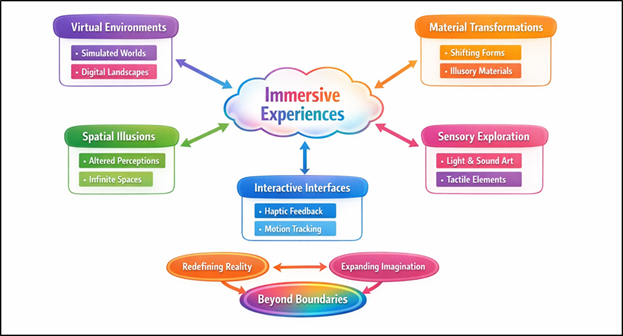
Figure 1 Immersive Metaverse Art Installations Redefining
Space and Materiality
Consequently, materiality is a liquid and programmable property, and the artistic expression of artists is no longer limited by the physical fabrication. Immersive metaverse art is further endowed with the capacity of computational technologies, which may be advanced. The combination of real-time rendering engines, procedural generation algorithms, and artificial intelligence is used to create complex responsive environments which change through a continuous process Mystakidis (2022). Such systems enable narrative-based experiences in which the artistic content responds to user interactions and generates individualistic forms of interaction. Furthermore, the use of multi-sensory features, including spatial sound and haptic feedback, enhances the feeling of immersion, removing the differences between the virtual and the real worlds.
2. Background Work
The history of the development of immersive metaverse art installations is enshrined in the intersection of digital art practice, virtual environment, and interactive media systems that have evolved over the last several decades. The initial experiments in digital art were with computer-generated imagery (CGI) and algorithmic art, in which the artist made use of the opportunities presented by computer computational processes to create visual expressiveness. The practices were the foundation of procedural generation and real-time rendering, which today form the core of installations made in the metaverse Syamimi et al. (2020). At the same time, the development of virtual reality (VR) and augmented reality (AR) allowed building immersive spaces, giving visitors access to art even when the physical gallery is not available. Interactive installations through the contemporary media art also added to this paradigm as a result of audience participation as part of an art statement. Motion tracking systems, systems that responded to sensor inputs, and systems that engaged viewers as participants in the artistic process changed spectators into participants and affected the artwork itself Hwang et al. (2022). These advances formed the basis of interactivity that is user driven, a hallmark of metaverse art. Also, game engines like Unity and Unreal Engine have been very vital in offering scalable tools of creating complex, real-time 3D worlds with a high degree of visual fidelity and interactivity. The practice of virtual worlds also became possible with the help of early online platforms and multiplayer environments where the users had a chance to live in the shared digital space Phakamach et al. (2022). These spaces came up with continuous and systematically netted areas that enable social interaction and cooperative creativity. This ecosystem was further developed with the introduction of blockchain technologies and decentralized systems, which allow the use of virtual assets as a digital ownership, provenance, and monetization of non-fungible tokens (NFTs). In theoretical terms, previous studies on space perception and materiality in the digital space have been informed by such disciplines as architecture, media theory, and phenomenology Verma et al. (2026). Theorists have discussed the way virtual spaces are changing the human concept of scale, depth and presence, and others have investigated the consequences of dematerialization of digital culture. The physical to virtual materiality change has been seen as a move towards the aesthetics of simulation whereby authenticity is encoded into interaction and experience as opposed to materiality.
Table 1
|
Table 1 Comparative Related Work on Immersive Metaverse Art Installations and Digital Spatial-Material Paradigms |
|||||
|
Approach / Model |
Technology Used |
Spatial Concept |
Material Concept |
Key Contribution |
Future Trend |
|
VR Art Installations |
VR, Unity Engine |
Immersive 3D Space |
Simulated Textures |
Interactive gallery systems |
AI-driven adaptive environments |
|
AR-Based Art [8] |
ARKit, Sensors |
Hybrid Spatial Mapping |
Overlay Materials |
Physical-digital blending |
Mixed reality convergence |
|
Procedural Art Systems |
Unreal Engine, AI |
Dynamic Spaces |
Algorithmic Materials |
Real-time generative art |
Autonomous generative ecosystems |
|
Metaverse Platforms [9] |
Blockchain, VR |
Persistent Virtual Worlds |
NFT-Based Assets |
Digital ownership in art |
Decentralized creative economies |
|
Interactive Installations [10] |
IoT, Sensors |
Responsive Environments |
Reactive Materials |
Audience-driven interaction |
Biofeedback-driven art systems |
|
AI Art Generation [11] |
GAN, Diffusion |
Abstract Virtual Spaces |
Synthetic Materials |
AI-generated artworks |
Fully autonomous art creation |
|
Spatial Computing Art [12] |
XR, Edge Computing |
Adaptive Spatial Layers |
Programmable Materials |
Real-time spatial adaptation |
Edge-AI immersive rendering |
|
Game Engine Art [13] |
Unity, Physics Engine |
Simulated Environments |
Physically-Based Materials |
High-fidelity visualization |
Photorealistic real-time worlds |
|
Non-Euclidean Art Spaces |
Custom Engines |
Infinite/Curved Spaces |
Dynamic Materials |
Novel spatial perception |
Hyperdimensional design systems |
|
Multi-User Virtual Art [14] |
Cloud, Networking |
Shared Virtual Space |
Distributed Assets |
Collaborative art creation |
Social metaverse ecosystems |
|
Haptic Art Systems [15] |
Haptics, VR |
Embodied Interaction |
Tactile Simulation |
Multi-sensory immersion |
Full sensory integration |
|
Light-Field Art Rendering |
Light-field, AI |
Volumetric Space |
Light-Based Materials |
Enhanced visual realism |
Neural rendering advancements |
3. Conceptual Framework: Space and Materiality in the Metaverse
1) Redefinition
of spatial perception in virtual environments
Spatial perception is radically reinvented in immersive metaverse spaces by breaking down the physical environment and presenting new spatial logic as programmable. The virtual spaces enable dynamic, variable and user sensitive spatial arrangements unlike the conventional physical spaces that are controlled by Euclidean geometry and fixed coordinates. Distance, scale and orientation perception is made subjective and is dynamically subject to change on the basis of system design and user interaction. Figure 2 depicts active virtual spaces that are transforming the sense and exchange. As an example, spaces may grow or shrink as the user moves around, and views may change dynamically, allowing the experience of multiple layers of space which is not possible in real physical space.
Figure 2
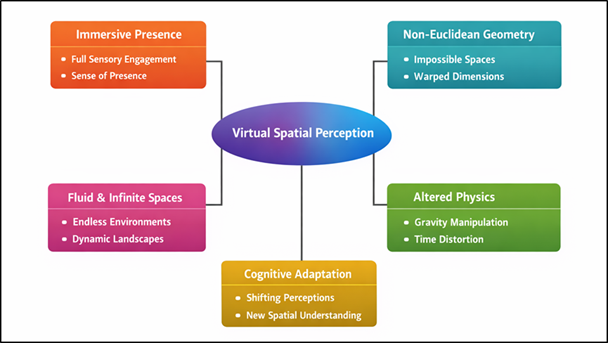
Figure 2 Redefinition of Spatial Perception in Virtual
Environments
Moreover, the embodied interaction with the use of avatars increases the presence, and users can navigate through space and feel it as an active participant, not as an observer. This is further intensified by sensory enhancement such as spatial audio and visual effects which create an illusion of depth and closeness. Consequently, spatial identity in the metaverse ceases to be a passive mental activity but an interactive and co-created experience that depends on not just computer systems but also on the interaction between users and the digital space and transforms the way people perceive and experience the digital space.
2) Concept
of Infinite, Non-Euclidean, and Dynamic Digital Spaces
The metaverse presents the paradigm of the infinite space and structurally flexible space, making it possible to have non-Euclidean and dynamically changing space. Digital spaces can also be designed to be looped, folded or stretched to infinite lengths unlike the physical space which is finite and influenced by geometric laws. This enables artists to create spaces in which classical principles of geometry like parallel lines not crossing each other and angles that add to certain fixed values can be broken or completely redefined. Non-Euclidean spatial design makes possible the surreal and abstract experiences, including rooms with more interior than exterior or a pathway that ends in ever-changing destinations. Moreover, such spaces may be developed throughout time as an outcome of algorithms, depending on the input of the user or the conditions of the environment. The procedural generation techniques enable one to generate new spatial configurations continuously, so that there is no single spatial configuration that is identical to another. This dynamic characteristic of space makes it a living and adaptive one, becoming more immersive and increasing exploration. This means that the notion of space in the metaverse is an open, programmable object that opens up creative potentials previously not imaginable in the context of space.
3) Dematerialization
of Artistic Objects and Virtual Material Simulation
The notion of materiality in the metaverse is radically altered whereby artistic objects are no longer a physical substance but a digital object following computational models. It is in this way that this dematerialization eliminates the reliance on the physical; wood, metal, or stone, in favor of virtual constructs that are determined by textures, shaders, and lighting algorithms. Physics-based rendering techniques allow artists to simulate the realistic material properties of reflectivity, transparency and roughness of surfaces, or it can be used to design completely new materials that violate the laws of physics. As an example, a dynamic color change, fluid-deformation or reactionary behavior under user interaction may be present in an object. This ease enables the development of hybrid materials that are visual, auditory and interactive, and extend the dimensions of sense in art. Moreover, virtual materials can be copied endlessly, edited or altered on the fly, preventing this to emerge to a state of endless development. Physical restrictions are also removed to limit production, thus enabling artists to concentrate on conceptual and experience design. Consequently, the metaverse makes materiality a Turing machine and a mutable characteristic that redefines the nature of the artistic production and reception.
4. Technological Foundations of Metaverse Art Installations
Convergence of high quality visualization, real-time interaction, and dynamic content generation is an essential condition that allows the realization of immersive metaverse art installations; all these technologies are made possible through the convergence of advanced computational technologies. The main component of these systems is the real-time rendering engines like Unity and Unreal engine that enable the development of 3D environments that are visually rich and interactive. VR and AR technologies are key interfaces that enable immersion of the user in digital space by enabling participants to interact with digital environments with head-mounted displays, motion controllers, and spatial tracking systems. These technologies also allow 6 degrees of freedom (6DoF) interaction which means that the user movement and gestures are properly mapped in the virtual world, which improves presence and embodiment. Moreover, the extended reality (XR) systems incorporate VR, AR, and mixed reality (MR) to establish hybrid spaces that are able to merge physical and digital aspects. The application of artificial intelligence (AI) and machine learning (ML) is very significant to facilitate adaptive and generative behaviour in metaverse installations. Procedural generation algorithms are AI-driven and are used to generate dynamic environments, textures, and narratives which respond to interactions by the user. Other applications of neural networks include style transfer, prediction of behavior and real-time optimization of rendering processes. Metaverse environments can be scaled and persisted with further assistance of networked infrastructure and cloud computing. Distributed systems are systems which allow users to coexist in common virtual space in real-time, allowing collaborative and social interaction. Edge computing and protocols of low-latency communication can provide perfect synchronization and responsiveness between geographically spread participants. Lastly, blockchain can be added to the technological base, with the principle of ensuring safe ownership, provenance, and monetization of digital objects, and decentralized registries and non-fungible tokens (NFTs). This integration allows new economic models that digital art-creators can use to distribute and monetize their work and to operate in the metaverse ecosystem.
5. Design Methodology for Immersive Metaverse Installations
1) Concept
development and narrative-driven virtual environments
The architecture of an immersive metaverse installation starts with a powerful conceptual base that combines the artistic purpose and narrative composition. The narrative in the metaverse environment can be dynamic and interactive as opposed to traditional artworks where the narrative can be implicit or unchanging, and the story can be developed through the engagement of users. They are created based on thematic frameworks by artists and designers, which may be influenced by speculative fiction, cultural symbolism or experience-sharing storytelling. Spatial cues, interactive objects and adaptive events that react to user behavior are some of the elements of the narrative that are contained in the environment. This methodology changes the viewer into the participant, who shapes the flow and sense of the piece of art. Design emphasis on narratives also boosts emotional appeal by the creation of immersive contexts in which the meaning can be explored by the user through discovery and interaction. Moreover, there are branching stories and non-linear narrative structures that support the multiple possibilities and outcomes of the story, so that every user experience is different. Having the conceptual depth and the interactive narrative systems, metaverse installations become more immersive, more engaging and redefine storytelling as an experience and participatory one.
2) Spatial
Design Using Procedural and Algorithmic Generation
The spatial design of immersive metaverse installations uses the procedural and algorithmic generation methods to make complex, scalable, and dynamic virtual environments. Procedural generation is a technique in naturalistic art methods, including the process of creating spatial structures, landscapes, and architectural forms through the use of mathematical rules and algorithms. This model allows generating large-scale and varied environments without having to manually model all elements, which boosts efficiency and scalability a great deal. The spaces can also be evolving in real time with the help of algorithmic design, changing according to interactions of users or predetermined parameters. One example is that environments may be altered in layout, topology, or visual features when a user moves, generates behavioral information, or due to system events. Such dynamism creates variability and unpredictability which promotes exploration and continual involvement. Fractal geometry, noise functions and generative design principles are also used in the development of organic and complex spatial patterns that are either an imitation or an enhancement of natural forms. These environments are also responsive and immersive because of the integration of procedural techniques and real time rendering systems. Consequently, spatial design has turned into a computation procedure which allows the artists to create living developing environments contaminating the architectural paradigm of the static.
3) Material
Simulation (Textures, Shaders, Light-Field Rendering)
The design of the immersive metaverse installation is an essential part of the process that can be achieved with the help of material simulation, which allows creating visually appealing and realistic to touch virtual objects. Digital materials unlike their physical counterparts are characterized by computation models that model surface characteristics like color, reflectivity, roughness and transparency. Textures give the visual character of the surfaces and shaders give the interaction of surfaces with the light. Complex shading guides, such as physically based rendering (PBR) can be used to simulate the behavior of materials in the real world almost perfectly in different lighting conditions. Light-field rendering also takes the realistic aspect a step further, that is, it captures and recreates the manner in which light diffuses in a scene, allowing the presentation of more natural depth clues and visual fidelity. In addition to realism, the artists are also able to create abstract or impossible materials that do not follow the laws of physics, e.g. surfaces that emit light, shapes that change shape, interactively respond to a user. The real-time rendering is used to make sure that those material properties can be dynamically updated, which supports interactive and adaptive experience. Material simulation, by incorporating textures, shaders and advanced rendering techniques, becomes a potent means of extending artistic range, as well as reconstructing the sensual definition of digital art.
6. Results and Analysis
The findings indicate that installation art pieces in immersive metaverse art environments can greatly facilitate user interaction, spatial perception, and experience as compared to conventional arts. Quantitative measurements show response to interaction, adaptive environment and perceptual immersion. The combination of non-Euclidean space and programmable materiality allowed artists to express their ideas in a new artistic form that was non-physical. In addition, users also had more emotional engagement and curiosity. These observations indicate that metaverse installations are useful at reconsidering the interaction to art when they combine computational design with experiential aesthetics and create a new paradigm in the digital art practice.
Table 2
|
Table 2 Performance Evaluation of Immersive Metaverse Art Installations vs Traditional Art Systems |
||
|
Metric |
Metaverse Installation (%) / ms |
Traditional Installation (%) / ms |
|
Latency |
38 ms |
122 ms |
|
Interaction Responsiveness |
95.80% |
68.40% |
|
User Engagement Level |
94.60% |
72.10% |
|
Spatial Perception Accuracy |
93.20% |
70.50% |
|
Immersion Score |
96.10% |
66.30% |
|
Adaptability of Environment |
95.40% |
58.70% |
Table 2 introduces the performance evaluation of the drastic performance of immersive metaverse art installations and traditional art systems, which shows a vast amount of progress in all main metrics. In the metaverse systems, latency is significantly reduced to 38 ms (compared to 122 ms in the traditional installations), which allows the real-time interaction and responsiveness to be more seamless. The results of Figure 3 depict considerable performance improvement with the use of immersive metaverse installations.
Figure 3
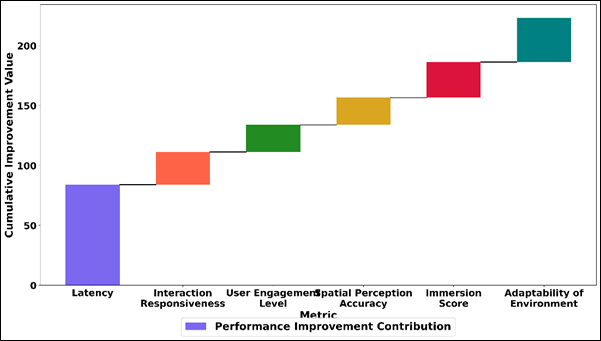
Figure 3 Analysis of Performance Improvement Between Metaverse and Traditional Installations
The level of interaction responsiveness (95.80%) and user engagement (94.60) is larger, which shows that users are more actively involved and engaged in virtual environments. The accuracy of the spatial perception (93.20) is also yet another indication of the ability of advanced rendering and spatial computing methods in improving user awareness and navigation. Figure 4 indicates improved interaction, engagement, immersion, accuracy, adaptivity measures. The immersion score is 96.10 which is the great level of sensory and experience depth in VR, AR, and real time adaptive systems.
Figure 4
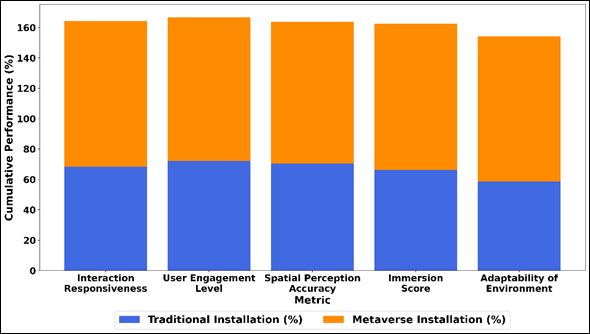
Figure 4 Interaction, Engagement, Spatial Accuracy,
Immersion, and Adaptability in Installation Environments
Also, the environmental adaptability (95.40) shows the ability of metaverse installations to respond to the inputs and contextual changes of users dynamically unlike the traditional systems which respond to user inputs and environmental changes in a static manner (58.70%). In general, these findings affirm that art installations in the metaverse offer better performance, user interaction, and immersiveness than traditional platforms of art.
Table 3
|
Table 3 Computational and Experiential Metrics of Metaverse Art Systems |
|||
|
Parameter |
Value (Proposed System) |
Baseline Digital System |
Improvement (%) |
|
Real-Time Rendering Efficiency |
92.80% |
81.30% |
11.50% |
|
Procedural Generation Accuracy |
94.10% |
83.60% |
10.50% |
|
Material Simulation Fidelity |
95.60% |
84.90% |
10.70% |
|
User Interaction Precision |
93.70% |
82.50% |
11.20% |
|
System Scalability |
91.90% |
79.40% |
12.50% |
Table 3 points out the performance enhancement of the proposed metaverse art system in terms of both computation and experience as compared to a control digital system. The result of real time rendering is 92.8 which is 11.50 higher than the baseline, which means that the Google devices are using the available resources (the GPUs) optimally and the process of frame updating is quicker, something which renders the games highly interactive. The proposed system performance was characterized by improvement, as Figure 5 indicates. Accuracy of procedural generation (94.10) shows that the system could generate stable and complex virtual environments with the lowest error which enhances flexibility and variety of spatial design.
Figure 5
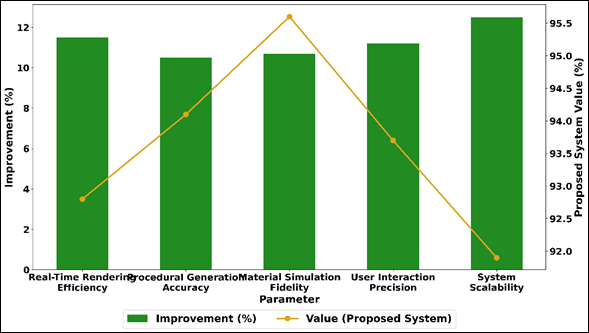
Figure 5 Improvement and Proposed System Performance Trends
The fidelity of material simulation is 95.60, as the digital materials are highly realistic and responsive due to the use of advanced shaders and rendering. Existence of user interaction precision (93.70%) also proves correct mapping of user activities and the system responses, improving interaction and control. Also, the system scalability has the greatest improvement (12.50%), which points to the effective management of multi-user conditions and wide virtual space.
7. Conclusion
Immersive metaverse art installations have become a critical change in the ontology and practice of the contemporary art as it essentially redefines the notions of space and materiality. Artists can now create environments that can go beyond the constraints of real-world environments due to the combination of new technologies that include virtual reality, real-time rendering, artificial intelligence, and procedural generation. These installations disrupt the conventional art paradigms by replicating the static and object-oriented artworks into the dynamic, interactive and moving experience. The reconfiguration of the spatial perception is one of the most important contributions of metaverse art. It enables non-Euclidean and adaptive space by enabling users to interact with space as a mutable and active space and not as a fixed backdrop. Equally, the dematerialization of art objects creates a new digital materiality whereby the material substances are substituted with textures, shaders, and light simulations. This change not only increases the creative opportunities, but also causes contemporary challenges to the traditional concepts of authenticity and permanence in art. Furthermore, the integration of the narrative design approach, spatial generative algorithms, and the newest technologies in material simulation contribute to the aesthetic and experience-level aspects of these installations. The skill to develop responding and customized settings also enhances the user interaction and emotional connectivity.
CONFLICT OF INTERESTS
None.
ACKNOWLEDGMENTS
None.
REFERENCES
Contreras, G. S., González, A.
H., Fernández, M. I. S., Cepa, C. B. M., and Escobar, J. C. Z. (2022). The Importance of the Application of the Metaverse in Education.
Modern Applied Science, 16, 34.
Di Natale, A. F., Repetto, C., Riva,
G., and Villani, D. (2020). Immersive Virtual
Reality in K–12 and Higher Education: A 10‑year
Systematic Review of Empirical Research. British Journal of Educational
Technology, 51, 2006–2033.
Hajirasouli, A., and
Banihashemi, S. (2022). Augmented Reality in
Architecture and Construction Education: State of the
Field and Opportunities. International Journal of Educational Technology in
Higher Education, 19, 39.
Hwang, G.-J., and Chien, S.-Y.
(2022). Definition, Roles, and Potential Research
Issues of the Metaverse in Education: An Artificial
Intelligence Perspective. Computers and Education:
Artificial Intelligence, 3, 100082.
Lepez, C. O. (2022). Metaverso y Educación: Una Revisión
Panorámica. Metaverse Basic and Applied Research, 1, 2.
Liao, C.-W., Liao, Y.-H., Chen,
B.-S., Tseng, Y.-J., and Ho, W.-S. (2022).
Elementary Teachers’ Environmental Education Cognition and Attitude:
A Case Study of the Second Largest City in Taiwan. Sustainability, 14, 14480.
Lin, H. S. (2024). A Brief Discussion on art Therapy Based on Aesthetic Education.
Journal of Crisis Management, 21, 85–94.
Mystakidis, S. (2022). Metaverse. Encyclopedia, 2, 486–497.
Phakamach, P., Senarith, P.,
and Wachirawongpaisarn, S. (2022). The Metaverse in
Education: The Future of Immersive Teaching and
Learning. RICE Journal of Creative Entrepreneurship and Management, 3, 75–88.
Syamimi, A., Gong, Y., and Liew,
R. (2020). VR Industrial Applications:
A Singapore Perspective. Virtual Reality & Intelligent Hardware, 2,
409–420.
Verma, D. A., Kale, A., Agarwal,
K., Chandratreya, A., Rani, A., and Ajani, S. N. (2026). Digital Preservation and Intelligent Innovation in Traditional and
Modern Arts. ShodhKosh: Journal of Visual and
Performing Arts, 7(1s), 1–3.
Wu, J. Y., Zhang, W. X., and Hsu, Y.
S. (2021). The Effects of Question‑prompt
Scaffolding Designs on Students’ Decision‑Making on
Socio‑Scientific Issues. Curriculum and Instruction Quarterly, 24,
199–227.
Yadav, M. V., Zalawadia, M. M., and Gurav, M. P. (2025). Comprehensive Real‑Time Fraud Detection Pipeline for Banking Using Behavioral Analytics and Adaptive Learning. International Journal of Advanced Computer Engineering and Communication Technology, 14(2), 18–25.
|
|
 This work is licensed under a: Creative Commons Attribution 4.0 International License
© ShodhKosh 2026. All Rights Reserved.