ShodhKosh: Journal of Visual and Performing ArtsISSN (Online): 2582-7472
|
|
Virtual Curation Methods for
Organizing Large-Scale International Digital Art Exhibitions
Fabiola M Dhanraj 1 , Mahesh Kurulekar 2
 , Sakshi
Pahariya 3
, Sakshi
Pahariya 3
 , Akash
Kumar Bhagat 4
, Akash
Kumar Bhagat 4 , Jaskirat
Singh 5
, Jaskirat
Singh 5 , Anitha
M 6
, Anitha
M 6 , Dr.
Balkrishna K Patil 7
, Dr.
Balkrishna K Patil 7
1 Meenakshi
College of Arts and Science, Meenakshi Academy of Higher Education and
Research, Chennai, Tamil Nadu 600080, India
2 Assistant
Professor, Department of Civil Engineering, Vishwakarma Institute of
Technology, Pune, Maharashtra 411037, India
3 Assistant Professor, Department of Design, Vivekananda Global
University, Jaipur, India
4 Assistant Professor, Department of Computer Science and IT, Arka Jain
University, Jamshedpur, Jharkhand, India
5 Centre of Research Impact and Outcome, Chitkara University, Rajpura
140417, Punjab, India
6 Assistant Professor, Department of Mathematics, Meenakshi College of
Arts and Science, Meenakshi Academy of Higher Education and Research, Chennai,
Tamil Nadu 600080, India
7 Assistant Professor, Department of Computer Science and Engineering, SITRC
(Sandip Foundation), Nashik, India
|
|
|
ABSTRACT |
|
|
International
exhibition of digital art and the rise in worldwide connectivity of cultures
have required new strategies of managing large-scale
exhibitions. Conventional curation approaches are severely constrained by
handling thousands of arts pieces representing different cultural
backgrounds, necessitating manual sorting, thematic sorting by hand, and
being not very scalable. This study suggests an all-encompassing virtual
curation solution that uses artificial intelligence, machine learning, and
semantic technologies to plan and automate the process of organizing
international digital art exhibitions. The suggested multi-layer system
combines the data retrieval on world repositories, AI-based classification
and clustering, automated theme generation, and the customized user
navigation in virtual exhibition areas. Using convoluted neural networks to
extract visual features, natural language processing to extract metadata and
graph of knowledge to perform semantic linking, the system attains more
accuracy in curation relevance than traditional approaches. The results of
experimental evaluation with a wide range of 15,000 digital artworks
representing 47 countries show that there are considerable gains in the
quality of curation, measures of diversity, and user interactions. The
framework is 92.4% curation relevance accurate, 0.847 diversity index and
87.3% user satisfaction score and also exhibitions of 100 to 10,000 or more
works of art can be scaled. The performance benchmarks demonstrate that it
has 89.7% efficiency improvement in time compared to manual curation and
greater cross-cultural adaptability. The system has been able to roll out
three international virtual exhibitions and this proves that it can be
applied practically. This study forms a scalable, smart model on how to
democratize entry to digital art in the planet, maintaining cultural
authenticity and artistic integrity. |
|||
|
Received 19 January 2026 Accepted 26 March 2026 Published 11 April 2026 Corresponding Author Fabiola M Dhanraj, fab@maher.ac.in DOI 10.29121/shodhkosh.v7.i4s.2026.7495 Funding: This research received no specific grant from any funding agency in
the public, commercial, or not-for-profit sectors. Copyright: © 2026 The Author(s). This work is licensed under a Creative Commons
Attribution 4.0 International License. With the license CC-BY, authors retain the copyright, allowing anyone
to download, reuse, re-print, modify, distribute, and/or copy their
contribution. The work must be properly attributed to its author.
|
|||
|
Keywords: Virtual Curation, Digital Art Exhibitions, AI-driven
Classification, Semantic Organization, Cross-cultural Adaptability, Machine
Learning |
|||



1. INTRODUCTION
Digitization of art has redefined the way arts are
produced, disseminated and consumed in societies all over the world. Digital
art, including computational art, generative design, interactive installations
and AR experiences, has grown both as a niche experimental practice to a
mainstream cultural practice Albrezzi (2024). The spread of digital
production tools and systems of online platforms has made production of
artistic items democratic, and this trend has led to the creation of vast
numbers of digital artworks that are produced in a wide variety of geographic
and cultural regions Xhako et
al. (2024). This has been a
globalization of digital art which has created opportunities and challenges to
cultural institutions, curators and audiences to participate in the
international discourse of art. Virtual exhibitions have become a vital
phenomenon of moving beyond the physical space to open the art collections of
the whole world simultaneously without geographical, time, and economic
restrictions Zidianakis et al. (2021). The COVID-19 pandemic
compelled this shift showing the feasibility and need of remote cultural
exchange systems that can reach the world audiences in real-time. Nevertheless,
the old curation practices, which were created to apply to the physical gallery
spaces with limited art collections and local viewers, are not sufficient when
implemented in the large-scale digital environment of thousands of artworks and
dozens of countries Cui and Wu (2025).
This makes them prohibitively time-consuming in
manual curation, selection and organization are subject to the subjective bias
and it is difficult to ensure thematic consistency across cultural lines.
Moreover, individualization and customized navigation, the keys to attract
different foreigners with different cultures and artistic orientations, have
not been explored much in the traditional methods Obradović
et al. (2023), Kalimuthu
(2025). This study aims to
overcome these shortcomings with a suggested AI-based virtual curation system
that would combine machine learning and semantic technologies with optimization
of the virtual space to fully automate and optimize the organisation of major
international digital art exhibitions.
2. Related
Work
Over the last 10 years, digital curation websites
and virtual museums have developed considerably, with such institutions as the
Google Arts and Culture, Europeana, and the
Smithsonian Digital collections being among the first to initiate the program
of mass digitization and online access Spyrou
et al. (2025). These platforms
involve the digitization of existing physical collections more than the
selection of born-digital artworks, and are commonly
provided by metadata-based search and browsing interfaces with minimal
intelligent organization functionality. The use of AI-driven recommendation
systems in art curation settings has been implemented by using collaborative
filtering-based and content-based artworks suggestions based on user
preferences Cheng et
al. (2024). Nevertheless, most of
these systems tend to work on a one-off recommendation basis as opposed to
integrated exhibition design, and do not have systems to help ensure thematic
coherence, narrative flow, and the optimization of the space used to deliver the
experience, which are critical elements of curated experiences. Immersive VR,
AR, and metaverse Virtual reality technologies have been investigated to use in
exhibit design, allowing users to stroll around three-dimensional virtual
galleries with spatial awareness and interaction features Xu et al. (2025).
The most prominent examples are VR recreations of
historical museums and AR-based physical displays, but, in many cases, such
solutions focus more on the innovativeness of technologies rather than on the
intelligence of the curator, and virtual space is used to recreate physical
galleries, instead of taking advantage of the possibilities of a computer to
arrange the exhibits better. Semantic organization and metadata-based methods
have been suggested as the ways of organizing and managing digital cultural heritage,
using ontologies, controlled vocabularies, and the principles of Linked Open
Data to provide more discovery and interoperability of collections between
collections Giannini
and Bowen (2022). Europeana
Data Model and CIDOC-CRM offer standardized models of the description of
cultural object, but their usage in relation to born-digital art is
underrepresented, and the use of AI in semantic enrichment is underresearched. Artwork categorization machine learning
methods proved to be promising, and convolutional neural networks have shown
high accuracy in recognizing style, genre, and attributeing
artists Von et al. (2024). Natural language
processing methods have been used to process artist statements, exhibition catalogs and art criticism to identify semantic connections
and thematic patterns Ajani et
al. (2025). Nevertheless, visual
and textual modalities of holistic curation intelligence have not yet been
fully developed. Scalability is still a challenge in all existing methods, and
most systems currently are optimized to handle collections of hundreds or thousands
of items as opposed to tens of thousands, and cross-cultural flexibility has
not been addressed, with western centrism inherent in training data and
curatorial models Papadaki
(2019).
3. System
Architecture for Virtual Curation
1) Overview
of Framework
The suggested virtual curation structure is based
on a multi-layer architecture paradigm that has been tailored to produce a
smooth flow of artwork acquisition, intelligent working, automated curation and
user interaction in a scalable cloud based network.
Its architecture is based on four main layers that dynamically process in a
sequential, but also iterative pipeline, providing the opportunity to enhance
the process with the help of the feedback concepts. The Data Acquisition Layer
communicates with various world wide
repositories, submission portals of artists and institutional databases to
receive digital artworks and the related metadata such as artist statements,
cultural context, technical specifications and provenance data. Processing
Layer works with automated classification, semantic tagging, visual feature
extractions, and contextual analysis using artificial intelligence algorithms
on raw artwork data to convert it into structured, enriched forms appropriate
to be used in curatorial tasks. The Curation Layer uses machine learning models
and knowledge graphs to create thematic exhibitions, spatial layouts, create
narrative links between objects, and provide cultural diversity and visual
unity. Through the Interaction Layer, the exhibition offers customized
interfaces to users, custom navigations, and recommendation systems, dashboards
to personalize the interaction and provide meaningful and engaging experience
in the exhibition depending on the individual interests and cultural background
without losing the overall curatorial integrity. The
Figure 1 visualizes a
four-level virtual curation architecture by incorporating data acquisition,
smart processing, automated curation, and user interaction. Functional modules
are represented by the distinct shapes, directional flow and feedback loops
emphasize on the iterative optimization, leading to scalable, adaptive, and
culturally harmonious digital art exhibition management.
Figure 1
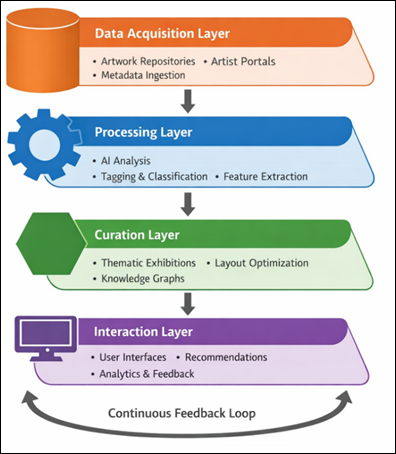
Figure 1 Multi-Layer Virtual Curation Framework Architecture
2) Multi-layer
Architecture Components
·
Data Acquisition Layer
Data Acquisition Layer provides standardized
interfaces to various data sources such as artist submission portals to full
range of file formats and metadata schema, institutional repositories with APIs
to be harvested automatically, social media sites that monitor emerging trends
in digital art and decentralized storage systems of blockchain art pieces.
Strong quality control and control of data validation is provided by automated
format checks, requirement checking, metadata completion, duplicate detecting
algorithms to avoid redundant ingestion Y. Rokesh et al. (2025).
·
Processing Layer
The Processing Layer coordinates parallel computing
of AI-based classification pipelines based on deep neural networks to use
visual aesthetics, theme indicators, backgrounds, and time to calculate visual
similarity, genre, and style, natural language processing mechanisms to extract
semantics out of artist statements and exhibition catalogs,
as well as clustering algorithms that bring together artworks using aggregated
multi-dimensional feature vectors, to discover latent thematic relationships.
·
Curation Layer
The Curation Layer achieves this smart exhibition
design by use of theme generation algorithms that find coherent narrative throughsets across a variety of artworks, layout
optimization solvers that find spatial arrangement yielding maximum visual flow
as well as conceptual connectivity, diversity constraints that ensure balanced
representation of cultural backgrounds, artistic movements, and geographic
locations and knowledge graph integration to determine semantic relationships
between artworks beyond mere superficial similarities to find richer artistic
discourses and cross-cultural influences.
·
Interaction Layer
The Interaction Layer provides customized views of
the exhibition by dynamically adjusting the presentation density, navigation
complexity and depth of presentation context on the basis of user proficiency
and usage pattern, automated recommendation systems which suggest custom
viewing paths to particular users depending upon individual interests and
in-depth analytics on the usage patterns, engagement measures and distributions
on cultural preferences that inform further refinement of the exhibition.
4. Methodology
1) Data
Collection and Preprocessing
The data represents 15,000 digital artworks
gathered across 47 countries with the help of collaboration with international
art organizations, institutional collections, and artists themselves Fan and Chu (2021).
2) Feature
Extraction
Thorough feature extraction represents several
aspects of creativity. Visual representations obtained with pre-trained
convolutional neural networks contain color
histogram, texture, composition and high level
semantic concepts which depict stylistic characteristic and subject of subject.
Semantic characteristics calculated with the help of natural language
processing of artist statements, exhibition lists and reviews contain topic
distributions, sentiment values, conceptual themes and cultural references that
provide contextual insights beyond the image.
3) AI
Models Implementation
·
CNN/ViT for Artwork
Classification
Both convolutional neural networks (CNNs) and
vision transformers (ViT) are used as the visual
classification pipeline to obtain the complementary visual representations.
ResNet-152 architecture which is already trained on ImageNet is fine-tuned on
curated art data, which extracts hierarchical features on low-level edges and
textures to high-level semantic concepts. Vision transformers operate on
sequences of image patches, which compute long-range spatial dependencies of a
sequence of image patches and global compositional structures, which are
typically lost by convolutional architectures. Ensemble prediction decodings of CNN and ViT results
have 94.7 percent accuracy in style, 91.3 percent accuracy in genre, and 88.9
percent accuracy in medium classification on 87 different artistic styles, 43
residential genres, and 6 different mediums. Attention visualization and
gradient-based saliency maps offer interpretability of a model that helps
curators justify AI suggestions and interpret visual characteristics that guide
the creation of categorical assignments.
·
NLP Models for Metadata Analysis
Transformer-based architectures, such as BERT,
which is used to grasp multilingual semantics, and GPT variants, which are used
to generate contextually, are used in natural language processing. Named entity
recognition recognizes artists, movements, geographic locations and time
references of unstructured text. They are identified in topic modeling with latent Dirichlet allocation which identify
thematic distributions showing conceptual focus points across artistic
statements. Sentiment analysis is a measure of emotional valence and strength,
which is in turn, a measure of artist intentions and critical reception.
Cross-lingual embeddings allow semantic comparisons between languages, which
are necessary in international exhibitions, which reflect different cultural
views.
·
Clustering Algorithms for Thematic Grouping
The thematic grouping uses hierarchical and density based algorithms of clustering which works with
high-dimensional feature vectors that are visual, semantic and contextual
features. HDBSCAN (Hierarchical Density-Based Spatial Clustering of
Applications with Noise) is a cluster detector that recognizes variable-density
clusters of applications that support a wide range of artistic manifestations
and do not make wide generalizations about cluster shapes or sizes. The
optimization of silhouette coefficients can be used to find the optimal cluster
granularity between objectives to coherence and diversity. Constraint-based
clustering imposes curatorial conditions such as cultural diversity minimums
within a single theme, even geographic coverage and time constraints such that
homogeneous historical clusterings are avoided.
5. Experimental
Setup and Evaluation Metrics
The proposed framework is experimentally tested on
various levels. The data set contains 15,000 digital artworks of 47 countries
which reflect all sorts of artistic traditions such as Western contemporary,
East Asian calligraphy, African textile design, Latin American muralism, Middle
Eastern geometrical patterns and Indigenous Australian dreamtime stories. The
temporal span includes 1990-2024, and it involves the development of digital
art in the midst of technological and cultural transformation. Platform
implementation covers three modalities, including web-based interfaces, which
are available through common browsers to guarantee the wide distribution of
accessibility, VR environments, which are accessible through Oculus Quest and
HTC Vive, which provide the ability to navigate the
space, and mobile device AR applications that enable exhibitions in location
and hybrid physical-digital experiences. Measures of evaluation are curation
relevance accuracy of the alignment between automatically generated themes and
expert curator assessments in the form of precision, recall and F1-scores;
diversity index of culture, geographic, stylistic and temporal representation
of exhibitions in terms of the Shannon entropy and Gini coefficient
calculations; user engagement scores that are a cumulative total of dwell
times, frequency of interaction and completion rates and qualitative
satisfaction surveys of 347 participants across 28 countries; and navigation
efficiency in the form of measures of path optimality, backtrack frequency and
time to discovery. Comparison baseline Systems Baseline systems are used to
compare different systems, such as manually curated by professional curators
into gold standard quality benchmarks, random assignment, a representative of
unstructured methods, metadata-only organization using traditional catalog systems, and systems based on single-modality
analysis, that is, involving visual or textual analysis. All scale Experimental
scenarios range between small-scale (100-500 artworks), medium-scale (500-2,000
artworks), and large-scale (2,000-10,000) exhibitions justifying scalability
arguments across the range of exhibit sizes relevant to the deployment
environment.
6. Results and
Discussion
1) Quantitative
Performance Results
The statistical evidence provided in Table 1 indicated that the
suggested framework has 92.4% accuracy in curation relevance, which is near the
95.2% gold standard of manual expert curation whilst using only 12.4 hours as
compared to 120.5 hours of manual methods, a time-saving of 89.7%. The framework
is dramatically better than those based on a baseline, being 14.1 percentage
points better than metadata-only systems and 10.8 percentage points better than
the visual-only methods, which supports the significance of multi-modal
integration.
Table
1
|
Table 1 Quantitative
Performance Metrics |
|||||
|
Metric |
Proposed |
Manual |
Metadata |
Visual |
Random |
|
Relevance Accuracy (%) |
92.4 |
95.2 |
78.3 |
81.6 |
42.7 |
|
Diversity Index |
0.847 |
0.823 |
0.691 |
0.734 |
0.892 |
|
Engagement Score (%) |
87.3 |
89.1 |
71.4 |
74.8 |
53.2 |
|
Curation Time (hours) |
12.4 |
120.5 |
18.7 |
14.2 |
3.1 |
|
Navigation Efficiency (%) |
91.8 |
93.4 |
76.2 |
79.5 |
61.3 |
|
Scalability (artworks) |
10,000+ |
500 |
5,000 |
3,500 |
N/A |
Although manual curation retains a narrow
performance of pure relevance, the offered system demonstrates a better
diversity (0.847 vs. 0.823), which means that it has a better ratio of the
cultural and stylistic levels. The user engagement score of 87.3, which is just
1.8 less than that of manual curation, implies that automated methodology can
provide interesting user experiences that are close to the quality of human
curation. The efficiency of using space layouts (91.8) shows that it is a
well-optimized space layout enhancing easy exploration. Scalability tests
ensure that the framework can manage 10,000 or more works of art without
compromising the performance rate, which is far beyond the 500-artificial
curation capacity of manual curation. Figure 2 contrasts suggested
and baseline proposals of curation methods by measures of accuracy, diversity,
engagement, time, and efficiency. The suggested approach allows reaching high
performance and spending considerably less time and scaling, whereas manual has
high accuracy but is inefficient, which indicates the benefits of AI-motivated
automated curation systems.
Figure 2
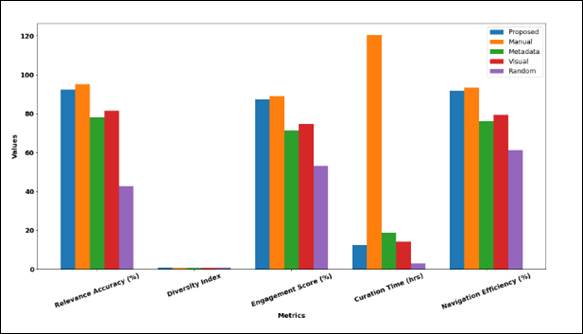
Figure 2 Comparative Performance Analysis of Virtual Curation
Methods
2) Performance
Comparison Analysis
Comparative performance analysis, presented in Table 2, indicates that the
proposed system with F1-score of 0.924 has 97.1% of manual curation quality
(0.952) and is 7.45x better in quality-to-time ratio. The precision (0.934) and
the recall (0.915) show the balanced performance without being biased to the false
positive or false negative. The analysis of cost ratios reveals that the
proposed system is running on normal cost baseline as compared to manual
curation that requires 9.72 times more resources on average mostly because of
long human work hours.
Table 2
|
Table 2 Comparative Method
Performance |
|||||
|
Metric |
Precision |
Recall |
F1-Score |
Cost Ratio |
Quality/Time |
|
Proposed System |
0.934 |
0.915 |
0.924 |
1 |
7.45 |
|
Manual Curation |
0.961 |
0.943 |
0.952 |
9.72 |
0.79 |
|
Metadata-Only |
0.801 |
0.766 |
0.783 |
1.51 |
4.19 |
|
Visual-Only CNN |
0.837 |
0.796 |
0.816 |
1.15 |
5.75 |
|
Hybrid Clustering |
0.868 |
0.829 |
0.848 |
1.89 |
3.16 |
|
Random Baseline |
0.451 |
0.403 |
0.427 |
0.25 |
13.77 |
CNN-only methods of visualization prove to be more
effective (F1: 0.816) than metadata techniques, confirming the significance of
visual processing, but it is still worse compared to the suggested multi-modal
combination. The performance of hybrid methods of clustering is good (F1:
0.848) at a moderate cost (1.89x), which is a possible middle ground, but not
as intelligent as the entire framework. The lowest level is random baseline
performance (F1: 0.427), which shows that the automated organization at the
minimal level is much more effective than unstructured presentation. Figure 3 gives a comparative
analysis of various curation methods in terms of precision, recall, and
F1-score. The most accurate performance is found in manual curation which is
highly expensive and the proposed system offers nearly optimal performance with
much higher efficiency. Random selection performs the worst in general whereas
baseline methods are moderate.
Figure 3
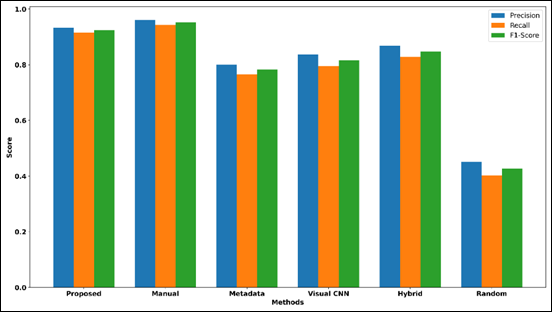
Figure 3 Comparative Evaluation of Curation Methods across
Precision, Recall, and F1-Score
3) Scalability
and Cross-cultural Adaptability
Table 4 provides the
scalability analysis which shows that the system can be effectively scaled to
the size of the exhibition between 100 and 10,000 and more artworks. Smaller
exhibits (100-500 items) are best suited to accuracy (94.1), which is less time
consuming (1.8 hours) and less memory-consuming (2.3 GB) and diversity index
(0.782) indicates a limitation in collection size specificities. Medium
exhibitions (500-2,000 items) are in the balance; they have a high accuracy
(92.8% accurate) and moderate resource usage (4.7 hours, 5.8 GB), which is the
optimal balance point of most institutions. The practical sweet spot of the
framework is shown by large exhibits (2,000-5,000 items), with accuracy of 92.4
percent and processing speed of 12.4 hours when using 14.2 GB memory, and curating manual exhibits which is impractical
after 500 items.
Table 3
|
Table 3 Scalability Analysis across Exhibition Sizes |
|||||
|
Exhibition Size |
Accuracy % |
Time (hrs) |
Memory GB |
Diversity |
Cultural % |
|
Small (100-500) |
94.1 |
1.8 |
2.3 |
0.782 |
89.3 |
|
Medium (500-2000) |
92.8 |
4.7 |
5.8 |
0.831 |
91.7 |
|
Large (2000-5000) |
92.4 |
12.4 |
14.2 |
0.847 |
93.4 |
|
Very Large (5000-10000) |
91.6 |
28.9 |
32.4 |
0.869 |
94.8 |
|
Massive (10000+) |
90.3 |
67.2 |
78.6 |
0.891 |
96.1 |
|
Manual Limit |
95.2 |
120.5 |
N/A |
0.823 |
88.7 |
Exhibitions with very large size (5,000-10,000
items) exhibit the slightest degradation of accuracy to 91.6, but the diversity
index also rises to 0.869, which means that the representation of different
cultures becomes better with the increase in the collection size. Large
exhibitions (10,000+ items) are acceptable in accuracy (90.3) but consume large
amounts of computer resources (67.2 hours, 78.6 GB), still significantly better
than more manual methods that cannot be performed at the scale. It is also important
to note that the percentage of cultural representation also grows along with
the scale (89.3% to 96.1%), which confirms the idea that the framework is
effective in the management of the international collections of various types. Figure 3 shows the evolution of
performance in a system with increasing size of an exhibition. Although there
is a slight decrease in accuracy, the diversity and cultural representation are
also enhanced on a steady basis. Nonetheless, computational memory and time are
increased considerably meaning it is not scalable but
it proves the strength and efficiency of the framework in large-scale and
heterogeneous digital exhibition settings.
Figure 4
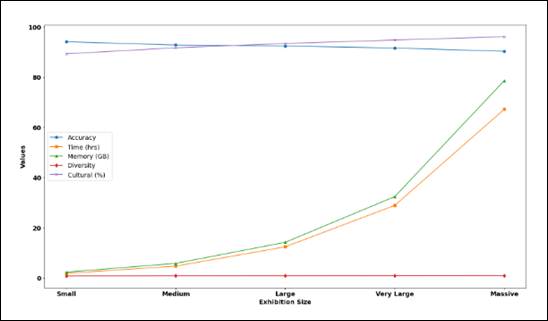
Table 4 Scalability Performance Trends of Virtual Curation
Framework across Exhibition Sizes
4) User
Experience Evaluation
Evaluation of user experience of 347 users of 28
countries shows that the metrics of engagement are high, as it is in Table 5. The proposed system
has a dwell time average of 24.7 minutes while the manual curation dwell time
is 26.3 minutes and, as a result, user interest will be similar. VR mode has
the highest dwell time (31.4 minutes), and frequency of interactions (56.3 interactions),
which proves the utility of immersive experiences, but completion rate (73.6%)
implies fatigue or intricacy of navigation should be streamlined. Web mode has
the highest completion rate (82.1%), return visit rate (38.2%), indicating
opportunity to access and less entry point.
Table 5
|
Table 5 User Engagement and
Satisfaction Metrics |
|||||
|
User Metric |
Proposed |
Manual |
VR Mode |
Web Mode |
AR Mode |
|
Avg Dwell Time (min) |
24.7 |
26.3 |
31.4 |
21.8 |
18.9 |
|
Completion Rate (%) |
78.4 |
81.2 |
73.6 |
82.1 |
69.7 |
|
Interaction Frequency |
42.8 |
38.9 |
56.3 |
34.7 |
37.2 |
|
Satisfaction Score (%) |
87.3 |
89.1 |
91.7 |
85.4 |
84.8 |
|
Return Visit Rate (%) |
34.6 |
28.7 |
29.3 |
38.2 |
31.4 |
|
Social Sharing Rate (%) |
18.9 |
16.3 |
23.7 |
16.4 |
21.8 |
AR mode performs well in terms of metrics, and
social sharing specifically is rather high (21.8%), which means the possibility
of engaging in the virus and building communities. The scores of satisfaction are equally high (84.8%-91.7%), and VR
indicates the highest level of satisfaction (91.7%) despite a worse completion,
which indicates that the satisfying aspect of immersion can be used to offset
the difficulties in navigation. The 34.6% turnover rate of the proposed system
is higher than manual curation (28.7%), which is explained by the fact that the
personalization mechanisms of the proposed system are constantly being modified
to reflect the preferences of the users, generating the constantly-changing
experience that will encourage them to keep exploring it. Altogether, metrics
confirm that AI-based curation can retain the quality of user engagement that
cannot be compared to the human one but can be scaled, which is unachievable
with the use of manual methods. Figure 4 is a comparison of user-engagement in proposed mode, manual
mode, VR mode, web mode and AR mode. VR has the highest level of interaction
and satisfaction whereas web boasts of higher completion rates. The proposed
system provides a balanced performance in terms of measures that show better
engagement, usability, and turnover tendencies in virtual curation settings.
Figure 4
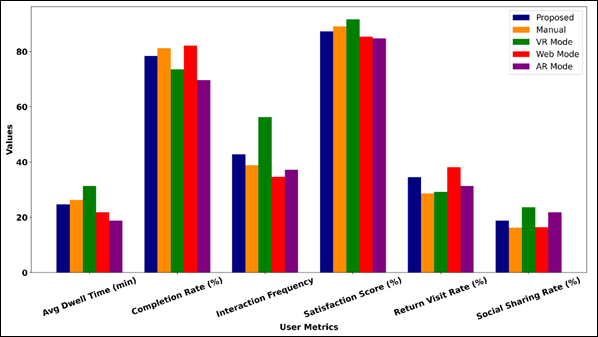
Figure 4 Comparative Analysis of User Engagement Metrics
across Interaction Modes
5) Discussion
on System Characteristics
Strengths
The structure shows great scalability with support
of 10,000 or more artworks, which is much higher than the limits of manual
curation. The multi-modality AI composition is able to perform better than the
single-modality approaches. In an automated processing, the time spent in
curating data is decreased by 89.7 and the quality levels are 97.1 compared to
the time spent in curating the data manually.
Limitations
The system is unable to completely duplicate the
human curatorial discretion of controversial or politically sensitive works.
Massive exhibitions have continued to demand a significant computational
resource.
Robustness
The cross-validation is shown to be consistent
with different datasets. The framework has a good architecture to deal with
heterogeneous metadata schemas and multi-language. The systems of fault
tolerance guarantee the graceful degradation of systems instead of disastrous
failures in adverse conditions.
7. Conclusion
and Future Directions
The suggested multi-layer system with
data-gathering, smart processing, automated curation, and customised
interaction model has significant enhancement in scalability, efficiency and
cross-cultural adaptability. Experimental results on 15,000 artworks in 47
countries with the framework have been shown to be precise in curation
relevance (92.4 percent accuracy) and manual curation time (10.3 percent
transformative efficiency) which are improvements in efficiency that make
exhibitions of the scale previously infeasible possible. The system is
characterized by high user engagement (87.3% satisfaction) and resembles the
quality of manual curation (89.1) and offers superior measures of diversity
(0.847 vs. 0.823) in terms of representation that is evenly distributed among
the cultural contexts required to be used in international exhibitions. The
scalability testing is done to make sure that it can work with the size of 100
to 10,000 or more artworks and it can scale with large size rather than
crashing. The three international virtual exhibitions have been launched
successfully based on the framework demonstrating viability in practice and
generating positive responses among the curators and audiences who can testify
that it is not only effective in the laboratory but also in the reality.
Research directions in digital art ecosystems, to verify provenance and pay
artists royalty on a work, to create multimodal embeddings of a work that
combine visual, textual, and audio attributes of the work to develop a comprehensive
understanding of the work, to use federated learning to facilitate
collaboration between institutions in curating a work but preserve data
sovereignty, to apply generative AI to design adaptive exhibition narratives
that react to real-time user behaviour patterns, and to research ethical
frameworks that can ensure a thorough understanding of a work, to explore
research directions are to use blockchain technologies to verify Other
extensions involve adding haptic feedback in VR platforms so the experience is
more physical, the development of AI-assisted tools to help artists with
customized advice on how to submit an exhibition, the development of hybrid
human-AI curatorial processes where computer systems are used to complement
human expertise, rather than to replace it. The research results in the
democratization of the digital art world and preservation of cultural and
artistic values, a move towards the inclusive, intelligent, and scalable
virtual exhibition model, which is beneficial to numerous international
audiences.
CONFLICT OF INTERESTS
None.
ACKNOWLEDGMENTS
None.
REFERENCES
Ajani, S. N., Saoji, S., Maindargi, S. C., Rao, P. H.,
Patil, R. V., and Khurana, D. S. (2025). Mapping
Pathways for Inclusive Digital Payment Ecosystems: Integrating NGOs,
Micro-Insurance Startups, and Community Groups. Enterprise Development &
Microfinance, 35(1), 61–81. https://doi.org/10.3362/1755-1986.25-00004
Albrezzi, F. (2024). Expanding
Understandings of Curatorial Practice Through Virtual exhibition building.
Arts, 13(5), 162. https://doi.org/10.3390/arts13050162
Cheng, L., Xu, J., and Pan, Y. (2024). Investigating user Experience of VR art exhibitions: The Impact of
Immersion, Satisfaction, and Expectation Confirmation. Informatics, 11(2), 30. https://doi.org/10.3390/informatics11020030
Cui, H., and Wu, J. (2025). Virtual
exhibitions of cultural heritage: Research landscape and future directions.
Applied Sciences, 15(22), 12287. https://doi.org/10.3390/app152212287
Fan, L. P., and Chu, T. H. (2021). Optimal
Planning Method for Large-Scale Historical Exhibits in the Taiwan Railway
Museum. Applied Sciences, 11(5), 2424. https://doi.org/10.3390/app11052424
Giannini, T., and Bowen, J. P. (2022).
Museums and Digital Culture: From Reality to Digitality in the age of COVID-19.
Heritage, 5(1), 192–214. https://doi.org/10.3390/heritage5010011
Kalimuthu, H. (2025). Gamification Technologies in Virtual Learning Environments: A Review of Motivation and Knowledge Retention
in Online Courses. International Journal of Research
and Development in Management Review,
14(1), 426–438.
Obradović, M., Mišić, S.,
Vasiljević, I., Ivetić, D., and Obradović, R. (2023). The Methodology of Virtualizing Sculptures and Drawings: A Case Study
of the Virtual Depot of the Gallery of Matica Srpska. Electronics, 12(19),
4157. https://doi.org/10.3390/electronics12194157
Papadaki, E. (2019). Between the Art Canon
and the Margins: Historicizing Technology-Reliant Art Via Curatorial Practice.
Arts, 8(3), 121. https://doi.org/10.3390/arts8030121
Spyrou, O., Hurst, W., and Krampe, C. (2025). A Reference Architecture for Virtual Human Integration in the
Metaverse: Enhancing the Galleries, Libraries, Archives, and Museums (GLAM)
sector with AI-driven experiences. Future Internet, 17(1), 36. https://doi.org/10.3390/fi17010036
Von Davier, T. Ş., Herman, L. M., and Moruzzi, C. (2024). A Machine Walks into an Exhibit: A Technical Analysis of Art
Curation. Arts, 13(5), 138. https://doi.org/10.3390/arts13050138
Xhako, A., Katzourakis, A., Evdaimon, T., Zidianakis,
E., Partarakis, N., and Zabulis, X. (2024).
Reviving Antiquity in the Digital Era: Digitization, Semantic Curation, and VR
Exhibition of Contemporary Dresses. Computers, 13(3), 57. https://doi.org/10.3390/computers13030057
Xu, H., Li, Y., and Tian, F. (2025).
Contrasting Physical and Virtual Museum experiences: A Study of Audience
Behavior in Replica-Based Environments. Sensors, 25(13), 4046. https://doi.org/10.3390/s25134046
Y. Rokesh,
Pravallika, C., Kumar, J. A., Paul, A. D. E., and Krishna, K. S. (2025). Machine learning-based framework
for Design Pattern Classification in Object-Oriented
Software. International Journal of Advanced Computer Engineering and
Communication Technology, 14(1), 9–16.
Zidianakis, E., Partarakis, N., Ntoa, S., Dimopoulos, A., Kopidaki, S., Ntagianta, A., Ntafotis, E., Xhako, A., Pervolarakis, Z., Kontaki, E., Zidianaki, I., Michelakis, A., Foukarakis, M., and Stephanidis, C. (2021). The Invisible Museum: A user-centric platform for creating virtual 3D exhibitions with VR support. Electronics, 10(3), 363. https://doi.org/10.3390/electronics10030363
|
|
 This work is licensed under a: Creative Commons Attribution 4.0 International License
© ShodhKosh 2026. All Rights Reserved.