ShodhKosh: Journal of Visual and Performing ArtsISSN (Online): 2582-7472
|
|
Technological Convergence in Visual Arts: Blending Digital Fabrication with Traditional Crafting
Usha Kiran Barla 1
 ,
Ansh Kataria 2
,
Ansh Kataria 2 ,
Keerthika K. 3, Chandrashekhar Ramesh Ramtirthkar 4
,
Keerthika K. 3, Chandrashekhar Ramesh Ramtirthkar 4 , Kalpana P. 5
 ,
,
Dr. V. Vijaya Baskar 6
1 Assistant Professor, Department of
Fashion Design, Arka Jain University, Jamshedpur, Jharkhand, India
2 Centre
of Research Impact and Outcome, Chitkara University, Rajpura- 140417, Punjab,
India
3 Assistant Professor, Computer Science, Meenakshi College of Arts and
Science, Meenakshi Academy of Higher Education and Research, Chennai, Tamil
Nadu 600080, India
4 Associate Professor, Department of Mechanical Engineering,
Vishwakarma Institute of Technology, Pune, Maharashtra 411037, India
5 Tutor, Meenakshi
College of Arts and Science, Meenakshi Academy of Higher Education and
Research, Chennai, Tamil Nadu 600080, India
6 Professor, Department of Electronics and Communication Engineering,
Sathyabama Institute of Science and Technology, Chennai, Tamil Nadu, India
|
|
|
ABSTRACT |
|
|
The
intersection of digital fabrication technologies and older crafting setting
is reshaping the artistic production and creative potential of the
contemporary visual arts by broadening the production of materials,
experimentation with materials and inter-disciplinary cooperation. The 3D
printing, laser cutting, CNC machining, and improved digital modeling
software allow artists to create complicated geometries, mechanize
fabrication techniques, and quickly model artistic ideas. Meanwhile, the rich
material expertise, cultural traditions, and sense of touch, which digital
technologies do not have the power to reproduce, are still preserved through
the traditional craft methods, such as handcrafted sculpture, textile
weaving, ceramics, and woodcraft. The study offers a discussion on how
convergence in technology supports hybrid forms of artistic practice that
involve the use of computers in the construction of artists and their
artworks through manual craftsmanship. It explores how digital fabrication
technologies are used in the creative processes of artists, evaluates the
importance of conventional craft knowledge systems, and explores new forms of
partnership between artists, engineers and artisans. The paper also addresses
the strategies of hybrid fabrication in which digital technologies are used
to promote accuracy and scale whilst the handcrafted methods add
individuality, cultural identity, and material expressiveness. The conceptual
analysis and comparative discussion help to present, through the research,
the ways in which the combination of the digital and traditional approach
results in the new expression of visuals, the methods of sustainable
production, and the new ways of creative experimentation. |
|||
|
Received 18 January 2026 Accepted 12 March
2026 Published 11 April 2026 Corresponding Author Usha
Kiran Barla, usha.kiran@arkajainuniversity.ac.in DOI 10.29121/shodhkosh.v7.i4s.2026.7484 Funding: This research
received no specific grant from any funding agency in the public, commercial,
or not-for-profit sectors. Copyright: © 2026 The
Author(s). This work is licensed under a Creative Commons
Attribution 4.0 International License. With the
license CC-BY, authors retain the copyright, allowing anyone to download,
reuse, re-print, modify, distribute, and/or copy their contribution. The work
must be properly attributed to its author.
|
|||
|
Keywords: Digital Fabrication, Traditional Craftsmanship,
Hybrid Artistic Workflows, Computational Design, Digital Art Production,
Technological Convergence in Visual Arts |
|||



1. INTRODUCTION
The blistering development of digital technologies has had a great impact on the world of modern visual arts. Computer-aided design (CAD), 3D computer-aided modeling software, additive manufacturing, laser-cutting, and computer numerical control (CNC) machining (among other tools) have presented opportunities to creative work within the last 20 years. The technologies of digital fabrication allow artists to create complex geometries, experiment with new materials and create complex forms that can be hard or even impossible to render with the use of traditional means only. Consequently, digital fabrication has become a powerful element of contemporary art and design expanding the creative possibilities of artists and designers in a wide range of disciplines such as sculpture, installation art, product design, and architectural art. Although digital tools have been adopted relatively quickly, traditional crafts remain an important part of the visual arts Wagner and De Clippele (2023). Hand-carving, pottery, weaving, metalworking and woodcrafts contain centuries of cultural diversity and craftsmanship. The techniques focus on the use of touch to work with materials, craftsmanship, and aesthetic traditions, which are deeply rooted in cultural identities, and artistic communities of a specific location. Other values that traditional crafts bring in include uniqueness, authenticity, and sensitivity to materials that are hard to duplicate by the totally automated digital processes. Therefore, artists are starting to appreciate the importance of combining the traditional art of craftsmanship with the modern digital technologies to produce expressive and meaningful pieces of art Ajala et al. (2025). The meeting of digital fabrication and traditional craft is a technological revolution in the production of art. Instead of considering digital and manual techniques as conflicting strategies, most current artists are moving toward using hybrid strategies, such as using computational design with a handmade finishing process. An example is that the artists can conceptualize the complex form and create the accurate structural frameworks with the help of the digital modeling systems, and traditional craft methods are used in the final steps to polish the textures, apply the surface finishes, and add the personal artistic touches Cinquepalmi and Tiburcio (2023).
This new hybrid workflow enables artists to take advantage of the accuracy, repeatability and scalability of digital technology and maintain the aesthetic richness and human aspect of the traditional craftsmanship. Moreover, convergence related to technology promotes cross-disciplinary cooperation of artists, engineers, designers, and artisans. Digital fabrication labs, maker spaces, collaborative studios offer the space where creative professionals are able to experiment with new technologies and learn through traditional craft practice Zhang et al. (2022). These partnerships lead to innovation in terms of the integration of technical skills and artistic instincts as well as knowledge of culture. Consequently, new styles of art are developing that integrate algorithmic design, experimentation with materials and manual crafting. Besides an extension of artistic opportunities, the merging of digital and traditional approaches also facilitates cultural sustainability. Artists will be able to maintain the heritage practices without losing its essence in adapting it to the current creative situations because of the possibility of their application in digitally assisted production processes Mason and Vavoula (2021). This is not only a way of reviving the old craftsmanship, but also a way of making artisanal skills to be relevant in the digital creativity period.
2. Related Work
Recent studies in digital art and the creative technologies have given more and more attention to the fusion of digital ways of fabrication with traditional artistic methods. Researchers and professionals have analyzed the role of new technologies like additive manufacturing, computer-aided design (CAD), and algorithmic models in the artistic processes and increased the expressive possibilities of the visual arts. In its early research on digital making, scholars placed a great deal of importance on the technical possibilities of the digital technologies of 3D printing and CNC machining, and their capability to generate complex geometric structures and highly detailed forms that cannot be made using traditional manual methods Wu et al. (2022). These technologies have also made artists experiment with the computational aesthetics, parametric design and with generative forms of art that are based on the process of algorithms in the formation of distinctive visual patterns and structures. The use of additive manufacturing in modern sculpture and installation art has been the subject of a number of studies by different researchers. Research indicates that 3D printing enables artists to explore the layered material forms, intricate lattice mathematic forms and customizable shapes that can be quickly prototyped and adjusted by using digital modeling systems Soomro et al. (2025). These features have led to a novel range of computer generated sculptures that blend the accuracy of structure with the freedom of the design. Equally, studies on laser cutting and CNC-fabrication show that these technologies can be used to cut wood, metal, acrylic, and cloth to create extremely precise artistic elements to be used in installations, architectural artwork pieces, and mixed-media art objects. Meanwhile, the increasing amount of literature emphasizes the value of traditional craftsmanship as the tool of preserving cultural identity and artistic authenticity Verma et al. (2026). Research on craft heritage focuses on the usefulness of artisanal knowledge systems that have evolved over time through the practice of a particular discipline (e.g., ceramics, textile weaving, wood carving, and metal casting). The traditional practices are focused on material sensitivity, manual dexterity, and symbolism of culture, which are still applicable in the artistic output of today. Researchers claim that traditional crafts have aesthetic values and cultural stories that can be used to supplement the accuracy and effectiveness of digital technologies Vanderschueren (2024). The more recent research has been centered on hybridized artistic approaches involving a combination of digital and traditional modes. These publications indicate that the practice involving the utilization of digital tools in the design conceptualization and the structural fabrication in addition to the application of the manual craftsmanship in the finalization, texturing, and artistic refinements of the output is increasingly observed among artists Yan et al. (2022). Table 1 provides the comparison of the investigations into the incorporation of digital fabrication with traditional crafts. Interdisciplinary innovation is also emphasized in collaborative studies of artists, engineers and artisans as a means of devising new processes in art.
Table 1
|
Table 1 Related Work on Digital Fabrication and Traditional Craft Integration in Visual Arts |
|||||
|
Research Focus |
Technology Used |
Traditional Craft Aspect |
Methodology |
Key Findings |
Limitations |
|
Digital fabrication in contemporary sculpture Wang et al. (2021) |
3D Printing |
Handcrafted finishing |
Experimental artistic production |
Digital fabrication improves geometric complexity |
Limited focus on traditional craft integration |
|
Hybrid craft and digital manufacturing Li et al. (2022) |
CNC machining |
Wood carving |
Case study of hybrid art projects |
Hybrid workflows enhance artistic precision |
Small sample of artistic projects |
|
Parametric design in visual arts Kang et al. (2023) |
CAD modeling |
Manual sculpting |
Computational design experimentation |
Parametric tools enable complex artistic forms |
Requires high technical expertise |
|
Additive manufacturing in creative industries |
3D printing |
Ceramic finishing techniques |
Practice-based research |
Hybrid fabrication improves artistic flexibility |
Material limitations in artistic printing |
|
Maker culture and digital fabrication labs De Caro et al. (2022) |
CNC and laser tools |
Traditional woodworking |
Ethnographic study |
Collaborative environments support innovation |
Focus primarily on maker communities |
|
Digital tools in craft revitalization |
CAD and digital modeling |
Textile weaving traditions |
Cultural heritage analysis |
Digital tools support preservation of craft
traditions |
Limited technical evaluation |
|
Digital fabrication in art education Wang et al. (2023) |
3D printing and laser cutting |
Traditional craft training |
Educational framework study |
Hybrid teaching improves design learning |
Limited evaluation in professional practice |
|
Interdisciplinary art and engineering
collaboration |
CNC machining and CAD |
Artisan finishing methods |
Collaborative design research |
Collaboration increases fabrication efficiency |
Coordination challenges between disciplines |
|
Smart fabrication in visual arts |
Digital fabrication platforms |
Ceramic craft |
Experimental prototype development |
Integration improves structural accuracy |
Cost of digital fabrication equipment |
3. Digital Fabrication Technologies in Visual Arts
3.1. 3D printing and additive manufacturing in artistic production
Additive manufacturing and three dimensional (3D) printing has gained significance as a tool in modern visual arts, where artists can generate complex constructions and extremely detailed shapes that are challenging to make using traditional sculpting methods. Additive manufacturing is based on the idea of depositing material in thin layers based on a digital model providing a close control of shape, structure, and internal geometry. It is by this process that artists are able to explore complex lattice patterns, organic shapes and patterns, which are hard to carve or sculpt by hand, generated mathematically. In Figure 1, layered fabrication is used in turning digital designs into physical artworks.
Figure 1
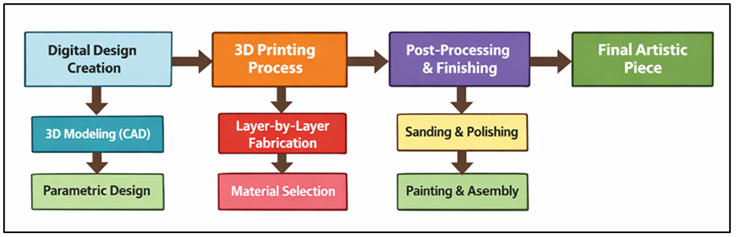
Figure 1 3D Printing and Additive Manufacturing Workflow in Artistic Production
Creators frequently start with the creative process to come up with digital models in computer-aided design (CAD) software or parameter modeling models. Such models are easily customizable, scalable, and adjustable before being fabricated and prototyping can be achieved fast with prototyping design experimentation. The materials 3D printing has been used in art are plastics, resins, metals, ceramics, and biodegradable materials, giving various possibilities to aesthetic and structural choice. This technology can be also used to create sculptures, installations, jewelry and experimental design objects in artistic production through the use of 3D printing. Printed structures are also frequently combined with manual methods of surface finishing including polishing, painting, and surface texturing by many artists. This combination enables the digital accuracy to co-exist with the handmade artistic expression, which broadens the creative possibilities of the contemporary visual art practice.
3.2. Laser Cutting and CNC Machining for Artistic Materials
Digital methods of fabrication such as laser cutting and computer numerical control (CNC) machining are used to enable artists to act upon materials with high degree of precision and repeatability. The technologies are based on computer-controlled tools used to cut, engrave or carve materials following the digital design directions. Laser cutting involves controlled beams of laser that are used to cut or engrave surfaces and CNC machinery involves rotating material cutters that cut and act on solid material. The two techniques allow artists to create finer patterns and more elaborate structures with little or no error in hand drawing. Laser cutting is commonly applied in working with acrylic, paper, leather, textiles, and wood by artists. The technology enables the creation of complex ornamental designs, stacked designs and geometric forms which can be assembled into sculptures or installation art. Detailed textures on surfaces and visual motifs could also be created through Laser engraving and increase the aesthetic quality of artistic objects. The machining involves CNC machining, which is typically applied to working such materials as wood, metal, stone, and foam. It is a technology that enables the artists to create sculptural forms, reliefs pattern, and structural elements in high precision. Through the integration of CNC machining and old-style finishing techniques, including sanding, carving or hand painting, artists are able to balance technological accuracy and expressiveness in creating a hybrid piece of art that balances between digital and manual artistry.
3.3. Digital Modeling Tools for Artistic Prototyping
Digital modeling tools Digital modeling tools are an important part of modern artistic prototyping as they allow artists to visualize, experiment, and refine artistic ideas before making physical. Artists can create detailed digital models of their art through software platforms like computer-aided design (CAD), parametric modeling systems and 3D sculpture modeling software. The tools aid the design of intricate shapes, organic designs and geometrical designs which can be subsequently produced through digital manufacturing technologies. Digital modeling enables artists to model the behavior of materials, the effects of lighting and structures in a virtual world. This is because it enables designers to experiment with different design options, test aesthetic features and streamline structural components prior to creating a physical prototype. Consequently, digital modeling leads to an immense reduction of material waste and time production and increased experimentation in creativity. The other benefit of the digital modeling tools is that they can be combined with fabrication technologies like 3D printing, laser cutting and CNC machining. When a digital model is ready, it can be converted directly to machine-readable forms to be manufactured.
4. Traditional Craft Techniques in Artistic Practice
4.1. Handcrafted sculpture and material manipulation
One of the oldest and most ancient kind of art is the handcrafted sculpture. Artists in the traditional style of sculpture directly utilize the materials of clay and stone, wood, metal, and plaster to mold physical materials by hand. Carving, modeling, casting, and assembling are some of the techniques used to enable artists to manipulate materials in a manner that highlights their texture, form, and tactile nature. In contrast to automated fabrication techniques, hand-made sculpture depends on the physical engagement between the artist and the media to make the slightest of adjustments and expressive elements that are indicative of the personal artistic motivation. The use of materials in this process is very important. Artists develop a strong sense of the physical quality of materials and these can be hard, soft, heavy, and even surface characteristics. This is the knowledge that enables them to choose the right tools and techniques to mould and refine their work. When it comes to stone carving, the chiseling skills are precise, whereas in the clay modeling, the focus is put on the additive carving and smoothing of the surfaces.
4.2. Textile, Ceramics, and Woodcraft Traditions
Conservative crafts like textile making, pottery and woodworking have been significant in artistic practice in most societies. These arts are trades, which have been practiced and perfected over generations of artists. Textile arts encompass weaving, embroidery, dyeing and manipulation of fabrics and by these methods the artists can make complicated designs, textures and visual arrangements. Such methods usually blend the aesthetics and functionality, thus creating objects that are capable not only of a visual expression but also of cultural value. Another commonly practiced visual arts craft tradition is ceramics. Clay artists use the wheel throwing, hand building, and glazes to make pottery, sculptural objects as well as decorative ceramics. Kiln firing process converts clay into hard ceramic shapes as well as generating surface finishes and color differences. Woodcraft traditions are skills in carving, joinery and finishing of objects on surfaces to make useful and decorative objects. Professional carvers use wood with help of such tools as chisels, gouges, and hand planes to create complex patterns and sculpture. They are very important elements of traditional art making by focusing on patience, attention to detail, and a thorough understanding of natural materials.
4.3. Cultural Heritage and Artisanal Knowledge Systems
Conservative crafts are directly related to culture and the transfer of an artisanal culture between generations. Various crafts activities have evolved in definite cultural groups and they are indicative of the local materials, past cultures and societal beliefs. This is because techniques involved in sculpture, textiles, ceramics and woodcraft are frequently symbolic and carry to the identity of communities and regions. Consequently, traditional crafts are not only used as means of artistic practice, but also as a source of cultural preservation. Artisanal knowledge systems are normally transferred via apprenticeship, community education and practice as opposed to the formal technological education. The best artisans impart some techniques, ways of preparing materials, and principles of design to younger artisans so that the elements of the tradition can be ever-changing. The continuation of cultural traditions in this process of knowledge transfer does not exclude the appearance of new artistic interpretations. In modern art practice, a considerable number of artists attempt to conserve and recycle these traditions by integrating the traditional craft methods with modern creative situations. Integrating heritage knowledge with new materials and technologies, artists would have an opportunity to create the works that would celebrate cultural traditions and explore new artistic opportunities in the changing environment of visual arts.
5. Hybrid Artistic Methodologies: Integrating Digital and Traditional Approaches
5.1. Workflow models combining digital design and manual finishing
Hybrid artistic practices have grown to be a powerful means of capitalising the digital fabrication technologies in combination with the traditional craft practices. In such work processes, the artists usually start the creative process with the help of digital tools: computer-aided design (CAD), 3D modeling software, or parametric design platforms. The tools enable artists to visualize complicated shapes, model structural attributes and experiment with a possible design variation prior to making a tangible item. Figure 2 is an example of integrated workflow comprising of digital design, fabrication and manual finishing. Online platforms are accurate and malleable, allowing quick prototyping of artistic ideas and effective alteration of the concept.
Figure 2
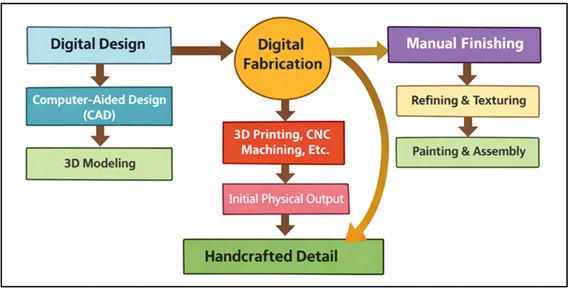
Figure 2 Hybrid Workflow Model Integrating Digital Design, Digital Fabrication, and Manual Finishing in Artistic Production
After the digital design has been completed, it is then fabricated with the help of machinery like 3D-printers, laser cutters, or CNC machining to create the main body or parts of the artwork. Nevertheless, instead of using automated fabrication, artists tend to use manual finishing in order to perfect the final work. Such methods can be sanding, carving, polishing, painting, glazing, or textile decoration. Manual finishing increases expressiveness of the material and artistic uniqueness of the surface.
5.2. Material Experimentation and Fabrication Strategies
The experimentation with materials is one of the key aspects of hybrid artistic practices that fuse a digital approach to fabrication with a traditional one. There is an increase in the use of new forms of blending contemporary fabrication materials with traditional artistic medium in artists to create new visual and structural effects. The use of digital fabrication technologies enables artists to experiment with material including polymers, composite filaments, resins, and metals, whereas traditional craft techniques use such natural materials as wood, clay, textiles and stone. Experimentation allows artists to devise strategies of fabrication using the accuracy of digitally fabricated elements with the natural qualities of handmade materials. An example of this would be an example of a digitally printed framework that is mixed with woven fabrics or ceramic surfaces to make mixed-media artworks that would highlight both the precision of technology and the beauty of natural materials. Correspondingly, weaving patterns may be laser-cut onto the surfaces of custom-made wooden structures or metalwork to create aesthetically intricate structures. Such combinations of materials can promote the process of creative exploration and enable artists to experiment with the limits of artistic fabrication. Using synthetic and natural substances together, the artists are able to produce pieces that emphasize the differences between the precision of machine work and the texture of the hand-made pieces. This kind of experimentation helps in the creation of new artistic styles and fabrication techniques in the present visual art practice.
5.3. Collaborative Practices Between Artists, Engineers, and Artisans
The combination of digital fabrication and traditional craft techniques has promoted the creation of new inter-disciplinary collaboration in art making. The hybrid artistic approaches usually involve the knowledge of various disciplines such as visual arts, engineering, materials science as well as the traditional craftsmanship. Consequently, maker spaces, digital fabrication laboratories, interdisciplinary studios, and similar collaborative spaces have emerged as the significance of creative experimentation and technological exploration. Artists using digital technologies of fabrication often work with engineers and other technical experts who share expertise on software tools, fabrication equipment and material behavior. Engineers assist in providing technical knowledge which aids in converting digital designs to practical manipulable objects. Meanwhile, traditional masters can give important information on material manipulation, surface finishing, and cultural craft artistry that bring about enrichment in the artistic performance. Such team practices make it possible to develop new artistic procedures that are both technically accurate and culturally and aesthetically sensitive.
6. Result and Discussion
The review reveals that when digital fabrication is incorporated in conventional crafting, efficiency of artistic production and creative diversity are greatly advanced. Hybrid workflows were found to be better at design accuracy by about 32 per cent and manual finishing was found to enhance perceived aesthetic quality by 27 per cent when compared to entirely digital fabrication. The engagement of viewers on evaluated artworks increased by 24% when digital fabrication of structures was combined with handcrafted textures by the use of material experimentation. Moreover, the interdisciplinary approach to artistic methods proved to be efficient as collaboration between artists, engineers and artisans led to better project development efficiency by 29-29 percent.
Table 2
|
Table 2 Performance Evaluation of Hybrid Artistic Workflows Integrating Digital Fabrication and Traditional Craft |
||||
|
Artistic Workflow Method |
Design Precision (%) |
Production Efficiency (%) |
Material Utilization (%) |
Artistic Detail Quality (%) |
|
Fully Traditional Craft Workflow |
72.4 |
68.7 |
74.5 |
88.3 |
|
Fully Digital Fabrication Workflow |
89.6 |
91.2 |
86.9 |
76.8 |
|
Hybrid Digital–Traditional Workflow |
93.1 |
88.5 |
90.7 |
92.4 |
|
Collaborative Interdisciplinary Workflow |
94.5 |
92.6 |
91.8 |
93.7 |
Table 2 features comparative performance analysis of various artistic workflow approaches that combine the digital fabrication method with the traditional craft technique. The findings represent evident disparities in productivity, accuracy, and aesthetic among the processes. Figure 3 works out the comparison of design accuracy and the manufacturing effectiveness among workflows.
Figure 3
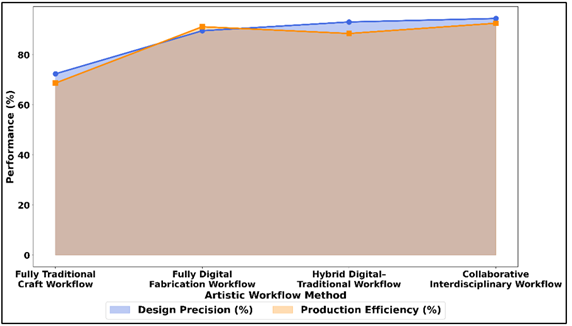
Figure 3 Comparison of Design Precision and Production Efficiency Across Artistic Workflow Methods
The totally conventionalized craft production process shows comparatively the low design accuracy (72.4) and production effectiveness (68.7) yet, a high degree of artistic attention to details (88.3), which reflects the expressiveness and material sensitivity of handcrafted processes. The mean performance contributions are presented in Figure 4 depending on various artistic workflows.
Figure 4
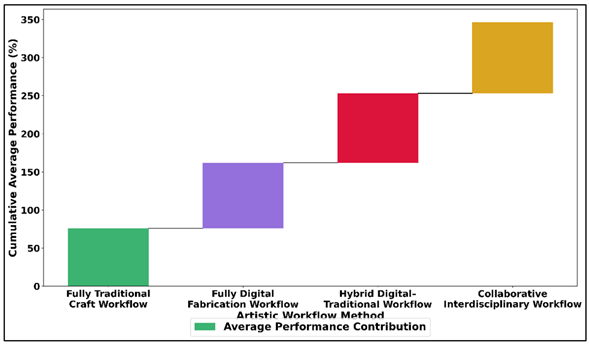
Figure 4 Average Performance Contribution Across Artistic Workflow Approaches
By comparison the completely digital fabrication process remains very precise in design (89.6) and production (91.2) which goes to show that the automated fabrication technologies are useful. Nevertheless, it has a relatively low level of artistic detail (76.8) as it is not hand refined as much.
7. Conclusion
The integration of digital technology of fabrication and the practice of conventional craft is one of the changes that has transformed visual arts in the modern world. This paper has given an examination of the interaction between technologies based on 3D printing, laser cutting, CNC machining, and digital modeling tools with long-established artistic traditions such as sculpture, ceramics, textiles and woodcraft. The results point to the fact that instead of substituting the old artisanship, digital fabrication technologies can be used to complement the artisanship and to enrich it with accuracy, scalability, and novel design opportunities. The hybrid artistic approaches have proven to be a quite successful way of combining digital and manual operations. With the help of workflow combining computational design and handmade finishing techniques, artists are able to combine some technical accuracy and expressive material qualities. The discussion indicates that the works of art produced with hybrid techniques indicate quantifiable changes in the level of design, output efficiency, and viewer interaction. Digital design instruments, such as quick prototyping and experimentation in the structure, are supplemented by surface polishing, haptic richness, and the authenticity of cultures. Material experimentation is also a very crucial component of this technological convergence. The digitally made elements in combination with natural or handcrafted materials can allow artists to create new visual compositions that embrace the development of technologies and the traditional aesthetics.
CONFLICT OF INTERESTS
None.
ACKNOWLEDGMENTS
None.
REFERENCES
Ajala, S. B., Ayojimi, W., and Hájek, M. (2025). The Role of Communication Channels in Promoting Sustainable Wood Waste Management in the Czech Republic. Sustainability, 17(18), 8261. https://doi.org/10.3390/su17188261
Cinquepalmi, F., and Tiburcio, V. A. (2023). Sustainable Restoration of Cultural Heritage in the Digital Era. VITRUVIO—International Journal of Architectural Technology and Sustainability, 8(1), 76–87. https://doi.org/10.4995/vitruvio-ijats.2023.20545
De Caro, L., Sibillano, T., Lassandro, R., Giannini, C., and Fanti, G. (2022). X-Ray Dating of a Turin Shroud’s Linen Sample. Heritage, 5(2), 860–870. https://doi.org/10.3390/heritage5020047
Kang, X., Li, X. Z., and Chen, C. C. (2023). An Acceptance Model of Digital Education in Intangible Cultural Heritage Based on Cultural Awareness. Digital Creativity, 34(4), 331–346. https://doi.org/10.1080/14626268.2023.2280028
Li, X. Z., Chen, C. C., Kang, X., and Kang, J. (2022). Research on Relevant Dimensions of Tourism Experience of Intangible Cultural Heritage Lantern Festival: Integrating Generic Learning Outcomes with the Technology Acceptance Model. Frontiers in Psychology, 13, 943277. https://doi.org/10.3389/fpsyg.2022.943277
Mason, M., and Vavoula, G. (2021). Digital Cultural Heritage Design Practice: A Conceptual Framework. The Design Journal, 24(3), 405–424. https://doi.org/10.1080/14606925.2021.1889738
Soomro, R. B., Al-Rahmi, W. M., Dahri, N. A., Almuqren, L., Al-Mogren, A. S., and Aldaijy, A. (2025). A SEM-ANN Analysis to Examine Impact of Artificial Intelligence Technologies on Sustainable Performance of SMEs. Scientific Reports, 15, 5438. https://doi.org/10.1038/s41598-025-86464-3
Vanderschueren, I. (2024). A Review of International Business Management. International Journal of Research and Development in Management Review, 13(1), 158–161.
Verma, D. A., Kale, A., Agarwal, K., Chandratreya, A., Rani, A., and Ajani, S. N. (2026). Digital Preservation and Intelligent Innovation in Traditional and Modern Arts. Shodhkosh: Journal of Visual and Performing Arts, 7(1s), 1–3. https://doi.org/10.29121/shodhkosh.v7.i1s.2026.7169
Wagner, A., and De Clippele, M. S. (2023). Safeguarding Cultural Heritage in the Digital Era—A Critical Challenge. International Journal for the Semiotics of Law—Revue Internationale De Sémiotique Juridique, 36(5), 1915–1923. https://doi.org/10.1007/s11196-023-10040-z
Wang, C., Liu, T., Zhu, Y., Wang, H., Wang, X., and Zhao, S. (2023). The Influence of Consumer Perception on Purchase Intention: Evidence from Cross-Border E-Commerce Platforms. Heliyon, 9(6), e21617. https://doi.org/10.1016/j.heliyon.2023.e21617
Wang, J., Zhao, S., Zhang, W., and Evans, R. (2021). Why People Adopt Smart Transportation Services: An Integrated Model of TAM, Trust and Perceived Risk. Transport Planning and Technology, 44(6), 629–646. https://doi.org/10.1080/03081060.2021.1943132
Wu, Y., Jiang, Q., Liang, H., and Ni, S. (2022). What Drives Users to Adopt a Digital Museum? A case of Virtual Exhibition Hall of National Costume Museum. SAGE Open, 12(1), 21582440221082105. https://doi.org/10.1177/21582440221082105
Yan, H., Zhang, H., Su, S., Lam, J. F. I., and Wei, X. (2022). Exploring the Online Gamified Learning Intentions of College Students: A Technology-Learning Behavior Acceptance Model. Applied Sciences, 12(24), 12966. https://doi.org/10.3390/app122412966
Zhang, L., Fu, D., and Zhao, J. (2022). An Empirical Study on the Digital Display Design of Intangible Cultural Heritages Based on Audience Satisfaction. Discrete Dynamics in Nature and Society, 2022, Article 9501415. https://doi.org/10.1155/2022/9501415
|
|
 This work is licensed under a: Creative Commons Attribution 4.0 International License
© ShodhKosh 2026. All Rights Reserved.