ShodhKosh: Journal of Visual and Performing ArtsISSN (Online): 2582-7472
|
|
3D Printing Innovations Reshaping Traditional Sculptural Methods in Contemporary Visual Culture
Leena Deshpande 1 , Neha Jitesh Zade 2
 , Swapnil
Chandrakant Mane 3
, Swapnil
Chandrakant Mane 3 , Wei
Li 4
, Wei
Li 4
 , Shalini
E 5
, Shalini
E 5 , Anitha
M 6
, Anitha
M 6
1 Associate
Professor, Department of Computer Engineering - Software Engineering, Vishwakarma
Institute of Technology, Pune, Maharashtra 411037, India
2 Department
of CSE (Cyber Security), St. Vincent Pallotti College of Engineering and
Technology, Nagpur, Maharashtra, India
3 Department of Civil Engineering, Bharati Vidyapeeth's College of
Engineering, Lavale, Pune, Maharashtra, India
4 Faculty of Education Shinawatra University, Thailand
5 Assistant Professor, Computer Science, Meenakshi College of Arts and
Science, Meenakshi Academy of Higher Education and Research, Chennai, Tamil
Nadu 600080, India
6 Assistant Professor, Department of Mathematics, Meenakshi College of
Arts and Science, Meenakshi Academy of Higher Education and Research, Chennai,
Tamil Nadu 600080, India
|
|
|
ABSTRACT |
|
|
The whole
process of sculpture has been transformed significantly with the invention of
the 3D printing technology, and has re-evaluated the relation of art,
material or digital innovation and provided more significance to the
contemporary visual culture. The paper examines how additive manufacturing
affects the traditional sculpture in that it presents new ways of creativity,
precision and effectiveness in production. It begins with discussing the
transformation of old methods of sculpture and integration with digital
fabrication technology such as Computer-Aided Design (CAD) and 3D printing
technology (Fused Deposition Modeling (FDM) and Stereolithography (SLA)). A
comprehensive literature review describes the current trends of the digital
art practices, material innovation and composite creative processes. This
paper derives an idea of a hybrid form of traditional craftsmanship and the
digital act of creation with the emphasis on the hybrid sculptural process. A
case-implementation is used in the paper to illustrate the practical
implementation and effectiveness of the framework. The standard sculpture and
3D sculpture are compared based on the factors such as the time efficiency,
cost, precision and creativity. The findings reveal that 3D printing enhances
precision, repeatability and more intricacy of designs, yet the conventional
methods offer a richness of touch and a depth of expression. The study also
addresses limitation issues including material constraints and consideration
of the artistic authenticity. |
|||
|
Received 16 January 2026 Accepted 21 March
2026 Published 11 April 2026 Corresponding Author Leena
Deshpande, leena.deshpande@vit.edu DOI 10.29121/shodhkosh.v7.i4s.2026.7479 Funding: This research
received no specific grant from any funding agency in the public, commercial,
or not-for-profit sectors. Copyright: © 2026 The
Author(s). This work is licensed under a Creative Commons
Attribution 4.0 International License. With the
license CC-BY, authors retain the copyright, allowing anyone to download,
reuse, re-print, modify, distribute, and/or copy their contribution. The work
must be properly attributed to its author.
|
|||
|
Keywords: 3D Printing, Additive Manufacturing, Sculpture,
Digital Fabrication, Contemporary Visual Culture, Hybrid Art Practices,
Generative Design, CAD Modeling, Material Innovation, Artistic Creativity |
|||



1. INTRODUCTION
The emergence of digital technologies into the domain of the artistic activity has significantly altered the image in the contemporary visual culture. The most prominent of these innovations is the three dimensional (3D) printing, which has taken the turn of the unknown and the redefinition of the sculptural approaches. Sculpture used to be done traditionally through carving and modeling and casting that required considerable material and material knowledge and skills. However, additive manufacturing has as well provided new opportunities in the design of shapes, management of materials and productivity of manufacturing. It is a turning point in the history of the sculptural practices since the industry boundaries between art and engineering and the digital design are further blurred with 3D printing where the artists can use advanced digital design to make high-quality, repeatable objects. Unlike subtractive, where the material is removed to shape an object, additive manufacturing adds material one (or many) layer at a time, thus allowing more complex geometries to be produced by fabrication than were historically manufactured or were impossible to historically. This kind of technological capability extends the artist potential of experimentation of the algorithmic design, parametric model, and generative artwork. This in turn no longer requires sculptors to be confined by the classical constraints of the tool and material but allows them to explore the hybrid process of digital production and conventional practice. The application of the 3D printing to the contemporary visual culture can as well be viewed as the bigger shifts towards the digitization, personalization, and interdisciplinary collaboration. Technology is also attracting the attention of artists, particularly in the industrial and engineering areas and the outcome of this process is the appearance of the new forms of artistic expression that break down the disciplinary lines. Moreover, the 3D printing opens up the democratization process of the production process to more affordable advanced fabrication tools in the hands of independent artists, designers, and educational institutions. This has led to innovation and exploration which helps in the diversification of the sculptural practices in the digital age Sargentis et al. (2022).
Although 3D printing is a potentially transformative technology when applied to sculpture, the integration of the technology brings forth significant concerns about authenticity, materiality and artistic authorship. Opponents believe that digital art can erode the sensuality and expressivity that are attributed to handmade art. Also, there exist issues of material constraints, surface finishing and technological dependence. Thus, one should be critical about the way in which 3D printing supports, but not eliminates the old techniques of sculpture. This paper intends to address how the 3D printing innovations are transforming the traditional sculpture in the visual culture of today. This research will add to the existing knowledge in the field of art and technology as it will help in uncovering the changing relationship between the two.
2. Background and Theoretical Context
Sculpture is a history with a strong involvement in the material and man-made ability as well as the cultural self-expression. The classical application of sculpture including carving, modeling, casting and assemblage has been developed through the centuries and shows the technological strengths and also the artistic intentions of the day. Sculptural creation has involved materials such as stone, wood, metal and clay with the artists having to gain a profound insight into the physical properties, structure behavior and tool handling. They are explicitly labor intensive, and they focus on the direct engagement of the artist with the material and they can produce pieces that are often unique and non-replicable. Authenticity, craftsmanship and expressiveness were always linked with the tangible and embodied character of traditional sculpture. The end of the twentieth century has been a milestone with the advent of digital technologies into the art world. This shift between physical and digital spaces had enabled an increase in experimentation of form, scale and structure prior to the creation of the actual artwork. Digital technologies also helped in documentation and preservation of cultural artifacts by use of 3D scanning of the artifact to make the accurate copying and restoration. Consequently, sculpture started to transcend the physical processes and shift to a hybrid space, a space that combines digital and material practices. The heart of this change is additive manufacturing or as it is popularly known, 3D printing. In contrast to the subtractive practices in which the material is removed to form a shape, 3D printing is created by creating layers on a material in accordance with the digitalized models. Fused Deposition Modeling (FDM), Stereolithography (SLA), and Selective Laser Sintering (SLS) are based on different technologies, which have dissimilarities in terms of precision, material compatibility, and surface quality. The technologies allow the formation of complex geometries, lightweight structures and complex internal forms that can hardly be crafted or formed by using manual methods Sargentis et al. (2021).
The art, science, and technology boundaries are being more and more blurred and interdisciplinary practices are emerging that question both the definition of creativity and authorship. Digital materiality, algorithmic design and generative art are concepts which focus on process more than product, in which the role of the artist has changed to being a designer of systems and processes, rather than a manual producer. This development is congruent with the increased role of computational thinking in art, in which data, code and algorithms are part of the creative work. Moreover, the trends of mass customization, accessibility and sustainability can be seen as defining the contemporary visual culture because the use of 3D printing can streamline the process of creating individualized pieces of art and prototypes and make sculptural practices more responsive to the needs and preferences of a particular individual. It is also democratizing access to fabrication technology so that independent artists, designers and students can use high-tech technologies that were formerly only available in the industrial environment. Concurrently, environmental impact issues have also triggered more studies in sustainable materials such as biodegradable filaments and recycled composite. Although these developments have been made, the introduction of digital fabrication into sculpture brings forth very serious questions concerning authenticity, materiality, and the worth of craftsmanship.
3. Literature Survey
Researchers highlighted how technologies (Fused Deposition Modeling (FDM), Stereolithography(SLA), and Selective Laser Sintering (SLS)-based) provide artists with the possibility to make complex shapes that are hard to create using traditional sculptural approaches. These studies have defined 3D printing as a manufacturing tool, as well as a creative exploration medium. Further studies have investigated the incorporation of 3D printing in the modern art practice, especially in digital aesthetics, and generative design. The application of computational and algorithmic tools and parametric modeling by artists into making dynamic and non-linear sculptural forms has been studied by scholars. It is indicative of a wider trend of data art and process oriented art where the artist no longer acts as manual creator but as the digital orchestrator. The literature in this field is popular with the rise of hybrid practices where handcraft is used together with machine-based production to enable artists to still have the tactile approach in their work, but use technological accuracy. There is also a lot of literature devoted to the comparison of the traditional sculptural techniques and digitally created works. Conventional sculpture, which is based on processes of carving, casting and modeling, focuses on the interaction of materials, manual work, and embodied knowledge. On the one hand, some of the studies cite the risk of homogenization because of the use of standardized tools; on the other hand, the risk has been noted to be less because of the possibilities of customization and experimentation Kantaros et al. (2023).
Another theme of critical importance in the current research is material innovation. Researchers have examined various materials that are applicable in 3D printing such as plastics, resins, metals, ceramics, and bio-based composites. These materials not only affect the aesthetic features of sculptures, but also their stability and their effects on the environment. The recent research focuses on sustainable operations, examining biodegradable filamentation as well as recycled material since the addition of new materials to the recycling process raises ecological concerns related to additive manufacturing. This trend is consistent with the overall debate in modern art on sustainability and mindful material consumption. Among the artistic and material aspects, there are a number of studies on the application of 3D printing in education and learning practices. Laboratories in digital fabrication (FabLabs), makerspaces have emerged as the new locations of interdisciplinary learning, where artists, engineers, and designers can work on creative projects. In literature, the environments are emphasized as a way of developing skills in digital modeling, prototyping, and fabrication, which help prepare artists in the technologically integrated practices. Moreover, with the availability of desktop 3D printers sculptural production has become democratized, allowing more practitioners to use the more sophisticated fabrication techniques. In spite of these developments, the literature mentions various threats and drawbacks. The end quality of the sculptures printed can be influenced by technical factors like size (build size), surface resolution and post processing (post-processing). Also, the reliance on software and hardware systems brings in problems of cost, maintenance and technological obsolescence. Conceptually, issues related to authorship, originality, and manual craftsmanship still remain debatable. Other scholars believe that the materiality of the work can be pushed away by the digital reliance, but others believe it is the development of the artistic practice.
On the whole, the literature can be presented as a dynamic and changing sphere of activity, in which 3D printing is used as an instrument and an abstract concept to redefine sculpture. Though a lot has been achieved in terms of its applications and implications, there exist gaps in terms of systematic effort to integrate the traditional and digital ways. It is required to have coherent frameworks that would bridge the gap between craftsmanship and technology, and empirical research would also be necessary to test artistic performance in hybrid processes. The given paper fills this gap by suggesting a conceptual model and carrying out comparative analysis of traditional and 3D-printed sculptural practices.
Table 1
|
Table 1 Recent Review on 3D Printing in Sculptural Practices |
||
|
Methodology |
Key Contributions |
Limitations |
|
Qualitative (interviews +
observation) Malik et al. (2021) |
Explores how 3D printing
enhances creativity, forms, and materials in sculpture |
Limited empirical
validation; subjective analysis |
|
Experimental + AI-based
modelling Jo et al. (2020) |
Integrates AI with 3D
printing for generative sculpture and complex form creation |
High dependency on
computational resources |
|
Review-based study Iigaya et al. (2018) |
Highlights cost efficiency,
speed, and creative flexibility of additive manufacturing in art |
Lacks deep comparative
analysis with traditional methods |
|
Conceptual + case-based Iigaya et al. (2020) |
Discusses sustainable
creativity and digital fabrication workflows in sculpture |
Limited focus on artistic
perception |
|
Material-based review Spee et al. (2023) |
Explores eco-friendly
materials and their structural behavior in 3D printing |
Material strength and
durability issues |
|
Technical review Joshi et al. (2025) |
Examines scalability,
precision, and industrial applications of 3D printing |
Less focus on artistic
applications |
|
Comprehensive review Fekete et al. (2022) |
Covers evolution, materials
(metal, polymer, ceramic), and future trends |
Broad scope; lacks
domain-specific artistic insights |
The literature survey Table 1 presents the recent studies of the usage of 3D printing in sculptural practices and the technological advances. The analyzed articles all emphasize the disruptive nature of additive manufacturing in facilitating artistic imaginative thinking, complex shapes, and hybrid processes that could bring together digital and traditional methods. A number of papers are dedicated to the integration of the latest technologies like artificial intelligence and parametric design that also broaden the opportunities of form generation in modern sculpture. Moreover, the table indicates increasing demand in the field of material innovation, namely, the utilization of eco-friendly and sustainable materials like clay composites and natural fibers. The technical reviews focus on the enhanced scalability, accuracy and efficiency of manufacturing, which denote the expanded industrial applicability of 3D printing. Nevertheless, even with these improvements, the literature also recognizes the limitations associated with these developments such as a strong computing demand, material constraints, and the fact that much work has not been done in terms of artistic perception and user experiences.
4. Proposed Model / Conceptual Framework
It is suggested in this section that a conceptual framework, encompassing the fusion of conventionally practiced sculptural techniques with the implementation of 3D printing technologies, can be created, which creates a hybrid of a workflow in contemporary artistic production. It is a framework that is intended to reduce the disparity between manual craft and digital fabrication through the creation of an orderly, but adaptable procedure that promotes creativity, accuracy and experimentation of materials Padghan et al. (2025).
4.1. Framework Overview: Hybrid Sculptural Workflow
This model focuses more on a circular and repetitive process instead of a linear process so that artists can flow freely through conceptualization, modeling in a digital form, physical production and refining. The structure is meant to help make creativity more creative, and artistic authenticity intact, so that technology is more of an enhancer and not a displacer of craftsmanship. It promotes the interdisciplinary cooperation and allows different artistic styles of the visual culture of the time. The model proposed is made up of four layers which are interconnected namely; the conceptual layer, the digital design layer, the fabrication layer and the post-processing and finishing layer. The conceptual layer is the first and it is the artistic vision and ideation process. At this point, the artist goes about building the thematic, aesthetic, and symbolic elements of the sculpture. This step can be done in drawing, actual prototyping or abstract investigation that is based on the older art forms. The technology and material used depends on each other as it is important to make the ultimate decision on the sculpture. The layer resolution, printing speed, material strength, and structural stability are some of the considerations that are introduced in this stage. Traditional methods of sculpture can also be used in other situations either during or after printing, e.g., adding handcrafted elements to printed parts thus adding to the hybrid quality of the framework Deore and Nemade (2026).
The last stage is the stage of post-processing and finishing which is aimed at the improvement of the aesthetic and tactile features of sculpture. The processes used include sanding, polishing, painting, assembling or casting of the printed molds. This step brings back the handwork of the artist and makes sure that the final piece is material and artisanal. It is also customizable and refinable which might not be possible with automated processes alone.
Figure 1

Figure 1 Framework for Hybrid Sculptural Workflow
The Figure 1 demonstrates a hybrid-type sculpture working process in which the work passes the four-stage cyclic process of concept development, digital modeling, 3D printing, and finishing.
4.2. Integration of Traditional Craft and Digital Design
The best characteristic of the structure is the seamless integration of the manual sculptural techniques with the digital tools. The more ancient methods of drawing, clay modeling, hand carving are combined with computer tools like CAD modeling, parametric design and 3D scanning. It is this combination that provides the artists with the skill of preserving the tactile feel and the intuitive creativity but gives the artists the capability of flexibility and computation accuracy. The hybrid style also enables restructuring of the conventional sculpture through digitalization and introduces innovation and conservation of the history of art.
4.3. Workflow Stages: Concept → Digital Modeling → Fabrication → Finishing
The model is constructed on the premise of four key phases. The first step is the concept development which involves coming up with an idea, exploring the theme and coming up with a couple of sketches or physical models. The second stage is digital modeling, which involves the translation of these concepts into 3D structures by way of software and in which scale, structure and complexity can be experimented with. The third step is the realization of the model in reality by using 3D printers, including FDM, SLA, or SLS, and materials and printing parameters are to be considered. The final step is finishing, which is a post-processing step of sanding, painting, assembly, casting, or some other process that provides the sculpture with aesthetics and tactile sense Inanloo Dailoo et al. (2023).
4.4. Role of Artist, Technology, and Material Interaction
The framework focuses on the relationship between three essential ingredients, the artist, the technology, and the material. The artist provides creative direction and concept intent, technology provides precision and innovation, and physical and aesthetic outcomes of the work are affected by materials. The success of sculptural process is determined by combining these factors. How materials behave either in the virtual or real world is an important insight that determines the structural integrity, quality and aesthetics of surfaces of the materials. This triangular relationship will ensure a moderate balance between imagination and technical talents.
4.5. Evaluation Criteria for Sculptural Outcomes
The framework suggests a number of evaluation criteria to determine whether the hybrid sculptural process is effective or not. They are aesthetic quality, originality, structural stability, material efficiency, time taken to produce and the cost-effectiveness. There are also the criteria of tactile experience, perception by the audience and conceptual depth, which are also taken into account to measure the artistic impact of the work. The framework also prioritizes the issue of sustainability, whereby, it encourages the utilization of friendly materials and effective production practices. The model offers a holistic method to the analysis of the results of modern sculptural activities by involving technical and artistic measurement indexes.
5. Implementation and Case Study
The section will provide the practical realization of the suggested hybrid sculptural model by means of a systematic case study that encompasses conventional artistic procedures with the technologies of 3D printing. The aim is to show how the ideas expressed in concepts can be converted into tangible sculptures using both digital and manual methods and analyze the efficiency, versatility, and obstacles of the working process. Implementation starts with formulating of the concept in which the artistic idea is developed. In the case study, a conceptual sculpture that was based on organic forms and fluid geometries was chosen. Preliminary drawings and clay models were made in order to find out form, proportions and spaces. This old technique enabled the ability to experiment intuitively and is what enabled determining the artistic path before switching to electronic instruments.
This step made the geometry of the process easily controllable and created the possibility of making repeating changes without losing materials. The completed digital model was created in the fabrication stage and in this case Fused Deposition Modeling (FDM) was used based on its availability and affordability with the use of a 3D printer. Polylactic Acid (PLA) had been chosen as the main material due to its convenience, biodegradability and sufficient strength to use in art. Calibration was necessary in the process of printing as to ensure that the dimensions were accurate and to reduce the occurrence of defects like warping or misalignment of layers. The fabrication stage identified the effectiveness of additive manufacturing as well as the significance of technical knowledge to deliver the best outcomes. After the fabrication process, the process shifted to the post processing and finishing stage which revived traditional methods of sculpture Kamal (2022).
6. Comparative Analysis
6.1. Traditional Sculpture vs 3D Printed Sculpture
This method is precise and repeatable with high precision and the complex geometries that are difficult to manufacture manually are possible. Whereas the traditional sculpture emphasizes material intuition and embodied practice, 3D printing imposes a new set of thinking and designing in the form of computational thinking and algorithmic design of the art. Instead of substituting the traditional approaches, 3D printing does not substitute them but complements them through the means of facilitating hybrid approaches that combine digital effectiveness and manual smoothing.
Table 2
|
Table 2 Traditional Sculpture Vs 3D Printed Sculpture |
||
|
Parameter |
Traditional Sculpture |
3D Printed Sculpture |
|
Time Efficiency |
Time-consuming, manual
processes |
Faster production after
design completion |
|
Cost Efficiency |
High labor and material cost |
Moderate cost; initial setup
high but efficient in long run |
|
Precision |
Dependent on skill; minor
variations |
High precision and
repeatability |
|
Creativity |
Intuitive, tactile,
expressive |
Computational, generative,
complex forms |
|
Material Use |
Natural materials (stone,
wood, clay) |
Polymers, resins, metals,
composites |
|
Reproducibility |
Difficult to replicate
exactly |
Easily reproducible |
|
Skill Requirement |
High craftsmanship skill |
Requires digital and
technical skills |
Table 2 above indicates that 3D printing is more precise, more rapid to create and more easily reproducible, whereas conventional sculpture focuses on the ability to craft and on expressive creativity. In spite of the fact that 3D printing enhances efficiency and complexity, it has material and tactile limitations. These two methods are complementary, and they add to the contemporary practices in sculptures.
Figure 2
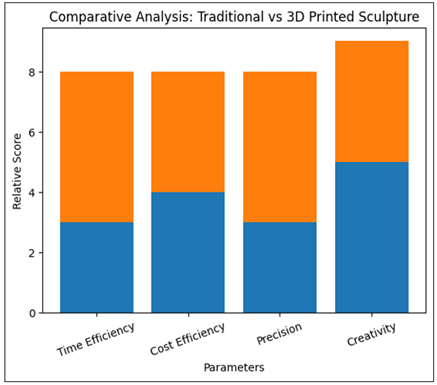
Figure 2 Comparative Analysis of the Methods
The graph above in Figure 2 is the relative comparison (scale 1-5) of the traditional and 3D printed sculpture in the major parameters. Cost Efficiency: The performance of both approaches is similar because in the first case, labor expenses are used, whereas in the second, 3D printing demands investing in equipment. Precision: 3D printing is a lot better than alternative techniques as it has the advantage of digital accuracy. Creativity: Traditional sculpture has a slight advantage of expressive creativity, and 3D printing can provide computational creativity.
6.2. Advantages of Additive Manufacturing in Sculpture
Sculptural practice has a number of benefits to additive manufacturing. It is also one of the greatest advantages as it allows creating highly detailed and complex shapes, such as internal structures and lightweight geometries. Rapid prototyping is also supported by the technology and enables artists to swiftly test and work out their ideas. The other benefit of this is customization since digital models are easy to adapt to create distinct or individual works of art. Also, 3D printing generates less waste of the material than subtractive, which makes it more productive and possibly more sustainable. Disciplinary collaboration is also possible because of the integration of digital tools as artists can collaborate with engineers, designers, and technologists. Moreover, it is possible to reproduce designs with accuracy hence due to scalability and reproducibility and especially in design oriented and commercial art.
6.3. Limitations and Constraints
In spite of its merits, 3D printing has a number of drawbacks. Technical limitations like the size of build, the resolution of the layers and the finished surface have the potential to influence the end product. Majority of the printed products need after processing to be made to look good. There are also material restrictions whereby the material used can be of poor texture and durability as compared to the traditional media. Also, it can be impeded by the initial expensive nature of equipment and technical skill requirements. Conceptual issues also exist in loss of craftsmanship and excessive dependence on technology.
6.4. Artist Perspective and Audience Perception
As seen by the artist, 3D printing provides means of experimentation, new approaches and interdisciplinary practice. Artists have the ability to experiment with previously inaccessible forms as well as include data-driven or algorithmic processes in the artwork. Nevertheless, other artists have been complaining of the lack of physical interaction and the likelihood of losing individual attachment with the material. The perception of the audience is also an important factor in the assessment of 3D printed sculpture. No matter how technologically advanced and detailed digitally created works are, some viewers could wonder about their authenticity or lack of emotion in the face of the hand-made pieces. The value of art is commonly attached to the energy and expertise used and this may affect the reception of 3D printed sculptures. In the end, both the old and the new tools make the art scene more varied and dynamic as various types of expressionism coexist and influence each other.
7. Conclusion
The paper has examined the disruptive nature of the 3D printing on the traditional method of sculpture in the contemporary visual culture. Through the examination of the evolution of sculptural practices, the literature review, and the presentation of a hybrid conceptual frame, the study depicts how additive manufacturing is changing the creative practices involved and increasing the possibilities of creativity. The comparative study indicates that the traditional sculpture is more interested in craftsmanship, materiality and depth of expression but 3D printing offers the benefits of precision, efficiency and complexity. The results suggest that rather than viewing 3D printing as an alternative format, one can view it as a supplemental tool that adds and broadens the artistic practice. The proposed hybrid paradigm recognizes how both digital and manual approaches may be implemented with the purpose to create some original and influential pieces of sculpture. These techniques combined enable artists to have the same touch and expression of traditional sculpture and exploit the technological benefit of the digital creation. At the same time, the paper also acknowledges negative aspects and restrictions associated with 3D printing, including materials, technical requirements, the problem of authenticity and craftsmanship. In order to cope with these challenges, the contemporary research and technological advancement is also required together with critical thinking of the art community. Since then, art and technology convergence is an active and growing field in which new types of creativity are continuing to be produced. As a result of the emergence of 3D printing technologies and their presence, they will play a bigger role in the future of sculpture. By using multidisciplinary approach, artists can use the potential of the traditional as well as the digital to re-establish the sculptural practices in the digital age.
CONFLICT OF INTERESTS
None.
ACKNOWLEDGMENTS
None.
REFERENCES
Deore, M. I. S., and Nemade, D. P. D. (2026). Integrated Material Selection Criteria for Ash-Based Cementitious Systems: Mechanical, Durability, and Environmental Perspectives. International Journal of Research in Applied Engineering and Technology, 15(1), 45–58.
Fekete, A., Pelowski, M., Specker, E., Brieber, D., Rosenberg, R., and Leder, H. (2022). The Vienna Art Picture System (VAPS): A Data Set of 999 Paintings and Subjective Ratings for Art and Aesthetics Research. Psychology of Aesthetics, Creativity, and the Arts, 17, 660–671. https://doi.org/10.1037/aca0000460
Iigaya, K., Fonseca, M. S., Murakami, M., Mainen, Z. F., and Dayan, P. (2018). An Effect of Serotonergic Stimulation on Learning Rates for Rewards Apparent After Long Intertrial Intervals. Nature Communications, 9, 2477. https://doi.org/10.1038/s41467-018-04840-2
Iigaya, K., Yi, S., Wahle, I. A., Tanwisuth, K., and O'Doherty, J. P. (2020). Aesthetic Preference for Art Emerges from a Weighted Integration Over Hierarchically Structured Visual Features in the Brain. bioRxiv. https://doi.org/10.1101/2020.02.09.940353
Inanloo Dailoo, S., Farrokhi, A., and Lu, C. (2023). Heritage Documentation and Digital Preservation: The Use of Cloud-Based Services for Heritage Conservation (the case of St. Albert River Lots). International Archives of the Photogrammetry, Remote Sensing and Spatial Information Sciences, 48, 729–734. https://doi.org/10.5194/isprs-archives-XLVIII-M-2-2023-729-2023
Jo, Y. H., Hong, S., Jo, S. Y., and Kwon, Y. M. (2020). Noncontact Restoration of Missing Parts of Stone Buddha Statue Based on Three-Dimensional Virtual Modeling and Assembly Simulation. Heritage Science, 8, 103. https://doi.org/10.1186/s40494-020-00450-8
Joshi, M., Tiwari, A., Dhabliya, D., Lavate, S. H., Ajani, S. N., and Gandhi, Y. (2025). Building AI-Driven Frameworks for Real-Time Threat Detection and Mitigation in IoT Networks. In Proceedings of the 2025 International Conference on Emerging Smart Computing and Informatics (ESCI 2025). https://doi.org/10.1109/ESCI63694.2025.10988310
Kamal, H. M. (2022). Planning for Artefact Installation and the Challenges of Implementation: Behind the Scenes in the King Tutankhamun Gallery at the Grand Egyptian Museum. Studies in Conservation, 67, 122–129. https://doi.org/10.1080/00393630.2022.2066310
Kantaros, A., Soulis, E., and Alysandratou, E. (2023). Digitization of Ancient Artefacts and Fabrication of Sustainable 3D-Printed Replicas for Intended use by Visitors with Disabilities: The Case of Piraeus Archaeological Museum. Sustainability, 15, 12689. https://doi.org/10.3390/su151712689
Malik, U., Tissen, L. N., and Vermeeren, A. P. (2021). 3D Reproductions of Cultural Heritage Artifacts: Evaluation of Significance and Experience. Studies in Digital Heritage, 5, 1–29. https://doi.org/10.14434/sdh.v5i1.32323
Padghan, N. P., Sapekar, K. N., Sonakneur, M. S., Masram, N. M., Lolure, S. R., and Madavi, S. C. (2025). Muscle Sensor Driven 3D printed Prosthetic Arm. International Journal of Technical and Applied Research in Mechanical Engineering, 14(1), 5–11. https://doi.org/10.65521/ijtarme.v14i1.513
Sargentis, G.-F., Dimitriadis, P., Iliopoulou, T., and Koutsoyiannis, D. (2021). A Stochastic View of Varying Styles in Art Paintings. Heritage, 4, 333–348. https://doi.org/10.3390/heritage4010021
Sargentis, G.-F., Frangedaki, E., Chiotinis, M., Koutsoyiannis, D., Camarinopoulos, S., Camarinopoulos, A., and Lagaros, N. D. (2022). 3D Scanning/Printing: A Technological Stride in Sculpture. Technologies, 10(1), 9. https://doi.org/10.3390/technologies10010009
Spee, B. T., Mikuni, J., Leder, H., Scharnowski, F., Pelowski, M., and Steyrl, D. (2023). Machine Learning Revealed Symbolism, Emotionality, and Imaginativeness as Primary Predictors of Creativity Evaluations of Western Art Paintings. Scientific Reports, 13, 12966. https://doi.org/10.1038/s41598-023-39865-1
|
|
 This work is licensed under a: Creative Commons Attribution 4.0 International License
© ShodhKosh 2026. All Rights Reserved.