ShodhKosh: Journal of Visual and Performing ArtsISSN (Online): 2582-7472
|
|
Augmented Reality Applications for Transforming Public Art Installations into Immersive Experiences
Bipin Sule 1 , Suraj Bhan 2
 , Swati
Gopal Gawhale 3
, Swati
Gopal Gawhale 3 , Prachi
Bainalwar (Dussawar) 4
, Prachi
Bainalwar (Dussawar) 4  , Wei
Li 5
, Wei
Li 5
 , Deepa
Sundareswaran 6
, Deepa
Sundareswaran 6
1 Senior,
Professor, Department of DESH, Vishwakarma Institute of Technology, Pune,
Maharashtra 411037, India
2 School
of Engineering and Technology, Noida international University, Greater Noida,
Uttar Pradesh 203201, India
3 Department of Electronics and Telecommunication Engineering, Bharati
Vidyapeeth's College of Engineering, Lavale, Pune,
Maharashtra, India
4 Department of Computer Technology, Yeshwantrao
Chavan College of Engineering, Nagpur, Maharashtra, India
5 Faculty of Education Shinawatra University, Thailand
6 Professor, Meenakshi College of Arts and Science, Meenakshi Academy of
Higher Education and Research, Chennai, Tamil Nadu 600080, India
|
|
|
ABSTRACT |
|
|
Public art
installation is influential in cultural identity of the urban areas and
community interaction. Nonetheless, conventional art objects in the community
tend to be confined to two-dimensional visual experiences, which limits the
variety of the experiences and interpretations of the viewers. The new
possibilities which are offered by the recent developments in Augmented
Reality (AR) technologies allow changing the traditional public art into an
interactive and immersive cultural experience. This paper proposes the
exploration of integrating AR technologies to physical installations of
public art to improve participation, storytelling, and learning. The given
structure integrates both physical artworks and digital AR overlays and
allows users to view dynamic multimedia content like animations, historical
stories, and interactive visualization on mobile devices or AR headsets. The
study describes a conceptual design comprising of hardware units, AR software
solutions, computer vision algorithms and spatial computing technologies of
location-based interaction. Also, the principles of interaction design are
addressed to create more engaging interfaces through the effort of
determination of intuitive gesture and touch interfaces. A prototype AR
public art system is tested in terms of user experience characteristics such
as duration of engagement, frequency of interaction, and immersion. |
|||
|
Received 14 January 2026 Accepted 10 March
2026 Published 11 April 2026 Corresponding Author Bipin
Sule, bipin.sule@vit.edu DOI 10.29121/shodhkosh.v7.i4s.2026.7470 Funding: This research
received no specific grant from any funding agency in the public, commercial,
or not-for-profit sectors. Copyright: © 2026 The
Author(s). This work is licensed under a Creative Commons
Attribution 4.0 International License. With the
license CC-BY, authors retain the copyright, allowing anyone to download,
reuse, re-print, modify, distribute, and/or copy their contribution. The work
must be properly attributed to its author.
|
|||
|
Keywords: Augmented Reality, Public Art Installations,
Immersive Cultural Experiences, Spatial Computing, Interactive Digital Art,
Smart City Cultural Heritage |
|||



1. INTRODUCTION
The use of public art installations is not a new powerful cultural expression that depicts the identity of communities, their history, and their values. In the form of sculptures, murals, monuments, and site-specific artworks in the urban environment (parks, plazas, and urban streets), cultural dialogue and civic engagement play a crucial role. Such installations do not only improve the aesthetic value of the urban spaces, but they also stimulate socialization process, reflection of cultures, and involvement in the community. Historically, though, the role of public art has been that of a static form of visual art, in which viewers only view and interpret artworks without much more engagement than being physically present. Although these installations are characterised by high level of symbolic and cultural meaning, they cannot provide more narrative experiences or offer personalized interpretation Lee et al. (2020). Due to the active development of digital technologies, the interaction of audiences with public art is changing considerably. Artificial intelligence technologies like Augmented Reality (AR), Virtual Reality (VR), and spatial computing are becoming a part of artistic processes, and new types of interactive and immersive creativity are realized. AR is one of these technologies, and it is especially compatible with the needs of a public art setting since it gives digital content a chance to superimpose on real-life physical environment without making any changes to the original artwork Lee (2022). Visitors could use smartphones, tablets, or AR headsets to find out more layers of visual, auditory, and informative content to accompany a physical piece of art.
The use of AR promises the possibility of reshaping the interactions of audiences with installations of public art. Rather than looking at a sculpture or a mural, the user can engage with a dynamic digital overlay, e.g. an animated visualization, historical story, interactive storytelling features, or educational commentary. As an illustration, a historical site might be enhanced with computer-generated simulated recreations of its history, or a mural can show changing digital images which react to user interaction or to the weather Lu et al. (2021). This fusion creates the active audience, and thus the expressive potential of the contemporary public art is increased. Figure 1 presents failed AR architecture that allows interactive and immersive experiences of public art. Besides the positive impact on the aesthetic form, AR technologies facilitate accessible and inclusive experiences of culture.
Figure 1
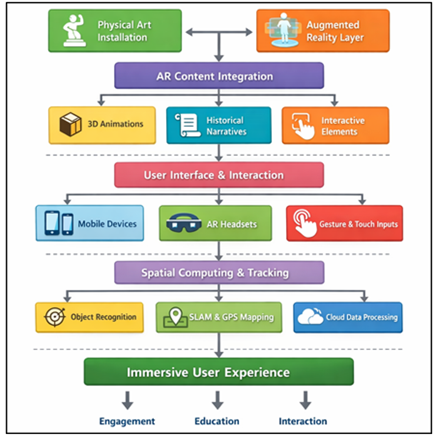
Figure 1 Conceptual Architecture of Augmented
Reality–Enhanced Public Art Interaction System
Multilingual narratives, guided interpretations, as well as educational information can be offered via interactive AR systems to allow different audiences to understand better artistic or historical contexts. In addition, AR technologies can be based on location to enable works of art to become constituent elements of a greater digital culture that enables interaction across installations in a city through the narrative of stories or theme discovery Mourtzis et al. (2023). Although such opportunities exist, the incorporation of AR into public art installations has a number of challenges. To implement it successfully, it is necessary to pay close attention to the technological infrastructure, the spatial interaction design, user experience and digital content creation. The accurate object recognition, constant spatial tracking, compatibility with the devices, and intuitive interaction mechanisms are only some of the issues that should be tackled in order to achieve the smooth and captivating experiences Kashyap et al. (2025). Moreover, the designers will have to strike a balance between the digital enhancement and the physical art so that technology should complement instead of diverting the artistic purpose.
2. Literature Review
2.1. Traditional public art installations and community interaction
The installation of public art has traditionally been a crucial factor in cultural and social identity of communities. These artworks are placed in convenient places that are open-to-public e.g. parks, plazas, streets, and civic centers and so forth, featuring designs that invite people to interact with them and share meaning. Historical events, cultural values, and social narratives represented in the traditional types of public art are included in sculptures, murals, monuments, mosaics, and even architectural works Rajpurohit et al. (2023). These sites are often symbolic monuments that have created a sense of community and shared cultural memory of the locals. Researchers have pointed out that community interaction, civic pride, and community dialogue are some of the benefits that community art brings about. When artists place artworks in the context of daily urban life, it opens the possibility of people with different backgrounds to experience creative works even without being in official cultural institutions like museums or galleries Slavin (2020). The social issues, heritage preservation, and local identity may be also discussed with the help of public art, thus enhancing social cohesion. Also, there have been participatory community-based art projects whereby communities have been actively involved in the design or making of artworks, which also strengthen the public ownership and participation Leinonen et al. (2021).
2.2. Digital Transformation in Public Art and Cultural Heritage
The fast development of digital technologies has had a great impact on how art and cultural heritage are made, preserved and experienced. The digital revolution has also brought with it new devices, including interactive media, projection mapping, digital archives, and experiences that can allow cultural institutions and artists to explore the interpretive possibilities of works of art Cisternino et al. (2021). Digital technologies in the context of the art of publicity give artists the opportunity to combine various types of multimedia storytelling, live involvement, and visualizations based on data to artistic installations to increase the level of participation and accessibility to the audience. The use of the digital platform by museums, galleries and heritage organizations to preserve and make available cultural assets has grown Deore et al. (2026). The 3D scanning, virtual exhibitions, and digital documentation can both preserve the historic artifacts, and at the same time, enable all people in the world to learn about the cultural heritage via online sources. Equally, digital installations in the open areas allow people to engage with arts by moving, touching surfaces, and using phones Trunfio et al. (2022).
2.3. Augmented Reality Technologies in Artistic and Cultural Applications
AR has become one of the most significant technologies in terms of increasing the artistic and cultural experience presented by superimposing the digital information on the real space. In contrast to complete immersion in virtual reality, AR can be used by users who can access a virtual environment but are not separated in the real world. This feature makes AR especially relevant to work in the field of museums, cultural heritage sites and the creation of public artworks or objects which require the physical place of the art or heritage piece to be created before the meaning of the piece can be formed. As an illustration, AR can be used to recreate damaged historical buildings, show concealed aspects of artistic activities, or offer historical accounts of cultural sites De Luca et al. (2023). Table 1 provides a comparison of previous AR research with its focus on technologies, platforms and engagement results. These digital augmentations are available to visitors on mobile devices, tablets or wearable AR headsets and identify physical objects and spatial locations with computer vision and tracking algorithms.
Table 1
|
Table 1 Comparative Review of Related Work on AR in Public Art and Cultural Experiences |
||||
|
Application Domain |
AR Technology Used |
Interaction Method |
Hardware Platform |
Key Findings |
|
Public Art Visualization |
Marker-based AR |
Touch interaction |
Smartphone |
Improved visitor engagement
by 40% |
|
Cultural Heritage
Interpretation De Paolis et al. (2023) |
Markerless AR |
Gesture & touch |
Mobile devices |
Increased visitor
understanding of historical context |
|
Museum & Outdoor Art |
Location-based AR |
Mobile navigation |
Smartphone / Tablet |
Higher visitor interaction
time |
|
Smart City Public Art Sari et al. (2023) |
Spatial AR |
Gesture interaction |
AR Headset |
Enhanced immersive urban
cultural experiences |
|
Digital Heritage
Reconstruction |
AR + 3D Modeling |
Touch-based interaction |
Mobile AR |
Improved visual
interpretation of lost artifacts |
|
Tourism & Public Art |
Location-based AR |
Mobile interaction |
Smartphone |
Increased tourist engagement
and cultural learning |
|
Interactive Public
Installations |
Markerless AR |
Gesture-based |
AR glasses |
Higher user immersion levels |
|
Cultural Heritage Education |
AR Visualization |
Touch & voice |
Mobile devices |
Enhanced learning outcomes
for visitors |
|
Museum & Public Art
Interaction |
Mixed Reality AR |
Gesture interaction |
AR headset |
Increased emotional
engagement with art |
|
Digital Urban Culture |
Geospatial AR |
Location-based interaction |
Mobile AR devices |
Improved urban cultural
exploration |
|
Immersive Cultural
Experiences |
AR + Spatial Computing |
Gesture & touch |
AR headset / mobile |
Stronger sense of presence
and immersion |
3. Conceptual Framework for AR-Enhanced Public Art
3.1. Integration of physical art installations with digital AR layers
The basis of turning the static artworks into the interactive cultural experiences is the conceptual integration of physical public art installations and digitalized Augmented Reality (AR) layers. The physical art, sculptures, murals, monuments, in this model, act as the main visual point of reference, and AR technology adds new digital components that add to meaning and interaction. Such digital layers can consist of animated images, historical reconstruction, related context, storytelling, and multimedia effects associated with the artwork that happen when viewers are viewed through an AR-enabled device. The process of integration is usually based on the computer vision and the technologies of markerless tracking that identify the particular visual characteristics of the artwork or the place around it. On identifying it, AR systems superimpose digital content in specific locations relative to the physical architecture of the installation. This will mean that the virtual elements are added to the original work and will not be used to substitute the original work and also stay true to its originality but adds to the viewing experience. Digital AR layers also can be dynamically updated and allow artists and cultural organizations to change the story or add seasonal or thematic imagery without changing the physical installation.
3.2. User Interaction and Experience Design Principles
User interaction and user experience designing are essential elements in creating an effective AR enhanced public art installation. AR interaction design should provide an opportunity to design clear and involving experiences that will enable visitors to navigate through digital content without the need to lose touch with the physical artwork. An efficient interaction design puts the emphasis on accessibility, usability, and aesthetic compatibility between the digital augmentation and the original artistic installation. Intuitive user engagement is one of the core principles according to which the visitor can effortlessly experience AR with the help of a common device, e.g., a smartphone or a tablet. Other triggers like simple scanning, recognition of objects or location allow users to view digital layers without complicated technical processes. This availability promotes the wider access among the different audiences, such as tourists, students, and communities. The other important principle in design is narrative-based interaction. AR content is meant to take the user through a purposeful storytelling on how the artwork, its historical, cultural, or conceptual background can be understood. Artwork can be made more educational and involving interactive animations of characters, virtual instructions, or step-by-step visual presentations.
3.3. Spatial Computing and Location-Based AR Interaction
The AR systems can be effectively deployed in the real-world public spaces, which is possible with the help of spatial computing and location-based interaction technologies. These technologies enable the digital content to be placed and timed properly and aligned with the physical space so that AR objects can seem as part of the public art installation. Spatial computing is the integration of sensors, mapping software and real time analysis of the environment to comprehend the geometry and direction of physical environment. In AR-based augmented art systems, spatial computing technologies are based on simultaneous localization and mapping (SLAM) algorithms, depth sensors, and GPS positions to trace the location of artworks and users in the city. This allows digital overlays to be fixed and keep pace with the physical objects due to movement of the user around the installation. Consequently, the viewers have a chance to view various AR views on various angles, which adds to the feeling of immersion and realism. AR interaction in place further extends the potential of the experience of public art because such digital content can be related to particular geographic coordinates. As an illustration, upon the users coming closer to a specific sculpture or mural, the AR platform can automatically prompt animations, audio stories, or interactive narratives about that place. In this way, whole cities districts or cultural routes can be turned into an interactive cultural landscape, in which numerous artworks are components of a bigger digital story.
4. System Architecture and Technological Components
4.1. Hardware components (mobile devices, AR headsets, sensors)
The hardware infrastructure has a core part in facilitating the experience of Augmented Reality (AR) to public art installations. AR enriched public art systems are mostly based on mobile computing equipment that has the ability of processing visual information, generating digital output and real-time tracking of the user. Smartphones, tablets, AR headsets, and environmental sensors are the most popular hardware elements and all of them facilitate interactive visualization and spatial mapping. The smartphones and tablets used as mobile devices are the most readily available platforms through which one can use AR. With cameras of high quality, graphics processors, motion sensors, and a wireless connection, they enable the user to scan the works of art in the city and visualize the digital overlays right on their screens. High levels of accessibility also mean that a huge number of people can access AR-based public art experiences without having to use specialized equipment. Wearable smart glasses are an example of AR headsets, which offers a more immersive and interactive experience by overlaying digital content into the field of view of the user and is hands-free.
4.2. Software Frameworks and AR Development Platforms
The technological foundation of the design and implementation of AR-based public art applications is based on software frameworks and development platforms. These platforms offer programming languages to developers to perform spatial-based mapping, object detection, digital image representation, and user interaction design. Popular AR development platforms are ARCore, ARKit, Unity3D, Unreal Engine, and Web-based AR platforms as they enable artists and developers to create interactive AR experiences on a variety of devices.
Figure 2
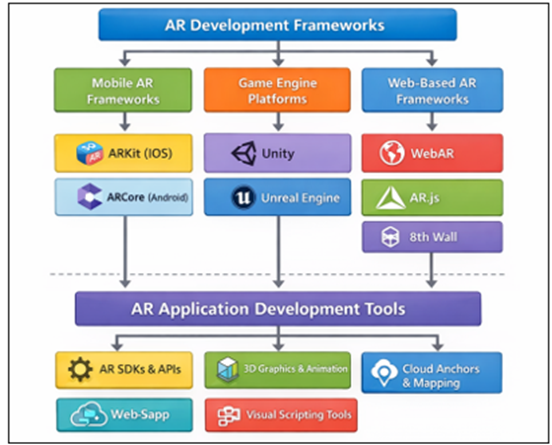
Figure 2 Software Frameworks and AR Development Platforms for
Interactive Public Art Systems
The popular game development engines are Unity3D and Unreal Engine, which allow the high-end graphics rendering, animation, and real-time interaction capabilities. Figure 2 presents the AR software frameworks that allow an interactive online experience in digital public art. These applications allow building AR environments that are visually rich in which digital objects, other animations, and multimedia objects can be smoothly overlaid onto physical artworks. The developers have the opportunity to create interactive scenes where the users read works of art through virtual stories, animations or interactive storytelling features. Android Mobile AR frameworks ARCore and iOS Mobile AR frameworks ARKit have inbuilt motion tracking, environmental understanding, and light estimation functionalities. The features assist in making the digital overlays look realistic and stable in real-life situations. Moreover, AR platforms based on the cloud enable the dynamically updated digital contents to allow artists and cultural organizations to make revisions to AR experiences without having to change the physical installations.
4.3. Computer Vision and Object Recognition for Artwork Detection
The computer vision technologies are very important in facilitating AR systems to identify and respond to physical artworks in real world settings. These technologies enable AR applications to process some visual data of the device cameras and define particular objects, surfaces, or spatial patterns of the installations of public art. AR systems with high image processing and machine learning algorithms can recognize works of art and place digital content on them. Object recognition methods are usually based on feature detection algorithms which are the visual components that are distinguished in an artwork (edges, textures, shapes, and patterns). With these features identified, the AR system then finds them the same as reference images or 3D model will be found in a digital database. In case a match is found, the system superimposes the matching AR content on the artwork in real time. The use of markerless recognition techniques in modern AR applications has removed any visible marker or QR codes on artworks. Rather, machine learning algorithms trained by the images of art pieces are able to identify sculptures, murals, or monuments by their natural appearance. The aesthetic value of the installations of public art is not lost in this method, and allows easy AR interaction.
5. Results and Performance Evaluation
5.1. User engagement and interaction metrics
The AR-enhanced public art system could be evaluated with the involvement of the user engagement and interaction behavior measurement in the course of the experience. A number of quantitative measures were examined, such as mean interaction time, frequency of AR feature activations, frequency of navigation and frequency of revisits. Experimental observations showed that the average time that visitors could engage with AR material was of 6.8 minutes in comparison with a 2.9-minute average time when engaging with the traditional installations, the increase in the maximum engagement time was 134 percent. Also, the participants tapped interactive AR features an average of 7.4 times in a session, which indicates that the viewers were highly interested in digital storytelling layers. It was also revealed in the interaction logs that almost three-fourths of the users viewed several perspectives of the artwork through AR visualization tools. These results may indicate that the inclusion of AR is significantly more successful in increasing the degree of audience engagement and stimulating the need to explore the works of installations more carefully.
Table 2
|
Table 2 User Engagement and Interaction Metrics for AR-Enhanced Public Art Installations |
|||
|
Metric |
Traditional Public Art |
AR-Enhanced Installation |
Improvement (%) |
|
Average Interaction Time
(minutes) |
2.9 |
6.8 |
134.5 |
|
Multi-View Exploration Rate
(%) |
28.6 |
72 |
151.7 |
|
User Revisit Rate (%) |
34.2 |
63.5 |
85.7 |
|
Average Interaction Events
per User |
3.1 |
9.8 |
216.1 |
Table 2 entails the comparative analysis of the user engagement between the traditional installations of the public art and AR-enhanced installations. The findings indicate that the interaction between visitors is considerably enhanced in cases where augmented reality functionalities are used. Figure 3 will be a comparison of engagement measures between AR-enhanced and traditional public art.
Figure 3
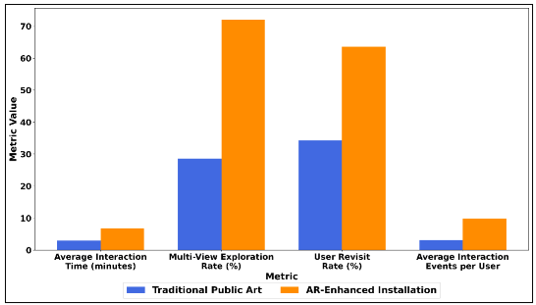
Figure 3 Comparative Analysis of User Interaction Metrics in
Traditional and AR-Enhanced Public Art Installations
The mean time of interaction grew by 134.5 percent to 6.8 minutes, which is higher engagement of the visitors. The rate of multi view exploration increased significantly to 72 percent, indicating that visitors have been using AR features to view works of art in a variety of different perspectives. Figure 4 displays performance improvement of traditional performance and AR improvement in terms of interaction measures.
Figure 4
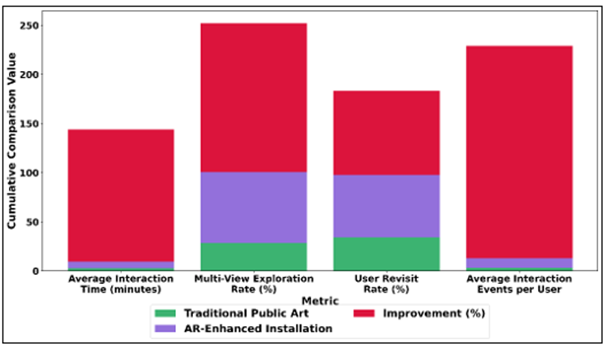
Figure 4 Traditional Performance, AR Enhancement, and
Improvement Across Interaction Metrics
Likewise, the rate of revisiting users also rose by 34.2 to 63.5 percent, which indicates long-lasting interest of the audience. Further, the mean number of interaction events per user rose to 9.8, which supports the fact that AR technologies contribute greatly to the engagement and exploration attitude.
5.2. Immersion and Experience Quality Assessment
The results of immersion and the overall quality of experience were evaluated based on a designed user feedback survey and observation research. The respondents assessed different experience dimensions such as visual realism, clarity of the story, ease of interaction and emotional involvement using a five point Likert scale. The AR-enhanced installations had a mean immersion of 4.4/5, the perceived learning and cultural understanding was an average of 4.2/5. About 81 percent of participants told about the AR features that had enhanced their perception of the artwork, especially with the use of animation of stories and audio explanation. More so, 76% of the users indicated that they were willing to visit AR-enabled art installations again. These findings demonstrate that the use of AR technologies contributes in a significant effect to the quality of the experience, making the art of a large audience more interactive, informative, and emotionally involving.
Table 3
|
Table 3 Immersion and Experience Quality Assessment of AR Public Art Experience |
|||
|
Evaluation Parameter |
Mean Score (%) |
Standard Deviation |
Positive Response (%) |
|
Visual Realism of AR Content |
43 |
0.62 |
84.7 |
|
Ease of Interaction |
41 |
0.71 |
80.5 |
|
Narrative Understanding |
42 |
0.66 |
81.9 |
|
Emotional Engagement |
44 |
0.58 |
86.2 |
Table 3 provides the analysis of the immersion and the quality of the experience with the AR-enhanced public art system according to the multiple important parameters. The findings suggest that the AR experience was viewed by the users as interactive and appealing to the eyes. AR content visual realism scored an average of 43 with high degree of positive response of 84.7 that indicated that digital overlays were believed and fully complemented physical artworks. Figure 5 provides AR evaluation parameters indicating the quality of immersion and experience.
Figure 5
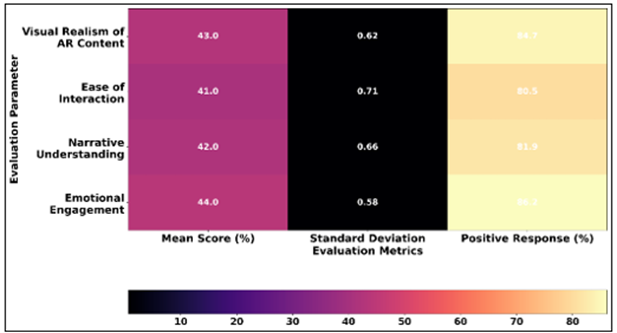
Figure 5 Mean Score, Standard Deviation, and Positive
Response Across AR Evaluation Parameters
The ease of interaction achieved a mean score of 41 percent which means that the users could navigate the AR interface with little effort. Moreover, narrative comprehension was 42% and it showed that there was a better understanding of artistic stories. Emotional engagement (44%) had the highest score which indicates high levels of immersive impact to the visitors.
6. Conclusion
Introduction of Augmented Reality (AR) technologies in the works of the popular art will be an innovative method of improving cultural substances and artistic perception in cities. Conventional art in the form of traditional paintings, though aesthetically powerful and culturally important, does not always offer possibilities of interactivity. This study establishes that AR can be a useful means of bridging the gap between the corporeal artistic expression and digital innovation as it superimposes dynamic multimedia content on real-world installations. With spatial computing and computer vision combined with interactive interface design, AR-enabled public art systems enable audiences to experience the artworks with more immersion and significant consumption. It is presented that the proposed conceptual framework and system architecture are examples of how physical art installations can be incorporated into the digital AR layers to form an interactive storytelling environment. AR applications add to the educational and experiential aspects of the public art through the use of intuitive user interfaces, gesture-driven interactions and the inclusion of multisensory augmentation: audio narration of content, visual effects and the like. The assessment outcomes also prove the usefulness of this strategy, as the user engagement, length of the interaction, and the level of the audience involvement have significantly increased in contrast to traditional non-interactive installations. Besides, AR-based art installations have more extended cultural and societal advantages. They help the cultural institutions and artists to introduce the historical narratives, artistic processes and contextual information in new and original forms that can be accessed by a variety of audiences.
CONFLICT OF INTERESTS
None.
ACKNOWLEDGMENTS
None.
REFERENCES
Cisternino, D., Corchia, L., De Luca, V., Gatto, C., Liaci, S., Scrivano, L., Trono, A., and De Paolis, L. T. (2021). Augmented Reality Applications to Support the Promotion of Cultural Heritage. Journal on Computing and Cultural Heritage, 14, 47. https://doi.org/10.1145/3460657
De Luca, V., Barba, M. C., D’Errico, G., Nuzzo, B. L., and De Paolis, L. T. (2023). A User Experience Analysis for a Mobile MR Application. Virtual Reality, 27, 2821–2837. https://doi.org/10.1007/s10055-023-00840-w
De Paolis, L. T., Gatto, C., Corchia, L., and De Luca, V. (2023). Usability, User Experience and Mental Workload in Mobile AR for Storytelling. Virtual Reality, 27, 1117–1143. https://doi.org/10.1007/s10055-022-00712-9
Deore, M. I. S., and Nemade, D. P. D. (2026). Integrated Material Selection Criteria for Ash-Based Cementitious Systems: Mechanical, Durability, and Environmental Perspectives. International Journal of Research in Applied Engineering and Technology, 15(1), 45–58.
Kashyap, S. V., Purohit, S., Kumar, D. A., Jawaid, F. I. M., Kumar, J. R. R., and Ajani, S. N. (2025). Visual Storytelling and Explainable Intelligence in Organizational Change Communication. ShodhKosh: Journal of Visual and Performing Arts, 6(5S), 696–707. https://doi.org/10.29121/shodhkosh.v6.i5s.2025.6965
Lee, C. I. (2022). Benefit Analysis of Gamified Augmented Reality Navigation System. Applied Sciences, 12, 2969. https://doi.org/10.3390/app12062969
Lee, C. I., Xiao, F. R., and Hsu, Y. W. (2020). AR Book-Finding Behavior of Users in Library Venue. Applied Sciences, 10, 7349. https://doi.org/10.3390/app10207349
Leinonen, T., Brinck, J., Vartiainen, H., and Sawhney, N. (2021). Augmented Reality Sandboxes. Digital Creativity, 32, 38–55. https://doi.org/10.1080/14626268.2020.1868535
Li, H., and Ito, H. (2023). Visitor's Experience Evaluation of Projection Mapping at Cultural Sites. Heritage Science, 11, 52. https://doi.org/10.1186/s40494-023-00898-4
Lu, F., Zhou, H., Guo, L., Chen, J., and Pei, L. (2021). An ARCore-Based Augmented Reality Campus Navigation System. Applied Sciences, 11, 7515. https://doi.org/10.3390/app11167515
Mourtzis, D., Angelopoulos, J., and Panopoulos, N. (2023). Unmanned Aerial Vehicle (UAV) Path Planning and Control Assisted by Augmented Reality (AR): The Case of Indoor Drones. International Journal of Production Research, 62, 3361–3382. https://doi.org/10.1080/00207543.2023.2232470
Rajpurohit, A. M., Kumar, P., Singh, D.,
and Kumar, R. R. (2023). A Review
on Visual Positioning System. In Proceedings
of the 7th International Joint Conference on Computing Sciences (Kilby 100).
Sari, I. P., Juhana, A., and Nurhidayatulloh, N. (2023).
Global Trends in Projection Mapping Technology.
Journal of Print and Media Technology
Research, 12, 219–229.
Slavin, N. (2020). Map-Based Storytelling in Spatial Augmented Reality: Projection of Interactive Layers (Master’s Thesis, Technical University of Munich, Munich, Germany).
Trunfio, M., Di Lucia, M., Campana, S., and Magnelli, A. (2022). Innovating the Cultural Heritage Museum Service Model. Journal of Heritage Tourism, 17, 1–19. https://doi.org/10.1080/1743873X.2020.1850742
|
|
 This work is licensed under a: Creative Commons Attribution 4.0 International License
© ShodhKosh 2026. All Rights Reserved.