ShodhKosh: Journal of Visual and Performing ArtsISSN (Online): 2582-7472
|
|
|
Special Issue on DIGITAL FUTURES OF ARTS AND
CULTURE: AI, DATA, CREATIVITY, AND SOCIAL IMPACT Dr. Dipti Chauhan 1 Dr. Sulekha Ojha 5 1 Professor & Head in the Department of Artificial Intelligence
& Data Science, Prestige Institute of Engineering Management &
Research, Indore, M.P., India 2 Tunku Abdul Rahman University of
Management & Technology, Malaysia 3 Department of Special Education, College of Education, Qassim
University 4 Assistant
Professor and Head of Department, Department of Drama and Theatre, Raja
Mansingh Tomar Music and Arts University, Gwalior (M.P.), India 5 Head, Senior Assistant Professor, Department of Fashion and Textiles
IIS (Deemed to be University) Jaipur, Rajasthan, India |
|
|
|




Dear Readers and Contributors,
The ShodhKosh:
Journal of Visual and Performing Arts invites original
research papers, reviews, and creative-critical contributions for a Special
Issue titled “Digital Futures of Arts and Culture: AI, Data, Creativity, and
Social Impact.”
In the contemporary era, rapid advancements
in artificial intelligence, data analytics, and digital technologies are
fundamentally transforming the production, dissemination, and reception of
visual and performing arts. These transformations are not only reshaping
artistic practices but also redefining cultural participation, audience
engagement, institutional management, and the broader socio-cultural ecosystem.
This Special Issue seeks to explore the
evolving intersections of art, technology, and society, with a particular focus
on how digital innovations influence creativity, authorship, cultural
sustainability, and social inclusion. It aims to provide a multidisciplinary
platform for scholars, practitioners, and researchers to critically examine the
role of emerging technologies in shaping contemporary visual culture and
performance practices.
This Special Issue aligns with the journal’s
commitment to fostering interdisciplinary research across visual arts,
performing arts, media studies, design, and cultural studies, particularly
within the context of emerging technological and social transformations.
Submissions that demonstrate theoretical rigor, methodological innovation, and critical engagement with contemporary issues are especially encouraged. Both empirical and conceptual papers, as well as practice-based research, are welcome.
Sincerely,
|
|
Dr. Dipti Chauhan is a Professor and Head of the
Department of Artificial Intelligence & Data Science at the Prestige
Institute of Engineering Management & Research (PIEMR), Indore. She holds
a Ph.D. from Maulana Azad National Institute of Technology (MANIT), Bhopal,
and has been awarded the prestigious MHRD fellowship during her doctoral
research. A certified IPv6 Gold and Silver
Network Engineer from the IPv6 Forum, University Sains Malaysia, she
specializes in Next‑Generation Networks, Wireless Communication, IPv6
Migration, IoT, Machine Learning, and Data Mining. Her research contributions
include Scopus‑indexed publications on 6G challenges, IPv6 tunneling, IoT energy‑efficient models, and
wireless network performance. Dr. Chauhan’s scholarly footprint is
reflected in her active presence on ORCID, Google Scholar, ResearchGate, and
Scopus, and her collaborative works with researchers across India. Her recent
publications also explore sustainable AI, cyber‑security, and
quantum‑AI applications, demonstrating her commitment to advancing
intelligent networked systems. |
|
|
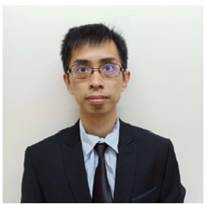
Dr. Lai Mun Keong is an Assistant Professor at Tunku Abdul Rahman University of Management and Technology (TARUMT), where he also serves as Associate Dean for the Department of Management. His CV notes, “I am currently serving as an Assistant Professor… where I hold the position of Associate Dean for the Department of Management,” reflecting his dual academic and administrative leadership. With over 16 years of teaching experience, he specializes in Management, Entrepreneurship, and Human Resource Management, and is a certified Train‑the‑Trainer (TTT) professional. Dr. Lai oversees
11 academic programmes, manages a team of 33 full‑time and over 70
part‑time staff, and chairs the Faculty Postgraduate Studies Admission
Committee. His research portfolio includes RM53,000 in completed grants and a
current AI‑focused SME project. He has published widely on AI in
business, entrepreneurship education, and SME innovation, and has presented
at international conferences, earning the Best Presenter Award at ICBISEA
2024. |
|
|
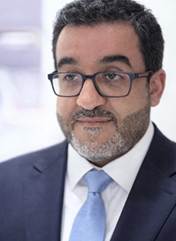
Dr. Jehad is a scholar in the field of Special
Education, currently affiliated with the “Department of Special Education,
College of Education, Qassim University” as stated in his application form.
He maintains an active academic presence through multiple global research
platforms, including ORCID (https://orcid.org/0009-0005-2244-4432) and Google
Scholar, where his profile reflects ongoing contributions to educational
research and interdisciplinary inquiry. Dr. Jehad professional identity is
supported by international accessibility, with contact details such as
“Jnaiem@qu.edu.sa” and a U.S. mailing address in Evans, Colorado,
underscoring his global academic engagement. His Scopus ID (57835840300)
further highlights his participation in peer‑reviewed scholarship. With expertise rooted in special
education and a commitment to advancing inclusive learning, Dr. Alnoaim brings valuable insight to editorial and
peer‑review roles. His academic footprint demonstrates dedication to
research quality, scholarly integrity, and the advancement of educational
practice.
|
|
|
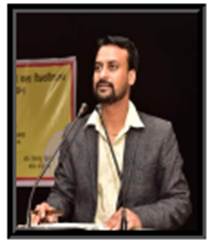
Dr. Himanshu Dwivedi is an Assistant Professor and Head
of the Department of Drama and Theatre at Raja Mansingh Tomar Music and Arts
University, Gwalior (M.P.), India . A distinguished
scholar‑practitioner in theatre arts, he holds a Ph.D. in Theatre Arts
from Panjab University, Chandigarh, where he completed his doctoral research
on “Bundelkhand Main Swang Ki Parampara Aur Uska Adhunik Swaroop” . He is a UGC‑NET qualified
expert in Performing Arts (Dec 2012 & Dec 2013) and a two‑time Gold
Medalist in M.A. Theatre from the Department of
Indian Theatre, Panjab University . Dr. Dwivedi has
also completed multiple diplomas and certificate courses in acting,
photography, Urdu, and classical arts, strengthening his multidisciplinary
artistic foundation. An accomplished author, he has written several important books for UGC‑NET, SLET, JRF, NSD, and FTII aspirants, including NRITIYA NATYA RANGMANCH Vastunishtha Prashnauttar and RANG DRISHTI . His contributions continue to shape theatre education, performance studies, and Indian dramatic traditions. |
|
|
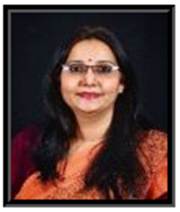
Dr. Sulekha Ojha is the Additional Head of Department
and Senior Assistant Professor in the Department of Fashion & Textiles,
IIS (Deemed to be University), Jaipur, Rajasthan, India. She holds a Ph.D. in
the Sustainability of the Metal Embroidery Industry of Rajasthan (2014),
along with an M.Sc. in Garment Production and Export Management and a B.Sc.
from Calcutta University, reflecting a strong academic foundation in textile
and apparel studies. Her expertise spans sustainable
fashion, textile crafts, embroidery traditions, garment production, design
innovation, and fashion technology. She has completed multiple advanced
certifications from global institutions, including the University of Sydney,
University of London, Bocconi University, Copenhagen Business School, and EIT
Digital, strengthening her interdisciplinary design and sustainability credentials . Dr. Ojha has received notable
recognition, including the Best Presentation Award for her work on
Danke‑ka‑kaam, a traditional metal
embroidery craft of Udaipur . Her research
contributions include studies on upcycling, textile heritage, consumer behavior, and innovative craft applications, several of
which appear in peer‑reviewed journals and conferences |

|
|
 This work is licensed under a: Creative Commons Attribution 4.0 International License
© ShodhKosh 2026. All Rights Reserved.