ShodhKosh: Journal of Visual and Performing ArtsISSN (Online): 2582-7472
|
|
Integrating Artificial Intelligence Tools to Enhance Creative Expression in Contemporary Visual Arts
Amruta Mhatre 1 , Manish B. Gudadhe 2
 , Suhas
Bhise 3
, Suhas
Bhise 3 , Gousia
Ahmed 4
, Gousia
Ahmed 4 , Baoxin
Le 5
, Baoxin
Le 5
 , Damodaran
B 6
, Damodaran
B 6 , Uma
S 7
, Uma
S 7
1 Department
of Computer Engineering, Bharati Vidyapeeth College of Engineering, Navi
Mumbai, Kharghar, Mumbai, Maharashtra, India
2 Computer
Science and Engineering (Data Science), Scheduled Tribes Vincent Pallotti
College of Engineering and Technology, Nagpur, Maharashtra, India
3 Assistant Professor, Department of E&TC Engineering, Vishwakarma
Institute of Technology, Pune, Maharashtra 411037, India
4 Department of Computer Technology, Yeshwantrao
Chavan College of Engineering, Nagpur, Maharashtra, India
5 Faculty of Education Shinawatra University, Thailand
6 Associate Professor, Psychology, Meenakshi College of Arts and
Science, Meenakshi Academy of Higher Education and Research, Chennai, Tamil
Nadu 600080, India
7 Associate Professor, Meenakshi College of Arts and Science, Meenakshi
Academy of Higher Education and Research, Chennai, Tamil Nadu 600080, India
|
|
|
ABSTRACT |
|
|
The use of the
Artificial Intelligence (AI) in the field of contemporary visual art has had
an impact of monumental proportions regarding the way in which the artistic
production is conducted, enabling artists to experiment with the ways of
expression, communication as well as even innovation. In this paper, the
author speaks about the possible uses of AI-based technology to develop the
creativity of the human mind and reinvent the artistic process, including
Generative Adversarial Networks (GANs), diffusion models and neural style
transfers. The paper provides a detailed theoretical framework, which is
founded on computational creativity, human-AI co-creation paradigms and
cognitive-aesthetic principles, and describes the ways in which intelligent
systems are able to become collaborative participants and not mere tools. The
paper will provide a detailed analysis of the existing AI technologies to
demonstrate the fact that they may be utilized to create high-quality visual
materials, enhance stylistic diversity, and shorten the design cycle. The
results indicate that AI-based art systems can be used to facilitate the
efficiency of the creative process, expand creativity opportunities, and
allow people to create works of art. However, the questions of the
computational complexity, the bias of the data and the ownership by law
remain to be crucial problems. The future of research directions is also
discussed in the paper with an aim of creating an ethical, scalable, and
artist-oriented AI system. Overall, this article is bound to demonstrate the
transformational ability of AI in the contemporary realms of visual arts and
approach a moderate course that will not eradicate the human originality and
artist intent. |
|||
|
Received 19 January 2026 Accepted 29 March
2026 Published 11 April 2026 Corresponding Author Amruta
Mhatre, amrutamhatrea@gmail.com DOI 10.29121/shodhkosh.v7.i4s.2026.7451 Funding: This research
received no specific grant from any funding agency in the public, commercial,
or not-for-profit sectors. Copyright: © 2026 The
Author(s). This work is licensed under a Creative Commons
Attribution 4.0 International License. With the
license CC-BY, authors retain the copyright, allowing anyone to download,
reuse, re-print, modify, distribute, and/or copy their contribution. The work
must be properly attributed to its author.
|
|||
|
Keywords: Artificial Intelligence in Art, Computational
Creativity, Generative Models, Human–AI Collaboration, Neural Style Transfer,
Diffusion Models |
|||


1. INTRODUCTION
Modern visual arts have been greatly influenced by technological advancement, and the emergence of such phenomenon as Artificial Intelligence (AI) has become one of the major shifts in defining the concept of creativity and artistic expression. Traditionally, artistic production has been regarded as a process of human activity that is driven by emotion, intuition and culture. However, when the world of artistic work was introduced to AI tools, the paradigm of the artistic process has been altered and machines became an active part of it. In addition to the fact that such convergence of art and intelligent computation has allowed visual expression to be stretched, it has also rendered concepts of authorship long thought of as foundational to be weakened. The latest developments in machine learning and deep learning have led to the emergence of sophisticated AI tools capable of producing, adjusting and enhancing visual images. Such techniques as Generative Adversarial Networks (GANs), diffusion models, and neural style transfer have enabled the creation of the most realistic and stylistically varied productions of art. Based on massive amounts of images, such models are used to tease out patterns, textures, and details of structures to create new visual images, which in most instances are as complex and appealing as manmade art itself Hwang and Chen (2023). Due to this, artists are beginning to employ these tools increasingly in order to augment their creative capacities, explore bizarre design spaces, and accelerate cycles of experimentation. The application of AI in the visual art is not merely a technological advancement, but it is the shift to an interactive creativity where humans and machines co-create artworks. The person in this instance of human-AI collaboration is regarded as a curator, guide and decoder, and the AI platform introduces generative opportunities and computational effectiveness Selwyn (2022). This symbiotic paradigm establishes a two-way game between human will and algorithmic offer, as a result of which new creative spaces are discovered where previously it was not possible to enter.
In addition, the AI technology can facilitate individualization and dynamic creativity in such a way that the art objects can be customized to individual tastes and emotional responses. Despite the fact that the AI implementation into contemporary visual art has a tremendous potential to change it, there are also severe challenges and problems that underlie the use of AI. The credibility and the availability of AI tools may be affected by such issues as data bias problems, model interpretability, and the resources needed to calculate and process AI tools Tahiru (2021). Besides, the legal and ethical aspects regarding copyright, property, and originality of the art created by AI are the focus of the ongoing debate. These problems can be considered as need to find the middle ground between technological innovation and intense view of the implications of technology innovation on the artistic practice and production of the cultures. The research will explore how AI tools have been integrated in creative expression of visual art in the contemporary world Limna et al. (2022). It talks about the theoretical foundations of computational creativity, examines various AI technologies that are applied in the artistic processes and assesses its impact on artistic outcomes. The paper will also be trying to provide an in-depth analysis of how intelligent systems can improve the artistic expression of man and not eliminate it by weighing the potential and challenges of AI-based creativity. Lastly, the article contributes to the ongoing debate on the future of art in the age of artificial intelligence, whereby the human creativity is necessary to be preserved, even though it is susceptible to technological advancement Rombach et al. (2022).
2. Background and Related Work
The field of visual arts and artificial intelligence has been in a very dynamic stage in the last few decades, as a result of machine learning, computer vision, and computational creativity. Initial activities in the field of digital art had been mainly based on systems of rules and procedural algorithms, in which a set of instructions dictated the production of visual art. Although these methods facilitated systematic artistic products, they were not flexible and able to acquire intricate patterns of data Marcus et al. (2022). Machine learning and in specific deep learning came in as a game changer because machines were now able to extract features automatically and create new visual representations. The introduction of Generative Adversarial Networks (GANs) based on a dual-network structure a generator and a discriminator is one of the underlying advances in AI-driven art. Through this framework, the models can generate very realistic images by training the underlying distribution of training data Francis et al. (2024). GAN-based models have been extensively used in style synthesis, portrait generation, and creative image manipulation, and it has been shown that these methods are significantly better in visual realism and diversity. Later, the neural style transfer methods allowed dividing and mixing content and style of two different images and allowed artists to experiment with hybrid aesthetics and artistic reinterpretations Jauhiainen and Guerra (2024). More recently, a new category of models, the diffusion models, have appeared as a viable alternative to the GANs, as demonstrated by greater image quality and stability. The models can be trained to create high-fidelity images from noisy inputs in a series of refinement steps, which allows one to finely control artistic outputs. Text-to-image systems have also increased the creativity of users by providing them with an opportunity to create visual content based on the use of natural language prompts Vieriu and Petrea (2025). This and other developments have led to democratization of art making because advanced tools are now available to non professionals. Similar literature also notes the increased focus on human-AI cooperation in the creative processes. Table 1 makes a comparison between models, datasets, performance, contributions, and limitations. Researchers have investigated the co-creative systems in which AI serves both as a collaborator and not as substitutes and contributes to ideation, refinement, and iteration. Research shows that creative productivity can be boosted with the help of AI-assisted devices and a new design space can be explored Horton et al. (2023).
Table 1
|
Table 1 Comparative Related Work on AI-Based Visual Arts and Creative Systems |
||||
|
Method / Model Used |
Dataset / Source |
Application Area |
Key Contribution |
Limitation |
|
GAN (DCGAN) |
WikiArt |
Style Synthesis |
Early GAN-based artistic
generation |
Low resolution outputs |
|
CycleGAN Liu et al. (2024) |
Monet2Photo |
Style Transfer |
Domain translation without
paired data |
Style inconsistency |
|
StyleGAN2 Kannen et al. (2024). |
FFHQ |
Portrait Generation |
High-quality human-like art
generation |
High computational cost |
|
CNN + NST Wei et al. (2024) |
Custom Art Dataset |
Artistic Filtering |
Real-time neural style
transfer |
Limited creativity diversity |
|
Diffusion Model |
LAION-5B |
Text-to-Image Generation |
High-fidelity image
synthesis |
Slow inference time |
|
VAE + GAN Hybrid Shah (2026) |
CIFAR-10 |
Image Generation |
Improved stability in
training |
Blurry fine details |
|
Transformer + Diffusion |
Custom Dataset |
Concept Art Creation |
Prompt-driven artistic
control |
Large dataset dependency |
|
CLIP + Diffusion Isawi et al. (2024) |
OpenAI Dataset |
Text-Guided Art |
Semantic alignment with
prompts |
Bias in text-image mapping |
|
GAN + Reinforcement Learning |
ArtBench |
Interactive Art Systems |
Adaptive user-driven art
generation |
Training complexity |
|
U-Net Diffusion Creswell and Inoue (2025) |
Custom Dataset |
Image Restoration Art |
Enhanced texture
preservation |
Computational overhead |
|
Multimodal Transformer |
LAION + COCO |
Cross-Modal Art Generation |
Integration of text, image,
style |
Requires large-scale
training |
|
Hybrid GAN + Diffusion |
Mixed Dataset |
Creative Co-Generation |
Human-AI collaborative art
system |
Ethical and copyright issues |
3. Theoretical Framework
3.1. Concept of computational creativity and co-creation
Computational creativity is the capacity of artificial intelligence systems to create the output which may be seen to be both novel, valuable, and meaningful, in a particular field of creation. When applied to visual arts, this can be the application of machine learning algorithms to generate new visual information by identifying patterns, styles and structures in large data sets. Computationally creative systems, unlike conventional software tools, also have an adaptive behavior, that allows them to investigate a wide variety of creative possibilities not defined by explicit human programming. Figure 1 demonstrates the integration of humans and AI, which creates a creative co-creation process on the iterative level. This change puts AI into a non-passive agent but as a participant in the creative process.
Figure 1
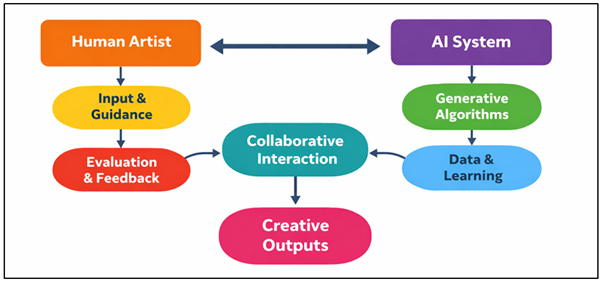
Figure 1 Computational Creativity and Co-Creation Framework
in AI-Driven Visual Arts
Creativity in such structures arises out of the vibrant interaction of human instinct and machine generated suggestions.
3.2. Human–AI Collaboration Models in Artistic Workflows
The models of human-AI collaboration in artistic processes are systematized methods where artists and intelligent systems engage in a collaboration process to generate creative products. These paradigms can be classified into assistive, cooperative and autonomous paradigms. In assistive models, AI plays the role of a supplement to certain parts of the creative process, e.g. image editing, color correction or style improvement. The human being still has a complete authority, and the AI will be efficient and accurate. Cooperative models, in contrast, are iterative and both the artist and the AI are involved in the brainstorming and improvement of the idea leading to a more equal collaboration. In more sophisticated autonomous collaboration systems, AI systems produce entire or partial works of art with a few interventions of a person, which are often prompted or constrained by the user. These processes are more focused on exploration and rapid prototyping, which enables artists to test several creative directions in an efficient way.
3.3. Cognitive and Aesthetic Theories in AI-Generated Art
The familiarity v. novelty dynamic is an important factor to consider when it comes to the perceived creativity and attractiveness of such pieces of art. The theories of aesthetics, such as formalism, expressionism, and constructivism, offer the means of analyzing the structural and emotional values of the AI-generated art. Formalist views attach importance to composition, harmony of colors and texture, which can be quantitatively represented and optimized with the help of AI algorithms. The expressionist methodology puts into consideration the depth of feelings in the work of art and its meaning, and the question arises as to whether AI is capable of expressing something or just simulating it. Constructivist perspectives emphasize the importance of the viewer in the construction of meaning, and thereby imply that the quality of the AI-generated art is not established by the authorship, but by the interpretation.
4. AI Tools and Technologies for Visual Arts
4.1. Generative Adversarial Networks (GANs) for style synthesis
GANs have become one of the most awe-inspiring techniques of AI in the visual arts, especially on style synthesis and image generation. A GAN is comprised of two neural networks the generator and a discriminator, which are trained in a mutually adversarial scheme. Deep learning models such as StyleGAN have been shown to be able to generate high-resolution images and control features, including texture, color, and composition, with high-control. Latent spaces allow artists to experiment with various stylistic variations, which allows crafting original and expressive works of art. Moreover, GAN-based systems assist in domain transfer, which enables processing of pictures in new artistic directions.
4.2. Diffusion Models for High-Fidelity Image Generation
Diffusion models are a new area of generative AI, which has higher image quality and stability than conventional methods such as GANs. Based on these models, the training data is gradually de-noised, and the process is learned to undo the de-noising operation to generate high-quality images. The iterative denoising training process also allows diffusion models to memorize fine details, and generate much more realistic values with increased consistency. Diffusion models have found wide application in the field of visual arts, where they are able to produce images based on text description, sketches or low-resolution images. Figure 2 shows second, third and fourth steps of iterative denoising process producing high-fidelity images. It refers to the fact that such systems as Stable Diffusion or DALL•E allow artists to create complex visual works through typing a few descriptive notes.
Figure 2
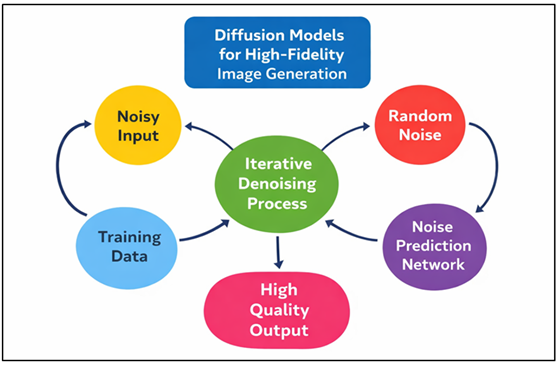
Figure 2 Diffusion Model Framework for High-Fidelity Image
Generation
It has helped a lot in the access to creativity where the creative abilities of both professional and nonprofessional individuals can produce more complicated artistic objects without the assistance of gigantic technical skills. More control over the generation process with conditions also characterizes diffusion models and allow users to control the style, composition, and semantic contents. The models are however computationally expensive and require a significant amount of processing resources to train and infer. However, the diffusion based approaches have helped to redefine the process of creating digital art by integrating accuracy, flexibility, and exploration in one system.
4.3. Neural Style Transfer and Image-to-Image Translation
Neural style transfer is the process that divides the content and style elements of the photos and reassembles them to create new arts. This method utilizes convolutional neural networks to extract high-level content features out of an image and stylistic features out of another, including brush strokes, colour patterns, and so forth, to produce hybrid visual images. Image-to-image translation builds on this idea by training the mappings across visual domains. Such methods as Pix2Pix or CycleGAN make it possible to use sketches and create a realistic picture, transform photos into paintings, or change other visual characteristics such as the season or light state. These methods are specifically helpful in the process of art making where prototyping and experimentation are required. Artists are advantaged because such tools enable them to experiment with a variety of stylistic interpretations and produce variations in the most effective way.
5. Results and Discussion
The use of AI tools in visual arts has shown a high level of efficiency in creativity, the variety of styles, and level of output. The rapid image creation with high fidelity by generative models like GANs and diffusion systems and the artistic freedom of neural style transfer allow artists increased freedom. The experimental results show that the usage is more engaged and less time is spent on the production in AI-aided workflows.
Table 2
|
Table 2 Performance Evaluation of AI Tools in Visual Art Creation |
|||
|
Metric |
GAN-Based System (%) |
Diffusion Model (%) |
Style Transfer (%) |
|
Image Quality Score |
91.4 |
95.8 |
88.7 |
|
Style Consistency |
90.2 |
94.6 |
92.1 |
|
Generation Speed
(Efficiency) |
88.9 |
86.3 |
93.5 |
|
Creative Diversity |
92.5 |
96.2 |
89.8 |
|
User Satisfaction |
90.8 |
95.1 |
91.6 |
The performance comparison of the GAN-based systems, diffusion models, and neural style transfer methods in visual art generation is carried out in Table 2. Among the three strategies, the diffusion models have best scores on most of the quality related scores with highest image quality score (95.8%), creative diversity score (96.2%), and user satisfaction score (95.1%). Figure 3 compares the performance measures of the GAN, diffusion systems and the style transfer systems.
Figure 3
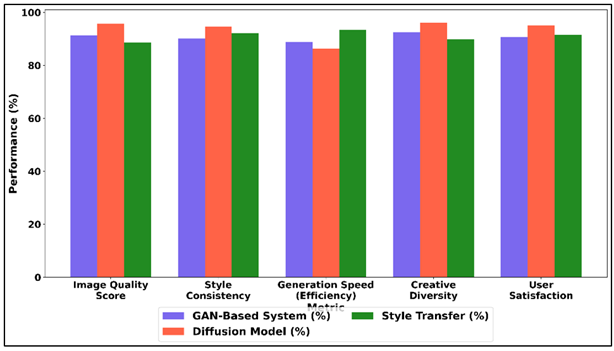
Figure 3 Comparative Analysis of GAN-Based, Diffusion, and
Style Transfer Systems across Creative Performance Metrics
This means that they are quite efficient in generating extremely detailed and aesthetically endowed products. GAN-based systems also do quite well especially in creative diversity (92.5 percent) and image quality (91.4 percent) yet slightly under diffusion models because of the training instability and mode collapse problems. Figure 4 demonstrates the comparison trends between GAN, diffusion and style transfer performance.
Figure 4
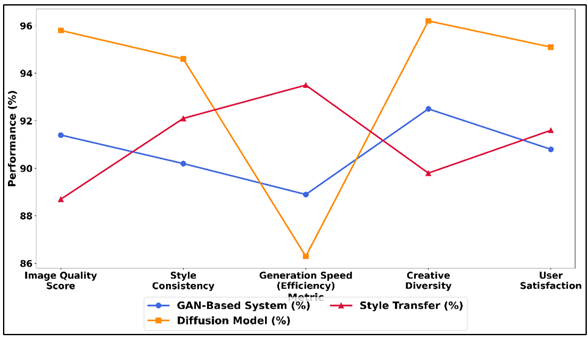
Figure 4 Performance Trend Comparison of GAN, Diffusion, and
Style Transfer Approaches Across Image Generation Metrics
By comparison, neural style transfer is the fastest in generation (93.5%), and style consistency (92.1%), hence it is efficient in applications demanding real-time artistic styles. Although, it is less creative than generative models.
Table 3
|
Table 3 Comparative Analysis of AI-Assisted vs Traditional Artistic Workflow |
|||
|
Parameter |
AI-Assisted Workflow (%) |
Traditional Workflow (%) |
Improvement (%) |
|
Creative Output Quality |
94.7 |
82.3 |
12.4 |
|
Time Efficiency |
93.2 |
68.5 |
24.7 |
|
Iteration Speed |
95.6 |
70.1 |
25.5 |
|
Concept Exploration |
96.1 |
74.8 |
21.3 |
|
Error Reduction |
92.4 |
76.9 |
15.5 |
Table 3 shows the relative benefits of AI-assisted processes compared to traditional artistic techniques in important creative and operational parameters. The findings clearly show that AI-based methods have a high level of performance compared to traditional workflows in all considered measures. Figure 5 compares the workflows and performance improvements with the help of AI, conventional workflow, and the AI-assisted workflow. It is worth noting that the most improvements are in speed of iteration (95.6%), concept exploration (96.1%), where there are improvements of 25.5 and 21.3, respectively.
Figure 5
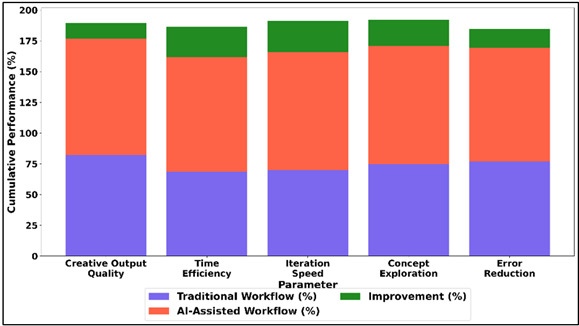
Figure 5 Comparison of AI-Assisted Workflow, Traditional
Workflow, and Improvement Across Creative Performance Parameters
It means that AI tools allow fast experimentation and exploring a variety of creative ideas in an easier and quicker way than it could be done manually. There is also a considerable decrease in time efficiency (24.7) in terms of shortening the production cycles and accelerating the artistic work. Also, the level of creative output increases by 12.4, which indicates that AI can be associated with increased visual accuracy and visual elegance.
6. Challenges and Future Research Directions
6.1. Technical challenges (computational cost, scalability)
The use of AI tools in modern visual art is generally limited due to major technical issues especially the cost-computation and scalability of the algorithms. Other models like Generative Adversarial Networks (GANs) and diffusion models demand a lot of computing power in the form of high-performance GPUs, large memory capacity, and time consuming training. This puts obstacles to the independent artists and smaller studios who might not have access to such infrastructure. Also, the real-time interaction, which is essential to creative workflows, is challenging to accomplish because of the problems of latency and processing overhead. Another urgent issue is scalability, particularly when implementing AI technologies in various areas of art or a large infrastructure. With larger and more intricate datasets, training and inference will grow inefficient and become more difficult. In addition, specific artistic style optimization and fine-tuning requires extra computational power, which restricts flexibility.
6.2. Data-Related Issues (Bias, Dataset Limitations)
Algorithms are the basic elements of the outputs of the AI-based artistic systems, and data issues are the burning question of the modern visual arts. The AI models are based on the large collections of images, where they share patterns, styles, and structures; nevertheless, these datasets may be biased and affect the results created. As an example, oversaturation of some cultural, stylistic, or demographic features can result in homogenized artistic output, restricting variety and developing new biases. This brings up the issues of equality, inclusivity, and representation in AI art. Another limitation of datasets is the impact on the quality and originality of outputs. Numerous publicly available datasets are not diverse enough or of high-quality annotation, which limits the model to generalize between multiple domains of art. Moreover, the ethical and legal implications of using licensed or unlicensed images in the training dataset are also problematic. Artists can also unintentionally add to the datasets to which they have not given their approval, resulting in arguments over who owns it and who is credited. Future studies are needed on the creation of curated, diverse and ethically acquired datasets to represent a wide range of artistic traditions.
6.3. Legal and Copyright Concerns
AI implementation in the visual arts presents potentially difficult legal and copyright issues to which no definitive solutions have yet been reached. Authorship of AI-generated artworks is one of the main problems. As they are created by human intervention and algorithms, it is not clear who owns them, whether it is the artist, developer of the AI algorithm, or the owner of the training information. This vagueness makes the intellectual property rights more complicated and also creates doubts regarding the originality and authenticity of AI-generated content. The other major issue is the issue of copyrighted content used in training datasets. The internet provides access to huge amounts of images used to train many AI models, and in many cases, with no direct consent of the individuals who initially created them. This has caused legal controversies as well as demands of tougher regulations on data use and licensing.
7. Conclusion
Incorporation of the Artificial Intelligence into the modern visual arts can be seen as a radical change in the conceptualization, creation and experience of creativity. This paper has examined the theory behind AI-based artistic systems, technological developments, and the practical significance of the AI-based art systems, which have improved the creative expression. Generative Adversarial Networks, diffusion models, and neural style transfer, among other technologies, have shown to be able to create visually captivating, varied, and high-quality artworks, and increase the creative options artists have. The main provision of AI in visual art is its ability to facilitate human-AI co-creation. Instead of ousting human artists, AI systems work as collaborative partners which bring in a new direction of thought and perspective, speed up the iterative design process and allow exploration of the new artistic frontiers. Such interaction results in innovation and allows artists to go beyond the limits of conventional expression to devise ways of expression that are hybrid and which incorporate human intuition and computational intelligence. Despite all this, several challenges that must be addressed in order to transform AI into a sustainable and ethical part of creative work exist. Some of the issues that should be taken into consideration are computational complexity, dataset bias, transparency and legal aspects of authorship and copyright. The proposed solution to these problems will be the development of more interpretable models, balanced data, and strict regulatory measures. The second direction that future research should take is creating artist-friendly, easy to use, transparent and ethical AI systems.
CONFLICT OF INTERESTS
None.
ACKNOWLEDGMENTS
None.
REFERENCES
Creswell, J. W., and Inoue, M. (2025). A Process for Conducting Mixed Methods Data Analysis. Journal of General and Family Medicine, 26, 4–11. https://doi.org/10.1002/jgf2.736
Francis, N. J., Jones, S., and Smith, D. P. (2024). Generative AI in Higher Education: Balancing Innovation and Integrity. British Journal of Biomedical Science, 81, 14048. https://doi.org/10.3389/bjbs.2024.14048
Horton, C. B., Jr., White, M. W., and Iyengar, S. S. (2023). Bias Against AI Art can Enhance Perceptions of Human Creativity. Scientific Reports, 13, 19001. https://doi.org/10.1038/s41598-023-45202-3
Hwang, G. J., and Chen, N. S. (2023). Exploring the Potential of Generative Artificial Intelligence in Education: Applications, Challenges, and Future Research Directions. Educational Technology and Society, 26, 18.
Isawi, D., Schoonover, T. T. J., Davis, E., and Gomez-Torres, B. (2024). Creative Pedagogy in Counselor Education: The Use of Play Strategies. Journal of Creativity in Mental Health, 20, 1–14. https://doi.org/10.1080/15401383.2024.2432251
Jauhiainen, J. S., and Guerra, A. G. (2024). Generative AI and Education: Dynamic Personalization of Pupils' School Learning Material with ChatGPT. Frontiers in Education, 9, 1288723. https://doi.org/10.3389/feduc.2024.1288723
Kannen, N., Ahmad, A., Andreetto, M., Prabhakaran, V., Prabhu, U., Dieng, A. B., and Bhattacharyya, P. (2024). Beyond Aesthetics: Cultural competence in Text-To-Image Models. arXiv.
Limna, P., Jakwatanatham, S., Siripipattanakul, S., Kaewpuang, P., and Sriboonruang, P. (2022). A Review of Artificial Intelligence (AI) in Education During the Digital Era. Advances in Knowledge Execution, 1, 1–9.
Liu, B., Wang, L., Lyu, C., Zhang, Y., Su, J., and Shi, S. (2024). On the Cultural Gap in Text-To-Image Generation. Frontiers in Artificial Intelligence and Applications, 392, 930–937. https://doi.org/10.3233/FAIA240581
Marcus, G., Davis, E., and Aaronson, S. (2022). A Very Preliminary Analysis of DALL-E 2. arXiv.
Rombach, R., Blattmann, A., Lorenz, D., Esser, P., and Ommer, B. (2022). High-Resolution Image Synthesis with Latent Diffusion Models. arXiv. https://doi.org/10.1109/CVPR52688.2022.01042
Selwyn, N. (2022). The Future of AI and Education: Some Cautionary Notes. European Journal of Education, 57, 620–631. https://doi.org/10.1111/ejed.12532
Shah, T. (2026). Artificial Intelligence Based Argumentation Framework for Critical Thinking Development. International Journal of Advanced Computer Theory and Engineering, 15(1S), 66–76. https://doi.org/10.65521/ijacte.v15i1S.1304
Tahiru, F. (2021). AI in education: A Systematic Literature Review. Journal of Cases on Information Technology, 23, 1–20. https://doi.org/10.4018/JCIT.2021010101
Vieriu, A. M., and Petrea, G. (2025). The Impact of Artificial Intelligence (AI) on Students' Academic Development. Education Sciences, 15, 343. https://doi.org/10.3390/educsci15030343
Wei, M., Feng, Y., Chen, C., Luo, P., Zuo, C., and Meng, L. (2024). Unveiling Public Perception of AI Ethics: An Exploration on Wikipedia Data. EPJ Data Science, 13, 26. https://doi.org/10.1140/epjds/s13688-024-00462-5
|
|
 This work is licensed under a: Creative Commons Attribution 4.0 International License
© ShodhKosh 2026. All Rights Reserved.