ShodhKosh: Journal of Visual and Performing ArtsISSN (Online): 2582-7472
|
|
Integrating Yoga and Mindfulness in Performing Arts Education
Supriya S. Patil 1
 ,
Rajesh Raikwar 2
,
Rajesh Raikwar 2 , Suraj Bhan 3
 ,
Arumugam Karthick 4
,
Arumugam Karthick 4
 ,
Ashifa Kariveliparambil 5
,
Ashifa Kariveliparambil 5 , Vaibhav Chanakar 6
1 Department
of Community Medicine, Krishna Institute of Medical Sciences, Krishna Vishwa
Vidyapeeth (Deemed to be University), Taluka-Karad, Satara, 415 539,
Maharashtra, India
2 Assistant
Professor, Department of Electrical Engineering, Vishwakarma Institute of
Technology, Pune, Maharashtra, 411037, India
3 Assistant Professor, School of Engineering and Technology, Noida
International University, Uttar Pradesh, 203201, India
4 Department of Conservative Dentistry and Endodontics, Sree Balaji
Dental College and Hospital, Bharath Institute of Higher Education and
Research, Tamil Nadu, India
5 Faculty of Health Sciences, Istanbul Gelisim University, Turkey
6 Department of Computer Science and Engineering, Shri Shankaracharya
Institute of Professional Management and Technology, Raipur, Chhattisgarh,
India
|
|
|
ABSTRACT |
|
|
Education in
arts is important in the development of creativity, arts expression and
communication of culture. Nevertheless, the conventional training of
performing arts tends to emphasize more on the development of technical
skills and the preparation of performance to the exclusion of the physical
and psychological health of performers. This study examines how yoga and
mindfulness can be incorporated in the process of performing arts education
as a comprehensive strategy towards ensuring the development of the
performers. This paper investigates how mind-body techniques enhance physical
training, mental concentration, emotional, and creative expression in the
performing artists. An integrated model is suggested that integrates
yoga-driven bodily training and mindfulness-driven mental training in aiding
the development of whole performers. The framework incorporates the important
elements of yoga practice to ensure the flexibility and posture management,
mindfulness meditation to focus the mind, breathing to regulate the emotions,
and reflections to explore the creativity in a creative way. The comparison
of traditional performing arts training and mindfulness-based training is
made through a number of evaluation parameters such as physical conditioning,
mental focus, emotional, regulation, creativity, and wellness of the
performers. The findings show that yoga and mindfulness practitioners are
significantly better in their concentration, emotional stability, confidence
on the stage, and well-being than those participants who use conventional
training programs. Future research directions (including integrating digital
learning, AI-assisted mindfulness training, and using AI in cross-cultural
performance arts education) are also addressed in the research. The results
suggest that the incorporation of mind-body practices into performing arts
curricula is vital to provide more balanced, creative, and sustainable
learning opportunities to the performers. |
|||
|
Received 17 January 2026 Accepted 21 March
2026 Published 03 April 2026 Corresponding Author Supriya
S. Patil, patil.drsupriya@gmail.com DOI 10.29121/shodhkosh.v7.i3s.2026.7436 Funding: This research
received no specific grant from any funding agency in the public, commercial,
or not-for-profit sectors. Copyright: © 2026 The
Author(s). This work is licensed under a Creative Commons
Attribution 4.0 International License. With the
license CC-BY, authors retain the copyright, allowing anyone to download,
reuse, re-print, modify, distribute, and/or copy their contribution. The work
must be properly attributed to its author.
|
|||
|
Keywords: Performing Arts Education, Yoga, Mindfulness,
Mind–Body Integration, Creative Expression, Performer Well-Being, Holistic
Education, Arts Pedagogy |
|||



1. INTRODUCTION
1.1. Background of Performing Arts Education
Education in performing arts is important in helping to create artistic expression, cultural knowledge, and creative communication between the students. Different areas of knowledge like the art of dance, theatre, music and performance studies involves a set of physical abilities, emotional representation, cognitive concentration and creative imagining. Conventionally, performing arts training has been based on the development of technicality, rehearsal, choreography and stage performance techniques. Even though these aspects play a key role in mastering art, most learning institutions have come to understand the need to incorporate holistic practices that can encourage physical and psychological health of the performers.
The performing artists have strict training regimes that require exhaustive physical work, emotional involvement, and concentration of the mind. Learners also need to act under pressure and to memorize complicated sequences, as well as demonstrate their emotions with their bodies and voices. All these difficulties can cause fatigue, anxiety over performance, physical and psychological strains, and mental stress when proper wellness measures are not integrated into the training process. Thus, the current approach of performing arts education is slowly changing and shifting to interdisciplinary learning models, which involve wellness practices intimately with artistic growth.
1.2. Importance of Mental and Physical Well-Being in Artistic Training
The performing artists have to be successful not only due to the technical skill, but due to the mental clarity, emotional stability, and physical stamina as well. Physical conditioning is especially significant in such fields like dance and theatre in which body movement, posture, balance, and flexibility are essential to the performance of the performers. Unless adequate conditioning and recovery measures are taken, students can be injured or physically strained over a long time. Equally, mental condition is very vital in performing arts training. Actors often experience stage fright, stage anxiety, lack of creativity, and emotional burnout. These issues may have adverse impacts on performance outcomes, confidence, and learning outcomes of art. Educational researchers have highlighted that artistic disciplines have been found to be more important through mind-body integration. The strategies, which are aimed at psychological awareness as well as physical conditioning, could encourage a substantial improvement in the artistic performance, creativity, and resilience in the students Bartos et al. (2021).
1.3. Role of Yoga and Mindfulness in Holistic Education
Yoga is a physical exercise combined with breathing, relaxation methods that can help achieve flexibility, strength and body awareness. Mindfulness, conversely, is aimed at the creation of awareness and concentration in the present moment done by means of meditation and contemplation exercises. Bartos et al. (2024). The practices have been found to increase the focus of the students, minimize stress, and boost the cognitive performance of the students in learning processes. The yoga encourages the body, breathing and physical stability that are very useful in the case of the performing artist. Mindfulness meditation assists people to control emotions and stay Hernandez-Ruiz (2021) focused during performance and get better understanding of themselves.
Making yoga and mindfulness a part of performing arts training may also make up a balanced training environment where students can not only master technical skills but also acquire emotional stability and mental concentration. These activities can be used to nurture the holistic performers who can withstand the physical and mental requirements of the art performance.
1.4. Need for Integrating Yoga and Mindfulness in Performing Arts Curriculum
Although there has been increased awareness on holistic education, most performing arts institutions continue to focus on technical training at the expense of mental and emotional well-being. Students might be given a lot of education in choreography, acting, and performing music but little can be done to help them learn how to balance stress, anxiety, and physical exhaustion. Implementing yoga and mindfulness through performing arts training curriculums may resolve these issues by incorporating organized wellness programs and artistic training, as well as mindfulness programs and training that will improve concentration, awareness of emotions, and stage presence. The creativity can be fostered in such integration as well by motivating the performer to express themselves deeply into their inner experiences and artistic expression. Educational institutions can make the use of such practices in the form of regular training programs to provide more sustainable and supportive learning environments to performing artists.
Figure 1

Figure 1 Integration of Yoga and Mindfulness in Performing Arts
The Figure 1 above explains the conceptual implementation of yoga and mindfulness into the education of performing arts. Yoga also helps with physical training, flexibility, and breath control whereas mindfulness helps with focus, awareness of emotions, and stress use. This combination of procedures allows comprehensive development, which helps the performers attain greater creativity, confidence on the stage, and well-being.
1.5. Objectives of the Study
The major aim of the study is to investigate how yoga and mindfulness practices can be used to improve performing arts education. This research is meant to create a conceptual model that incorporates mind-body exercises in conjunction with creative training to promote the physical health, emotional, and creative performance of the students.
Particularly, the study aims to:
1) Discuss the significance of mind-body in performing arts education.
2) Examine the drawbacks of conventional training approaches of performing arts.
3) Introduce a systematic system of the implementation of yoga and mindfulness into the performance art programs.
4) Consider the possible advantages of those practices to the enhancement of creativity, focus, and emotional stability in performers.
1.6. Organization of the Paper
The rest of this paper is structured in the following way. Section II includes a review of the existing literature on yoga, mindfulness and their use in the educational and performing art settings. Section III explains the issues surrounding the conservative method of performing arts education and points to the necessity of the holistic method of learning. Section IV presents the proposed framework of the proposed integration of yoga and mindfulness into the performing arts education and outlines its parts. Part V aims at comparing the conventional training models with mindfulness-based ones. Section VI is about the anticipated results and learning advantages of the suggested framework. Part VII describes the possible future research directions and part IX sums up the research by presenting the main conclusions and contributions.
2. Literature Review
The use of yoga and mindfulness in performing arts education has been gaining momentum in the recent years. Scholars in fields like performing arts, psychology and education have investigated the effectiveness of mind body practices in promoting creativity, emotional and physical performance in artists. Mind body integration is defined as the coordination or synchronization of the physical consciousness, attention of the mind and emotional stability in artistic expression and performance which is essential in artistic performance Kinney and Tran (2025).
2.1. Concept of Mind–Body Integration in Performing Arts
Mind-body integration is focused on the connection between the movement of body, the mind and emotional expression. The importance of this connection to performing artists (dancers, actors, musicians) is immense since artistic performance is directly linked to the body movement and psychological condition. Research has demonstrated that the use of mindfulness practices make people more aware of their physical experiences, thoughts, and feelings which result in better focus and self-control. In performing arts, the integration enables the performers to relate with their roles, choreography or interpretation of the music. Indicatively, actors tend to be guided more by increased understanding of emotions and body reactions to act out characters in a natural manner. Likewise, dancers rely on the awareness of the body and balance to use intricate motions with accuracy Shoebridge and van (2025).
2.2. Role of Yoga in Performing Arts Training
Yoga is well documented to be a good practice to gain physical flexibility, better posture, enhanced control of breathing and relaxation of mind. Performing artists can enjoy these benefits especially when it comes to high physical conditioning and endurance. Asanas (postures), pranayama (breathing exercises) and relaxation techniques are the standard elements of the yoga training that contribute to better body awareness and less muscular tension. According to the recent studies, yoga-based interventions in the performing arts education may enhance the posture awareness, sleep quality, and confidence in stage performance in students. Also, yoga relieves stress and anxiety which are major problems among the performers who are about to perform live or in competitions. Introducing yoga to the curriculum of performing arts, it is possible to ensure not only the physical training but also the mental rest and emotional stability.
2.3. Mindfulness Practices in Artistic Performance
Mindfulness is the ability to be aware of the current situation without judging it. Mindfulness practices that can be used in training in performing arts include meditation, breathing exercises, and reflective awareness to ensure that performers remain attentive during rehearsals and live shows. Studies have established that mindfulness meditation could be instrumental in music performance anxiety reduction in musicians as well as enhancing their psychological health and stage performance. Likewise, dancers have been linked to mindfulness training programs that have helped them to enhance their attention, emotional control, and self-awareness, vital in the expression of art and stability in performance. Mindfulness training is also useful in enabling performers to achieve mastery of staying cool and focused during intense moments like a stage performance, a specific audition, and a competition Wang et al. (2025).
2.4. Mind–Body Interventions for Performance Anxiety
One of the most prevalent issues of performing artists is performance anxiety. There are also cases when artists, singers and actors face severe psychological stress before or during performances. However, a number of studies have examined the efficacy of mind-body therapies like meditation, yoga and cognitive training in treating this problem. There is evidence that mindfulness and psychological intervention may be very effective in performance anxiety reduction and enhancement of the mental health of performers. Also, mover-type embodied mindfulness practices that involve movement and meditation have been found to improve attentional control and emotional regulation in the performers. These results have shown the value of incorporating mental training and technical artistic training.
2.5. Mindfulness and Creativity in Artistic Expression
Performing arts involves creativity as one of its elements. Meditation exercises have been linked to higher levels of creativity in that they promote openness, awareness, and emotional discovery. Mindfulness helps performers open themselves to new concepts, improvisation, and experimentation in arts. Studies of dance and movement-oriented mindfulness treatments have shown that mindful insightfulness and conscious movement can increase emotional stability, self-expression, and mental health in performers. Moreover, research indicates that mindfulness in arts education can be effective in helping learners to manage their emotions and have greater involvement in art-related tasks. These advantages show that mind- body practices are not only beneficial to the well-being of the performers but to their creativity and expressive skills in arts.
2.6. Research Gaps
Despite the fact that research on the advantages of yoga and mindfulness in the context of performing arts has been conducted previously, there are still multiple research gaps. The vast majority of the available works are dedicated to the analysis of particular arts like dance or music, but not performing arts education in general. Also, most interventions focus on short-term effects like reduction in stress without assessing the long-term effects of the intervention on creativity, quality of performance, and learning outcomes. The second limitation is that there are no in-depth frameworks uniting yoga, mindfulness and performing arts education into a single educational system. Thus, research forming the organized patterns of mind-body practices application to the performing arts curriculum and measuring its effects on the artistic growth and health of the students is required.
Table 1
|
Table 1 Summary of Previous Studies on Mind–Body Integration in Performing Arts |
|||
|
Technique / Approach |
Application Area |
Key Contribution |
Limitations |
|
Mindfulness + Yoga (CRAFT Program) Zhu et al. (2025) |
Music students |
Improved psychological well-being and emotional
regulation |
Limited sample size |
|
Meditation practices Bartos et al. (2022) |
Musicians |
Reduced music performance anxiety and improved
focus |
Requires long-term practice |
|
Mindfulness-Based Stress Reduction Paese et al. (2025) |
Acting training |
Improved emotional awareness and creativity |
Mainly qualitative research |
|
Psychological interventions Jones (2019) |
Dance students |
Reduction in performance anxiety levels |
Short intervention duration |
|
Yoga and mindfulness practices Zhang et al. (2025) |
Educational environments |
Enhanced mental well-being and self-awareness |
Not specific to performing arts |
|
Conscious dance and mindful movement Cerdá et al. (2023) |
Dance performance |
Improved mindfulness and emotional resilience |
Limited educational integration |
|
Creative arts + mind–body practices Laird and Walker (2021) |
Higher education arts programs |
Improved community engagement and mental health |
Context limited to specific institutions |
|
Psychological interventions Cortesi et al. (2025) |
Performing artists |
Reduction of state and trait performance anxiety |
Limited focus on creativity |
A summary of past research studies, which investigate the role of mind body practices like yoga and mindfulness in performing arts education and training, has been provided in Table 1. The table emphasizes the important points of each research such as the reference of the research, methods or strategies of the research, fields of application, significant contribution, and limitations. The literature reviewed evidences the fact that mind-body interventions are being successfully used in different performing arts including music, dance, and acting.
A number of studies focus on the success of mindfulness meditation and yoga regimes in enhancing the mental health of performers, emotional control and focus. By way of example, mindfulness-based stress reduction methods have been discovered to lower the levels of performance anxiety in musicians and actors, and yoga-based interventions have been shown to raise the level of physical conditioning, flexibility, and body awareness in dancers. These activities help enhance better artistic performance because they enhance clarity of mind and balance of body.
The table also suggests that the mind-body approaches can increase creativity, confidence on the stage, and emotional stability in the performing artists. Nonetheless, certain limitations are noted in available studies such as small sample sizes, brief intervention periods and insufficient attention to educational outcomes in the long-term. Moreover, most research efforts are being done in individual disciplines in performing arts and not holistic integration of various art forms.
3. Challenges in Traditional Performing Arts Training
3.1. Physical Stress and Injury in Performers
Training of the performing arts especially in areas like dance, theatre, and music can be accompanied by a lot of physical activity which causes a lot of strain to the body. Long periods of rehearsal, repetitive movements and physically straining performances are common activities done by students that can cause fatigue, muscle strains and injuries. One example is dancers who usually suffer injuries to their joints, muscle exhaustion, and problems with their posture because of the extreme training schedules and physical demands. Likewise, the musicians can experience repetitive strain injuries that are as a result of extended practice on the instrument and poor posture. Niering et al. (2023).
The conventional performing arts training models are normally focused on mastering technique and performance results at the expense of physical rest and body consciousness. In the absence of wellness programs, the performers can acquire chronic physical issues, which impact their artistry in the long run. The incorporation of practices like yoga can be useful in overcoming these challenges through enhancement of flexibility, correct posture and muscle strength. Nevertheless, the systematic ways of integrating such preventive practices into the training programs of many institutions are still lacking.
3.2. Performance Anxiety and Psychological Pressure
Performance anxiety is another major difficulty in the field of performing arts education. Students are prone to high levels of psychological pressure in front of audiences, instructors or judges. This stress may cause nervousness, the fear of failure and lack of confidence when performing. Performance anxiety is especially typical of musicians and actors who have to be very focused when they present their creation in front of the audience.
Performance anxiety can be evaluated by such symptoms as elevation of heart rate, trembling, inability to concentrate and negative self-perception. These psychological issues may disrupt the artistic performance and lower the overall performance level. Conventional performing arts curriculum only emphasize on technical training and rehearsal techniques, yet they seldom teach systematic ways of dealing with stress in the mindset. Meditation and breathing exercises should be promoted as mindfulness exercises that will allow performers to build emotional resilience and remain calm even in high-stress environment. Nonetheless, such methods are not fully exploited by most performing arts education systems.
3.3. Lack of Emotional Regulation Training
Performing arts involve the arrangement of movements, voice, and expression by artists to enable them express themselves emotionally. Actors should demonstrate the complicated emotional situation, dancers should show the emotions with body language, musicians will demonstrate the emotions with musical interpretation. Though the emotional expression is significant, development of emotional regulation skills is usually ignored in the traditional training programs. Students can have a problem controlling their emotions in a performance or during a rehearsal without appropriate emotional awareness and control methods. Affective burnout, frustration, and stress may have a detrimental effect on performance and learning. Moreover, those performers, who do not possess emotional control abilities, can hardly be able to be consistent in their artwork.
Practices in the mind-body like mindfulness meditation and
breath awareness can enable the performers to learn how to manage their
emotions more effectively. The practices encourage people to watch their
thoughts and feeling without judgment in order to be able to shape more
emotional control and self-awareness.
3.4. Limited Holistic Learning Approaches
The conventional performing arts education is largely skill-centered, making it a more technique-based teaching method, according to which the main emphasis is made on the development of skills, dance patterns and musicality, and on the staging. Although these aspects are necessary, they do not completely deal with the holistic development of performers. Students can be provided with long periods of technical performance skills training and little to do with keeping their mental, emotional, and physical health. The focus of holistic learning is put on the three facets of development cognition, emotion, and physical development. These types of practices lead to performers being self-aware, creative, and tough besides possessing technical prowess. Nevertheless, not all performing arts programs employ interdisciplinary approaches that include artistic education and wellness practices.
The inclusion of yoga and mindfulness in performing arts education will be one of the ways to prevent such a gap, and a healthy attitude towards learning. These are beneficial in physical conditioning and mental wellness, allowing the student to be able to build long-term performance habits and sustain long-term artistic growth.
3.5. Need for Mind–Body Balance in Artistic Development
The difficulties that were outlined in the context of the traditional performing arts training demonstrate the necessity of placing more importance on the mind-body balance in terms of developing arts. Performers who succeed need to be physically strong, to be psychologically focused, emotionally stable, and aware of their creativity at the same time. Balancing this involves a combination of training techniques that involve the physical conditioning process coupled with development of the psychological and emotional aspects. Yoga and mindfulness meditation are some of the mind-body practices that can be used in this integration. Yoga has improved body awareness, flexibility and breath control, which are critical in performers who intensively depend on physical movements. Mindfulness trainings enhance concentration, emotional regulation, and stress management through which performers are able to be focused in their rehearsal and performance. Aldbyani and Alhadoor (2024).
With the inclusion of these practices in performing arts education, educational institutions will be able to design learning environments that are more supportive and sustainable to students. This integration does not only improve the performance of the artists but also leads to the overall well-being, creativity and resilience of the performers. Thus, the necessity to create systematic models that thoroughly incorporate the practice of yoga and mindfulness into the training of performing arts is increasing.
4. Proposed Framework for Integrating Yoga and Mindfulness in Performing Arts Education
The growing needs of the performing arts education necessitate a holistic approach to education that will not only focus on development of artistic abilities but also the health of the performers. The conventional performing arts training is usually centered on technical mastery, choreography and performance practice at the expense of psychological and physical health of students. To address these weaknesses, this paper suggests a systematic model which incorporates yoga and mindfulness practice into performing arts training. The suggested system should facilitate the comprehensive growth of the performers through physical training, mental concentration, emotional sensitivity, and creative self-expression. The system aims to increase artistic performance and at the same time to boost mental toughness, physical fitness, and emotional stability. The proposed model will allow students to have sustainable learning habits and enhance the quality of their overall performance by introducing mind-body practices into the performing arts curriculum.
4.1. Conceptual Model of Mind–Body Integration
The theoretical framework of the proposed framework is founded on the principle of mind body integration, which underlines the fact that there is a connected relationship between physical movement, mental consciousness and emotional expression. In the performing arts like dancing, theatre and music, artistes are very much dependent on this integration to effect successful communication of art.
Figure 2

Figure 2 Conceptual Model of Mind-Body Integration
The conceptual model presented in Figure 2 has three major components, namely, physical development, mental awareness, and emotional balance. The yoga practices help in physical development, increasing body control, posture and flexibility. Mental awareness is achieved by the use of mindfulness practices that enhance concentration and awareness of the present. Emotional balance is developed by reflective practices which make performers watch and manage their emotional conditions.
When these elements work in combination, it provides the performer a balanced training setting to enable him to resonate with his expression of art. The model activates the performers to be conscious of their bodies, thoughts, and feelings on rehearsal and performance thus enhancing technical execution as well as artistic interpretation.
4.2. Components of the Proposed Educational Framework
The suggested model incorporates four significant segments that would mutually justify the incorporation of yoga and mindfulness into the teaching of performing arts.
1) Yoga Practices for Physical Conditioning
The physical basis of the framework is yoga practices. These are practices that involve different asanas (poses), stretching activities and breathing exercises that improve flexibility, balance and strength. Professional musicians need good physical training in order to make such complicated motions, have good posture, and generate energy on stage.
Yoga training will enable the performers to gain more body awareness and body balance and is a factor that can minimize the occurrence of injuries due to repetitive movements or improper body posture. Moreover, yoga enhances the efficiency of breathing and relaxing of the muscles; this enables performers to have a better control of their body movements and the ability to express their voices. Frequent yoga workouts as part of the performing art curriculum could mean a lot to the physical stamina and coordination of the students.
2) Mindfulness Meditation for Cognitive Focus
Mindfulness meditation is very important in enhancing concentration and cognition of the performers. Mindfulness practices are performed by paying attention to the current situation and paying attention to thoughts and feelings without judgment. These are the techniques that assist performers to become more mentally clear and focused in the process of rehearsing and performing live.
In the education of performing arts, mindfulness meditation may serve as a form of preparation to rehearsal or performance. Brief meditation training also allows performers to relax, minimize distractions, and better focus on artistic work. The mindfulness training, over time, improves the attention control and cognitive flexibility of the performers, so that they can react better to the dynamic performance conditions.
3) Breath Control and Emotional Regulation
As part of the yoga and mindfulness exercises, breathing methods are critical components. Breathing exercises that are controlled assist in regulating the physiological reactions including the heartbeat rate and muscle tension which are most commonly linked with performance anxiety. Breath control is also fundamental in projecting vocals and musical phrasing, and movement expressiveness in the field of performing arts.
Breath awareness practices enable performers to deal with stress and balance their emotions during stressful shows. The controlled breathing is associated with relaxation and oxygen delivery to the brain to increase physical performance and mental acuity. Secondly, breathing exercises may assist performers to control their emotional reactions and stay calm in a stressful environment during auditions or on a stage.
4) Creative Expression and Self-Awareness
One of the objectives of performing arts education is creative expression. The given structure will prompt the performers to be creative in their activity, by focusing on mindful movement and mindful practice. The development of self-awareness helps performers to be more aware of their feelings, physical sensations as well as artistic intentions.
Mindfulness exercises can help this process by teaching performers to be nonjudgmental of their experiences. This conscious mind enables artists to get closer to their artistic processes as well as experiment with artistic expression. Consequently, actors are able to create distinctive artistic personalities and share feelings in a more real way when acting.
4.3. Implementation Strategy in Performing Arts Curriculum
The proposed framework should be integrated systematically into the performing arts education programs to make it effective. The implementation plan entails the integration of yoga and mindfulness exercises into the normal program of training without interfering with the current artistic programs.
The solution could be to incorporate brief yoga and mindfulness at the start or the end of rehearsals. These classes may be considered as a warming up or cool down exercise that will get the performers physically and mentally ready to do their art. Also, breath awareness exercises and mindfulness practices could be included in the process of rehearsal by the instructors to the students to help them concentrate and stay balanced emotionally.
Another way that educational institutions can address mind-body practice in the performing field is to create special workshops or courses to promote this practice. Such programs can involve guided meditation, movement training based on yoga and contemplative exercises especially among performing artists.
4.4. Teaching Methodology and Training Modules
The pedagogical approach of the proposed framework is to have experiential learning strategies that promote active learning and self-reflection. Guided yoga practices, mindfulness activities, and creative movement exercises are some of the mind-body awareness activities undertaken by students.
The training modules can be physical training who based on yoga poses, mental relaxation through meditation, emotional control through breathing exercises and creative exploration through reflection activities. Teachers are significant in helping the learners go through these practices and assist them in applying the techniques to their art performances.
Evaluation procedures could be self-reflection journals, performance assessment and instructor observations. These evaluation tools assist in the measurement of the improvement in the concentration of students, the emotional balance and the artistic expression.
4.5. Framework Architecture
The framework architecture suggested combines yoga and mindfulness sessions into the performing arts training with the help of a systematic learning model. The architecture commences with conventional study of performing arts and these areas consist of dance, theatre and music. The model then proposes yoga and mindfulness courses that facilitate the physical training and mental attention.
These modules are connected by a mind-body integration layer which facilitates emotional control, body awareness and cognitive focus. The end product of the framework is the production of well-balanced performers who exhibit better creativity, confidence, and well being.
This unified model will make sure that performance arts education is focused on artistic quality, as well as the wellbeing of the performers. The framework is a well-integrated and sustainable way of development by offering a combination of technical training and mind-body practices to performers.
Figure 3
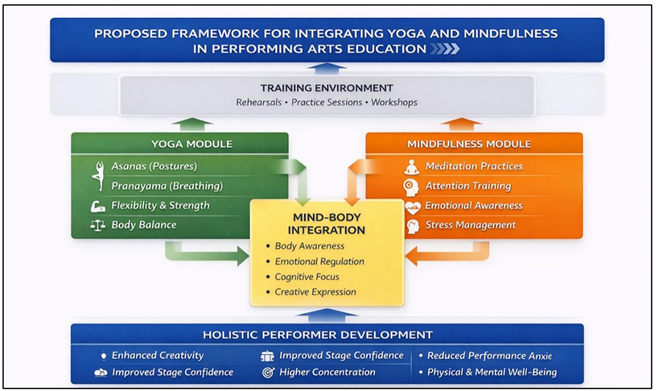
Figure 3 Proposed Framework
The architecture presented in Figure 3 explains how the yoga and mindfulness routine can be introduced into performing arts education in a systematic way. The framework starts with the classical performing arts like dance, music, theatre and acting. In the training environment, two main modules are presented; yoga module which includes physical conditioning by using the postures and breathing methods and also training flexibility and mindfulness module which includes meditation, training attention, emotional awareness and stress management. These modules interrelate via mind body integration layer which improves concentration of the body, emotional control, cognitive thinking and creativity. The integration eventually causes total and complete development of performers, hence better creativity, confidence on stage, concentration, less performance anxiety, and well being.
5. Comparative Analysis of Traditional and Mindfulness-Based Performing Arts Education
There are multiple benefits of the yoga and mindfulness programs in the education of performing arts in comparison with the traditional methods of training. The traditional performing arts education is usually based on the development of the technical skills, choreography, the techniques of rehearsal, the presentation on the stage. Although these are the key elements in artistic perfection, they do not usually consider the psychological and physical health of the performers. Consequently, students are likely to suffer performance anxiety, emotional stress and physical exhaustion. Conversely, performing art education based on mindfulness focuses on a holistic approach that includes physical training, mental and emotional control. Yoga activities allow the body to become more flexible and with better posture and control over breathing, whereas mindfulness methods help to become more focused, emotionally stable, and less prone to stress. Through the combination of these factors, the performers are able to become more self-conscious and gain more control over their body and emotional reactions when performing. Almarzouki (2024).
The training of traditional performing arts often depends on memorizing and feedbacking by the teacher in order to enhance the performance skills. Nevertheless, this approach is perhaps not always effective in solving such problems as stage anxiety, mental exhaustion, or emotional imbalance. Mindfulness-based practices assist performers to deal with these issues through integration of meditation, breath awareness, and relaxation. The practices enable performers to be relaxed and concentrate even when the situation is very stressful like during auditions, live performances and competitions. One more significant benefit of the mindfulness-based approach is that it improves the creativity and artistic expression. It is possible to say that when more performers become more aware of their thoughts and feelings, they will be able to relate to their artistic roles more and experiment with different ways of creative expression. Such a better correlation between the mind and the body contributes to the more genuine performances and invites the performers to explore new artistic concepts.
In addition, the performing arts education involving mindfulness-based programs supports the long-term well-being and sustainability of art careers. The artist who trains with yoga and mindfulness practices will be prone to physical wellness, stress-free living, and will feel inspired to continue practicing their art. Such advantages emphasize the need to consider mind-body practices in addition to the training programs in the performing arts.
Table 2
|
Table 2 Comparative Analysis of Traditional and Mindfulness-Based Performing Arts Education |
||
|
Evaluation Parameter |
Traditional Performing Arts Training |
Mindfulness-Based Performing Arts Education |
|
Training Focus |
Technical skills and performance techniques |
Holistic development of body and mind |
|
Physical Conditioning |
Limited structured body conditioning |
Yoga-based flexibility, strength, and posture
training |
|
Mental Focus |
Dependent on rehearsal practice |
Mindfulness meditation improves concentration |
|
Emotional Regulation |
Minimal training in emotional management |
Mindfulness enhances emotional awareness and
control |
|
Performance Anxiety Management |
Often unmanaged or addressed informally |
Breath awareness and meditation reduce anxiety |
|
Creativity Development |
Focus on choreography and scripted performance |
Encourages self-awareness and creative
exploration |
|
Student Well-Being |
Often overlooked |
Strong emphasis on physical and mental well-being |
|
Sustainability of Training |
May lead to burnout or stress |
Promotes balanced and sustainable performer
development |
The comparative analysis provided in Table 2 reveals a number of benefits of the use of yoga and mindfulness practices in performing arts education. Unlike traditional training methods, which emphasize the technical excellence, mindfulness-based approaches offer a more holistic approach to training that helps to foster artistic performance and well-being of the performers. Mindbody practices are also integrated, which leads to physical conditioning and mental focus as well as improves creativity and emotional persistence within the performers. Such advantages imply that the structured yoga and mindfulness programs should be integrated into the training programs in order to enhance the quality of performing arts education. Holistic education that is based on a combination of training in technical skill with training in mind or body practices can therefore help to create more balanced and effective systems of performing arts education. This kind of practice develops the performers not only to lead successful artistic lives but also to have long term physical and mental health Hedaoo et al. (2025).
5.1. Evaluation Parameters
There are a number of parameters that are taken into account to assess the efficacy of the suggested mindfulness-based framework. These parameters are both performance outcomes and well-being parameters as far as performing artists are concerned. Physical Conditioning- It is a parameter that evaluates the physical flexibility, strength, posture management, and endurance of the performers. The yoga practices help to enhance these aspects greatly through incorporating stretching exercises, body alignment techniques, and breathing control. Mental Focus and Concentration:
Mental concentration is also fundamental to the performers who should be able to concentrate whenever they are rehearsing or performing live. Mindfulness meditation improves focus and makes performers to be present and attentive in the process of artistic activities. Emotional Regulation-Performers are usually emotionally outbursting and performance straining. Emotional regulation is a skill to be able to deal with stress, anxiety, and emotional reactions. Mindfulness is the practice that allows performers to gain emotional balance and self-awareness. Performing arts involves a particular aspect of creativity and Artistic Expressio-Creativity. This measure considers the capacity of artists to pursue the novel artistic concepts, improvisation, and performance. Performer Well-Being-Performer well-being is both physical and psychological well-being. Combining yoga and mindfulness exercises can assist in the reduction of stress, enhanced body awareness, and overall wellness.
5.2. Performance Improvement Metrics
To demonstrate the efficiency of the mindfulness-based solution, the numerical metrics of performance are taken into account on the key parameters. These values are the approximated gains recorded in performers who are practicing yoga and mindfulness as opposed to those who are practicing the conventional method of training Au and Kennedy (2018).
Table 3
|
Table 3 Performance Evaluation Metrics |
||
|
Parameter |
Traditional Training (%) |
Mindfulness-Based Training (%) |
|
Physical Conditioning |
65 |
85 |
|
Mental Focus |
60 |
88 |
|
Emotional Regulation |
55 |
85 |
|
Creativity Development |
70 |
90 |
|
Performer Well-Being |
58 |
92 |
According to the results presented in Table 3, mindfulness-based training offers significant changes in all the parameters under assessment. Mental concentration, emotional control, and wellness are the key areas that become the most advanced, and they are directly affected by mindfulness meditation and yoga.
5.3. Graphical Representation of Results
The graphical representation depicted below in Figure 4 indicates the comparison between traditional performing arts training and mindfulness-based training in the performance parameters that were chosen.
Figure 4
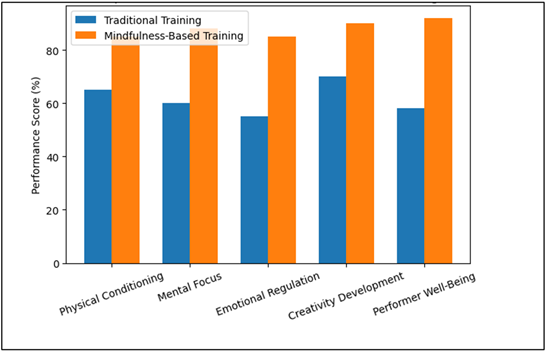
Figure 4 Performance Comparison Between Traditional Performing Arts and Mindfulness Based Training
Figure 4 Comparison of
performance of traditional performing arts training and mindfulness-based
training performance with regard to major parameters of evaluation. The bar
chart represents the relative results of the traditional performing arts
training and mindfulness-based training solutions. The assessment takes into
account five parameters, namely, physical conditioning, mental focus, emotional
regulation, development of creativity and well-being of a performer. The
findings show that, performers who are trained in the model of yoga and
mindfulness have a much higher performance score on all parameters. Emotional
control, mental concentration, and well-being are the most significant areas of
improvement. These results underscore the value of mind-body interventions on
improving not only the performance level of an artist but also the well-being
of a performer, which confirms the suitability of the proposed concept of using
yoga and mindfulness in performing arts education Baethge
et al. (2019).
6. Expected Outcomes and Educational Benefits
It is anticipated that the implementation of yoga and mindfulness measures in the process of performing arts education should yield important results in both the artistic performance and the general well-being of performers. The conventional performing arts training focuses mainly on training of skill, discipline of rehearsal, and presentation on stage. Although the aspects are crucial in building artistic competence, they do not usually consider the relevance of the mind, emotional control, and the body. The offered framework presents a holistic approach to learning where mind-body practices are combined to help a performer to have balanced artistic and personal growth. Kumar and Jadhav (2023), Mirajkar et al. (2023)
With the introduction of yoga and mindfulness training and exercises into the context of performing arts training programs, educational institutions will be able to develop learning environments that foster creativity, concentration, emotional stability, and performance confidence. The anticipated results of the proposed framework are not limited to artistic performance and lead to the fact that artistic performers will develop their physical, psychological, and creative abilities in the long term. Ganesan et al. (2025)
6.1. Improvement in Artistic Creativity
One of the main elements of performing arts is creativity because the performers are required to understand artistic works, demonstrate emotions, and create their own performance styles. Mindfulness is a practice that helps performers develop ways of being in the present moment, receptive to new experiences, which can result in creative thought and artistic discovery. Being more conscious of the thought and feelings, performers can get in touch with their creative processes and come up with new ideas of artistic expression.
Yoga practices are also helpful in enhancing creativity through body awareness and control of movement. Dancers are able to experiment with new gestures, movements, and expressions in the course of rehearsals because of the higher level of physical awareness. This increased relation of the mind and body enables the performers to perceive artistic material in a more authentic and creative way. Consequently, students can possibly show even better improvisation abilities, better emotional articulation and increased originality in their performances. Rawandale et al. (2025)
6.2. Enhancement of Emotional Well-Being
The artistic performers frequently face stressful situations because of the intense training, competitive conditions, and anxiety over the performance. In the absence of proper emotional regulation strategies, the students might develop anxiety, burnout or lack of motivation. The suggested framework will solve these dilemmas by considering the practice of mindfulness to enable performers to achieve emotional mindfulness and resilience. Mindfulness meditation teaches people to perceive their thoughts and emotions without judging them in an attempt to lower stress levels and emotional stability. Regular mindfulness practices help participants to have more healthy reactions to performance pressure and balance their emotions on the rehearsals and on the stage. Also, yoga activities allow body relaxation and lessening physical stress, which can also help to make emotional well-being better. These advantages provide a conducive learning atmosphere in which the performers are more confident, motivated, and evenly emotionally balanced to be involved more efficiently in an artistic activity. Venkata et al. (2025)
6.3. Development of Concentration and Stage Presence
Successful performing artists need to have concentration and stage presence. Musicians have to be very concentrated when performing complicated moves, lines, or playing music. Distractions, anxiety and mental fatigue may be detrimental to concentration and may diminish the quality of performances. Mindfulness meditation is also very important in enhancing the attentional control and cognitive concentration. Mindfulness training would teach the performers to focus their minds in the current moment that would assist them to be completely engaged when rehearsing and performing. This increased focus allows the performers to react better to the dynamic stage conditions as well as to be consistent in their performance.
Moreover, mindfulness exercises also allow performers to become more presentable on the stage, being more self-aware and confident. When the performers are completely alert and conscious of their movements, expressions as well as their feelings, they are able to communicate better with their audience. This enhanced stage presence leads to better performances which are more convincing and effective. Hazarika et al. (2025)
6.4. Reduction of Performance Anxiety
Anxiety about performance is among the widespread issues of performing artists. Students are usually nervous, fearful of failure and psychologically pressurized during or before performances. Such symptoms may hamper concentration, lower the quality of performance, and have negative impact on the confidence of performers. The given model deals with performance anxiety by applying yoga and mindfulness practices jointly. Yoga breathing exercises like pranayama assist in the regulation of body reactions that occur in relation to stress like heart rate and muscle tension. Respiratory control facilitates relaxation and determines better control of emotions enabling the performer to stay relaxed in stressful conditions. The mindfulness-based practice can also assist the performers to be more aware of their thinking and feeling, therefore, they can be better able to deal with anxiety. Through the routine of mindfulness, performers can be able to learn how to recognize nervousness without letting it make them feel overwhelmed. Such performance anxiety management quality helps in achieving better confidence, concentration, and successful stage performances.
6.5. Holistic Development of Performing Artists
The greatest advantage of the suggested scheme is the overall growth of performing artists. The whole person development is known as holistic development, which is an equal development of skills, awareness of the mind, stability of emotions, and the expression of creativity. Conservatory education in performing arts frequently focuses on technical training and ignores other areas of performer development. y with the proposed framework incorporating yoga and mindfulness interventions into performing arts education, several dimensions of performer development are taken into consideration. Yoga also improves physical fitness, flexibility and posture vital in practicing the performing arts like dance and theatre. The practices of mindfulness enhance mental concentration, emotional sensibility, and stress management. This physical and mental training combination makes the learning experience more comprehensive to the performing arts students. Artists with a robust mind-body awareness can be more prepared to deal with the problems of creative professions and continue being well over the long term. In the end, the combination of yoga and mindfulness practice prevents the creation of one-sided performers who can prove artistic perfection together with personal strength.
7. Future Research Directions
Incorporating yoga and mindfulness in the curriculum of performing arts is a promising strategy that can be used to improve the well-being, creativity, and artistic performance of performers. Nonetheless, the suggested framework also provides multiple prospects of the research and technological advancement in the future. With the changing educational environment of the digital technologies and the interdisciplinary research methods, it seems that more research is required in order to learn how to increase, optimize, and adapt mind body practices following the different learning settings. The research of the future can be aimed at the implementation of digital learning systems, the creation of AI-assisted training instruments, cross-cultural experiments, and studies on the efficacy of mind-body training in performing arts education on the long-term.
7.1. Integration with Digital Learning Platforms
As digital technologies are developed at a high rate in the educational field, the future research can address the question how yoga and mindfulness practices can be adapted to online and hybrid learning settings and used in performing arts education. The mobile learning platforms that enable delivery of guided mindfulness and yoga training remotely include digital learning platforms like virtual classrooms, online rehearsal space and educational mobile applications. Researchers can explore the creation of interactive online courses that include guided meditation practices, breathing techniques, and other yoga-based movement programs that are specifically created to support performers. The technologies of virtual reality (VR) and augmented reality (AR) can also be significant in designing an interactive learning experience in which the rehearsal environment is imitated and mindfulness training is included.
7.2. AI-Assisted Mindfulness Training for Performers
The introduction of artificial intelligence (AI) can improve mindfulness-based training by offering individual learning opportunities to performing artists. With the help of AI-driven systems, the behavior of users, physiological data and performance patterns can be analyzed and offer recommendations on tailored mindfulness practices and relaxation methods. The future studies may focus on creating smart systems that will be able to give real-time feedback to performers on the condition of their mental and emotional condition in rehearsals and performances. Indicatively, the level of stress, heart rate variability, and a change in breathing might be detected by AI algorithms and biometric sensors to showcase some signs of performance anxiety. On the basis of such analysis, AI can propose the right mindfulness practices which may include breathing or guided meditation.
7.3. Cross-Cultural Applications in Global Performing Arts Education
Education in performing arts is highly diverse in the cultural context and educational systems. Future studies can be on how yoga and mindfulness can be modified and implemented in different cultural settings in performing arts education around the world. Yoga and mindfulness as a concept have their roots in the ancient cultural practices, especially in South Asian philosophy, and have been extensively incorporated into contemporary wellness and education initiatives. The way of applying these practices to the practice of performing arts, however, can be different according to the cultural values, traditions of art and the education systems.
7.4. Longitudinal Studies on Mind–Body Training
Although the existing research proves the short-term positive effects of yoga and mindfulness practices in enhancing mental attention, emotional control, and physical health, there is only a scant research on the long-term effects of the practices in performing art education. Further studies should, therefore, be conducted on longitudinal research on the long-term impact of mind body training on the artistic growth and the sustainability of the careers of the performers. Performing arts students can be followed in the long-term study to determine the impact of the regular practice of yoga and mindfulness on their physical health, psychological stability, and the quality of their performance. These researches can also explore how mind-body practices can be used to prevent injuries, decrease burnout, and sustain motivation during the career of performers.
8. Conclusion
This study investigated how yoga and mindfulness can be introduced into performing arts education as a holistic method of improved performer development, creativity and well-being. The training on traditional performing arts has long held the focus of developing technical skills, the rehearsal practices, and performance excellence. Whereas these requirements are vital to mastery of art, they tend to ignore the psychological and physical health of the performers. The growing percentage of performance anxiety, emotional stress and physical fatigue among performing artists shows that they need more thorough training models that focus on both artistic and personal growth. The suggested model in this paper understands yoga and mindfulness practices into the framework of performing arts education in order to foster the mind and the development of a holistic performer. Such yoga practices as asanas, breathing and stretch exercises help in physical conditioning, body awareness and posture control. The practices assist the performers to increase their physical stamina, minimize chances of injury and precision of movement when performing. Meanwhile, mindfulness meditation and attention training practices help maintain mental attention, emotional stability and stress management. Having awareness of their thoughts, emotions and even their sensory feelings helps the performers to be more in control of the performance experiences that they go through and will be able to react better to the difficult stage conditions.
The comparative research performed in the study shows that mindfulness-based performing arts education has a number of benefits as compared to the traditional training practices. The essential performance parameters such as physical conditioning, mental attention, emotional control, development of creativity, and the well-being of the performers were improved. These results help to assume that the adoption of mind-body practices in performing arts education can also have a great positive impact on the performance of art and the personal growth of students. Moreover, the suggested framework promotes the creative expression and the confidence on the stage because it promotes building stronger links between the physical acts, feelings, and the artistic motives of the performers. With a more mature mind body recognition, the performers are in a better position to convey artistic concepts in a natural manner and connect with audiences more appropriately. The study also sheds light on some prospects of future development, such as incorporation of digital learning resources, AI-equipped mindfulness training instruments and cross-cultural implementation in international performing arts education. Longitudinal research can also investigate the sustainability of mind-body training as regards to the physical health of the performers, psychological endurance and artistic careers.
CONFLICT OF INTERESTS
None.
ACKNOWLEDGMENTS
None.
REFERENCES
Aldbyani, A., and Alhadoor, Z. A. N. (2024). The Impact of Mindfulness Training on Alleviating COVID-19 Fear Among International Students in China: A Quasi-Experimental Study. Heliyon, 10, e31809. https://doi.org/10.1016/j.heliyon.2024.e31809
Almarzouki, A. F. (2024). Stress, Working Memory, and Academic Performance: A Neuroscience Perspective. Stress, 27, 2364333. https://doi.org/10.1080/10253890.2024.2364333
Au, W. C. C., and Kennedy, K. J. (2018). A Positive Education Program to Promote Wellbeing in Schools: A Case Study from a Hong Kong School. Higher Education Studies, 8(1), 9. https://doi.org/10.5539/hes.v8n4p9
Baethge, C., Goldbeck-Wood, S., and Mertens, S. (2019). SANRA—A Scale for the Quality Assessment of Narrative Review Articles. Research Integrity and Peer Review, 4, 5. https://doi.org/10.1186/s41073-019-0064-8
Bartos, A., Smith, M. J., and Rodriguez, L. (2022). Integrating Mindfulness and Yoga in Music Education: Effects on Student Well-Being and Performance. Journal of Music Education Research, 24(3), 215–228.
Bartos, L. J., Funes, M. J., Ouellet, M., and Krägeloh, C. (2021). Developing Resilience During the COVID-19 Pandemic: Yoga and Mindfulness for the Well-Being of Student Musicians. Frontiers in Psychology, 12, 1–12. https://doi.org/10.3389/fpsyg.2021.642992
Bartos, L. J., Posadas, M. P., Wrapson, W., and Krägeloh, C. (2024). The CRAFT Program: Mindfulness and Yoga for Enhancing the Well-Being and Academic Experience of Higher Education Student Musicians. Journal of Humanistic Psychology, 64(2), 215–232. https://doi.org/10.1177/00221678241233991
Cerdá, M., Ruiz, A., and Gómez, P.
(2023). Mind-Body Practices and Student Well-Being
in Higher Education Environments. Frontiers in Psychology, 14, 1–12.
Cortesi, F., Bianchi, A., and
Rinaldi, G. (2025). Creative Arts Programs and
Mental Health Outcomes in Higher Education. Arts and Health, 17(1), 55–70.
Ganesan, M. P., Vasanthan, R., Govindaraj, C., Nabi, M. S. M., and Chong, S. T. (2025). Intelligent Learning Analytics for Adaptive Curriculum Design: A Multi-Modal Behavioural Study of Student Engagement. OIDA International Journal of Sustainable Development. Ontario International Development Agency. ISSN 1923-6654 (print), 1923-6662 (online).
Hazarika, I., Cai, Z., Ghunnar, P., and Cheng, Y. (2025). Cross-Cultural Advertising for Promoting Gender Equality and Diversity (SDG 5 and 10). Lex Localis: Journal of Local Self-Government, 23(S6), 7520. https://doi.org/10.52152/tmw9y075
Hedaoo, M., Marghade, S., Kanpate, M., Ghurpude, A., and Khadse, S. (2025). An Effective Study on Working Capital Management of Maruti Suzuki Nagpur for the year of 2020–2024. International Journal of Research in Development and Management Review, 14(1), 63–66. https://doi.org/10.65521/ijrdmr.v14i1.294
Hernandez-Ruiz, E. (2021). Effect of Music on a Mindfulness Experience: An Online Study. The Arts in Psychotherapy, 73, 1–8. https://doi.org/10.1016/j.aip.2021.101827
Jones, P. (2019). Mindfulness-Based Stress Reduction in Actor Training: Enhancing
Emotional Awareness and Stage Performance. Theatre, Dance and Performance
Training, 10(2), 162–176.
Kinney, C., and Tran, L. (2025). Therapeutic Interventions for Music Performance Anxiety: A Systematic
Review. Psychology of Music, 53(1), 1–18.
Kumar, C., and Jadhav, K. (2023). Antecedents of Ecotourism Development: An Empirical Analysis of Case
Study in Maharashtra. Academy of Marketing Studies Journal, 27(1), 1–9.
Laird, S., and Walker, K. (2021). Mindful Movement and Conscious Dance Practices in Performer Training. Research in Dance Education, 22(3), 310–325.
Mirajkar, G., Garg, L., Alagirisamy, M., and Shinde, S. (2023). Image Processing in Toxicology: A Systematic Review. In A. Mirzazadeh, Z. Molamohamadi, B. Erdebilli, E. Babaee Tirkolaee, and G. W. Weber (Eds.), Science, Engineering Management, and Information Technology (SEMIT 2023) (Communications in Computer and Information Science, vol. 2198). Springer. https://doi.org/10.1007/978-3-031-72284-4_10
Niering, L., Vogel, C., and
Reiss, S. (2023). Psychological Interventions for
Performance Anxiety in Musicians and Performing Artists: A Systematic Review.
Psychology of Aesthetics, Creativity, and the Arts, 17(2), 240–255.
Paese, M., Oliveira, R., and Carvalho, T. (2025). Meditation Practices and Music Performance Anxiety: A Controlled Experimental Study. Psychology of Music, 53(1), 45–60.
Rawandale, U. S., Kotkar, S., and Middha, S. (2025). Self-Learning Adaptive Hearing Aid Filter Using Q-Learning. 2025 International Conference on Information, Implementation, and Innovation in Technology (I2ITCON), Pune, India, 1–6. https://doi.org/10.1109/I2ITCON65200.2025.11210507
Shoebridge, and van Zyl, R. (2025). Well-Being for Young Elite Musicians: Development of an Evidence-Based Health and Performance Program. Frontiers in Psychology, 16, 1–14. https://doi.org/10.3389/fpsyg.2025.1401511
Venkata, S. B., Ashirova, A., Karwande, V. S., Aruna, T., Kholiyarov, E., and Singh, S. (2025). Towards Accurate Maritime Surveillance: A Hybrid CNN-Transformer Architecture for Ship Detection in SAR Imagery. International Conference on Innovations in Intelligent Systems: Advancements in Computing, Communication, and Cybersecurity (ISAC3 2025). https://doi.org/10.1109/ISAC364032.2025.11156808
Wang, X., Liu, H., and Chen, Y. (2025). Exploring the Impact of Mindfulness, Subjective Well-Being, and Music Engagement on Students' Academic Performance. Humanities and Social Sciences Communications, 12(1), 1–13. https://doi.org/10.1057/s41599-025-04658-6
Zhang, L., Chen, Y., and Li, W. (2025). Psychological Interventions for Reducing Performance Anxiety Among Dance Students. Journal of Dance Medicine and Science, 29(1), 15–23.
Zhu, Z., Léger-Goodes, L., and Beerse, M. (2025). Mindfulness-Based Art Interventions for Students: A Meta-Analysis. Behavioral Sciences, 15(8), 1–18. https://doi.org/10.3390/bs15081078
|
|
 This work is licensed under a: Creative Commons Attribution 4.0 International License
© ShodhKosh 2026. All Rights Reserved.