ShodhKosh: Journal of Visual and Performing ArtsISSN (Online): 2582-7472
|
|
Therapeutic Dimensions of Performing Arts in Healthcare: Integrating Music, Dance, and Drama Therapy
Kapil Mundada 1 , RPS Chauhan 2
 , Dr. Biswajit Kalita 3, Shekhar Kumbhar 4
 , Dr. N. Anitha 5
 , Veerendra Yadav 6
1 Associate
Professor, Department of Instrumentation and Control Engineering, Vishwakarma
Institute of Technology, Pune, Maharashtra, India
2 Department
of Artificial Intelligence and Machine Learning, Shri Shankaracharya Institute of
Professional Management and Technology, Raipur, Chhattisgarh, India
3 Associate
Professor, Department of English, Suren Das College (Autonomous), Hajo, Kamrup, Assam, India
4 Department
of Community Medicine, Krishna Institute of Medical Sciences, Krishna Vishwa
Vidyapeeth (Deemed to be University), Taluka-Karad, Dist-Satara,
415539, Maharashtra, India
5 Department
of Oral and Maxillofacial Pathology and Oral Microbiology, Sree Balaji Dental
College and Hospital, Chennai, Tamil Nadu, India
6 Assistant
Professor, School of Engineering and Technology, Noida International
University, Uttar Pradesh 203201, India
|
|
|
ABSTRACT |
|
|
Performing
arts therapies have been receiving growing recognition as non-medical forms
of healthcare interventions that treat both the emotional, psychological, and
social aspects of patient health. Therapies in music, dance and drama offer
organized forms of arts that encourage self expression,
emotional control and physical recovery. This paper examines therapeutic
aspects of performing arts in healthcare and how the combination of different
artistic modalities can increase patient recovery rates. Theoretical
underpinnings of the performing arts therapy, clinical use of music therapy,
dance and movement therapy, and drama therapy are discussed. It suggests a
single model of integrated arts-based treatment programs in healthcare
facilities. The benefits of these interventions in the reduction of stress,
emotional stability, and engagement with the patient are demonstrated in
case-based evidence. Comparison shows that integrated performing arts therapy
has better therapeutic effects compared to individual artistic interventions.
The strategies of healthcare institutions implementation are also addressed,
with the much focus on interdisciplinary collaboration and program evaluation
systems. The results reveal the possibility of performing arts therapies to
supplement conventional medical therapies and enhance holistic care of the
patients. The inclusion of creative therapeutic practices in the healthcare
settings is a novel practice aimed at improving the patient health and
wellness, as well as the effectiveness of rehabilitation. |
|||
|
Received 16 January 2026 Accepted 21 March
2026 Published 03 April 2026 Corresponding Author Kapil
Mundada, kapil.mundada@vit.edu DOI 10.29121/shodhkosh.v7.i3s.2026.7429 Funding: This research
received no specific grant from any funding agency in the public, commercial,
or not-for-profit sectors. Copyright: © 2026 The
Author(s). This work is licensed under a Creative Commons
Attribution 4.0 International License. With the
license CC-BY, authors retain the copyright, allowing anyone to download,
reuse, re-print, modify, distribute, and/or copy their contribution. The work
must be properly attributed to its author.
|
|||
|
Keywords: Performing Arts Therapy, Music Therapy, Dance
Therapy, Drama Therapy, Healthcare Rehabilitation, Expressive Arts Therapy,
Emotional Well-Being, Holistic Healthcare |
|||



1. INTRODUCTION
The medical system is becoming aware of the significance of the holistic approach that would not only focus on physical disease but also mental and emotional health. Performing arts-based therapies on the basis of the complementary approach to contemporary healthcare have received considerable attention. Expressive and participatory therapies are therapy techniques, offered through music, dance, and drama, that enable a person to communicate, alleviate stress, and generally enhance mental wellbeing. Conventional clinical therapies are mainly held on physiological recovery and emotional and social aspects of healing can still be overlooked. The application of performing arts therapies can help fill this gap through providing structured creative processes that trigger cognitive and emotional processes. Music therapy allows rhythm, melody, and sound to be used in affecting emotional conditions and neurological functions. Dance therapy is a combination of body awareness and movement, which facilitates physical healing and emotional discharge. Drama therapy is a form of therapy that brings storytelling, role playing, acting to assist patients in dealing with emotions and acquiring coping mechanisms Mezzalira et al. (2023). All these strategies facilitate patient involvement, alleviate anxiety, and improve the results of rehabilitation. The accumulating research evidence suggests that performing arts therapies can lead to a positive change in mood, pain, and cognitive abilities of patients in hospitals and rehabilitation facilities. Research has demonstrated that music therapy has the ability of controlling heart rate and stress hormones, dance therapy has the power to enhance the motor coordination of neurological victims and drama therapy is able to help patients with trauma and psychological distress. The arts-based programs are being introduced in healthcare institutions across the world as a way of enhancing the satisfaction of patients and quality of care Ravens-Sieberer et al. (2022). Another reason why these therapies are of interest is the understanding that creative expression facilitates social interaction and emotional strength. Patients engaged in arts based programs have frequently indicated that they feel more driven to do so and have a greater sense of community Hu et al. (2021). These interventions are especially useful in the long-term care facilities where emotional isolation and stress can make recovery difficult. Introduction of the concept of performing art in healthcare practice is a new and humanistic approach to treatment. The investigation of the therapeutic aspect of music, dance, and drama therapy will help to comprehend how creative expression may be used to supplement medical therapy and improve patient health Shafir et al. (2020).
2. Conceptual Foundations of Performing Arts Therapy
The theory used in the therapeutic implementation of performing arts is based on interdisciplinary theories which integrate psychology, neuroscience and practice in expressive arts. Creative expression has always been applied as an emotional communication and healing tool. Contemporary treatment models are a continuation of these traditions, in that they apply systematic artistic practices in clinical settings. The working principle of performing arts therapy is the fact that artistic expression enables one to maintain a certain level of emotions which one may not be able to express in words Bresler Nardi et al. (2022). Patients are also able to engage in an exploration of their inner world with the use of music, movement and dramatic story-telling, thus releasing their psychology. Cognitive and behavioral theories describe the process through which impressions of performing arts arouse neural pathways related to emotion regulation, memory and sensory processing. Music stimulates the response of various regions of the brain at the same time, affecting mood and attention. The therapy of dance is based on bodily cognition, which is an idea that implies that the body movement and the mood are interrelated Karkou et al. (2019). Drama therapy is based on narrative psychology, in which a person can reinterpret personal experiences by telling stories and acting.
Table 1
|
Table 1 Performing Arts Therapies in Healthcare |
||||
|
Therapy Type |
Core Techniques |
TargetHealth Conditions |
Key Therapeutic Benefits |
Typical Healthcare Setting |
|
Music Therapy Shukla et al.
(2022) |
Instrument playing, singing, rhythmic
listening |
Anxiety, pain, neurological disorders |
Stress reduction, emotional regulation,
cognitive stimulation |
Hospitals, mental health clinics |
|
Dance Therapy Al-Hroub
(2023) |
Guided body movement, rhythmic
coordination |
Stroke recovery, Parkinson’s disease,
trauma |
Improved mobility, body awareness,
emotional release |
Rehabilitation centers |
|
Drama Therapy Wood and
McKoy-Lewens (2023) |
Role-playing, storytelling,
improvisation |
Trauma, depression, behavioral
disorders |
Emotional expression, communication
development |
Counseling centers, psychiatric clinics |
The neuroscientific studies have also given more support to the usefulness of performing arts therapy. Functional brain imaging research has shown that listening to music stimulates reward systems in the brain which results in a rise in dopamine release and positive emotions as indicated in Table 1. The therapies involving movements activate motor and sensory loops and may lead to increased coordination and physical recovery Ghislanzoni et al. (2020). Perspective-taking and social cognition are promoted by dramatic expression that makes people comprehend and handle interpersonal relations. Group dynamics and social interaction are also the principles that are used in performing arts therapies. Participatory art practices can foster assistive conditions whereby people are induced to exchange experiences and to work in a collaborative manner. This group engagement helps in building emotional attachment and minimizes the sense of loneliness in the patients Mohagheghi et al. (2022). The therapeutic programs usually take the form of trained facilitators who plan activities that are designed according to the requirements of patients and clinical objectives. Sessions can be guided improvisation, rhythm exercises, choreographed motion, dramatic story telling. These are interventions that encourage self awareness, expressing emotions and self development. Theoretical bases of the performing arts therapy are based on the combination of artistic imagination and evidence-based treatment interventions, which prove how arts might be strong methods of psychological and physical recovery Zablotsky et al. (2019).
3. Music Therapy in Clinical Healthcare
Among the most popular forms of performing arts therapy in a medical setting is music therapy. It entails the deliberate application of musical components like rhythm, melody, harmony and tempo to produce therapeutic goals. Music therapists create systematic interventions which can involve music listening, singing, instrument playing or songwriting. These activities provoke emotional and thinking processes which enhance the recovery and well-being of patients. Medical literature also proves that music therapy may have a major impact on physiological reactions. Rhythmic patterns have been indicated to control the heart rate and the breathing process whereas melodic patterns can lead to relaxation and emotional steadiness Mayer-Benarous et al. (2021). Music therapy is commonly applied in hospitals to eliminate preoperative anxiety and to treat medically induced pain. Chemotherapy and patients undergoing treatment of chronic diseases have been found to have low levels of stress when they engage through music based therapeutic programs. Music therapy can also be used in neurological rehabilitation programs. Rhythmic auditory stimulation(RAS) has achieved success in patients with stroke and motor impairments due to Parkinson disease. The patients can enhance gait, coordination, and motor control by coordinating rhythmic cues to their movement Vrisaba and Yudiharso (2021). Cognitive rehabilitation of individuals with memory problems, such as dementia and Alzheimer disease, is also supported using music therapy. Autobiographical memories usually evoke in patients with cognitive loss familiar tunes, prompting them to communicate. Another major outcome of the work of music therapy is emotional well-being. Involving the patients in muscular activities motivates them to express themselves and interact socially. Group music sessions can generate beneficial emotional experiences which lead to elevated mood and psychological strength Verma et al. (2026). The use of music therapy as a complementary form of treatment is becoming an increasingly valued interface by healthcare institutions. Music therapy programs are being implemented in hospitals, rehabilitation centers, and mental health clinics as part of the patient care program. It is indicated that these interventions do not only enhance patient satisfaction, but also patient treatment outcomes since they address emotional and psychological aspects of healing. Music therapy is thus a promising overlap between artistic and clinical endeavor, which proves the immense impact of sound and rhythm on the wellbeing of human beings Gaikwad and Bhirud (2026).
Figure 1
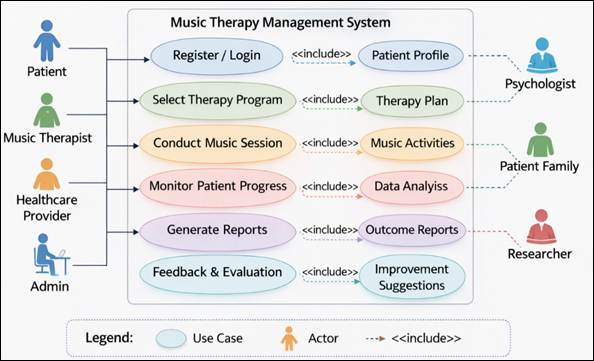
Figure 1 Music
Therapy Interaction Workflow for Emotional Healing
Dance and movement therapy involves a combination of physical exercise and emotional expression thus being especially useful in the context of rehabilitation. The therapy is premised on the idea that movement is a reflection of psychological conditions and that it can be used to enable enhancement of physical and emotional wellbeing. The organized movement exercises will assist the patients in re-identifying themselves with the body and enhancing flexibility, coordination and balance. Dance therapy has often been used in neurological rehabilitation programs in order to help stroke patients or patients with neurological conditions recover. The stimulation of the motor control neural pathways by repetitive movement patterns in combination with music rhythm. This kind of stimulation promotes neuroplasticity where the brain is able to restructure and recover any lost functions as shown in Figure 1. The use of dance-based therapy has been also successfully applied in patients suffering Parkinson disease to improve the gait stability and reduce motor rigidity. There is also psychological advantage of dance therapy besides physical rehabilitation. Exercise gives an outlet to emotions and allows the release of self, which might be essential especially to people who go through trauma, anxiety, or depression. Desai et al. (2026) Dance therapy has been associated with a high degree of self-confidence and a heightened sense of body awareness among the participants. Group dances activities promote socialization and emotional bonding in group members. The joint move activities foster communication and coordination, as well as assist individuals, to create supportive relationships in the healing process. This social interaction helps enhance better mental health and lessens isolation which leads to isolation especially during illness or recovery. Jadhav et al. (2025)
Table 2
|
Table 2 Clinical Applications of Performing Arts Therapies |
|||
|
Therapy Type |
Healthcare Application |
Example Patient Group |
Expected Outcome |
|
Music Therapy |
Pre-surgery relaxation sessions |
Surgical patients |
Reduced anxiety and stabilized heart
rate |
|
Dance Therapy |
Motor rehabilitation programs |
Stroke survivors |
Improved balance and coordination |
|
Drama Therapy |
Psychosocial counseling
sessions |
Trauma survivors |
Enhanced emotional coping skills |
|
Integrated Arts Therapy |
Holistic wellness programs |
Cancer patients |
Improved mood and treatment engagement |
Dance therapy programs are mostly supported by qualified therapists who arrange patients into exercises depending on their physical capacity and therapeutic requirements as demonstrated in Table 2. Sessions can be characterized by improvisational movement, choreographed routines as well as rhythmic coordination exercises. These activities integrate artistic creativity and physical rehabilitation approach giving patient care a holistic approach. The success of dance therapy as an integrative treatment modality is supported by growing research in the healthcare and psychology field. The fact that it can be used at the same time to treat physical mobility, emotional well-being, and social interactions implies the multifaceted therapeutic opportunities of movement-based artistic practices. Vasanthan and Nandhini (2014)
4. Drama Therapy and Psychological Healing
Drama therapy is based on theatrical approaches and is used to address emotional issues, communication, and psychological recovery. Storytelling, role-playing, and improvisation give people the opportunity to analyze their own experiences and feelings and do it in a safe and supportive setting. Dramatic expression helps the participants to externalize the internal conflicts and acquire new views about their life situations. Problem-playing practice enables patients to play the role of situations that capture individual problems or emotional difficulties. When people take up other roles, they will be able to see other perspectives and sympathize with other people. These practices promote self-reflection and assist the participants to find positive coping mechanisms. Drama therapy is commonly used in mental health counseling programs and trauma recovery programs. Creative storytelling and dramatic expression are usually useful to those who struggle with anxiety, depression, or other post-traumatic stress disorders.
Figure 2
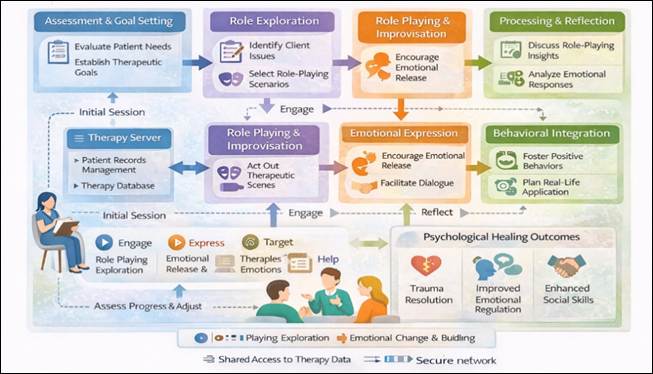
Figure 2 Drama
Therapy in Clinical Healthcare Diagram
The techniques enable the subjects to rebuild challenging experiences symbolically, eliminating emotional anguish and enhancing psychological resilience. Drama-based activities in the adolescent therapy programs are often used to deal with behavioral problems and social difficulties. With the involvement of the storytelling and improvisational theatre, the young participants will acquire the communication skills and self-confidence as illustrated in Figure 2. Drama therapy is also useful to the enhancement of interpersonal relationships and promote empathy and emotional awareness. Rawandale et al. (2023)
Medical workers acknowledge the use of drama therapy as an effective means to improve the participation of a patient in the process of therapy. Verbal communication is a weakness of patients who might feel comfortable expressing emotions through dramatic action and narrative exploration. This creative involvement helps an individual develop a condition of empowerment and helps to take active part in the process of healing. Therapeutic drama sessions are normally facilitated by trained workers who plan activities based on the therapeutic goals. The combination of theatre arts and psychological counseling strategies proves that the creative expression can be helpful in terms of emotional healing and personal growth on the background of healthcare settings.
5. Integrated Framework for Performing Arts Therapy
A performing arts therapy program is an integrated approach that involves music, dance and drama intervention in a coordinated healthcare program. The aim is to develop a comprehensive healing environment that will support various aspects of patient wellness at the same time. All performing arts have their own therapeutic advantages and their combination will increase the effectiveness of the overall treatment. Music therapy mostly affects emotional control and neurological reactions. Dance therapy focuses on bodily restoration and body consciousness. Drama therapy is concerned with communication and interaction of emotions. A combination of these strategies enables therapists to come up with effective treatment plans that can meet the needs of individual patients.
Figure 3
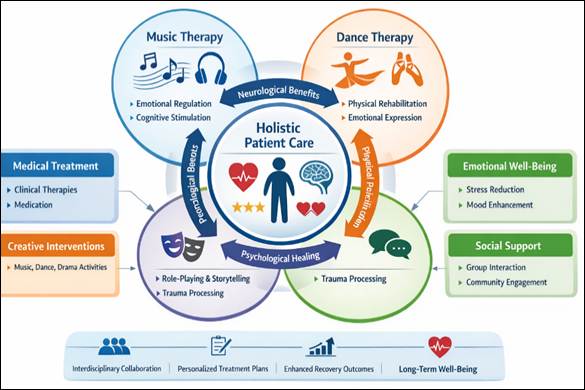
Figure 3 Integrated
Performing Arts Therapy Framework for Holistic Healthcare Outcomes
Integrated performing arts therapy programs require collaborative team work to implement them. The cooperation of healthcare professionals, psychologists, and performing art therapists is aimed at creating treatment plans that can be used to complement medical interventions. The interdisciplinary collaboration guarantees that the arts and priorities of the clinic are consistent with the capabilities and needs of the patients. Sequential or combined artistic activities can be used as integrated therapy sessions. An illustration can be given as such a session commences with rhythmic music activities to create emotional relaxation, physical engagement by guided movement and finally emotional reflection through storytelling or role-play as shown in Figure 3. This multiphase model promotes involvement and long-term therapeutic substances. Moulick et al. (2025) Health care facilities that have implemented integrated performing arts therapy programs have indicated an increase in patient satisfaction, emotional well being and rehabilitation outcomes. These activities are usually enjoyed and felt to be meaningful by the patients and become more motivated to attend therapy sessions.
6. Implementation Strategies in Healthcare Systems
Implementation of performing arts therapy programs in healthcare systems is a complicated task that must be planned and executed interdisciplinarily. The hospitals and rehabilitation centers should develop systematic frameworks, which will facilitate the incorporation of the artistic therapies into the established clinical practices. Major factors are training of the therapists, designing the programs, and infrastructure requirements in addition to patient accessibility. Healthcare facilities tend to start with pilot programs in which the viability and efficacy of performing arts interventions are assessed. Such programs can include collaborations with professional artists, therapists as well as academic institutions that major in expressive arts therapy. The educators of healthcare personnel should also be trained on the principles and advantages of arts-based therapy to make the program sustainable. The process of program design generally includes the identification of patient groups that can possibly be the most beneficiaries of the performing arts therapy. Some of the groups that are likely to be involved in such programs include oncology patients, rehabilitation patients, and patients who have mental issues. Individual therapy sessions mean that activities should be designed based on the capabilities of patients and the clinical goals. Other infrastructure factors such as allocated areas to music, movement, and dramatic activities in the health facilities are also considered. These environments should be safe, convenient, and comfortable to participants. Performing arts therapy sessions are becoming more frequently accessible to distant patients because digital technologies and virtual platforms are utilized to provide such services remotely. Assessment and surveillance systems are also important. Medical professionals should evaluate both qualitative and quantitative effectiveness of practicing performing arts to obtain the results of performing arts therapy. The effectiveness of a program can be determined with the help of patient feedback, psychological assessments and physiological indicators. Hazarika (2014)
7. Case Studies and Evidence
The application of performing arts therapies in clinical settings has been shown to produce quantifiable positive patient outcomes in a variety of healthcare settings. Music, dance, and drama therapy are becoming additional types of interventions that are integrated into hospitals and rehabilitation centers and are aimed at meeting the needs of an individual, both emotional and psychological, in addition to the traditional one. According to the case-oriented observations, structured artistic activities are beneficial in stress management, emotional stability, and engagement among patients in the recovery processes. Performing arts therapies are twice functions, i.e. expressive outlets, and systematic therapeutic means capable of helping to achieve clinical rehabilitation objectives.
Programs of music therapy used in oncology and the treatment of chronic diseases have demonstrated considerable returns in terms of diminished stress and emotional comfort. Long term patients receiving long term treatments also develop feelings of anxiety and psychological exhaustion, rhythmic listening classes and guided musical involvement have been linked to a better mood and lower physiological stress levels. Dance therapy programs applied in the neurological rehabilitation facilities have shown an increase in mobility, balance, and confidence of the patient. Exercises based on the movements provoke the development of motor coordination and physical engagement, especially in patients who have suffered a stroke or have a Parkinsonian disorder. The interventions applied in mental health programs with the help of drama therapy are aimed at emotional exploration and communication that allow individuals to deal with traumas and establish coping mechanisms through the method of storytelling and role-play. The subsequent observations of the case demonstrate the common results of conducting interventions with performing arts therapy in clinical settings.
Table 3
|
Table 3 Case Study Summary of Performing Arts Therapy Applications |
||||
|
Therapy Type |
Clinical Setting |
Patient Group |
Duration (Weeks) |
Observed Outcome |
|
Music Therapy |
Oncology Center |
Chemotherapy patients |
8 |
Reduced anxiety and improved mood |
|
Dance Therapy |
Rehabilitation Unit |
Stroke survivors |
10 |
Improved balance and mobility |
|
Drama Therapy |
Mental Health Clinic |
Trauma patients |
6 |
Enhanced emotional expression |
|
Integrated Arts Therapy |
Wellness Program |
Mixed patient groups |
12 |
Increased engagement and well-being |
Findings of these programs have shown that a combination of various artistic modalities tend to have more positive therapeutic effects as indicated in Table 3. The integrated arts therapy sessions which include music, movement and dramatization are holistic in emotional and physical healing. The respondents indicate that they are more motivated and their satisfaction with therapy sessions is better than traditional counseling strategies. Measurement of stress levels prior to and after the therapy sessions is also an effective way to prove the effectiveness of performing arts interventions.
Table 4
|
Table
4 Sample Outcome Dataset of Performing
Arts Therapy Programs |
||||
|
Therapy Program |
Participants |
Baseline Stress Score |
Post-Therapy Stress Score |
Improvement (%) |
|
Music Therapy |
30 |
78 |
52 |
33 |
|
Dance Therapy |
25 |
72 |
45 |
37 |
|
Drama Therapy |
20 |
75 |
48 |
36 |
|
Integrated Arts Therapy |
28 |
80 |
44 |
45 |
The statistics indicate that any form of therapy led to significant decreases in patient stress levels. The highest percentage of improvement was observed in integrated therapy programs and it could be argued that the combination of various artistic modalities leads to higher therapeutic effects. These observations demonstrate how performing art interventions can contribute to the overall patient care in the contemporary healthcare systems as illustrated in Table 4. Case studies are also a good source of evidence of the practical influence of performing arts therapy in the health care. Music, dance and drama therapy programs are applied within several hospitals and rehabilitation centers so as to help patients recover and feel better. Music therapy in the form of live instrumental performances has been demonstrated in oncological practice to reduce the anxiety in chemotherapy patients. The participants usually note that they are in a better mood and that they experience less pain during the treatment sessions. The application of the dance therapy programs in neurological rehabilitation centers has been a success. Stroke patients undergo structured movement training that helps them to improve balance and coordination. Frequent enrollment in such programs has been linked to improved mobility as well as the development of confidence in the day-to-day activities. Psychological counseling programs often involve the use of drama therapy initiatives. The survivors of trauma practice storytelling and role plays that assist them in processing traumatic experiences. Such practices allow one to rebuild stories of individual fortitude and strength.
8. Results Interpretation
The case study tables of particular success and graphical analysis presented as an empirical evidence all indicate the therapeutic usefulness of performing arts interventions in healthcare settings. As mentioned in Table 1, the various clinical uses of music, dance, and drama therapies in oncology, rehabilitation, and mental health environments can be noted as the contribution of each of the artistic modalities to patient recovery through various mechanisms, including emotional regulation, physical rehabilitation, and psychological expression. Table 3 is a quantitative evidence of these observations as the baseline and post-therapy stress levels of the participants are compared. These graphical plots based on this data also represent the tendencies of therapeutic impact. The trend graph on stress reduction indicates a steady decrease in the level of patient stress after sessions of stress therapy, which proves the idea that stress reduction participation in performing arts activities helps to achieve a better emotional condition. Comparison chart of the therapies used shows that integrated arts therapy is the lowest in terms of post-therapy stresses, which could be an indication that integrating music, movement and dramatization therapy has a positive effect in the therapeutic measures.
Figure 4
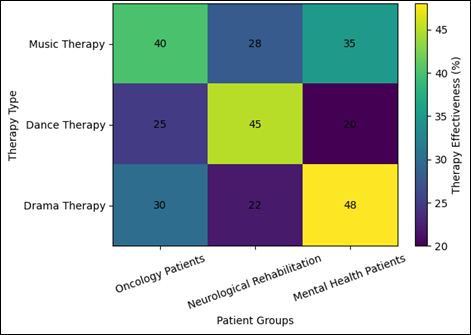
Figure 4 Therapy Effectiveness Across Oncology, Neurological Rehabilitation& Mental Health Patient Groups
The heatmap demonstrates a difference in the effectiveness of therapy in various clinical populations. Music therapy proves to be more effective in the oncology patients group where rhythmical and melodic interaction plays the role of reducing stress and providing comfort. Dance therapy is the most effective in the neurological rehabilitation, which demonstrates the impact of the interventions based on movements to enhance motor skills and physical outcomes. The greatest effect in the Mental health treatment is noted in drama therapy, which is characterized by its ability to ensure expression of emotions, processing of traumas and interpersonal communication as illustrated in Figure 4. These trends indicate that various performing arts therapies can be best applied to certain patient groups, which helps to formulate specific therapy in medical facilities. the patient improvement percentage plot suggests that the highest rate of patient improvement is brought by an integrated arts therapy, then by dance and drama therapies. These findings suggest that although individual artistic modalities offer a beneficial effect, multidisciplinary performing arts therapy programs have greater overall effects in patient well-being. The synthesis of the information in tables and graphs thus demonstrates empirical evidence to the use of performing arts therapies in healthcare systems as something that can be used as a complementary intervention to enhance psychological resilience, engagement in treatment, and comprehensive care of a patient.
9. Discussion and Therapeutic Impact
Evaluation of performing arts therapy program has shown that it has great advantages in psychological, physical and social aspects of health. Music, dance, and drama are associated with the arousal of feelings and thinking which allow the patients to feel more positive about their sickness and stress. Music therapy leads to relaxation and emotional control, whereas dance therapy levels physical recovery and the body image. Drama therapy promotes communication and self-reflection, as it assists patients to analyze personal experiences and feelings.
Figure 5
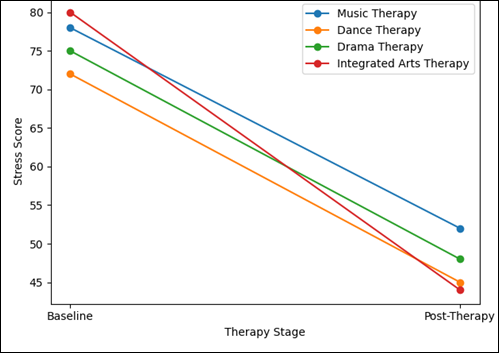
Figure 5 Stress
Reduction Trend Before and After Performing Arts Therapy Interventions
The stress reduction pattern indicates a steady decrease in the scores of stress following the performance in the performing arts therapy programs. All the forms of therapy are characterized by a significant decrease in the baseline levels to post-therapy results as represented in Figure 5 implying that artistic interventions have a beneficial effect on emotional control and psychological healing. The strongest change is in integrated arts therapy, which implies that the therapeutic effect of combining music, dance, and drama is more comprehensive.
Figure 6
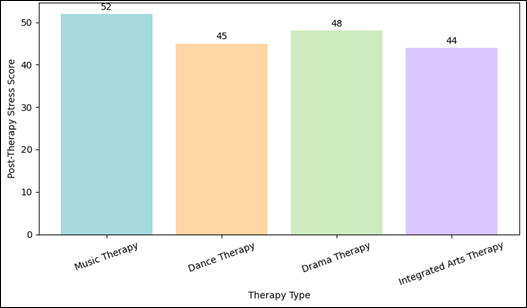
Figure 6 Comparison
of Post-Therapy Stress Scores Across Different Performing Arts Therapies
Comparison of stress scores after the therapy depicts that individual therapy methods are different in terms of effectiveness. The score of integrated arts therapy has the lowest level of post-therapy stress compared to all other programs, which shows better results in terms of therapeutic outcomes as shown in the Figure 6. Dance therapy and drama therapy are also showing high results in stress reduction and music therapy is fairing moderately but significantly on the emotional state of the patients.
Figure 7
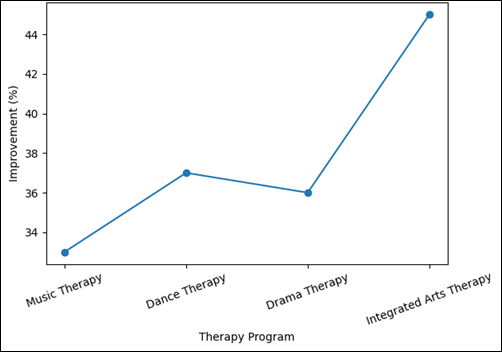
Figure 7 Patient
Improvement Percentage Achieved by Different Therapy Programs
The percent improvement of patient plot shows a general effect of various performing art interventions in a therapeutic process. The highest improvement rate is noted in the integrated arts therapy, which means that a multi-modal approach in artistic involvement improves of the treatment results as presented in Figure 7. The dance and drama therapies also yield significant changes, which prove the significance of expressive movement and narration in psychological healing and rehabilitation. Synthetic evidence indicates that the use of the performing arts therapy improves patient satisfaction and improves therapeutic relationships between health practitioners and patients. Creative involvement promotes active involvement in treatment that can result in better recovery results.
10. Conclusion
The practice of performing arts therapy has proven to be an excellent form of complementary therapy in contemporary healthcare because it helps to deal with emotional, psychological, and social components of patient health. The combination of music, dance, and drama therapies offers a multimedia treatment model that helps in holistic healing in addition to the traditional clinical therapies. Participating in organized artistic activities enhances emotion abilities and desensitization, as well as socialization, and patient motivation towards rehabilitation and recovery. Discussed findings in this study indicate that performance arts interventions are helping in stress reduction, stabilization of emotions, and enhance patient involvement in therapeutic programs. Rhythmic and melodic aspects that are promulgated in music therapy encourage relaxation and cognitive stimulation. Movement therapy and dance are used to complement physical rehabilitation and body awareness especially in patients who have been exposed to neurological disorders. The drama therapy helps in the psychological exploration and communication and allows individuals to cope with the trauma and work out coping strategies. Case-based analysis evidence also suggests that integrated arts therapy programs have better results than single-modality interventions. The introduction of performing arts therapy in medical centers needs interdisciplinary cooperation between medical workers, therapists, and creative practitioners. Patients and treatments can be improved through structured therapy programs facilitated by the right infrastructure and evaluation frameworks. Research can be expanded in the future to include digital platforms, virtual reality environments and technology-assisted performing arts therapy to increase accessibility and efficacy. To achieve a more human-centered practice of therapy and a higher quality of life of patients in various clinical settings, the enhancement of the role of performing arts in healthcare systems may help.
CONFLICT OF INTERESTS
None.
ACKNOWLEDGMENTS
None.
REFERENCES
Al-Hroub, A. (2023). Art Therapy Interventions for Syrian Child and Adolescent Refugees: Enhancing Mental Well-Being and Resilience. Current Psychiatry Reports, 25, 857–863. https://doi.org/10.1007/s11920-023-01474-0
Bresler Nardi, A., Bat Or, M., and Shuper Engelhard, E. (2022). Dance Movement Therapy Processes and Interventions in the Treatment of Children with Anxiety Disorders Derived from Therapy Logs. The Arts in Psychotherapy, 80, Article 101951. https://doi.org/10.1016/j.aip.2022.101951
Desai, V. P., Shinde, P. P., Mirajkar,
G. S., Pillai, P. K., and Oza, K. S. (2026). Assessment of Adulteration in Edible Oil Using
Machine Learning. IAENG International Journal of Computer Science, 53(1),
456–464.
Gaikwad, M. P. G., and Bhirud, P. A. N. (2026). AI-Powered Predictive Risk Analysis in Construction Projects
Using Hybrid Machine
Learning and Simulation Models. International Journal
of Research in Advanced Engineering and Technology, 15(1), 1–12.
Ghislanzoni, L., Tobia, V., Gambarini, A., Rossi, E., Tombini, G., and Ogliari, A. (2020). The Psychopathological Profile of Children with Specific Learning Disorders: The Point of View of Children and Their Mothers. European Journal of Special Needs Education, 37, 89–103. https://doi.org/10.1080/08856257.2020.1847764
Hazarika, I. (2014). Performance Metrics Versus Wealth Metrics of Dubai Telecommunication Sector. In Proceedings of the International Business Information Management Association Conference-IBIMA (Vol. 23). Valencia, Spain.
Hu, J., Zhang, J., Hu, L., Yu, H., and Xu, J. (2021). Art Therapy: A Complementary Treatment for Mental Disorders. Frontiers in Psychology, 12, Article 686005. https://doi.org/10.3389/fpsyg.2021.686005
Jadhav, K. D., Pathak, A., Bhosale, K. S., Nair, S., Pokale, N. B., Bogam, V. A., and Arguelles Jr., P. R. (2025). Smart Groundwater Management: Affordable IoT Based Solutions for Rural Water Supply. Waterlines, 43(2), 149–167. https://doi.org/10.3362/waterlines.v43i2.530
Karkou, V., Aithal, S., Zubala, A., and Meekums, B. (2019). Effectiveness of Dance Movement Therapy in the Treatment of Adults with Depression: A Systematic Review with Meta-Analyses. Frontiers in Psychology, 10, Article 936. https://doi.org/10.3389/fpsyg.2019.00936
Mayer-Benarous, H., Benarous, X., Vonthron, F., and Cohen, D. (2021). Music Therapy for Children with Autistic Spectrum Disorder and/or Other Neurodevelopmental Disorders: A Systematic Review. Frontiers in Psychiatry, 12, Article 643234. https://doi.org/10.3389/fpsyt.2021.643234
Mezzalira, S., Santoro, G., Bochicchio, V., and Schimmenti, A. (2023). Trauma and the Disruption of Temporal Experience: A Psychoanalytical and Phenomenological Perspective. American Journal of Psychoanalysis, 83, 36–55. https://doi.org/10.1057/s11231-023-09395-w
Mohagheghi, M., Pourmohamadreza-Tajrishi, M., Shahshahanipour, S., Movallali, G., and Vahedi, M. (2022). The Effectiveness of Assertiveness Training on Anxiety Symptoms in School-Age Children with Specific Learning Disorder. Journal of Rehabilitation, 22, 408–429. https://doi.org/10.32598/RJ.22.4.487.15
Moulick, J., Phursule, R., Kale, A. P., Rana, V. S., Goswami, S., and Karwande, V. S. (2025). Real-Time Crypt Analysis and Defense Mechanisms in Cloud Computing Services. Journal of Discrete Mathematical Sciences and Cryptography, 28(5), 1753–1761. https://doi.org/10.47974/JDMSC-2175
Ravens-Sieberer, U., Kaman, A., Erhart, M., Devine, J., Schlack, R., and Otto, C. (2022). Impact of the COVID-19 Pandemic on Quality of Life and Mental Health in Children and Adolescents in Germany. European Child and Adolescent Psychiatry, 31, 879–889. https://doi.org/10.1007/s00787-021-01726-5
Rawandale, U. S., Ganorkar, S. R., and Kolte, M. T. (2023). Aquila Based Adaptive Filtering for Hearing Aid with Optimized Performance. International Journal of Intelligent Engineering Systems, 16(3), 151–161. https://doi.org/10.22266/ijies2023.0630.12
Shafir, T., Orkibi, H., Baker, F. A., Gussak, D., and Kaimal, G. (2020). Editorial: The State of the Art in Creative Arts Therapies. Frontiers in Psychology, 11, Article 68. https://doi.org/10.3389/fpsyg.2020.00068
Shukla, A., Choudhari, S. G., Gaidhane, A. M., and Quazi Syed, Z. (2022). Role of Art Therapy in the Promotion of Mental Health: A Critical Review. Cureus, 14, Article e28026. https://doi.org/10.7759/cureus.28026
Vasanthan, A., and Nandhini, R. (2014). The Use of Activities-Based Content Has
Been Shown to Enhance Language
Teaching Effectiveness at
the College Level, Particularly Within the Context of Indian Classrooms.
Verma, D. A., Kale, A., Agarwal, K., Chandratreya, A., Rani, A., and Ajani, S. N. (2026). Digital Preservation and Intelligent Innovation in Traditional and Modern Arts. ShodhKosh: Journal of Visual and Performing Arts, 7(1s), 1–3. https://doi.org/10.29121/shodhkosh.v7.i1s.2026.7169
Vrisaba, N. A., and Yudiharso, A. (2021). Systematic Review
of Art Therapy in Children with Autism Spectrum Disroder (ASD). Insight: Jurnal Pemikiran dan Penelitian Psikologi, 17, 403–429.
Wood, C., and McKoy-Lewens, J. (2023). An Art Therapy Education Response: Linking Inequality and Intersectional Identity. International Journal of Art Therapy, 28, 28–37. https://doi.org/10.1080/17454832.2023.2175000
Zablotsky, B., Black, L. I., Maenner, M. J., Schieve, L. A., Danielson, M. L., Bitsko, R. H., Blumberg, S. J., Kogan, M. D., and Boyle, C. A. (2019). Prevalence and Trends of Developmental Disabilities Among Children in the United States: 2009–2017. Pediatrics, 144, Article e20190811. https://doi.org/10.1542/peds.2019-0811
|
|
 This work is licensed under a: Creative Commons Attribution 4.0 International License
© ShodhKosh 2026. All Rights Reserved.