ShodhKosh: Journal of Visual and Performing ArtsISSN (Online): 2582-7472
|
|
XINBIN MANCHU ANCESTRAL WORSHIP CEREMONY: SYMBOLIC STRUCTURE, EMBODIED PRACTICE, AND THEIR TRANSFORMATION INTO CONTEMPORARY EASEL PAINTING
Dake Liu 1, Dr. Arkom Sangiamvibool
2

1 Faculty of Fine-Applied Arts and Cultural Science, Mahasarakham
University, Thailand
2 Associate Professor, Faculty of Fine-Applied Arts and Cultural
Science, Mahasarakham University, Thailand
|
|
|
ABSTRACT |
|
|
The ancestral
worship of the Xinbin Manchu is a sophisticated
ritual system that preserves cultural memory, social order, and ancestral
identity through symbolic frameworks, embodied practices, and ceremonial
sequences. This ongoing ritual tradition encounters issues of discontinuity
and symbolic erosion with modernization, urbanization, and generational
change. Although current scholarship has explored Manchu ancestral worship
mainly through folkloric, anthropological, and historical lenses, there has
been no focus on the systematic transformation of its ritual logic via
contemporary artistic practices. This study used a practice-based research
methodology to investigate the translation of the symbolic structures and
embodied practices of Xinbin Manchu ancestral
worship into contemporary easel painting as a means of cultural knowledge
formation. This research, based on qualitative fieldwork in Xinbin Manchu Autonomous County, including in-depth
interviews, participant observation, and archival analysis, examines ritual
significance across three interconnected dimensions: symbolic organization
(space, material objects, and color), embodied enactment (gesture, posture,
and sensory engagement), and temporal structure (ritual sequence and
process). These analytical discoveries are then converted into artistic
language through a systematic process of experimentation and reflective
study. The results indicate that modern easel painting serves as a
non-representational medium for cultural memory, reinterpreting ritual logic
through abstraction, materiality, and rhythmic composition instead of visual
reproduction. By positioning artistic creation as an analytical and
generative process, this study contributes an interdisciplinary framework
that bridges ritual studies, semiotics, and contemporary art practice,
offering a sustainable pathway for the dynamic inheritance of intangible
cultural heritage. |
|||
|
Received 22 February 2026 Accepted 15 April 2026 Published 24 April 2026 Corresponding Author Dr. Arkom Sangiamvibool, arkom.s@msu.ac.th DOI 10.29121/shodhkosh.v7.i1.2026.7400 Funding: This research
received no specific grant from any funding agency in the public, commercial,
or not-for-profit sectors. Copyright: © 2026 The
Author(s). This work is licensed under a Creative Commons
Attribution 4.0 International License. With the
license CC-BY, authors retain the copyright, allowing anyone to download,
reuse, re-print, modify, distribute, and/or copy their contribution. The work
must be properly attributed to its author.
|
|||
|
Keywords: Ritual Symbolism, Embodied Practice, Practice-Based
Research, Cultural Memory, Intangible Cultural Heritage |
|||



1. INTRODUCTION
The Manchu, architects of the Qing Dynasty (1644–1912), established an intricate ritual framework that amalgamated shamanistic beliefs, Confucian principles, and clan-oriented social structures. Xinbin Manchu Autonomous County in Liaoning Province, acknowledged as the historical origin of Manchu culture, maintains one of the most enduring living traditions of Manchu ancestral veneration. These events serve as both religious observances and means of conveying collective memory, kinship identity, and cosmological order. In current culture, Manchu ancestral worship encounters significant obstacles stemming from urbanization, urban migration, generational disconnection, and the deterioration of ritual knowledge transmission. Although recording and museum preservation protect ritual forms, they frequently do not maintain the lived, embodied, and symbolic vitality of ritual practice.
Current scholarship on Manchu ancestral worship has primarily evolved within folklore studies, anthropology, and ritual history, providing detailed descriptive analyses of ritual frameworks and symbolic systems. This branch of inquiry seldom examines how ritual significance might be reactivated and rearticulated through modern artistic production. Simultaneously, contemporary art studies typically utilize traditional cultural symbols but frequently lack thorough engagement with ethnographic research or ritual theory, leading to symbolic appropriation instead of analytical transformation. As a result, a notable theoretical disparity exists between ritual studies, which emphasize interpretation yet refrain from creative translation, and contemporary art practice, which lacks a systematic and methodologically sound framework for converting ritual symbolism into a coherent visual language. This disparity highlights the necessity for an interdisciplinary methodology that amalgamates ritual analysis with practice-oriented artistic inquiry.
The focus of this research is how the meaning and rituals of Xinbin Manchu ancestral worship can be transformed into modern art without reducing the tradition to aesthetic consumption or a cultural display. The subsequent research questions delineate the conceptual framework for systematically examining the symbolic, embodied, and processual dimensions of Xinbin Manchu ancestral worship and their evolution into contemporary easel painting:
1) In what manner does Xinbin Manchu ancestral worship operate as a cultural system of memory and social order via its ritual practices and symbolic organization?
2) Of what manner are the symbolic significances of Xinbin Manchu ancestral worship organized through spatial orientation, material artifacts, embodied actions, and the sequence of rituals?
3) In what manner may these ritual symbols and embodied activities be methodically converted into modern easel painting via a practice-based creative research methodology?
This research introduces a new model called "ritual–symbol–painting" that uses fieldwork and sign analysis to help translate the meaning of rituals into today's visual art. By using practice-based research on intangible cultural assets, the study shows that creating art is not just about making pictures but also about generating knowledge that can provide deeper understanding. The study illustrates that easel painting serves as a modern medium for cultural memory, reinterpreting ancestral ritual logic in a manner that captivates contemporary audiences while maintaining cultural richness.
Collectively, these contributions promote interdisciplinary discourse among ritual studies, cultural heritage research, and contemporary art practice, providing a reproducible framework for future art-based cultural investigation.
The following section reviews about Manchu ancestral worship, ritual symbolism, and practice-based artistic research to place this work in the context of current studies and explain the theoretical and methodological gaps it fills.
2. XINBIN MANCHU ANCESTRAL WORSHIP CEREMONY AND ITS TRANSFORMATION INTO CONTEMPORARY EASEL PAINTING
The literature review establishes the theoretical and methodological underpinning of this study, dividing it into six interconnected strands. The analysis starts by looking at recent studies on Manchu ritual culture, then includes broader ideas from ritual theory and symbolic anthropology that see ritual as a practice that involves the body and creates meaning. The paper then looks at semiotics and iconology as tools for understanding and changing ritual symbols into visual language, along with ideas about cultural memory and identity that see ritual as a keyway to pass on memories.
Consequently, research on contemporary art's interaction with traditional culture aims to elucidate dominant methodologies of artistic reinterpretation. Together, these factors reveal a major gap in research, explained in Section 2.6, regarding the lack of real-world studies that combine ritual analysis, semiotic interpretation, and easel painting into a unified approach. This section explores pertinent literature on Manchu ancestral worship, ritual symbolism, and practice-based artistic research to contextualize this study within current scholarship and elucidate the theoretical and methodological gaps it addresses.
2.1. STUDIES ON MANCHU RITUAL CULTURE
Research on Manchu ritual culture has predominantly evolved within the realms of folklore studies, anthropology, religious studies, and Qing history, with a consistent focus on shamanism, ancestor veneration, and sacrificial practices. Research underscores ritual as a systematic framework through which cosmology, lineage, and political authority are manifested, rather than as discrete ceremonial activities Keliher (2024), Qu (2023). Research on Manchu shamanism illustrates the integration of ritual practices with mythic tales, trance, and mediation, alongside ancestral and territorial identities Yuguang et al. (2020), Qu (2023).
Historical and cultural evaluations underscore the dynamics of institutionalization and transition, particularly regarding state formation and imperial ritual systems. Keliher (2024) demonstrates that early modern political situations influenced Manchu ceremonial traditions while they still effectively symbolized authority and social order. Studies of cultural expressions during the Qing period, like bannermen storytelling, show how Manchu symbols adapted and remained strong despite changing historical situations Chiu (2020).
Recent ethnographic and memory research in Northeast China reveals a trend of ritual simplification coupled with symbolic continuity. Even though modern rituals might be smaller, key parts like ritual specialists, calling on ancestors, direction, offerings, and performances still play an important role in creating meaning and identity Xiao et al. (2024). These findings indicate that ritual significance is preserved more through the persistence of symbolic logic inherent in practice than through rigid formal imitation.
Despite these contributions, current works primarily maintain a descriptive, historical, or ethnographic focus. Visual analysis and the possibilities for the artistic transformation of ritual symbolism are hardly examined. So, while the material provides a strong foundation for understanding Manchu ritual systems, it offers less help on how to rethink the meaning of rituals in today's visual and artistic practices.
2.2. RITUAL THEORY AND SYMBOLIC ANTHROPOLOGY
Ritual theory and symbolic anthropology define ritual as an embodied and performative practice that generates meaning through action, repetition, and participation, rather than as a static literary script. Modern anthropological views show that ritual is an active process that shapes social connections, feelings, and shared understanding through physical participation and symbolic meaning Kapferer (2013), Turner et al. (2017). From this perspective, ritual is not solely symbolic but actively generates and reinforces social reality.
Recent methods from different fields emphasize the mental and emotional sides of ritual, showing how repeated actions help strengthen shared beliefs, manage feelings, and build community ties Hobson et al. (2018). Ritual symbols are recognized as polysemous and context-dependent, deriving significance from their positioning within extensive symbolic frameworks and situational performance Hoskins (2015). These perspectives underscore the fluid and relational nature of ritual symbolism, which resists singular or static interpretation.
Symbolic anthropology emphasizes the significance of interpretative profundity and contextual examination. Scholars argue that culture acts like a system of signs, requiring us to understand ritual actions, objects, and spaces within their complicated cultural settings to reveal their deeper meanings Bachmann-Medick (2015). This interpretative framework offers analytical instruments for deciphering ritual significance but is predominantly explanatory in nature.
Notwithstanding their theoretical robustness, these methodologies predominantly emphasize interpretation over change. Although they present comprehensive frameworks for comprehending ritual embodiment and symbolism, they furnish no direction on how ritual logic might be transmuted into artistic expression or restructured through creative practice. Consequently, creative metamorphosis is frequently regarded as just illustrative or peripheral to ritual analysis. This limitation shows the need for a new approach that moves from understanding symbols to expressing them creatively in today's visual art.
2.3. SEMIOTICS AND ICONOLOGY
Semiotic theory provides a fundamental framework for comprehending ritual elements as organized systems of signs that generate and convey cultural meaning. From this viewpoint, ritual items, gestures, and spatial configurations function as interconnected signifying elements, with their meanings arising from culturally particular customs and contextual relationships rather than inherent visual characteristics Eco (1979), Tejera (1991). Semiotic analysis facilitates the deconstruction of ritual symbols as a relational system situated within wider cultural codes. Iconology enhances semiotic analysis by offering a historically and culturally informed perspective on visual significance.
Iconological analysis examines visual motifs and compositional structures in connection to underlying worldviews, belief systems, and symbolic traditions, rather than concentrating exclusively on descriptive form Kalkanis (2018). Recent scholarship elucidates the conceptual differentiation and complementarity between semiotics and iconology, highlighting their mutual focus on meaning-making while acknowledging iconology’s greater emphasis on cultural interpretation and historical profundity Liepe (2023), Andersson (2024).
Within the realm of ritual studies, the integration of semiotics and iconology provides a systematic approach for interpreting ritual symbols into visual language, avoiding their reduction to mere literal representation. This analytical paradigm facilitates the abstraction and reconfiguration of ritual meaning in modern visual forms by recognizing repeating themes, spatial hierarchies, and bodily movements Damisch (2020). Nonetheless, iconology has conventionally been utilized as an interpretative instrument for pre-existing artworks rather than as a creative methodology. This study advances semiotic-iconological analysis within practice-based artistic research, framing modern easel painting as a medium for the methodical rearticulation of ritual symbols as a dynamic visual system.
2.4. CULTURAL MEMORY AND IDENTITY
Ritual theory and symbolic anthropology define ritual as an embodied and performative practice that generates meaning through action, repetition, and participation, rather than as a static literary script. Modern anthropological views show that ritual is an active process that shapes social connections, feelings, and shared understanding through physical participation and symbolic meaning Kapferer (2013), Turner et al. (2017). From this perspective, ritual is not solely symbolic but actively generates and reinforces social reality.
Cultural memory theories assert that memory is a process mediated by social and material factors, maintained by collective behaviors, symbols, and artifacts rather than solely through individual cognition. Cultural memory is generated and solidified by recurrent interaction with symbolic forms—such as rituals, artifacts, pictures, and locations—that ground collective identity throughout time Assmann (2011), Apaydin (2020). Ritual practice serves as a fundamental mechanism for the enactment and renewal of memory through physical participation and spatial arrangement. Contemporary legacy and memory research emphasizes the material and emotional aspects of cultural memory. Material objects and practices are perceived to influence the experience, transmission, and embodiment of memory, connecting cultural identification to sensory engagement and habitual actions Malafouris (2013), Heersmink (2023). As ritual practices diminish owing to social change, memory may become just archival and representational, severed from lived experience and embodied continuity Harrison et al., (2020).
In this context, art is increasingly posited as an alternative medium for cultural memory, capable of reactivating memory through emotive, material, and experiential modalities. Artistic practices help people connect emotionally and shape their identities by turning cultural memory into modern forms that can be experienced outside of traditional rituals Brandellero et al. (2014), Smith (2020). This perspective offers a theoretical basis for the current work, which examines contemporary easel painting as a medium for rearticulating the embodied logic and symbolic structure of Xinbin Manchu ancestral worship inside modern visual discourse.
2.5. CONTEMPORARY ART AND TRADITIONAL CULTURE
Ritual theory and symbolic anthropology define ritual as an embodied and performative practice that generates meaning through action, repetition, and participation, rather than as a static literary script. Modern anthropological views show that ritual is an active process that shapes social connections, feelings, and shared understanding through physical participation and symbolic meaning Erjavec (2012), Kapferer (2013), Radhakrishnan (2013), Turner et al. (2017). From this perspective, ritual is not solely symbolic but actively generates and reinforces social reality.
Contemporary art theory increasingly views tradition as a dynamic and evolving resource, rather than a static past that should remain unchanged. Artistic engagement with tradition is seen as an important process of reinterpreting and placing cultural ideas in new artistic and social settings. From this viewpoint, tradition is not merely duplicated but revitalized through modern modes of expression. Recent scholarship highlights relationality, embodiment, and spatial context as essential aspects of contemporary artistic activity. Relational and process-oriented methodologies emphasize that meaning arises from interaction, contextual experience, and material involvement, rather than solely from independent representation Moon (2016), Gray and Kontos (2018), Fronzi (2022). These viewpoints emphasize artistic practice as an immersive and dialogic process, intricately connected to embodied cultural knowledge. In heritage and cultural studies, creative practice is increasingly recognized as a means to rejuvenate cultural memory in contexts where traditional transmission has waned. Heritage is perceived as a dynamic cultural process influenced by emotion, interpretation, and modern application, rather than a fixed assemblage of artifacts or locations Smith (2020), Harrison et al., (2020). Artistic reinterpretation consequently aids in the continual negotiation of cultural identity and significance.
Notwithstanding these theoretical advancements, a significant portion of the study remains focused on theory, providing scant methodological direction for the systematic transformation of old ritual systems via artistic practice. Practice-based research mitigates this deficiency by framing artistic creativity as a method of inquiry and knowledge generation Sullivan (2010), Skains (2018). Easel painting can be redefined as a process-oriented and analytical medium that translates ritual logic, embodied memory, and symbolic structure into modern visual language. This methodology offers an essential foundation for the current research's exploration of Xinbin Manchu ancestral worship as a source of cultural rationale rather than a mere object of representation.
2.6. RESEARCH GAP
An examination of the current literature indicates a distinct and ongoing research deficiency. Although research on Manchu ritual culture offers significant anthropological and historical perspectives, it predominantly remains descriptive and interpretive, rarely advancing study into the realm of visual or artistic change. Ritual theory and symbolic anthropology offer significant conceptual frameworks for understanding ritual as an embodied and meaning-generating practice; however, they inadequately address the translation of such ritual logic into creative expression. Likewise, semiotic and iconological methodologies offer frameworks for interpreting symbolic systems, although they are hardly utilized in a practice-oriented artistic situation, especially concerning easel painting. While modern art theory prioritizes innovative interpretations of tradition, it frequently lacks a scientific foundation in extensive fieldwork and ritual investigation. As a result, there is a significant lack of practical, practice-oriented research that combines ritual studies, semiotics, and contemporary painting into a cohesive methodological framework. This gap highlights the necessity for an interdisciplinary methodology that regards creative creation as an analytical process capable of producing new insights into ritual, embodiment, and cultural memory.
This study addresses the highlighted research gap by employing a practice-based methodological approach that combines qualitative fieldwork, symbolic analysis, and artistic creation. This section delineates research design, study location and participants, data collecting and analytic methodologies, and the function of creative practice in conveying ritual significance through modern easel painting.
3. METHODOLOGY
3.1. RESEARCH DESIGN
This study employs a practice-based research approach that combines qualitative fieldwork with creative expression as a method of knowledge development. The study regards artistic practice not merely as an ancillary representation of research outcomes, but as an analytical and generative process for examining, translating, and rearticulating cultural meaning. The study design addresses the intricacies of ritual phenomena, encompassing symbolic systems, embodied activities, and temporal processes that cannot be entirely elucidated through textual analysis only.
The research progresses through four interconnected stages. Initially, field inquiry provides an empirical basis by directly engaging with ritual activities and community situations. Second, symbolic decoding entails the analytical interpretation of ritual symbols, embodied behaviors, and procedural frameworks uncovered during fieldwork. Third, creative transformation conveys these analytical ideas into modern visual language via easel painting. Ultimately, reflective analysis rigorously evaluates the results of artistic practice concerning the study questions, determining the efficacy of rearticulating ritual meaning through artistic expression. The stages are not strictly sequential but iterative, permitting ideas from artistic practice to inform continuous study.
3.2. RESEARCH AREA AND PARTICIPANTS
Fieldwork was performed in Xinbin Manchu Autonomous County, concentrating on Yongling Town and adjacent villages, where ancestral worship persists as a vibrant cultural tradition. This region was chosen for its historical importance in Manchu ceremonial culture and the ongoing practice of community-based ancestral ceremonies.
The research participants comprised ritual knowledge holders, including elders and shamans with significant experience in ancestral worship; families engaged in ancestral rituals in both domestic and communal settings; and local cultural scholars specializing in Manchu history and ritual traditions. Participants were chosen using purposive sampling to guarantee representation of both practical ritual knowledge and interpretive cultural viewpoints. Ethical issues, such as informed consent and adherence to cultural protocols, were maintained throughout the research procedure.
Various qualitative data collection approaches were utilized to elucidate the intricacies of ritual practice and symbolic significance. Comprehensive interviews were performed with ritual practitioners, elders, and community members to record experiential knowledge, interpretations of ritual symbolism, and views on cultural continuity. The interviews offer commentary on both overt explanations and implicit understandings inherent in ritual practice.
Participant observation was conducted at significant ancestral worship occasions, enabling the researcher to examine ritual structure, embodied actions, spatial organization, and sensory dimensions in real-time. Observational data were collected using field notes, photography, and video documentation, focusing on ritual sequence and participant engagement.
Furthermore, documentary and archival analyses were conducted to place modern activities within historical frameworks. This involved the analysis of historical documents, anthropological accounts, and visual artifacts pertaining to Manchu ritual culture, facilitating a comparative comprehension of continuity and change throughout time.
3.3. DATA COLLECTION METHODS
Various qualitative data collection approaches were utilized to elucidate the intricacies of ritual practice and symbolic significance. Comprehensive interviews were performed with ritual practitioners, elders, and community members to record experiential knowledge, interpretations of ritual symbolism, and views on cultural continuity. The interviews offer commentary on both overt explanations and implicit understandings inherent in ritual practice.
Participant observation was conducted at significant ancestral worship occasions, enabling the researcher to examine ritual structure, embodied actions, spatial organization, and sensory dimensions in real-time. Observational data were collected using field notes, photography, and video documentation, focusing on ritual sequence and participant engagement.
Furthermore, documentary and archival analyses were conducted to place modern activities within historical frameworks. This involved the analysis of historical documents, anthropological accounts, and visual artifacts pertaining to Manchu ritual culture, facilitating a comparative comprehension of continuity and change throughout time.
3.4. DATA ANALYSIS
The study of data integrated qualitative coding with semiotic interpretation to methodically investigate the significance of rituals. Interview transcripts and field notes were analyzed to discern reoccurring themes about symbolic organization, embodied practice, and ritual sequence. Visual elements were examined through semiotic principles, emphasizing the connections among signs, meaning, and cultural context.
The analytical findings were consolidated into a conversion matrix of “cultural theme–visual symbol–artistic element,” functioning as a conceptual link between ethnographic investigation and creative production. This matrix informed decisions on compositional structure, color application, gesture, and material handling in the painting process, ensuring that artistic transformation was based on empirical and analytical insight rather than solely on subjective intuition.
Utilizing the analytical framework, a collection of conceptual sketches was created to investigate the visual representation of ritual symbols, embodied rhythm, and temporal structure. The sketches were refined iteratively through community interaction and expert feedback, ensuring cultural sensitivity and analytical precision guided creative choices.
The completed results comprise a collection of substantial contemporary easel paintings that translate ritual logic into artistic expression. The painting technique acted as a physical manifestation of ritual reenactment, with repetitive movements, layered building, and temporal pacing reflecting elements of ritual practice noted during fieldwork. This technique transformed artistic creation into a reflecting space where analytical interpretation and embodied participation intersected, facilitating the emergence of new cultural insights through visual expression.
3.5. RESEARCH TRUSTWORTHINESS AND RIGOR
This qualitative, practice-based study employs recognized criteria for qualitative inquiry to assure rigor and trustworthiness, specifically credibility, transferability, dependability, and confirmability. These criteria are suitable for research that combines ethnographic fieldwork with creative expression as a method of knowledge production.
Credibility was attained by extensive field participation and methodological triangulation. Data was gathered by participant observation of ancestral worship ceremonies, comprehensive interviews with ritual practitioners and community members, and research of documents and archives. Interpretations of ritual symbolism, embodied practice, and procedural structure were verified against these many sources. Informal conversations with local custodians of ritual knowledge further validated the precision of cultural interpretation and mitigated the misrepresentation of ritual significance.
The issue of transferability was tackled by employing dense description. Comprehensive descriptions of the research context, ritual processes, symbolic systems, and creative transformation methods are presented, allowing readers to evaluate the relevance of the analytical framework to alternative cultural or ritual settings. The findings, which are based on the Xinbin Manchu ancestral worship ceremony, suggest that the methodological approach and symbolic-artistic translation model can be applied to comparative or cross-cultural research.
Dependability was ensured via a clear and methodical study procedure. The four-stage design—field inquiry, symbolic decoding, artistic transformation, and reflective analysis—was uniformly implemented throughout the project. Research materials, such as field notes, interview transcripts, analytical matrices, and records of creative decision-making, were meticulously preserved to ensure a transparent audit trail and procedural uniformity.
Reflective practice and analytical transparency made it easier to confirm. Considering the researcher’s dual role as a cultural analyst and creative practitioner, reflexive recording was employed to critically assess the impact of positionality, interpretation, and artistic preference on the research results. The implementation of a formal "cultural theme–visual symbol–artistic element" conversion matrix enhanced confirmability by illustrating the systematic translation of analytical conclusions into artistic practice, rather than depending solely on subjective intuition.
This study employs methodologies that guarantee methodological rigor while recognizing the interpretive and creative aspects intrinsic to practice-based artistic research.
Informed by the practice-based study approach, the subsequent part delineates the empirical findings obtained from field observations, interviews, symbolic analysis, and artistic experimentation. The findings elucidate how ritual symbolism, embodied practice, and the temporal structure of Xinbin Manchu ancestral worship were identified, analyzed, and interpreted during the research process, establishing the analytical basis for addressing the study's research questions.
4. RESULTS
Three unique yet interconnected dimensions thoroughly analyze the internal logic of the Xinbin Manchu ancestral worship rite. First, the study delineates the symbolic framework of the ritual, emphasizing the roles of spatial orientation, material objects, and chromatic elements as conduits of cultural significance. Secondly, it examines ritual practice as embodied action, emphasizing bodily movement, gesture, and sensory engagement as means by which symbolic meanings are enacted and conveyed. Third, it analyzes the procedural and chronological framework of the ceremony, illustrating how the ritual sequence and orchestrated advancement create symbolic unity and communal engagement. Collectively, these elements offer a thorough analytical framework that facilitates the following conversion of ceremonial significance into modern artistic expression.
4.1. SYMBOLIC STRUCTURE OF XINBIN MANCHU ANCESTRAL WORSHIP
Field observation and qualitative investigation reveal that Xinbin Manchu ancestral worship functions through a cohesive symbolic system, wherein spatial arrangement, material artifacts, and color accent collaboratively create a ceremonial atmosphere that is separate from quotidian existence. The symbolic significance emerges not from individual components but from their organized interconnections within the ritual context.
Ritual significance is established at the spatial level through orientation and axial arrangement. In-home settings, ancestral tablets are invariably placed against the western wall, creating a fixed sacred axis that distinguishes ancestral presence from ordinary living space. In formal or public ceremonial contexts, this rationale extends to axial symmetrical and hierarchical arrangement, with altars, officiants, and participants positioned along a central axis. Despite the variation in scale, all designs embody a common symbolic principle: spatial order serves as a visual representation of ancestral hierarchy and ritual authority.
Figure 1
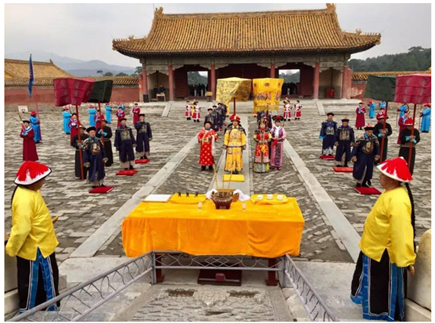
Figure 1 Spatial
Hierarchy and Axial Organization in Qing Dynasty Imperial Ancestral Rituals,
Illustrating the Codified Symbolic Ordering of Ritual Space and Participant
Positioning
As shown in Figure 1, imperial ancestral rites utilize codified spatial logic, defined by axial symmetry, hierarchical arrangement, and centralized altar location. This institutional spatial model provides a substantial comparative framework for understanding the operation of symbolic orientation across diverse ritual scales within Manchu ancestral worship traditions.
Chromatic elements intensify symbolic condensation inside ritual space. The repeated application of red and yellow fabrics, along with the visible presence of incense smoke, distinguishes ritual time from mundane time. Color functions as a culturally significant symbol of energy, validity, and religious authority, whilst incense smoke presents a dynamic visual representation of transcendence and impermanence. These components create a multimodal symbolic environment where meaning is visually discernible before linguistic expression.
Collectively, spatial direction establishes ritual hierarchy, material objects ground symbolic mediation, and chromatic emphasis enhances holy distinctiveness. This cohesive symbolic framework offers the analytical basis for comprehending how Xinbin Manchu ancestral veneration preserves cultural memory and facilitates its evolution into modern creative expression.
Material symbols further reinforce this spatial logic. Ancestor tablets serve as focal places for rituals, representing ancestry, acting as sites of address, and symbolically substituting for ancestor presence. Adjacent offerings—such as meat, bowls, and incense—are organized according to established standards that signify respect, reciprocity, and continuity. These things are regarded not as consumables but as mediating instruments that enable contact between the living and the ancestral realm Figure 2.
Figure 2
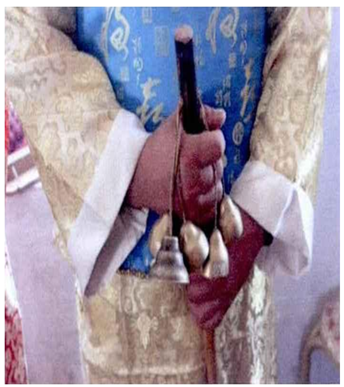
Figure 2 Ritual Implements Held by a Ceremonial Practitioner During the Xinbin Manchu Ancestral Worship Ceremony, Emphasizing the Symbolic Role of Material Objects in Mediating Ancestral Communication (Fieldwork Photograph by the Author, 2025).
As shown in Figure 2, a detailed view of the ceremonial implements utilized during the event, emphasizing the role of material items as intermediaries between human participants and the ancestral domain.
The findings indicate that Xinbin Manchu ancestral worship functions as a cohesive symbolic ritual system, wherein spatial orientation, material mediation, and color emphasis collaboratively shape cultural significance, reinforce ancestral hierarchy, and preserve social memory in both domestic and ceremonial settings.
The symbolic framework of Xinbin Manchu ancestral worship delineates the spatial, material, and chromatic parameters of ritual significance; yet, these symbols do not operate autonomously from practice. Their cultural importance is engaged and maintained through physical involvement. This section thus transitions focus from symbolic organization to ritual practice as embodied action, analyzing how posture, movement, and sensory engagement convert symbolic structure into lived experience.
4.2. RITUAL STRUCTURE AND TEMPORAL SEQUENCE
In addition to spatial symbolism and corporeal action, the significance of ritual is additionally organized through temporal sequencing. The symbolic coherence of Xinbin Manchu ancestral worship is maintained through spatial organization, embodied actions, and a distinctly ordered chronological sequence. Field documentation indicates that ritual significance develops incrementally through a sequence of structured steps, rather than being encapsulated in one instance. This procedural logic organizes participation, controls emotional intensity, and deepens the shared understanding of the meaning of the ritual.
The ceremony often consists of three interconnected phases: preparation, sacrifice performance, and communal conclusion. The preliminary phase encompasses the arrangement of ritual space, the purification of utensils, and the organization of offerings. These actions signify a shift from mundane time to ritual time, indicating the cessation of daily activity and the initiation of ceremonial order.
The central phase is characterized by sacrificial deeds, which represent the symbolic apex of the ceremonial process. Rituals, including the presentation of a complete animal and the execution of accompanying music or chant, enhance ritual concentration and reinforce ancestral contact. This phase focuses on the altar, where physical movements, material offerings, and music coalesce to enhance ritual concentration and community participation.
The last phase highlights social reintegration. Activities including communal assembly, the redistribution of consecrated meat, and the disassembly of ritual structures denote the conclusion of sacred time and the reversion to quotidian social existence. These activities convert ritual involvement into a collective social memory, amplifying symbolic importance beyond the ritual event itself.
The ceremony operates as a processual system, wherein meaning builds through sequential steps over time. The form of rituals ensures continuity by reinforcing symbolic meaning through repetition and group participation, rather than through isolated symbolic acts. Figure 4 demonstrates that sacrificial preparation is a unique ritual phase wherein synchronized physical actions and material organization indicate the shift from preparatory tasks to the ceremonial apex.
Figure 3
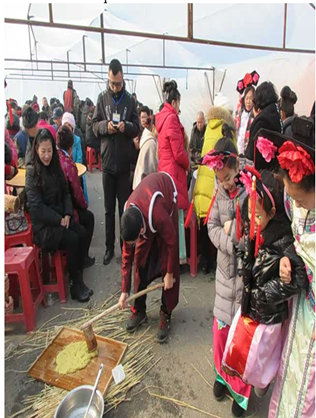
Figure 3 Sacrificial Preparation During the Xinbin Manchu Ancestral Worship Ceremony, Illustrating a Key Stage Within the Ritual Sequence Where Offerings are Ritually Activated Prior to Ceremonial Culmination (Fieldwork Photograph by the Author, 2025).
The sacrificial preparation scene signifies a transitional ritual phase marked by synchronized physical actions, distinct roles, and intentional material organization. Preparation serves not merely as a practical chore but as a significant ritual act that stimulates offerings before the ceremonial culmination. This phase sets the parameters for future sacrificial performances and collective involvement, strengthening the procedural rationale by which ritual significance builds over time.
The study expands on the understanding of ritual structure and temporal sequencing, illustrating how ritual logic can be methodically transposed into modern easel painting via practice-based creative research. Instead of illustrating ritual scenes, the painting method abstracts the ceremonial rhythm—preparation, sacrifice performance, and communal conclusion—into compositional structure, layered materiality, and gestural intensity. This study introduces Guan Wenwu’s Shun’en Duli as a comparative example, illustrating how modern easel painting can convey ritual temporality and embodied experience into an independent painterly structure, thereby providing a pertinent reference for the practice-based transformation analyzed herein.
Figure 4
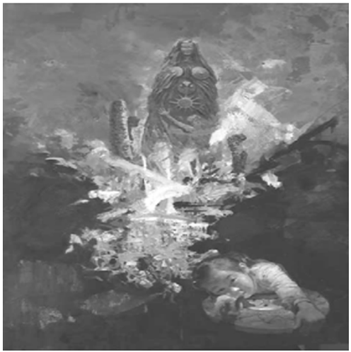
Figure 4 Guan Wenwu, Shun’en Duli. Contemporary Easel Painting Illustrating how the Ritual Sequence of Xinbin Manchu Ancestral worship—Preparation, Sacrificial Enactment, and Communal Closure—can be Translated into Layered Composition, Gestural Rhythm, and Material Process Through Practice-Based Artistic Research.
Figure 4 illustrates how ritual temporality is manifested in pictorial form through the accumulation and disruption of layered marks, contrasting areas of density and openness, and the variation of tonal and textural rhythm. The preliminary phase is characterized by a regulated compositional foundation, the sacrificial climax by heightened gesture and material focus, and the community closing phase by the progressive dispersal and stabilization of pictorial stress. The easel painting functions as an independent visual domain where ritual sequences are redefined as processual forms rather than narrative depictions.
This translation process illustrates that modern easel painting can serve as a methodological extension of ritual analysis, allowing for the reconfiguration of symbolic structure, embodied activity, and chronological progression within a current visual language. The painting functions not as a depiction of ancestral worship but as a venue where ritual logic is reinterpreted through artistic techniques, so addressing Research Question 3 by demonstrating how embodied ritual experience can be transmuted into modern artistic activity.
Together, the symbolic structure, embodied enactment, and temporal sequencing show that Xinbin Manchu ancestral worship works as a unified ritual system that continuously creates and renews cultural meaning, social order, and remembrance of ancestors. The transposition of this ritual logic into modern easel painting reinforces the notion that artistic practice may function as a systematic and analytical endeavor, allowing ritual significance to be reinterpreted within contemporary visual discourse without diminishing tradition to mere ethnographic representation. The Xinbin Manchu ancestral worship ceremony demonstrates how ritual significance is created and maintained through a systematic sequence of preparation, sacrificial performance, and communal conclusion, thereby strengthening collective involvement and the perpetuation of social and ancestral hierarchy.
The findings in Section 4 explain how Xinbin Manchu ancestral worship works as a connected system of symbols, actions, and timing, and how this system can be understood in new ways through modern art practices. The results answer the study's questions by showing, first, how ancestral worship acts as a cultural system that supports social order and shared memories; second, how symbolic meanings are arranged and brought to life through different aspects like space, materials, physical actions, and time; and third, how these ritual ideas can be adapted into modern easel painting using a hands-on research approach. The subsequent study questions establish the conceptual foundation for interpreting and evaluating the findings.
5. DISCUSSION
The findings in Section 4 collectively address the primary issue of this study by illustrating how the symbolic meanings and ritual practices of Xinbin Manchu ancestral worship can be reinterpreted through modern artistic practice, avoiding the reduction of tradition to mere aesthetic consumption or ethnographic representation. The analysis asserts that rituals should not be regarded as a static heritage artifact; instead, its meaning is produced through the interplay of symbolic structure, embodied enactment, and temporal sequencing, which can be systematically adapted into contemporary easel painting via practice-based research.
From the standpoint of Manchu ritual studies, the results augment current scholarship that highlights ritual continuity during historical change Keliher (2024), Qu (2023), Xiao et al. (2024). Although prior research records the continuity of symbolic components, including ancestral references, spatial orientation, and offerings, it predominantly remains descriptive. This study enhances the field by illustrating that these symbolic systems are perpetuated through ritual repetition and can be triggered by visual abstraction and painting techniques, providing a novel methodological approach to engaging with Manchu ritual culture beyond mere recording.
The findings align with ritual theory and symbolic anthropology, affirming that ritual is an embodied and processual practice that generates meaning through action, repetition, and participation Kapferer (2013), Turner et al. (2017). The examination of physical gestures, ritual movements, and synchronized actions in Section 4.2 substantiates that ritual knowledge is conveyed somatically rather than through text. This work illustrates that embodied ritual logic can be expressed artistically, thus advancing symbolic anthropology beyond mere interpretation to creative transformation.
The amalgamation of semiotics and iconology elucidates the abstraction of ritual significance into visual language. This study demonstrates that easel painting can serve as a non-illustrative visual system by interpreting ritual space, objects, and gestures as relational sign systems Eco (1979), Tejera (1991) and reorganizing these elements according to iconological principles of structure and cultural interpretation Kalkanis (2018), Andersson (2024). This investigation addresses the restriction noted in iconological studies, which have conventionally concentrated on analyzing existing artworks rather than producing new visual knowledge through practice.
The results correspond with theories that highlight memory as socially, materially, and effectively mediated from the perspective of cultural memory and identity Assmann (2011), Apaydin (2020). With the reduction of ritual participation, cultural memory is at risk of becoming just archival and detached from lived experience Harrison et al., (2020). This study illustrates that modern easel painting can serve as an alternative medium for embodied cultural memory, converting ritual temporality, gesture, and symbolic logic into tangible and emotive visual representation Malafouris (2013), Heersmink (2023).
This study enhances discussions on artistic reinterpretation within contemporary art and traditional culture by demonstrating that interaction with heritage does not necessitate representation or nostalgia Erjavec (2012), Radhakrishnan (2013). The practice-based painting technique emphasizes relationality, material process, and embodied experience, in accordance with contemporary theories of artistic knowledge formation Sullivan (2010), Skains (2018). This study positions easel painting as both an analytical and generative medium, contesting its marginalization in contemporary art discourse and reaffirming its significance for cultural and ritual studies.
Overall, this discussion illustrates that the transition from Xinbin Manchu ancestral worship to contemporary easel painting involves not merely the appropriation of ideas for artistic endeavors, but a meticulous process of cultural translation, wherein the significance of rituals is revitalized in contemporary artistic discourse.
6. CONCLUSION
This study verifies that Xinbin Manchu ancestral worship is a multifaceted and cohesive ritual system wherein symbolic structure, embodied practice, and chronological sequencing collaboratively function to create and uphold cultural significance. The ceremony actively generates ancestral hierarchy, social order, and communal memory through the interplay of space structure, material mediation, bodily enactment, and ritual process, rather than serving as a static tradition. The research illustrates that the cultural importance of ancestral worship lies not in individual symbols or ideas, but in the systematic logic of ritual practice when these dimensions are analyzed in connection to one another.
The work illustrates, via a practice-based artistic research methodology, that ritual significance can be reinterpreted and conveyed in contemporary visual language without diminishing ancestral devotion to mere literal representation or ornamental images. Through the abstraction of symbolic structure, physiological rhythm, and procedural flow, contemporary easel painting serves as a medium that reinterprets ritual logic in a manner comprehensible to modern audiences. Artistic creation serves as both a means of expression and a way of producing cultural information, thereby preserving cultural memory through visual transformation.
This research highlights how contemporary art can act as a bridge between intangible cultural legacies and current cultural discussions. Through the utilization of ritual symbolism in creative practice, ancestral worship remains connected to its cultural roots and more than a mere relic of history. Rather, it is redefined as a dynamic source of meaning that can persistently evolve within modern artistic frameworks. The study offers a combined approach that brings together the study of rituals, personal experience, and artmaking, creating a lasting way to reinterpret and share ancestral culture in today's world.
Ultimately, this research confirms that modern easel painting can function as a significant cultural arena where ritual memory is not only kept but also perpetually reinterpreted and revitalized.
7. IMPLICATIONS
This research expands the ways we study art and cultural heritage by showing that practice-based artistic research can be a strong tool for analysis, not just an extra or decorative method. The study provides a systematic framework for analyzing ritual systems through artistic activity by integrating field observation, visual-symbolic analysis, and creative production. This methodology reconciles the divide between ritual studies, typically rooted in anthropology and religion studies, and contemporary art research, which frequently lacks thorough engagement with ethnographic and cultural analysis. The results show that artistic practice can offer new academic insights by turning symbols, physical actions, and time-related processes into visual forms, which helps improve discussions across different fields about cultural heritage, visual culture, and knowledge in the arts.
This study presents a replicable framework for transforming ritual symbolism and physical practice into contemporary easel painting, devoid of literal representation. The research shows how painting can express cultural meaning through its arrangement, movements, and methods by simplifying ideas about space, body movement, materials, and the order of rituals. This study offers easel painting as a legitimate and intellectually robust medium for dealing with intangible cultural legacy, challenging the notion that modern art must sever ties with old cultural sources to maintain relevance. The research confirms that creative creation functions as a reflective and analytical process, allowing artists to critically interact with ceremonial traditions while producing work that resonates within modern visual discourse.
The research advocates for a concept of dynamic inheritance for intangible cultural assets, highlighting reinterpretation and creative development over static preservation. This study illustrates how ancestral worship can retain cultural significance in evolving social situations through the medium of contemporary painting. This method enriches cultural identity by facilitating intergenerational interaction, permitting younger audiences to connect with ancestral symbolism via visual languages that resonate with modern aesthetic preferences. The research changes the view of ancestral worship from something fixed in the past to a lively cultural resource that can be continually refreshed, helping to pass on culture and encouraging more people to engage with Manchu history. These consequences collectively underscore the capacity of practice-based art research to serve as a crucial nexus among scholarship, artistic creativity, and cultural sustainability.
CONFLICT OF INTERESTS
None.
ACKNOWLEDGMENTS
None.
REFERENCES
Andersson, F. (2024). Iconology and Semiotics: With Some Examples from Schapiro and Thürlemann. ICO Iconographisk Post: Nordic Review of Iconography, 1(2), 61–94. https://doi.org/10.69945/ico.vi1-2.27022
Apaydin, V. (2020). Introduction: Why Cultural Memory and Heritage. In V. Apaydin (Ed.), Critical Perspectives on Cultural Memory and Heritage: Construction, Transformation and Destruction ( 1–11). UCL Press. https://doi.org/10.2307/j.ctv13xpsfp.6
Assmann, J. (2011). Cultural Memory and
Early Civilization: Writing, Remembrance, and Political Imagination. Cambridge
University Press. https://doi.org/10.1017/CBO970511996306
Bachmann-Medick, D. (2015). Culture as Text: Reading and Interpreting Cultures. Universitätsbibliothek Johann Christian Senckenberg.
Brandellero, A., Janssen, S., Cohen, S., and
Roberts, L. (2014). Popular Music Heritage,
Cultural Memory and Cultural Identity. International Journal of Heritage
Studies, 20(3), 219–223. https://doi.org/10.100/1352725.2013.77399
Chiu, E. S. Y. (2020). Bannermen Tales (zidishu): Manchu Storytelling and Cultural Hybridity
in the Qing Dynasty (Vol. 105). Brill.
Damisch, H. (2020). Semiotics
and Iconography (Vol. 1). Walter de Gruyter.
Dan, S. (2011). Remote Homeland, Recovered
Borderland:
Manchus, Manchoukuo, and Manchuria,
1907–195. University of Hawai‘i
Press.
Eco, U. (1979). A Theory of Semiotics. Indiana University Press.
Erjavec, A. (2012). Art and Aesthetics:
From Modern to Contemporary. Diogenes, 59(1–2), 14–157. https://doi.org/10.1177/0392192112451604
Fronzi, G. (2022). Eco-Aesthetics: The Art
and Aesthetics of Relations from a Post-Pandemic Perspective. Aisthesis:
Pratiche, Linguaggi e Saperi Dell'estetico, 15(2), 147–161. https://doi.org/10.36253/Aisthesis-13713
Gray, J., and Kontos, P. (2018). An Aesthetic of Relationality: Embodiment, Imagination, and the Necessity of Playing the Fool in Research-Informed Theater. Qualitative Inquiry, 24(7), 440–452. https://doi.org/10.1177/107700417732926
Heersmink, R. (2023). Materialised Identities: Cultural Identity, Collective Memory, and Artifacts. Review of Philosophy and Psychology, 14(1), 249–265. https://doi.org/10.1007/s13164-022-0063-7
Hobson, N. M., Schroeder, J., Risen, J. L., Xygalatas, D., and
Inzlicht, M. (2018). The Psychology of Rituals: An
Integrative Review and Process-Based Framework. Personality and Social
Psychology Review, 22(3), 260–24. https://doi.org/10.1177/106317734944
Hoskins, J. (2015). Symbolism in Anthropology. In J. D. Wright (Ed.), International Encyclopedia of the Social and Behavioral Sciences (2nd ed., Vol. 23, 60–65). Elsevier. https://doi.org/10.1016/B97-0-0-09706-.12226-3
Kalkanis, E. (2018). An Analysis of Erwin Panofsky’s Meaning in the Visual Arts. Macat Library.
Kapferer, B. (2013). Ritual Practice and
Anthropological Theory. Religion and Society, 4, 3–12. https://doi.org/10.3167/arrs.2013.040102
Keliher, M. (2024). Ritual in the Early Modern World: Proliferation, State-Formation, and the Work of the Manchu Surrender Ceremony. Journal of World History, 35(3), 377–406. https://doi.org/10.1353/jwh.2024.a935010
Liepe, L. (2023). What is the Difference
Between Iconography and Semiotics? Iconographisk Post: Nordisk Tidskrift för
Bildtolkning, 3–4, 39–55. https://doi.org/10.69945/ico.vi3-4.25311
Malafouris, L. (2013).
How things Shape the Mind: A Theory of Material Engagement. MIT Press. https://doi.org/10.7551/mitpress/9476.001.0001
Moon, C. H. (2016). Relational Aesthetics and Art Therapy. In Approaches to Art Therapy ( 50–6). Routledge. https://doi.org/10.4324/971315716015-5
Qu, F. (2023). Deconstruction of the Trance
Model: Historical, Ethnographic, and Contextual Studies of Manchu Shamanism.
Religions, 14(4), 496. https://doi.org/10.3390/rel14040496
Radhakrishnan, R. (2013). Cultural Theory and the Politics of Location. In Views Beyond the Border Country ( 275–294). Routledge.
Skains, R. L. (2018).
Creative Practice as Research: Discourse on Methodology. Media Practice and
Education, 19(1), 2–97. https://doi.org/10.100/1462753.2017.1362175
Smith, L. (2020). Emotional Heritage:
Visitor Engagement at Museums and Heritage Sites. Routledge. https://doi.org/10.4324/971315713274
Sullivan, G. (2010). Art Practice as Research: Inquiry in visual arts (2nd ed.). Sage.
Tejera, V. (1991). Eco, Peirce, and Interpretation. American Journal of Semiotics, (1), 149–15. https://doi.org/10.540/ajs19911/231
Turner, V., Abrahams, R., and Harris, A. (2017). The Ritual Process: Structure and Anti-Structure. Routledge. https://doi.org/10.4324/971315134666
Xiao, J., Zhang, S., and Wang, X. (2024).
The “War of Position” in Memory: The Siden Saman and the Revivification of
Manchu Shamanism in Northeastern China. Asian Anthropology, 23(2), 73–93. https://doi.org/10.100/16347X.2024.23152
Yuguang, F., Yanjun, L., and Ying, L. (2020). Shamanic and Mythic Cultures of Ethnic Peoples in Northern China I:
Shamanic Deities and Rituals. Routledge. https://doi.org/10.4324/971003132516
|
|
 This work is licensed under a: Creative Commons Attribution 4.0 International License
© ShodhKosh 2026. All Rights Reserved.