ShodhKosh: Journal of Visual and Performing ArtsISSN (Online): 2582-7472
|
|
Contribution of Artist Suresh Chaudhary in the Indian Contemporary Art Scene
Pooja kumawat 1 , Dr. Kumkum Bharadwaj 2
1 Assistant
professor, Government Girls P. G. College, Ujjain (M.P.), Vikram University,
Ujjain (M.P.), India
2 Head
and Professor, Government Maharani Laxmi Bai Girls P. G. College, Kila Bhawan,
Devi Ahilya Vishwavidyalaya, Indore (M. P.), India
|
|
|
ABSTRACT |
|
|
The
contemporary art in India is largely understood to have its roots during the
post-independence era when the Progressive Artists Group was established in
Bombay in 1947 to express ideas through novel methods and techniques in art.
This group proved to be a revolutionary movement that served the purpose of
modern and secular artistic language beyond conventional, renaissance art
style and colonial academic art, which was in tune with post-colonial India.
The artists associated with this group tried to express their art in the
search for a universal, international form while maintaining a connection
with Indian realities and cultural heritage. This search was continued by the
contemporary artist Suresh Chaudhary of Madhya Pradesh. The presented
research paper sheds light on the contribution of the Madhya Pradesh artist
Suresh Chaudhary to the Indian contemporary landscape. To accomplish this
aim, biographical sketch, newspaper pages, art catalogues and other reliable
sources have been analyzed. His daughter, artist Bhawana Chaudhary,
wholeheartedly cooperated in providing these primary data. By providing a
brief introduction to Indian contemporary art and artist Suresh Chaudhary,
the research work progresses towards achieving its objective. Madhya
Pradesh-born artist Suresh Chaudhary is known for his atmospheric landscapes
and abstract compositions in which he has earned a place of distinction.
Having obtained a Diploma in Art from J. J. School of Art, Bombay, he has
held several solo and group exhibitions in India and abroad throughout his
artistic career spanning nearly fifty decades. He was awarded the Senior
Fellowship by the Government of India in the field of Painting. His
collection of paintings can be seen in the India’s prestigious art centers
National Gallery of Modern Art, New Delhi and Bharat Bhawan, Bhopal as well
as foreign countries. The artist’s consistent art displays and artistic
achievements reflect his significant contribution in the Indian contemporary
art scene, details of which have been given in the presented research paper. |
|||
|
Received 16 February 2026 Accepted 20 March
2026 Published 28 April 2026 Corresponding Author Pooja kumawat, poojakumawat21193@gmail.com DOI 10.29121/shodhkosh.v7.i5s.2026.7383 Funding: This research
received no specific grant from any funding agency in the public, commercial,
or not-for-profit sectors. Copyright: © 2026 The
Author(s). This work is licensed under a Creative Commons
Attribution 4.0 International License. With the
license CC-BY, authors retain the copyright, allowing anyone to download,
reuse, re-print, modify, distribute, and/or copy their contribution. The work
must be properly attributed to its author.
|
|||
|
Keywords: Contemporary Art, Indian Contemporary Art, Artist,
Suresh Choudhary |
|||



1. INTRODUCTION
Contemporary art is a broad term incorporates all art produced in the last few decades as well as contemporary and recent art unbound by any distinct style or genre. Contemporary art presents a vast array of styles that classifying them is nearly impossible. The period after the 1980s saw the emergence of novel art genres and mediums with in the art scene. Since then, a blend of different art genres was seen in art exhibitions, fairs and biennales. Before discussing the advent and development of new genres, mediums and forms of art with in contemporary art in India, it is essential to understand the historical perspective of western art which is largely considered to be the basis of its origin and dissemination Rai (2018).
The beginning of contemporary art cannot be defined within a specific timeframe. It generally embraced a serious form sometime after the mid-nineteenth century. The middle of the nineteenth century marked a period of social, economic and political turmoil in western world. At the same time, on the one hand, the decline of the elite class, rise of the common man and materialistic development led to the breakdown of traditions, while on the other hand, industrial, technological development and other similar transformative conditions gave rise to urban development and community ties. As a result of revolutionary discoveries in science, people’s perception of themselves also changed.
This era of change also impacted the artist, who was freed from the constraints of royal patronage and commissioned work and was inspired to independent art creation. Such horizon opened up for the artists where traditional art concepts were no longer a barrier to the discovery of a new artistic language.
Western art originated in Europe, where the culture was a synthesis of two strains; Greek civilization and Christianity which proved to the crucial factors in determining the life and attitudes of Europeans until the Renaissance. Following the Renaissance, factors such as the Reformation, the French Revolution, the Industrial Revolution and the rise of mass entertainment served as catalysts for the European cultural landscape. These new perspectives and changes led to innovations in art, prominent among which was the non-representational art. The actual depiction of forms lost its relevance and was no longer artistically important. The established art traditions and nature became the source for artists’ inspiration in the pursuit of new artistic possibilities in various mediums.
Within the Western art, Renaissance artists produced the illusion of realism in art, revealing true nature. European isms, integral to Western art, under which impressionists depicted nature as a prism splitting light into seven colours, post-impressionists recreated nature, surrealists began to depict dreams and hidden desires to justify the idea that the inner world is the true reality, dadaists explored subconscious mind to establish the new dimensions beyond traditional artistic boundaries, abstractionists invented an abstract patterns, created in various forms and hues to portray nature in the unique way and the futurists tried to manifest the sensations of time and space with in the still medium of painting Mago (2001).
These artistic practices provided artists a broader perspective, allowing them to freely develop new pictorial languages. Art became able to express itself and in such a milieu, artists inspired to abandoned traditional norms in art and reflect the contemporary world by giving it diverse forms. Art came closer to the contemporary world and that is what contemporary art really is.
Suresh Chaudhary was one such contemporary artist who has established new dimensions in art. Originally from Indore, Madhya Pradesh, he later resided in Bhopal, the city of lakes In his world of colors. (n.d.). He received his artistic training at Govt. Fine art College of Indore followed by obtaining Diploma in Art from J. J. School of Art, Bombay. Furthermore, he pursued M. A. and Diploma (Hons.) in Painting and Fine and applied Arts respectively. In the initial phase of his artistic carrer, he visited the Malwa region of Madhya Pradesh, tribal belt of Bastar, Chhattisgarh and Kullu valley during which he created live-landscapes in which nature was presented in a unique way Three-dimensional effects in paintings. (1977).
Both the cities of Indore and Bhopal played a significant role in the artistic career of Suresh Choudhary. He learned the initial tricks of art in Indore and achieved praise and acclaim through his art display while working in Bhopal which brought him opportunities and recognition internationally and he established himself in the world of contemporary art.
2. Objective
This research paper aims to highlight the contribution of artist Suresh Chaudhary to the scenario of Indian contemporary art. To achieve this objective, the research was conducted through in-depth analysis of primary data such as art catalogues, artist bio-data and newspaper cuttings as well as interview and observation methods.
3. Method
Within the primary data, a thorough observation of artist Suresh Choudhary’s artworks was conducted through art catalogue and exhibition. Unfortunately, the artist is no longer alive, so an interview was scheduled with his artist daughter Bhawana Chaudhary, to closely examine the artist’s distinctive style and the resulting recognition in the art world and his contribution to the Indian art scene. Thus, both interview and observation methods were used to achieve the research objective.
4. Contemporary Art in India
The roots of contemporary art in India lie in the post-independence era, when the Progressive Artists Group was formed in Bombay in 1947 with aim to introduce novel methods and techniques to the art scene. This group proved to be a revolutionary movement that served the purpose of modern and secular artistic language beyond conventional, renaissance art style and colonial academic art Rai (2018). Painters F. N. Souza, M. F. Hussain, S. H. Raza, K. H. Ara, H. A. Gade and sculptor S. K. Bakre were the core members of this group. The art of Raza, Husain, Gade and Bakre inclined towards abstract approaches to form and color. Souza’s works largely focused on the narrative content. Ara’s artistic style was known for its directness, reflecting human empathy and interest regarding every aspect of life.
Furthermore, Bombay Group, Delhi Shilpi Chakra, Group 1890 and so on were crucial in shaping Indian contemporary art by breaking away from colonial styles, fostering experimentation with Western modernism and Indian themes, defining national identity.
After the Progressive Artists Group disbanded, the new Bombay group emerged, consisting of former members of Progressive Artists Group. Inspired by the Indian Ajanta cave paintings and miniatures, the Bombay Group artists aimed to blend Indian art elements with Western art approaches, gradually shifting towards abstract style and simplified forms.
Delhi Shilpi Chakra artists tried to infuse social realities with the blend of modernism and traditional Indian art. Inspired by the modern art style of the West, Chakra artists introduced young artists to new artistic expressions. But many Chakra artists were deeply interested in expressing the spirit of Indian traditional art in their art. Influenced by the social upheaval of Partition, the Chakra artists created a new artistic language by assimilating social realities into art. The Partition affected the Delhi Shilpi Chakra as well as artists of other regions of the country, especially Lahore and in such an ambience, the new art tendencies and ides that inspired the artists of Lahore continued to emerge in the art scene of Delhi as well Mago (2001).
Group 1890, founded by artist Jagdish Swaminathan, emerged as the India’s pioneering artist collective whose formation was based on ideological affinity rather than any region or specific idea. The embrace of personal and aesthetic experiences, by opposing previous art ideologies and rejecting prevalent ar5tistic styles, makes this group unique.
The hybrid styles developed by the influence of the gradual movements of modern European art on Indian classical, miniature and folk styles, the tendency towards abstraction in the name of cosmopolitanism and the soul-destructive and meaningless efforts of modern Indian art to establish its identity; above all, the artistic expressions of the artists of Group 1890 emphasized the manifestation of forms rather than the search for same. The artworks of these artists reflect art’s own uniqueness, substantiality, vitality and ability to generate a life of its own. These artists worked towards creating entirely new using unconventional materials by exploring the style of minimalism in their art Mishra (2022).
The arrival of western art in India in eighteenth and nineteenth centuries paved the way for the rise of Bengal School. Following the artistic revolution, Rabindranath Tagore emerged as an artist who, by incorporating various experiments into his art, elevated Indian art to world status. He advised artists to practice art independently with the potential to awaken new styles and meanings. Thus, Tagore’s vison opened vistas in Indian contemporary art landscape and in the 1940s, artists group from the Calcutta Group onwards broke away from the established art standards of Bengal School and developed an original style by integrating western art movements and Indian art tradition Singh (2017).
Moreover, the decade of 1990s marked for radical change in the scenario of Indian contemporary art. During this period, the country’s move towards liberalization as well as free market economy gave new dimensions to art and enabled Indian artists to reach the global art world Rai (2018).
Generally, Indian contemporary art is defined as art that had been produced with in the period from mid-twentieth century to present, characterized by the expression of current local and global issues with diverse art mediums and concepts.
5. Contribution of Artist Suresh Choudhary in Indian Contemporary art
Suresh Choudhary, an established modern and contemporary artist of India, renowned for his abstract compositions and atmospheric landscapes characterized by evocative, emotional quality. His paintings often feature dreamlike landscapes or Inscapes in which passages, lanes, staircases, doors, castles, forts, natural elements, human faces and figures shrouded in mist, imparting a sense of introspection and mystery (See Image 1, Image 2 and Image 3). Moreover, he explored themes derived from the Indian literature and poetry.
Image 1
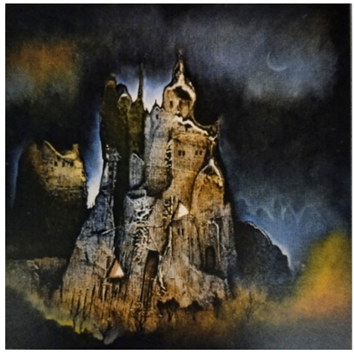
Image 1 Suresh Choudhary, Inscape 1, Oil on Canvas
Source of Image 1: Wanderlust: Exhibition of paintings by Suresh
Chaudhary [Exhibition Catalogue], 8-14 Oct, Jehangir Art Gallery, Mumbai
Image 2
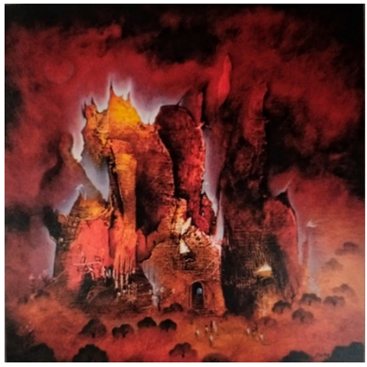
Image 2 Suresh Choudhary, Inscape 2, Oil on Canvas
Source of Image 2: Wanderlust: Exhibition of paintings by Suresh Chaudhary [Exhibition
Catalogue], 8-14 Oct, Jehangir Art Gallery, Mumbai
Image 3
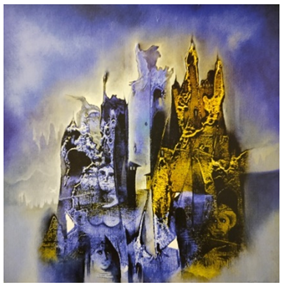
Image 3 Suresh Choudhary, Inscape 3, Oil on Canvas
Source of Image 3: Wanderlust: Exhibition of
paintings by Suresh Chaudhary [Exhibition Catalogue], 8-14 Oct, Jehangir Art
Gallery, Mumbai
Suresh often used oil colors on canvas with predominant use of monochromatic palette to achieve three-dimensional effect and depth which further enhances his atmospheric scenes. His art style incorporating realism with abstraction emphasized on mood rather than precise artistic expression and subtle details, resulted in beautiful mystical appearance (based on personal observation of the Pranati: An exhibition of paintings by the students of D. D. Devlalikar at Devlalikar Kala Vithika, Indore, April 18, 2025).
Suresh established the new dimensions in landscape genre, embodying qualities such as movement, poeticism and symbolism. Besides this, giving a new form to horse figures, artist depicted the same as shapes of celestial clouds on ground. Some of his artworks depict textures, with an impression of abstraction, employed in the quest of forms including single and group forms of horses Choudhary (2013). His Inscapes and Horse series, as well as poetry-based artworks, brought him fame not only nationally but also internationally, ensuring his invaluable contribution to the Indian contemporary art world Chaudhary (2026).
Suresh produced a large body of work throughout his artistic career, which he has displayed in many solo and group exhibitions, frequently exhibited in the art galleries of Bhopal, New Delhi, Mumbai, Bangalore, Pune and Kolkata. Fortunately, almost all his art exhibitions were successful, especially those held at the Jehangir art Gallery in Mumbai, Chitrakoot Art Gallery in Kolkata, Dhoomimal Art Center in New Delhi and Chemould Art Gallery in Mumbai, served as a turning point in his artistic career Chaudhary (2026). His collection of paintings can be seen in the India’s prestigious art centers National Gallery of Modern Art and Lalit Kala Akademi, New Delhi and Bharat Bhawan, Bhopal as well as foreign countries like U. S. A., England, France, Japan, Canada etc. He was conferred with Amrita Shergill Fellowship and senior Fellowship in the field of Creative Paintings by Madhya Pradesh government and Indian Government respectively. He was also honored with National Veteran artists Award by all India Fine Arts and Crafts Society (Suresh Choudhary, Bio-data).
Artistic creativity with poetic imagination elevated Suresh’s art to a new level of thought. The skillful combination and harmony of colours testify to his original style. His painting surface was accentuated with bold brushwork followed by subtle effects were produced in depth. His art conveys an artistic language that transcends region, culture and religion and reveals the inner world rather than the outer world.
Suresh Chaudhary was passionate about experimenting with different techniques in his artworks and this passion proved instrumental in developing his unique artistic language which earned him international acclaim Chaudhary (2026). He played a significant role in the Indian contemporary Art Scene through establishing his unique art style in art world, consistent engagement in numerous solo and group exhibitions and an active participation in various camps and juries. Moreover, his artworks preserved in the permanent and private collections of prestigious art centers established at his workplace in Bhopal as well as in many metropolitan cities across the country like Mumbai, New Delhi, Bangalore, Hyderabad and Chennai, continue to inspire the present generation of artists, reflecting his indelible contribution to the Indian contemporary art scene.
6. Conclusion
After the artistic revolution as Bengal School, an early Indian modernist Rabindranath Tagore’s vison of independent art expression opened new horizons in the scenario of India contemporary art and the artists of the 1940s’ groups inspired to break away from the art principles of the Bengal School and paint in an original style, assimilating Indian art traditions with Western art approaches. As a result of radical change due to liberalization in the 1990s, new dimensions were established in Indian contemporary art and Indian artists gained recognition in the art world and became adept at working with the diverse art mediums, materials and techniques. Through in-depth analysis of primary sources, observation and interview methods, it was concluded that Suresh Choudhary was such an Indian contemporary artist who proved his talent in experimenting with varied techniques without being bound to any specific technique and his consistent art displays and artistic achievements reflect his significant contribution in the Indian contemporary art scene.
CONFLICT OF INTERESTS
None.
ACKNOWLEDGMENTS
None.
REFERENCES
Chaudhary,
B. (2026, April 4).
Personal interview.
Choudhary,
S. (2013). Exhibition of
paintings by Suresh Choudhary [Exhibition catalogue]. Jehangir Art Gallery.
Choudhary,
S. (n.d.). Bio data.
In his world of
colors. (n.d.). Newspaper article.
Mago, P. N.
(2001). Contemporary art in
India: A perspective (1st ed.). National Book Trust.
Mishra,
R. N. (2022). Rethinking
comparative aesthetics in a contemporary frame. Indian Institute of Advanced
Study.
Pranati:
An exhibition of paintings by the students of D. D. Devlalikar (2025). Devlalikar Kala Vithika.
Rafi, S.
(2022). Contemporary Indian
art: Amalgamation of new genres. Journal of Emerging Technologies and
Innovative Research, 9(2), 524.
Rai, H. K.
(2018). Contemporary art in
Indian context. Artistic Narration, 9(2), 37.
Singh, A.
K. (2017).
Internationalism: The determined strength in Himmat Shah's art. International
Journal of Applied Business and Economic Research, 15(2), 323–324.
Three-dimensional
effects in paintings. (1977, June 29). The Times of India.
|
|
 This work is licensed under a: Creative Commons Attribution 4.0 International License
© ShodhKosh 2026. All Rights Reserved.