ShodhKosh: Journal of Visual and Performing ArtsISSN (Online): 2582-7472
|
|
Social Media as a Platform for Contemporary Performance and Visual Culture
Jeevajothi R 1 , Monisha J 2
 , Shanthi
V 3
, Shanthi
V 3 , Koushik
Kumar N 4
, Koushik
Kumar N 4 , Veda
Vijaya T 5
, Veda
Vijaya T 5 , Fang
Xueyi 6
, Fang
Xueyi 6
1 Assistant
Professor, Department of Management Studies, Meenakshi College of Arts and
Science, Meenakshi Academy of Higher Education and Research, India
2 Assistant
Professor, Department of Management Studies, Meenakshi College of Arts and
Science, Meenakshi Academy of Higher Education and Research, India
3 Professor, Department of Computer Science, Meenakshi College of Arts
and Science, Meenakshi Academy of Higher Education and Research, India
4 Meenakshi College of Physiotherapy, Meenakshi Academy of Higher
Education and Research, India
5 Professor, Department of Pharmacology, Meenakshi Ammal Dental College
and Hospital, Meenakshi Academy of Higher Education and Research, India
6 Faculty of Education, Faculty of Management, Shinawatra University,
Thailand; Research Fellow, INTI International University, Malaysia
|
|
|
ABSTRACT |
|
|
The growing
popularity of social media platforms has greatly changed the environment of
modern performance and visual culture. Online spaces like social network
sites and multimedia sharing sites have emerged to be fluid environments of
artistic creation, distribution, and communication. The work examines the way
social media is used as a participatory space of the modern day performance
and visual culture, where artists are able to market creative work out of the
gallery and physical performance space. The study reviews the conceptual
correlation between digital media and artistic communication as to how the
online media supports real time performances, participatory culture, as well
as communication with audiences around the globe. The paper also examines the
role of the major platforms in sustaining visual storytelling with short-form
content, live stream, and content circulation via algorithms, which affect
the perception and exposure of artistic work. As new opportunities are
offered by social media in terms of accessibility and creative
experimentation, a number of problems are raised, such as the problem of
intellectual property, authenticity, digital manipulation, and privacy of
information. The research evaluates the new role of social media in the development
of contemporary artistic practices through the case study of various examples
of digital performance art, virtual exhibitions, and social media campaigns
in the visual arts. |
|||
|
Received 08 December 2025 Accepted 26 March
2026 Published 03 April 2026 Corresponding Author Jeevajothi
R, rjeevajothimba@maher.ac.in DOI 10.29121/shodhkosh.v7.i3s.2026.7333 Funding: This research
received no specific grant from any funding agency in the public, commercial,
or not-for-profit sectors. Copyright: © 2026 The
Author(s). This work is licensed under a Creative Commons
Attribution 4.0 International License. With the
license CC-BY, authors retain the copyright, allowing anyone to download,
reuse, re-print, modify, distribute, and/or copy their contribution. The work
must be properly attributed to its author.
|
|||
|
Keywords: Social Media, Visual Culture, Digital Performance,
Online Art Platforms, Audience Participation, Digital Creativity |
|||


1. INTRODUCTION
The high development of digital technologies and the internet connection has greatly altered the modes through which art is produced, shared and consumed. Social media platforms have become potent communicative, creative, and cultural platforms of communication among these technological developments. Social media platforms like Instagram, YouTube, Tik Tok, facebook and other multimedia networks enable artists, performers and cultural practitioners to present their work directly to the global audiences without restriction of the physical facilities. Consequently, social media has become a powerful medium in the modern performance and visual culture, which allows current artistic expression and exchange in the digital age. Contemporary visual culture is the broad category of visuality that dominates the communication of modern culture such as photography, digital artwork, video performance, graphic design and multimedia storytelling. Previously, the visual culture was mainly spread in galleries, museums, print press, and television Eg et al. (2023). But due to the emergence of digital spaces, the creation and consumption of visual culture has moved to the online sphere where images, videos and performances are exchanged over networks at a very fast rate. There are social media to share content in real time, live stream, and multimedia, which means that artists can use various approaches to visual storytelling and performance that have not been tested before. Democratization of participation in art has been one of the greatest changes brought by the social media Hafezi et al. (2023). Artists no longer rely on institutional mediators like galleries, curators or publishers to showcase their work to viewers. Rather, they have the ability to post performances, visual work and digital projects directly to online platforms, and they can reach audiences that are not limited by geographical limits. This availability has increased the opportunities of young artists and independent creators that has led to a more participatory and inclusive creative ecosystem Kasemsarn et al. (2024). Figure 1 reveals that social media makes it possible to have performance, interaction, and global visual culture in the digital realm. The social media, also, promotes the cooperation of artists representing diverse cultural and disciplinary orientations and results in the emergence of hybrid forms of artistic practice encompassing performance, digital media, and interactive technologies.
Figure 1

Figure 1 Conceptual Framework of Social Media as a Platform
for Contemporary Performance and Visual Culture
The other significance of social media in the modern performance is that it incorporates real-time interaction and participation of the audience. Contrary to the conventional performance space where the audience can only engage with the performance through their physical presence, the social media enables the audience to react instantly by commenting, reacting and sharing the content Li et al. (2023). Live streaming functions can allow artists to play live to remote audiences and make immersive digital experiences that obliterate the line between performer and spectator. This participatory culture is also engaging the viewers and transforms the relationship between artists and audiences into a more interactive and collaborative mode of communication between the creator and the audience. Although such opportunities are present, the application of the social media in artistic practices also implies a number of challenges and ethical issues Li et al. (2024). Interpretations like copyright protection, digital authenticity, and data privacy have become the more important issues in the online cultural environment. The mass production of images and videos has the potential to cause the illegal reproduction of an artistic piece, whereas the visibility calculated by algorithms may affect the types of artworks that are given attention and those that are excluded.
2. Conceptual Framework of Social Media and Visual Culture
2.1. Definition of social media platforms
Social media platforms are online communication platforms that provide users to create, share and exchange information, images, videos, and interactive material by utilizing internet-based networks. These systems are used to support social interaction, teamwork, and sharing multimedia content among individuals and groups of people on the global scale quickly Rodríguez-Illera et al. (2021). Instagram, YouTube, Tik Tok, Facebook, and Twitter are the popular platforms, which enable the user with the possibility to publish visual and textual content, interact with the audiences, and take part in the online cultural and social discussions. Technologically speaking, social media is run using web-based or mobile applications, which combine multimedia sharing, user generated and algorithm-driven distribution technologies Rubio-Hurtado et al. (2022). The sites enable posting of photographs, videos, live performances, and digital art and they are therefore important platforms of creative expression and cultural communication. Social media platforms are interactive and participatory as opposed to traditional media channels like television or the print media, where the audience is not allowed to react to the content by liking, commenting, sharing and collaboratively participating Trichopoulos et al. (2023).
2.2. Concept of Contemporary Visual Culture
Contemporary visual culture is the various types of visual representation that affect the ways in which people perceive, interpret, and convey cultural meanings of the contemporary society. It has a wide spectrum of vision media, which include photography, digital art, film, video installations, graphic design, performance art, and online visual media. Visual culture today has been broadened in the digital era not only to the institution of art like the museums and galleries, but also to images and visual stories that pass through digital platforms and social networks. Visual culture is directly related to how images can be used as instruments of communication and cultural expression Xie et al. (2023). The modern society is also becoming image-based and visual presentation is prominent in the formulation of identity, social values and cultural discussion. Digital technologies have also increased the speed of production and distribution of visual data, allowing artists, designers, and creators to explore the newer modes of visual narratives and multimedia expression. Visual culture practiced in contemporary arts can tend to overlap with technology, media studies, and cultural theory Zhou et al. (2023).
2.3. Relationship Between Digital Media and Artistic Communication
The digital media has essentially changed the way art is communicated through the new tools and platforms that can be used to express creative works as well as the channels of communication. Artistic communication can be defined as the process in which artists express ideas, emotions, cultural stories, and aesthetic concepts to audiences either visually, through performance or through multimedia. The advent of digital technologies has transformed this communication process to be beyond the conventional physical geography like theatres, galleries, and exhibition halls Armutcu et al. (2023). Digital media platforms help artists to display their work in well-rounded and interactive forms that include digital videos, online performances, augmented reality, and multimedia installations. The technologies enable instant distribution of artworks to the world audience via the network of the World Wide Web. The social media platforms also enrich this communication process by giving the viewers a chance to engage with the art materials by commenting, interacting through feedback and sharing content. This exchange generates a dialogic partnership between artists and audiences and artistic communication is turned into a participatory cultural experience Banerjee et al. (2018). In addition, digital media promotes the exploration of new art forms and mixed methods that involve visual art, performance, sound and digital design. Table 1 is a summary of the previous research indicating a transformative nature of social media in the modern visual culture. Musicians have the opportunity to incorporate live streaming, animation and interactive media to create an immersive creative experience. Camilleri (2024)
Table 1
|
Table 1 Related Work on SocialMedia as a Platform for Contemporary Performance and Visual Culture |
|||||
|
Study Focus |
Platform Analyzed |
Research Method |
Contribution to Visual
Culture |
Limitation |
Application Area |
|
Participatory digital
culture Camilleri (2024) |
Multiple platforms |
Cultural analysis |
Strengthens audience–artist
interaction |
Limited empirical evaluation |
Digital media studies |
|
Visual culture in digital
environments |
Instagram |
Computational media analysis |
Introduces data-driven
visual analysis |
Platform-specific focus |
Visual media research |
|
Digital performance art Dhaku et al. (2025), Gretzel et al. (2022) |
YouTube |
Case study analysis |
New digital performance
formats |
Limited audience metrics |
Performance studies |
|
Networked public
communication Karule et al. (2025) |
Twitter / social media |
Media network analysis |
Enhances collaborative
artistic discourse |
Algorithm influence not
studied |
Digital communication |
|
Social media visual
communication |
Instagram |
Content analysis |
Highlights visual
storytelling patterns |
Focus on single platform |
Social media culture |
|
Virtual and digital art
exhibitions |
Multimedia platforms |
Art history analysis |
Expands digital museum
practices |
Limited audience interaction
analysis |
Digital exhibitions |
|
Instagram photography
culture Nanchang et al. (2025) |
Instagram |
Visual culture analysis |
Democratizes image creation |
Platform algorithm bias |
Visual media practice |
|
Digital interaction in
creative communities |
Multiple platforms |
Qualitative research |
Strengthens artist–audience
relationships |
Limited quantitative data |
Creative communities |
|
Instagram visual culture |
Instagram |
Digital ethnography |
Explains platform-based
artistic communication |
Limited performance focus |
Media culture |
|
Digital platform ecosystems |
Social networks |
Platform analysis |
Identifies platform
governance impacts |
Limited artistic case
studies |
Platform studies |
|
Digital art and network
culture |
Online platforms |
Art theory review |
Connects digital media with
art theory |
Limited empirical results |
Digital art research |
3. Social Media as a Space for Contemporary Performance
3.1. Digital performance practices and online artistic expression
The nature of the modern performance has changed due to digital technologies and social media sites as now artists are able to perform their work in virtual space. The digital performance practices will be artistic practices produced, shown, or shared via digital tools, like social networks, video-sharing websites, and interactive multimedia systems. In this regard, the artists combine visual media, sound, motion graphics, and techniques of digital editing to create new forms of artistic expression that have a presence mainly on the Internet. The social media is a readily available resource of artists trying out new forms of performance beyond the conventional theatre stages or gallery display. Instagram, YouTube, and Tik Tok are some of the platforms that performance artists, dancers, musicians, and multimedia creators are demonstrating short video performances, digital storytelling projects, and collaborative multimedia artworks. Such sites enable artists to bring different creative aspects such as visual effects, animation, augmented filters, and digital sound design together to produce interesting artistic content. Moreover, the artistic expression online promotes interdisciplinary experimentation in which performance art overlaps with the digital media, photography, graphic design and interactive storytelling. Dhaku Jadhav et al. (2025)
3.2. Live Streaming and Real-Time Performance Dissemination
Live streaming is a significant technological aspect that allows artists and performers to bring their work to their viewers in real time using social media channels. As opposed to the recorded content, the live streaming enables the performances to be transmitted at the same time to the audience in various geographical locations. YouTube Live, Instagram Live, Facebook Live and Tik Tok live are all platforms offering easy-to-use broadcasting features which allow artists to deliver concerts, theatre show, dance breaks and art demonstrations directly to their online viewers. Due to the use of live streaming technologies, the access to the artistic performances has grown substantially. Those audiences, who cannot be present at the physical venues, galleries, or theatres, will be able to attend the live events remotely with the help of the internet-connected gadgets. This has especially been needed in cases where physical meetings are restricted as is the case during world epidemics or geographic confinements. Cultural events, artistic performances or creative workshops can be carried on in virtual space using the means of real-time digital broadcasting. Moreover, live streaming creates a novel sense of immediacy and authenticity of digital performance. During performances, performers are able to engage with viewers and react to their comments and feedback and it is performed. Gretzel et al. (2022)
3.3. Audience Interaction and Participatory Culture
The greater degree of audience interaction and participatory engagement is one of the most peculiar features of the performance using social media. Compared to the traditional performance contexts where people usually look at the artistic works as spectators, social media platforms offer the opportunity to participate in the performance, as they have the functions of comments, reactions, sharing content, collaborative creativity, and so on. Figure 2 depicts audience involvement, interaction, collaboration that creates digital performance culture. This participatory form has helped in enriching the participatory culture in the modern digital art and performance. The participatory culture is a cultural environment where audiences are not only spectators but also participants in the creative processes. Karule et al. (2025)
Figure 2
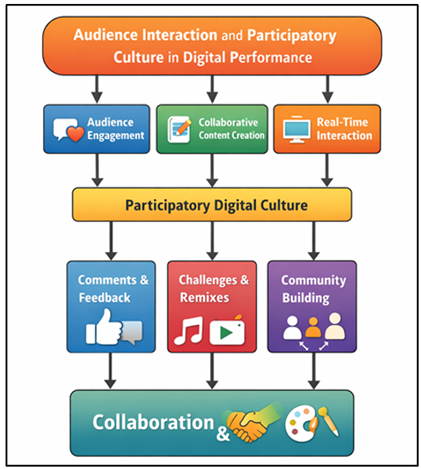
Figure 2 Audience Interaction and Participatory Culture
Framework in Social Media-Based Digital Performance
Social media allow viewers to react to artistic performances and thus give feedback, give interpretations or even produce original work based on the original one. To illustrate, through the participation of the audience, such as Tik Tok or Instagram, performance issues, art projects, and remix culture tend to appear. Moreover, audience interaction is often employed as an element of the creative process itself among artists. During digital performances, the performers can invite the viewers to propose themes, answer live polls, or collaborate in telling the story. This engaging strategy builds on the perception of community between performers and viewer, which generates collective creative experience in the online space.
4. Platforms and Technologies Supporting Digital Art Performance
4.1. Instagram, YouTube, TikTok, and multimedia platforms
Instagram, YouTube and Tik Tok are some of the social media that have become significant digital spaces that facilitate modern performance and visual culture in art. Such sites offer multimedia capabilities to artists to create, edit and distribute visual and performative images to audiences all over the world. Nanchang et al. (2025) Each platform presents it with different features that allow it to express itself artistically and connect to the audience in diverse ways. Visual artists, photographers and performers share curated visual content, short video content, and live-stream performances on Instagram. Its graphic user interface enables artists to display artworks, performance records and creative project using images, reels and stories. Instead, YouTube is an all-encompassing video-sharing tool, which allows longer records of performances, documentaries, digital exhibitions, and live-streaming. There is an opportunity to establish special platforms where artists are able to store and sell their art to foreign people. The TikTok has become one of the new platforms of creative expression of short forms especially among the youth. It promotes the experimentation of music, dancing, visual effects and telling stories in short, captivating videos. The editing and filters, as well as the sound libraries of the platform enable the artists to create vibrant digital performances. Rawandale et al. (2024)
4.2. Short-Form Visual Storytelling and Creative Content Formats
Brief visual storytelling has become a characteristic of performance in digital art on the social media. As the consumption of mobile-based content grows in popularity, numerous platforms are focused on short and visually stimulating content that can attract the attention of the audience in a short time. Videos are usually a few seconds to minutes long and short-form content provides artists with a channel to convey information and stories in brief and visually stimulating formats. Light-hearted apps like Tik Tok, Instagram Reels and YouTube Shorts promote the idea of creative storytelling among artists, in which they can incorporate visuals, sound, text overlays, and editing effects to create a compelling story. These genres allow performers, visual artists and multimedia practitioners to express artistic ideas in small digital stories that can be easily distributed in online communities. Short stories are usually dependent on visual symbols, movement, and quick cuts to deliver artistic messages within minimal periods. Moreover, the short format enables artists to have a broader audience by matching their creative actions to modern digital communication patterns. Tongsubanan and Kasemsarn (2023)
4.3. Algorithmic Visibility and Content Circulation
The use of algorithmic systems is important in shaping the process of distributing and finding artistic content on the social media. The majority of online platforms depend on the automated recommendation systems that assess user behavioral patterns, patterns of engagement, and content features in order to determine which posts should be displayed in the feed of users. These algorithms determine the exposure and the promotion of the artistic performance and visual materials in the online networks. Artists and performers may have a lot of influence on the visibility of their online creations through algorithmic visibility. Algorithms of platforms give content with a large number of likes, comments, shares, and the amount of time viewed priority and can be offered to more people. This is the process that can make the emerging artists reach a wider visibility and recognition besides the immediate followers. Simultaneously, it can pose difficulties to the creators whose work does not necessarily produce a high level of engagement in the initial stage. It is also due to algorithmic circulation that content types popular in the social media sites get to be popular. Artists can change their creative tactics to meet the trends of the platform, visual style, or narrative formats that are promoted by the recommendation systems. On the one hand, it can make the content more visible, but on the other hand, it might promote homogenisation of the content or affect the process of making artistic decisions. Vasanthan et al. (2023)
5. Challenges and Ethical Considerations
5.1. Intellectual property and copyright issues
The use of social media as a medium of artistic expression has become a big issue concerning intellectual property and copyright protection. People who post their art on the Internet are usually exposed to the danger of having their creative material reproduced, distributed, or altered without their own permission. Digital images, video, and performances are readily replicated, copied, or reused without giving due credit to the creators, and creators have a hard time retaining ownership of the original content. This problem becomes especially important to visual artists and performers, the material of which spreads quickly on social media platforms. The copyright laws are aimed at safeguarding creators and they accord them legal rights on the use and distribution of their work. But, implementing these rights online is also frequently difficult since the world of online platforms is global, and it is very easy to copy content. To assist in the protection of artistic works, many social media websites have mechanisms that include copyright reporting systems, digital watermarking, or content identification devices. However, these systems are not always effective in deterring unfair use or even fairly compensate creators.
5.2. Authenticity and Digital Manipulation
The issue of authenticity has gained a significant ethical issue within the digital art and performance based on social media. As the digital editing tools, image processing software, and artificial intelligence technologies progress, the art content can be modified or manipulated with ease. Although the digital manipulation is frequently considered as the appropriate artistic method to make visual and performance art more creative and experimental, it may also pose the question of authenticity and originality of visual and performance art. Whenever discussing the modern visual culture, it is important to note that a significant number of artists deliberately incorporate digital filters, effects, animation, and multimedia editing to design new artistic manifestations. These methods enable the performers and the visual artists to experiment with new aesthetic possibilities that cannot be attained using conventional methods. Nevertheless, manipulation can be overdone or inaccurate to a point where artistic performance and the artificial creation of images are indistinguishable. Social media sites also make this problem more complicated because they promote highly refined and aesthetically smoothed content. The stress of capturing the attention of the audience and greater engagement can result in creators showing editions or staged versions of their work. In others, manipulated content can either be a falsification of reality or misrepresentation of the original context of artistic performances.
5.3. Data Privacy and Platform Governance
The social media platforms as the performance and visual communication platform also get people concerned about the data integrity and the regulation of the platforms. The social media networks gather and process big volumes of data up to user viewing patterns, patterns of interaction, location, and personal preferences. Veeravalli et al. (2025) The data is frequently utilized to enhance the functionality of platforms, enhance the personalization of content recommendations, and facilitate the targeted advertising systems. The gathering and utilization of personal information has however led to controversy regarding security of privacy and ethical data handling. The artists and the audiences involved in the digital performances might send personal information online without knowing it. Live streaming events, interactive discussions, and sharing of content can also pose privacy threats to the users should data protection methods not be put in place. Also, those artists who depend on social media as their source of professional visibility will end up being dependent on platform policies and governance structures that dictate the distribution and monetization of their content. Platform governance can be described as the rules, regulations, and moderation measures that are used by social media firms to control on-line content and user conduct. The policies dictate the manner in which artistic content is classified, marketed, censored, or banned on digital platforms. In other instances, automated moderation software can misinterpret visual or performative content and either tag or delete artistic content.
6. Case Studies of Social Media-Based Artistic Practices
6.1. Digital performance art projects
Digital performance art projects are novel artistic expressions that use a social media as a main stage of their performance production and distribution. There are a great number of modern artists who explore digital technologies, video editing, live broadcasting, and multimedia narration, creating a performance that is primarily aimed at an online audience. Such projects usually integrate visual art, music, theatre, dance and digital media in order to produce hybrid forms of artistic expression. Through social media, artists have the opportunity to distribute their performances which can be recorded, edited, and distributed immediate to any part of the world. As an example, conceptual performances with performance artists often involve Instagram, Tik Tok, or YouTube and discuss issues like identity, social problems, digital culture, and personal stories. Such performances can contain brief visual stories, experimental video art or interactive storytelling forms that are mobile friendly. Digital performance projects also promote the collaboration between artists who are based at various regions of the world. Online platforms allow performers to collaboratively create through sharing video pieces, collaboratively editing a performance, or by taking part in a live event that is synchronized. This cooperative space broadens the artistic experimentation and promotes artistic cross-cultural exchange. Verma et al. (2026)
6.2. Online Exhibitions and Virtual Galleries
In the virtual galleries and online exhibitions have gained more and more significance as the means of displaying visual artworks in cyberspace. As the internet technologies and social media networks have grown, several artists, cultural institutions and galleries have embraced the use of digital forms of exhibitions to display works of art outside the physical environment. Through online exhibitions, artists can use paintings, photographs, digital illustrations, video art, and multimedia installations to present their work to individuals all over the world. Social media and special websites are commonly involved in the virtual galleries where selective digital exhibits are developed. Applications like Instagram are often referred to as visual galleries where artists share a series of art pieces in the form of well-organized posts, collections, and interactive stories. In the same way, video-based works of art, artist lectures, and virtual tours of an exhibition can be broadcasted on YouTube channels and websites of digital exhibitions. There are considerable merits in regard to accessibility and reach to the audience in these digital exhibitions. The exhibitions can be experienced by viewers even when they are in various geographical locations without the visitors having to visit the physical galleries. Online exhibition also provides interactive applications like comments, live discussions, and interviews with the artists and these are very helpful in the audience and making it more informative.
7. Result and Discussion
Through the analysis, social media websites and their tools impact data greatly on the modern-day performance and visual culture due to their availability of resources to create and distribute art and connect with their audience. Digital platforms like Instagram, YouTube, Tik Tok allow artists to experience multimedia narratives, live performance and interactive forms of content. The findings indicate that social media increases international presence of artists and helps to participate in the culture of participation and collaborative creativity by engaging with the audience. Nevertheless, the research also identifies issues in copyright protection, discovery, authenticity, and privacy of data.
Table 2
|
Table 2 Impact of Social Media Platforms on Contemporary Performance and Visual Culture |
|||||
|
Platform |
Average Audience Reach (%) |
Engagement Rate (%) |
Content Sharing Frequency
(%) |
Artist Visibility Increase
(%) |
Audience Interaction Score |
|
Instagram |
82.4 |
76.8 |
71.5 |
79.6 |
8.1 |
|
YouTube |
85.7 |
72.3 |
69.4 |
83.2 |
7.8 |
|
TikTok |
91.2 |
88.6 |
84.7 |
90.3 |
9.2 |
|
Facebook |
74.6 |
65.9 |
63.1 |
70.4 |
6.9 |
|
Twitter/X |
69.8 |
60.7 |
58.5 |
66.2 |
6.4 |
Table 2 shows the relative effect of the key social media portals on the modern performance and visual culture according to various performance parameters, such as audience reach, engagement rate, frequency of content sharing, increase in the visibility of artists, and the score of the audience interaction. Figure 3 is a comparison of the audience scope and the level of engagement of the top social media. Tik Tok is the most successful platform judging by most of the measures, it reaches 91.2 people, has an engagement rate of 88.6, and the highest interaction score of 9.2, which means that it has a high ability to sell short-term creative content and interactive involvement.
Figure 3
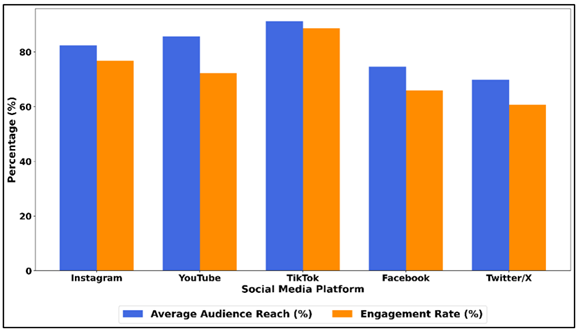
Figure 3 Comparative Analysis of Average Audience Reach and Engagement Rate Across Social Media Platforms
According to YouTube, the number of people that the service reaches (85.7%) and the increase in artists visibility (83.2% also indicate that the service is effective in terms of spreading art using video. Instagram engages and increases visibility (76.8 and 79.6% respectively), which justifies the popularity of visual storytelling and sharing of digital art. Figure 4 depicts the pattern of sharing the contents, the increase in the visibility of artists and their interaction with the audience.
Figure 4
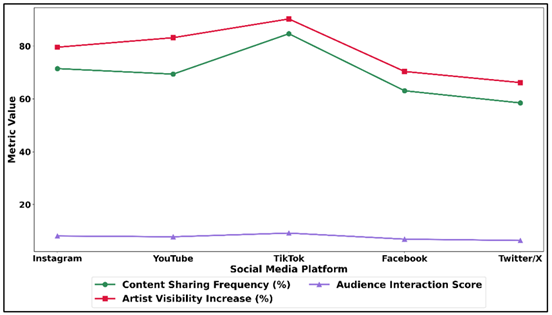
Figure 4 Content Sharing, Artist Visibility, and Audience
Interaction Trends Across Digital Platforms
Contrary to this, Facebook and Twitter/X have relatively lower engagement and interaction scores, indicating that the two are not as effective in case of artistic performance promotion as compared to visually oriented platforms.
Table 3
|
Table 3 Performance Evaluation of Digital Art Dissemination through Social Media |
||||
|
Digital Art Activity |
Audience Reach (%) |
Participation Rate (%) |
Content Virality Index (%) |
Viewer Retention (%) |
|
Digital Performance Art |
86.5 |
78.9 |
72.6 |
74.1 |
|
Live Streaming Performances |
83.2 |
81.4 |
70.8 |
76.5 |
|
Online Exhibitions |
79.7 |
68.5 |
64.3 |
71.3 |
|
Visual Art Campaigns |
88.9 |
82.7 |
77.9 |
75.8 |
Table 3 assesses the impact of various digital art dissemination actions on social media based on the indicators of reaching the audience, degree of participation, content virality index, and the retention of viewers. Figure 5 also provides a comparison of the trends of reach, participation, virality, and viewer retention. The findings suggest that visual art campaigns have the greatest audience reach (88.9%), and virality index (77.9%) which implies that a targeted campaign and themed content prove to be very effective in terms of reaching large audiences and motivating content sharing among many people.
Figure 5

Figure 5 Comparison of Audience Reach, Participation, Virality, and Viewer Retention Across Digital Art Activities
Digital performance art also exhibits good reach (86.5%), participation (78.9%), as an indication of the rising popularity of multimedia performances in the online setting.
8. Conclusion
The social media has become a new platform of modern performance and visual culture that has transformed the methods of creating, sharing, and experiencing artistic pieces. The blistering development of the digital communication tools has allowed artists to disregard the conventional physical space including galleries, theatres, and exhibition areas. Artists can offer digital performances, visual artworks, and multimedia projects via Instagram, You-Tube, and Tik Tok directly to the global audience, which leads to the increase of accessibility and cultural exchange. It shows that social media promotes various types of artistic expression, including the digital performance art, the visual storytelling by the use of short-term visuals, the live-stream events, or the online exhibitions. These media promote the exploration of multimedia media and give artists the chance to engage audiences on a real time basis. The involvement of the audience in the discussion by commenting, sharing and co-creation of content has also played a role in the creation of the participatory culture where the audience becomes an active contributor to the arts communication. In spite of these opportunities, there are still a number of challenges that exist in the digital cultural ecosystem. The problems of intellectual property safety, digital manipulation, algorithmic visibility, and privacy of data are crucial issues that should be taken into consideration by artists, audiences, and platform developers. The policies of fairness, authenticity, and respect of the rights of creators require ethical governance and transparent policies on the platform to make sure that digital artistic practice is fair, authentic, and respectful.
CONFLICT OF INTERESTS
None.
ACKNOWLEDGMENTS
None.
REFERENCES
Armutcu, B., Tan, A., Amponsah, M., Parida, S., and Ramkissoon, H. (2023). Tourist Behaviour: The Role of Digital Marketing and Social Media. Acta Psychologica, 240, Article 104025. https://doi.org/10.1016/j.actpsy.2023.104025
Banerjee, R., Hazarika, I., and Abdualla, A. (2018, December 15). An Analysis of Cash Flow and Investments: A Case of Consumer Staples Sector in UAE. In Proceedings of the 12th International NCM Conference: Challenges in Industrial Engineering and Operation Management. https://doi.org/10.2139/ssrn.3301793
Camilleri, M. A. (2024). Tourism Planning and Destination Marketing. Emerald Publishing. https://doi.org/10.1108/9781804558881
Dhaku Jadhav, K., Bhilare, M., Patil, M., and Ali, S. (2025). Bridging Knowledge Gaps: Conceptual Frameworks for Inclusive Learning Dissemination in Development Impact Assessment. Enterprise Development and Microfinance, 35(1), 223–242. https://doi.org/10.3362/1755-1986.25-00013
Eg, R., Demirkol Tønnesen, Ö., and Tennfjord, M. K. (2023). A Scoping Review of Personalized User Experiences on Social Media: The Interplay Between Algorithms and Human Factors. Computers in Human Behavior Reports, 9, Article 100253. https://doi.org/10.1016/j.chbr.2022.100253
Gretzel, U., Fuchs, M., Baggio, R., Höpken, W., Law, R., Neidhardt, J., and Xiang, Z. (2022). Digital Tourism: An Interdisciplinary Perspective. Journal of Tourism Futures, 8, 22–42.
Hafezi, F., Bijani, M., Gholamrezai, S., Savari, M., and Panzer-Krause, S. (2023). Towards Sustainable Community-Based Ecotourism: A Qualitative Content Analysis. Science of the Total Environment, 891, Article 164411. https://doi.org/10.1016/j.scitotenv.2023.164411
Karule, K. P., Sapkal, V., Mirajkar, G., Babajanov, M., Tajne, P., Ahire, L. K., and Qushnazarova, U. (2025). Leveraging Transfer Learning Techniques for Automated Tuberculosis Classification on Chest X-Ray. Indian Journal of Tuberculosis, 72, S512–S530. https://doi.org/10.1016/j.ijtb.2025.11.015
Kasemsarn, K., Sawadsri, A., Harrison, D., and Nickpour, F. (2024). Museums for Older Adults and Mobility-Impaired People: Applying Inclusive Design Principles and Digital Storytelling Guidelines—A Review. Heritage, 7, 1893–1916. https://doi.org/10.3390/heritage7040090
Li, L., Feng, R., Xi, J., Huijbens, E. H., and Gao, Y. (2023). Distinguishing the Impact of Tourism Development on Ecosystem Service Trade-Offs in Ecological Functional Zone. Journal of Environmental Management, 342, Article 118183. https://doi.org/10.1016/j.jenvman.2023.118183
Li, N., Meng, F., and Martin, D. (2024). The Distorted Gaze? Travel Photo Editing in the Social Media Era. Journal of Travel Research, 64, 1804–1819. https://doi.org/10.1177/00472875241274562
Nanchang, C., Pinsagul, C., Sailaaiad, C., and Phumdara, T. (2025). Community Participation in Solid Waste Disposal of People in Dusit District, Bangkok. International Journal of Research and Development in Management Research, 14(1), 35–45. https://doi.org/10.65521/ijrdmr.v14i1.104
Rawandale, U. S., and Kolte, M. T. (2024). Improving the Hearing aid System Using Optimized Variable Bandwidth Filter Based on Wolf Optimization. Multimedia Tools and Applications, 83, 79503–79531. https://doi.org/10.1007/s11042-024-19748-x
Rodríguez-Illera, J. L., Barberà Gregori, E., and Molas-Castells, N. (2021). Reasons and Mediators in the Development and Communication of Personal Digital Stories. Education and Information Technologies, 26, 4093–4109. https://doi.org/10.1007/s10639-021-10460-z
Rubio-Hurtado, M. J., Fuertes-Alpiste, M., Martínez-Olmo, F., and Quintana, J. (2022). Youths’ Posting Practices on Social Media for Digital Storytelling. Journal of New Approaches in Educational Research, 11, 97–113. https://doi.org/10.7821/naer.2022.1.729
Tongsubanan, S., and Kasemsarn, K. (2023). Sustainability at Home: The Development of an Efficient Framework for Home Energy-Saving Applications. Designs, 7, Article 101. https://doi.org/10.3390/designs7040101
Trichopoulos, G., Alexandridis, G., and Caridakis, G. (2023). A Survey on Computational and Emergent Digital Storytelling. Heritage, 6, 1227–1263. https://doi.org/10.3390/heritage6020068
Vasanthan, R., Jeyarani, J., and Karthikeyan, J. (2023). Harnessing the Benefits of Translingualism for English Language Education in India. Journal of Law and Sustainable Development, 11(6), e1196. https://doi.org/10.55908/sdgs.v11i6.1195
Veeravalli, S. D., Patil, P. A., Porwal, T., Karwande, V. S., Budhewar, A. S., and Nanche, B. M. (2025). Adaptive-Personalised Federated Deep Learning for Privacy-Aware NAFLD Screening. In Proceedings of the International Conference on Innovations in Intelligent Systems: Advancements in Computing, Communication, and Cybersecurity (ISAC3 2025). https://doi.org/10.1109/ISAC364032.2025.11156569
Verma, D. A., Kale, A., Agarwal, K., Chandratreya, A., Rani, A., and Ajani, S. N. (2026). Digital Preservation and Intelligent Innovation in Traditional and Modern Arts. ShodhKosh: Journal of Visual and Performing Arts, 7(1s), 1–3. https://doi.org/10.29121/shodhkosh.v7.i1s.2026.7169
Xie, C., Yu, J., Huang, S., Zhang, K., and Yang, D. O. (2023). The “Magic of Filter” Effect: Examining Value Co-Destruction of Social Media Photos in Destination Marketing. Tourism Management, 98, Article 104749. https://doi.org/10.1016/j.tourman.2023.104749
Yuan, Y., Chan, C., Eichelberger, S., Ma, H., and Pikkemaat, B. (2022). The Effect of Social Media on Travel Planning Process by Chinese Tourists: The Way Forward to Tourism Futures. Journal of Tourism Futures. https://doi.org/10.1108/JTF-04-2021-0094
Zhou, M., Lu, X., and Wang, B. (2023). Travel Pictures’ Authenticity in the Social Media Space. Annals of Tourism Research, 101, Article 103581. https://doi.org/10.1016/j.annals.2023.103581
|
|
 This work is licensed under a: Creative Commons Attribution 4.0 International License
© ShodhKosh 2026. All Rights Reserved.