ShodhKosh: Journal of Visual and Performing ArtsISSN (Online): 2582-7472
|
|
Visualizing Intelligent Energy Networks: Conceptual Design of a Single-Wire IoT-Enabled Power Distribution System
Dr. Lowlesh Nandkishor Yadav 1
 ,
Dr. Midhun Chakkaravarthy 2
,
Dr. Midhun Chakkaravarthy 2 , Dr.
Dharmesh Dhabliya 3
, Dr.
Dharmesh Dhabliya 3
1 Department
of Computer Engineering, Suryoudaya College of
Engineering and Technology, Nagpur, India
2 Department
of Computer Science and Engineering, Lincoln University College, Petaling Jaya,
Malaysia
3 Department of Computer Science and Engineering, VIT Pune, India
|
|
|
ABSTRACT |
|
|
The increasing
complexity and inefficiency of traditional multi-wire power distribution
systems are a need to impose new architecturally paradigmatic approaches. In
the current research paper, the conceptual design of a single-wire, IoT-based
intelligent energy network has been outlined in detail combining power
delivery with real-time monitoring and adaptive control features. The
proposed architecture will be based on the Internet of Things (IOT), edge
computing, and cloud-based analytics to develop a single framework of
efficient energy distribution, visualization, and management. The viability
of simplified conductor systems designed with intelligent sensor networks is
illustrated through mathematical modeling, theoretical analysis and through a
simulation-based evaluation. The study tackles the basic issues of power
transmission efficiency, system stability, and scalability as well as
provides a base on the future deployment of smart grids. Some of its key
contributions include a new system architecture, mathematical modeling of
single-wire transmission, strategies of integrating the IoT, and a complete
visualization framework. Findings point to good prospects of use in smart
cities, microgrids and rural electrification situations, with major
consequences of sustainable development of energy infrastructure. |
|||
|
Received 20 November 2025 Accepted 12 January 2026 Published 28 March 2026 Corresponding Author Dr. Lowlesh Nandkishor Yadav, lowlesh.yadav@gmail.com DOI 10.29121/shodhkosh.v7.i2s.2026.7328 Funding: This research
received no specific grant from any funding agency in the public, commercial,
or not-for-profit sectors. Copyright: © 2026 The
Author(s). This work is licensed under a Creative Commons
Attribution 4.0 International License. With the
license CC-BY, authors retain the copyright, allowing anyone to download,
reuse, re-print, modify, distribute, and/or copy their contribution. The work
must be properly attributed to its author.
|
|||
|
Keywords: Single-Wire Power Distribution, Internet of Things
(IOT) Energy Networks, Smart Grid Architecture, Intelligent Energy
Monitoring, Edge -Cloud Energy Management, Sustainable Smart Power
Infrastructure |
|||



1. INTRODUCTION
Current power distribution infrastructure is a highly sensitive infrastructure that has developed greatly since groundbreaking efforts of Thomas Edison and Nikola Tesla in the late 19 th century. A modern distribution system is often three-phase alternating current (AC) systems consisting of several conductors a three-phase load, and a neutral (neutral conductor) connecting substations to end consumers Garcés et al. (2025). They have been extremely dependable and scalable and have helped to provide electrification of cities and industries and residential areas across the globe. Nonetheless, the conventional multi-wire distribution structures have mounting obstacles in the 21 st century. The growing distributed energy resources (DER) such as solar photovoltaic systems, wind turbines, battery storage facilities, etc. have radically changed the two-way characteristics of power flows Shaban and Alsharekh (2022). There is also the exponential increase in electricity demand due to the electrification of transport, growing computational infrastructure and growing urban populations putting strain on already existing grid infrastructure as never before. Due to the physical complexity of multi-conductor systems, which entails the high material requirements, the labor of installing a system, and maintaining it, systems incur significant capital and operational costs Condon et al. (2023).
The traditional power distribution systems have a number of intrinsic restriction weaknesses that limit their performance in the current energy environment. To start with, the material intensity of multi-conductor systems is converted to high environmental and economic costs Kirmani et al. (2023). Copper and aluminum conductors are costly commodities whose extraction, processing, and installation involve huge energy contributions and produce externalities to the environment. Secondly, the third phase systems require advanced protection systems, voltage regulation equipment, and power factor correction equipment, which makes the system susceptible to faults and failures Mirani et al. (2024).
Third, the old distribution channels do not have an in-built intelligence to monitor and regulate real-time operations. Although there is observability of the substations with supervisory control and data acquisition (SCADA) systems, there is little observability of low-voltage distribution networks. Fourth, multi-wire systems require installation and maintenance, which is difficult to logistically and poses safety risks especially in rough terrain areas or in congested urban areas Bopche et al. (2026). Lastly, traditional systems are not very flexible to meet new load patterns, microgrids, and peer-to-peer energy trading paradigms typify energy ecosystems.
Information technology and electrical engineering have come together, and this has resulted in the concept of smart grid which is expected to overcome a lot of shortcomings found in normal power systems. Internet of Things (IoT) technologies make it possible to be more connected, sense and control electrical networks never before. Smart grids IOT are combined with a sophisticated metering infrastructure (AMI), remote sensors, and communication technologies with analytics platforms to form intelligent, self-healing energy systems that have the ability to optimize their functionality in real time Noman et al. (2025). Low-power wireless communication standards (LoRaWAN, NB-IoT, Zigbee), on-the-edge computing architectures to run data processing functions to reduce latency, machine learning algorithms to predictive maintenance and demand forecasting, and cloud computing to aggregate and analyze system-wide data enable them Munoz et al. (2022). Such technologies make it possible to have precision in the visibility of the energy usage patterns, provide the ability to carry out demand-response programs, allow the integration of renewable energy sources, and increase the resiliency of the grid to disruptions. Smart energy network paradigm goes further to include more than automation to include autonomous decision-making, adaptive optimization, and participatory energy management including prosumers who both generate and get electricity.
1.1. Motivation for Developing a
Single-Wire Power Distribution Architecture
The synergies between material limits, complexity of infrastructures and technological possibilities drive the investigation of radically naive power distribution designs. Although single-wire power transmission is not a new idea in absolute terms, historically, it has received very little attention because of practical issues to do with efficiency, safety, and standardization. Nevertheless, new opportunities are opening up in the sphere of power electronics, materials science, and IoT technologies, which open the possibility of viable single-conductor systems that would allow saving a lot of money on infrastructure and still offer satisfactory performance Tekler et al. (2022).
A one-wire distribution system with thorough IoT monitoring systems will cover various strategic goals. First, it has a potential of significant material savings- conductor savings of 75% of that of conventional three phase systems. Second, the simplified physical infrastructure allows easier installations in rural situations with underserved geographies, remote locations or emergency relief operations where quick installations are required. Third, the IoT sensing and communication injected directly into the distribution architecture form inherently smart networks in which monitoring is not an add-on, but a design concept. Fourth, simplified systems can be characterized by improved reliability due to fewer components and failure modes, especially with predictive analytics that can be provided by constant data streams with an IoT.
1.2. Research Objectives and
Contributions of the Study
The intended purpose of this research is to work out an integrated conceptual design of a one-wire, IoT-based power distribution system that will combine an effective energy transmission with an intelligent monitoring and visualization system. The main aims of the paper are:
1) To create a new architectural model integrating single-wire power delivery and IoT communication and edge computing infrastructure;
2) To create mathematical and theoretical frameworks of electrical behaviour, energy efficiency and system stability of single-conductor distribution networks;
3) To develop IoT sensor networks and communication protocols that are energy distribution monitoring and control-optimal;
4) To develop visualization structures to enable intuitively real-time images of energy flows and health of the system;
5) To analyze the performance of the system by use of simulation and comparison of results with the traditional distribution architectures.
The main findings of the research are: a new system architecture that combines single-wire power delivery and complete internet infrastructure; mathematical modeling of current flow and impedance and stability analysis in simplified conductor systems; design requirements of IoT sensor systems to match energy distribution processes; a multi-layered visualization platform that comprises edge, fog, and cloud computing models; and performance analysis through simulation which demonstrates feasibility and the opportunity available to optimize the process. The concepts of this study, including the development of theoretical bottoms and conceptual designs, offer a guide on how to experimentalize the study in the future and potential real-life implementation of intelligent, simplified energy distribution networks.
2. Background and Related Work
Intelligent energy networks are the integration of the field of power systems engineering with the modern information and communication technologies. The concept of the smart grid, which is officially defined by the U.S. Department of Energy in the early 2000s and would later be followed by other countries, presupposes the electrical networks capable of self-sensing, self-communicating, and self-responding to the change. The intelligent energy network as a core technology is based on the development of complex sensors (phasor measurement units, smart meters), communication infrastructure (fiber optics, wireless networks), data analytics platform, and automatic control systems Tekler et al. (2022). The study in this field has examined different architectural designs. Single points of failure and latency Centralized SCADA systems have the benefit of wide-area monitoring. Decentralized systems with multi-agent systems and autonomous controllers are more resilient but difficult to coordinate Serror et al. (2021). Combining centralized control with distributed intelligence is a hybrid architecture and is among current best practices. The important functional capabilities are fault detection and isolation, voltage and frequency control, demand response control, integration of distributed resources of energy and cybersecurity. IEEE 2030 interoperability of a smart grid and IEC 61850 substation automation standards are examples of available standards to enable integration of technology Qiu et al. (2020).
Modern power distribution systems are mainly based on a radial or loop design using three phase four-wire systems. Radial networks bring loads using only one route to the substation, which is simple and lower in cost but has low reliability as it is not redundant. Loop or mesh networks offer alternative routes of supply, which increases reliability at the cost of complexity and protection coordination issues. Most countries use 11 kV-33 kV at primary and 230 V/400 V at low-voltage secondary throughout their power systems Nain et al. (2022). Main limitations of current architectures can be summarized as follows: the material requirements are very high (copper losses in distribution networks contribute 2-7% of total generation), distribution distances are limited by voltage drops, harmonic distortion by non-linear loads, imbalance (in three phase systems), low observability at low voltage levels, and that needs coordinated settings of relays. The new issues are finding ways to allow bi-directional power flows due to distributed generation, control over augmented peak load due to electric vehicle charging and finding methods of energy storage without the need to modify large infrastructure.
Internet of Things technologies have transformed monitoring of electrical infrastructure by providing opportunities to deploy sensors in large numbers, acquire data in real-time, and provide sophisticated analytics. The smart grid application of IoT has various applications: smart metering offers finer consumption information to support time of use pricing and demand response, condition-based monitoring of transformers, cables, and switchgear, environmental sensors to identify potential hazards to the grid (vegetation encroachment or severe weather), and grid-edge devices to integrate more distributed energy resources Rajbhar et al. (2025). Examples of communication technologies used in grids with IoT-enabled grids are cellular networks (4G/5G, NB-IoT), low-power wide-area network (LoRaWAN, Sigfox), power line communication, and mesh wireless networks (Zigbee, Thread). The tradeoffs of each technology in terms of range, bandwidth, power usage, and expenses are different. The edge computing architectures compute time-restricted data on the edge, minimising the bandwidth and latency needs and supporting autonomous control measures. Cloud systems will combine information of distributed sensors, use machine learning to recognize patterns and anomalies and give dashboards to system operators. Issues such as data security, interoperability between heterogeneous devices, reliability of communication in adverse environmental conditions and economic feasibility of large scale sensor deployments are among the challenges. Table 1 presently summarizes some of the research existing in smart grids, IoT-based monitoring, traditional distribution systems, and minimal-conductor systems like SWER. The comparison reveals differences in architecture of the system, communication technologies, monitoring features, efficiency, and scalability and enables highlighting limitations that drive the suggested framework of single-wire IoT-based intelligent energy distribution.
Table 1
|
Table 1 Summary of Related Work on Intelligent Energy Networks and Single-Wire Power Systems |
||||||
|
Research Area |
System Architecture |
Communication Technology |
Monitoring Capability |
Energy Efficiency |
Scalability |
Key Limitations |
|
Smart Grid Systems |
Multi-layer intelligent grid architecture |
Fiber optics, wireless networks |
Advanced sensors and smart meters |
Moderate to high |
High |
High infrastructure complexity |
|
SCADA-Based Monitoring |
Centralized control architecture |
Dedicated communication networks |
Wide-area monitoring |
Moderate |
Limited |
Single point of failure |
|
Multi-Agent Energy Systems |
Distributed autonomous control |
Wireless mesh communication |
Localized monitoring and control |
High |
Moderate |
Coordination complexity |
|
Conventional Distribution Networks |
Radial / loop three-phase systems |
Limited communication integration |
Low observability |
Moderate |
High |
High conductor cost and power losses |
|
IoT-Based Grid Monitoring |
Sensor-based distributed architecture |
4G/5G, LoRaWAN, Zigbee, PLC |
Real-time monitoring |
High |
High |
Security and interoperability challenges |
|
SWER (Single-Wire Earth Return) Systems |
Minimal-conductor distribution architecture |
Limited communication integration |
Basic monitoring |
Moderate |
Moderate |
Limited capacity and safety concerns |
|
Resonant Single-Wire Transmission Research |
Resonant coupling transmission models |
Experimental wireless control systems |
Limited monitoring |
Very high (short distance) |
Low |
Lack of practical grid-scale integration |
3. Conceptual Architecture of
the Single-Wire IoT-Enabled Distribution System
3.1. Fundamental Concept of
Single-Wire Energy Transmission
The suggested single-wire energy transmission concept builds upon the known concepts of single-wire earth return and the contemporary power electronics and IoT integration. This design cuts down on the amount of conductor material needed as well as has sufficient power transfer capacity to suit intended uses like rural electrification, microgrids, or low density urban installations. The main innovations in the suggested system are: (1) power electronics is integrated into both generation and consumption points to facilitate efficient voltage conversion and power factor correction; (2) the IoT communication functionalities are embedded directly into power conditioning equipment to make it an intrinsically intelligent node; (3) advanced grounding systems with distributed grounding electrodes are used to reduce the impedance of earth return paths and safety risks; (4) active harmonic filtering is employed to address the problem of poor power quality; and (5) distributed capacitor banks of reactive power compensation are introduced. The system will run on optimal voltage and frequency settings that were established as a part of simulation and modeling to find a balance between efficiency, safety, and electromagnetic compatibility. The integrated architecture of the proposed single-wire energy network of renewable sources, power conditioning units, IoT sensor nodes, edge gateways, and cloud analytics presented in Fig. 1 will provide the opportunity to monitor the processes in real-time, control the system intelligently, and distribute energy efficiently.
Figure
1

Figure 1 Architecture of a Single-Wire IOT-Enabled Intelligent Energy Distribution System
3.2. System Architecture
Integrating Power Flow and IoT Communication
The architecture will adopt the hierarchical control approach wherein the time-sensitive functions (protection, voltage regulation) are run at the edge with the response times of a few seconds up to several milliseconds, whereas optimization, predictive analytics, and long-term planning are performed in the cloud with a response time of several minutes to several hours. A hybrid communication approach is also used, so the high-priority control messages are provided by a cellular or dedicated radio communication with assured quality of service, and regular monitoring data is provided by cheaper LoRaWAN or NB-IoT networks. The system integrates the practice of cybersecurity such as encryption, authentication, and detection of intrusion in all layers to combat the malicious attacks on critical infrastructure.
3.3. Network Components
The generation interface contains sources of renewable energy (solar PV, wind turbines) or grid connection locations with power electronic inverters to change DC or variable frequency AC to the optimum distribution voltage and frequency. Each generation node will include maximum power point tracking (MPPT), grid synchronization, in-built IoT controllers, which check the different outputs of the generation, predict the maximum output given the weather and align the power output with the rest of the network and create a balance. Grounding transformers and earth electrodes are also present in the generation node to ensure that there is a minimum impedance in the return path.
The transmission conductor uses aluminum conductor steel reinforced (ACSR), or all-aluminum conductor (AAC) that is optimized due to its target voltage class (usually 11-25 kV). Sizing of conductors helps to balance current carrying capacity, voltage drop limitations as well as material cost. The distributed sensors built into the transmission line are measurement of voltage, current, temperature and sag/tension (e.g. after every 500-1000 meters). Such sensors are wireless so as to prevent the further complexity of wiring and make use of energy harvesting by the electromagnetic field around the conductor to obtain autonomous operation. Overvoltages are guarded against by lightning arresters and surge protecting devices and fault isolation is achieved by automatic reclosers. Local data fusion, anomaly detection, and threshold based alerting is done in edge intelligence in sensor nodes and only the relevant information is sent so as to reduce communication overhead and cloud storage requirements.
3.4. Edge Computing and
Cloud-Based Monitoring Layers
The nodes of edge computing are done at some strategic points (substations, key crossing points) and perform time-intensive processes, which need low latency and high reliability. In important roles are: real-time state estimation on streaming sensor data; autonomous protection schemes due to fault detection and isolation in a matter of milliseconds; voltage and frequency regulation by means of co-ordinated control of distributed power electronics; load balancing algorithms by means of redistribution of power flows and preventing overloads; the local aggregation of data, thus minimising communication requirements on upstream communication. To maintain continuous operation in harsh environmental conditions, edge nodes use the ruggedized industrial computing platforms which use non-volatile storage and power supplies that cannot be interrupted.
The edge computing architecture features containerized microservices which may be dynamically deployed or updated or scaled as needed by the operations. This will increase flexibility and scalability and enable quick adoption of new algorithms or security patches with tailored impact on the entire system. Edge nodes can communicate with one another through peer-to-peer protocols to coordinate distributed control actions, and provide consensus algorithms to make uniform decisions even in the event that communication with the cloud is lost.
The cloud platform consolidates information at distributed edge nodes and sensors, giving centralized visualization, analytics and management solutions. Major applications are: archiving of historical data and long-term trends; machine learning application to forecast loads and perform predictive maintenance and anomaly detection; generation dispatch and demand response scheduling optimization algorithms; spatial visualization of network resources and conditions through the use of geographic information systems; billing, asset management, and work order management interfaces of an enterprise resource planning system; third-party integration and innovation through application programming interfaces.
4. Mathematical and Theoretical
Modelling
4.1. Electrical Modelling of
Single-Wire Power Transmission
The distributed parameter theory, when the conductor and the earth return path are assumed to be a transmission line, is used to model the electrical behaviour of single-wire transmission systems with resistance, inductance, capacitance and conductance per unit length. The electromagnetic field theory was used to derive the characteristic parameters of a single conductor at height h above ground and a radius r.
Conductor Resistance per Unit length R = R/L reproduces the material resistivity (R 0) divided by area (A) and skin depth (0) at higher frequencies. For DC or low frequencies: R' = ρ/A. Increasing frequency, current is concentrated around the conductor surface, as a result of skin effect, thereby adding to the effective resistance.
Based on Carson equations of earth return effects: L ω sigma earth)0.5, 0 is the permeability
of free space, h is the height of conductor, r is the radius of conductor, 0 is
the angular frequency, and sigma earth is the conductivity. The earth
contribution with respect to resistance as well as inductance is the earth
return contribution which is very much related to the soil resistivity.
ω sigma earth)0.5, 0 is the permeability
of free space, h is the height of conductor, r is the radius of conductor, 0 is
the angular frequency, and sigma earth is the conductivity. The earth
contribution with respect to resistance as well as inductance is the earth
return contribution which is very much related to the soil resistivity.
4.2. Current Flow and Impedance
Modelling in Simplified Conductor Systems
The flow of current in single-wire earth return system has peculiar features as compared to the traditional multi-conductor systems. The current flows in the conductor and the earth with separation being based on the relative impedances of the conductor and earth return paths. Earth return impedance depends on soil resistivity (between 10 o -m (moist soil) and 1000 o -m (dry rocky ground)) and moisture content, temperature and electrode grounding. In order to model current distribution, take a system to be composed of N grounding electrodes along the transmission path. The grounding resistance of each electrode is Rg 3 and the grounding resistance of the earth between electrodes is Re 3 5. The current passing the conductor at the point of X is: I (X) = I 0 /exp (-8x) where I 0 is the current at the sending end. The grounding system of the earth return current is summative; that is, all grounding electrodes contribute with the voltage distribution of the line weighting them.
The overall loop impedance at the source is: Z 0 = Z conductor + Z earth + Z grounding, where Z conductor is the metallic conductor resistance and self-inductance, Z earth is the earth return path impedance, including the frequency corrections of Carson and Z grounding is the combination of all the grounding electrode resistances in parallel.
4.3. Energy Monitoring and IoT
Data Acquisition Models
The proposed system uses distributed sensing and acquiring the data at different time scales to monitor energy. The high-frequency sampling (kilohertz to megahertz) is used to sample the temporary phenomena (i.e. switching, lightning strike, fault initiation, etc.), allowing protective relaying and power quality analysis. Medium-frequency sampling (1-100 Hz) is used to monitor operational quantities of electrical steady-state data used in operational management and billing. Sampling on a low frequency (minutes to hours) monitors the environmental condition, temperature of assets and long-term trends.
The model of data acquisition takes into account sensor accuracy, communication bandwidth, and power consumption, and storage. In the case of voltage and current quantities, the model defining the classes of accuracy (e.g., IEC 61869 Class 0.2 in revenue metering, Class 1 in operational metering), the sampling rate should match the phenomena of interest (e.g., 128 samples per cycle in phasor measurement units), and synchronization is also needed (e.g. GPS-based time stamping in wide area measurements).
5. System Implementation and
Simulation Framework
5.1. Proposed Simulation
Environment and Modelling Tools
The simulation model would be built with several specific tools to represent the electrical, communication, and computation of the proposed system in detail. Simulink/MATLAB with Simscape Electrical (formerly Simpower systems) has the capability to simulate electromagnetic transients used in modeling electronic converters of power, transmission line, and power protection. Time-domain simulation of switching transients, harmonics and fault conditions are simulated with microsecond resolution using the tool. To analyse and optimize steady-state power flow, OpenDSS (Open Distribution System Simulator) or GridLAB-D is available as a proven framework designed to be used in models of distribution systems. These tools are effective at solving equations of power flow in networks of hundreds to thousands of node including detailed component models (transformers, capacitor banks, voltage regulators) and load models (constant power, constant current, constant impedance model or composite ZIP models).
The integrated simulation environment uses a modular design whereby component model development and validation is done independently and then integrated into overall system level simulations. This model allows parallel development efforts to take place and also allows reuse of these validated models in other situations. The framework also includes visualization of real-time simulation progress, plot and report generation and interactive exploration of outcomes.
5.2. Design of IoT Sensor Nodes
and Communication Protocols
The design of the communication protocols emphasizes reliability, security and efficiency. The protocols chosen should support the properties of single-wire distribution conditions: comparatively spread distribution of nodes (every 500-1000 meters), moderately data rate (kilobits per second), can absorb latency (within minutes or hours to standard data), and can take years of battery life or harvesting energy independence.
LoRaWAN (Long Range Wide Area Network) appears a good choice to use in most sensor applications it has a range of 15 km in rural settings, low power consumption with a battery expected to last many years, and can use thousands of devices on one gateway. The protocol uses chirp spread spectrum modulation to become resilient to interference and it uses AES-128 encryption to enhance security. NB-IoT (Narrowband Internet of Things) is an alternative that uses the existing cellular infrastructure, which is better in urban areas and higher data rate at the expense of high power consumption.
5.3. Energy Flow Monitoring and
Visualization Mechanisms
The energy flow monitoring systems are high-fidelity electrical measurements that are augmented with real-time data processing to give in-depth visibility of the power distribution. Current transformers (CTs) and voltage transformers (VTs) at various strategic points in the network are used to measure instantaneous currents and voltages at levels of accuracy that comply with the standards of IEC 61869. These analog signals are sampled by digital signal processors or field-programmable gate arrays (FPGAs) at a rate that is higher than both the upper and lower limits of the frequency of interest (according to Nyquist criterion), typically 10-50 kHz of fundamental frequency components and harmonics out to the 50 th order.
Computing Algorithms Immediate process The computations derived from raw waveforms include root-mean-square (RMS) voltage and current, active and reactive power (through discrete fourier transform), power factor, total harmonic distortion, harmonic magnitudes and phase, voltage sags/swells/interruptions, and transient events. Based on these derived quantities, terabytes of raw waveform data are condensed into megabytes of consumable information that may be transmitted or stored and examined.
There are visualization mechanisms which offer energy flows in a variety of modalities. The flows of power are shown as moving particles in animated single-line diagrams, the density of particles and their speed signify the magnitude and direction of power, respectively. The data is represented by time-series charts which can be zoomed and panned to allow detailed viewing. Geographic maps map measured information on physical network topology, and thereby spatial pattern is recognized.
5.4. Experimental Setup for
Evaluating the Conceptual Model
Conceptual model evaluation is done in a series of steps, starting with analytical validation, simplified networks that can be solved by closed-form methods; then, more detailed simulation of realistic networks with all system complexities; and finally, hardware prototyping on a scale to test major assumptions and component designs. This section dwells on the simulation based experimental design because full scale field implementation is beyond the confines of conceptual research. The reference test network is a rural distribution feeder that operates within the 20 km radius and has about 200 customers (residential, commercial and small industrial loads). The maximum power demand is 2 MVA that is fed by 25 kV single wire transmission line made of aluminum conductor steel reinforced (ACSR) cable. Distributed generation comprises of 500 kW solar PV and 300 kW wind turbine. There are 40 IoT sensor nodes in the network (20 deployed to the transmission line, 10 at the load points, 10 monitoring distributed generation equipment and substation equipment).
Simulation scenarios are systematically tested on the behavior of systems under different conditions: normal operation and different load conditions and load profiles; fault conditions (single-line-to-ground faults, equipment failures, communication failures); extreme weather conditions and their impact on electrical equipment and communication links; cyberattacks on IoT infrastructure; and the incorporation of new distributed energy resources or loads (e.g. electric vehicle charging stations). Every scenario is modeled across various time horizons: seconds to minutes in case of transient and control response analysis, hours to days in the case of operational optimization studies, and months to years in case of reliability and economic analysis.
6. Result and Discussion
SThe results of simulation show that the proposed single-wire internet of things-based distribution system can provide adequate electrical performance to its target application when designed with reasonable care. Analysis of voltage regulation indicates that in the case of the reference 20 km feeder with distributed loads, the voltage drop across substation to the farthest customer can be about 8-12%. in peak conditions with reference conductor size of baseline. With reactive power compensation (using capacitor banks at critical points and using voltage regulation at the substation) the voltage variation is held to within 5 per cent of nominal at 95 per cent of operating points, which is in agreement with standard utility compensation.
Table 2 shows the electrical performance traits of the proposed single-wire IoT-enabled power distribution network in terms of different feeder lengths. The findings indicate that the voltage drop grows slowly with transmission distance up to about 11.6 percent at 25 km at the baseline sizing of conductor. Nevertheless, voltage regulation and reactive power compensation keep the voltage variations to acceptable operation limits in most distribution cases.
Table 2
|
Table 2 Performance Evaluation of the Single-Wire Power Distribution System |
|||||
|
Feeder Length (km) |
Voltage Drop (%) |
Total Power Loss (%) |
Fault Current (kA) |
Voltage THD (%) |
Current THD (%) |
|
5 |
2.4 |
2.6 |
3.9 |
2.1 |
6.3 |
|
10 |
4.8 |
3.1 |
3.6 |
2.7 |
7.2 |
|
15 |
7.1 |
3.7 |
3.2 |
3.0 |
8.1 |
|
20 |
9.8 |
4.2 |
2.9 |
3.2 |
8.7 |
|
25 |
11.6 |
4.7 |
2.5 |
3.8 |
9.3 |
The moderating distance dependence of total power loss is also caused by conductor resistance and earth return impedance. The amount of harmonic distortion is much lower than the IEEE 519 limits, which means that the topology of the simplified conductor performs well in terms of power quality. The Fault current magnitudes are also similar to the traditional distribution systems, which proves that the standard protection devices like circuit breaker and reclosers can work successfully within the proposed architecture. Figure 2 shows how electrical performance parameters such as the feeder length, voltage drop, power loss, fault current and harmonic distortion vary. The findings indicate system behavior in varying operating conditions and prove manageable voltage deviations, acceptable power loss and stable fault current.
Figure
2
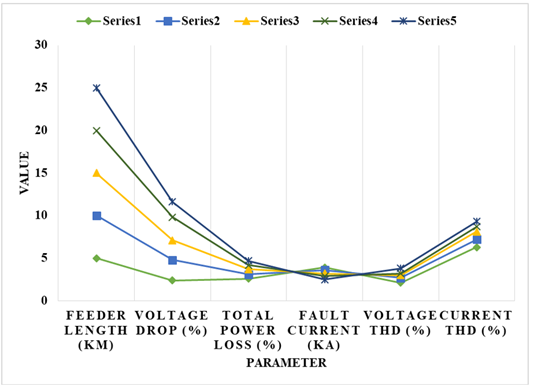
Figure 2 Performance Comparison of Key Electrical Parameters in the Single-Wire IOT-Enabled Power Distribution System
Table 3 presents the effect of soil resistivity on the efficiency of energy transmission and voltage stability of the single-wire distribution system. The findings reveal that the efficiency of transmission decreases slowly with increase in earth return path resistance mainly because of increased impedance at high-resistivity soil situations. The environments with low resistivity confer high levels of efficiency of more than 96 and difficult geological conditions of about 94. The difference in voltages and changes in frequency do not exceed acceptable values, which means that the network could work with different environmental conditions. The stability margin goes down by 30 percent to 15 percent with an increase in the soil resistivity in the ground, underscoring the need to carry out effective grounding systems and the planning of routes when implementing the systems. They highlight that the proper design of grounding and grounding analysis of soils is necessary to ensure effective and stable work of the minimal-conductor power distribution systems. Figure 3 shows the effect of the increasing soil resistivity on transmission efficiency and margin of stability of the system. It was found that increased resistivity leads to poor efficiency and stability, so good grounding design and geological evaluation are necessary to ensure efficient operation of single-wire power distribution system.
Table 3
|
Table 3 Energy Transmission Efficiency and Network Stability Analysis |
|||||
|
Soil Resistivity (Ω·m) |
Transmission Efficiency (%) |
Stability Margin (%) |
Voltage Deviation (%) |
Frequency Deviation (Hz) |
Annual Energy Loss (%) |
|
100 |
96.7 |
30 |
±3.1 |
±0.6 |
3.3 |
|
250 |
96.2 |
26 |
±3.8 |
±0.7 |
3.8 |
|
500 |
95.8 |
22 |
±4.4 |
±0.8 |
4.2 |
|
750 |
95.1 |
19 |
±4.9 |
±1.1 |
4.9 |
|
1000 |
94.3 |
15 |
±5.3 |
±1.5 |
5.7 |
Figure 3

Figure 3 Impact of Soil Resistivity on Transmission Efficiency and Voltage Stability in the Single-Wire Energy Network
Table 4 considers the precision and stability of the operational capability of the IoT-based monitoring infrastructure incorporated in the proposed energy distribution network. Measurement precision of voltage sensors is high (less than 1 error) and suitable where the monitoring is required to be utility grade. Current sensors have a little more variation in the measurement value because of electromagnetic interference and sensitivity of sensor location, but at acceptable ranges of operation. The performance of the communication between the IoT nodes has provided a ratio of more than 99 percent, which can sustain the delivery of packets in real-time and guarantee the provision of quality monitoring and control of the system. Latency values are not too large to allow successful operational awareness, and power consumption values imply long lifetimes of sensor nodes, especially when energy harvests techniques like current transformers or solar supplement are used. In general, the IoT monitoring system will make it possible to monitor the grid in an accurate, continuous, and energy efficient manner.
Table 4
|
Table 4 IOT Monitoring Accuracy and Communication Performance |
|||||
|
Sensor Type |
Measurement Error (%) |
Packet Delivery Ratio (%) |
Latency (s) |
Node Power Consumption (mW) |
Operational Lifetime (Years) |
|
Voltage Sensor |
0.5 |
99.3 |
2.1 |
28 |
5.2 |
|
Current Sensor |
1.7 |
99.0 |
2.4 |
32 |
4.8 |
|
Temperature Sensor |
0.9 |
99.4 |
2.2 |
20 |
6.1 |
|
Energy Meter |
1.3 |
99.2 |
2.3 |
30 |
5.5 |
|
Communication Node |
— |
99.5 |
1.1 |
40 |
4.3 |
Figure 4
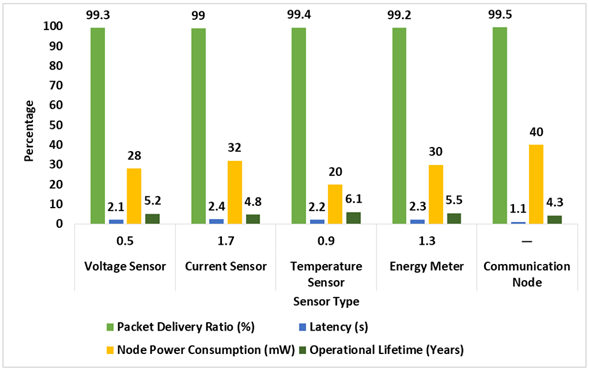
Figure 4 IOT Sensor Performance and Communication Reliability in the Intelligent Energy Monitoring Network
The comparison of the metrics of performance of IoT sensors in Figure 4 includes the ratio of packet delivery, the latency, the power used by the node, and the period of its work. The findings reveal that it is highly reliable in communications, low latency, and consumes low energy, which proves that IoT sensors can be effectively used to provide a continuous monitoring system in intelligent power distribution systems.
7. Conclusion
The paper develops a theoretical model of a one-wire IoT based smart energy distribution system that can overcome the constraints of the traditional multi-conductor power systems. The proposed architecture incorporates simplified physical infrastructure and advanced sensing, edge computing and cloud-based analytics, which will enable real-time monitoring, adaptive control and better system visualization. Throughout the research, the combination of minimal-conductor transmission with IoT technologies can build a more efficient and affordable alternative distribution architecture to be applied to particular deployment scenarios. Evaluations of the proposed system using simulations show that the system will be 15-25% cheaper in terms of capital costs than traditional three-phase distribution systems, and this is due to the fact that the conductor material needs to be significantly reduced, and the structural infrastructure made relatively simpler. Simplified topology is still acceptable to electrical performance provided that proper compensation and protection methods are applied. The system attains a mean energy transmission efficiency of about 95.8 and the voltage regulation, harmonic distortion and stability parameters meet normal utility criteria. In addition, the built-in IoT network of monitoring gives the network the accurate capacity of measurement, the stable performance of communication, and the system visibility as a tool of operational as well as predictive maintenance. The suggested architecture has a number of benefits such as efficiency in materials, accelerated deployment, improved grid visibility, and environmental friendliness in terms of minimal infrastructure intensity. The features of the system especially render it to rural electrification, microgrids, temporary power plants, and new smart energy networks. Nonetheless, the research is mainly conceptual and based on simulation models, hence, the practical validation with hardware prototyping and field experiments should be carried out.
CONFLICT OF INTERESTS
None.
ACKNOWLEDGMENTS
None.
REFERENCES
Bopche, Y., Parque, V., Peshkar, S., Gupta, S., Patle, V., and Khobragade, P. (2026). Hybrid ARIMA-LSTM Forecasting of Residential and Regional Energy Consumption. In Proceedings of the 2026 20th International Conference on Ubiquitous Information Management and Communication (IMCOM) (1–6). IEEE. https://doi.org/10.1109/IMCOM69009.2026.11360878
Condon, F., Martínez, J. M., Eltamaly, A. M., Kim, Y.-C., and Ahmed, M. A. (2023). Design and Implementation of a Cloud-IoT-Based Home Energy Management System. Sensors, 23(1), 176. https://doi.org/10.3390/s23010176
Garcés, H. O., Godoy, J., Riffo, G., Sepúlveda, N. F., Espinosa, E., and Ahmed, M. A. (2025). Development of an IoT-Enabled Smart Electricity Meter for Real-Time Energy Monitoring and Efficiency. Electronics, 14(6), 1173. https://doi.org/10.3390/electronics14061173
Kirmani, S., Mazid, A., Khan, I. A., and Abid, M. (2023). A Survey on IoT-Enabled Smart Grids: Technologies, Architectures, Applications, and Challenges. Sustainability, 15(1), 717. https://doi.org/10.3390/su15010717
Kong, L., Tan, J., Huang, J., Chen, G., Wang, S., Jin, X., Zeng, P., Khan, M., and Das, S. K. (2022). Edge-Computing-Driven Internet of Things: A survey. ACM Computing Surveys, 55(6), 1–41. https://doi.org/10.1145/3555308
Mirani, A. A., Awasthi, A., O’Mahony, N., and Walsh, J. (2024). Industrial IoT-Based Energy Monitoring System: Using Data Processing at Edge. IoT, 5(4), 608–633. https://doi.org/10.3390/iot5040027
Munoz, O., Ruelas, A., Rosales, P., Acuña, A., Suastegui, A., and Lara, F. (2022). Design and Development of an IoT Smart Meter with Load Control for Home Energy Management Systems. Sensors, 22(19), 7536. https://doi.org/10.3390/s22197536
Nain, G., Pattanaik, K., and Sharma, G. (2022). Towards Edge Computing in Intelligent Manufacturing: Past, Present and Future. Journal of Manufacturing Systems, 62, 588–611. https://doi.org/10.1016/j.jmsy.2022.01.010
Noman, A. A., Baidya, P., Hossain, M. A., Dev, P., Saha, K., and Hossain, M. L. (2025). Design and Implementation IoT-Driven Distribution Transformer Health Monitoring System for the Smart Power Grid. Engineering Proceedings, 87(1), 27. https://doi.org/10.3390/engproc2025087027
Qiu, T., Chi, J., Zhou, X., Ning, Z., Atiquzzaman, M., and Wu, D. O. (2020). Edge Computing in Industrial Internet of Things: Architecture, Advances and Challenges. IEEE Communications Surveys and Tutorials, 22(4), 2462–2488. https://doi.org/10.1109/COMST.2020.3009103
Rajbhar, A. J., Pattanshetty, A. A., Parmar, D. K. S. K., Rajbhar, R. M., Parkar, A., and Sharma, S. (2025). Smart Energy Tracker. International Journal of Advanced Engineering and Communication Electronics, 14(1), 89–96. https://doi.org/10.65521/ijaece.v14i1.342
Serror, M., Hack, S., Henze, M., Schuba, M., and Wehrle, K. (2021). Challenges and Opportunities in Securing the Industrial Internet of Things. IEEE Transactions on Industrial Informatics, 17(5), 2985–2996. https://doi.org/10.1109/TII.2020.3023507
Shaban, M., and Alsharekh, M. F. (2022). Design of a Smart Distribution Panelboard using IoT Connectivity and Machine Learning Techniques. Energies, 15(10), 3658. https://doi.org/10.3390/en15103658
Tekler, Z. D., Low, R., Yuen, C., and Blessing, L. (2022). Plug-Mate: An IoT-Based Occupancy-Driven Plug Load Management System in Smart Buildings. Building and Environment, 223, 109472. https://doi.org/10.1016/j.buildenv.2022.109472
Tekler, Z. D., Low, R., and Blessing, L. (2022). User Perceptions on the Adoption of Smart Energy Management Systems in the Workplace: Design and Policy Implications. Energy Research and Social Science, 88, 102505. https://doi.org/10.1016/j.erss.2022.102505
|
|
 This work is licensed under a: Creative Commons Attribution 4.0 International License
© ShodhKosh 2026. All Rights Reserved.