ShodhKosh: Journal of Visual and Performing ArtsISSN (Online): 2582-7472
|
|
UNDERSTANDING THE CULTURAL DIMENSION OF DISPLACEMENT: A SCIENTOMETRIC ANALYSIS
Yashodhara Pattanaik 1
 ,
Dr. Madhubrata Mohanty 2
,
Dr. Madhubrata Mohanty 2 ,
Dr. Jayadev Pati 3
,
Dr. Jayadev Pati 3
1 Faculty
of Legal Studies, SOA National Institute of Law, Siksha O Anusandhan (Deemed to
be) University, Bhubaneswar, Odisha, India
2 Faculty
of Legal Studies, SOA National Institute of Law, Siksha O Anusandhan (Deemed to
be) University, Bhubaneswar, Odisha, India
3 Faculty of Legal Studies, SOA National Institute of Law, Siksha O
Anusandhan (Deemed to be) University, Bhubaneswar, Odisha, India
|
|
|
ABSTRACT |
|
|
Culture is the
most sensitive yet important thread that links us to our past. It gives
communities an identity and helps with the continuity of the working of
society. It is a big part of us and is rooted in the way the society
functions which reflects the collective experience and memory of the people.
In this study, we have presented a bibliometric analysis of intellectual
works derived from Scopus database that discusses the cultural aspect of
displacement. Using R Studio and VOS viewer we were able to examine the
productions, citations, sources, themes, contributors, affiliations,
collaborations and network. Also, a literature review of the most cited
documents is also presented, the list of which was drawn from the
bibliometric analysis. The findings present a significant growth in the
number of scientific production in the last ten years (2016- 2025) while the
citations remain low. The thematic mapping reveals that the cultural aspect
of displacement is discussed through active engagement in interdisciplinary
works where topics like gentrification and refugee have emerged as highly
engaging themes. Collaboration patterns are limited to USA, UK, Australia and
few European countries. The analysis also shows limited contributions from
authors and affiliations. The results present a strong need to integrate
culture as a core theme in displacement related studies and a need for
thematic and geographically diverse approach in the production of research
work relating to the cultural aspect of displacement. |
|||
|
Received 10 January 2026 Accepted 03 March
2026 Published 21 April 2026 Corresponding Author Yashodhara
Pattanaik, yashodharapattanaik25@gmail.com DOI 10.29121/shodhkosh.v7.i5s.2026.7307 Funding: This research
received no specific grant from any funding agency in the public, commercial,
or not-for-profit sectors. Copyright: © 2026 The
Author(s). This work is licensed under a Creative Commons
Attribution 4.0 International License. With the
license CC-BY, authors retain the copyright, allowing anyone to download,
reuse, re-print, modify, distribute, and/or copy their contribution. The work
must be properly attributed to its author.
|
|||
|
Keywords: Culture, Displacement, Bibliometric Analysis,
Literature Review |
|||


1. INTRODUCTION
Displacement of population has always been dealt through the lens of social and economic loss. However, the loss of culture which is more intricate is limitedly discussed. Culture and heritage project the rich history that tells the tale of a community even after thousands of years. The loss of cultural properties due to various man-made or state sponsored activities leads to the loss of the memory of that community that ties them with the present Upadhyay and Rathee (2020). The systemic destruction people face due to displacement, particularly for state sponsored projects has a serious impact on the cultural fabric that later can potentially lead to the disappearance of the culture altogether Czajkowski et al. (2023). Large infrastructures often disrupts local cultures leading to a cultural crisis that can lead to disappearance of the culture, tradition, heritage and identity altogether if during rehabilitation and resettlement, restoration of the culture, tradition and cultural practice is not given adequate consideration Abrampah et al. (2015). For the tribal, indigenous, forest dwelling people and other small communities, loss of land leads to cultural displacement as it becomes difficult for the people to recreate or continue their culture and tradition and they have to adapt to the culture of the host community Reddy and Viswanath (2025). While development projects like dam does provide economic benefits, they affect the marginalized group the most, especially those who depend on the natural resources for maintaining their life and livelihood Raina (2000). Just like culture and tradition, which are a common memory for the people, displacement is also a common lived experience of the displaced people Baburaj and Pannikot (2023). Displacement of the tribals, indigenous people and other forest dwelling people and smaller communities not just lead to economic and social loss, it also leads to loss of culture, heritage, language and a way of living that cannot be recreated post rehabilitation. The lands on which they live is culturally, traditionally and spiritually significant and hold special influence over the people and links them to their ancestors and with nature whom the people consider as a mother. Displacement for them means a serious impact on their culture Mossavi (2024). Displacement not just leaves people homeless, landless and jobless, it also cuts off their connection with their land where their ancestors resided, loss of their traditional and cultural practices and knowledge they followed which includes practices like rituals, festivals, medicine, agricultural, fishing along with language and literature and their access to nature which was a huge part of their life. Mohamed (2024), has mentioned that displacement caused by development projects deteriorates the culture and language of the indigenous people extremely which gets less focus compared to the economic loss. Culture and language are of extreme importance to the displaced people particularly the displaced tribals and indigenous people who have a distinct identity, culture, tradition and language. When discussing dam induced displacement, Kumar and Devi (2025) have highlighted how displacement due to such large scale development project leads to the erosion of culture and loss of identity which is further intensified due to resettlement where the host community and their culture and belief dominates. Calling the loss of culture due to development induced displacement a ‘cultural genocide’, Joseph and Beegom (2017) state that development projects are a form of exploitation by the state towards the tribals who sees tradition as a road block to progress. While discussing the disintegration of culture due to dam induced displacement Abdullah (2024) mentioned that such displacement causes loss of kinship and breakdown of social ties damaging the community. Displacement of tribals, indigenous people and other forest dwellers and other small community leads to the collapse of their existence in the entirety as their sustenance is deeply rooted to the place itself. Besides, their language, belief, culture and form of living can hardly be replicated post displacement. Even when these people get resettled, they are often considered uncivilized by the host communities due to their distinct style of living which is drastically different than what is considered ‘normal’ by the society. This exclusion creates a sense of discrimination and coupled with the loss of identity it can also lead to isolation of the displaced vulnerable group Yousaf and Naqvi (2025). The people displaced for development projects are barely able to reap any advantage brought on by them due to poor and uneven distribution of benefits. Government has time and again failed to protect the culture and cultural rights of these people and barely makes adequate effort to restore them post displacement and resettlement Lawrence (2005/2006).
According to Bisht (2009), development induced displacement breaks the delicate socio-cultural network that connects people to the land as it not just affects their culture but, also ruptures their unique identity, knowledge and traditional occupation that is distinct to the particular community. Resettlement of a community who is dependent on the land and nature and is linked to it culturally and economically is difficult and recreating a similar environment is almost impossible. Thus, resettlement often falls short when it comes to cultural practices as many times the idols of the deities, other sites of traditional beliefs such as praying sites and the graves of their ancestors often get submerged underwater due to development projects like mining Mandishekwa and Mutenheri (2020). As much as we can understand the inability to uproot the burial sites of the ancestors, the poor emphasis in relocating the idols and lack of due consideration towards reconstructing new praying sites in the resettled area leads to the inability of the displaced people to reconnect with their belief and practices. While discussing the impact of reservoir creation on the surrounding, Wijesundara and Dayawansa (2011) noticed that the cultural landscape around the project areas faces tremendous change. The conversion of land for the reservoir use changed the settlement pattern in numerous ways affecting the people’s settlement ways. The culture of the people faces serious changes due to rise in conflict, state driven projects of various nature and resettlement as culture, tradition and heritage are given the least consideration Singer et al. (2015).
In most cases of large infrastructure and development projects which require specific environmental impact assessment and social impact assessment, assessment on the cultural impact of such projects remains consistently insufficient Hanna et al. (2016). Resettlement leads to such a tremendous change which brings decline in the practice and participation of the displaced people’s customs, festivals and traditions that formed a part of their native culture which slowly affects their distinct identity. The influence of culture and life style of the host community can have serious effects on the displaced people’s cultural practice and distinct style of living Bemak and Chung (2017). Preservation of culture, tradition and heritage plays a critical role in the development of society which is also promoted by sustainable development mechanisms Mafi and Shaikh (2024). The continuation of cultural knowledge through production and further through reproduction is an important part of cultural preservation. This knowledge is often transmitted verbally from one person to another with little written records which subjects it is to the possibility of manipulation and alteration Rao (2016). Women and elderly play a crucial role in preserving culture and traditions but they are hardly given due credit for that. They not just preserve, but also continue performing them even after displacement as it acts as a form of connection with their past and their land Bisht (2009). They also continue to converse in their local language keeping their native language afloat. Folklores are used by the displaced people to collectively remember their distinctive identities ensuring the protection, preservation and passing of their cultural knowledge to the next generation Rahmani et al. (2022). This is crucial for the culture’s survival which becomes difficult to keep a check on after their ties to their land is severed Lin and Lin (2020). Taking the example of Sardar Sarovar dam, we remember that acres of land of the tribals and indigenous people were submerged for that project. The loss of culture in such a scenario is hardly given much thought and restoring it became even difficult as people had moved to other places. Such incidents lead to a constant neglect towards the protection and preservation of culture, tradition and heritage of the displaced people. Such circumstances are repetitive in almost every large scale development project which mostly affects the rural poor, forest dwelling, tribals and indigenous people the most as they face they face the loss of culture and identity. Government and financial institutions sponsoring such development projects place little regards on the cultural impact of it, let alone provide measures for the protection of culture and heritage Marchetti et al. (2019).
It has become important to synthesize the works of previous researchers on the topic for which a scientometric analysis would be the best course of action. The aim of this study is to carry out a comprehensive bibliometric analysis to understand the cultural aspect of displacement from intellectual works found in the Scopus database. This work will discuss about the scientific publications and citations received by the documents and acknowledge the sources, themes, networks and contributors who discuss the cultural aspect of displacement in their work. Studying authorship collaborations and institutional affiliations will give us an insight into understanding how ideas and knowledge are shared within a research domain and the countries engaging in research on the topic. The second aim is to review the top cited articles found from the bibliometric analysis.
2. METHODS AND MATERIALS
For this work, bibliometric analysis was conducted using data derived from Scopus database. The dataset after undergoing filtering was run through Biblioshiny from R studio application and VOS Viewer application to generate details regarding publication, citation, sources, institutions, themes and collaboration patterns. Following the bibliometric analysis, a literature review of the top ten highly cited literatures will also be presented.
2.1. Collection of Document
For this work, we choose Scopus database for its broad coverage and user-friendly approach. In the document search query, we provided them simple and limited terms for searching documents that discusses the cultural aspect of displacement. The Boolean was as follows: TITLE-ABS-KEY (culture, cultural, displacement). The reason these terms were was to limit the otherwise broad horizon of displacement related documents that discusses culture and traditions. This search query was carried out in January of 2026. This search provided us with 1173 documents from various document types, source types and languages. The document types included articles, book chapters, books, reviews, conference papers, editorials, notes and conference reviews.
2.2. Filtering of documents
To ensure that only those documents that discuss the cultural aspect of displacement are derived, we have undergone two forms of filtering process. One, we added many filters after the Boolean search which helped narrowed our search. The first was the year filter; we limited the year of documents from 2016 to 2025. Then, in the language filter, we limited the language of documents to English only. The document types and source types limitation was set to articles and journals and the publication stage was set to final. Then, subject area was limited to Social Science, Arts and Humanities, Environmental Science, Earth and Planetary Sciences, Agriculture and Biological Sciences, Economics and Psychology. We also restricted few keywords such as Factor Analysis, Factor Analysis Statistical, Clinical Article, Ethnobotany, Major Clinical Study, Neoliberalism and Abiotic. After processing all the filters it gave 325 documents which we downloaded into an excel file. The excel file had meta data of all those documents such as journal name, publication year, author name and abstracts among many. For the second round of filtering of documents, abstracts of all those articles was read from which few documents were removed due to biasness (few documents felt unable to express the cultural aspects of displacement adequately and few were social concepts of displacements which is not related to our topic and both these are the first authors personal opinions). Hence, after all the filtering we were left with 250 documents for our bibliometric analysis. For the literature review section, the documents flagged as top 10 highly cited articles from 2016 to 2025 by Biblioshiny were used.
3. RESULTS AND DISCUSSION
3.1. Scientific Productions and Citations
Figure 1
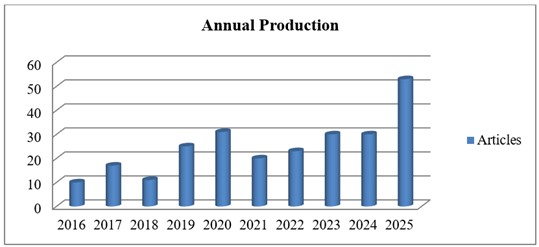
Figure 1 Annual Production of Documents (R Studio)
Figure 1 shows the annual publication of documents. From 2016 to 2025, the production follows an uneven pattern where initially the publication was low but it soon gained a momentum with occasional decrease. The annual growth rate of document production is 20.36% as per the bibliometric information found from R studio. Growth in publication has occurred in 2019 (n = 25), 2020 (n = 31), 2023 (n = 30), 2024 (n = 30) and a huge leap can be seen in 2025 (n =53). This reflects a growing interest of researchers on studying the cultural aspect of displacement. In the 10 years, through the number of productions we can see that the cultural aspect of displacement has moved from a niche theme to a rather dominant and interdisciplinary topic.
Table 1
|
Table 1 Annual Citation of Documents (R Studio) |
|||
|
Year |
MeanTCperArt |
N |
MeanTCperYear |
|
2016 |
14.00 |
10 |
1.27 |
|
2017 |
13.71 |
17 |
1.37 |
|
2018 |
18.18 |
11 |
2.02 |
|
2019 |
10.72 |
25 |
1.34 |
|
2020 |
7.42 |
31 |
1.06 |
|
2021 |
4.60 |
20 |
0.77 |
|
2022 |
4.61 |
23 |
0.92 |
|
2023 |
4.00 |
30 |
1.00 |
|
2024 |
2.67 |
30 |
0.89 |
|
2025 |
0.32 |
53 |
0.16 |
The table shows the citation count of production received during the ten years. From 2016 to 2018, despite the limited number of document, the articles managed to receive high impact yearly with the highest in 2018 (MeanTCperArt = 18.18, N = 11). Later, from 2019 onwards, citation count saw a downward move despite number production remaining relatively high. Citation tag which means that newer publication getting less citation for being published recently and database access and bias can be one of reasons for lower number of citations; however, this is pure speculation on the authors part.
Table 2
|
Table 2 Top 10 Highly Cited Papers (R Studio) |
||||
|
Paper |
DOI |
TC |
TC
per Year |
Normalized
TC |
|
GAINZA
X, 2017, URBAN STUD |
10.1177/0042098016630507 |
66 |
6.60 |
4.82 |
|
VERSEY
H, 2019, INT J ENVIRON RES PUBLIC HEALTH |
10.3390/ijerph16234633 |
66 |
8.25 |
6.16 |
|
THOMPSON
C, 2016, J RURAL STUD |
10.1016/j.jrurstud.2016.03.008 |
60 |
5.45 |
4.29 |
|
DUTTA-BERGMAN
MJ, 2018, HEALTH COMMUN |
10.1080/10410236.2017.1292576 |
54 |
6.00 |
2.97 |
|
HORGAN
M, 2018, INT J URBAN REG RES |
10.1111/1468-2427.12645 |
49 |
5.44 |
2.69 |
|
GREENE
MC, 2017, CONFL HEALTH |
10.1186/s13031-017-0123-z |
45 |
4.50 |
3.28 |
|
DUTT
S, 2019, QUAT INT |
10.1016/j.quaint.2018.11.012 |
37 |
4.63 |
3.45 |
|
ROANE
JT, 2022, J RURAL STUD |
10.1016/j.jrurstud.2022.06.006 |
35 |
7.00 |
7.59 |
|
KÄKELÄ
E, 2020, EUR J SOC WORK |
10.1080/13691457.2019.1693337 |
32 |
4.57 |
4.31 |
|
TREVIÑO
M, 2021, OCEAN COAST MANAGE |
10.1016/j.ocecoaman.2021.105688 |
31 |
5.17 |
6.74 |
Table 2 presents the list of top ten highest cited documents published in high quality from the year 2016 to 2025. Gainza (2017) published in Urban Studies talks about gentrification due to creative industry and artistic and aesthetic shops and its cultural impact received the highest citation which is 66 total citations with the total citation per year being 6.60. The second position is held by Versey (2019) published in International Journal of Environmental Research and Public Health which also talks about gentrification led changes which affected the cultural landscape and makes the existing elderly people feel alienated. This paper also received 66 total citations with the total citation per year being 8.25. While the total score is similar for both the first and second paper, the total citation per year is higher for Versey. However, since, Gainza was published in 2017, it can be assumed as the foundation paper for such topics; hence, due to the publication year it was given the first spot. Versey though has gathered higher per year citation, it can be said to have followed the foundation and came out to be appreciated more. Thompson et al (2016) published in the Journal of Rural Studies follows them at the third place with a total citation of 60 and the total citation per year being 5.45. This paper also talks about gentrification and how it slowly erases the culture for which the wealthy class people moved to the area.
3.2. Authors, Affiliations and Sources
Figure 2 displays the list of top ten most relevant authors who have contributed significantly on the topic discussing culture in the context of displacement. The chart shows that most of the authors (9 out of 10) have contributed two works each which shows that there is no single dominant researcher in this field yet and contributions are relatively spread among multiple researchers. This shows that contributions on the cultural aspect of displacement comes from various field of academia and involves collaboration leading to interdisciplinary works on the issue. The absence of a dominant researcher shows that the topic is still in a developing stage among researchers where they have approached the topic from various angles enriching the field. The issue of cultural aspect of displacement though draws researcher for interdisciplinary works giving us diverse approach to the issue, has a limited standalone approach.
Figure 2
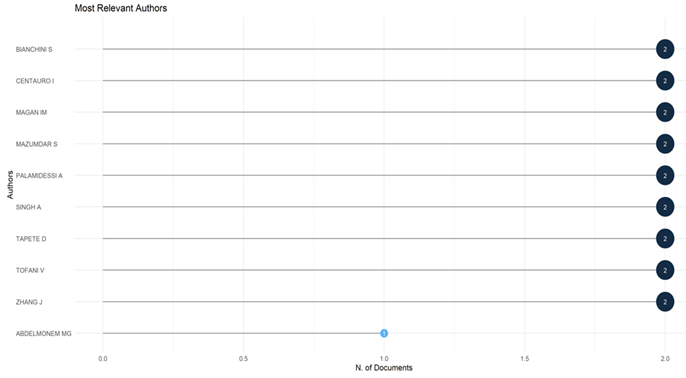
Figure 2 Most Relevant Authors (R Studio)
Figure 3
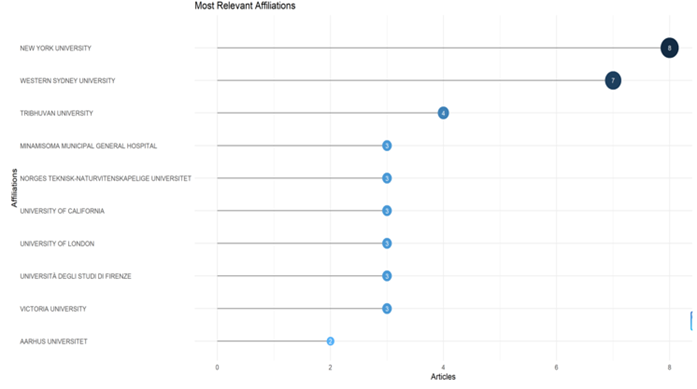
Figure 3 Most Relevant Affiliations (R Studio)
Figure 3 presents us the chart of top ten most relevant affiliations. These are the institutions who have contributed the most amount of work on the topic of cultural aspect of displacement. From the chart we can see that the New York University is the highest publishing affiliation with 8 articles followed by the Western Sydney University with 7 articles making it the second highest. These two universities are the leading contributors on the topic. The University of California in the 6th place and the Victoria University in the 9th place each with 3 articles indicates that the USA and Australian region are dominating the academic space when it comes to the discussion of culture with respect to displacement. Following them in the third place is the Tribhuvan University of Nepal with 4 articles. Institutes from Japan (Minamisoma Municipal General Hospital), Norway (Norges Teknisk-Naturvitenskapelige Universitet), UK (University of London) and Italy (Universita Degli Studi di Firenze) have contribute 3 articles each keeping the contribution even and the Aarhus University from Denmark contributed 2 article. This chart reflects that contribution on the topic remains geographically spread majorly across Europe suggesting the discussion on the cultural aspect of displacement remains a globally acknowledge topic.
Figure 4
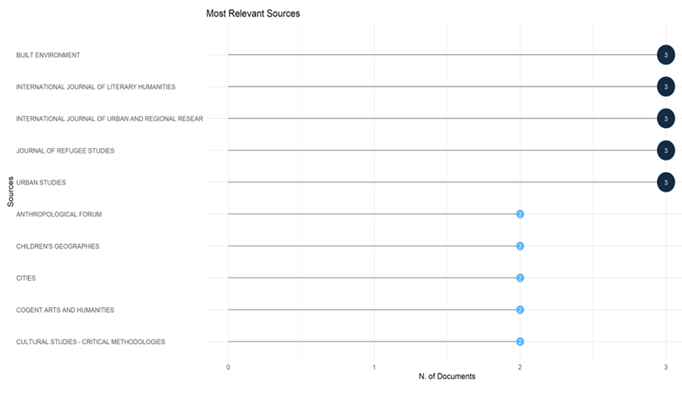
Figure 4 Most Relevant Sources (R Studio)
Figure 4 presents us the chart of the academic journals that have given us the most number of works that discusses the cultural aspect of displacement. The Built Environment, International Journal of Literary Humanities, International Journal of Urban and Regional Research, Journal of Refugee Studies and Urban Studies journal have taken the top five spots (sequentially) with three documents each. The journals in the rest five spots have contributed two documents each keeping the contribution even. This shows that no single source has turned out to be dominant in producing documents on the topic and contribution remains low but even. The chart shows that the cultural aspect of displacement is a topic not limited to a single discipline but rather includes refugee studies, environmental science, arts and humanities, anthropology, childhood studies in relation to geographical issues and urban and regional studies. The topic is being researched from an interdisciplinary lens as we can see from the figure which states that the cultural aspect of displacement is being discussed in a broader setting rather than being limited to the preconceived theoretical discipline.
3.3. Themes, Collaborations and Network
The Figure 5 is the thematic map of the dataset. This map helps understand relevant and developed themes relating to the cultural aspect of displacement. The map is divided into four parts or quadrants. These quadrants are known as the motor themes (themes that are well developed and central to the topic), basic themes (themes that are central to the topic but less developed), niche themes (themes that are developed but to central) and emerging or declining themes (themes that are not central and weakly developed). The horizontal line dividing the quadrant is the centrality axis which shows relevancy of a theme where themes on the right are very important whereas themes on the left and less connected. The vertical line is the density axis which shows development of a theme where themes on the top are highly developed whereas themes on the bottom are less developed. From the map one can see that themes are concentrated at two places only; one at the motor theme quadrant (right of centrality axis and top of density axis) and second at the emerging or decline theme quadrant (left of centrality axis and bottom of density axis). Three clusters fall in the motor quadrant ‘human, refugee, article’, ‘gentrification, neighbourhood, united states’ and ‘gender, cultural relations, art’. This shows that art, cultural relation, gender, human centred and urban transformation topics are currently the most developed topics in the field. The emerging or declining quadrant theme has three clusters; one, ‘culture displacement, migration’, two, ‘cultural identity, Australia, cultural history’ and three ‘post displacement regions’. Research on these themes is limited; thus, these themes are either emerging or declining. Currently refugee and gentrification based research is the trend and purely cultural based research is either emerging or in decline but they definitely need further development.
Figure 5
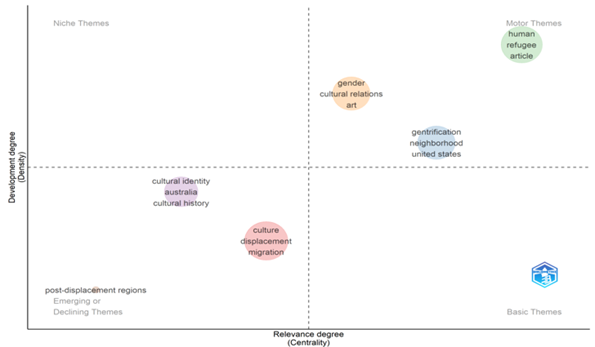
Figure 5 Thematic Map (R Studio)
Figure 6 represents the corresponding author’s country which also shows the collaboration pattern of researchers from various countries. Here, the length in the bar shows its production size which means the lengthier the size (be it red or blue), the higher is the countries production of document. The blue bars shows production of document from a single country (SCP- Single Country Production) while the red ones show multiple country publication (MCP) where authors from different countries collaborate together. From the length of the bar we can see that USA and UK have the largest (SCP = 43, MCP = 7) and second largest (SCP = 21, MCP = 1) bar which means that they are the leading countries in international collaboration. India follows them at third place; however, the collaboration pattern is restricted within the country. From the graph, we can see that North America and Europe are dominating the international collaboration field with few collaboration with the Global South and Asia (Australia, Colombia, and Iran). This shows that the topic has gathered international interest with the significant interest growing in the west. Table 3 presents a detailed list of top ten corresponding author’s country discussing collaborations practice of both single country and multiple country collaboration.
Figure 6
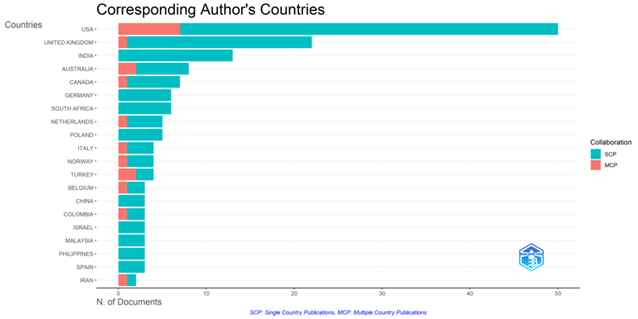
Figure 6 Corresponding Author's Countries (R Studio)
Table 3
|
Table 3 Country Collaboration (R Studio) |
|||||
|
Country |
Articles |
Articles % |
SCP |
MCP |
MCP % |
|
USA |
50 |
20 |
43 |
7 |
14 |
|
UNITED KINGDOM |
22 |
8.8 |
21 |
1 |
4.5 |
|
INDIA |
13 |
5.2 |
13 |
0 |
0 |
|
AUSTRALIA |
8 |
3.2 |
6 |
2 |
25 |
|
CANADA |
7 |
2.8 |
6 |
1 |
14.3 |
|
GERMANY |
6 |
2.4 |
6 |
0 |
0 |
|
SOUTH AFRICA |
6 |
2.4 |
6 |
0 |
0 |
|
NETHERLANDS |
5 |
2 |
4 |
1 |
20 |
|
POLAND |
5 |
2 |
5 |
0 |
0 |
|
ITALY |
4 |
1.6 |
3 |
1 |
25 |
The Figure 7 shows the keyword co-occurrence network which basically displays how different keywords are related to the studies on the topic of cultural aspect of displacement. Here, the bigger the node, the frequent the keyword appears in the studies and the lines connecting keywords shows that the terms (lines connecting two nodes) are connectively discussed. Displacement and culture keywords are two of the biggest nodes in the network which shows they are the central topics in the research area. They are the part of the red cluster which discusses the central theme which is the cultural aspect of displacement. One can see multiple lines connecting them with other keywords within and beyond the cluster such as cultural heritage, cultural geography, cultural relation, indigenous population, forced migration, identity, trauma, art, religion, gender, women status, livelihood, diaspora, mobility, exile, ethnography, questionnaire survey, literature, refugee, psychology, resettlement, etc. The keywords in the red cluster are themes that are discussed majorly with the central topic and their individual node sizes though are smaller than the central topics show the frequency in which these keywords are connectively discussed together. Researchers have focused on discussing the cultural aspect of displacement relating it to indigenous population, gender, identity, heritage, trauma, religion, livelihood, etc. The green cluster discusses human centred themes like migration, refugee, humans, psychology, mental health, male and female, cultural factor etc. These keywords relate to the cultural aspect of displacement from social science and psychological perspective making the discussion interdisciplinary in nature. Here, migration, refugee and human are the keywords with the biggest nodes which as you can see joins with red and blue clusters as well. This means that these keywords are active discussed connectively with the central and urban transformation themes. The keywords mentioned in the blue cluster discuss relocation and urban transformation. The keyword gentrification has the biggest node here, which tells that urban transformation is another most discussed topic. One can see multiple lines connecting gentrification within and outside the cluster which shows that the term is also discussed along with central and human centred themes. Besides gentrification, the cluster also has keywords like cultural identity, resettlement, neighbourhood, Australia and United States. This shows that researchers discuss topics like identity, resettlement and neighbourhood transformation more in these countries. This keyword co-occurrence network displayed that researchers are actively discussing the cultural aspect of displacement in various settings. They are not studying just the core concept of culture with respect to displacement they are also studying the cultural aspect of displacement from the lens of various disciplines combining social, psychological, urban studies in the process.
Figure 7
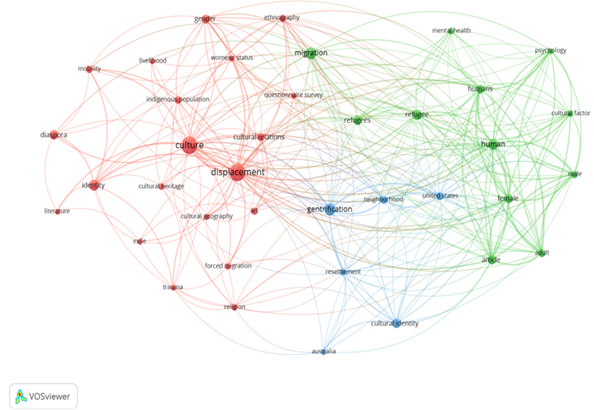
Figure 7 Keyword Co-Occurrence Network (VOS Viewer)
[Type of analysis: Co-occurrence, Unit of analysis: All keywords, Counting method: Full counting; Minimum number of occurrences of a keyword: 5; Out of 1610 keywords, 38 meet the threshold. (Network Visualization)]
3.4. Review of Literatures
Table 4
|
Table 4 This Table Presents the Summary of the Most Globally Cited Documents From the Year 2016 Till 2025 |
||||
|
Sl. no. |
Author |
Title |
Type
for Displacement |
Short
Summary |
|
1 |
Gainza
(2017) |
Culture-led neighbourhood transformations beyond
the revitalisation/ gentrification dichotomy. |
Gentrification |
Using culture in the form of creative industry
and art galleries, the image of a neighborhood is being tried to be
rewritten. This culture led approach in an attempt to reshape the old
existing culture in neighborhood has aided in the gentrification. Long before
people actually moved, due to the new culture the place stopped feeling
homely as art studios, cafes, etc. took over local shops and rents and
housing prices went up making in unaffordable and disrupting the local
community. In such a case, culture is being used as a weapon to erase and
rewrite the past and existing local culture and lifestyle. |
|
2 |
Versey
et al. (2019) |
Beyond housing: Perceptions of indirect
displacement, displacement risk, and aging precarity as challenges to aging
in place in gentrifying cities. |
Gentrification |
Gentrification leads to the influx of other
people into a stable community, changing the community to a whole different
level. The loss of cultural landscapes and the damage to the social fabric
affects the existing people particularly the older generation in several ways
which makes them feel alienated. The very act of making the place better by
erasing what their forefathers left would leave the future generations unable
to associate with their past. The change in the social and cultural fabric in
the neighborhood brings out a sense of being pushed out without actually
moving. |
|
3 |
Thompson
et al. (2016) |
Vulnerability of fishing communities undergoing
gentrification. |
Gentrification |
The shift of wealthy families towards fishing
villages to enjoy the culture instead of boosting the local tourism has led
to gentrification. This movement led to rise in the local property taxes and
value of houses making it difficult for the actual fishing community to
continue residing. They are thus forced to move due to their inability to
afford the present condition. This led to the slow erosion of the local
culture, identity and the distinct way of life. |
|
4 |
Dutta
et al. (2018) |
Health meanings among foreign domestic workers in
Singapore: A culture-centered approach. |
Economic |
The domestic migrants in a foreign country are
often from the poor or displaced families who come out in search of economic
opportunities and eventually end up as a cheap source of labour. It was seen
that things that were culturally staple to the domestic migrants were never
given any consideration by their employers eventually erasing their distinct
identity slowly. Despite the existence of laws that puts a stop to
exploitation and ensures these people are respected, culturally significant
matters that would not create any inconvenience to the employers get
repeatedly rejected from being expressed. This affects the migrants
psychologically making them assume that they are no less than a work mule,
further silencing them from expressing their opinion. |
|
5 |
Horgan
(2018) |
Territorial stigmatization and territorial
destigmatization: A cultural sociology of symbolic strategy in the
gentrification of Parkdale (Toronto). |
Gentrification |
The single room occupancy area is territorially
stigmatized which resulted in the displacement of the vulnerable and
economically weaker groups. By stigmatizing, the area gets a poor reputation
and they are then rebranded to rectify the reputation, erasing the past and
local culture and creating gentrification. By doing this, they erased the
history of the people that made the community and place visible. |
|
6 |
Greene
et al. (2017) |
Addressing culture and context in humanitarian
response: Preparing desk reviews to inform mental health and psychosocial
support. |
Humanitarian
grounds |
While providing humanitarian aid, the local
culture is often ignored. The aid provided is usually designed according to
the western perspective which can further add to the psychological trauma
faced by people. Understanding the way people express pain and their local
idioms regarding mental issues is important when providing aid as otherwise
the aid would not of much effect. It is important for the aid providing
agency to have prior desk review to understand the local culture and practice
before engaging to ensure that their way of life is respected. |
|
7 |
Dutta
et al. (2018) |
Climate
variability and evolution of the Indus civilization. |
Environmental |
Displacement has been a part of the human
evolution since ages. During the Indus valley civilization we see
displacement due to disaster and loss of the people’s ability to continue
livelihood which led to them move towards the Ganges region. Back then for
the people, displacement besides being the loss of land and livelihood was a
means to survive. As they moved, their culture also started adapting to the
new settlement and evolving as well creating a shift in their identity. This
reflects that due to displacement, culture and identity gets rewritten. |
|
8 |
Roane
(2022) |
Black Ecologies, subaquatic life, and the Jim
Crow enclosure of the tidewater. |
Economic |
Black people were concentrated near the bay area
where they worked and lived together with water being a common source of
economic sustenance and the sense of togetherness among the people. When that
area was commercialized due to industrialization many were forced to become
laborers affecting their traditional practice. However, they still were able
to manage their way of life by singing songs and sharing stories ensuring
their community and culture survives. |
|
9 |
Käkelä
(2019) |
Narratives of power and powerlessness: Cultural
competence in social work with asylum seekers and refugees. |
Cross
border |
The people displaced across border find
themselves pinned to a stereotypic label regarding their culture which is the
host country’s perspective of them. It is important to keep in the mind the
distinct cultural aspect from the perspective of the refugees and asylum
seekers. Cultural awareness is essential when dealing with people with
distinct culture and religious practices and while providing assistance to
counter their sense of helplessness |
|
10 |
Trevino
and Murillo-Sandoval (2021) |
Uneven consequences: Gendered impacts of shrimp
aquaculture development on mangrove dependent communities. |
Economic |
For people dependent on mangrove forests, the
forest isn’t just a part of their life; it is also a part of their way of
living and identity. Women particularly, depend on the mangrove forest for
collecting food and aiding in economic sustenance. Now due to shrimp farms,
mangrove deforestation saw an increase and the women lost their livelihood
which has jeopardized their role in the community. People lost their
traditional livelihood and are forced to work as low paying laborers
affecting their economic condition and distinct traditional practice
altogether. |
4. CONCLUSION
In this work, we conducted a bibliometric analysis and a literature review on the cultural aspect of displacement using Scopus Database. Using ‘culture, cultural, displacement’ as search query keywords we received a series of documents relating to the topic. These documents went through a filtering process in the database and another round of scrutiny was conducted where after reading the abstracts, few documents were removed from the dataset and the final document count came out to be 250. Bibliometric analysis was conducted using the R Studio and VOS Viewer applications which also provided us with the list of top ten most cited literatures which were used for the literature review. The analysis showed us while the production regarding the topic has increased over the years, citation count has decreased. Contribution from authors remains even yet limited and same can be said about sources where no singular source came out as a dominant contributor to the topic. Geographically, publication and collaboration remains limited to USA, UK, Australia and few European countries with limited contributions from Asian, African and South American regions. Thematically, discussion is concentrated within human centred research and urban transformation. While culture is being discussed actively, it remains underdeveloped and is more or less discussed in an interdisciplinary setting and not as an independent theme. The review of literatures has also confirmed this thematic concentration. The results present a strong need to integrate culture as a core theme in displacement related studies and a need for thematic and geographically diverse approach in the production of research work relating to the same.
5. LIMITATIONS
This study has several limitations. First is that the analysis has relied on data from Scopus database which can excluded important document that could have been found in other databases and could have changed the output. Secondly, the search strategy was limited to terms like ‘culture, cultural, displacement’, which could have limited many works relevant to the topic. However, the search query keyword limitation was made for conceptual precision only. Thirdly, to generate dataset for the use of bibliometric analysis many filters were used which could have also limited us from accessing some of the most relevant documents related to the topic. Finally fourth, the final stage of filtering was based on reading the metadata which gave us limited information about the documents. Along with that, few documents were also excluded as it felt less relevant to the topic which is a personal bias. This approach could have also excluded relevant works that address the cultural aspect of displacement.
6. Declarations
Ethical considerations: We would like to extend our heartfelt gratitude to our institution for providing access to essential resources. We would also like to extend our acknowledgment to the previous researchers whose work provided a foundation for our study. We have given due recognition to the literatures wherever used abiding by the ethics of research.
Use of artificial intelligence (AI): The authors declare that no generative artificial intelligence (AI) tools were used in the preparation, analysis, or writing of this manuscript.
List of Abbreviations:
MCP: Multiple Country Publication
n: Numbers
NP: Number of Production
SCP: Single Country Publication
TC: Total Citation
UK: United Kingdom
USA: United States of America
VOS Viewer: Visualization of Similarities Viewer
CONFLICT OF INTERESTS
None.
ACKNOWLEDGMENTS
None.
REFERENCES
Abdullah, A. M. (2024). Investigating the Social and Cultural Consequences of the Power Plant Dam Construction Project in the Western Region of the Country (Examining the Lived Experience of the Residents of the Western Region of the Country from the Construction of the Sardasht Power Plant Dam). Geography (Regional Planning), 13(53), 120–136.
Abrampah, D. A. M., Apoh, W., Gavua, K., Freeman, M. H., Amartey, S., Tei-Mensah, D. A., et al. (2015). Assessing the Bui Dam Salvage Archaeology Project and Cultural Heritage of Impact Communities. Ethnographisch-Archaeologische Zeitschrift, 56(1–2), 275–294. https://doi.org/10.54799/MOYI4890
Baburaj, A., and Pannikot, D. (2023). Mnemonic Communities of Displaced Indigenous People: Northeast Indian Narratives of Cultural Memory. Journal of Narrative and Language Studies, 11(23), 272–287. https://doi.org/10.59045/nalans.2023.32
Bemak, F., and Chung, R. C. (2017). Refugee Trauma: Culturally Responsive Counseling Interventions. Journal of Counseling and Development, 95(3), 299–308. https://doi.org/10.1002/jcad.12144
Bisht, T. C. (2009). Development-Induced Displacement and Women: The Case of the Tehri Dam, India. The Asia Pacific Journal of Anthropology, 10(4), 301–317. https://doi.org/10.1080/14442210903271312
Czajkowski, M., Meade, N., Seroa da Motta, R., Ortiz, R., Welsh, M., and Blanc, G. (2023). Estimating Environmental and Cultural/Heritage Damages of a Tailings Dam Failure: The Case of the Fundão Dam in Brazil. Journal of Environmental Economics and Management, 121, Article 102849. https://doi.org/10.1016/j.jeem.2023.102849
Hanna, P., Vanclay, F., Langdon, E. J., and Arts, J. (2016). The Importance of Cultural Aspects in Impact Assessment and Project Development: Reflections from a Case Study of a Hydroelectric Dam in Brazil. Impact Assessment and Project Appraisal, 34(4), 306–318. https://doi.org/10.1080/14615517.2016.1184501
Joseph, A., and Beegom, B. R. K. (2017). Cultural Genocide Among Tribals: An Excrescence of Development Induced Displacement. Heritage: Journal of Multidisciplinary Studies in Archaeology, 5, 620–630.
Kumar, G., and Devi, A. (2025). Cultural Erosion and Identity Crisis: Impact of Forced Displacement on Indigenous Communities in Himachal Pradesh’s Dam Projects. International Journal of Social Science Research, 2(3), 1–11. https://doi.org/10.70558/IJSSR.2025.v2.i3.30410
Lawrence, M. P. (2005/2006). Damming Rivers, Damning Cultures. American Indian Law Review, 30(1), 247–289. https://doi.org/10.2307/20070754
Lin, P. S., and Lin, W. C. (2020). Rebuilding Relocated Tribal Communities Better Via Culture: Livelihood and Social Resilience for Disaster Risk Reduction. Sustainability, 12(11), Article 4538. https://doi.org/10.3390/su12114538
Mafi, F., and Shaikh Baikloo Islam, B. (2024). Cultural Heritage as a Social Phenomenon: A New Approach to Historical-Cultural Studies of Dam Construction Projects. Ancient Iran Studies, 3(10), 109–125.
Mandishekwa, R., and Mutenheri, E. (2020). Mining-Induced Displacement and Resettlement: An Analytical Review. Ghana Journal of Development Studies, 17(1), 114–140. https://doi.org/10.4314/gjds.v17i1.6
Marchetti, N., Curci, A., Gatto, M. C., Nicolini, S., Mühl, S., et al. (2019). A Multi-Scalar Approach for Assessing the Impact of Dams on the Cultural Heritage in the Middle East and North Africa. Journal of Cultural Heritage, 37, 17–28. https://doi.org/10.1016/j.culher.2018.10.007
Mohamed, D. (2024). Development Projects, Displacement, and Their Impact on the Deterioration of Indigenous Language and Culture: The Role of Women in Preserving the Nubian Language (Doctoral Dissertation, University of the Incarnate Word).
Mossavi, T., Fayazi, M., and Mottaki, Z. (2025). Cultural Integration of the Built Environment: The Case of Displaced Pakistanis on the Outskirts of Tehran. Habitat International, 160, Article 103407. https://doi.org/10.1016/j.habitatint.2025.103407
Raina, V. (2000). Why People Oppose Dams: Environment and Culture in Subsistence Economies. Inter-Asia Cultural Studies, 1(1), 145–161. https://doi.org/10.1080/146493700361051
Rahmani, M., Muzwagi, A., and Pumariega, A. J. (2022). Cultural Factors in Disaster Response Among Diverse Children and Youth Around the World. Current Psychiatry Reports, 24(9), 481–491. https://doi.org/10.1007/s11920-022-01356-x
Rao, K. K. (2016). Cultural Ecology in the Erosion of Local Knowledge: Folklore Among Konda Reddis of South India. Asian Anthropology, 15(1), 21–35. https://doi.org/10.1080/1683478X.2015.1103941
Reddy, P. M. K., and Viswanath, V. (2025). Cultural Displacement in Amulya Malladi’s Novel: The Mango Season. Literary Herald, 3(2).
Singer, J., Hoang, H., and Ochiai, C. (2015). Post-Displacement Community Resilience: Considering the Contribution of Indigenous Skills and Cultural Capital Among Ethnic Minority Vietnamese. Asia Pacific Viewpoint, 56(2), 208–222. https://doi.org/10.1111/apv.12057
Upadhyay, N. K., and Rathee, M. (2020). Protection of Cultural Property Under International Humanitarian Law: Emerging Trends. Revista de Direito Internacional, 17(3), 576–598. https://doi.org/10.5102/rdi.v17i3.7076
Wijesundara, C. J., and Dayawansa, N. D. K. (2011). Construction of Large Dams and Their Impact on Cultural Landscape: A Study in Victoria Reservoir and the Surrounding Area. Tropical Agricultural Research, 22(1), 211–219. https://doi.org/10.4038/tar.v22i2.2830
Yousaf, W., and Naqvi, S. A. (2025). Cultural Displacement and Futuristic Allegory: Analyzing the Shifting Cultural Landscapes and Fable-Like Narrative of The Forever War by Joe Haldeman. Contemporary Journal of Social Science Review, 3(2).
|
|
 This work is licensed under a: Creative Commons Attribution 4.0 International License
© ShodhKosh 2026. All Rights Reserved.