ShodhKosh: Journal of Visual and Performing ArtsISSN (Online): 2582-7472
|
|
An Interaction-Experience-Driven Design Framework for the Digital Regeneration of Craft Intangible Cultural Heritage
Xueqing Shi 1
 ,
Worawith Sangkatip 2
,
Worawith Sangkatip 2 , Suwich Tirakoat 3
1 Department
of New Media, Faculty of Informatics, Mahasarakham
University, Maha Sarakham Province 44150, Thailand
2 Department
of New Media, Faculty of Informatics, Mahasarakham
University, Maha Sarakham Province 44150, Thailand
3
Department of
New Media, Faculty of Informatics, Mahasarakham
University, Maha Sarakham Province 44150, Thailand
|
|
|
ABSTRACT |
|
|
Current
digital practices regarding Intangible Cultural Heritage (ICH) often
emphasize visual representation and static documentation, frequently
neglecting the experiential interaction essential to craft-based traditions.
This study aims to overcome this "display-centric" limitation by
proposing a digital regeneration framework centered on interaction experience
and guided by Design Thinking. Utilizing a Research through Design (RTD)
methodology, the research incorporates an experiential probe of stone carving
craftsmanship to identify core characteristics: embodiment, procedurally, and
symbolization. These insights were synthesized into a three-layer structural
model comprising: (1) a Cultural Translation Layer for data acquisition of
tacit knowledge; (2) an Interactive Experience Construction Layer for sensory
and procedural mediation; and (3) a User Participation and Feedback Layer for
cultural meaning-making. Findings demonstrate that shifting the focus from
"object digitization" to "process-oriented participation"
enables the effective transfer of embodied skills and "muscle
memory" that passive media cannot capture. This framework provides a
transferable, technology-independent methodological guide for designers and
heritage practitioners, ensuring that the intangible spirit of craftsmanship
is experientially sustained in the digital age. |
|||
|
Received 28 January 2026 Accepted 29 February 2026 Published 30 April 2026 Corresponding Author Suwich Tirakoat, suwich.t@msu.ac.th DOI 10.29121/shodhkosh.v7.i1.2026.7294 Funding: This research
received no specific grant from any funding agency in the public, commercial,
or not-for-profit sectors. Copyright: © 2026 The
Author(s). This work is licensed under a Creative Commons
Attribution 4.0 International License. With the
license CC-BY, authors retain the copyright, allowing anyone to download,
reuse, re-print, modify, distribute, and/or copy their contribution. The work
must be properly attributed to its author.
|
|||
|
Keywords: Craft Intangible Cultural Heritage, Digital
Regeneration, Interactive Experience, Embodied Knowledge, Design Thinking;
Stone Carving |
|||



1. INTRODUCTION
Against the backdrop of the rapid development of digitalization and modern technologies, the protection and inheritance of ICH have attracted growing attention from academia and relevant institutions. As the challenges facing traditional heritage transmission models continue to intensify, digital media has emerged as a pivotal approach to advancing the digital regeneration and activation of ICH Durak et al. (2016). Digital practices have significantly enhanced the visibility and accessibility of cultural expressions, providing crucial support for cultural documentation, archiving, and the promotion of public engagement Jeffrey et al. (2020), UNESCO (2003). Yet the effectiveness of digital initiatives varies considerably across different ICH categories, particularly prominent among those rooted in artisanal and craft-based practices.
The fundamental characteristics of craft-based ICH lie in procedural knowledge, embodied skills, and material engagement formed through long-term practice. Unlike textual or performative heritage, craft transmission relies on tacit knowledge embedded in physical movements, sensory perception, and hands-on participation Malafouris (2019), Polanyi (1966). This processual and embodied nature poses persistent challenges to digital regeneration. Existing digital heritage practices often prioritize visual presentation and information completeness, leading to static or object-oriented documentation methods that fail to fully reflect the experiential structure and dynamic processes of craft practices Giaccardi (2012).
Although digital technologies are increasingly applied in the documentation and dissemination of craft-based ICH, existing research and practices remain largely constrained by an instrumental understanding of "interaction." Interaction is frequently relegated to a functional tool for navigation or information acquisition—a perspective that aligns with the "interaction as transmission" paradigm identified by Hornbæk and Oulasvirta (2017). However, this study argues that such an instrumental view overlooks the potential of interaction as a mediational framework for constructing processual craft experiences. This theoretical limitation reflects a lack of Design Thinking methodologies to guide technological mediation in digital heritage. Consequently, core experiential dimensions—including embodied actions and procedural knowledge—are often marginalized, hindering the effectiveness of digital systems in supporting meaningful craft transmission and cultural sustainability. By re-examining technological applications through Design Thinking, digital systems can enable the effective transfer of procedural knowledge and embodied skills, rather than merely documenting finished artifacts.
To address the research gap, this study proposes a Design Thinking-centered approach for the digital regeneration of craft-based ICH. Rather than treating digital technologies as neutral tools for cultural representation or dissemination, this study positions interaction design as a mediational framework through which craft knowledge is transformed, constructed, and experientially actualized. From this perspective, digital systems are not only visual presentation platforms but also defined as designed experiential contexts that can support in-depth engagement with craft processes, embodied skills, and procedural understanding. By highlighting the core value of design methodologies in digital technology applications, this study aims to clarify how interaction design can facilitate the transmission and inheritance of craft skills—with stone carving craftsmanship as a specific case for empirical analysis—while ensuring the method is scalable to a broader range of craft-based ICH practices. This research pathway lays the foundation for constructing an interaction experience-driven design framework, which is developed through a qualitative, design-based research analysis process Koskinen et al. (2011), McKenney and Reeves (2019).
2. LITERATURE REVIEW
2.1. From Documentation to Regeneration: Conceptualizing Digital ICH
P Against the backdrop of accelerating globalization, ICH has become a key concern within cultural studies and design research. Unlike tangible heritage, ICH consists of practice-based knowledge systems that are continuously reconstituted through embodied action. While UNESCO (2003) establishes the foundational policy context for ICH, this study further grounds its embodied nature in Material Engagement Theory Malafouris (2013) and contemporary craft cognition Nimkulrat and Matthews (2022), which argue that heritage knowledge is performative and situated. Over the past several decades, digital technologies have evolved from tools for static documentation and virtual display Kalay et al. (2008) toward complex platforms for participatory engagement Giaccardi (2012), Lombardo and Damiano (2012).
This study establishes Digital Regeneration as its core theoretical framework to clarify its conceptual boundaries in relation to conventional digitization. Specifically, while digitization focuses on technical conversion and digital representation emphasizes storage in virtual museums, Digital Regeneration—as synthesized in this research—draws upon the "regenerative" social perspective of Logan et al. (2015) and the "interaction materiality" of Wiberg (2018). It posits that digital heritage should not be viewed as a static assemblage of records, but as a continuously evolving social and interactive process. By adopting this lens, the study shifts the design focus from the preservation of finished artifacts to the mediation of the living process, providing a stabilized foundation for interactive experience design in the heritage context.
Building on this perspective, this study defines Digital Regeneration as an interpretive and design-oriented digital practice process, in which digital systems actively support the continuity of cultural practices, the production of cultural meaning, and the intergenerational transmission of embodied knowledge. This conceptualization is particularly critical for craft-based ICH, as such practices are deeply grounded in procedural knowledge, contextual understanding, and sustained bodily engagement—dimensions that cannot be effectively sustained through modes of documentation or display alone Giaccardi (2012), Ingold (2013).
2.2. Current Practices and Paradoxes in Digital ICH
Digital media technologies—such as virtual reality (VR), augmented reality (AR), and interactive 3D environments—have been widely employed in cultural heritage contexts to enhance accessibility, interpretation, and public engagement. In museums and heritage institutions, these technologies are commonly used to reconstruct historical environments, visualize artifacts, and create immersive narrative experiences Bekele et al. (2018), Hornecker and Stifter (2006), Sylaiou et al. (2010).
In the domain of craft- and skill-based heritage, digital media applications have demonstrated particular value in visualizing complex processes and making otherwise inaccessible practices observable. VR simulations, interactive videos, and digital reconstructions are frequently used to demonstrate craft procedures, tool usage, and production sequences, thereby supporting educational and interpretive goals Champion (2021). These approaches have contributed to broader public awareness and appreciation of traditional craftsmanship.
However, existing digital heritage applications tend to prioritize visual immersion and representational clarity over experiential engagement with skill acquisition. While such systems often allow users to observe or navigate craft processes, they typically provide limited opportunities for active participation, procedural experimentation, or embodied interaction. As a result, these applications frequently function as illustrative tools rather than as environments that support the development of craft competence or procedural understanding. Roussou and Katifori (2021) observe that this tendency toward visually oriented interaction constrains deeper experiential engagement in heritage interaction studies, reflecting a broader methodological gap in which technological innovation often advances more rapidly than the development of design frameworks that meaningfully support experiential learning.
2.3. Sensory Perception, Embodiment, and Experiential Knowledge in Craft Practices
Research across philosophy, anthropology, and design studies emphasizes that craft knowledge is fundamentally experiential, embodied, and often tacit. This study builds on Polanyi (1966) foundational notion of tacit knowledge, defining it as the extent to which skilled action exceeds explicit verbalization, particularly in practices acquired through hands-on engagement. In craft contexts, knowledge emerges through bodily movement, sensory perception, and sustained interaction with materials.
Anthropological perspectives further conceptualize making as a process of continuous engagement between practitioners, tools, and environments. Ingold (2013) argues that skills are developed through attentive involvement with material processes rather than through the execution of predefined instructions, while Malafouris (2013) demonstrates how material engagement actively shapes cognition. From this perspective, perception and action are inseparable, and meaning arises through situated practice.
Within interaction design and human–computer interaction research, embodiment has similarly been recognized as central to understanding how people engage with digital systems. Dourish (2001) frames interaction as grounded in bodily activity embedded within social and material contexts, challenging purely representational models of interaction. More recently, Nimkulrat (2020a) has shown how crafting generates experiential knowledge that resists symbolic abstraction, underscoring the need for design approaches that engage directly with sensory and embodied dimensions. These insights suggest that digital heritage systems must move beyond visual representation to address how interaction structures experiential conditions for learning and understanding craft practices.
2.4. Critical Reflections on Digital Heritage Projects: Near-Successes and Methodological Limitations
Although many digital heritage projects demonstrate technical sophistication and immersive qualities, critical assessments reveal recurring methodological limitations, particularly in relation to skill-based engagement. These limitations have been consistently reported across immersive heritage systems, as evidenced in recent critical analyses by Roussou and Katifori (2021) and Polanyi (1966) inherent in the practice. This study characterizes such initiatives as "near-successes": they effectively visualize cultural content and attract user interest yet provide limited support for experiential understanding or procedural learning.
In such projects, immersive technologies are often employed to enhance visual realism or narrative presentation, while the underlying logic of craft practice remains insufficiently articulated through interaction. Users may be able to observe highly detailed representations of tools and workflows yet are rarely afforded opportunities to engage with the procedural logic or embodied actions that characterize real-world craft learning. Consequently, interaction remains largely observational rather than participatory, a limitation highlighted in contemporary heritage interaction studies Roussou and Katifori (2021) as a failure to move beyond the "display-centric" paradigm.
These observations indicate that technological advancement alone does not ensure meaningful cultural engagement. As Economou (2015) argues, the effectiveness of digital heritage initiatives depends on the interpretive and design frameworks that shape user experience. This analysis further suggests that without explicit methodological attention to interaction as a mediating process—a perspective grounded in the interaction paradigms articulated by Hornbæk and Oulasvirta (2017)—digital projects risk remaining at the level of representation rather than fostering experiential or skill-oriented engagement.
2.5. Synthesis and Identification of the Research Gap
Overall, the literature reveals a tension between the increasing technological sophistication of digital heritage systems and their limited capacity to support experiential and skill-based engagement with craft-based ICH. While substantial progress has been made in documenting and representing cultural practices, fewer studies have systematically addressed how digital interaction can support embodied understanding, procedural learning, and the transmission of craft skills.
Three interconnected gaps emerge from this review. First, digital heritage research often lacks design methodologies explicitly oriented toward experience and skill acquisition, resulting in technology-driven rather than design-driven solutions. Second, interaction is frequently relegated to a functional tool—a perspective aligning with the "interaction as transmission" paradigm—instead of being treated as a central mediating process through which cultural knowledge is structured and experienced Kaptelinin and Nardi (2006).
Addressing these gaps requires a Design Thinking-oriented approach that foregrounds interaction experience as a core analytical and generative element. This study responds to this need by proposing an interaction experience-driven design framework for the digital regeneration of craft-based ICH, developed through a qualitative, design-based analytical process Harrison et al. (2020), Koskinen et al. (2011).
3. RESEARCH OBJECTIVES
The primary goal of this research is to develop a systematic, experience-driven design framework for the digital regeneration of craft-based ICH. To achieve this goal, the study establishes the following specific research objectives:
1) To reconceptualize interaction as a meaning-generative and mediating mechanism in digital ICH regeneration, through an analytical examination of how interaction structures experiential engagement with craft practices.
2) To identify and abstract key experiential dimensions intrinsic to craft-based practices, including embodied action, sensory perception, and procedural cognition, and to translate these dimensions into analytically grounded elements relevant to interaction and experience design.
3) To construct a transferable, interaction experience–driven design framework that integrates heritage theory, experiential cognition, and interaction design logic, enabling the systematic organization of craft knowledge within digital regeneration contexts.
4) To contribute a methodological perspective to digital heritage research by formalizing a conceptually coherent framework that enables systematic reasoning about experiential dimensions in craft-based interactive heritage contexts.
4. RESEARCH METHODS
This study employs a qualitative, Research through Design (RtD) approach to develop a conceptual framework for the digital regeneration of craft-based ICH. Unlike purely empirical studies focused on system evaluation, this research prioritizes the synthesis of interdisciplinary theories and the iterative abstraction of design knowledge. By positioning design as a mode of inquiry, the study transforms dispersed craft practices and heritage theories into a structured, transferable design logic. The methodology is executed in three distinct phases.
4.1. Phase 1: Experiential Probe and Field Research
The first phase focused on the
"Discover" stage of Design Thinking, utilizing an experiential probe
to gather foundational data on craft-based ICH. Specifically, a participant
observation was conducted in a stone carving factory to record the kinetic
rhythms and procedural workflows of the craftsmen, ensuring the framework is
grounded in authentic embodied knowledge. By engaging directly with the
physical environment of the stone carving practice, this phase aimed to
identify the complex interplay between material resistance, tool mastery, and
the craftsman’s sensory feedback Polanyi
(1966). The qualitative data collected—including rhythmic strike intervals and
stage-based carving sequences—provided the empirical basis for defining the
core experiential characteristics of the craft. These field insights ensured
that the subsequent theoretical synthesis was not merely an abstract derivation
but a reflection of the performative essence of heritage practice.
4.2. Phase 2: Conceptual Ideation and Framework Construction
Drawing on the field insights
from Phase 1 and a systematic synthesis of HCI and heritage literature, this
phase follows the Design Thinking logic of ideation and structured synthesis.
It is crucial to clarify that the 'Prototyping' stage in this research refers
to the creation of a conceptual framework diagram rather than a functional
software system. This focus ensures the structural validity of the theoretical
model while avoiding misplaced expectations for empirical system testing McKenney
and Reeves (2019) . The objective of this stage was to transform abstract theoretical
dimensions—Sensory, Process, Cognitive, and Meaning—into a coherent design
logic. By positioning the "prototype" as a methodological blueprint,
this phase clarifies how dispersed cultural data can be systematically
re-encoded into digital affordances. This conceptual construction serves as a
stabilized foundation for the three-layer framework, ensuring that the
resulting model is both theoretically robust and practically applicable as a guide
for future digital regeneration projects.
4.3. Post Occupancy evaluation (POE)
The final phase focused on the
"Deliver" stage, where insights from the experiential probe and
theoretical dimensions were synthesized into a cohesive structure. This process
involved aligning the hierarchical needs of craft ICH with specific interaction
design affordances to form the three-layer model. To ensure the face validity
of the proposed framework, the structural logic was qualitatively reviewed
through expert consultations involving practitioners in Interaction Design and
ICH preservation Lombardo
and Damiano (2012). This evaluative step focused on assessing the framework's internal
consistency and its potential to bridge the gap between cultural theory and
digital practice. The feedback confirmed that the three-layer model effectively
accommodates the complexities of embodied craft knowledge, establishing it as a
robust conceptual foundation for future technical implementation. By
incorporating this expert-led refinement, the framework transitioned from a
preliminary hypothesis to a validated methodological guide, ensuring its
relevance and applicability across diverse intangible heritage contexts.
5. THE PROPOSED FRAMEWORK
5.1. Characteristics of Interactive Experience in Craft ICH
The digital regeneration of craft-based ICH requires a departure from static representation toward an experience-driven paradigm, reflecting the emphasis on living practices and transmission outlined in the UNESCO (2003). Convention. Based on the experiential probe conducted in the stone carving factory, three core characteristics were identified: embodiment, procedurality, and symbolization. These characteristics are not merely theoretical constructs but are deeply rooted in the physical reality of the craft.
For instance, in stone carving, embodiment is manifested in the craftsman’s rhythmic control of the chisel; procedurality is reflected in the rigid sequence of stages—from rough hewing to fine detailing Polanyi (1966); and symbolization is embedded in the cultural narratives that transform a piece of granite into a guardian lion. Recognizing these characteristics allows for the translation of tacit craft knowledge into structured interactive dimensions.
5.2. Dimensions of Interactive Experience: A Synergistic Flow
This study identifies four
interrelated dimensions that constitute the interactive experience of digital
craft: sensory perception, process interaction, cognitive engagement, and
meaning construction. Unlike traditional models that treat these as isolated
components, this research proposes that they form a synergistic feedback loop Wiberg
(2018). The arrows in Figure 1 denote the dynamic, non-linear transitions between sensory input and
cognitive construction.
Figure 1
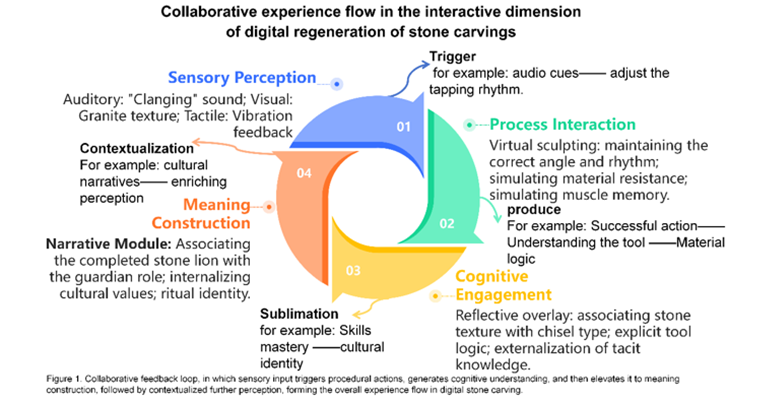
Figure 1 Synergistic Flow of Interactive Dimensions in the Digital Regeneration of Stone Carving
As demonstrated in the stone carving probe, these dimensions form a continuous flow (see Figure 1). For example, the sensory perception of the "clinking" sound triggers immediate adjustments in process interaction (the striking rhythm), fostering a cognitive engagement with material resistance and tool logic Giaccardi and Redström (2020). This fluid transition ensures that the meaning construction—the user’s internal recognition of cultural value—is grounded in the embodied reality of the practice Giaccardi (2012) rather than fragmented visual features. This synergistic flow provides the necessary "experiential data" for the construction of the multi-layered framework discussed in the following section.
To bridge the gap between
abstract theory and the "Experiential Probe" conducted in Phase 1,
Table 1 provides a systematic mapping of how specific stone carving practices
are translated into these interactive dimensions.
Table 1
|
Table 1 Analytical Mapping of Stone Carving ICH to the Proposed Framework |
|||
|
Framework Layer |
Core Dimension |
Analytical Mapping: Stone Carving Case |
Digital Translation Logic |
|
L1: Cultural Translation Layer |
Embodied Action |
The craftsman’s dynamic control over hammer
force and chisel angles during the carving process. |
Capturing "wrist flick" and
"striking rhythm" as quantifiable Motion Capture Data. |
|
Procedural Knowledge |
The irreversible sequence of carving: from
"Rough Hewing" (粗雕) to "Fine Detailing" (精雕). |
Mapping the craft workflow into a digital
State Machine for stage-locked interaction. |
|
|
L2: Interactive Experience Construction
Layer |
Sensory Perception |
The rhythmic "clinking" sound of
metal hitting stone and the tactile vibration felt through the palm. |
Reconstructing the carving texture using
high-fidelity audio and Haptic Feedback. |
|
Process Interaction |
Users simulate the carving action, where
success depends on maintaining the correct strike angle. |
Developing a Physics-based Dynamic Model to
simulate material resistance and loss. |
|
|
L3: User Participation & Feedback Layer |
Cognitive Engagement |
Understanding why specific grain structures
require distinct tool types (e.g., flat vs. pointed chisels). |
Transforming Tacit Knowledge into explicit
learning through real-time feedback and cues. |
|
Meaning Construction |
Users complete a digital "Stone
Lion," internalizing its ritual role as a guardian through the labor
process. |
Shifting from "Object
Digitization" to the appreciation of Laborious Ritual and cultural
identity. |
|
5.3. Framework Synthesis: The Layered Model for Digital Regeneration
This study integrates the
identified characteristics into a three-layered conceptual framework for
digital craft regeneration Lombardo
and Damiano (2012). As illustrated in Figure 2, these layers constitute an iterative, systemic cycle rather than
discrete functional units.
Figure 2
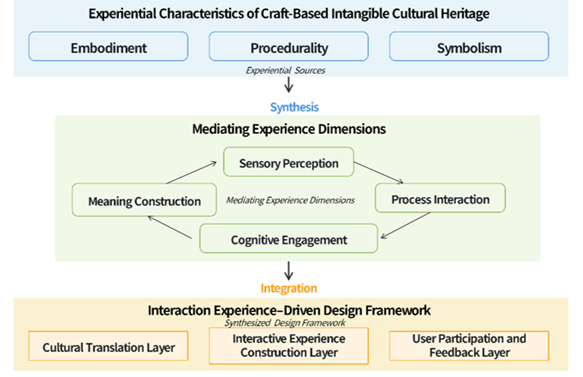
Figure 2 The Conceptual Framework for Digital
Regeneration of Craft-Based ICH
The arrows in Figure 2 illustrate a dynamic feedback loop in which sensory input guides
procedural action, fostering deeper cognitive and symbolic interpretation Malafouris (2013). This model ensures that digital regeneration remains a
process-oriented endeavor, with its components
detailed below.
5.3.1. LAYER 1: CULTURAL TRANSLATION LAYER (DATA ACQUISITION AND DECODING)
This foundation layer focuses on deconstructing the tacit, embodied knowledge of craft into transferable digital data. Specific Application in Stone Carving: In this research, this layer specifically captures the craftsman’s dynamic control data, transforming the tacit "wrist flick" and precisely timed striking intervals recorded in the stone carving factory into quantifiable motion profiles.
5.3.2. LAYER 2: INTERACTIVE EXPERIENCE CONSTRUCTION LAYER (MEDIATION AND SIMULATION)
This layer utilizes the translated data to reconstruct the craft’s sensory and procedural dimensions within a mediational environment Wiberg (2020). Specific Application in Stone Carving: For stone carving, this layer constructs a "Virtual Carving Interface" that utilizes haptic feedback to simulate the varying resistance of granite, requiring users to maintain correct tool angles—mimicking the physical constraints identified in the experiential probe.
5.3.3. LAYER 3: USER PARTICIPATION AND FEEDBACK LAYER (INTERPRETATION AND EVALUATION)
The top layer mediates the transition from skill emulation to cultural value interpretation Vannini (2021), assessing the user’s progression from "doing" to "understanding." Specific Application in Stone Carving: This layer assesses how the laborious process of virtually carving a stone lion fosters an emotional connection to its cultural role as a "guardian symbol," ensuring the user recognizes the heritage’s significance beyond its visual form.
5.4. Scope and Transferability of the Framework
The proposed framework scales across diverse craft-based ICH by transcending specific material or cultural constraints. Its adaptability stems from an orientation toward experiential architectures and design logic rather than technology-dependent implementations Koskinen et al. (2011). By prioritizing the universal necessity for a mediational interface to facilitate embodied learning, the framework functions as a versatile methodological conduit for digital heritage regeneration.
The reflective refinement through the stone carving probe serves as a critical empirical anchor, demonstrating that the framework’s efficacy extends far beyond lithic traditions. Deconstructing the high-resistance rhythms of stone carving provides a template for other tactile ICH. The logic of decoding embodied motor-rhythms into mediational feedback loops applies directly to crafts like textile weaving or ceramic throwing Malafouris (2013). In these domains, the sensory-motor loop functions as the primary vehicle for transmitting tacit cultural knowledge Polanyi (1966).
This modularity enables designers to navigate technological evolution while maintaining the "interpretive fidelity" Lombardo and Damiano (2012) essential for authentic transmission. By prioritizing the craft’s performative essence over objective digitization, this framework positions interaction design as an interdisciplinary bridge Giaccardi et al. (2019), ensuring the sustainable regeneration of ICH in a digital-first landscape.
6. DISCUSSIONS
This study re-interprets interaction as a meaning-generative mechanism for the digital regeneration of craft-based ICH. Beyond visual representation, this research demonstrates that interactive experience mediates the articulation of procedural knowledge and cultural significance. This aligns with the "interaction as mediation" paradigm Wiberg (2018), extending practice-oriented heritage theories (Smith, 2006) into the realm of digital design logic.
6.1. Case-based Reflect The Stone Carving Probe
Reflecting on the application of the three-layer framework to the Stone Carving case reveals significant advantages in knowledge transmission. Traditional digital documentation often reduces stone carving to a visual archive, neglecting the "tacit knowledge" Polanyi (1966) inherent in the practice. By transmitting rhythmic kinetic patterns through the Embodied Interaction layer, this framework allows users to access the craftsman's "muscle memory" in a way that passive media, such as video, cannot. The challenge, however, lies in the "fidelity of resistance"—recreating the physical struggle between chisel and granite. This struggle facilitates a deeper connection to the craft. As Nimkulrat (2020b) suggests, realizing that material removal requires specific angles and force transcends technical skill, fostering a profound appreciation of the laborious ritual inherent in the heritage.
6.2. Deepening Meaning-Making the Traditional Documentation
Compared to traditional Digital Heritage systems that prioritize "aesthetic success" and static display, this framework enables a more structured meaning-making process. While previous research often resulted in "near-successes" that looked visually accurate but lacked procedural depth, the proposed three-layered logic ensures that user engagement is cumulative. Integrating Lombardo and Damiano (2012), framework ensures the digital stone lion is perceived as a vessel of cultural guardianship rather than a mere 3D asset. This shifts the focus from "observing the object" to "experiencing the culture"Giaccardi (2012) , directly fulfilling the core objectives of ICH safeguarding.
6.3. Methodological and Practical Implications
Methodologically, this research validates a qualitative, design-based approach for framework construction. By prioritizing analytical abstraction, this study distills theoretical insights into transferable design knowledge McKenney and Reeves (2019). The framework’s technology-independent nature ensures adaptability across evolving platforms, while its conceptual modularity facilitates sustainable heritage regeneration. While focused on synthesis, future research should empirically validate how the "embodied interaction layer" affects skill transmission Skoble (2022).
7. CONCLUSION
This study establishes an experience-driven framework for digital ICH regeneration, shifting the paradigm from static documentation to procedural participation UNESCO (2003). By formalizing sensory-motor loops into design logic, the research demonstrates how interactive mediation systematically aligns with the performative essence of traditional crafts Smith (2006).
The primary originality of this work lies in its ability to complement and transcend existing digital heritage practices, which frequently result in "near-successes" by prioritizing aesthetic high-fidelity over the transmission of skill-based tacit knowledge. Moving beyond visual preservation, this framework addresses the "skill learning" gap by deconstructing the kinetic rhythms of craft into interactive affordances, bridging the tactile void in "tacit knowledge" Polanyi (1966). Consequently, it transforms digital regeneration from a passive archival tool into an active, meaning-generative mechanism that preserves the "laborious ritual" of heritage.
This study contributes a transferable design logic by synthesizing the "interaction as mediation" paradigm Wiberg (2018) with contemporary heritage values. The resulting three-layered model provides a platform-independent methodological guide, ensuring conceptual robustness amid rapid technological evolution McKenney and Reeves (2019). By positioning interaction as the primary vehicle for cultural interpretation, this research provides a stabilized foundation for future empirical validation, ultimately ensuring that the intangible spirit of craftsmanship is not only recorded but experientially sustained in the digital age. Byju (2026)
7.1. Practical Implications for Developers and Designers
This research provides a methodological pivot for design practice, shifting from graphic-centered representation to process-oriented engagement. By prioritizing "sensory-motor loops"—such as the haptic resistance identified in the stone carving probe—developers can establish a robust interactive foundation before investing in high-fidelity rendering Wiberg (2018). This strategic shift positions the digital interface as a mediational tool rather than a static display, grounding technological deployment in the craft’s procedural logic Giaccardi and Redström (2020). Consequently, interactive affordances must prioritize experiential coherence to deepen the user’s grasp of the embodied knowledge and cultural significance inherent in the heritage practice.
7.2. Specific Directions for Future Research
While this study establishes a theoretical foundation
through analytical synthesis, subsequent research should focus on empirical and
quantitative validation. Hypothesis
testing for future studies should
employ controlled user testing to confirm whether the "Embodied
Interaction Layer" significantly enhances the transmission of tacit skills
as hypothesized Roussou and Katifori (2021). Quantitative metrics
utilize kinetic data analysis and longitudinal user surveys will help determine
if the framework’s experiential dimensions—specifically embodiment and procedurality—effectively translate into measurable
learning outcomes and deeper cultural identity among diverse user groups Sylaiou et al. (2010). Cross-domain
expansion framework's adaptability should be tested beyond lithic crafts,
extending to performing arts and ritual practices to refine its cross-cultural
and cross-material applicability (Smith, 2006).
7.3. Strategic Alignment
At policy and educational levels, this study advocates for design-led engagement over technology-centered preservation. By prioritizing "interpretive fidelity" Lombardo and Damiano (2012), the framework fosters interdisciplinary collaboration and aligns digital practices with the long-term goals of cultural transmission and social responsibility Vannini (2021).
CONFLICT OF INTERESTS
None.
ACKNOWLEDGMENTS
This research project was financially supported by Mahasarakham University.
REFERENCES
Bekele, M. F., Pierdicca, R., Frontoni, E., Malinverni, E. S., and Gain, J. (2018). A Survey of Augmented, Virtual, and Mixed Reality for Cultural Heritage. Journal on Computing and Cultural Heritage (JOCCH), 11(2), 1–36. https://doi.org/10.1145/3145534
Byju, H. (2026). From Ritual to Revenue: Tourism and the Political Economy of Cultural Commodification in Kerala., ShodhSamajik: Journal of Social Studies, 3(1), 1-6. https://dx.doi.org/10.29121/ShodhSamajik.v3.i1.2026.62
Champion, E. (2021). Rethinking Virtual Heritage: Cultural Heritage Computing. Springer Nature. https://doi.org/10.1007/978-3-030-62658-7
Dourish, P. (2001). Where the Action is: The Foundations of Embodied Interaction. MIT Press. https://doi.org/10.7551/mitpress/7221.001.0001
Durak, S., Yeke, S. T., and Arslan, T. V. (2016). Significance of Cultural Heritage Preservation in Sustainable Cultural Tourism: Muradiye Complex in Bursa, Turkey. European Journal of Sustainable Development, 5(4), 1–12. https://doi.org/10.14207/ejsd.2016.v5n4p1
Economou, M. (2015). Heritage in the Digital Age. The Museum Journal, 58(2), 215–238. https://doi.org/10.1002/9781118486634.ch15
Giaccardi, E. (Ed.). (2012). Heritage and Social Media: Understanding Heritage in a Participatory Culture. Routledge. https://doi.org/10.4324/9780203112984
Giaccardi, E., Speed, C., and Van Allen, P. (2019). Design in the Age of Computing. In The Routledge companion to digital ethnography. Routledge.
Giaccardi, E., and Redström, J. (2020). Technology and More-Than-Human Design. Design Issues, 36(4), 33–44. https://doi.org/10.1162/desi_a_00612
Harrison, S., Tatar, D., and Sengers, P. (2020). The Three Paradigms of HCI Revisited. Human-Computer Interaction, 35(5–6), 403–455.
Hornbæk, K., and Oulasvirta, A. (2017). What is Interaction? In Proceedings of the 2017 CHI Conference on Human Factors in Computing Systems. https://doi.org/10.1145/3025453.3025765
Hornecker, E., and Stifter, M. (2006). Learning from Interactive Museum Installations. In Proceedings of the SIGCHI Conference on Human Factors in Computing Systems (Montreal, Canada).
Ingold, T. (2013). Making: Anthropology, Archaeology, Art and Architecture. Routledge. https://doi.org/10.4324/9780203559055
Jeffrey, S., Hale, A., Jones, C., Maxwell, M., and Jones, S. (2020). Digital Heritage and Authenticity. International Journal of Heritage Studies, 26(3), 215–231. https://doi.org/10.1080/13527258.2019.1636140
Kalay, Y., Kvan, T., and Affleck, J. (2008). New Heritage: New Media and Cultural Heritage. Routledge. https://doi.org/10.4324/9780203937884
Kaptelinin, V., and Nardi, B. A. (2006). Acting with Technology: Activity Theory and Interaction Design. MIT Press.
Koskinen, I., Zimmerman, J., Binder, T., Redström, J., and Wensveen, S. (2011). Design Research Through Practice: From the Lab, Field, and Showroom. Morgan Kaufmann. https://doi.org/10.1016/B978-0-12-385502-2.00006-7
Logan, W., Nic Craith, M., and Kockel, U. (Eds.). (2015). A Companion to Heritage Studies. Wiley-Blackwell. https://doi.org/10.1002/9781118486634
Lombardo, V., and Damiano, R. (2012). Storytelling on Mobile Devices for Cultural Heritage. New Review of Hypermedia and Multimedia, 18(1–2), 11–35. https://doi.org/10.1080/13614568.2012.617846
Malafouris, L. (2013). How Things Shape the Mind: A Theory of Material Engagement. MIT Press. https://doi.org/10.7551/mitpress/9476.001.0001
Malafouris, L. (2019). Mind and Material Engagement. Phenomenology and the Cognitive Sciences, 18(1), 1–17. https://doi.org/10.1007/s11097-018-9606-7
McKenney, S., and Reeves, T. C. (2019). Conducting Educational Design Research (2nd ed.). Routledge. https://doi.org/10.4324/9781315105642
Nimkulrat, N. (2020a). Craft as a
form of Knowledge. In G. Adamson, J. Bryan-Wilson,
and S. Teasley (Eds.), The Routledge Companion to
Craft (165–175). Routledge.
Nimkulrat, N. (2020b). Hands-on Intellect: Integrating Craft Practice into Design Research. International Journal of Design, 14(3), 1–14.
Nimkulrat, N., and Matthews, J. (2022). Crafting Knowledge: The Role of the Body in Craft Practice. Design Studies, 78, 101071. https://doi.org/10.1016/j.destud.2021.101071
Polanyi, M. (1966). The Tacit Dimension. Doubleday and Company.
Roussou, M., and Katifori, A. (2021). Training the Visitors: Designing for Active Engagement in Cultural Heritage. Journal on Computing and Cultural Heritage, 14(2), 1–26. https://doi.org/10.1145/3440035
Skoble, A. (2022). Digital Crafting: A Framework for Future Heritage. In L. Smith (Ed.), Uses of heritage. Routledge.
Sylaiou, S., Mania, K., Karoulis, A., and White, M. (2010). Exploring the Relationship Between Presence and Enjoyment in a Virtual Museum. International Journal of Human-Computer Studies, 68(5), 243–253. https://doi.org/10.1016/j.ijhcs.2009.11.002
UNESCO. (2003). Convention for the Safeguarding of the Intangible Cultural Heritage.
Vannini, R. (2021). Reflection-in-Action in the Digital Heritage Studio. Journal on Computing and Cultural Heritage, 14(2), 1–19. https://doi.org/10.1145/3446959
Wiberg, M. (2018). The Materiality of Interaction: Notes on the Materials of Interaction Design. MIT Press. https://doi.org/10.7551/mitpress/9780262037518.001.0001
Wiberg, M. (2020). Interaction Design. In M. Soegaard and R. F. Dam (Eds.), The Encyclopedia of Human-Computer Interaction (2nd ed.). Interaction Design Foundation.
|
|
 This work is licensed under a: Creative Commons Attribution 4.0 International License
© ShodhKosh 2026. All Rights Reserved.