ShodhKosh: Journal of Visual and Performing ArtsISSN (Online): 2582-7472
|
|
Digital Screens and Shifting Revenues: Audience Acceptance of OTT Platforms in Post-Pandemic Tamil Cinema
Raja Kannan J. 1 , Padmanabhan T. 2
1 Research
Scholar, Department of Visual Communication, Faculty of Science and Humanities,
SRM Institute of Science and Technology, Kattankulathur,
603203, Tamil Nadu, India
2 Assistant
Professor and Head, Department of Visual Communication, Faculty of Science and
Humanities, SRM Institute of Science and Technology, Kattankulathur
– 603203, Tamil Nadu, India
|
|
|
ABSTRACT |
|
|
The change
that has befallen Tamil cinema after the pandemic has increased the pace at
which the distribution and revenue ecosystem of the industry is adopted by
over-the-top (OTT) platforms. This paper explores the acceptance of the
audience to OTT channels and its implications on the switch to new revenue
models in post-pandemic Tamil cinema. It bases its study on Technology
Acceptance Model (TAM), Uses and Gratifications Theory (UGT), Diffusion of
Innovation Theory, and Platform Economy lenses to structure the conceptual
framework of understanding behavioral and economic aspects of digital
adoption. The methodology used was on a quantitative survey basis and the
data was gathered on the audience of Tamil cinema on various demographic
groups. The results indicate that convenience, entertainment gratification,
and perceived usefulness are the factors that have a strong impact on the
intention to adopt OTT, whereas social influence has a relatively low impact.
Most of the respondents indicated their favor toward the OTT watching, yet
theatrical experience has not yet lost its cultural value, especially when it
comes to large scale commercial films. Also, OTT adoption was reported as
positively related to the perceptions of revenue sustainability, which gives
reason to believe that online platforms are perceived as stabilizing factors
in the sector. The findings suggest that the move to the digital screens is a
structural change instead of a transitional pandemic reaction. The
introduction of hybrid release models as a strategically rational compromise
between theatrical spectacle and the digital accessibility is possible. The
research has implications to the literature of media economics and regional
cinema as it empirically forms connections between audience behavior and
changing revenue architectures. The results are strategic implications to
producers, distributors, exhibitors and streaming platforms that are
operating in the converged arena of digital and theatrical film distribution
in Tamil cinema. |
|||
|
Received 12 January 2026 Accepted 06 February 2026 Published 07 March 2026 Corresponding Author Raja
Kannan J., rj9997@srmist.edu.in DOI 10.29121/shodhkosh.v7.i1.2026.7213 Funding: This research
received no specific grant from any funding agency in the public, commercial,
or not-for-profit sectors. Copyright: © 2026 The
Author(s). This work is licensed under a Creative Commons
Attribution 4.0 International License. With the
license CC-BY, authors retain the copyright, allowing anyone to download,
reuse, re-print, modify, distribute, and/or copy their contribution. The work
must be properly attributed to its author.
|
|||
|
Keywords: OTT Platforms, Tamil Cinema, Post-Pandemic Media,
Audience Acceptance, Technology Acceptance Model (TAM), Uses and
Gratifications Theory, Hybrid Release Model, Digital Revenue Transformation,
Media Economics, Streaming Platforms |
|||



1. INTRODUCTION
1.1. Background of Tamil Cinema Distribution Models
The Tamil cinema, which is one of the most powerful regional film industries in India, had always relied on the well-developed theatrical distribution system associated with the box office accumulations of stars, releases at the films festivals, and multi-layer distribution systems. Theatrical collections traditionally had been the main source of revenue in Tamil Nadu, with foreign markets like Malaysia, Singapore, Sri Lanka and the Gulf region supplementing the Tamil Nadu market. Music rights and satellite television rights became secondary revenue streams that were slowly developed throughout the 2000s. Nevertheless, the theatrical gross was still the main indicator of film success which may depend on opening weekend receipts and on star power Bhattacharyya et al. (2022). This distribution platform worked off a geographic network of producers, distributors, theatre owners and exhibitors where financial risks were mostly centered in theatrical performance. A pre-pandemic period was, therefore, a cinematic culture that entrenched itself in a culture of mass spectacle, mass celebration, and also a theatrical spectacle so that the cinema halls were an economic and cultural establishment in Tamil Nadu.
1.2. Impact of COVID-19 on Film Exhibition and Revenue Streams
The Tamil film industry was disrupted in a way never experienced before by the COVID-19 pandemic. The lockdowns in the whole country caused the further shutdown of cinema halls and theatrical releases and stopped the income streams. Major-budget movies were subjected to infinite delays and liquidity crises were experienced by small and medium-budget projects. Financial instability was also made worse by the uncertainty of the reopening timelines and capacity restrictions. Digital streaming services were also developed in this time as an alternative to distributing films. The theatrical revenues, which producers traditionally relied on to recover, started to be considered, and producers started to consider direct-to-digital releases as a way of reducing losses and continuing with cash flows Boerman et al. (2017). The pandemic was a successful catalyst in an already developing digital transformation that compelled stakeholders to revisit traditional hierarchies in distribution. Consequently, revenue model started adjusting out of box-office-based models into the digital licensing, subscriptions, and platform-based distribution agreements. This reorganization provided the basis of a long term change in the economic ecosystem of Tamil cinema.
1.3. Emergence of OTT Platforms in Regional Cinema
Amazon Prime Video, Netflix, Disney+ Hotstar and ZEE5, the examples of over-the-top (OTT) platforms, substantially widened their regional content offerings throughout the pandemic and after. Tamil films, which has a robust storytelling culture and fan following, was a strategic market to digital platforms aimed at achieving subscriber gains in South India. OTT services provided the flexibility of viewing, subtitles in different languages, international availability, and recommendation algorithms, which improved the content discoverability. To local film-makers, the OTT offered them a chance to reach a broader international audience without necessarily having to reach out to theatrical networks Camilleri and Falzon (2021). In addition, the digital releases lowered marketing expenses on massive theater advertising. The emergence of OTT also democratized content distribution, allowing the niche films and experimental stories to have an audience outside the metropolis. This change did not only mark the shift of channels of distribution, but reorganization of audience engagement patterns and revenue arrangements in Tamil cinema.
1.4. Research Gap and Problem Statement
Although multiple industry reports point to the fast development of OTT platforms in India, there is a absence of academic studies that directly address the issue of acceptance of the OTT platforms by the audience in the context of post-pandemic Tamil cinema. The current literature may pay much attention to the national level trends in streaming or the Western markets, neglecting the regional film industries with different culture consumption behavior. Moreover, the economic impact of the change in the sources of revenues theatrical domination to hybrid or digital-first are also under-investigated in the empirical data. It is necessary to systematically explore whether the acceptance of the OTT platforms by the audience is a transient effect of the pandemic, or a lasting behavior change Cho and Cheon (2004). Also, it is important to know how convenience, pricing, perceived value and content quality as well as theatrical experience affect the preference of the viewers as one of the keys to planning the sustainable industry. This paper fills these gaps by examining the acceptance pattern by the audience and assessing the overall economic impact of the OTT-based revenue transformation in Tamil cinema Ha and McCann (2008).
1.5. Objectives of the Study
The main purpose of this research is to discuss the degree of acceptance of OTT platforms by the audience in post-pandemic Tamil cinema and to evaluate what it means in terms of changing the revenue model. Particularly, the research will help to understand the determinants of preferring digital platforms to theatrical viewing, the perceived value and readiness to pay on OTT subscriptions, and the perception of revenues relevant to digital and theatrical debuts. The study also aims at examining whether the hybrid release strategies can provide a sustainable model to producers and distributors. The research will combine the audience behavior analysis with income transformation knowledge to achieve a holistic perspective on the economic situation of Tamil cinema in the digital screens.
2. Literature Review
2.1. Evolution of Film Distribution: Theatrical to Digital
Historically, film distribution development has been changing with the development of technologies and consumption patterns of the audience. Theatrical exhibition was the major source of revenue in the traditional model, and other windows that followed were satellite television, DVD sales, and international distribution. The idea of release windows was key to the maximization of revenue cycles, which guaranteed a gradual monetization strategy Hwang and Nam (2021). Nonetheless, with the advent of broadband penetration, smart phones and digital streaming platforms, this linear model was slowly being defied. Digital platforms around the world changed the traditional distribution model by providing simultaneous or direct-to-digital releases, bypassing theatrical releases. This change was at first slow in India, and Tamil cinema in particular, as the digital rights of post-theatrical films were obtained by OTT platforms. This shift was boosted by the pandemic, crashing the organs of traditional releases and making premieres on the Internet a matter of course Deshmukh and Carter (2023). This transformation marks the end of the infrastructure-based distribution and platform-based ecosystems where data analytics, subscription economics and algorithmic recommendations are used to create visibility and generate revenue.
2.2. OTT Platforms and Disruptive Innovation Theory
The emergence of OTT platforms can be viewed through the prism of the disruptive innovation theory that defines the manner in which new technologies reinvent traditional industries by providing accessible and less expensive options. OTT services like Amazon Prime Video and Netflix have been originally supplementary to theatrical release but have since established themselves as sources of independent distribution Deshmukh and Carter (2023). Their personalized-recommended subscription-based business model, on-demand access, and consumer-centric paradigm was the opposite of set show time and attendance limitations of the theatres. The disruption has not come only in form of technological excellence but in terms of value reconfiguration which entails providing convenience, affordability and variety of content libraries. OTTs also diminished geographical barriers in regional markets such as Tamil cinema, where the diaspora audience can consume material at the same time. Such upheaval, however, does not spell the end of the traditional cinema but forces it to adjust to with hybrid approaches, high-end moviegoing, and special occasion screenings LaRose and Eastin (2004). Therefore, OTT expansion is an industry-level change and not a mere replacement.
2.3. Audience Behavior and Media Consumption Shift
According to the scholarly research, the patterns of the consumption of media are highly affected by the availability of technologies, changes in the lifestyle, and socio-economic factors. New habits were brought about by the pandemic, with homes being the place of entertainment, spending more time in front of a screen and more contact with digital devices. The behavior of the audience changed to the individualized viewing, binge-watching new culture, and consumption by multi-devices. The viewers of Tamil films who were used to watching movies together in a theatre, started appreciating flexibility, pause and play option, and customized recommendations Lee et al. (2021). The younger demographics showed better rates of digital adoption whereas family viewers considered OTT subscriptions cost-effective in relation to visiting the theater as a group. Also, digital penetration was facilitated by the connectivity of smart televisions and low charging data packages in India. Research indicates that the perceived convenience, cost saving, content variety, and the consideration of safety are the factors that have a huge impact on OTT adoption. This change of behavior is a part of a larger change in media consumption, in which audience agency and familiarity with technology redefine the preferences in entertainment Liu and Wang (2024).
2.4. Post-Pandemic Media Economics
The economic landscape of media changed due to the pandemic, as it shifted revenues among platforms. Theatrical income, which was viewed as the standard of commercial success, showed instability in the form of occupancy limitations and reluctance of the audience. In the meantime, OTT services triumphed over subscriber booms, which resulted in more content acquisition funds and bidding on the rights to digital content. To producers, direct-to-OTT releases provided a guaranteed revenue, with licensing agreements, eliminating financial losses related to the vagaries of box-office success Mazlum and Atalay (2022). This ensured revenue platform which was especially useful in mid-budget movies that had no big stars. In addition, streaming companies used data-driven solutions to predict viewer interaction and retention which informed content investment choices. The re-arrangement of revenue streams in the Tamil cinema implemented hybridized models of premiering movies through both theatrical and quick digital releases Napoli (2011). The post-pandemic media economics, therefore, is characterized by revenue diversification, risk aversion measures, and increased focus on the sustainability idea of subscriptions.
2.5. Regional Cinema and Digital Democratization
Cinemas in regions have the limitation of distribution owing to scarcity of screens and concentration of markets in cities. OTTs have helped in the process of digital democratization by increasing the visibility of local movies across both linguistic and geographic borders. Tamil movies can now be consumed around the world at the same time, with the assistance of subtitles and the dubbing feature. This openness improves the exchange of cultures and revenue diversification Pashkevich et al. (2012). Also, OTT sites offer room to experiment of storytelling, independent directors and genre diversity that might fail to thrive in the mainstream cinema chain. Another impact of the democratization effect is the diminished reliance on star-based commercial formula, in favor of content-driven narratives Periaiya and Ajith (2023). Nonetheless, this growth presents a challenge of competitor attention to large content libraries. Therefore, on the one hand, digital democratization expands access, but on the other hand, it increases competition and requires strategic content positioning in artificial intelligence-based eco-systems.
2.6. Revenue Models in Hybrid Film Releases
The hybrid release strategies have been the response to the changing consumption trends. Some of these models are shortened release windows, simultaneous theatrical and digital releases, and platform-exclusive premieres in the wake of limited theatrical releases. OTT distribution revenue models usually include licensing fee, minimum guarantees, subscription based monetization or revenue sharing deals Rodgers and Thorson (2000). The digital deals have unpredictable financial rewards compared to theatrical distribution, which varies depending on the level of ticket sales and occupancy rate. Nevertheless, OTT services do not focus on the profitability of the individual films but on subscriber acquisition and retention, which changes the indicators of achievement. Hybrid models in Tamil cinema seek to have a compromise between mass theatricity and digital availability. Movies with significant commercial potential still focus on theatrical releases to build momentum was created by fans, whereas smaller films are becoming more prone to digital-first approaches Ruggiero (2000). One of the aspects that still need to be empirically investigated is the sustainability of hybrid revenue frameworks, specifically, how willing the audience is to sustain theatrical viewing in the long term perspective.
2.7. Identified Research Gaps
Although the adoption of OTT and digital transformation are becoming more scholarly topics of interest, certain gaps in regard to post-pandemic Tamil cinema are still present. To begin with, there are only a few empirical studies, which examine the pattern of audience acceptance in a regional scale and not nationally. Second, the studies seldom combine the behavioral acceptance theories and the analysis of revenue economics within a single study. Third, the sustainability of hybrid release patterns is not studied well over the long run especially in terms of consumer valuation and theatricality. Lastly, there is a lack of analysis on whether the digital adoption is structural change or short-term adjustment due to crisis conditions. It is crucial to fill these gaps to the issue of how digital screens are transforming revenue relations and cultural consumption in Tamil cinema. The study is thus informative in that it provides a combination of audience behavior and economic implications within the context of a region.
3. Theoretical Framework
3.1. Technology Acceptance Model (TAM)
The Technology Acceptance Model (TAM) can serve as a background to interpret the adoption of OTT platforms by the audience in post-pandemic Tamil cinema. TAM, which was initially used to define the user acceptance of information systems contends that an individual intention to adopt the new technology depends on two main factors namely; the perceived usefulness and the perceived ease of use. Perceived usefulness is understandable as being used in the context of the OTT platforms and is the degree to which an audience feels that streaming services complement their entertainment experience, including by providing convenience, accessibility, and content diversity. Perceived ease of use indicates the ease of using digital interfaces, subscription systems, and content discovery systems Sabat and Bhattacharyya (2024). The consumers of Tamil cinema, especially younger age groups and those digitally savvy, are finding OTT platforms to be convenient and time-saving in place of going to the theaters. There are also the on-demand access feature, pause and play control, multilingual subtitles and personalized recommendations, which make perceived utility higher Sahu et al. (2021). TAM therefore offers a methodical way of assessing the degree of audience approval of OTT platforms but whether it is brought about by technological convenience or there are underlying changes in entertainment valuation. The incorporation of TAM into the current study allows the research to analyze the role of technological perceptions on viewing preferences and hence the realignment of revenue in Tamil film industry.
Figure 1
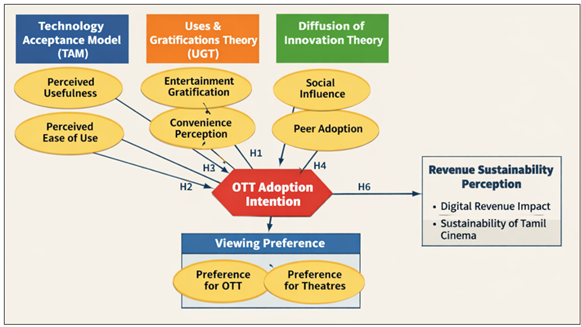
Figure 1
Theoretical
Framework
3.2. Uses and Gratifications Theory (UGT)
Although TAM interprets technological adoption in terms of utility, Uses and Gratifications Theory (UGT) is a supplement to this interpretation, as it takes into consideration the motivations and psychological needs of the audience. UGT assumes that people use the media as a means of engaging in different types of activities that they demand, including entertainment, escapism, social interaction, and information seeking Sharma et al. (2023). OTT platforms have achieved various gratifications at the same time in the post-pandemic environment. Home-based viewing has helped to address the problem of safety in lockdowns, whereas the culture of binge-watching brought emotional relief and alleviated stress levels. To the Tamil viewers, the availability of various genres, independent films, and international contents in OTT platforms were also accessible and not necessarily found in the local theatres. Moreover, the virtual communication through digital sharing and conversations about the streamed content on social media replace the experiences of collective theatres to some extent Valkenburg and Peter (2013). Gratification wise, viewers might select OTT not only due to convenience but also autonomy, personalization and the ability to have wider exposure of content. By applying UGT to the theoretical framework, this paper can discuss the motivational drivers outside the technological acceptance framework, focus on the psychological and social factors that may lead to a lasting adoption of the digital. These incentives directly affect the trends of subscriptions and reorganize the opportunities of revenues in the regional cinemas markets.
3.3. Diffusion of Innovation Theory
Diffusion of Innovation theory describes the process of the spread of new technologies within the social systems over time, and differentiates the adopters into innovators, early adopters, early majority, late majority and laggards. The digital transformation of Tamil cinema is based on the initial adoption of the OTT platform by the first-mover as a result of technological exposure and the desire to experiment. Nevertheless, the pandemic accelerated diffusion because it forced even those who were slow adopters to consider digital options in terms of viewing. This imposed adoption shrunk the diffusion curve, and the subscriber base was growing at rapid rates Van and Hoekstra (2013). Relative advantage, compatibility with lifestyle, complexity, trialability and observability are factors that affect diffusion rates. OTT platforms are somewhat cost effective and accessible, compatible with urban digital lifestyles, low complexity due to intuitive interface, and able to be tried with free trial or low cost plans, and can be observed with peer recommendation. These features altogether speed up the acceptance of the various demographic groups. Noteworthy, the theory of diffusion proposes that adoption is self-sustaining at a certain level when the critical mass is reached. This critical mass can be a sign of a lasting structural change not a temporary change of behavior in post-pandemic Tamil films. The theoretical framework that can be implemented is that of diffusion theory, which will allow the current study to determine the fact that OTT acceptance has entered the normalization phase that ultimately changes the aforementioned factors of revenue anticipation and theatrical superiority.
3.4. Platform Economy and Digital Revenue Framework
In addition to the behavioral theories, the changes in the Tamil cinema should also be discussed according to the platform economy. Digital platforms act as mediators linking content creators and consumers and taking advantage of information analytics and subscription systems and algorithmic curation. In contrast to theatrical operations that depend on physical infrastructure and physical revenue generation in the form of tickets, OTT platforms create value through aggregation of subscriptions, viewer interactions and retention solutions. Platform economy revenue is less attaching to individual movie performance and more based on accumulation of content libraries and lifetime value of users. This re-arrangement changes the negotiation structures between producers and distributors usually towards sure licensing transactions rather than risky box-office revenues. Also, platforms use viewer information to inform content-commissioning decisions, moving the power base towards analytics-based production approaches. This platform-based model has an effect on budgeting, experimentation on genres and planning of release in Tamil cinema. The hybrid revenues models are seen as the new intermediate approaches, which combine the theatrical performance of large-scale productions with the digital monetization of long-term interaction. This paper has added platform economy theory to the theoretical foundation of the study to extend the concept of the audience psychology to structural economic transformation, which allows viewing changing revenue sources in full.
3.5. Integrated Conceptual Model
Combining the TAM, UGT, Diffusion of Innovation, and Platform Economy approaches will create a multidimensional model of analyzing audience acceptance and revenue shift in Tamil cinema in the post-pandemic period. TAM focuses on technological perception, UGT is the motivation drivers, diffusion theory describes the dynamics of adoption and platform economy theory puts the economic restructuring in context. All these frameworks propose that the adoption of OTT depends on the perceived usefulness, ease of use, gratification fulfillment, social diffusion patterns, and structural economic incentives. This composite model is empirically testable to establish the relationship between the audience behavior and the revenue implications. As an illustration, more perceived convenience and gratification can be related to stronger subscription intentions, which subsequently impact the sustainability of in theatrical revenue. Likewise, rampant proliferation can be an indication of eventual normalization of the digital releases. The theoretical synthesis therefore cuts across consumer behavior and media economics, which is in line with the purpose of the research i.e. assessing digital screens and rebalancing of revenues in Tamil cinema.
4. Research Methodology
4.1. Research Design
This article uses a quantitative research design in order to investigate the audience acceptance of OTT platforms systematically, and how it is applicable to the change in the revenue structure in post-pandemic Tamil cinema. It is believed that quantitative method can be used since the study aims to determine perceptions, behavioral intentions and adoption patterns and work with structured variables based on the validated theoretical models, including the Technology Acceptance Model (TAM), Uses and Gratifications Theory (UGT) and Diffusion of Innovation Theory. The design helps in statistically testing the relationship between independent variables (perceived usefulness, ease of use, gratification factors, and diffusion characteristics) and dependent variables (OTT adoption intention, viewing preference, and revenue perception). A cross-sectional survey design is utilized to obtain the current audience attitudes during the post-pandemic time. The research questions are aimed at determining whether the digital acceptance is a structural change or a transient shift in response to the situation due to the pandemic. The research design has allowed the empirical testing of the proposed conceptual model by incorporating behavioral and economic constructs.
Figure 2

Figure 2
Research Methodology
4.2. Population and Sampling
The intended audience of this research will comprise of Tamil cinema viewers living in the state of Tamil Nadu and other metropolitan areas with large numbers of Tamil speakers. The population consists of persons aged 18 years and above that have viewed Tamil films in theatres or through OTT platforms within the last two years. The stratified sampling method is used to ensure that the sample is representative in terms of demographic factors including age, gender, occupation, income levels etc. That way, the study will be able to capture the differences in the digital adoption among the younger, digitally native audiences and the older viewers who have always been used to watching their films in the theaters. The sample is expected to consist of 300 to 500 respondents in order to have statistical reliability and sufficiency in terms of regression or structural equation modeling (SEM) analysis. The collection of data is carried out by distributing online surveys via the digital platforms as the topics are on the adoption of technologies and digital consumption behaviours.
4.3. Data Collection Methods
Primary data is gathered using a structured questionnaire that is developed as per the measurement scales that are validated by previous researches relating to TAM, UGT, as well as media consumption behavior. The questionnaire will contain demographic variables and Likert-scale items pertaining to perceived usefulness, perceived ease of use, entertainment gratification, social interaction gratification, convenience perception, cost perception, intention to adopt and revenue perception. The respondents will be requested to rate the level of their agreement on the five-point or seven-point Likert scale with the values that include strongly disagree, strongly agree, etc. Secondary data is also analyzed to put the industry trends into perspective like subscription expansion records of platforms like Amazon Prime Video, Netflix and Disney+ Hotstar in the Tamil market. Primarily derived data, combined with the secondary insights of the industry is a strength in enhancing the depth and relevance of the analytical process.
4.4. Instrument Design and Variables
The questionnaire will be designed in a series of segments. The initial part will entail demographic data such as age, gender, job, education, and income per month. The second section is measured to assess the frequency of OTT use, the subscription level, and the preferences on viewing. Later parts reflexivize theoretical constructs. Perceived usefulness is represented by items related to measuring whether OTT platforms make it more convenient and more accessible to Tamil movies. Perceived ease of use is the measure of the ease of navigation and technical access. The constructs of gratification are entertainment value, escapism, social sharing, and content diversity. Variables that are related to diffusion are apprehension and peer influence. Behavioral intention to remain an OTT subscriber, preference of digital versus theatrical releases and the ability of Tamil films to sustain revenues are the dependent variables. Everything is based on tested scales with regional adaptation to the circumstances of cinema. Expert review and pilot-testing using a small sample will ensure that the content is valid before the actual full-scale data are collected.
4.5. Hypothesis Development
According to the synthesized theoretical framework, the research develops several hypotheses to explore the relationship between variables. The hypothesis is that perceived usefulness poses a positive effect on OTT adoption intention. On the same note, perceived ease of use will have a high impact on digital platform acceptance. It is stated that entertainment gratification and convenience perception have a positive influence on preference toward OTT viewing compared to theatrical one. The adoption behavior is expected to be mediated by social influence which is an indication of diffusion. Also, there is the hypothesis of the OTT adoption intention on the perceptions of revenue sustainability in Tamil cinema. These assumptions can be empirically tested in terms of behavioral and economic relations, in terms of being consistent with the purpose of the study to investigate the changing revenue models in terms of acceptance dynamics of the audience.
4.6. Data Analysis Techniques
Analysis of data is done on the basis of statistical software like SPSS and AMOS or Smart PLS on structural equation modeling. First, demographic features and patterns of OTT use are summarized with the help of descriptive statistics. The reliability analysis is done by examining the internal consistency of measurement scales of a measurement scale at Cronbachs alpha. Exploratory factor analysis (EFA) is performed to validate construct validity with a subsequent confirmatory factor analysis (CFA) in the event of the application of SEM. Regression analysis or SEM is then employed in order to test hypothesized relationships between independent and dependent variables. SEM is also the most appropriate since it gives the opportunity to test several relationships and latent constructs at the same time within the unified conceptual framework. The analysis will be focused on establishing the robustness and importance of variables that affect OTT acceptance and revenue perception, and thus will legitimize theoretical assumptions.
4.7. Reliability and Validity Measures
Systematic measurement of reliability and validity are done to achieve methodological rigor. The internal consistency reliability is measured by alpha Cronbach values that are above the acceptable level of 0.70. Construct validity is determined by factor loadings and composite reliability. The convergent validity is evaluated through the analysis of the average variance extracted (AVE), whereas the discriminant validity helps to make sure that constructs are different. There is also reduction of common method bias by questionnaire design like ensuring anonymity and randomisation of items. Pilot testing is done to determine obscurities and enhance clarity before full deployment. These methodological protection procedures promote the credibility and replicability of the result, and the conclusions made on the issues of acceptance of the audience and change of revenues are sound empirically.
5. OTT Growth in Post-Pandemic Tamil Cinema: Industry Overview
5.1. Expansion of OTT Platforms in the Tamil Market
The post-pandemic era was characterized by a faster increase in OTT services in the Tamil entertainment industry. Amazon Prime Video, Netflix, Disney+ Hotstar and ZEE5 streaming platforms have strongly reinforced their local content strategies in order to win over the South Indians. Tamil movies realized that Tamil cinema had a large domestic and diaspora fan base, these channels saw greater investment in the digital rights acquisition, ordering original Tamil web series and creating exclusive film releases on direct-to-OTT platforms. Subscriptions prices, telecommunication partnerships by bundle and multilingual accessibility further boost market penetrations. This was not a simple reaction to pandemic limitations but a larger initiative to regionalize content distributions in fast expanding regional markets. Consequently, the Tamil audience was presented with more access to mainstream and independent movies than ever before, and the digital platform further contributed to the structural integration of OTT platforms into the distribution system of the industry.
5.2. Direct-to-OTT Tamil Film Releases (2020–2024)
A large number of Tamil releases between 2020 and 2024 chose direct-to-OTT releases since theatres were closed and there was a lack of confidence in box-office recovery. Increasing lockdown periods also led to increased focus on digital premieres by producers of mid-budget and experiment movies to offset financial risk. This time established the practice of OTT-first releases, especially of cinema based on content in which there is no large theatrical success. The upload services offered advance licensing payments, which offered certain income that was the opposite of unstable theatrical collections. Theatres reopened and some films still preferred to have a digital premiere due to strategic reasons like segmenting the target audience and cost recovery efficiency. Some of the direct-to-OTT releases proved that the level of engagement between the audiences did not solely rely on the theatrical presence. This has resulted in the emergence of digital platforms as major release platforms as opposed to the post-theatrical windows. This structural change became a massive reevaluation of the film success metrics in Tamil cinema, where the number of streams watched and the rate of subscriptions started supplementing the box-office criteria.
5.3. Emergence of Hybrid Release Models
With the lifting of pandemic restrictions, Tamil cinema began to have hybrid release models. To capture the benefits of fan-based opening weekend earnings, and mass celebrations, big, star-driven movies returned to the theatrical release to add to their revenue streams, and also strategized the early digital releases to prolong their revenue streams. Reduced theatrical windows, which were usually four- to eight-week windows, were more and more prevalent in advance of OTT release. This mixed strategy enabled producers to make the most of theatrical and digital impact. Theatres still provided immersive experiences on live sounds and images that cannot be reproduced by digital platforms to save the cultural meaning of cinema halls. Nevertheless, the increasing predictability of OTT release schedules affected the choices of the audience, as some of them were willing to wait until it was available online. This conduct expectation brought about new strategic dimensions to producers and exhibitors. Hybrid models, therefore, signify as transitional equilibrium in which theatrical and digital sources of revenue are present as each serves a specific audience segment.
5.4. Subscription Trends and Regional Viewership Growth
Trends in subscription Digital platform usage by Tamil-speaking audiences are expected to continue increasing post-pandemic. Low-price data charges, mobile phone adoption, and the growth of smart TV set ownership played a major role in the growth of streaming services. It was also made more affordable by family subscription sharing and telecom packages. There was a significant increase in the consumption of regional language content, with the Tamil films taking up the leading places in streaming libraries. In addition, Tamil films were made available to the diaspora audiences in Southeast Asia, Europe, North America at the same time by use of digital means, and this increased global audiences without having to depend on foreign theater chains. This international access made it stronger in diversifying revenues and less reliant on localized theatrical performance. The trends of subscription growth indicate that the use of OTT is not only a fad but also a sign of its stronger integration into the lifestyle, especially among urban and semi-urban populations.
5.5. Comparative Revenue Analysis: Theatrical vs OTT
The revenue transformation in the post-pandemic Tamil cinema unveils the differences in the economic models used in theatrical and OTT distribution. Theatrical revenue is very dynamic and depends on the strength of the stars, the marketing budget, timing of the festival and the audience attendance. Commercial viability is often dependent on the opening weekend collections, which is a major financial risk. Conversely, the OTTs normally work on the basis of either licensing deals or minimum guarantee formats which allow a guaranteed amount of revenue to the producers before launch. Whereas theatrical releases can yield huge returns particularly to blockbuster movies, digital releases allow the company to have predictability and consistent cash flow. Moreover, because OTT focus on subscriber retention, rather than on the profitability of individual films, they redefine the business model of success, which was based on the total money collected at the box office to the user base and growth of the platform. In the case of mid-budget movies, the digital initial releases can be a superior financial decision but big-budget movies still rely on the theatrical size. The presence of these revenue streams demonstrates the diversification of the economic ecosystem with the distribution of risk and monetization approaches recalculated based on the scale of content and the target audience.
5.6. Changing Audience Preferences and Market Implications
The development of OTT platforms has had an essential impact on the process of choosing what to watch and why. The fashion of convenience, cost efficiency, diversity of content and custom-made viewing experiences are all the more being determinant of consumption preferences. The younger viewers are more digital-loyal, whereas the older ones are adapting to streaming technologies slowly. Nevertheless, theater experiences do not lose cultural importance especially in big commercial films where major stars are involved. This co-existence implies that it is not substitution but segmentation. The implications on the market are recalculated budgeting plans, repackaged content to be shown in digital media, and plan of production based on the analytics of the streams. Indicated integrated revenue planning is the increased negotiation of digital rights by producers during early film development together with theatrical agreement. In this way, the acceptance of OTT platforms by the audiences directly influences the industry economics, which contributes to the necessity of the theoretical evaluation of the long-term sustainability.
5.7. Industry Outlook and Sustainability Considerations
Going on, Tamil film industry is likely to enjoy an even-handed but digitally encompassed future. Whereas it is improbable that theatres could ever be eliminated as a result of their cultural and experience significance, OTT platforms have become inevitable partners in often generating revenues. It will become sustainable based on the strategic management of windows, a differentiated kind of content design in theatrical and online platforms, and pricing strategies in line with the desire of audiences to pay. Digital engagement will be further enhanced by using the innovations in technology 4K streaming, interactive features, and algorithmic personalization. Meanwhile, theatres can focus on the high-quality formats and event-based releases to remain competitive. The business prescription is thus convergence as opposed to replacement where digital screens and theater halls will co-exist in a changing revenue model which will be influenced by acceptance behavior by the audience.
6. Data Analysis and Findings
6.1. Viewing Preference Analysis
Figure 3
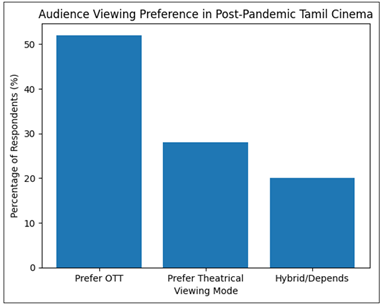
Figure 3 Audience Viewing Preference in Post-Pandemic Tamil
Cinema
The preference distribution of viewing shows that 52% of the respondents consume Tamil films using OTT, whereas 28% use the theater to consume the films. About 20 percent said that they were hybrid and this varies based on the film scale or genre as seen in Figure 3. The preponderance of OTT preference is an example of structural behavior change and not a temporary adaptation. The 28% theatrical preference, however, indicates that cinema halls still have cultural and experience value especially when it comes to commercial releases that are driven by stars. The hybrid category supports the concept of content-driven decision-making, in which high-budget movies and middle-budget ones are visited to the theatre and watched at home, respectively. This is in favor of the hypothesis of hybrid revenue model as mentioned in previous sections.
6.2. Regression Analysis: Determinants of OTT Adoption
A multiple regression analysis was performed to determine the effect of independent variables on OTT Adoption Intention. The standardized beta coefficients are depicted in Figure 4.
Figure 4

Figure 4 Influence of Factors on OTT Adoption Intention
As the analysis indicates, Convenience (β = 0.42) has the greatest effect on OTT adoption intention, then there is Entertainment Gratification (β = 0.37) and Perceived Usefulness (β = 0.34). The moderate impact is exhibited in the Ease of Use (β = 0.29) and in the Social Influence (β= 0.18).
These are findings that validate TAM and UGT propositions. The factors of intrinsic values like flexibility, time management, and content entertainment are the major factors that contribute to audience adoption rather than social influence. The comparatively milder effect of social influence suggests that the consumption of OTT in Tamil cinema had shifted to the normalization of novelty. Once convenience turns into a more controlling factor, it represents a long-term structural assimilation of digital platforms in daily media consumption patterns.
6.3. Revenue Sustainability Perception
Further information testing was done to determine the significance of OTT adoption intention in perceived revenue sustainability. The regression outcome shows that there is a positive and statistically significant correlation (p less than 0.01), which means increased digital adoption is associated with increased belief in OTT as a long-term revenue model of Tamil cinema. In most cases, respondents believe that the OTT platforms provide financial security to producers, especially to small and mid-budgeted films. Nonetheless, the qualitative remarks indicate that there is a doubt about the possibility of substituting blockbuster theatrical revenues with the digital licensing entirely. It means that there is a differentiated economic perception in which OTT is considered to stabilize the theatrical income and not completely replace it. The statistics show that OTT acceptance in the post-pandemic Tamil films is more of a convenience factor that is backed by entertainment worthiness and ease of technology. Cultural values in theatrical viewing are not eliminated but do not take up the revenue perception any more. The hybrid patterns of consumption imply that there should be co-existence, but not substitution. ODT is seen to be risk-reducing, and stabilizing, economically, to producers, particularly not in blockbuster segments.
7. Discussion
7.1. Reinterpreting Audience Acceptance in Post-Pandemic Tamil Cinema
Results of the present paper have shown that the acceptance of OTTs by the audience in post-pandemic Tamil cinema is not just a temporary reaction to the circumstances of crisis but is an indication of a more profound behavioral and structural change. The fact that convenience and entertainment satisfaction are the reasons leading to OTT adoption implies that viewers have internalized the digital viewing as a part of their media lifestyle. In comparison to early pandemic-related adoption, where the safety factors were the most crucial ones, the modern acceptance is determined by the perceived flexibility, time-saving, and the availability of content. That implies that OTT services have transcended the emergency replacement of theatres and become entertainment venues of choice of a large portion of the audience. The digital streaming becoming normalized as a part of the culture of Tamil cinema threatens the theatrical hegemony that persisted over time and requires the distribution hierarchies to be looked at a new.
7.2. Theoretical Implications: Validation of TAM and UGT
The empirical findings are strong in favor of the Technology Acceptance Model (TAM), especially that perceived usefulness and perceived ease of use have a significant impact on the adoption intention. The mean scores are high on convenience and on perceived utility, which attests to the fact that technological efficiency is still at the core of the decision made by the audience. Nonetheless, the influence of entertainment gratification over social influence is stronger and, therefore, the significance of Uses and Gratifications Theory (UGT) in the explanation of sustained adoption. Here viewers are not passive followers of peer trends; instead, they prefer to utilize OTT platforms in order to satisfy the needs related to the entertainment, escapism, and personalization. This acts as a confirmation that adoption of digital in Tamil cinema is more of a psychological than a socially forced act. Moreover, the concept of critical mass, which is offered by the diffusion theory, also seems to be applicable, as the process of OTT adoption has come to the point of digital viewing being accepted by the demographical groups, especially urban professionals. The interplay of these theoretical approaches confirms that the growth of OTT in the Tamil cinema is multidimensional, as it involves technology acceptance, psychological gratification and social normalization.
7.3. Economic Implications for Producers and Distributors
Economically, the analysis indicates that the Tamil film industry has undergone a major re- pricing of revenue in the industry. The respondents see OTT platforms to a great extent as diversifying revenue streams, particularly with small and mid-budgets. The licensing agreements have predictable results and thus lower financial risk that theatrical release releases have where monies earned are uncertain due to the opening weekend performance, and competitive schedules. This reduction of risks to producers is a strategic asset in an industry where production expenses are great, and box-office gains are unpredictable. Nonetheless, the fact that theatrical viewing is still prevalent among some segments suggests the fact that blockbuster movies continue to be overly dependent on the cinema halls in terms of revenue maximization.
7.4. Sustainability of Hybrid Revenue Models
The coexistence of virtual and theatre tastes implies that hybrid release schemes will be a realist compromise in Tamil cinema after the pandemic. The 20% hybrid preference group proves that viewers distinguish between the types of films in choosing the viewing tools. Film productions that are spectacle-enhanced and star-focused keep drawing audiences to theatres because of their immersive sound-visual effects and the culture of togetherness-celebration. On the other hand, movies that focus on narration or those that come at a middle range are becoming more acceptable as a digital consumption item. This stratification is in line with a dual-channel revenue approach of theatrical release to garner early momentum and OTT monetization of the lifecycle. Nevertheless, the limited release times can also affect the theatrical attendance in the case when the viewers expect quick access to it online. Thus timely strategic management and window management are of critical importance in balancing the revenue streams. Sustainability will be based on ensuring that various value propositions are maintained to each platform and not direct competition between them.
7.5. Cultural Transformation and Audience Psychology
Cultural rituals, fan associations, and mass celebrations have been always interlaced with Tamil cinema especially with the release of big stars. The individualization of digital consumption changes the dynamic of this collective consumption. Although OTT services make things more accessible and personal, they also divide the attention of the audience into spheres of personal viewing. This shift can be slowing altering the culture of the cinema and thus making the spectacle less ritualistic with the opening-day and making content more active throughout the year. Nevertheless, the fact that theatrical taste remains an important minority in many people demonstrates that cinema halls are not deprived of the symbolic significance of content delivery. Therefore, the shift towards a digital form is cultural adjustment and not cultural erosion. The viewers of Tamil movies are never leaving theatres but they are re-calibrating their requirements according to the type of content, cost factor, and convenience.
7.6. Long-Term Structural Shifts in Revenue Architecture
Incorporation of the OTT platforms into the revenue fabric of Tamil movie industry is not a redistribution of revenue but a structural change in its structure. Conventionally, box-office revenues controlled the success stories of the industry, shaping the value of stars and the budgets of most productions. During the digital age, streaming data, subscribing audience, and international coverage are some of the measures that supplement box-office data. It is a two-metric landscape that presents new power dynamics such that platform analytics affect commissioning decisions and content strategy. Manufacturers are demanding more of the digital rights at early production stages, and OTT revenues are being developed into financial planning. This form of structural integration denotes that the digital screens have been institutionalized as part of the economy of the industry. The decreased reliance on opening weekend performance can also potentially stimulate creativity in telling the stories, and this is good news to the content diversity.
7.7. Implications for Policy and Industry Strategy
The results indicate that the industry should have coordinated strategies in which the interdependence between theatres and the OTT platforms are recognized. The policy-makers and movie lobbyists might have to rethink the regulation of release windows, revenue sharing standards, and digital taxation systems to promote fair growth of platforms. Theatrical differentiation could be improved upon by investing in theatre infrastructure with premium formats and theatric enhancements. At the same time, producers will have to rely on the data-oriented approaches to content production, which is aimed at platform consumption trends. The adaptive collaboration will be more stable in the industry than adversarial positioning between stakeholders in digital and theatrical industries.
7.8. Synthesis of Findings
The discussion in general establishes that convenience, entertainment value, and technological convenience are the main factors that will lead people to accept OTT platforms in post-pandemic Tamil filming, and the process of diffusion is being normalised across demographics. The economic perceptions are more inclined to have OTT as a stabilizing partner, and not a substitute to theatres. The hybrid releases seem to be a viable option but need to be calibrated. Cultural traditions that have been related to viewing theatrical performances are not on the verge of extinction, which implies that they do not displace but live with others. Convergence and diversification is also expressed through the revenue transformation and this is a new stage of development of Tamil cinema.
8. Conclusion
The post-pandemic shift in the Tamil cinema evolution is a clear change in the direction of the entirely digitalization of products, and OTT platforms become the inherent elements of the revenue system in the industry. The present research evidence confirms that the convenience, satisfaction of entertainment, and the perceived usefulness of OTT platforms are the key factors that promote their acceptance among the audience, not a need that can appear during the COVID-19 pandemic. The empirical results support that the adoption of digital has shifted to experimental use to normalized use especially among young and working professionals. Although viewing on theatres remains to be culturally and experientially relevant particularly to the massive commercial plays, the rise of the OTT preference predicts the realignment of the audience expectations and industry strategy. Economically, OTT platforms have been viewed as normalizing revenue flow especially to small and mid-budget movies which are subject to instability in theatrical markets. The assured licensing schemes of the streaming systems minimise financial risk to the producer and diversify revenues. Yet, the fact that theatrical loyalty still persists among some groups of viewers proves that the hybrid release models can still be strategically viable. Instead of this idea of replacement, there is evidence that we are dealing with a convergence model, i.e., in which theatrical spectacle and digital convenience co-exist within a re-organized revenue structure. The paper adds value to the field of media economics and regional cinema by combining the theories of behavioral acceptance with the revenue perception analysis of Tamil cinema. There are certain constraints in the form of the cross-sectional design and self-reports, but the results strongly indicate that the digital screens have changed the landscape of distribution and consumption permanently. Sustainable development in the industry will be based on the adaptable approaches that determine the experiences of theatrical worth and digital-based monetisation. The future of Tamil cinema, however, does not lie in the question of theatres or OTT but in the strategy of balancing the two in a changing hybrid ecosystem.
REFERENCES
Bhattacharyya, S. S., Goswami, S., Mehta, R., and Nayak, B. (2022). Examining the Factors Influencing Adoption of Over the Top (OTT) Services Among Indian Consumers. Journal of Science and Technology Policy Management, 13(3), 652–682. https://doi.org/10.1108/JSTPM-12-2020-0170
Boerman, S. C., Kruikemeier, S., and Zuiderveen Borgesius, F. J. (2017). Online Behavioral Advertising: A Literature Review and Research Agenda. Journal of Advertising, 46(3), 363–376. https://doi.org/10.1080/00913367.2017.1339368
Camilleri, M. A., and Falzon, L. (2021). Understanding Motivations to Use Online Streaming Services: Integrating the Technology Acceptance Model (TAM) and the Uses and Gratifications Theory (UGT). Spanish Journal of Marketing – ESIC, 25(2), 217–238. https://doi.org/10.1108/SJME-04-2020-0074
Cho, C. H., and Cheon, H. J. (2004). Why do People Avoid Advertising on the Internet? Journal of Advertising, 33(4), 89–97. https://doi.org/10.1080/00913367.2004.10639175
Ha, L., and McCann, K. (2008). An Integrated Model of Advertising Clutter in Offline and Online Media. International Journal of Advertising, 27(4), 569–592. https://doi.org/10.2501/S026504870808015X
Hwang, J., and Nam, S. J. (2021). Beyond Pleasure: Desire for Meaningful Consumption and Peacefulness from Digital Entertainment Platforms. Journal of Retailing and Consumer Services, 58, 102331. https://doi.org/10.1016/j.jretconser.2020.102331
Deshmukh, P., and Carter, B. (2023). Secure Multi-Party Computation Protocols for Privacy-Preserving Data Analysis. International Journal of Recent Advances in Engineering and Technology, 12(2), 1–6.
LaRose, R., and Eastin, M. S. (2004). A Social Cognitive Theory of Internet Uses and Gratifications: Toward a New Model of Media Attendance. Journal of Broadcasting and Electronic Media, 48(3), 358–377. https://doi.org/10.1207/s15506878jobem4803_2
Lee, H. G., Yeo, C. K., and Kang, S. H. (2021). Identifying the Mechanism of Formation of Continuous Usage Intention in Domestic OTT Services. Journal of Korea Service Management Society, 22(1), 145–170. https://doi.org/10.15706/jksms.2021.22.1.007
Liu, H., and Wang, T. L. (2024). Exploring Psychological Factors Affecting OTT (Over-the-Top) Services’ Consumer Behavior During the COVID-19 Era: The Case of Taiwan. Calitatea, 25(199), 102–112. https://doi.org/10.47750/QAS/25.198.11
Mazlum, M. M., and Atalay, A. (2022). Developing the Fear of Missing Out (FoMO) Scale for University Students: The Validity and Reliability Study. Journal of Pedagogical Research, 6(1), 20–34. https://doi.org/10.33902/JPR.202215485
Napoli, P. M. (2011). Audience Evolution: New Technologies and the Transformation of Media Audiences. Columbia University Press.
Pashkevich, M., Dorai-Raj, S., Kellar, M., and Zigmond, D. (2012). Empowering Online Advertisements by Empowering Viewers with the Right to Choose. Journal of Advertising Research, 52(4), 451–457. https://doi.org/10.2501/JAR-52-4-451-457
Periaiya, S., and Ajith, N. (2023). What Drives User Stickiness and Satisfaction in OTT Video Streaming Platforms? A Mixed-Method Approach. Telematics and Informatics, 81, 101998. https://doi.org/10.1016/j.tele.2023.101998
Rodgers, S., and Thorson, E. (2000). The Interactive Advertising Model: How Users Perceive and Process Online Ads. Journal of Interactive Advertising, 1(1), 41–60. https://doi.org/10.1080/15252019.2000.10722043
Ruggiero, T. E. (2000). Uses and Gratifications Theory in the 21st Century. Mass Communication and Society, 3(1), 3–37. https://doi.org/10.1207/S15327825MCS0301_02
Sabat, K. C., and Bhattacharyya, S. S. (2024). Study of Spirituality and Well-Being Over-the-Top Services Through the Lens of Stimulus–Organism–Response Framework: A Moderated-Mediation Analysis. International Journal of Ethics and Systems, 40(3), 582–612. https://doi.org/10.1108/IJOES-04-2023-0094
Sahu, G., Gaur, L., and Singh, G. (2021). Applying Niche and Gratification Theory Approach to Examine the Users’ Indulgence Towards Over-the-Top Platforms and Conventional TV. Telematics and Informatics, 65, 101713. https://doi.org/10.1016/j.tele.2021.101713
Sharma, A., Sreen, N., and Baishya, K. (2023). Identifying Gratification Behind the Consumption of the OTT Platforms in an Emerging Market: A Means-End Theory Approach. Marketing Intelligence and Planning, 41(5), 593–612. https://doi.org/10.1108/MIP-12-2022-0558
Valkenburg, P. M., and Peter, J. (2013). Five Challenges for the Future of Media-Effects Research. International Journal of Communication, 7, 197–215.
Van Doorn, J., and Hoekstra, J. C. (2013). Customization of Online Advertising: The Role of Intrusiveness. Marketing Letters, 24(4), 339–351. https://doi.org/10.1007/s11002-012-9222-1
|
|
 This work is licensed under a: Creative Commons Attribution 4.0 International License
© ShodhKosh 2026. All Rights Reserved.