ShodhKosh: Journal of Visual and Performing ArtsISSN (Online): 2582-7472
|
|
MAKING OPTIMAL DECISIONS BY CONSUMERS IN THE MARKET IN THE CONTEXT OF DIGITAL MARKETING DEVELOPMENT
Gunay Aliyeva 1
 ,
Havva Adigozelova 2
,
Havva Adigozelova 2 ,
Aydin Nabiyev 3
,
Aydin Nabiyev 3 ,
Vilayat İsmayılov 4,
Firana Mammadova 5
,
Vilayat İsmayılov 4,
Firana Mammadova 5
1 Azerbaijan Technical University, Baku,
Azerbaijan
2 Nakhchivan State University, Nakhchivan, Azerbaijan
3 Azerbaijan Architecture and Construction University, Baku,
Azerbaijan
4 Azerbaijan Academy of Labor and Social Relations, Baku, Azerbaijan
5 Azerbaijan Academy of Labor and Social Relations, Baku, Azerbaijan
|
|
|
ABSTRACT |
|
|
The purpose of
this work is to study the influence of digital marketing channels on consumer
purchasing decisions. The first part included demographic issues. The second
part included the impact of the use of the Internet and digital marketing
channels on the purchase of goods, in order to
determine the impact of these channels on consumer decision-making. Of the
290 respondents who use the Internet daily, more than 63% said they are
connected to social media and marketing emails. 93 participants expressed their
opinion about websites that have a greater impact on consumer
decision-making. 190 participants also stated that they often buy products
using digital marketing channels. The scientific novelty of the study is that
consumer decision-making in the digital economy is characterized by reduced
information costs, high speed of comparing prices and goods, as well as the
use of big data and AI recommendations. The consumer gets access to a wide
range of choices, but is faced with manipulative
strategies of companies such as "obfuscation". At the same time,
factors such as access to information, the role of platforms and data,
optimization and manipulation, network effects, etc. are considered key
aspects of the decision-making process in the digital age. Therefore,
professionals should carefully study their target audience and act in
accordance with consumer behavior in order to gain a
competitive advantage when placing their products or services on websites and
social media accounts. From a practical point of view, the research results
can be useful to marketers and specialists working in this field. The
research also specifies the principles of consumer choice when making optimal
decisions. In addition, it helps customers determine which approach to
digital marketing strategy is needed. This approach allows companies to
develop their digital strategies with more precise targeting. |
|||
|
Received 28 November 2025 Accepted 08 January 2026 Published 27 March 2026 Corresponding Author Gunay
Aliyeva, gunay.aliyeva@aztu.edu.az
DOI 10.29121/shodhkosh.v7.i2s.2026.7138 Funding: This research
received no specific grant from any funding agency in the public, commercial,
or not-for-profit sectors. Copyright: © 2026 The
Author(s). This work is licensed under a Creative Commons
Attribution 4.0 International License. With the
license CC-BY, authors retain the copyright, allowing anyone to download,
reuse, re-print, modify, distribute, and/or copy their contribution. The work
must be properly attributed to its author.
|
|||
|
Keywords: Digital Economics, Consumers, Optimal Behavior, Key
Aspects, Influencing Factors, Decision-Making Process |
|||



1. INTRODUCTION
Almost a quarter
of a century has passed since
the commercial
use of the Internet began. During
this time,
the business landscape has changed very
quickly. Large multinational
corporations such as
Google, Facebook, Alibaba,
HUAWEI, and others,
which were unknown in the world
20 years
ago, have become key
players in the modern
economy. By 2020,
experts predict the availability
of 50 billion
devices with Internet
access. These 50
billion devices will become interconnected
in the
Internet of Things and smart
home network.
In the current environment, the internet has opened up vast opportunities for firms to leverage the
advantages of digital marketing. By utilizing various digital marketing channels,
companies can share their products and services online, increase the number of
their customers, attract them to their channels, and improve their return on
investment (ROI). With the use of the internet, digital marketing strategies
have replaced traditional marketing strategies in the development of highly
competitive markets and technologies Cengiz
(2019).
Additionally, digital marketing covers a broad area in
the global market and includes business models that use digital technologies to
reduce costs and grow businesses worldwide. Nowadays, digital marketing offers
greater opportunities for the future development of trade sectors since
customers are satisfied with online shopping and consider it safer than
traditional marketing Deniz
and Erciş (2008). In this regard, consumer behavior evolves in parallel with changing
generations. Brands that wish to keep up with changing consumer behavior
benefit from digital marketing methods.
Consumer behavior is one of the main subjects of the
marketing field, and it is expressed as a discipline that combines human
behavior with consumption types. More broadly, consumer behavior is defined as
“the field of study that examines the processes involved when individuals or
groups select, purchase, use, or dispose of products, services, ideas, or
experiences” Ege (2020). The article investigates whether the marketing tools that consumers
encounter on the internet are related to their purchasing decisions. It also
examines the significance of these marketing tools to consumers, the value they
provide, the extent of their usage of different tools, and the relationship
between these factors and purchasing decisions. Many studies in this direction
have discussed the impact of digital marketing on consumer purchasing decisions
CCSENET
(2024). Therefore, the methodology of this research is thought to be guided by
and beneficial for other studies conducted in the field of digital marketing.
Before examining consumer behavior, it is necessary to
investigate the concepts of consumption and consumers TML (2024). Consumption is a process that begins at birth and continues until
death. The concept of consumption can be defined as the expenditure or
depletion of an item. The consumer is the person who consumes this item and
performs the act of consumption Yasmin
et al. (2015). Another definition states that the consumer is the individual who
decides to purchase products or services that meet their needs Research Publish (2023). In a broader sense, consumer behavior is defined as “the field of
study that examines the processes involved when individuals or groups select,
purchase, use, or dispose of products, services, ideas, or experiences” Abdel
(2021). Although there are multiple definitions of consumer behavior, no
universally accepted definition exists. Therefore, the principle of considering
consumer behavior as a branch of human behavior has been accepted. Consumer
purchasing behavior varies depending on different demands and needs. What is
important is the satisfaction that arises after consumption Ismayilov
et al. (2021). Consumer behavior is influenced by social, cultural, psychological,
and several other factors. Consumer decision-making in
digital marketing is characterized by increased choice
awareness through easy
access to information,
reviews, and price
comparisons in real
time by ADA Global.
Digital marketing, including
personalization, content strategies,
and social
media, helps consumers
find the best deals,
but at the same time enhances
the influence of brands on
customer behavior.
2. MATERIALS AND METODS
Both primary data and previously conducted research in
this field were used in the preparation of the article. The research data
methodology included relevant legislation, articles, books, theses, etc.,
related to the subject of the study. The data collection, systematization, and
analysis method used in the research was the most common in marketing research:
the survey method. The survey used in the research was divided into two parts.
In the first part of the survey, questions were included to determine the
demographic characteristics of the participants, such as gender, age groups,
and education level. In the second part, questions were asked to identify the
impact of digital marketing channels on consumers’ purchasing decisions. The
questions covered topics such as internet usage frequency, use of digital
marketing channels, satisfaction with the quality of the purchased product, the
effect of digital marketing channels on purchasing decisions, the factors
influencing consumers’ purchasing decisions, etc.
During the sample selection in the research, various
demographic and psychographic factors were taken into account.
Demographic factors determine the buyer of branded products, while
psychographic factors clarify whether customers purchase a specific product or
not. The respondents' age, gender, income, and behaviors in the digital
environment were systematically analyzed to increase the reliability of the
research results. Additionally, further statistical tests were conducted to
assess the extent to which the results could be generalized to a larger
population.
3. RESULTS
Behavioral models help to understand consumers’
purchasing behavior. These models aim to better understand consumer behavior.
Consumer behavior models are divided into two categories: explanatory
(classical) behavior models and descriptive (modern) behavior models Baycan (2017).
Classical behavior models were not initially created
to explain consumer behavior. These models were adapted to consumer behavior by
specialists who sought to understand individual behavior. They explore consumer
behavior in terms of motivation, explaining why one product is preferred over
others through motivation Agarwal
(2015). The most famous of the classical behavior models is Marshall’s
economic model. Additionally, Pavlov’s learning model, Freud’s psychoanalytic
models, and Veblen’s social (spiritual) model exist. Recognizing that classical
behavior models are insufficient to explain social behavior, new models were
developed. As a result of these studies, descriptive (modern) consumer behavior
models were created. The first of these is the Engel-Kollat-Blackwell (EKB)
model. Other models include the Nicosia (N) model, the Howard-Sheth model, and
Henry Assael’s models Akar (2019).
A company aiming to gain a competitive advantage
through marketing activities should analyze consumers’ behaviors and needs to
meet them. Therefore, careful attention should be given to understanding
consumers’ purchasing decisions. During the purchasing process, consumers’
emotions, attitudes, and contextual factors are studied. Various biological and
psychological factors influence consumers’ purchasing decisions. Additionally,
other factors such as social classes, families, gender, socio-cultural factors,
material factors, and motivation can be included. The decision-making process
for consumer behavior, influenced by these factors, will be studied through the
following five-step process Figure 1.
Figure 1

Figure 1 Evaluation of the Consumer Purchase Decision Process
Source Compiled on
the Basis of Research Publish (2023)
As seen in the figure, consumers’ purchasing
decisions are carried out in five stages. Below are the opinions of researchers
who have conducted studies on these stages:
Need Recognition: The
purchase decision process begins with the consumer’s recognition of a desire or
need for a product or service. The consumer can first identify the need or
problem. This identification arises from a necessity, change in lifestyle, or
replacement scenario. Thus, the consumer becomes aware of the problem that
needs to be solved Tekvar (2016).
Information Search:
After the need is clearly identified, the consumer may start searching for
relevant information. The consumer looks for information that can offer choices
to solve the identified problem, including product alternatives and other
purchasable options.
Evaluation of Alternatives: Consumers then evaluate the information gathered from various
sources to determine its relevance to their needs. Here, all advantages and
disadvantages are considered, and alternatives are evaluated using various
standards Bulunmaz (2016). Price, quality, warranties, and other objective criteria may or may
not be used to evaluate alternatives Chizmeci and
Ercan (2015).
Purchase Decision:
After reviewing the options, the consumer can decide on the product they will
purchase. The actual transaction takes place at this stage. After evaluating
the alternatives, consumers make their final decisions, selecting one of the
evaluated alternatives or choosing not to purchase anything at all Chaffey
and Smith (2013).
Post-Purchase Evaluation: In the final stage, the consumer assesses whether their needs were
adequately met and whether the purchase was satisfactory. If the need is met,
customers may recommend the purchase to others Baltes
(2016). Feedback from customers becomes a key driver for other customers’
purchase decisions. Consumers can be divided into three different groups after
a purchase: those who are satisfied and will shop again from the same brand,
those who are partially satisfied but have doubts, and those who are
dissatisfied and will not purchase the product again Chizmeci and
Ercan (2015).
Existing marketing models in this field have certain
limitations in explaining consumer behavior comprehensively in the digital
environment. For example, the traditional AIDA (Attention, Interest, Desire,
Action) model demonstrates that consumers make purchasing decisions in stages,
yet in the modern digital ecosystem, since consumers are interacting across
multiple channels, this process becomes more complex. Furthermore, although the
STP (Segmentation, Targeting, Positioning) model justifies the segmentation of
the audience, it does not sufficiently account for the changing digital habits
of individual consumers.
Therefore, the integration of fields such as
psychology, neuromarketing, social network analytics, and others can enable the
development of more accurate and contextually relevant models.
The topic of the research was analyzed on the basis
of survey materials prepared by the authors, taking into account the lack of
materials that will determine the impact of digital marketing, which has been
widely applied in recent times, on the purchasing decisions of consumers.
In order to obtain detailed information about the
survey participants, demographic questions are asked that include the
respondents' gender, age, education level, average monthly income of their
family and their social status Dijilopedi
(2019). The answers to the demographic questions, age groups and education
level given in the first part of the survey were checked through Frequency
analysis and the results are given in Table 1 below.
As a result of the analysis of the gender of the
respondents, it was found that 226 participants (70.2%) were women and 96
(29.8%) were men. The obtained result shows that female participants were the
majority in the survey.
While the minimum age of 16 was mentioned in the
survey participants covering the age groups of the respondents, there was no
limit for the maximum age.
Table 1
|
Table 1 Distribution of Respondents by Gender, Age Groups and Education Level |
||
|
Gender |
Frequency |
% |
|
male |
96 |
29.8 |
|
female |
226 |
70.2 |
|
Age groups |
||
|
16-25 |
180 |
55.9 |
|
26-35 |
97 |
30.1 |
|
36-45 |
34 |
10.6 |
|
46-55 |
8 |
2.5 |
|
56 and above |
3 |
0.9 |
|
Education level |
||
|
Complete high
school education |
28 |
8.7 |
|
Professional
college |
36 |
11.2 |
|
Bachelor |
148 |
46 |
|
Master |
93 |
28.9 |
|
PhD student |
17 |
5.2 |
|
total |
322 |
100 |
|
Source:
Prepared By The Authors, Based On Survey Materials |
||
As can be seen from the analysis data, 55.9% of the
participants are the young generation covering the age range of 16-25 years.
The age group of consumers with the least place in the survey is 56 years and
older, which consists of only 3 people, making up 0.9%. The main reason for
this can be explained by the fact that the survey is conducted online, so it is
spread more among the younger generation, or the older generation does not have
much interest in this type of survey. The 26-35 age group, which ranks second,
covers 30.1% of 97 places. Participants in the age range of 36-45 made up 10.6%
of the survey, and the age range of 46-55 made up 2.5%.
Frequency analysis was carried out in SPSS program
to study the data of the survey reflecting the educational levels of the
participants. 80.1% of the participants are bachelor's, master's and doctoral
students. According to the results, 8.7% of people with complete secondary
education and 11.2% of vocational/college education participated in the survey.
Another question of the survey is about the
frequency of Internet use. Based on the received data, it was determined that
290 of the participants are respondents who use the Internet regularly, and 32
are respondents who use it only when necessary Chart 1.
Chart 1

Chart 1 Degree of Internet Usage
Source: Compiled Based on Demand Data
One of the survey questions was designed to determine
which digital marketing channel respondents were most aware of. According to
the received data, most of the respondents - 37% are
aware of social media marketing, 26% of e-mail marketing. Other groups and
interest rates are detailed in Chart 2.
Chart 2

Chart 2 Digital Marketing Channels
The next question covers how often they shop using
digital marketing channels. As shown in Chart 3, the majority of respondents (260) are those
who use digital marketing channels frequently and occasionally. 25 people
stated that they never used digital marketing channels to make a purchase.
Chart 3
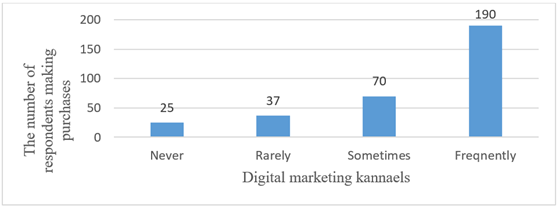
Chart 3 The Number of Purchases Using Digital Marketing Channels
The data
in Chart 4 below shows that 54% (174) of the
total respondents are always satisfied with the product they buy using digital
channels, 40.1% (129) are sometimes satisfied, and 5.9% (19) are satisfied with
the products does not agree.
Chart 4
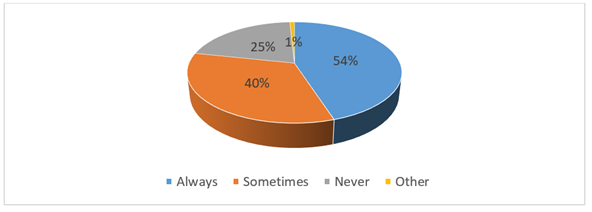
Chart 4 Satisfaction of Respondents with A Product Purchased Through Digital Channels
The data
of Chart 5 shows that 95% (305) of the total
respondents think that technology has changed the buying pattern of people in
the coming days, while 5% (17) of the respondents do not think so.
Chart 5

Chart 5 Respondents Who Consider Changing Technologies in the Habit of Shopping
The next
question aims to determine which digital marketing channel has the most
influence on the respondents. According to the responses, a group of 155
people, who make up the highest percentage of social media marketers, and a
group of 93 people, who make up the next majority, said that websites influence
their purchase decisions, and the influence rates of other digital marketing
channels are indicated.
Chart 6
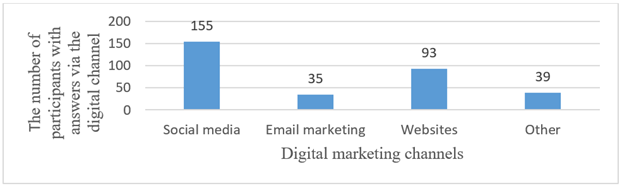
Chart 6
Digital Marketing Channels That Influence the Purchase Decision the Most
The data
in Chart 7 shows that 185 of the total
respondents believe that coupons, discount offers influence their purchase
decisions, 55 more advertise their decisions, 45 find attractive website design
and features influence their purchase decisions, and 30 find effective product
descriptions influence their purchase decisions. purchase decisions, and the
remaining 7 people stated that it influenced their purchase decisions for
reasons not mentioned in the question.
Chart 7

Chart 7 Factors Influencing a Customer's Decision to Purchase Through Digital Marketing
Chart 8
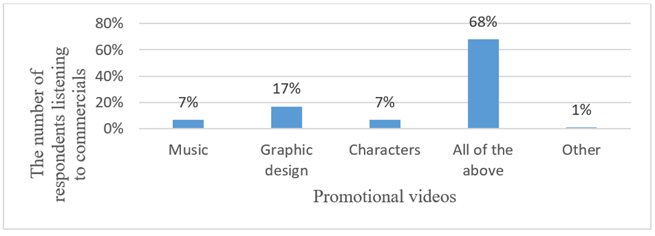
Chart 8 Features of Some Commercials Broadcast on Digital Channels That Lag Behind in Memory
The data
of graph 8 shows that 74% (241 people) remember all advertisements, 24% (78
people) all graphic design and characters, and 1% (3 people) remember most of
the characteristics of the given advertisements in digital channels, noted that
he remained.
Chart 9

Chart 9 The Influence of Types of Advertising on the Decision to Purchase Different Products
As can be
seen from the data of graph 9, when the customer decided to become a product,
the influence of social media ads was 225 people (70%), TV ads were 37 people
(11.5%), the influence of e-mail, newspaper and other ads was 60 people
(18.5%).
In order to
reduce the impact of the detailed explanation of the questions on the volume of
the article, the answers to the other 8 questions given to the participants are
combined and given in Table 2.
It is
clearly seen from the survey results that digital
marketing services have a direct impact on the decisions consumers will make.
Therefore, from the responses of the participants to questions 10-17, it is
clearly seen that consumers are already interested in doing detailed research
to obtain any product/service. Because it is important for them that the
product they buy is of good quality and meets their needs. In particular, the
participants' responses regarding doing research on the internet before purchasing
the product (question 14) were recorded. The fact that 300 participants (93%)
participated in the questions confirms the above-mentioned view once again.
Based on
the results of the research survey conducted by the authors, it can be
concluded that according to the respondents, the factors that most affect the
purchasing power of manufacturers can be attributed to the following: social
media, e-mail marketing, the impact of technology on people's purchasing
patterns, the impact of digital marketing channels on purchasing decisions,
effectiveness of digital marketing over other advertising, coupons and discount
offers, influence of social media, etc.
Table 2
|
Table 2 Respondents' Answers to the Last 8 Questions ("yes" and "no"), the Number and Percentage of Participants in the Demand |
|||||
|
№ |
Questions |
Results |
|||
|
Yes |
% |
No |
% |
||
|
10 |
Do you think it is
important to have an effective website to attract customers? |
280 |
87 |
42 |
13 |
|
11 |
Are you comparing a
product you purchased from one website with another? |
242 |
75 |
80 |
25 |
|
12 |
Do you think online
advertising through digital marketing on a company's website gives customers
more choice? |
251 |
78 |
71 |
22 |
|
13 |
Do you research a
product/service online before buying it? |
300 |
93 |
22 |
7 |
|
14 |
Are digital ads
encouraging me to buy products I don't want? |
251 |
78 |
71 |
22 |
|
15 |
Considering that the
seller cannot always give me accurate information about the product/service,
I believe that I can get objective information in this area from the
Internet. |
296 |
92 |
26 |
8 |
|
16 |
Digital marketing ads
are different from traditional banner, paper, radio, etc. is it more
effective than ads like? |
286 |
89 |
36 |
11 |
|
17 |
If the information on
the Internet about the product/service I will buy is created by the consumer,
I trust that information. |
274 |
85 |
48 |
15 |
|
Source: Compiled
Based on the Responses of the Respondents in the Questionnaire |
|||||
4. DISCUSSION
4.1. Different approaches to consumer behavior theories in digital marketing
An
analysis of the application of consumer behavior theories to digital marketing
shows that these theories identify constraints on what consumers base their
purchasing decisions on IJEFM
(2024). These theories help marketers
predict consumer behavior on online platforms, etc. For example, let's consider
an analysis of theoretical models of consumer behavior and their application to
digital marketing:
Engel-kollat-blackwell (EKB) model. The
EKB model focuses on the consumer decision-making process. This process
consists of the stages of problem solving; information search; evaluation of
alternatives; purchase decision and buyer behavior after the decision. The
strengths of the model include comprehensiveness, flexibility, post-purchase
focus, and weaknesses include linear approximation, simplification, digital
disruption, etc.
Theory of planned behavior–TPB. TPB theory was
developed by Isaac Ajzen and proposes that three factors influence an
individual's behavior: attitudes, subjective norms, and behavioral control. The
strengths of the theory include psychological depth, prediction of behavior,
and social influence.
Maslow's
pyramid of needs. This theory suggests that human needs are hierarchical. These
include physiological needs, safety needs, social needs, esteem needs, and
self-actualization. The strengths of the theory include its person-centered
approach, broad applicability, and segmentation. The weaknesses of the model
include hierarchical expectations, cultural constraints, and oversimplification
of difficult decisions.
The
influence of cultural and social factors on consumer behavior in the digital
environment. Consumer behavior in the digital environment is shaped not only by
individual preferences and psychological factors, but also by broader cultural
and social influences. The Internet and digital technologies have changed the
way consumers interact with products, services and brands. Here, the influence
of cultural and social factors on consumer behavior in the digital environment
is undeniable. Cultural factors include: language and
communication styles, consumer trust and technology acceptance, cultural
preferences, etc., while social factors include social media and peer
influence, influencer marketing, etc.
Cultural
and social factors significantly influence consumer behavior. These factors
manifest in different forms in the digital environment: social influence,
normative expectations, and individual values. For example, social media
platforms influence the formation of cultural and social trends through user
interactions. Additionally, consumers in different regions respond differently
to digital marketing messages. Taking these differences into account is crucial
for developing more effective marketing strategies.
Empirical
studies prove the impact of digital marketing on consumer purchasing behavior.
For example, based on a study conducted in 2022, it was concluded that 78% of
consumers make purchasing decisions under the influence of social media
advertisements. Another study shows that personalized email campaigns lead to a
29% increase in open rates and a 41% increase in click-through rates.
Additionally, companies using Google Ads have an average ROI (Return on
Investment) ratio of 8:1, meaning every $1 spent generates $8 in revenue. As a
result, effective digital marketing strategies directly influence consumer
behavior and increase the profitability of companies [31].
Empirical
evidence on the impact of digital marketing on consumer behavior. Digital
marketing is changing consumers' purchasing decisions, regulating interest in
products, attention, and buying behavior. Empirical research on these changes
is ongoing, and the impact of digital marketing on consumer behavior is
presented in valuable data. Let's take a look at the
main conclusions reached in relation to this problem:
The
impact of social media on consumer behavior. Social media marketing (SMM) is a
combination of tactics such as paid advertising, influencer recommendations,
user-generated content, and organic engagement with brands. Empirical research
shows that social media, through a combination of these factors, strongly
influences consumer attitudes toward products and purchasing decisions.
Social
media engagement and purchase intentions. A study by Liu
et al. (2020) found that consumers who interact with brands on social
media have higher purchase intentions and are more likely to purchase products.
Interaction with consumers on social media platforms builds trust and loyalty
in consumers about the brand, which influences their purchasing decisions.
Influencer
marketing. Freberg K. et al. (2010) found
that influencers have a strong influence on consumer
behavior. Influencers can build trust with their followers, leading to more
positive evaluations of products or brands.
User-generated
reviews and social proof. Cheung et al. (2009)
found that social media and customer reviews influence consumers' purchasing
decisions. Consumers rely heavily on online reviews and ratings, and products
recommended by other consumers are more likely to be sold.
The
impact of search engine marketing (SEM) on consumer behavior. Search engine
marketing (SEM), which encompasses both SEO (search engine optimization) and
paid search advertising, influences how consumers search for products and make
decisions.
Search
behavior and decision making. Jansen et al. (2007)
study shows how search engine advertising influences consumer decisions and
notes that consumers trust the highest quality brands more in search engines,
which influences their purchasing decisions.
Click-through
rate (CTR) and conversion. A study by Chong et al.
(2017) showed that digital ads placed on search engines lead to high
click-through rates (CTR) and increased conversion rates. Quality ads lead to
higher sales that match user intent.
The
impact of email marketing on consumer behavior. Email marketing is still one of
the most effective and cost-effective digital marketing strategies. Many
studies have empirically examined the impact of email marketing on consumer
behavior.
Personalization
and opening rates. A study by Chen et al. (2019)
found that personalized email ads (e.g., discount offers based on past
purchases or browsing history) generated higher open and click-through rates
(CTR) than non-personalized emails. Personalization generates greater interest
and purchase intent in consumers.
Abandoned
cart reminders and purchases. A study by Srinivasan
et al. (2017) found that reminder emails sent to consumers who abandoned
their shopping carts increased the likelihood that they would complete their
purchases. The study found that 20-30% of abandoned cart emails encouraged
repurchases.
The
impact of mobile marketing on consumer behavior. The widespread use of
smartphones has made mobile marketing an important part of digital marketing
strategies. Mobile devices allow consumers to connect with brands and make
purchases at any time MMA Global (2024).
Mobile
ads and impulsive purchases. A study by Ladhari et al.
(2019) found that mobile advertising reinforces impulsive buying
behavior in consumers, especially through mobile apps and mobile-optimized
websites. The convenience offered by mobile devices reduces barriers to the
shopping process and increases the number of spontaneous purchases, especially
in sectors such as e-commerce, food delivery, and entertainment Elektronik
Ticaret Rehberi (2024).
Mobile
payments and consumer convenience. A study by Yoo
and Kim (2017) found that mobile payment systems provide greater
convenience to consumers, thereby increasing their shopping frequency. The ease
of transactions via mobile devices encourages impulsive purchases, leading to
more purchases, especially in markets prone to impulsive shopping.
The
impact of video marketing on consumer behavior. With video marketing becoming
one of the main tools of modern digital marketing, platforms such as YouTube,
etc. are key channels that increase the effectiveness of marketing campaigns.
Visual
content and emotional connection. A study by Hutter
et al. (2013) showed that consumers who interact with video content
become more emotionally attached to brands, which increases their brand loyalty
and purchase intentions.
Video
product reviews and trust. Chung et al. (2020)
found that video product reviews posted on platforms such as YouTube have a
strong influence on consumer purchasing behavior. Consumers trust video reviews
more because such reviews provide more detailed information about the product’s
features and usage.
4.2. Digital marketing: concept and difference from traditional marketing
In recent
times, with the increasing use of social media and the internet and their
growing significance in human life, the concept of digital marketing has
evolved. Traditional one-way marketing activities carried out through
communication channels like radio and television may not be sufficient to meet
individuals’ needs Hyolmo (2024). In the digital age, which
encompasses the internet and social media, it has become inevitable for
businesses to operate in the digital environment. As a result of the
development and widespread use of internet technologies, consumers now seek to
meet many of their needs through virtual means Alnsour (2018). Digital marketing is also of great
importance to consumers. Through digital marketing tools, consumers can access
information about desired products or services anytime and anywhere using
digital platforms, and if desired, they can obtain them at a much lower cost.
One of the greatest advantages of digital marketing over other marketing
channels is its low cost. Without paying for rent or incurring additional
expenses, you can promote your products or services to customers who visit your
website or virtual store, thereby increasing your sales Bektash
(2012). However, when promoting products
or services in digital environments, companies should avoid using long
descriptive texts and large images, as they may not be appealing to customers.
Due to the rapid development of technology and the integration of the internet
into human life, digital marketing is now widely used by businesses. However,
engaging in digital marketing activities does not prevent businesses from using
traditional marketing methods. Marketing specialists in companies aim to
increase profitability and competitiveness by combining traditional and digital
marketing methods. Digital marketing aims to create a connection between the
customer and the brand by promoting, supporting, and directing the customer
toward making a purchase decision, either directly or indirectly, through the
internet Ismayilov
et al. (2021).
Below
is a comparison of digital marketing with traditional marketing, designed to
show the differences between the two:
Cost: The primary tools of traditional
marketing are television and newspapers. It is well known that print media and
professional advertising require large budgets. In digital marketing, however,
many of the marketing processes require little to no payment, or if you do need
to pay, it requires only a small budget. For instance, you only pay for
advertising on social media. Instead of paying for an entire team of actors,
scriptwriters, directors, and copywriters, you may only pay one influencer.
Time
and Continuity:
With traditional marketing methods, your advertisements are shown to consumers
during specific periods, and potential customers may miss seeing your ads
during that time. Since it is difficult to ensure continuity, it is also
challenging to increase the number of followers of the brand, and the process
is slow. In digital marketing, however, your advertisement can run 24/7. A
viral ad can rapidly increase brand awareness.
Communication
and Interaction: In
traditional marketing, which allows one-way communication, you cannot measure
the reactions of potential customers to your advertisement. It is impossible to
know how a customer will react when they see or hear the advertisement. In
contrast, digital marketing, particularly social media marketing, offers
communication options such as comments and messaging. Those who see the ad can
express their opinions, resolve their questions quickly, and turn into real
customers.
Reaching
the Target Audience:
In traditional marketing, you need to rely more on chance. Sometimes, those who
see your advertisements may not be your potential customers. In digital
marketing, however, you have the ability to control
who sees your ads. This allows you to directly connect with people who are
genuinely interested in your products or services.
4.3. Digital marketing channels
Targeting
consumers digitally using technologies such as websites, email marketing,
social media marketing, affiliate marketing, SEO, and SEM is called digital
marketing. There are many digital marketing tools under this heading
and they all serve different purposes. But if a common goal of specialists is
maximum efficiency at minimum cost, they must know very well the
characteristics, differences and purposes of these techniques in order to achieve their goals effectively and quickly.
Although there are many differences between the techniques, ultimately
businesses aim to manage all these channels in the most efficient and effective
way. Regardless of which technique they use, businesses must plan, test, and
optimize these processes. Below is detailed information about digital marketing
channels.
Email
marketing, a branch of direct marketing, is considered one of the most powerful
digital marketing channels because it is cost-effective and easily measurable
in delivering targeted messages to target customers. There are four main
advantages of email marketing. These include low cost, high response rate,
ensuring customer loyalty and directing purchasing behavior Chadwick
and Doherty (2012).
With the
changing and developing technology, smartphones, which almost everyone has, are
determined as one of the digital marketing methods. Activities such as brand
promotion and advertising are carried out through text messages and video
messages sent to smartphones. The fact that mobile devices play a big role in
our lives and are almost always with us has led to the inclusion of these tools
in marketing activities. Since mobile devices are personal, they provide direct
access to customers. Video or voice calls can be made via mobile devices. This
has created a personalized marketing approach and has become attractive to
customers Altunışık et al. (2016).
User
experience plays an important role on websites. The better the user experience, the higher the purchase rate. The colors used in
the website design and the menu design on the website play an important role in
attracting the user to the website and turning them into a
real consumer. In the website design, the user should be able to easily
find what they are looking for. The site should be made suitable for the users
and unnecessary information should not be given. In order to
easily find the product you are looking for,
categories and subcategories should be defined correctly, and users who have
questions should be able to easily find answers to their questions with the
help of chat. Websites are considered an advertising platform in themselves.
Unlike other types of advertising, visitors to websites are volunteers. The
website they come from also attracts attention with its perception of
persuasion and awareness Omar and Atteya (2020).
It is
becoming easier every day to find the product you are looking for and compare
products with other sellers online. What brands need to do at this point is to
differentiate themselves from their competitors. Being ranked at the top in
search engines is a great advantage for brands to stand out from their
competitors. SEO is an advertising model designed to increase user traffic to
companies' websites and gain new customers in the light of the data obtained
from search engines. Keywords emerge at this stage. Determining the relevance
of keywords used in search engines is very important. The processes carried out
in line with all these goals are called SEO (search engine optimization).
Search engines use automatic programs called "bots" or "spiders"
to scan hundreds of thousands of websites and collect data in
order to suggest the best keywords to companies. They do this to ensure
good SEO management Aksoy
(2017). In-site code errors, alignment and
alignment of visuals and content for search engines are SEO studies for web
pages. Companies should adjust their websites and social media channels to be
SEO-friendly. At this point, brands aim to create an environment where search
engine bots can crawl the site correctly and determine target keywords by
evaluating the site content well. At this point, it is imperative for brands to
produce original content on the site Bulunmaz (2016). SEO research is not a channel that
can provide quick results, and at this point you need to wait a bit. When
adding content to a website that can be useful for SEO studies, care should be
taken to ensure that the content is sincere and useful to users. Otherwise,
these studies may create a bad impression on the site.
SEM
stands for Search Engine Marketing, which is the name given to the practice of
getting your brand name or products to appear at the top of search engines for
a fee. SEM is more permanent than SEO. SEM is done for a budget and as the fee
decreases, so will the impact of SEM. But SEO is a work that needs to be done
continuously as it requires patience and its durability is longer Dagher
et al. (2015).
One of
the modern marketing techniques is buying behavior as a
result of increased trust in the product by the comment of someone who
has used the product. At this stage, social media phenomena called opinion
leaders and influencers come into play. As technology advances, some brands
struggle to keep up with this change, while others struggle to keep up. As
customers turn to different channels, it has become almost mandatory for brands
to be on these channels. Brands struggling to keep up with digital marketing
tools got help from influencer marketing in this era. By using influencer
marketing, they can expand their market size and reach more consumers with link
and banner ads. It is a tool used within marketing activities to explore
customer opinions, create brand perception, benefit from active social media
users, deliver messages via the Internet, and positively impact brand
recognition. By monitoring social media, it is possible to monitor what
customers are talking about the brand. Nowadays, brands and even institutions
respond to user complaints through social media channels, sending the message
that they are always ready to support their users. After the advertising
campaign, brands can monitor the impact of the advertising campaign on the
target audience through social media monitoring Alzyoud (2018).
5. CONCLUSİONS
When
developing marketing strategies, a company should first analyze the behaviors
and attitudes of consumers and implement the marketing strategy and activities
according to the behaviors shown by consumers. It is very important for
marketing professionals to understand why and how consumers buy a
product/service, how they behave during the purchasing process, and which
personal or environmental factors affect their behavior. Especially due to
developing technology and increasing internet use, consumers have started to
act as producers on online platforms. This situation causes the company to
conduct digital marketing activities along with traditional marketing
activities. The number of businesses conducting digital marketing activities is
increasing in the globalizing world. For this reason, businesses have to give importance to digital marketing activities in order to maintain their competitive environment and even
gain competitive advantage.
The study
aims to reveal the impact of digital marketing channels on consumers'
purchasing decisions. To this end, 290 of the 322 people who took part in the
survey said they use the Internet every day, more than 63% (155 people) they are conscious about social media and email marketing.
While 190 participants stated that they often make purchases using digital
marketing channels, the majority of participants
stated that digital marketing advertising differs from traditional advertising
on banners, newspapers, and radio and confirmed that it is more effective than
similar advertising. When asked what influences your purchasing decision
through digital marketing, 185 people answered coupons and discount offers,
while 55 people answered more advertising. When looking at the results of the
survey conducted to collect information, it can be said that digital marketing
is actually quite effective on consumers' purchasing
decisions. Therefore, experts need to carefully examine their target audience
and act according to consumer behavior in order to
gain a competitive advantage when placing their products or services on
websites and social media accounts.
The
conducted research characterizes the contribution that the study of digital
marketing’s impact on consumer behavior can make to scientific knowledge.
Specifically, it provides new insights into the effectiveness of channels such
as social media and email marketing. From a practical perspective, the findings
of the research could be useful for marketers, as this study helps identify
which digital marketing strategies consumers are more sensitive to. This
enables companies to design their digital strategies with relatively precise
targeting.
The scientific novelty lies in the fact that correct consumer decision-making in the digital economy is characterized by a reduction in information costs, a high rate of price and product changes, as well as the use of big data and AI recommendations. In this way, the consumer gets access to a wide range of choices, but is faced with manipulative strategies of companies such as "obfuscation". At the same time, factors such as access to information, the role of platforms and data, optimization and manipulation, network effects, etc., are considered key aspects of the decision-making process in the digital age.
CONFLICT OF INTERESTS
None.
ACKNOWLEDGMENTS
None.
REFERENCES
Abdel, F. A.-A. (2021). The Effect of Digital Marketing on Purchasing Decisions: A Case Study in Jordan. Journal Name, 8(5), 455–463.
Agarwal, G. (2015). Consumer Behavior [E-book].
India: SBPD Publications.
Akar, E. (2019). Traditional and Internet Word of Mouth Communication in Marketing Context: A Theoretical Framework. Erciyes University Faculty of Economics and Administrative Sciences Journal, (32),
115.
Aksoy, İ. (2017). The Relationship Between Electronic Word of Mouth
Communication and Consumer Purchasing Behavior in Terms of Zero Moment
of Truth Approach in Digital Marketing and a Research. 20.
Alnsour, M. (2018). Social Media Effect on Purchase Intention: Jordanian Airline Industry.
Journal of Internet Banking and Commerce, 20–28.
Altunışık, R., Özdemir,
Ş., and Torlak, Ö. (2016). Marketing
Principles and Management (2nd ed.). Istanbul: Beta Publishing.
Alzyoud, M. F. (2018). Does Social Media Marketing
Enhance Impulse Purchasing Among Female Customers? Case Study of Jordanian Female Shoppers. Journal of Business and Retail
Management Research, 135–151.
Baltes, L. P. (2016). Inbound Marketing – the Most Important Digital Marketing Strategy. Journal Name, 9(2), 64.
Baycan, P. (2017). The Role
of Social Media on Generation Y Purchasing
Behavior. 56.
Bektash, G. A. (2012). An Application on the Use of Web 3.0 Technology
in Internet-Based Education Systems. 30.
Bulunmaz. (2016). Importance of Digital Marketing in the Service Sector: A Case Study on hotels. Journal of Tourism and Hospitality Management, 350–359.
CCSENET. (2024). International Journal of Business and Management.
Cengiz, H. İ. (2019). The Effect of Product Packaging on Consumer Purchasing Behavior: The Example of Torku Biscuits and Chocolate Products. p.23.
Chadwick, F. E., and Doherty, N. F. (2012). Web Advertising: The Role of E-Mail Marketing. Journal of Business Research, 843. https://doi.org/10.1016/j.jbusres.2011.01.005
Chaffey, D., and Smith, P. R. (2013). eMarketing Excellence: Planning and Optimizing Your Digital Marketing. Routledge. https://doi.org/10.4324/9780203082812
Chizmeci, F., and Ercan, T. (2015). Digital Marketing Strategies: An Empirical Study on How Companies Cope with Digital Technologies. International Journal of Marketing Studies, 153–162.
Dagher, G. K., Itani, O., and Kassar, A. N. (2015). The Impact of Environment and Attitude on Green Purchasing Behavior: Gender as the Moderator. Contemporary Management Research, 11(2), 179. https://doi.org/10.7903/cmr.13625
Deniz, A., and Erciş, A. (2008). A Study on the Investigation of Relationships Between Personality Traits and Perceived Risk. Journal of Economic and Administrative Sciences, 22(2), 301–330.
Dijilopedi. (2019). İnternet Kullanımı Ve Sosyal Medya Istatistikleri.
Ege, S. D. (2020). The Impact of Influencer Marketing on Consumer Behavior: A Study on Luxury Consumption. (2), 265.
Elektronik Ticaret Rehberi. (2024). E-ticaret Genel Bilgiler.
Hyolmo, I. (2024). Islam Hyolmo Thesis.
IJEFM. (2024). International Journal of Economics, Finance and Management.
Ismayilov, V. İ., et al. (2021). Influence of Internal Production Conditions on the Efficiency and Competitiveness of Enterprises. Future Business Journal, 7(1), 1–10. https://doi.org/10.1186/s43093-021-00086-5
MMA Global. (2024). MMA Updates Definition of Mobile Marketing.
Omar, A. M., and Atteya, N. (2020). The Impact of Digital Marketing on Consumer Buying Decision Process in the Egyptian Market. International Journal of Business and Management, 15(7), 25. https://doi.org/10.5539/ijbm.v15n7p120
Research Publish. (2023). The Impact of Digital Marketing.
TML. (2024). Tüketici Davranışları.
Tekvar, S. O. (2016). Defining
Consumer Behavior According to Demographic
Characteristics. Journal of Human and Social Sciences
Research, 601–616.
Yasmin, S., Tasneem, S., and Fatema, K. (2015). Mobile Marketing: A Literature Review. Journal of Marketing and Communication, 70–77.
|
|
 This work is licensed under a: Creative Commons Attribution 4.0 International License
© ShodhKosh 2026. All Rights Reserved.