ShodhKosh: Journal of Visual and Performing ArtsISSN (Online): 2582-7472
|
|
Evaluating Artistic Merit of AI-Generated Photographs
Anil Kumar 1 , Zarafruz Burkhonova
2
, Zarafruz Burkhonova
2
 ,
Shweta Goyal 3, Rahul A. Padgilwar 4
,
Shweta Goyal 3, Rahul A. Padgilwar 4 , Arivukkodi R. 5
 , Subhash Kumar Verma 6
1 Department of Computer Engineering,
Poornima Institute of Engineering and Technology, Jaipur, Rajasthan, India
2 Samarkand State Medical University,
Uzbekistan
3 Department of Electrical Engineering, Graphic Era Deemed to be
University, Dehradun, Uttarakhand, India
4 Department of Engineering, Science and Humanities, Vishwakarma
Institute of Technology, Pune, Maharashtra, 411037, India
5 Assistant Professor, Meenakshi College of Arts and Science,
Meenakshi Academy of Higher Education and Research, Chennai, Tamil Nadu,
600103, India
6 Professor, School of Business Management, Noida International
University, Greater Noida, 203201, India
|
|
|
ABSTRACT |
|
|
The paper will
address the artistic quality of AI-generated photographs and combine the
aesthetic theory, computational imaging, and empirical analysis. With the
growing ability of generative models to generate images of visual appeal,
issues of creativity, originality, authorship, and cultural worth emerge. The
research places AI photography in the frame of classical and contemporary
aesthetics, the intentionality of humans and the algorithmic production. The
work technologically reviews GAN-based, diffusion-based and
transformer-driven image synthesis in focus of prompt engineering and
human-AI co-creation workflow. The methodologically based curated set of
AI-generated and human-created photographs are built, including a variety of
genres, cultural motifs, and stylistic traditions. Mixed-method evaluation
system is a hybrid quantitative rating scale with qualitative ratings by
expert photographers, artists and curators as well as surveys by the
audience. Comparative studies evaluate the quality of perceptions, emotional
appeal, originality, and depth of storytelling of human and AI outputs and
the output of various generative models. Findings suggest that AI generated
photographs can take the top positions in terms of high technical and
compositional ratings, but they are inconsistent in terms of perceived
purposefulness and situational meaning. Evaluation is largely mediated by
cultural background which manifests bias and conflicting aesthetic
priorities. The article has implications on the practice, education, and
curation of art, stating that AI photography should be seen as a hybrid
creative process instead of a substitute of human art. |
|||
|
Received 17 September 2025 Accepted 21 December
2025 Published 17 February 2026 Corresponding Author Anil
Kumar, anilkumar@poornima.org DOI 10.29121/shodhkosh.v7.i1s.2026.7126 Funding: This research
received no specific grant from any funding agency in the public, commercial,
or not-for-profit sectors. Copyright: © 2026 The
Author(s). This work is licensed under a Creative Commons
Attribution 4.0 International License. With the
license CC-BY, authors retain the copyright, allowing anyone to download,
reuse, re-print, modify, distribute, and/or copy their contribution. The work
must be properly attributed to its author.
|
|||
|
Keywords: AI-Generated Photography, Artistic Merit, Aesthetics
and Creativity, Human–AI Co-Creation, Cultural Evaluation |
|||


1. INTRODUCTION
Photography has always held an ambiguous role in the arts, between the repetition of machinery and the human will, perception and taste. Since its inception in the nineteenth century with the initial arguments surrounding photography as a form of art with its technical mediation being regarded as a challenge the medium has continually changed with the technological advancement. The artificial intelligence (AI)-based image generation is a new stage in the evolution of the image generation in the modern time. The creation of AI-generated photographs, which is not based on direct optical recording but instead, a generative model, disrupts the conventional ideas of creativity, authorship, originality, and the value of an artistic work. Recent progress in generative AI, such as generative adversarial networks, diffusion models and transformer-based architecture, have allowed systems to generate photorealistic and stylistically advanced images that are highly similar to the photographs created by people Marcus et al. (2022). Such systems have the ability to simulate lighting, composition, texture, and even culturally particular visual appearance with little human intervention except textual prompts. Consequently, the images created with the help of AI are becoming more and more common in art galleries, media art, advertising, and online visual culture. Their increasing popularity poses a basic question, what is the artistic merit of the photographs created by machines? The artistic quality of photography has been measured historically based on the following criteria; compositional balance, emotional appeal, originality, intellectual depth, narrative purpose and cultural context Hermerén (2024). These standards assume a human author and his experiences, intentions, and expressive purposes are implicitly or explicitly embedded in the picture. This framework is complicated by the AI-generated photographs because the author is spread throughout datasets, algorithms, model designers, and users who design prompts or choose outputs. This decentralization of agency finds fault with traditional conceptualizations of the author and raises the question of whether one can have artistic value even in the absence of human volition Cetinic and She (2022).
The issue of AI and creativity is not only scientific but very philosophical and cultural. The advocates suggest that AI systems can be creative as far as they produce original and useful visual outputs, which can shock even their creators. The opponents respond that AI is devoid of consciousness, feelings, and lived experience and thus cannot actually produce art, but can fuse preexisting patterns found in the information produced by humans. In photography, the discussion is especially sharp, because the medium has always been connected with the perception of reality, individual vision, and moral accountability, which are hard to attribute to the detached systems. Zhou and Lee (2024). In addition to philosophical issues, there are practical problems when assessing the AI-generated photographs. The fact that viewers sometimes react divergently when made aware of the source of an image indicates that perception of artistic value is influenced by more than visual attributes but also the information of who created a piece of art. Additional factors that affect the judgments are the cultural background, training in aesthetic, and exposure to AI technologies, which adds variability and bias in the evaluation processes. In addition, various AI models have varying tendencies in style, and questions are raised on cross-model assessment and standardization. It is against this background that there is an urgent necessity to develop systematic and interdisciplinary approach to the evaluation of the artistic merit of the AI-generated photographs Fallahzadeh and Yousof (2019). The aesthetic theory, photographic practice, and methods of the empirical evaluation should be combined with such approach, but one should be sensitive to cultural and contextual diversity.
2. Conceptual Foundations of Artistic Merit
2.1. Classical and contemporary theories of aesthetics
Aesthetic classical theories offer a basis of judging the value of art works based on beauty, harmony, proportion and formal balance. Art became linked to mimesis by philosophers like Plato and Aristotle where the art quality was derived by good imitation of the real world and the ability to cause moral or emotional feelings. Subsequently, Immanuel Kant redefined aesthetics as disinterested judgment, and believed that beauty in art was not its utility or personal desire, but rather its universal communicability of pleasure. In this perception, will and human reason are main to aesthetic enjoyment Mazzone and Elgammal (2019). The modern theories of aesthetics, though, extend further than formal beauty to actually incorporate concept, context and interpretation. The focus of expression, symbolism, and socio-cultural meaning emphasized by the thinkers of the twentieth century made the art a part of historical, political, and ideological contexts. This move in photography made documentary, experimental and conceptual practices legitimate, where the focus is on narrative, criticism as well as affect and not visual harmony on its own. The postmodern aesthetics also created instability in the established norms of merit and focused on plurality, intertextuality, and viewer involvement in interpretation of meanings Zhang and Lu (2021). In this dynamic environment, merit in art is no longer unique or universal and depends on the context, discussion, and reception. The plurality is especially topical when considering AI-generated photographs, which are defiant in relation to assumptions about purpose, novelty, and articulation Sikri et al. (2024).
2.2. Creativity, originality, and authorship in photography
Traditionally, creativity in photography was related to the capacity of the photographer to frame, time, and light, and perspective and interpret reality. In contrast to painting or sculpture, photography has a restricted range of performance by the outer world and, therefore, originality is not as much of an invention as it is of a vision, a choice, and an interpretation. Even the use of mechanical reproduction as the medium of authorship is associated with deliberate choice and self-expression. The importance of iconic works of photography is not only a function of the content portrayed in them, but the way and reason of capturing them. As the concept of originality and authorship is subject to change with the advent of digital manipulation and computational photography, the concept has already radically changed Samo and Highhouse (2023). The blurred line between capture and creation is complicated through editing software, improvement of algorithms, and composite imagery. AI generated photographs take this change to a new stage, generating the image without a physical reference, but rather based on the acquired visual patterns in extensive data sets. Such decentralization of the agency poses serious questions: Is it possible to be original when one is synthesizing images based on existing visual information? Who writes, the algorithm or the human prompter or the group of non-named contributors that are inherent in training data? The assessment of artistic value, therefore, must be done in a way that outgrows the individual authorship modes of thinking to the relational and procedural senses of creativity, specifically in human-AI collaborative photography Greenier and Moodie (2021).
2.3. Human vs. machine creativity debates
Arguments between human and machine creativity have taken a leading role in the discussion of the AI-generated art. Human creativity has been commonly interpreted as one based on consciousness, emotion, lived experience and purposeful meaning-making. In this sense, artistic production entails subjective knowledge, cultural recollection and moral social accountability, which machines have frequently been believed to possess none of. Critics suggest that AI systems only mimic or rebuild the existing patterns, which give results that mimic creativity without actual knowledge or purpose Jiménez Alonso and Brescó (2021). In contrast, functional and outcome based definitions are used by those that support machine creativity. According to them, in the event that creativity is defined by novelty, value, and surprise, AI systems can be said to be creative as far as they come up with images that are aesthetically persuasive and unexpected. In photography, AI models are able to produce images of the non-existing world in terms of scenes, styles, and composition, breaking the belief that creativity needs human consciousness Rinehart and Ippolito (2022). Table 1 presents comparative evaluation variables that are applied to evaluate AI-generated photographic art. Other scholars also argue that creativity has never been concentrated, but it has been produced through tools, techniques, and socio-technical systems and not by individual persons.
Table 1
|
Table 1 Comparative Analysis of Related Work on Evaluating Artistic Merit of AI-Generated Photographs |
||||
|
Focus Area |
AI Technique Used |
Benefits |
Impact on Art & Photography |
Future Trends |
|
Computational creativity |
GAN (AICAN) |
Challenges human-centric creativity |
Redefined machine role in art creation |
Autonomous creative agents |
|
AI & authorship Ang (2022) |
Style transfer models |
Clarifies human–AI roles |
Influenced curatorial discourse |
Co-authorship frameworks |
|
AI aesthetics |
Deep learning models |
Reveals cultural bias |
Critical AI art studies |
Culturally diverse datasets |
|
AI photography theory |
GAN-based synthesis |
Preserves human agency |
Framed AI as assistive medium |
Hybrid creative models |
|
Machine originality Lin et al. (2024) |
GAN analysis |
Realistic image synthesis |
Raised originality debates |
Beyond recombination models |
|
Human–AI co-creation |
Interactive AI tools |
Boosts creative productivity |
Adoption in art education |
Adaptive creative interfaces |
|
Aesthetic evaluation Jaruga-Rozdolska (2022) |
GAN + metrics |
Objective comparison |
Standardized AI art metrics |
Explainable creativity scores |
|
Audience perception |
AI-generated images |
Identifies perception gap |
Public trust considerations |
Emotion-aware AI models |
|
Consumer response |
AI visuals in media |
Ethical transparency |
Media credibility debates |
AI disclosure standards |
|
Cultural aesthetics Wen et al. (2024) |
Deep generative models |
Highlights inclusivity need |
Global art representation |
Culturally aware generators |
|
Diffusion models |
Text-to-image diffusion |
High-quality synthesis |
Accelerated AI art adoption |
Semantic controllability |
|
Explainable AI art |
XAI + vision models |
Better evaluation clarity |
Curatorial acceptance |
Explainable aesthetic AI |
|
AI art ecosystems |
Multimodal models |
Balanced innovation |
Policy & education influence |
Ethical, inclusive AI art |
3. AI Techniques for Photographic Image Generation
3.1. Generative Adversarial Networks (GANs) in photography
Generative Adversarial Networks (GANs) are amongst the oldest and most significant AI applications to generation of photographs. GANs were introduced as a competitive model and they have two neural networks: the generator and the discriminator that are trained concurrently by using adversarial learning. The discriminator checks whether the generated images are authentic or not based on the real samples, whereas the generator tries to create images, which are similar to real photographs. GANs learn increasingly complex visual distributions during the process of iterative competition, making it possible to synthesize high quality realistic photographic images. GANs have found extensive applications in photography in the areas of portrait synthesis, landscape generation, style transfer, image super-resolution and repairing historical photographs. They are especially useful in creating images that match the traditional aesthetic of photographs because of their capability to simulate the textures of finer tonal nuances, settings, features of the face. Conditional GANs also go a step further and provide the ability to manipulate other qualities like pose, color tone or semantic content and provide more creative control. Nevertheless, GAN-based photography also has constraints, which can be applied to the evaluation of art.
3.2. Diffusion and transformer-based image synthesis models
The diffusion model, as well as transformer-based models, is a new generation of AI-based methods that have significantly further advanced the synthesis of photographic images. Diffusion models are trained to produce images by training to undo a sequence of noises added one after the other, and progressively improving this process with each addition of noise. Figure 1 depicts architecture that combines diffusion and transformer models in the generation of images. This method enables a higher degree of stability in the course of the training process and a better control of small visual details than the previous GAN-based systems. Due to this, diffusion models tend to generate images of better perceptual quality and deeper texture as well as better global composition uniformity.
Figure 1
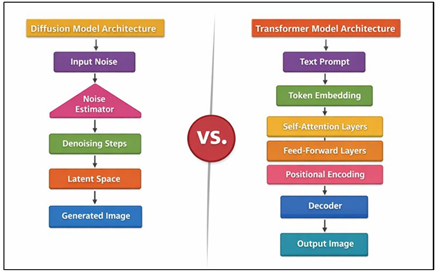
Figure 1 Architecture of Diffusion and Transformer-Based Models for Photographic Image Synthesis
Transformer-based architectures which were initially designed to work on natural language processing systems have been expanded to image generation via attention mechanism modelling long-range interactions among visual elements. Transformers achieve fine-tuning of textual description to visual outputs when trained with diffusion or multimodal training of large size. This has rendered text-to-image generation a prevailing paradigm in modern AI photography permitting users to describe detailed scenes, atmospheres, and stylistic allusions in the words. Artistically, these models broaden the possibilities of creative processes through providing subtle conceptual as well as refinement.
3.3. Prompt engineering and human–AI co-creation workflows
Prompt engineering has become a very important interface between human creativity and image generation by AI, with implications on the way photographic results are conceptualized and evaluated. Most modern AI systems are not self-sufficient and instead are based on textual or multimodal cues by a user to direct the generation process. These cues can be defined in terms of subject matter, lighting, camera angles, emotional, or artistic content, and in a way human intent is converted into machine comprehensible commands. Prompts can be of a high quality, specific, and conceptual clarity; such factors impact the images greatly. Human-AI co-creation processes are not limited to one-stimulus situations, but rather involve repetitive processes of creation, selection, optimization, and reinterpretation. Users can tend to produce multiple variations, modify prompts or mix outputs with manual editing, which makes AI an extension of human authorship interacting collaboratively. In photography, it is a reflection of the old ways of staging, experimentation in the darkroom, and post-processing, but in an algorithmic way. These processes are making the concepts of artistic merit more complicated, as they are spreading out the artistic power in both human choice and machine processes.
4. Methodology
4.1. Dataset selection and curation of AI-generated and human photographs
To evaluate artistic value, the study uses a well-selected set of AI-generated and human-created photographs to the extent that it represents a balanced and representative assessment of artistic value. The human images are obtained through publicly accessible photography collections and modern portfolios, and they are in all genres, including portraiture, landscape, street photography, documentary, and conceptual art. Selection criteria are based on diversity in style, cultural context, subject matter and aesthetic approach and excludes the images that are strongly bias towards brands or celebrities to reduce familiarity effects. Every image created by humans is anonymised to lessen the impact of reputation on ratings. The AI generated photographs are created through various state of the art image generation models, which covers various generative paradigms. Prompts are created to be parallel in the themes and genres they represent in the human photography subset in order to make meaningful comparison. To overcome bias in datasets, the prompts are enabled through repeated refinements in order to prevent the explicit emulation of recognizable artists or copyrighted works. Figures produced undergo filters on technical artifacts and only those figures that fulfil the baseline standards of photographic qualities are kept.
4.2. Experimental design and evaluation protocol
The research methodology is a conjoint approach to the evaluation process to give an opportunity to embrace quantitative and qualitative aspects of artistic merit. The participants are shown randomized groups of images without any information about the authors to minimize the bias based on the preconceived notions of AI or human creators. Individual assessment of the images is done to avoid comparative anchoring effects. The assessment plan incorporates the combination of standardized rating schemes with open-ended interpretative answers, which allows doing the assessment in a structured way and at the same time leave the interpretation to subjective reflection. Quantitative analysis dwells upon major artistic attributes, such as the quality of composition, emotional appeal, originality, depth of ideas and general artistic quality. The Likert-scale measures are used to collect the ratings so that they can be analyzed statistically and compared across groups. Qualitative feedback represents the interpretative narratives, perceived intentionality, and emotional responses of the viewers and provides a clue on meaning construction made by AI and human photos. The experiment uses between-group and within-group comparisons to compare the differences based on image origin, genre and generative model. Significance is tested using statistical methods to determine patterns in evaluation results. Image order is randomized and session length is manipulated in order to consider learning or fatigue effects. This strict review plan not only entails methodological strength, but also it recognizes the subjective essence of the concept of aesthetic judgment in photographic art.
4.3. Survey instruments and expert panel assessment
The data on evaluation is gathered both in the form of structured surveys and expert panel assessment that will enable to involve various opinions about the artistic merit. The questionnaire will target those audiences and those who are professionally trained in art. It consists of demographics, knowledge about photography and AI, and attitudinal indicators to put respondents into perspective. Core assessment measures depend on the validated aesthetical judgment scales modified to fit the analysis of photographic data, to guarantee the reliability and comparability of the results. Meanwhile, a professional panel of photographers, visual artists, curators and art teachers carries out detailed evaluations of a chosen sample of images. Professionals receive the request to give the rating and a written commentary, basing on the artistic intent, stylistic integrity, cultural resonance, and strength of the idea. The panel discussion is designed, though open-ended so that the experts are able to express subtle decisions that cannot be measured using numerical scales.
5. Comparative Analysis
5.1. AI-generated vs. human-created photographs
The comparative study of AI and human-created images is based on the perception of the artistic value of images according to such important evaluation dimensions. The quantitative findings show that photos created by AI can be rated highly in terms of technical performance such as sharpness, consistency in lighting, and composition. On a number of genres, especially portraits and staged scenes, AI images can often be confused with human-made work concerning the realism of the surface. Nevertheless, discrepancies arise in parameters of the conceptual richness, narrative purpose, and emotional plausibility. Images that are created by humans are rated higher in intentionality and context meaning as people are likely to assume the presence of a personal vision or experience. Qualitative answers indicate that viewers would give more easily the sense of intention and moral consciousness to human photographers, particularly in documentary or more socially based photography. Conceptual differences between AI-generated and human photographic workflows are conceptually compared in Figure 2. On the contrary, AI generated images are occasionally said to be impressive visually but ambiguous in terms of emotions or lack of conceptual clarity.
Figure 2

Figure 2 Conceptual Architecture Comparing AI-Generated and Human-Created Photographic Workflows
It is interesting to note that in the case of concealed authorship, the distance between evaluation reduces, which implies that impressions of artistic virtue are shaped equally by assumptions of origin as by visual attributes. This observation highlights the artificiality of artistic valuation. In general, the discussion indicates that although AI-generated images can compete with the creations of humans in terms of formal aesthetics, there is still a dissimilarity in the way meaning, intention, and authorship are perceived in artistic criticism.
5.2. Cross-model comparison of AI image generators
Comparison between models shows a high degree of variability in artistic results among the varying AI image generation systems. Models that are analytically based on previous generative paradigms are more likely to generate images of strong visual coherence and high local realism but low in diversity and repeat common compositional structures. The systems of newer diffusion and transformer also have a wider stylistic range, a stronger global coherence and a more delicate adherence to conceptual prompts. These distinctions are captured in scores of originality, complex composition and expressive variation. Some models are good at certain genres of photography. To illustrate, certain systems are better in generating portraits with realistic facial expressions and controlled light effects whereas others are even better in abstract or atmospheric scenes. Nevertheless, greater technical quality does not always make the work of higher artistic value because the people who assess the works tend to find more value in the interpretive richness and perceived intent than in the visual excellence itself. It is also noted in the analysis that training data and model design have an impact on aesthetic results. Models that are trained on smaller datasets are stylistically homogeneous, and models that are trained on more extensive visual cultures produce images with a greater range. These results indicate that the artistic criticism of AI-generated photographs cannot work with AI systems as a single category. Rather, merit should be evaluated relative to certain model capabilities, constraints, and creative circumstances where they are implemented.
5.3. Cultural and stylistic variation in artistic evaluation
The cultural and stylistic difference is an important factor in determining the artistic merit with regards to both artificial intelligence generated and human generated photographs. Survey data analysis shows that the cultural background of evaluators plays an important role in preferences towards subject matter, color choices, composition standards and symbolism. Images with connection to some recognizable cultural discourse or visual culture are more likely to be rated highly, irrespective of the author. This is more so evident in AI-generated images, in which cultural indicators can be homogenized or mixed. The work of different photographic traditions also makes it more difficult to evaluate them, since they prefer to focus on different criteria of merit. Making judgments based on intellectual involvement is common to the minimalist or conceptual styles, and authenticity and ethical context is essential to documentary or realist styles. Images produced by AI that blur or otherwise distort these stylistic norms can be openly seen as beautiful, but culturally indeterminate. On the other hand, to the extent that AI productions achieve the successful output within particular stylistic conventions, they become more easily accepted as artistically valid. These results show the relevance of culturally sensitive assessment models that exceed generalized aesthetic norms.
6. Results and Discussion
The findings suggest that AI-generated images have high ratings in technical aspects, such as composition, lighting, and visual coherence, and in many cases, they are equal or better than human-generated photographs on the surface level. Nevertheless, significant differences are statistically obtained in the dimensions associated with perceived intention, depth of narratives, and the authenticity of emotions, wherein human photographs are more likely to score higher. Evaluation gaps are reduced when authorship information is hidden and this may imply the influence of artistic judgment by both visual perception and beliefs regarding creative agency. Cross-model comparison shows that AI systems are quite diverse, and the more recent diffusion-based models have a stronger originality and stylistic diversity rating. The artistic merit is culturally specific and therefore it is important to remember that evaluation largely depends on cultural background and is a context shaping socially negotiated cultural aspect.
Table 2
|
Table 2 Comparative Evaluation of Artistic Merit (%) — AI-Generated vs. Human-Created Photographs |
||
|
Evaluation Criterion |
Human-Created Photographs (%) |
AI-Generated Photographs (%) |
|
Compositional Quality |
88.6 |
86.9 |
|
Lighting & Tonal Balance |
87.2 |
89.4 |
|
Emotional Impact |
84.8 |
78.3 |
|
Narrative / Conceptual Depth |
86.1 |
76.5 |
|
Originality Perception |
82.9 |
79.8 |
|
Cultural Context Awareness |
85.4 |
74.6 |
Man-made photos do better than AI generated images in a number of criteria that rely on meaning. Everyone in the emotional impact category also has a 6.5% difference in favor of human photographs (84.8 vs. 78.3), whereas the difference in the narrative and conceptual depth is even greater (9.6 vs. 86.1), meaning that human works are narrated more and are intentional. The comparison of human and AI-generated photographs is presented in Figure 3.
Figure 3
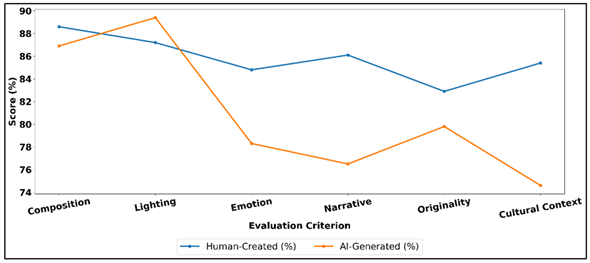
Figure 3 Human vs AI Photograph Evaluation
The largest difference can be observed in cultural context awareness whereby human photographs outperform AI-generated images in 10.8% (85.4% vs. 74.6%), reflecting the weakness of AI in visual expression in a culturally situated context. Figure 4 indicates that human and AI photographs vary in their quality.
Figure 4
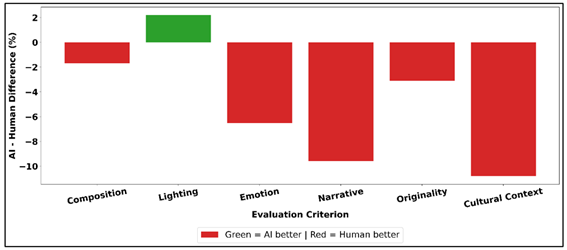
Figure 4 Difference Analysis of Human vs AI Photograph Quality
On the other hand, AI-generated photos are better than human in terms of lighting and tonal balance (89.4% vs. 87.2%), which is an optimization of exposure and color balance by the algorithm. Compositional quality has a human margin of 1.7% (88.6% and 86.9% respectively), whereas originality perception is deferring by only 3.1% (82.9% and 79.8% respectively), which indicates that there is almost no disparity in formal aesthetics.
Table 3
|
Table 3 Cross-Model Artistic Performance of AI Image Generators (%) |
|||
|
Performance Metric |
GAN-Based Model (%) |
Diffusion-Based Model (%) |
Transformer-Based Model (%) |
|
Visual Realism |
85.2 |
91.6 |
90.4 |
|
Stylistic Diversity |
78.5 |
89.3 |
87.1 |
|
Prompt Alignment Accuracy |
76.9 |
90.1 |
91.8 |
|
Emotional Resonance |
72.4 |
82.6 |
84.3 |
|
Conceptual Coherence |
74.1 |
85.7 |
86.9 |
The cross-model analysis shows apparent performance hierarchy between AI image generators at artistic levels. Diffusion-based models are always the most visually realistic with a score of 91.6, which is 6.4 and 1.2 higher than GAN-based, and transformer-based models, which show their capability to capture fine texture and global image coherence. Figure 5 provides a comparison in performance of disparate generative image synthesis models.
Figure 5

Figure 5 Comparative Performance of Generative Models
Diffusion models are again more diverse in style with 89.3, which is 10.8 and 2.2 times higher than GANs and transformers, respectively. To provide fast alignment accuracy, transformer-based models score the highest score of 91.8 that is slightly better than diffusion models (90.1) and significantly higher than GANs (14.9), which demonstrates the power of attention mechanisms in semantic understanding. Emotional resonance is the lowest aspect in all models, but transformers achieve the highest score of 84.3, then diffusion models with 82.6, and GANs with 72.4, and there is a 11.9% difference between early and modern architectures. Equally, conceptual coherence also increases significantly with architectural development, going up to 74.1 percent in the case of GANs, 85.7 percent in the case of diffusion models, and 86.9 percent in the case of transformers. On the whole, it can be seen that there is a clear evolutionary trend: the closer the model architecture is to semantically conscious and context-sensitive, the better artistic performance is achieved, and the AI image-generation process is no longer centered on surface realism, but on more conceptual expression of photographs.
7. Conclusion
In this paper, the researcher attempted to assess the artistic quality of AI-created photographs by combining aesthetic theory, technological analysis, and empirical evaluation. The results prove that the technical complexity of AI systems now allows them to generate photo images of a visual and aesthetic quality. Formally, i.e., regarding composition, tonal balance, and realism, AI-generated photos can be compared to the works created by humans and old stereotypes about the uniqueness of human abilities in photographic activity can be challenged. Nonetheless, artistic quality rises above technical quality. The research shows that there are still notable discrepancies in the interpretation of meaning, intention, and emotional depth of AI-generated and human-created photographs by the viewers. Human photographs are increasingly linked to individual vision, lived subject, and environment, especially in genres that are dependent on ethical involvement or narrative basis. The analysis also demonstrates that AI image generators are not a homogenous group of products. The various models have varied aesthetic inclinations based on the training data, architecture and immediate interaction which needs model-specific evaluation methods. This variation, in terms of culture and style also has a decisive influence, reaffirming the fact that artistic merit is culturally located and not universal. The findings ensure that the idea of AI should be perceived as a complement to human creativity instead of its substitution, which is supported by the hybrid approach under the hypothesis of the emergence of artistic value through human-AI interaction.
CONFLICT OF INTERESTS
None.
ACKNOWLEDGMENTS
None.
REFERENCES
Ang, T. (2022). Photography: The Definitive Visual History. Penguin.
Cetinic, E., and She, J. (2022). Understanding and Creating Art With AI: Review and Outlook. ACM Transactions on Multimedia Computing, Communications, and Applications, 18, 1–22. https://doi.org/10.1145/3475799
Fallahzadeh, A., and Yousof, G.-S. (2019). Piet Mondrian, Early Neo-Plastic Compositions, and Six Principles of Neo-Plasticism. Rupkatha Journal on Interdisciplinary Studies in Humanities, 11, 1–18. https://doi.org/10.21659/rupkatha.v11n3.12
Greenier, V., and Moodie, I. (2021). Photo-Narrative Frames: Using Visuals With Narrative Research in Applied Linguistics. System, 102, 102597. https://doi.org/10.1016/j.system.2021.102597
Hermerén, G. (2024). Art and Artificial Intelligence. In Elements in Bioethics and Neuroethics. Cambridge University Press. https://doi.org/10.1017/9781009431798
Jaruga-Rozdolska, A. (2022). Artificial Intelligence as Part of Future Practices in the Architect’s Work: MidJourney Generative Tool as Part of a Process of Creating an Architectural Form. Architectus, 3, 95–104. https://doi.org/10.37190/arc220310
Jiménez Alonso, B., and Brescó, I. (2021). Narratives of Loss: Exploring Grief Through Photography. Qualitative Studies, 6, 2021. https://doi.org/10.7146/qs.v6i1.124433
Lin, F., Xu, W., Li, Y., and Song, W. (2024). Exploring the Influence of Object, Subject, and Context on Aesthetic Evaluation Through Computational Aesthetics and Neuroaesthetics. Applied Sciences, 14, 7384. https://doi.org/10.3390/app14167384
Marcus, G., Davis, E., and Aaronson, S. (2022). A Very Preliminary Analysis of DALL-E 2. arXiv.
Mazzone, M., and Elgammal, A. (2019). Art, Creativity, and the Potential of Artificial Intelligence. Arts, 8, 26. https://doi.org/10.3390/arts8010026
Rinehart, R., and Ippolito, J. (2022). Re-Collection: Art, New Media, and Social Memory. MIT Press.
Samo, A., and Highhouse, S. (2023). Artificial Intelligence and Art: Identifying the Aesthetic Judgment Factors That Distinguish Human- and Machine-Generated Artwork. Psychology of Aesthetics, Creativity, and the Arts.
Sikri, A., Sikri, J., & Gupta, R. (2024). AI-Powered Dentistry: Revolutionizing Oral Care. ShodhAI: Journal of Artificial Intelligence, 1(1), 1–8. https://doi.org/10.29121/shodhai.v1.i1.2024.2
Wen, Y., Jain, N., Kirchenbauer, J., Goldblum, M., Geiping, J., and Goldstein, T. (2024). Hard Prompts Made Easy: Gradient-Based Discrete Optimization for Prompt Tuning and Discovery. Advances in Neural Information Processing Systems, 36, 51008–51025.
Zhang, C., and Lu, Y. (2021). Study on Artificial Intelligence: The State of the Art and Future Prospects. Journal of Industrial Information Integration, 23, 100224. https://doi.org/10.1016/j.jii.2021.100224
Zhou, E., and Lee, D. (2024). Generative Artificial Intelligence, Human Creativity, and Art. PNAS Nexus, 3, 52. https://doi.org/10.1093/pnasnexus/pgae052
|
|
 This work is licensed under a: Creative Commons Attribution 4.0 International License
© ShodhKosh 2026. All Rights Reserved.