ShodhKosh: Journal of Visual and Performing ArtsISSN (Online): 2582-7472
|
|
Human–AI Co-Creation Models in Conceptual Art
Suhas Bhise 1 , Indira Priyadarsani Pradhan 2
 , Dr.
Halaharvi Keerthi 3
, Dr.
Halaharvi Keerthi 3 , Dr.
Gajanan P. Arsalwad 4
, Dr.
Gajanan P. Arsalwad 4 , Dr.
Kanchan Tolani 5
, Dr.
Kanchan Tolani 5 , Saraswati
B. 6
, Saraswati
B. 6
1 Assistant
Professor, Department of E&TC Engineering, Vishwakarma Institute of
Technology, Pune, Maharashtra, 411037, India
2 Assistant
Professor, School of Business Management, Noida International University, Greater
Noida 203201, India
3 Department of Artificial Intelligence and Machine Learning, B.N.M.
Institute of Technology, Bangalore- 560070, India
4 Assistant Professor, Department of Computer, Engineering Trinity
College of Engineering and Research, Pune, India
5 Ramdeobaba University, Nagpur, Maharashtra,
India
6 Assistant Professor, Meenakshi College of Arts and Science, Meenakshi
Academy of Higher Education and Research, Chennai, Tamil Nadu 600110, India
|
|
|
ABSTRACT |
|
|
Human-ai
co-creation is an important paradigm in the modern conceptual art, whereby
ideas, processes and systems are prioritized over material form. This paper
explores formal frameworks of human-AI collaborative creation and the way
that AI is transforming the notions of authorship, intentionality, and
creative agency in the context of conceptual practice. The paper is based on
the conceptual art theory and co-creativity frameworks of the human-computer
interaction and places AI not only as a tool, but as an active partner in the
idea-based artistic generation. The study relies on a design-based research
approach based on multimodal data sources such as textual prompts, sketches,
generative products and interaction logs to analyse
the creative decision-making process in cycles between humans and AI. Case
studies Practice The practice-based case studies will illustrate how
generative language models and diffusion models can be used to support
conceptual exploration, allow for critical reflection, and broaden the
possibilities of artistic inquiry with regard to traditional material
constraints. When comparing the models of co-creation, it is possible to note
that creative control, conceptual depth, and perceived authorship are
different. Theoretically, the results can help change how the process of
creativity is understood as a distributed phenomenon that occurs between
human and AI through the interaction of the two instead of as a result of
human genius. |
|||
|
Received 12 September 2025 Accepted 10 December 2025 Published 17 February 2026 Corresponding Author Suhas
Bhise, suhas.bhise@vit.edu DOI 10.29121/shodhkosh.v7.i1s.2026.7121 Funding: This research
received no specific grant from any funding agency in the public, commercial,
or not-for-profit sectors. Copyright: © 2026 The
Author(s). This work is licensed under a Creative Commons
Attribution 4.0 International License. With the
license CC-BY, authors retain the copyright, allowing anyone to download,
reuse, re-print, modify, distribute, and/or copy their contribution. The work
must be properly attributed to its author.
|
|||
|
Keywords: Human–AI Co-Creation, Conceptual Art, Co-Creativity,
Generative AI, Artistic Authorship, Practice-Based Research |
|||



1. INTRODUCTION
Conceptual art essentially changed the direction in which art was practiced in the twentieth century by giving primacy to ideas, processes and systems as opposed to material form and aesthetic finish. Since its initial formulation, conceptual art defied conventional ideas of craft, originality, and author-ship and contended that the intellectual structure of a work of art is the work of art. Here, artificially intelligent creation as a creative partner is not a break or a break in, but a continuation of conceptual practice throughout history. The conceptual art focus on dematerialization, procedural reasoning, and delegation of execution is also close to human–AI co-creation models, which makes AI especially a matter of interest to contemporary conceptual artists. The latest developments in generative AI specifically large language model, diffusion-based image generators, multimodal systems have changed the way ideas can be externalized, iterated, and recontextualized. Instead of being highly automated as in the case of previous digital tools, modern AI systems are also actively involved in the ideation process, suggesting new textual, visual, and symbolic associations Melville et al. (2023). This has reinstated AI as an active tool rather than a passive one in the creative processes. Consequently, conceptual art activities are ever more concerned with dialogic relationships between human will and machine generated propositions, questioning critically the question of creativity, agency and authorship. The conceptual art of human-AI co-creation cannot be described well in terms of technical or aesthetic aspects. Rather, it demands an interdisciplinary approach that combines the conceptual art theory, human-computer interaction, and co-creativity research Haj et al. (2024). In this kind of framework, creativity is considered to be a distributed process that exists between human decisions, algorithmic processes, training data and feedback loops. As shown in Figure 1, collaborative models are those in which human intent and AI generation are co-evolved conceptually. This is consistent with the tradition of conceptual art of questioning the role of the author, in which artists have traditionally outsourced production to assistants, systems, instructions, or chance-operated processes.
Figure 1

Figure 1 Human–AI Co-Creation Models in Conceptual Art
Practice
AI builds upon this tradition and adds probabilistic and data-driven delegation which is both generative and unpredictable. Although there is an increased interest in AI-generated art, most of the current discussion is biased between the technological innovation and moral panic, with most people seeing AI as either a threat to human creativity or a fully independent creator. These dichotomous stories blur the more subtle fact of co-creation, in which the creative results are produced in collaboration, and not in substitution Chiou and Lee (2023). This partnership is particularly acute in conceptual art, where the meaning is created based on the decisions made by the curators, framing the context, or intending meaning, and not the actual material object. Human-AI co-creation models can thus offer an effective prism through which to explore the human-AI negotiation of control, interpretation and responsibility in practices mediated by AI.
2. Literature Review and Theoretical Foundations
2.1. Conceptual art theories: idea-centric creation and dematerialization
Conceptual art was a critical reaction to object-oriented and market-based art practices by stating that the major content of art is ideas and not physical form. The main idea of this movement is centered on the principle that the idea or intellectual suggestion to a work is superior to its material implementation. the artistic value is then to be found in purpose, training, words and context and not in artisanship or sensuous beauty. It is this change that allowed artists to use text, documentation, systems, and procedural rules as valid artistic media and in many cases makes the object they produce secondary or even unnecessary Haase and Hanel (2023). Dematerialization was one of the leading theoretical foundations of conceptual art, which is focused on processes, actions, and thought experiments at the expense of permanent objects. Art might be in the form of written directives, scores, diagrams, or momentary events, disrupting the classical ideas of originality and property. Most significantly, conceptual art justified delegation and automation by enabling it to be done by others or by the predetermined systems as long as the original idea was not lost. With this delegation openness, a fundamental basis of current computational and algorithmic practice was established in theory. In this context, the concept of authorship is propositional, but not manual, which corresponds to the present-day AI-mediated creation Cropley and Cropley (2023). In situations where the AI systems produce works through conceptual prompts, datasets, or rules specified by the artist, the work is part of the conceptual tradition of breaking out the idea and the execution. Conceptual art theory therefore offers a strong perspective on human-AI co-creation as the extension of idea-based, systems-based art as opposed to its rejection.
2.2. Human–computer interaction and co-creativity frameworks
Researchers of human-computer interaction (HCI) has been steadily moving past usability-focused paradigms in favor of creative co-worker relationship between computers and humans. In this development, the conceptions of co-creativity visualise the creativity as a joint process whereby creativity is ideated, explored, and refined by human and machine processes. Co-creativity models focus on interactive feedback loops, mixed initiative systems and adaptive interfaces that react to human input in generative approaches instead of viewing computers as passive tools Rezwana et al. (2023). In co-creative systems there is no centralized agency but a distributed one. Human beings offer goals, constraints, aesthetic judgement and contextual awareness whereas the computational systems offer speed, variation, pattern discovery and probabilistic generation. This distribution is consistent with models of extended cognition, according to which cognition is conceptualized as operating both internally and externally, in the form of systems and thinking. In this case, the invention of creativity occurs through the interaction, not through an individualized authorship. HCI studies also differentiate human-inspired, system-inspired, and balanced co-create interactions, and have provided a valuable typology through which human-AI cooperative work in the arts is analyzed. In co-creativity models, it is not uncommon to evaluate based on quality of the processes as well as on outputs, user engagement and perceived creative ownership Demirel et al. (2024). These are specifically applicable to conceptual art, where meaning is created through interaction, reflection and decision-making as opposed to formal aesthetics alone.
2.3. Review of AI-generated and AI-assisted art studies
The study of AI-generated and AI-assisted art has grown at an accelerated rate with the development of machine learning, specifically in the generative models of text, images, and multimodal content. The initial research was mainly on algorithmic art and Nema (2024) rule-based systems whereby the artists coded formal constraints into computer programs. The more recent scholarship considers deep learning-based systems that produce results via statistical learning using large datasets, which provides more variability and seem novel Chen et al. (2023). Such studies examine aesthetics quality, originality, perception, and in many cases, compared the works produced by AI and those produced by humans. Research continues to find enthusiasm in AI-assisted art, and not generation that is completely autonomous, focusing on collaborative processes in which artists guide, curate and remake the work of the machine. In these works, AI serves as a catalyst to exploration, which allows quick iteration and conceptual provocation instead of human creativity Koivisto, and Grassini (2023). Researchers observe that the subject of artistic authorship is deeply anthropocentric, with creation of meaning through timely design, selection, sequencing, and contextual framing. Philosophical issues of creativity and intentionality are also approached critically in this literature as well as ethical concerns to data provenance, bias, and work. But there is less work which places AI art directly within existing art-historical and theoretical frameworks. The conceptual art offers a rather useful but under-researched frame of reference since it prefigures systems, delegation, and process-based meaning Grassini and Koivisto (2024). The practices of human-AI co-creations in the fields of generative art today are summarized in Table 1 Through this lens, it is possible to analyze AI art and see human-AI co-creation not in the light of technological spectacle, but as a theoretically motivated continuation of the modern conceptual practice.
Table 1
|
Table 1 Summary on Human–AI Co-Creation in Conceptual and Generative Art |
|||||
|
Approach |
Art Domain |
AI Technique Used |
Human Role |
AI Role |
Limitations |
|
Early Algorithmic Art Systems |
Conceptual / Generative Art |
Rule-based algorithms |
Define rules & concepts |
Execute rules |
Limited adaptability |
|
Interactive Computational Creativity Grassini (2023) |
Digital Art |
Evolutionary algorithms |
Guide & evaluate |
Generate variations |
High learning curve |
|
AI-Generated Textual Art |
Conceptual Text Art |
Language models |
Curate & frame meaning |
Generate text |
Ambiguous authorship |
|
GAN-Based Visual Art Studies |
Visual Conceptual Art |
GANs |
Select & contextualize |
Generate images |
Dataset bias |
|
Human–AI Co-Drawing Systems Lee et al. (2025) |
Visual Art |
Sketch recognition + ML |
Iterative refinement |
Suggest forms |
Tool dependency |
|
Prompt-Based Generative Art |
Conceptual / Digital Art |
Diffusion models |
Design prompts |
Produce outputs |
Prompt sensitivity |
|
AI as Creative Partner Frameworks |
Creative Theory |
Hybrid ML systems |
Negotiate intent |
Co-ideate |
Evaluation complexity |
|
Curatorial AI Art Practices |
Installation Art |
Generative ML |
Curate & interpret |
Mass generation |
Loss of intent clarity |
|
Process-Oriented AI Art Ege et al. (2024) |
Conceptual Art |
Language + vision models |
Reflect & document |
Generate artifacts |
High documentation effort |
|
Educational Co-Creative Systems |
Art Education |
Interactive AI tools |
Mentor & assess |
Assist ideation |
Limited artistic depth |
|
Data-Driven Conceptual Art |
Critical Data Art |
ML on datasets |
Frame critique |
Reveal patterns |
Ethical concerns |
|
Multimodal Generative Installations |
Conceptual Installations |
Multimodal AI |
Compose narrative |
Generate media |
Technical complexity |
|
Autonomous AI Art Experiments |
Experimental Art |
Self-generative AI |
Minimal intervention |
Lead creation |
Weak conceptual framing |
|
Human–AI Conceptual Co-Creation (This Study) Karadağ, and Ozar (2025) |
Conceptual Art |
Language & diffusion models |
Frame, iterate, interpret |
Generate & provoke |
Context-specific findings |
3. Human–AI Co-Creation Models
3.1. Human-led with AI as generative assistant
With the human-based co-creation approach, the artist maintains the main creative role and uses AI as a generative partner to expand the ideation and implementation abilities. The conceptual structure, thematic will and evaluative standards are determined by the human but variations and associations or materializations of the ideas of the artist are created by AI systems. This model is very much similar to the historic conceptual art traditions whereby artists outsource performance to assistants, systems or procedural regulations but retain ownership of the original idea Weisz et al. (2023). In this model, AI is an exploration engine, as opposed to a creating engine. Artists explore generative outputs through prompts, constraints, and refinements to support the creation of work, and choose the results and contextualize the results to most effectively convey the desired idea. The creative process is therefore not in the generation of each output, but in the structuring of the generative process and the decisions of selection and framing. The use of AI creates artifacts that serve as raw materials in conceptual reasoning instead of finished works of art per se. This model encourages purposefulness, explanatory lucidity and moral responsibility where the human artist is in charge of meaning and authorship Lisete et al. (2025). It fits especially in conceptual art that is text-based, instructional, and research-oriented practices in which AI reinforces cognitive discovery. The conceptual depth of conceptual art is boosted by the idea of accelerating the iteration and increasing the range of associative possibilities so that AI is subdued to human artistic judgment, further supporting the conceptual art premises that are rooted in ideas.
3.2. AI-led with human curatorial and interpretive control
In AI-centered co-creation models, generative systems will play a bigger role in the creation of main content, and people will be curators, editors and interpreters of machine-generated content. In this case, the artist actively entrusts a significant generative power to AI, where algorithms create unanticipated combinations, stories or visual shapes and forms that can be beyond the expectations of the human. It is emergent, probabilistic and algorithmic in agency, a response to the historical concern of conceptual art with systems and randomness in its techniques of creation. Radical selection, sequencing, and contextual framing are the changes in human engagement in this model Abdel et al. (2023). This is because the artist decides what will be displayed, how they will be named or categorized and the manner in which the audiences will be influenced to decipher them.
Figure 2
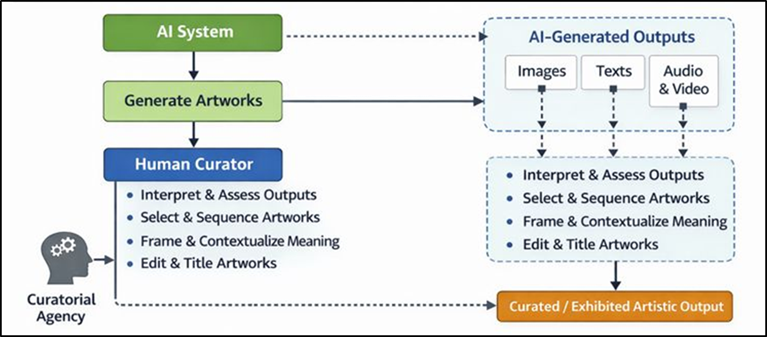
Figure 2 Flowchart of AI-Driven Generation and Human
Curatorial Authorship
The meaning is built in a post-factum manner that is based on decisions of the curator, but not based on intentions. Figure 2 illustrates the generation of AI with human curation to direct the end artistic authorship. This makes authorship be dispersed in algorithmic process and human interpretation which undermines traditional ideas of creative ownership. The model has been especially used with large-scale generative projects, data-driven conceptual works, and installations where the volume, variation, or systemic behavior, itself, has conceptual meaning. Nonetheless, it also has a theoretical and ethical concern of responsibility, bias, and attribution because AI systems are mirrors of the structures and datasets that form their outputs. This model has the benefit of not placing AI as an alternative to human creativity, but rather as a fruitful source of conceptual provocation and critical questioning.
3.3. Symbiotic co-creation and iterative feedback loops
Symbiotic co-creation involves the most integrated human-AI collaboration where human and machine mutually impact each other through continuous and iterative feedback loops as the creative path is followed. No one dominates in this model, but rather creative agency dynamically shifts between ideation, generation, evaluation and refinement stages. Human prompts and constraints determine the AI outputs, and in return, human understanding, will and further decisions are reformulated by AI responses. This two-way communication resonates with co-creativity and extended cognition theories, according to which the creativity arises through the interaction and not through the independent agents. The advantages of this model to conceptual art practices are that it can turn the very creative process into a place of investigation. The conversation between human and AI as it develops is incorporated into the artwork, with the process, negotiation, and emergence being of greater importance than the ultimate form. Recordings of encounters, decision making and reworkings frequently have about as much quality of thought as the artifacts produced. Symbiotic co-creation allows artists to experiment with ambiguity, reflexivity and co-authorship like never before. It encourages dynamic conceptual investigation, which enables concepts to respond to machine instigated provocations and human assessment. Although this model is highly creative, it also requires careful mindfulness of power relations, restrictions within a system and ethical issues. Finally, the symbiotic co-creation makes human-AI interaction in itself a conceptual medium, an extension of the philosophical roots of the conceptual art of the present day.
4. Methodological Framework
4.1. Design-based research approach for artistic inquiry
This work uses the design-based research (DBR) approach to research the topic of human and AI co-creation in conceptual art practice. Design based research is especially appropriate to artistic enquiry since it focuses on abstract experimentation, situated practice and theory construction through concrete interaction as opposed to abstraction. As opposed to purely empirical or evaluative methodologies, DBR enables artistic processes to simultaneously serve both as research tools and research results. This is in line with the tradition of conceptual art where process, documentation and reflection are considered part of the art itself. In this system, the innovative interventions are planned, implemented, evaluated, and optimized in several cycles. With each iteration, there will be information about the interactions of conceptual intentions, human decision making and AI system behavior over time. The methodology is less concerned with generalization on a wide basis and tends to assert the setting validity and principles that can be generalized to wider artistic and theoretical assertions. The artist-researcher works reflexively and recognizes his/her contribution to the creation of a system creative outcomes and the interpretation of results. The design based research also helps to incorporate qualitative analysis, reflective journaling, and comparative case study to gain a subtle insight into the co-creative processes.
4.2. Data sources: prompts, sketches, text, visual outputs, and process logs
The methodological framework brings in the use of various multimodal data repositories to ensure that the entire complexity of human processes in co-creation with AI is achieved. Primary data refers to textual cues and directions employed to control generative models, which are direct descriptions of the human will and conceptual definition. These prompts are examined in terms of structure, semantic focus and change through many iterative loops and through this format, the negotiating control and meaning of artists using language are examined. Additional information is the hand-drawn sketches and diagrams, as well as written notes created prior, during, and after communication with AI. These artifacts give an idea of pre-conceptual ideation, interpretive reasoning and reflective evaluation. Another essential dataset generated by AIs is text and visual productions generated by algorithmic response, not in its own right but in the form of material evidence of the co-creation system. Comparative analysis between outputs denote variation, emergence and thematic coherence. A very important source of longitudinal data is process logs and interaction histories. These logs record timely corrections, choice actions, a discarded output and time patterns of interaction. The research investigates the way the creative direction changes in accordance with the AI behavior and the way the iterative feedback influences the conceptual results by looking at the process logs. These multimodal sources of data, in combination, allow triangulation of intention, action, and result. This data holism approach contributes to the intensive study of human-AI co-creation as processual and reflective practice at the core of modern conceptual art studies.
4.3. Experimental protocols for human–AI interaction cycles
The experimental procedures in the research are made to order human-AI interaction without limiting the creative openness needed in conceptual art practice. The experiments have a specific interaction cycle that comprises of conceptual framing, generative engagement, evaluation and reflective adjustments. The artist creates a conceptual premise in the first phase and comes up with prompts or constraints which state the desired inquiry. It is then fed with these inputs to use AI systems, which produce either textual or visual outputs. After the generation, a critical evaluation step is done whereby the generated output is assessed through the conceptual relevance, ambiguity, provocation, and adherence to artistic intent. Outputs are selected or modified or rejected and reflective notes recorded in order to capture interpretive reasoning. According to this analysis, the prompts and constraints are updated and the next interaction cycles begin. Such a recursive design allows observing the development of ideas in a systematic manner based on repeated interactions of a human with an AI. Experiments are run on various co-creation models and generative configurations to make comparative analysis possible. Specificity of the prompts used, degree of human involvement, and control over the levels of iteration are deliberately changed with similar conceptual objectives. The method will enable the study of the impact of various interaction protocols on agency distribution, conceptual depth, and perceived authorship.
5. Case Studies and Practice-Based Experiments
5.1. Text-driven conceptual art co-created with generative models
Conceptual art based on text offers a very productive avenue of studying the nature of human-AI co-creation, since language has served historically as the means and expression of conceptual art. Generative language models are involved in these case studies as the dialogic companions in generating textual propositions, instructions, fragmentary poems, and speculative statements. It starts with the artist conceptualizing an inquiry, which can be authorship, temporality, institutional critique, etc. and develops prompts that express limitations, not determinate results. AI-generated text is not considered to be finished, but rather as conceptual content to be interpreted, chosen or recontextualized. The iterative prompting scheme allows the artist to investigate semantic drift, contradiction and emergent meaning, and to find out how the probabilistic language generation can uncover latent conceptual associations. The creative act lies within the framing of questions, finding resonant fragments, and putting them together into well-definite conceptual formations. Recording of rejected productions and timely evolution are constituted integral to the work of art, a process of foregrounding instead of after-the-fact. The experiments show that AI broadens linguistic possibility and, nevertheless, it is part of human intention. Figure 3 displays a progressive partnership in writing between human conceptual will and AI results. The resulting artworks tend to be in the form of directions, manifestos or performative writing, which is in line with historical conceptual art tactics.
Figure 3

Figure 3 Human–AI Textual Co-Creation Framework for
Conceptual Art Practice
Notably, authorship is sustained by way of curatorial and interpretative choice putting AI in the role of a conceptual explorer not a self-sufficient author. Co-creation of text is therefore used to show that idea-based artistic inquiry can be extended fruitfully by generative models.
5.2. Visual and multimodal conceptual works using diffusion and language models
The visual case study and multimodal case studies address the subject of conceptual art practices changing in the presence of language-based prompting and diffusion-based image generation and cross-modal systems. These experiments involve artists using textual cues, sketches and semantic constraints to produce visual work which is more of a speculative hypothesis than an aestheticist resolution. Images tend to be deliberately ambiguous, repetitive or unstable and are focused on conceptual intent rather than visual finesse. Multimodal workflows provide the possibility of a recurrent translation text to image and vice versa, where textual products shape the further linguistic consideration and vice versa. This interchangeable procedure anticipates interpretation because artists critically inspect the way AI systems represent abstract ideas, cultural allusions or philosophical inquiries. The process of selection and sequencing generated images becomes core artistic actions and the massive amounts of output are transformed into edited conceptual narratives or installations. The works tend to emphasize the weaknesses and shortcomings of generative systems, and the visual artifacts are commonly used to reveal a disconnection between the human intent and the human reading of machines. In this way, the very concept of AI system becomes a conceptual content, which focuses on the data structures, representational norms, and algorithmic mediation. These experiments suggest that conceptual art practices that put an emphasis on inquiry, critique, and systemic reflection, rather than visual spectacle, can be facilitated by multimodal AI systems by integrating both diffusion and language models.
5.3. Comparative analysis across co-creation models
The comparative datasets of human-led, AI-led, and symbiotic co-creation models show that there are substantial variations in creative agency, conceptual and perceived authorship. The clearest and most conscious consistency of the concept is best applied in human-based models because the artists will have a solid grip on framing and interpretation. AI is more an ideational amplifier, which does not disrupt the authorial identity but aids exploration. The pieces are likely to be in line with pre-existing conceptual art traditions of teaching and delegation. Models led by AI on the other hand are more focused on emergence and unpredictability. Although conceptual results might seem to be fractured or discursively obscure, curatorial framing decisively determines the creation of meaning. Authorship is more shared and the conceptual emphasis is usually turned to systems, chance and algorithmic behaviour. The works especially succeed when it is the volume, variability, or autonomy of generation itself that is in question. The co-creation based on symbiosis results in the most dynamic conceptual development, ideas evolve on the basis of the persistent human-AI conversation. Process, reflexivity and co-authorship have been preempted in these works, which frequently include interaction logs and iterative artifacts as part of the final work. Although this model contains an abundance of creative possibilities, it requires an increased level of critical awareness and rigor.
6. Discussion and Theoretical Contributions
6.1. Redefining creativity and authorship in conceptual art
The results of this paper require the re-evaluation of the concept of creativity and authorship in the modern conceptual art. Conventionally, creativity has been linked with personal will and intellectual novelty, even in conceptual practices that deemphasize material performance. The co-creation of human and AI complicates this model because it brings out non-human agents that actively construct propositions, variations, and associations. In this regard, creativity arises as a distributed aspect which is defined by human choices, algorithmic, training data and repeated interaction. Authorship also becomes a change of singular ownership into the curatorial and procedural responsibility. Instead of being determined by actual production, authorship is performed by designing generative systems, delivering conceptual questions, as well as by choosing and framing outputs. This is in line with the history of conceptual art of focusing on instruction, delegation, and systems, and extending it to the domain of computation. Notably, the existence of AI does not annul the authorship of humans, yet it redefines it as a relationship and process-oriented. These dynamics oppose legal, ethical, and institutional suppositions such as the assignment of authorship to that of manual production. In the human-AI collaborative works, the meaning and impact are human-focused, despite the case of algorithmically generated works. Conceptual art therefore offers a critical model of comprehending AI as not an independent creative entity, but as a member of a wider creative ecosystem. This redefinition prefigures creativity as an interactional practice, which confirms the eternal topicality of conceptual art in the era of generative intelligence.
6.2. Human–AI co-creation as an extension of conceptual practice
Co-creation between human beings and AI does not imply a kind of break in terms of conceptual art, but rather a natural progression of its original principles. Systems, language, chance and delegated execution has always been among the acceptable artistic strategies in conceptual art. The AI technologies add to these anxieties by unleashing more complicated, data-driven systems that can derive unpredictable though contextually based consequences. In that regard, AI is a medium and method of the current conceptual practice. The conceptual art that has focused on process rather than object using AI is further decentralized by using AI as an artistic location. Prompts, iterations, errors and revisions are significant and even documented and are frequently shown alongside end products. This emphasis supports the dematerialization and broadens the conceptual platform to encompass algorithmic behavior, data politics as well as human-machine negotiation. Moreover, the co-creation of human AI increases the critical ability of conceptual art. Artists can use AI to critique the institutions and carry out epistemological research by revealing how generative systems encode cultural assumptions and biases. Instead of pursuing an aesthetic novelty, these practices preempt the consideration of authorship, agency and mediation via technology. Viewed in this perspective, AI does not harm the critical base of conceptual art, but it makes it more energetic. Human-AI co-creation, therefore, is a modern form of expression of the long-standing conceptual art tradition of doubting the processes of art production, its definition, and its valuation.
6.3. Implications for art theory, pedagogy, and creative industries
The human-AI co-creation theoretical knowledge has great implications in art theory, education, and creative industries. To art theory, such practices present a challenge against human-centered practices of creativity and positively open up other frameworks that consider distributed agency, algorithmic mediation, and authorship as processes. The field of conceptual art could use AI in more than just a way, though, namely, as an extension of system-oriented artistic enquiry in the modern context. Human-AI co-creation presents new paradigms of teaching conceptual thinking, critical reflexivity and experimentation in pedagogical settings. Alternatively to having students learn to use tools, AI may be incorporated as an interlocutural interlocutor that provides an eliciting response and promotes learning through trial. By focusing on process documentation, timely design and critical analysis, learners will be motivated to interact with AI in a reflective, as opposed to an instrumentally, manner. This model promotes innovativeness, morality, and digital literacy at the same time. In creative industries, human-AI co-creation provides that ideation hybrid workflows are implemented with AI supplementing ideation and human analytic and moral control. The responsible use of AI in the areas of design, media, and cultural production can be informed by conceptual frameworks created in artistic settings. The practices confront the narratives of complete automation and creative displacement by preempting sense, context, and accountability.
7. Conclusion
This paper has discussed the concept of human-AI co-creation in conceptual art as a modern continuation of conceptual, system-based artistic practice. Placing generative AI in the context of already existing conceptual art theory and co-creativity models, the paper will show that AI does not profoundly alter the critical underpinnings of conceptual art, but rather intensifies the already existing issues of the form with process, delegation, authorship and dematerialization. Human-AI cooperation turns out to be a range of practices that are influenced by different allocations of agency instead of a single and unanimous mode of creation. The study outlines the role in building creative meaning through framing, interaction, and interpretation, instead of autonomous generation, through the study of human-led, AI-led, and symbiotic co-creation models. In all the models, conceptual power is not largely influenced by the level of autonomy in the algorithms but rather the capacity of the artist to construct interaction procedure, curate outputs, and critically situate machine-created content. AI will never be an author, but it is a system of generation, in which human conceptual intention is integrated with it. The iterative interaction of humans and AI, as demonstrated by the methodological framework and practice based case studies, also makes creativity a distributed and reflexive process. Recording of prompts, decisions and revisions will become part of the artwork, and conceptual art is often based on the focus on process instead of object. Interaction is already pre-empted in these practices as a medium of art, which broadens conceptual investigation to include algorithms of behavior, data structures and human-machine negotiation. Hypothetically, the paper brings to the current discussions of creativity and authorship by rewording them into relation and procedural instead of individual and material. In practice, it provides an insight to artists and educators, as well as to creative industries, aiming to make AI a critical and responsible one. Finally, human-AI co-creation of conceptual art confirms a creative approach to the age of generative intelligence is essentially human, not because people create, but because they frame, interpret and attach meaning to systems of collaboration.
CONFLICT OF INTERESTS
None.
ACKNOWLEDGMENTS
None.
REFERENCES
Abdel-Karim, B. M., Pfeuffer, N., Carl, K. V., and Hinz, O. (2023). How AI-Based Systems can Induce Reflections: The Case of AI-Augmented
Diagnostic work. MIS Quarterly,
47, 1395–1424.
Chen, V., Liao, Q. V., Wortman
Vaughan, J., and Bansal, G. (2023). Understanding the Role of Human
Intuition on Reliance in Human-Ai Decision-Making with Explanations. Proceedings of the ACM on
Human–Computer Interaction, 7, 1–32.
Chiou, E. K., and Lee, J. D.
(2023). Trusting Automation: Designing for Responsivity and Resilience.
Human Factors, 65, 137–165.
Cropley, D., and Cropley, A.
(2023). Creativity and
the Cyber Shock: The Ultimate
Paradox. Journal of Creative Behavior,
57, 485–487.
Demirel, H. O., Goldstein, M.
H., Li, X., and Sha, Z. (2024). Human-centered Generative Design Framework: An Early Design Framework to Support Concept Creation and Evaluation. International Journal of
Human–Computer Interaction, 40, 933–944.
Ege, D. N., Øvrebø, H. H., Stubberud, V., Berg, M. F., Steinert, M., and
Vestad, H. (2024). Benchmarking AI Design Skills:
Insights from ChatGPT’s
Participation in a Prototyping Hackathon. Proceedings of the Design Society, 4, 1999–2008.
Grassini, S. (2023). Shaping the Future of Education:
Exploring the Potential and
Consequences of AI and ChatGPT
in Educational Settings. Education Sciences, 13, 692.
Grassini, S., and Koivisto, M.
(2024). Artificial Creativity?
Evaluating AI Against Human Performance in Creative Interpretation of Visual Stimuli. International Journal of
Human–Computer Interaction, 41, 4037–4048.
Haase, J., and Hanel, P. H. P.
(2023). Artificial Muses: Generative Artificial Intelligence Chatbots
have Risen to Human-Level Creativity. Journal of Creativity, 33, 100066.
Haj-Bolouri,
A., Conboy, K., and Gregor, S. (2024). Research Perspectives: An Encompassing Framework for Conceptualizing
Space in Information Systems: Philosophical Perspectives, Themes, and Concepts. Journal of the Association for
Information Systems, 25, 407–441.
Karadağ, D., and Ozar,
B. (2025). A New Frontier in Design Studio: AI and Human Collaboration in Conceptual
Design. Frontiers of Architectural Research. Advance online publication.
Koivisto, M., and Grassini, S.
(2023). Best Humans Still
Outperform Artificial
Intelligence in a Creative Divergent Thinking Task. Scientific Reports, 13, 13601.
Lee, S., Law, M., and Hoffman, G.
(2025). When and how to
use AI in the Design Process? Implications for
Human-Ai Design Collaboration. International Journal of Human–Computer
Interaction, 41, 1569–1584.
Lisete, B. (2025). Serendipity: Obstacles and Facilitators. Journal of Arts, Humanities
and Social Sciences, 2, 50–56.
Melville, N. P., Robert, L.,
and Xiao, X. (2023). Putting Humans
Back in the loop: An Affordance Conceptualization
of the 4th Industrial Revolution. Information Systems Journal, 33, 733–757.
Nema, M., (2024). Folk And Tribal Arts And Literature Covered In Indian Tradition ShodhShreejan: Journal of Creative Research Insights, 1(1), 24-29. https://doi.org/10.29121/shodhshreejan.v1.i1.2024.8
Rezwana, J., and Maher, M. L. (2023). Designing Creative AI Partners with COFI: A Framework for Modeling Interaction in Human-AI Co-Creative Systems. ACM Transactions on Computer–Human Interaction, 30, 1–28.
Weisz, J. D., Muller, M., He, J., and Houde, S. (2023). Toward General Design Principles for Generative AI Applications. arXiv. https://arxiv.org/abs/2301.05578
|
|
 This work is licensed under a: Creative Commons Attribution 4.0 International License
© ShodhKosh 2026. All Rights Reserved.