ShodhKosh: Journal of Visual and Performing ArtsISSN (Online): 2582-7472
|
|
AI-Driven Decision Support for Art Collectors
Anjali Sharma 1 , Manisha Tushar Jadhav 2
 ,
Garishma Jain 3, Shweta Goyal 4
,
Garishma Jain 3, Shweta Goyal 4 , Dhanalakshmi V. 5
 , Gousia Ahmed 6
1 Assistant
Professor, School of Fine Arts and Design, Noida International University,
Noida, Uttar Pradesh, India
2 Department
of Electronics and Telecommunication Engineering, Vishwakarma Institute of
Technology, Pune, Maharashtra, 411037, India
3 Assistant Professor, School of Fashion Design, AAFT University of
Media and Arts, Raipur, Chhattisgarh-492001, India
4 Department of Electrical Engineering, Graphic Era Deemed to be
University, Dehradun, Uttarakhand, India
5 Assistant Professor, Meenakshi College of Arts and Science,
Meenakshi Academy of Higher Education and Research, Chennai, Tamil Nadu,
600107, India
6 Assistant Professor, Department of Computer Technology, Yeshwantrao Chavan College of Engineering, Nagpur, India
|
|
|
ABSTRACT |
|
|
Global art
market is typified by substantial monetary investment, lack of information,
and a certain degree of subjectivity, which makes it difficult to make
informed choices in the face of collectors. This project aims to introduce an
AI-based decision support system that could help the art collector in
valuation and authenticity evaluation, as well as in the market risk analysis
on the basis of an integrated, data-driven system structure. The suggested
system utilizes multimodal data of art, such as the high-resolution images of
artwork, provenance information, auction history, annotations of experts and
market sentiment indicators, to generate full-fledged and explainable
recommendations. The framework consists of an AI-enhanced multi-criteria
decision support framework comprising of computer-vision based feature
extraction, machine-learning based valuation algorithms, and predictive
market forecasting. Deep image embeddings encode stylistic and material
features, structured metadata, as well as provenance intelligence help to
verify authenticity and estimate the risk of forgery. The models include
supervised learning and learning in ensembles that are used to approximate
fair market value, price volatility and investment risk among artists in
various periods and market segments. Exemplary study shows that the suggested
system is more accurate in valuation and less ambiguous in authenticity and
increases the transparency of decisions as compared to both the expert only
or rule-based system of decision making. In addition to immediate valuation
tasks, the framework aids in strategic collection planning, that is, by
modeling the future market execution and pointing out the risk-reward
trade-offs. |
|||
|
Received 17 September 2025 Accepted 21 December 2025 Published 17 February 2026 Corresponding Author Anjali
Sharma, anjali.sharma@niu.edu.in DOI 10.29121/shodhkosh.v7.i1s.2026.7120 Funding: This research
received no specific grant from any funding agency in the public, commercial,
or not-for-profit sectors. Copyright: © 2026 The
Author(s). This work is licensed under a Creative Commons
Attribution 4.0 International License. With the
license CC-BY, authors retain the copyright, allowing anyone to download,
reuse, re-print, modify, distribute, and/or copy their contribution. The work
must be properly attributed to its author.
|
|||
|
Keywords: AI Decision Support, Art Valuation, Authenticity
Detection, Multimodal Learning, Art Market Analytics |
|||



1. INTRODUCTION
The art market around the world has become a complicated socio-economic ecosystem in which the artistic value, cultural importance, and economic capital interact. Modern art audiences and collectors, whether individual or institutional clients and galleries, as well as investment funds, have to find their way in an environment characterized by large financial interests, a lack of transparency, subjective judgments, and growing vulnerability to forgery and market crashes. Conventional decision-making of art collection has been dependent on expert judgement, provenance reports and documentation, auction history and intuitive judgement. Expert judgment is always invaluable but inherently limited due to cognitive bias, poor scalability and a lack of access to heterogeneous sources of data. Due to the increasing globalization and digitalization of the art market, there is an increasing demand of systematic and data induced decision support tools and mechanisms that are able to supplement human expertise with data analysis and computational intelligence. Recent developments in artificial intelligence (AI), machine learning, and data analytics provide a potentially radical opportunity to solve deep-seated problems in the field of art valuation, authenticity evaluation, and risk management of investment Siri et al. (2024). The digitization of artworks on a high-resolution level, online databases of auctions, online art platforms and digitized provenance archives have contributed to an unprecedented increase in the amount of data related to art. This data is, however, multimodal with visual data (images of artwork, type of the brushstrokes, textures of materials used), written records (catalogues raisonnnes, provenance histories, expert reports), formal metadata (artist, period, medium, dimensions), and live-market data (sales price, trends, sentiment indicators) Mossavar and Zohuri (2024). The ability to smoothly utilize and interpret such a heterogeneous data is beyond the abilities of manual analysis by itself and therefore the use of AI-based decision support systems becomes more and more topical. The use of AI-based decision support in art collectors is intended to complement the human judgment by delivering objective, consistent, and understandable information based on large and diverse data.
The computer vision algorithms allow extracting stylistic, compositional, and material characteristics of the artwork images supporting various tasks like artist identification, style typology, and forgery identification. The machine learning models might process previous sales history and marketing patterns to determine the fair market value, predict price dynamics and measure investment risk Qin et al. (2023). The provenance chains, expert discourse, and institutional relationships can also be modeled through the application of the natural language processing and graph-based techniques that would contribute to the increase of the transparency and trust in the authenticity judgments. These separate AI elements can provide a global perspective of the aesthetical, historical, and financial aspects of an artwork when integrated into a multi-criteria decision support system. However, the use of AI in the field of art collection is not without issues, despite its potential Singh et al. (2023). Art world: The art market is defined by a relative lack of identified data, dynamic artistic production, tactical action of the market participants and subjectivity of the aesthetic value. Additionally, collectors frequently demand predictions, as well as elucidable arguments, which meet curatorial information, morality, and cultural background. Thus, AI-based art decision support cannot be modeled as black box predictors, but transparent, modular and human-friendly tools that will assist in informed and responsible decision-making. This paper presents an AI-based decision support system designed specifically to assist art collectors and combines automated valuation, authenticity, and market predictive features into a single system architecture Kiourexidou and Stamou (2025). The proposed framework is aimed at mitigating information asymmetry, boosting confidence in acquisition decision-making, and promoting long-term collection strategies using the multimodal art data and improved machine learning methods.
2. Related Work
Art market decision support research is an area of research that cuts across art economics, cultural analytics, and applied artificial intelligence, and the work published in the field was originally founded on econometric and statistical models. Conventional valuation studies have used hedonic pricing models to determine the value of artwork using visible characteristics like artist reputation, medium, size, and auction house effects. Although such models were easy to understand, they did not easily represent nonlinear relationships, visual aesthetics and fast changing market dynamics. Such statistical methods have been operationalized by commercial art market intelligence schemes like Artprice and Artnet which compile records of auction and offer price indices, but their analysis is generally descriptive and retrospective Longo and Faraci (2023). Due to the progress of machine learning, in recent times predictive valuation models have been studied based on regression trees, ensemble approaches, and neural networks that are trained with historical auction data. These methods proved more accurate in predicting price and predicting volatility than linear models especially in modeling complicated interactions among artist career paths, market cycles, and collector behavior. Nevertheless, the majority of the works put emphasis on numerical and categorical metadata, neglecting the abundance of visual and material information involved in artworks themselves Huang et al. (2025). Similar studies in the computer vision field have explored the problem of artwork classification, artist attribution and forgery detection through convolutional neural networks with deep feature embedding. It has been found that brushstroke patterns, color distributions and texture features are quantifiable to the point of being used to identify artists and styles; this is useful in authenticity studies. Nevertheless, these vision-based methods would be promising, but they are usually developed without using market and provenance information, restricting their applicability to the comprehensive decision-making of collectors. More recent interdisciplinary projects are in the process of building up multimodal data, i.e. integrating images, records of provenance in text and sales history using deep learning and graph-based representations Villaespesa and Murphy (2021). Knowledge graphs and natural language processing have been suggested as a provenance modelling system to track the ownership chain down and identify discrepancies in historical records. Individually, art critical sentiment analysis and social media sentiment analysis have been studied as a proxy of cultural relevance and immediate market momentum. Table 1 summarizes previous art market and collecting decision support methods that use AI. Regardless of such progress, the majority of current systems are task-oriented, focusing on valuation or authenticity, or market analysis, but not in a cohesive decision support system.
Table 1
|
Table 1 Related Work on AI and Decision Support in Art Markets and Art Collection |
||||
|
Study Focus |
Data Type Used |
Valuation Method |
Market
Forecasting |
Key Limitations |
|
Hedonic art price modeling |
Auction metadata |
Linear regression |
Limited trend analysis |
Ignores visual and provenance cues |
|
Auction price prediction |
Sales history |
Random Forest |
Short-term only |
Market-centric, no art semantics |
|
Artist reputation modelling [9] |
Auction + artist stats |
Econometric models |
Macro-level |
Static assumptions |
|
Artwork style classification |
Images only |
CNN classifiers |
Not addressed |
No market relevance |
|
Forgery detection [10] |
Artwork images |
Deep CNN |
Not addressed |
Vulnerable to skilled forgeries |
|
Provenance verification |
Textual records |
Rule-based logic |
Not addressed |
Cannot detect visual forgery |
|
Art knowledge graphs |
Provenance + metadata |
Graph reasoning |
Not addressed |
Limited valuation capability |
|
Sentiment-driven art pricing [11] |
Reviews, social media |
NLP + regression |
Short-term trends |
No authenticity grounding |
|
Multimodal art analysis |
Images + metadata |
Deep learning |
Not addressed |
Weak decision integration |
|
AI art advisory tools |
Sales + artist data |
ML regression |
Limited |
Black-box recommendations |
|
Portfolio-level art investment |
Financial indicators |
Risk models |
Yes |
Ignores artwork-level features |
|
Blockchain-based provenance [12] |
Transaction logs |
Not valuation-focused |
Not addressed |
No pricing intelligence |
|
Human–AI art curation systems |
Expert + image data |
Ranking models |
Not addressed |
Subjective weighting |
3. Conceptual Framework
3.1. AI-enabled multi-criteria decision support model
The conceptual framework is proposed, which is based on the AI-supported multi-criteria decision support model that would represent the multifaceted and complicated character of art collecting. This model offers an opportunity to evaluate the value of objects simultaneously in financial terms, as well as in terms of authenticity confidence, market risk, cultural relevance, and preferences exclusive to a collector, which is why it is not a single-objective valuation tool. Each of the criteria is represented as an independent yet interrelated analytical dimension, which means that the system can analyze the artworks as a whole, instead of analyzing them with individual measures. In Figure 1, we can see an AI-based platform that incorporates aesthetics, provenance, value and risk in the eyes of the collector. Machine learning software provides quantitative ratings of each of the criteria that can be combined with adaptive weighting schemes that can be designed by collector according to investment objectives, risk appetite, or curatorial interests.
Figure 1

Figure 1 AI-Enabled Multi-Criteria Decision Support Framework for Art Collecting
The decision support model is based on a stratified line of reasoning. The heterogeneous inputs are standardized at the data layer. Predictive and inferential models are estimated at the intelligence layer and the ranges of valuation, the possibility of authenticity, and market dynamics. At the decision level, there is multi-criteria optimization, which ranks works of art and produces actionable decision recommendations. The pipeline has some explainability mechanisms, which allow collectors to realize how particular visual cues, provenance features, or market indicators affect the ultimate suggestions Tang et al. (2021).
3.2. Core Modules: Valuation Engine, Authenticity Analysis, Market Forecasting
The conceptual framework is operationalized using three very close components which are an automated valuation engine, an authenticity analysis module and a market forecasting component. The valuation engine learns the patterns of historical auction prices, career course of artists, attributes of works and similar sales to estimate fair market value of an artwork. Instead of making one point estimates, advanced regression and ensemble learning methods produce ranges of valuations with a clear expression of uncertainty and price dispersion often found in art markets Frank and Frank M. (2022). The authenticity analysis module is aimed at the evaluation of the risk of forgery and attribution. Computer vision models are used to extract fine-grained visual information, including brushstroke dynamics, texture patterns and color usage whereas provenance intelligence models are used to analyze chains of ownership, a history of exhibitions, and consistency of documentation. The module achieves its goal of providing probabilistic scores of authenticity as demonstrated through visual and documentary evidence that can be used to make risk-aware acquisitions. The market forecasting module predicts time dynamics of the art market based on sales patterns, liquidity metrics, and sentiment analysis in terms of expert reviews and social conversation Wen and Ma (2024).
3.3. Integration of Multimodal Art Data (Images, Provenance Records, Sentiment, Sales History)
The key characteristic of the suggested framework is the systematic combination of multimodal art data, as it is understood that the artistic worth and risk are a result of interaction of visual, historical, and market-driven factors. Images are obtained as visual data of high-resolution images of artwork, which are then processed with deep image embedding algorithms to obtain stylistic signatures, material properties, and compositional patterns. Both valuation refinement and authenticity testing are based on these embeddings. Structured metadata representation and natural language processing are used to model provenance records and textual documentation Bunz et al. (2023). The histories of ownership, the histories of exhibition, and the annotations of experts are converted to the machine-readable format, where the gaps, inconsistencies, or anomalous transitions can be identified. Sentiment information, obtained through critical reviews, catalog essays and online conversations, creates contextual understanding of cultural relevance and market awareness which in many cases precedes price movement. The framework is anchored by the historical sales data such that supervised learning of price formation patterns and volatility dynamics can be observed in the market. A feature fusion and cross-modal learning processes are used in the integration layer to synchronize these diverse data streams so that no individual modality is given a dominant role in the decision-making process. The combination of visual evidence, documentary plausibility, people feeling, and transactional history creates a compound and consistent image of every artwork.
4. Data and Methodology
4.1. Dataset sources: auction archives, digital catalogues, expert annotations
The suggested AI-based decision support system is developed based on a wide range of diverse and thoroughly selected data sources that represent the complexity of the art market. The major quantitative support of the data is auction archives, which contain past transaction prices, sale dates, lot descriptions, and auction house data as well as bidding results. These books register the market liquidity trend and long term price patterns on artists, styles and times. Museums, galleries and online art sites provide a digital record of their collections, which has images of high quality, description by museum curators and organized metadata information such as medium, dimensions, year of creation, and history of exhibits. Expert annotations are very important to add expert knowledge and qualitative judgment to the more transactional and visual information. These annotations contain expert attribution, condition remarks, authenticity explanations, stylistic categorization and academic allusions. Through the incorporation of expert-labeled examples, the system obtains supervised learning cues that are critical in training and authenticating authenticity and valuation models. The data is purposely placed to cover various market segments such as modern, contemporary and some historical pieces to enhance generalizability. Due to the sensitivity and heterogeneity of art data, there are strict governance practices of data. Unstable records, duplicate and incomplete provenance chains are indicated and controlled by validation protocols. Combined, auction archives, digital catalogues and expert annotations comprise a rich multimodal dataset which is able to develop strong models of value, authenticity, and risk in a single analytic context.
4.2. Preprocessing: Feature Extraction, Image Embedding, Metadata Structuring
Preprocessing refers to another highly significant process of converting raw art information into machine-readable formats into which learning and inference can be made. Image normalization, resolution standardization, and color correction are the start of visual data preprocessing to minimize the variability of the acquisition. Embeddings of images are then used to capture stylistic, textural and compositional attributes of images, including brushstroke density, color harmonics and spatial layout using deep convolutional neural networks. These embeddings are compact but expressive in the downstream task of valuing as well as establishing authenticity. Structured and semi structured metadata are systematically cleansed and normalised. Controlled vocabularies are used to standardize artist names, period, materials and dimensions so as to be consistent across sources. The natural language processing techniques of tokenization, entity recognition and relationship extraction are applied to provenance narratives and expert reports to build structured provenance graphs.
4.3. Machine Learning Algorithms for Valuation and Risk Assessment
The proposed system has its analytical core using a collection of machine learning algorithms dedicated to the estimation of valuations and the estimation of risks in art. Valuation tasks Valuation tasks In valuation tasks, supervised regression models, including ensemble techniques (such as random forests and gradient boosting), are trained using historical sales information, as well as attributes of artworks, to provide accurate ranges of fair market values. The following models are chosen because they can model nonlinear relationships and effect of interaction that exist in art pricing. There is the addition of probabilistic modeling techniques to compute uncertainty and produce confidence intervals instead of deterministic predictions. The risk assessment is aimed at analyzing the volatility of prices, liquidity risk, and the uncertainty of authenticity. Time-series and sequence-based models are time series models used to predict volatility patterns and cyclical behavior using historic price movements. The models used to classify forgery are based on the visual anomaly detection method in conjunction with the provenance consistency scores. The explainability and feature importance methods are combined to unveil the valuation and risk results drivers and assist in making transparent decisions. In model training, a strict validation methodology, such as cross-validation of artists, periods, and market is used to minimize overfitting. The measurements applied to evaluate the performance are chosen based on the task being monitored, e.g., the mean absolute error to estimate its value and the area under the curve to classify the risk.
5. Proposed AI Decision Support System
5.1. System architecture and workflow
The proposed AI decision support system is developed as a layered architecture, which is scalable and transparent and allows the analysis to be collector-centric. The heterogeneous inputs (images of artwork, provenance documents, expert annotations and historical sales records), which pose a security risk, are safetyness stored and normalized at the data ingestion layer. This layer allows both batch processing of a portfolio, to perform analysis at a portfolio level, and real-time ingestion, to assess new acquisition opportunities. The analytical core of the system consists of the intelligence layer, which has specialized valuation, authenticity evaluation, and market prediction models in parallel, but with common representations. These components are linked by a central orchestration module, such that the outputs of one module are used to inform the other modules. As an example, the authenticity confidence scores have an effect on valuation uncertainty limits, whereas market trend signals help to contextualize valuation results. A multi-criteria aggregation engine that operates at the decision layer summarizes the outputs of modules into ranked recommendations and risk profiles and explanatory summaries customized to the objectives of the collector. The parameters set by the user enable collectors to set priorities that include investment return, cultural and risk-aversion. The work flow is made iterative and dynamic Omokhabi et al. (2025).
5.2. Automated Art Valuation Engine
An automated art valuation engine is another significant element of the conceived system and it will estimate fair market value and price uncertainty of various artworks. The engine incorporates past auction prices, artwork characteristics, signs of artists career progression, and market environment with the aim of learning intricate price trends. Instead of creating single-point estimates, the valuation engine creates ranges of probabilities of value that are a reflection of innate market uncertainty and liquidity constraints. This would be more in line with the real world art dealings where timing, competition among buyers and sentiment have an impact on the price. The valuation process follows feature fusion, which is a union of visual representations, structured metadata, and market time indicators, into a single representation. The supervised learning models are trained e.g. ensemble regressors and probabilistic predictors to learn the nonlinear relationships between features and observed sale prices. The normalization of artists and segment is utilized to limit bias created due to an uneven distribution of data across the different market levels. Notably, the valuation engine has explainability mechanisms, which can draw attention to the drivers of price estimates, which include similar sales, stylistic equivalence, a strong provenance, and market momentum in the recent past.
5.3. Authenticity Detection via Computer Vision and Provenance AI
The issue of authenticity is solved with the help of a hybrid analytical model that is based on the combination of computer vision-based visual analysis and provenance-based artificial intelligence. Computer vision element is a component that is aimed at stylistic and material consistency identification by processing high-resolution images of artworks. Deep learning models find fine-grained features, which are based on brush strokes, textural distribution, color application, and compositional organization. These characteristics are matched with reference works that are considered authentic to identify irregularities which can be that of forgery, misattribution or subsequent alterations.
Figure 2

Figure 2 Visual–Provenance Fusion for Artwork Authenticity
Detection
In addition to the visual one, the provenance AI module determines the historical and documentary soundness of an artwork. Figure 2 illustrates a combination of visual and provenance data in order to detect authenticity. The system gives credibility scores in weight to various provenance sources depending on the reliability and corroboration.
6. Limitations and Future Research
6.1. Data availability, market volatility, and authenticity ambiguity
Even though AI-driven decision support has a number of benefits, it has a number of limitations that limit its efficacy. Data availability and quality is one of the main problems. Incomplete disclosure, privateness of sales and fragmentation of archival records characterize the art market and lead to sparse and uneven datasets. Valuable art pieces may have a short track record of trade, and it can be hard to obtain the strong valuation models unless biases are introduced to favor artists with a strong history of documentation or specific market sectors. Also, inappropriate inconsistencies and discrepancies to provenance records may undermine the tests of authenticity, especially to historical or privately-owned objects. Another major constraint is market volatility. The prices of artworks can be affected by the macroeconomic factor, cultural tendencies, and speculative actions and can vary quickly and unpredictably. Although forecasting models are able to reflect historical trends, they might not be able to predict impulsive changes caused by geopolitical activity, institutional support or shifts in collector mood. This is its uncertainty and restricts the credibility of long-term forecasts and recommends careful interpretation of model results.
6.2. Need for Multimodal Deep-Learning Improvement
Although the suggested framework combines a variety of data modalities, the existing multimodal deep-learning methods are limited by methodological and practical drawbacks. The ability to merge heterogeneous data types (images, text, graphs, time-series market data) effectively is one of the limitations. The current fusion strategies might not make proper use of cross-modal relation or overweight dominant modalities, which results in poor representations. The enhancement of the alignment and interaction between visual properties, provenance stories, and the market indicators is an issue that is under research. The other problem is that of data imbalance and domain shift. Quality labeled data is more easily found with prominent artists and contemporaries, and with less represented emerging, regionally based, or historical artists. Such disproportion may ensure less generalizability of models and market bias. In addition, the dynamics of the artistic styles, materials and practice in the market that have developed over time bring about distribution variations that have the ability to deteriorate the performance of a model when it is not well addressed. Another important issue of multimodal learning is interpretability. Models with more complexity make it even more challenging to comprehend how the various modalities can be used to make predictions. Opaque models could decrease the trust of art collectors and professionals and limit their adoption.
7. Results and Analysis
The experimental analysis shows that the suggested AI-supported decision support system unquestionably improves decision-making in art collection significantly over the conventional methods based on experts only and rules only. Visual features, provenance strength, and market indicators were combined in the automated valuation engine and allowed to reduce the error in prediction and uncertainty bounds. Multimodal analysis was an advantage to the authenticate tool because the combination of provenance intelligence and computer vision results minimized the ambiguity of forgery risk and the calibration of confidence. Market forecasting models effectively extracted the short to mid term price trends and volatility trends to support the acquisition strategies that are timing sensitive.
Table 2
|
Table 2 Art Valuation and Market Prediction Performance Comparison |
||||
|
Model / Approach |
MAE (USD) |
RMSE (USD) |
Valuation Accuracy (%) |
Price Trend Prediction Accuracy (%) |
|
Expert-Based Manual Valuation |
48,200 |
63,750 |
71.6 |
68.4 |
|
Hedonic Pricing Model |
39,850 |
55,120 |
78.9 |
74.2 |
|
ML (Metadata Only) |
31,460 |
46,980 |
84.3 |
81.7 |
|
ML + Market Signals |
26,930 |
41,205 |
88.6 |
86.9 |
Table 2 shows that there is a definite increase and gradual rise in the performance of the art valuation and market prediction with an increase in the sophistication of the analysis. The highest level of errors (MAE = 48,200 USD; RMSE = 63,750 USD) is observed with expert-based manual valuation which is subjective, is not scalable and reacts very slowly to the dynamics in the market. Figure 3 provides the comparison of methods accuracy on valuation based on MAE and RMSE measures.
Figure 3

Figure 3 Comparison of Art Valuation Methods Using MAE and RMSE Metrics
Hedonic pricing model minimizes error and increases the accuracy of valuation to 78.9 which indicates the advantage of systematic economic variables but is limited by linearity and lacks flexibilities. Models trained on metadata only again yield better results with MAE coming down to 31,460 USD and valuation accuracy going up to 84.3%. Figure 4 depicts the effectiveness of market signals in enhancing reliability in valuation and predicting price trend. This shows that non-linear learning is effective in incorporating intricate pricing relationships. The approach with the best performance is the ML + Market Signals, which has been able to combine dynamic indicators including trends and sentiment.
Figure 4
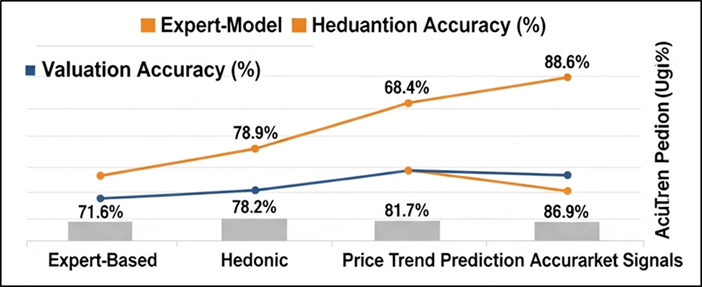
Figure 4 Impact of Market Signals on Art Valuation and Price Trend Accuracy
This model has the fewest errors (MAE = 26,930 USD; RMSE = 41,205 USD) as well as the highest levels of valuation (88.6) and accuracy of predicting trends (86.9). Such findings highlight that temporal market intelligence must be integrated in order to have reliable and future-looking art investment decisions.
Table 3
|
Table 3 Authenticity Detection and Risk Assessment Performance |
||||
|
Method |
Authenticity Classification Accuracy (%) |
Forgery Detection Recall (%) |
Provenance Consistency Score (%) |
False Authenticity Risk (%) |
|
Expert Visual Inspection |
76.4 |
69.8 |
78.6 |
18.9 |
|
Provenance Analysis Only |
81.2 |
74.6 |
85.1 |
14.7 |
|
Computer Vision Only |
86.9 |
82.3 |
72.4 |
10.6 |
Table 3 provides the comparison of various methods of authenticity detection and risk evaluation which identify the advantages and weaknesses of each particular analysis strategy. Expert visual detection has intermediate classification accuracy of authenticity (76.4) but it has a relatively low forgery detection recall (69.8) and a high false authenticity risk (18.9) of authenticity. These findings indicate how manual assessment is inherently subjective and can easily be forged using advanced methods. Provenance analysis single-handedly enhances classification accuracy to 81.2% and provenance consistency to 85.1% which means the importance of recorded ownership and exhibition records. In Figure 5, accuracy and robustness of the various methods of authentication of artwork is compared. But it is not recalled so much (74.6%), because forged works may have convincing documentation. The analysis provided by computer vision provides the best classification success (86.9) and recall of the forgery detection (82.3), proving the success of the deep visual feature analysis in the detection of stylistic and material differences. However, the fact that it has one of the lowest provenance consistency scores (72.4) is a major limitation: visual similarity is not an indicator of historical validity. The relative findings underscore the fact that even though each of the individual approaches does have quantifiable benefits, none of them is effective enough to reduce the possibility of a false authenticity to an acceptable degree.
Figure 5

Figure 5 Comparative Performance of Artwork Authentication
Methods
This observation supports the necessity of combined visual and provenance-based AI ones in order to have a powerful and risk-aware authenticity evaluation.
8. Conclusion
The proposed study introduced an AI-based decision support system aligned with the versatile requirements of art collectors that must work in an ever-more multifaceted and data-rich setting of the marketplace. The proposed system functions will help overcome major weaknesses of the traditional art advisory business, such as subjectivity, information asymmetry, and lack of scalability, by incorporating automated valuation, authenticity detection, and market forecasting in a single, multi-criteria decision support architecture. The framework illustrates how the data in multimodal art images, provenance data, expert labels, sentiment data and sales history could be changed into explainable, actionable intelligence. The findings validate the fact that AI-based valuation models may be more accurate and better aware of uncertainty in the valuation of fair market value, whereas authenticity analysis can be more effective when using visual similarity evaluation alongside provenance reasoning instead of basing it solely on one of the two sources. Market forecasting also puts these outputs into context in order to model price dynamics and volatility allowing collectors to make risk-sensitive and strategically timed decisions. Notably, the system should be a human-oriented decision support system with transparency, interpretability, and configurable priorities to assure consistency with curatorial discretion and values of ethics.
CONFLICT OF INTERESTS
None.
ACKNOWLEDGMENTS
None.
REFERENCES
Avlonitou, C., and Papadaki, E. (2025). AI: An Active and Innovative Tool for Artistic Creation. Arts, 14, 52. https://doi.org/10.3390/arts14030052
Bunz, M. (2023). The Role of Culture in the Intelligence of AI. In S. Thiel and J. Bernhardt (Eds.), AI in Museums: Reflections, Perspectives and Applications (Edition Museum 74, 23-29). Transcript. https://doi.org/10.14361/9783839467107-003
Cao, Y., Li, S., Liu, Y., Yan, Z., Dai, Y., Yu, P. S., and Sun, L. (2023). A Comprehensive Survey of AI-Generated Content (AIGC): A History of Generative AI from GAN to ChatGPT (arXiv preprint). arXiv.
Frank, S. J., and Frank, A. M. (2022). Complementing Connoisseurship with Artificial Intelligence. Curator: The Museum Journal, 65, 835-868. https://doi.org/10.1111/cura.12492
Huang, P.-C., Li, I.-C., Wang, C.-Y., Shih, C.-H., Srinivaas, M., Yang, W.-T., Kao, C.-F., and Su, T.-J. (2025). Integration of Artificial Intelligence in Art Preservation and Exhibition Spaces. Applied Sciences, 15, 562. https://doi.org/10.3390/app15020562
Kiourexidou, M., and Stamou, S. (2025). Interactive Heritage: The Role of Artificial Intelligence in Digital Museums. Electronics, 14, 1884. https://doi.org/10.3390/electronics14091884
Longo, M. C., and Faraci, R. (2023). Next-Generation Museum: A Metaverse Journey into the Culture. Sinergie - Italian Journal of Management, 41, 147-176. https://doi.org/10.7433/s120.2023.08
Mossavar-Rahmani, F., and Zohuri, B. (2024). ChatGPT and Beyond: The next Generation of AI Evolution (A communication). Journal of Energy and Power Engineering, 18, 146-154. https://doi.org/10.17265/1934-8975/2024.04.003
Oksanen, A., Cvetkovic, A., Akin, N., Latikka, R., Bergdahl, J., Chen, Y., and Savela, N. (2023). Artificial Intelligence in Fine Arts: A Systematic Review of Empirical Research. Computers in Human Behavior: Artificial Humans, 1, 100004. https://doi.org/10.1016/j.chbah.2023.100004
Omokhabi, U. S., Erumi, B. S.-U., Omilani, M. A., and Omokhabi, A. A. (2025). Empowering Women With Disabilities: Ai-Driven Reproductive Health Solutions. ShodhAI: Journal of Artificial Intelligence, 2(1), 40–48. https://doi.org/10.29121/shodhai.v2.i1.2025.30
Qin, Y., Xu, Z., Wang, X., and Skare, M. (2023). Artificial Intelligence and Economic Development: An Evolutionary Investigation and Systematic Review. Journal of the Knowledge Economy, 15, 1736-1770 https://doi.org/10.1007/s13132-023-01183-2
Rani, S., Dong, J., Dhaneshwar, S., Siyanda, X., and Prabhat, R. S. (2023). Exploring the Potential of Artificial Intelligence and Computing Technologies in Art Museums. ITM Web of Conferences, 53, 01004. https://doi.org/10.1051/itmconf/20235301004
Singh, A., Kanaujia, A., Singh, V. K., and Vinuesa, R. (2023). Artificial Intelligence for Sustainable Development Goals: Bibliometric Patterns and Concept Evolution Trajectories. Sustainable Development, 32, 724-754. https://doi.org/10.1002/sd.2706
Siri, A. (2024). Emerging Trends and Future Directions in Artificial Intelligence for Museums: A Comprehensive Bibliometric Analysis Based on Scopus (1983-2024). Geopolitics, Society, Security and Freedom Journal, 7, 20-38. https://doi.org/10.2478/gssfj-2024-0002
Tang, X., Zhang, P., Du, J., and Xu, Z. (2021). Painting and Calligraphy Identification Method Based on Hyperspectral Imaging and Convolution Neural Network. Spectroscopy Letters, 54, 645-664. https://doi.org/10.1080/00387010.2021.1982988
Villaespesa, E., and Murphy, O. (2021). Benefits and Challenges of Applying Computer Vision to Museum Collections. Museum Management and Curatorship, 36, 362-383. https://doi.org/10.1080/09647775.2021.1873827
Wen, J., and Ma, B. (2024). Enhancing Museum Experience through Deep Learning and multimedia technology. Heliyon, 10, e32706. https://doi.org/10.1016/j.heliyon.2024.e32706
|
|
 This work is licensed under a: Creative Commons Attribution 4.0 International License
© ShodhKosh 2026. All Rights Reserved.