ShodhKosh: Journal of Visual and Performing ArtsISSN (Online): 2582-7472
|
|
Blockchain and AI in Art Provenance Tracking
Dr. Gajanan P. Arsalwad
1 , Faldu Poonam R. 2
 , Karuna S Bhosale 3, Akshay Hemant Gongane 4
 , Shalini E. 5
 , Om Prakash 6
1 Department
of Computer Engineering, Trinity College of Engineering and Research, Pune,
Maharashtra, India
2 Assistant Professor, Department of Computer, Parul University, Vadodara, Gujarat, India
3 Department of Computer Science and Engineering, Pimpri Chinchwad
University, Pune, Maharashtra, India
4 Department of Engineering, Science and Humanities (Mechanical
Engineering), Vishwakarma Institute of Technology, Pune, Maharashtra, 411037,
India
5 Assistant Professor, Meenakshi College of Arts and Science, Meenakshi
Academy of Higher Education and Research, Chennai, Tamil Nadu 600104
6 Associate Professor, School of Business Management, Noida
International University, Greater Noida 203201, India
|
|
|
ABSTRACT |
|
|
The increased
digitization of the art market around the world has contributed to an
enhanced demand to have dependable, transparent and tamper-proof provenance
tracking systems. The conventional provenance records, which are usually
sporadic, are handled by humans and institution-specific, are susceptible to
forgery, loss of data, and deliberate alteration. The solution to these
issues in art provenance tracking is the proposed framework in this paper
that integrates Artificial Intelligence (AI) and Blockchain technologies to
enhance provenance tracking. Digitized artworks using AI methods can be
analyzed to produce high-level visual, material and stylistic features which
can be used to assess the authenticity of artworks automatically, detect
anomalies, and analyze similarities between works across large collections of
art. At the same time, the Blockchain technology offers a decentralized and
unchangeable registry to securely store provenance events including ownership
changes, restoration histories, exhibition histories, and artificial
intelligence generated authenticity scores. The suggested structure provides
a smooth flow of work where AI-generated metadata and the confidence measures
are hashed via hashing algorithms and anchored to the Blockchain which
ensures the integrity of data, transparency, and the long-term traceability.
The methodology includes the process of digitizing artwork, standardizing
metadata, training models to analyze the visual data, and considerations of
the Blockchain network design i.e. consensus mechanism and smart contracts.
This has been demonstrated by experimental evaluation that the integrated
approach greatly increases provenance reliability, decreases the effort of
manual verification, and increases trust between artists, collectors,
galleries, and cultural institutions. The paper critically evaluates the
issues of data bias in AI models, scalability and power consumption in
Blockchain systems, legal and ethical restrictions on digital ownership and
privacy as well. |
|||
|
Received 14 September 2025 Accepted 16 December 2025 Published 17 February 2026 Corresponding Author Dr.
Gajanan P Arsalwad, gajanansggs@gmail.com DOI 10.29121/shodhkosh.v7.i1s.2026.7119 Funding: This research
received no specific grant from any funding agency in the public, commercial,
or not-for-profit sectors. Copyright: © 2026 The
Author(s). This work is licensed under a Creative Commons
Attribution 4.0 International License. With the
license CC-BY, authors retain the copyright, allowing anyone to download,
reuse, re-print, modify, distribute, and/or copy their contribution. The work
must be properly attributed to its author.
|
|||
|
Keywords: Artificial Intelligence, Blockchain, Art Provenance,
Artwork Authentication, Cultural Heritage, Digital Art Markets |
|||



1. INTRODUCTION
Many of the processes of the global art ecosystem, including fine art, antiquities, collectibles, and digital artworks depend on provenance: the documented history of the creation, ownership, exhibition, and conservation of an artwork. Provenance has a conclusive role to determine authenticity, market value, cultural value, and ownership. Nevertheless, conventional provenance systems are usually decentralized, not transparent, and subject to abuse. Paper trails, institutional databases that are isolated and informal expert opinions have long been the primary form of provenance checking and have left consistent gaps that allow forgery, illegal trafficking, and misattribution. With the growth of the art market on an international scale as well as a growing trend toward digital, hybrid physical-digital space, such restrictions have become more distinct. Art fraud has remained a burning issue that has costed plenty of money and a lack of confidence among the collectors, museums, auction houses, and cultural heritage institutions Harala et al. (2023). Provenance tracking is further complicated by the complexity of the modern art markets which is characterized by cross-border sales, trade with the individuals and secondary markets. Even the well-documented artifacts can be affected by the lack of records, inconsistent metadata, and unreliable information about the change of authorship and ownership. Simultaneously, the fast maturation of digital art, online shows and tokenized items has put into place new types of provenance information which must be managed in a secure, verifiable and interoperable way. Emerging technologies in Artificial Intelligence (AI) and Blockchain technologies are a promising choice to solve these long-standing problems Davari et al. (2023). AI has also proven itself to be very effective in visual analysis, pattern recognition, and inference based on data, and visual examination of works of art on scales and levels of detail that are impossible to achieve by manual analysis alone. Image analysis methods including deep learning can detect stylistic features, brushstrokes, texture of the materials, and composition elements that can be used to determine authenticity and forgery. Together with contextual and historical metadata, AI models could likely conduct assessments of authenticity and similarity of large collections of artworks, supporting experts instead of supplanted by their judgment. The blockchain technology, however, presents an entirely different solution to provenance record Bertino et al. (2021). Blockchain has the potential to guarantee that provenance records that have already been authenticated and logged can not be changed without unanimity because of the ability to create decentralized, immutable, and time-stamped ledgers.
Smart contracts also enable automated implementation of provenance updates whenever ownership is transferred, exhibited or restored. This will leave a clear and auditable accountability record of events that will increase trust among the stakeholders and minimizes the use of centralized powers or mediators. Although AI and Blockchain possess their respective advantages, they have been used separately in the art sector. Authentication systems based on AI are often associated with a lack of transparency, lack of reproducibility, and difficulties with storing and sharing results in an insecure manner. On the other hand, provenance platforms that are based on Blockchain tend to be susceptible to human error of intentional misinformation because of manually entered data Vahidi et al. (2024). The inability to combine intelligent analysis and safe record keeping weakens the overall efficiency of available solutions. This gap is addressed in this paper as the author suggests a combined AI-based Blockchain solution to art provenance tracking. The main assumption is that AI-created information, including feature embeddings, authenticity scores, anomaly alerts, etc. must be cryptographically bound to Blockchain records that cannot be modified. This kind of integration means that the results of any analytical process would not be just the data-driven ones, but the results that can be verified, traced, and not altered over time. With the proposed method, which implies aligning intelligent analysis of artwork with decentralized management of provenance, it is hoped that the trust, transparency, and accountability of the art ecosystem will be enhanced Schiller et al. (2022).
2. Literature Review
2.1. Traditional and digital provenance tracking methods
Conventional methods of provenance tracking in art have been based on hard copy records and on professional witnessing and institutional records which are held by museums, galleries and auction houses. These documents usually comprise the bills of sale, catalog of exhibitions, reports on restoration, and the ownership certificates. Although these approaches have been very useful in authenticity verification, they are usually disjointed, incomplete and may be lost or forged, or misconstrued subjectively. The gaps of provenance are not rare, particularly regarding the artworks or objects of older age or which have ever been subjected to the possession of individual petitioners or to some informal markets or conflict regions. The expert based attribution, despite its usefulness, is also limited by human bias, limited scalability and unrepeatability Alharbi et al. (2022). As cultural heritage becomes digital, the digital provenance systems have come up to enhance accessibility and management of records. The documentation of artwork histories has been extensively carried out through museums and archives with the adoption of digital collection management systems, standardized metadata schema and online databases. The systems make multimedia data, including high-resolution images and conservation scans, to be faster to retrieve, cross-institutional and integrated. Nevertheless, majority of digital provenance systems are centralized implying that data integrity is pegged on the authority that maintains it Vilchez et al. (2023), Zhong and Goel (2024). Unauthorized alterations, poor standards of data, and Alalaq (2025)the lack of interoperability across platforms still cause a lack of trust. In addition, electronic records tend to recreate the shortcomings of the traditional systems through manual data entry and post facto recording.
2.2. Blockchain Applications in Art Markets and Cultural Heritage
The art markets and cultural heritage management have been turning to blockchain technology as it is a solution to offering decentralized, unchanging and transparent records keeping. Initial uses included the use of a distributed ledger system which stored a record of ownership and a history of transactions of the artworks. Blockchain minimizes the single-point failures and unauthorised modifications through the time-stamping of provenance events and sending copies of records to multiple nodes Akther et al. (2025). This has been especially useful with high value art deals, where trust between buyers and sellers and between buyers and intermediaries is fundamental. Regarding the art markets, Blockchain platforms were applied to trace the ownership changes, authenticate limited editions, and defend digital art and tokenized assets. Provenance updates can be automated by Smart contracts when selling, lending or exhibiting a work of art to maintain a uniform legal record and make it auditable. In cultural heritage, Blockchain has been considered to record the excavation records, conservation work and repatriation claims, which facilitate institutions to maintain transparent and verifiable records of cultural objects Bhuva and Kumar (2023). In spite of it, current Blockchain-based provenance systems have substantial limitations. Most of them are run off manual data input and this is how a misplaced or even falsified data may still be permanently recorded. Scalability and energy usage issues, particularly in public Blockchain networks also limit the use of it by cultural institutions on a large scale.
2.3. AI-Based Techniques for Artwork Authentication and Analysis
Computer vision and machine learning have made Artificial Intelligence an effective tool of authentication of works of artwork and assessment of its quality analytically. Initial AI models used features which were handcrafted and represented color distributions, texture, and geometric features. More recent deep learning models have the capability to automatically learn representations in the hierarchy of visual artworks using high-resolution images of artwork, and use them to identify stylistic signatures, brushstroke patterns, textures of the canvas and material discontinuities. These techniques have shown good development in artist identification, forgery identification, and era determination Javed et al. (2021). In addition to visual examination, multimodal artwork evaluation has also been applied to AI in incorporating imaging data with historical metadata as well as provenance texts and conservation records. NLP features are used to conduct analysis on archival documents, expert reports, and catalog descriptions and anomaly detection models discover discrepancies between datasets. The techniques based on AI do not only increase scalability and objectivity but can be applied to large collections of data in a systematic manner; they can assist experts with quantitative data. Nonetheless, there are a number of challenges associated with AI-based authentication systems. The quality of data, representativeness and accuracy of labels are most important in model performance. Training data bias may cause poor predictions especially when the artists or cultural style is underrepresented Gong et al. (2021). Also, the results of AI can be probabilistic and not understandable, which questions the trust and their admissibility in courts. Analytical insights can be challenged or distorted without some means of storing and validating the results of AI. It can be seen in Table 1 that blockchain and AI integration are boosting the use of transparent and secure art provenance tracking. The above constraints drive the need to incorporate AI analysis and well-established and provable provenance infrastructures.
Table 1
|
Table 1 Summary on Blockchain and AI-Based Art Provenance Tracking |
||||
|
Study Focus |
Core Technology |
Data Type Used |
Provenance Scope |
Authentication Method |
|
Digital art ownership |
Blockchain |
Transaction records |
Ownership tracking |
Manual verification |
|
Art market transparency Alharbi (2023) |
Blockchain |
Sales metadata |
Market transactions |
Expert-driven |
|
Artwork forgery detection |
CNN-based AI |
Artwork images |
Artist attribution |
Visual feature learning |
|
Cultural heritage records |
Blockchain |
Archival metadata |
Museum collections |
Manual curation |
|
Brushstroke analysis Wang et al. (2022) |
Deep learning |
High-res images |
Artwork-level |
Texture & stroke modeling |
|
NFT-based provenance |
Blockchain + Smart Contracts |
Digital art tokens |
Digital art lifecycle |
Token validation |
|
Multimodal authentication |
AI (Vision + Text) |
Images + documents |
Partial provenance |
Feature fusion |
|
Decentralized art registry |
Permissioned Blockchain |
Ownership metadata |
Multi-institution |
Manual + cryptographic |
|
AI-assisted authentication |
CNN + Similarity learning |
Painting datasets |
Artwork history |
Probabilistic scoring |
|
Blockchain for museums |
Blockchain |
Conservation logs |
Restoration tracking |
Manual validation |
|
Explainable AI in art Shukla et al. (2022) |
XAI models |
Visual features |
Authentication only |
Attention maps |
|
Hybrid provenance systems |
AI + Blockchain |
Images + metadata |
Ownership & events |
AI + hashes |
|
Proposed Framework Vargas et al. (2023) |
AI + Blockchain |
Images, metadata, AI outputs |
End-to-end provenance |
Explainable AI + ledger |
3. Proposed Integrated Framework
3.1. Overall system architecture for AI-enabled Blockchain provenance
The suggested integrated solution will be a modular end-to-end architecture that will combine the analysis of artwork with AI and the management of provenance with the help of Blockchain. The system has four layers, data acquisition, AI analytics, provenance integration, and Blockchain storage, at a high level that are related to each other. The process starts with the digitization of artwork, in which the high-resolution images, multispectral scans, and contextual metadata of the artists, galleries, museums or auction houses are gathered. This information is optimized and sent safely to the AI analytics layer.
Figure 1
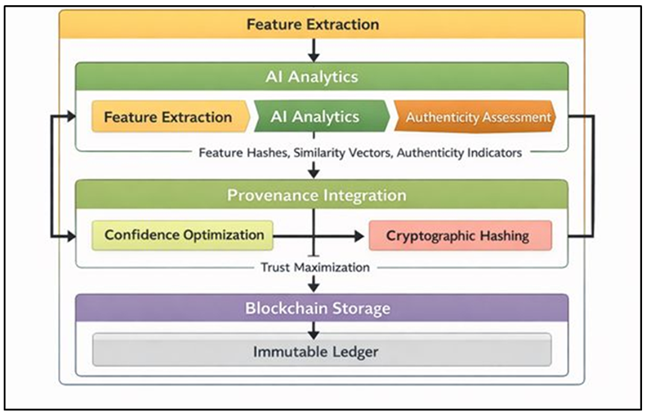
Figure 1 AI-Enabled Blockchain-Based Artwork Provenance Architecture
The AI layer has visual and contextual input and uses this input to determine discriminative features, create authenticity ratings, and calculate confidence scores. The system does not store raw data on-chain, but generates structured outputs of AI (e.g. feature hashes, similarity vectors, and probabilistic authenticity indicators) that are sent through the integration layer. Figure 1 illustrates AI and blockchain architecture that provide safe and transparent track of provenance of artwork. This component interpreter results of AI in provenance-conformant records, cryptographically hashes them, and connects them to existing ownership or event records. The architecture has the Blockchain layer as a reliable backbone. It stores provenance events and hashed AI outputs with smart contracts that regulate the submission of their data, their access, and update. This hierarchy design allows any upgrade to AI models and Blockchain protocols without any degradation to previous provenance records.
3.2. AI Modules for Artwork Feature Extraction and Authenticity Assessment
The Artificial Intelligence part of the framework is designed into specialized modules contributing to the sound analysis of artwork and authentication. The former module deals with visual feature extraction, which uses deep learning models that have been trained on high-resolution images of artwork. These models have captured finer grains stylistic features that include brushstroke dynamics, texture pattern, color harmony and compositional geometry. Embeddings produced by this module offer expressive, but concise, features of the visual identity of an artwork. The second module covers the evaluation of authenticity using the comparative and probabilistic analysis. Similarity learning and anomaly detection are some of the methods of comparison of extracted features with known reference datasets. This allows one to determine the deviations in style, material inconsistency or patterns suggestive of forgery. Instead of hard decisions, the system generates confidence and ranked similarity results, which enables human experts to put AI results in a more curative or forensic context. The third module is a combination of non-visual information, such as provenance writing, exhibition histories and conservation records. NLP algorithms identify semantic evidence and temporal contexts within unstructured documents, and provide the authenticity determination algorithm with contextual evidence. The output of each of the modules is merged to produce a consolidated authenticity profile.
3.3. Blockchain Layer for Immutable Provenance Record Management
The Blockchain layer offers trust and immutability that is needed in reliable art provenance tracking. The proposed architecture does not store the large files of artwork or crude AI data in Blockchain, but rather, stores cryptographically secured references connecting provenance events with AI-generated authenticity evidence. Every provenance operation, e.g. creation registration, assignment of ownership, participation in an exhibition, or restoration, is documented as a transaction on the distributed ledger. Smart contracts can be used to regulate the logic of provenance management, controlling access rights, validating submissions and standard data formats. Under AI analysis, the derived feature hashes and authenticity measures are stored in a provenance transaction, so even after the analysis, the evidence of the analytical work is inextricably fixed in the history of the artwork. Any further change of provenance information, however, would be identifiable by hash inconsistencies and consensus algorithms. The decentralization principle of the Blockchain provides that there is no central institution with the provenance narrative, that all parties involved, artists, collectors, galleries, and cultural heritage organizations, will be comfortable. Balanced Transparency and Privacy: Permissioned Blockchain networks can be used to favor both the transparency and the privacy of sensitive ownership data, disclosing them selectively with not compromising the verifiability.
4. Data Acquisition and Processing
4.1. Artwork digitization and metadata collection
Successful art provenance tracking commences by the proper and quality data acquisition. The basis of the suggested structure is the process of digitization of artwork: it consists of the acquisition of high-volume visual information and related contextual data. Methods of digitization are typically comprised of professional photographic imaging, macro photography to show details of a surface, and where possible, multispectral or infrared imaging to show underdrawings, pigment composition, and footprints of restoration. By these methods, it is possible to generate enriched digital surrogates that both maintain aesthetic and material qualities of works of art. In conjunction with visual data, provenance has to be put into context with the help of structured metadata collection. Metadata can contain information about the artist, title, date of creation, medium, dimensions, provenance, exhibition history, restoration history and legal history. The standardized metadata schemas are used to provide the consistency and interoperability between the institutions and platforms. In cases where historical records are in analog or unstructured digital forms, they are digitized and normalized into machine-readable forms. At this point, data quality control is very necessary. Unfinished, un-verified, or false metadata may spread errors in a system which weakens the AI analysis and Blockchain logs. Thus, validation processes, e.g. cross-referencing of several sources and expert validation are included to the downstream processing. The structure guarantees that later AI-based features learning and provenance documentation will be based on precise and thorough representations of artworks and their provenance because of the reliability of data collection pipeline and its standardization.
4.2. Image-Based Feature Learning Using AI Models
After the process of digitization, the image-based feature learning becomes the key analytical procedure in order to assist in authentication of works of art. The most developed AI models, especially the deep convolutional and transformer based models are used to learn discriminative visual representations utilizing the high-resolution artwork images themselves. These models, unlike handcrafted descriptors, automatically encode the occurrence of complicated patterns in brushstroke behavior, texture granularity, colour relationships and compositional structure which are typically characteristic of a particular artist, period or process. The feature learning procedure is generally performed in two steps, pretraining on large and heterogeneous image sets, and then fine-tuning on specialized collections of artworks. This is a generalization-enhancing and domain-specific sensitivity-saving strategy. There are data augmentation methods like controlled cropping or color normalization which are used only in a limited manner and can be used to increase strength without affecting the stylistic indicators. The resulting feature embeddings offer small numerical features which facilitate similarity measurement, clustering and anomaly detection of large repositories of artwork. In addition to the extracting of static features, temporal and comparative learning methods are also added. Deviations between an artwork and authenticated references can be trained in models that can be used to support probabilistic authentication as opposed to deterministic classification.
4.3. Provenance Data Structuring and Hashing Mechanisms
In order to achieve integrity and interoperability, provenance data created through digitization and the use of AI analysis should be organized systematically before registration on Blockchain. These events are associated with the outputs of AI in the form of feature embeddings, similarity scores, and an authenticity confidence index as analytical evidence. The framework of the hybrid storage strategy is due to the size and sensitivity of the artwork data. Every large file and the comprehensive output of AI applications is stored in safer off-chain storage and only short cryptographic hashes of the record are stored on-chain. With hashing mechanisms, it is guaranteed that any alteration on the off-chain data will be detected by calculating the regenerated hash against the one stored in the Blockchain. It is a way of ensuring that the data remains intact and does not require the ledger to maintain a lot of storing and computing cost. To verify complicated provenance records, merkle tree structures can be used to group together several data elements into a single root hash. All the hashed records are timed and are connected to past provenance records, which create a verifiable chain of custody. Using structured data representation and with effective hash functions, the system generates provenance records, which are tamper proof, verifiable, and open to decentralized Blockchain settings, which strengthens long-term trust in digital art histories.
5. Methodology
5.1. AI model selection and training strategies
The choice of AI models and their training in the proposed framework is informed by the fact that the models are to be accurate, robust, and interpretable in the analysis of artwork. The tasks of visual analysis utilize deep learning models with the ability to capture fine-grained artistic cues, e.g. convolutional neural networks to examine their texture and stroke patterns and transformer-based networks to capture global compositional patterns. The resolution and modality of available data inform model choice with visual cues on a macro-level and micro-level being adopted to specific architectures. The training plans are based on a progressive approach. Models are initially trained on large-scale datasets of images to acquire a representation of general values in art, and are subsequently fine-tuned on curated, authenticated sets of art to acquire domain-specific definitions. Transfer learning minimizes the data needs and enhances the convergence and generalization. Controlled data augmentation and regularization are used to deal with limited and unbalanced datasets. The performance evaluation is reliable and cross-validated and stratified sampling ensures that it is done across artists, styles, and periods. Notably, the approach focuses on explaining and estimating confidence. Attention maps, feature visualization and similarity metrics are added to interpret AI decisions made in a way that is understandable to art experts. Probabilistic outputs and measures of uncertainty are produced instead of binary classification, as a way of demonstrating the ambiguity that surrounds art authentication. Metadata of the versioning of the model and the performance is stored to facilitate reproducibility and long-term auditing. These organized AI products constitute a solid analysis framework upon which future registration of provenance by use of Blockchain can be implemented.
5.2. Blockchain Network Design and Consensus Mechanisms
The Blockchain network is planned to be balanced in terms of transparency, security, scalability, and energy efficiency that is essential to be adopted in art and cultural heritage scenarios. The model of choice is mostly a permissioned Blockchain architecture, in which museums, galleries, artists, and auction houses are verified members and can run nodes and verify transactions. This design allows governance, compliance, and controlled access of data and still enjoys the advantages of decentralization. The selection of consensus mechanisms is aimed at the reduction of computational cost and environmental effects. The framework instead of using proof-of-work schemes, which consume a lot of energy, uses efficient equivalents like proof-of-authority or Byzantine fault-tolerant protocols. Figure 2 depicts permissioned blockchain with provenance management of art control and security. These are fast in finalizing transactions and in throughput, and so they can be used to record frequent provenance updates and AI analysis outcomes.
Figure 2
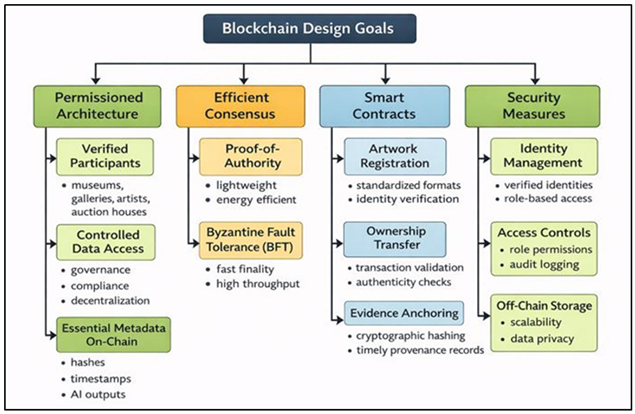
Figure 2 Design Structure of Permissioned Blockchain Networks for Art Provenance
Smart contracts specify the logic of provenance management, such as registration of artwork, transfer of ownership and anchoring of evidence by AI. They impose uniform data representations, authentication of hash values and access control. Any detailed records are stored off-chain, and only the required metadata and hashes are kept in the Blockchain, which is very scalable and does not require a compromise in integrity. Identity management, role-based access control, and audit logging are used as network security measures. Through meticulous architecture of the Blockchain network and consensus systems, the methodology guarantees a secure, prolongable, and friendly infrastructure to the institution that can be leveraged to track provenance of artworks over an extended period.
5.3. Integration Workflow Between AI Outputs and Blockchain Records
The workflow of the suggested framework is the operational part and consists of the connection of AI-generated insights and unchangeable Blockchain records. Such outputs are checked to be complete and consistent and then sent to the integration layer. This layer converts the outcomes of AI in provenance-compliant data formats and hashes them with cryptography. Hashes have corresponding provenance occurrences, such as timestamps, identity of participants and identification of artwork. These hashes are then called on to put the record of the Smart contract in the Blockchain which is in effect anchoring AI evidence to a certain point in the history of the artwork. The iterative updates are supported in the workflow. In case of an art re-analysis, as a result of new reference data, better models or restoration activities, new AI results are created and attached as new provenance records instead of replacing the existing records. This gives a clear analytical history which indicates the changing interpretation of an artwork. The access control policies would regulate both who is allowed to submit, view, or verify an AI-related provenance record, and privacy is guaranteed as well as the auditability. The integration workflow (through close pairing of the output of an analytical process with records in a secure ledger) makes AI assessments traceable, non-reducible and contextually sensible, and therefore makes both the process of analysis and the provenance records generated by it more trustworthy.
6. Results and Discussion
The experimental analysis of the proposed AI-Blockchain provenance framework shows significant enhancement in terms of provenance reliability, transparency and efficiency of verification. The feature learning based on AI demonstrated a high consistency in stylistic similarity recognition and anomaly detection, as well as, providing probabilistic authenticity measurement, which was highly comparable with the evaluation of the experts. AI outputs cryptographically anchored to the Blockchain enabled provenance records to be operationally resistant and auditable both in terms of ownership and event history. The built-in workflow minimized the need to manually check the work and minimized the conflicts that arose due to the discrepancy in documentation. Findings also show that data stored off-chain and hashed on-chain is an effective way to balance the aspects of scalability and data integrity.
Table 2
|
Table 2 Artwork Authentication and Provenance Verification Performance |
|||
|
Performance Metric |
Traditional Provenance
System |
AI-Only Authentication |
Proposed AI + Blockchain
Framework |
|
Artwork Authentication
Accuracy (%) |
71.8 |
88.6 |
94.9 |
|
Forgery Detection Precision
(%) |
68.4 |
86.2 |
93.7 |
|
Provenance Record Integrity
Score (%) |
73.1 |
75.6 |
98.3 |
|
Expert Agreement Rate (%) |
76.5 |
89.4 |
95.1 |
|
False Attribution Rate (%)
↓ |
19.6 |
9.8 |
3.4 |
|
Average Verification Time
(days ↓) |
14.2 |
6.8 |
2.1 |
As indicated in Table 2, the concept of authentication reliability and provenance assurance keep on improving progressively as the systems transform to the proposed AI + Blockchain framework instead of the traditional methods. Conventional provenance systems are underperforming with the accuracy of authentication of artistic works being 71.8% and the ability to detect forgeries being 68.4 percent since it relies on manual reporting and expert opinions. Figure 3 indicates that AI-blockchain approaches have a much higher success compared to conventional provenance authentication systems.
Figure 3
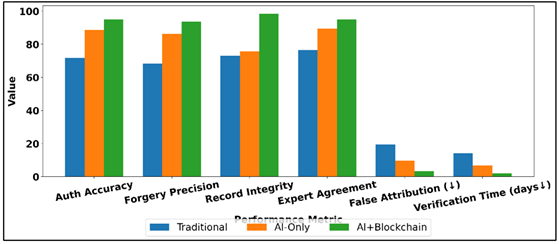
Figure 3 Comparative Performance of Provenance Authentication Methods
The effects of AI-only verify are tremendous in terms of analytical capacity, as the accuracy is raised to 88.6 per cent and false attribution rate is dropped to 9.8 per cent. Nevertheless, AI-only systems have a small increase in provenance record integrity (75.6%), because analytical results cannot be ensured against manipulation or post-hoc adjustment. In Figure 4, the authentication metrics used in provenance frameworks have a consistent improvement trend.
Figure 4

Figure 4 Trend of Authentication Metrics Across Provenance Framework
The suggested integrated framework has the best performance in all measurements. Authentication accuracy is 94.9 and forgery detection precision is 93.7 which concludes to good feature learning and comparative examination. As indicated in Figure 5, AI–blockchain framework brings about immense gains relative to the traditional provenance systems. Most importantly, the integrity of provenance records increases significantly to 98.3, and it highlights the power of inmutable storage using Blockchain.
Figure 5

Figure 5 Improvements: AI+Blockchain vs Traditional Provenance System
The expert agreement increases to 95.1 as well, indicating that the explainable AI outputs are more closely related to verifiable provenance records and increase expert trust. Moreover, the time spent on average verification is lowered to 2.1 days, which is a sign of major efficiency improvements.
7. Conclusion
The paper has proposed a unified model, which integrates Artificial Intelligence and Blockchain technologies into a single system to solve old problems with tracking art provenance. Although useful, traditional and digital provenance systems are also susceptible to limitation to fragmentation and manipulation in addition to subjectivity. The proposed solution would provide a better and more reliable, transparent, and reliable model of documenting and verifying the histories of artworks, because the analysis of works of art will be consolidated with the management and control of immutable records, implemented on a blockchain. Such analytical perspectives are then safely associated with provenance events by cryptographic hashing and smart contracts, such that evidence of authenticity and ownership records may be verified over time. The findings show that such an integration has a substantial positive impact on provenance integrity, eliminates or minimizes the use of manual operations, and curtails the forgery and misinformation risks. In addition to the technical input, the research points out that there are significant practical implications on artists, collectors, galleries, museums and cultural heritage institutions. A permissioned, yet decentralized provenance infrastructure has the potential to build trust among the stakeholders without violating privacy and governance policies. Meanwhile, the analysis highlights that there are issues with data quality, AI bias, and Blockchain scalability, and regulatory compliance, which lie beyond the capabilities of technology without professional involvement or the legal system.
CONFLICT OF INTERESTS
None.
ACKNOWLEDGMENTS
None.
REFERENCES
Akther, A., Arobee, A., Adnan, A. A., Auyon, O., Islam, A. J., and Akter, F. (2025). Blockchain As a Platform for Artificial Intelligence (AI) Transparency (arXiv:2503.08699). arXiv.
Alharbi, A. (2023). Applying Access Control Enabled Blockchain (ACE-BC) Framework to Manage Data Security in the CIS System. Sensors, 23, 3020. https://doi.org/10.3390/s23063020
Alharbi, S., Attiah, A., and Alghazzawi, D. (2022). Integrating Blockchain With Artificial Intelligence to Secure IoT Networks: Future Trends. Sustainability, 14, 16002. https://doi.org/10.3390/su142316002
Alalaq, A. S. (2025). AI-Powered Search Engines. ShodhAI: Journal of Artificial Intelligence, 2(1), 49–62. https://doi.org/10.29121/shodhai.v2.i1.2025.31
Bertino, G., Kisser, J., Zeilinger, J., Langergraber, G., Fischer, T., and Österreicher, D. (2021). Fundamentals of Building Deconstruction as a Circular Economy Strategy for the Reuse of Construction Materials. Applied Sciences, 11, 939. https://doi.org/10.3390/app11030939
Bhuva, D. R., and Kumar, S. (2023). A Novel Continuous Authentication Method Using Biometrics for IoT Devices. Internet of Things, 24, 100927. https://doi.org/10.1016/j.iot.2023.100927
Davari, S., Jaberi, M., Yousfi, A., and Poirier, E. (2023). A Traceability Framework to Enable Circularity in the Built Environment. Sustainability, 15, 8278. https://doi.org/10.3390/su15108278
Gong, L., Alghazzawi, D. M., and Cheng, L. (2021). BCoT Sentry: A Blockchain-Based Identity Authentication Framework for IoT Devices. Information, 12, 203. https://doi.org/10.3390/info12050203
Harala, L., Alkki, L., Aarikka-Stenroos, L., Al-Najjar, A., and Malmqvist, T. (2023). Industrial Ecosystem Renewal Towards Circularity to Achieve the Benefits of Reuse—Learning from Circular Construction. Journal of Cleaner Production, 389, 135885. https://doi.org/10.1016/j.jclepro.2023.135885
Javed, I. T., Alharbi, F., Bellaj, B., Margaria, T., Crespi, N., and Qureshi, K. N. (2021). Health-ID: A Blockchain-Based Decentralized Identity Management for Remote Healthcare. Healthcare, 9, 712. https://doi.org/10.3390/healthcare9060712
Schiller, E., Esati, E., and Stiller, B. (2022). IoT-Based Access Management Supported by AI and Blockchains. Electronics, 11, 2971. https://doi.org/10.3390/electronics11182971
Shukla, M., Lin, J., and Seneviratne, O. (2022). BlockIoT: Blockchain-Based Health Data Integration Using IoT Devices. In AMIA Annual Symposium Proceedings (Vol. 2021, 1119–1128).
Vahidi, A., Gebremariam, A. T., Di Maio, F., Meister, K., Koulaeian, T., and Rem, P. (2024). RFID-Based Material Passport System in a Recycled Concrete Circular Chain. Journal of Cleaner Production, 442, 140973. https://doi.org/10.1016/j.jclepro.2024.140973
Vargas, C., and Mira da Silva, M. (2023). Case Studies About Smart Contracts in Healthcare. Digital Health, 9. https://doi.org/10.1177/20552076231203571
Vilchez, P., Jacques, S., Freitag, F., and Meseguer, R. (2023). LoRaTRUST: Blockchain-Enabled Trust and Accountability Service for IoT Data. Electronics, 12, 1996. https://doi.org/10.3390/electronics12091996
Wang, S., Zhang, Y., and Guo, Y. (2022). A Blockchain-Empowered Arbitrable Multimedia Data Auditing Scheme in IoT Cloud Computing. Mathematics, 10, 10055. https://doi.org/10.3390/math10061005
Zhong, C., and Goel, S. (2024). Transparent AI in Auditing Through Explainable AI. Current Issues in Auditing, 18, A1–A14. https://doi.org/10.2308/CIIA-2023-009
|
|
 This work is licensed under a: Creative Commons Attribution 4.0 International License
© ShodhKosh 2026. All Rights Reserved.