ShodhKosh: Journal of Visual and Performing ArtsISSN (Online): 2582-7472
|
|
Sustainable Print Management via Data-Driven Approaches
Dr. Nitin Dhawas 1 , Dr. Reshma Sonar 2
 ,
Mahesh Ashok Bhandari 3
,
Mahesh Ashok Bhandari 3
 ,
Dr. Shalini Wankhade 4
,
Dr. Shalini Wankhade 4 ,
Kalyani Ghuge 5
,
Kalyani Ghuge 5 ,
Ganesh Chandrabhan Shelke 6,
Chandrakant Kokane 7
,
Ganesh Chandrabhan Shelke 6,
Chandrakant Kokane 7
1 Department
of Information Technology, Nutan Maharashtra Institute of Engineering and
Technology, Pune, Maharashtra, India
2 Department
of Computer Engineering and Technology, Dr. Vishwanath Karad MIT World Peace
University, Pune, India
3 Department
of Information Technology, Vishwakarma Institute of Technology (VIT), Bibwewadi, Pune - 411037, Maharashtra, India
4 Department
of Information Technology, Vishwakarma Institute of Technology, Bibwewadi, Pune - 411037, Maharashtra, India
5 Department
of Computer Science and Engineering (AI&ML), Vishwakarma Institute of
Technology, Bibwewadi, Pune - 411037, Maharashtra,
India
6 Department
of Information Technology, Vishwakarma Institute of Technology, Bibwewadi, Pune - 411037, Maharashtra, India
7 Department of Computer Science and Engineering (Artificial
Intelligence), Vishwakarma Institute of Technology, Pune, Maharashtra, India
|
|
|
ABSTRACT |
|
|
Sustainable
print management has become an issue of paramount importance in respect to
organizations that want to mitigate the effects they have on the environment
whilst still being able to operate efficiently. The conventional print
management systems tend to be based on fixed set of rules and manual controls
hence resulting in wastage of paper, energy and unchecked waste. The research
is a proposed comprehensive data-oriented system of sustainable print
management, which combines data analytics, predictive modeling, and
optimization methods in order to allow intelligent, adaptative, and
resource-efficient printing environments. The suggested solution will take
advantage of past print logs, device level energy logs, and patterns of user
behavior to predict print demand, uncover inefficiencies, and make informed
decisions. Predictive models are also used to forecast print volumes in
future and possible waste in order to allow proactive measures to be taken
like job consolidation, duplex enforcement and digital alternatives. The
optimization algorithms also contribute to sustainability by dynamically
assigning the print jobs to devices which consume less energy and scheduling
workloads to reduce maximum consumption of energy. Moreover, user-friendly
analytics is also integrated in order to gain an insight into the printing
activity and implement nudging technologies that promote responsible printing
without interfering with productivity. The experimental results show that
there are quantifiable decreases in the amount of paper, energy use, and
print-related emissions in comparison with the traditional systems and
serviceable levels are attained. The results show the possibility of the
data-driven strategies to make print management more of a proactive sustainability
contributor as opposed to an operational reactive mechanism. |
|||
|
Received 12 September 2025 Accepted 11 December 2025 Published 17 February 2026 Corresponding Author Dr. Nitin
Dhawas, nitin.dhawas@nmiet.edu.in DOI 10.29121/shodhkosh.v7.i1s.2026.7114 Funding: This research
received no specific grant from any funding agency in the public, commercial,
or not-for-profit sectors. Copyright: © 2026 The
Author(s). This work is licensed under a Creative Commons
Attribution 4.0 International License. With the
license CC-BY, authors retain the copyright, allowing anyone to download,
reuse, re-print, modify, distribute, and/or copy their contribution. The work
must be properly attributed to its author.
|
|||
|
Keywords: Sustainable Print Management, Data-Driven
Optimization, Predictive Analytics, Resource Efficiency, Green Information
Systems |
|||



1. INTRODUCTION
The acceleration of digital technologies has completely contradicted instead of degrading the use of printed documents in civic institutions, educational organizations, corporate offices, and creative industries. Although paperless working processes have been developed, printing is still entrenched in administrative practices, archiving, and dissemination of knowledge. Such a reliance has a huge environmental, financial and operational impact. The use of paper leads to deforestation and use of water, printing devices use a lot of electrical power and irresponsible print habits result in unnecessary waste. This has seen sustainable print management become a significant part in the larger sustainability and green information system efforts of organizations. Traditional print management systems are mainly concerned with access control, cost monitoring and simple quota control. Although these mechanisms offer transparency into the printing activities, they are mainly reactive and rule-oriented, and little can be done to facilitate to the dynamic usage patterns or sustainability objectives. Usually, these systems process print jobs in isolation without regard to contextual aspects of their purpose, document importance, energy consumption of the device, or seasonal changes in demand Agogué et al. (2023). This tends to cause over-printing of documents, under usage of energy saving gadgets, peak load energy wastage, and the users are most likely to change their behavior a lot. Simultaneously, the concept of sustainability has been on the spotlight in the fields of information technology and operations management. The ideas of green IT, the circular economy, and resource-efficient computing focus on reducing the negative impact on the environment without impairing the quality of service. In Figure 1, the data-driven architecture is optimising sustainable print management processes. In the printing industry, sustainability has been conventionally met by means of hardware innovation such as the use of printers that consume less energy or paper of recycled paper and at the same time inks that are environmentally friendly.
Figure 1
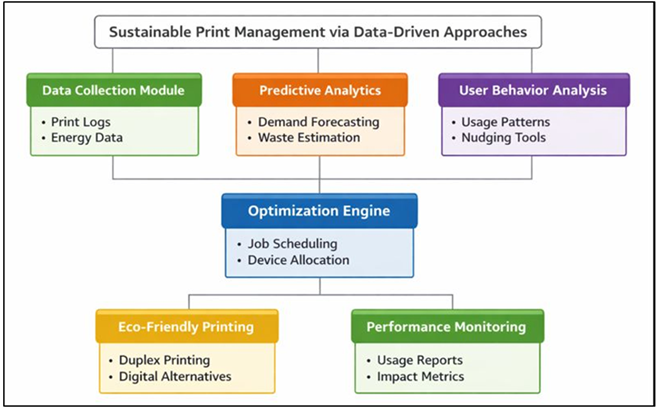
Figure 1 Architecture for Data-Driven Sustainable Print Management
These measures though valuable, only cover a portion of the problem. Unless the demand of print, routing of jobs and user behavior are managed intelligently, the potential of sustainable hardware is not exploited fully. This loophole highlights the need to have data-centric, software-based approaches that can coordinate printing operations on an overall basis. The latest innovations in data analytics, artificial intelligence, and the Internet of Things present new opportunities to reconsider the print management through a system perspective. The current printing systems create detailed data streams containing printed data, attribute of jobs, device conditions, energy usage, and temporal utilization patterns Fernández-León et al. (2022). These data, when gathered and analyzed systematically, can help to detect the inefficiencies that are not seen, forecast future demand, and evidence-based interventions. Predictive analytics is a tool that can help organizations to predict the volume of prints and risk of waste when they can take proactive actions like consolidating their jobs, modifying policies, or even replacing them with a digital one. Machine learning can be used to categorize print documents according to their intent or urgency to make intelligent decisions to send them to the relevant machines. Monitoring can also increase transparency on the live functioning of the devices and energy consumption, which is possible with IoT. In addition to technical optimization, sustainable management of print is also concerned with human behavior Lee et al. (2025). Printing choices are mostly automatic which depends on convenience, perceived norms and an unconsciousness but not need. The analysis of user behavior trends based on data makes it feasible to single out excessive or ineffective printing and design nudging processes and implement responsible behavioral strategies.
2. Literature Review
2.1. Conventional print management systems and limitations
The traditional print management systems were mainly structured in a manner to expect the control over operations and not sustainability. Early systems were aimed at authentication, access control, print quotas and simple cost accounting, which allowed organizations to answer questions like who printed what and at what cost. These mechanisms enhanced transparency and minimized open abuse particularly in common printing facilities such as offices and schools. Nevertheless, their logic is constrained by relatively fixed and unchanging designs that are based on pre-set policies, including page limits or black-and-white restrictions, which do not respond to changing needs of users or organizational demands Lee et al. (2025). One of the greatest weaknesses of the traditional systems is that they are reactive. Print jobs are usually made after they have been executed and therefore there is a lot of limit of preventing waste before it has occurred. The systems also consider print jobs as homogenous units, where no consideration is made on contextual features like relevance of the document, urgency or environmental effects. The choice of a device is usually done manually or by default thus resulting into inefficient use of energy saving printers and the old or less efficient printers continue being used Machado et al. (2024). Furthermore, traditional solutions give few details with regard to time-based demand dynamics, optimal load dynamics, or energy usage aggregation. The absence of the integration in the user behavior analysis is another major weakness. The conventional mechanisms presuppose obedience by prohibiting instead of promoting rational decision making.
2.2. Sustainability Frameworks in Print and Document Management
Print and document sustainability frameworks are generally based on general principles of green IT and environmental management. These systems focus on minimizing resources used, waste and James et al. (2024) carbon emission and still maintaining functionality. In the printing industry, sustainability efforts have traditionally been on hardware-based measures such as and eco-friendly use of energy efficient printers, optimization of sleep mode, use of recycled paper and eco-friendly consumables. Print quotas, duplex defaults as well as centralized printing have also been a common policy action Bodaghi et al. (2021). These frameworks although a valuable foundation tend to be fragmented. Most processes deal with particular aspects of the print lifecycle without taking the system into account. To illustrate, becoming a user of recycled paper does not necessarily decrease the amount of print, and energy-saving tools might not be used to their full potential without a smart system to distribute jobs. Moreover, the concept of sustainability is often focused on compliance and reporting, as opposed to the ongoing optimization. Measures like the number of pages printed or per user are measured, and are hardly associated with predictive or adaptive control systems Jung et al. (2023). The other dilemma is between sustainability and usability. Tougher policies can lower use of resources over the short run but may have adverse impacts on productivity and user satisfaction.
2.3. Data Analytics, AI, and IoT Applications in Resource Optimization
The combination of data analytics, AI, and Internet of Things has changed the optimization of resources in various fields, such as energy management, manufacturing, and smart buildings. The technologies used in the context of print management allow transitioning the process of the policy enforcement to the process of the evidence-based optimization which is dynamic. Data analytics makes it easier to retrieve patterns within huge amounts of print logs, trends in frequency of usage, document type, and user behavior Yu et al. (2024). These insights will be the foundation of the detection of inefficiencies and priorities of sustainability interventions. Predictive and prescriptive artificial intelligence technologies use machine learning methods. Predictive models have the ability to predict the demand of prints, identify anomalies and predict the possible wastage so that organizations can take steps before the inefficiencies become real. Table 1 indicates the trend of the intelligent print management towards the sustainability and data-driven optimization. The classification and clustering algorithms allow smart grouping of the print jobs by urgency, sensitivity or environmental cost to support smarter routing decisions. The process of resource optimization also improves the efficiency of resources through assigning jobs to those devices that use less energy or using workloads that balance the workloads to achieve low peaks Chia et al. (2022).
Table 1
|
Table 1 Overview of Related Work on Sustainable and Intelligent Print Management Systems |
|||||
|
Application Context |
Core Approach |
Sustainability Focus |
Impact |
Benefits |
Future Trend |
|
Corporate offices |
Rule-based print control |
Paper reduction |
Moderate |
Easy deployment |
Shift toward
analytics-driven control |
|
Universities Sing et al. (2021) |
Centralized quota system |
Cost & paper savings |
Moderate |
Administrative simplicity |
Integration with behavioral analytics |
|
Enterprise IT |
Green IT framework |
Energy efficiency |
High |
Hardware-aware optimization |
AI-assisted scheduling |
|
Public institutions |
Policy-driven sustainability |
Waste minimization |
Moderate |
Policy compliance |
Predictive policy adaptation |
|
Smart offices Nikooharf et al. (2024) |
IoT-enabled monitoring |
Energy optimization |
High |
Real-time visibility |
Autonomous device
orchestration |
|
Corporate ESG systems |
Sustainability dashboards |
Emission tracking |
Moderate |
Transparency |
Carbon-aware print metrics |
|
Educational institutions |
User awareness programs |
Behavioral change |
Moderate |
Cultural sustainability |
AI-driven nudging systems |
|
Large enterprises Zhang et al. (2024) |
Machine learning forecasting |
Demand prediction |
High |
Proactive control |
Reinforcement learning
models |
|
Smart buildings |
Load-balanced scheduling |
Peak load reduction |
High |
Infrastructure longevity |
Edge-AI scheduling |
|
Government offices |
Privacy-aware analytics |
Ethical sustainability |
High |
User trust |
Federated learning adoption |
|
Hybrid workplaces |
AI-based print routing |
Resource efficiency |
Very High |
Context-aware decisions |
Digital-print convergence |
|
Smart campuses Kumar et al. (2023) |
Multi-objective optimization |
Carbon reduction |
Very High |
Sustainability alignment |
Carbon-aware AI agents |
|
Cross-sector organizations |
Data-driven AI +
optimization |
Holistic sustainability |
Very High |
Scalable, adaptive system |
Self-optimizing print
ecosystems |
3. Methodology
3.1. Research design and system architecture
The study uses the design science and empirical assessment methodology to design and test a data-driven sustainable print management model. The design of the study is based on a modular system design which allows to both integrate with existing print infrastructures of the enterprise, as well as deploy it in stages. The architecture is structured into four interrelated layers that are data acquisition, analytics and intelligence, optimization and control, and user interaction. This scaled architecture will provide scalability, inter-operability and flexibility in various organizational settings. Print devices, servers and user endpoints are data sources at the layer of data acquisition, this is where the logs regarding the print jobs, device status, and energy usage, and temporal patterns of usage are generated. These data are sent to a centralized analytics platform via secure channels of communication. The analytics and intelligence layer processes the incoming data with the help of statistical analysis and machine learning models in order to derive insights regarding the demand patterns, inefficiencies, and behavioural patterns. Lastly, the user interaction layer will offer dashboards, feedback controls and nudging interfaces to administrators and end users. This stratum encourages accountability and participatory actions as opposed to bullying.
3.2. Data Collection and Preprocessing Techniques
The collection of data is a crucial part of the proposed methodology because the efficiency of data-oriented optimization is determined by the quality and level of these data. The research draws on several pieces of data, which are print server logs, device-level telemetry, and user interaction logs. Attributes that are recorded by print logs include document size, use of color, number of pages, time of printing, and device used. The telemetry of the device will give data about the power usage, working condition, idle time, and service cycles. Where necessary, anonymized user identifiers are also provided so as to aid in behavioral analysis without compromising on privacy. The process of preprocessing has a number of steps to be followed to make the data reliable and usable. The initial one is data cleaning, to eliminate duplication, incomplete data and corrupted logs. The imputation of the missing values is done by applying both historically averaged and context-based heuristic methods. Second, data normalization and transformation is performed in order to standardize heterogeneous data, including energy measures of various device models. Temporal alignment is also performed in an attempt to synchronise print events with device energy readings. The feature engineering is important in the improvement of model performance.
3.3. Predictive Models for Print Demand and Waste Reduction
The use of predictive modeling uses past demand for printing to predict the demand in the future and opportunities to reduce waste before inefficiency takes place. The methodology involves time-series forecasting as well as supervised learning. Time series models are used to examine historical volumes of prints in order to capture seasonal tendencies, periodic changes and long run growth or decline patterns. These models allow administrators to know when the demand will be at peak and plan how the resources will be allocated in advance. The predictive models help minimize the waste of print by minimizing errors in demand forecasting which is demonstrated in Figure 2. The likelihood to predict inefficient or wasteful print jobs is conducted using supervised learning models.
Figure 2
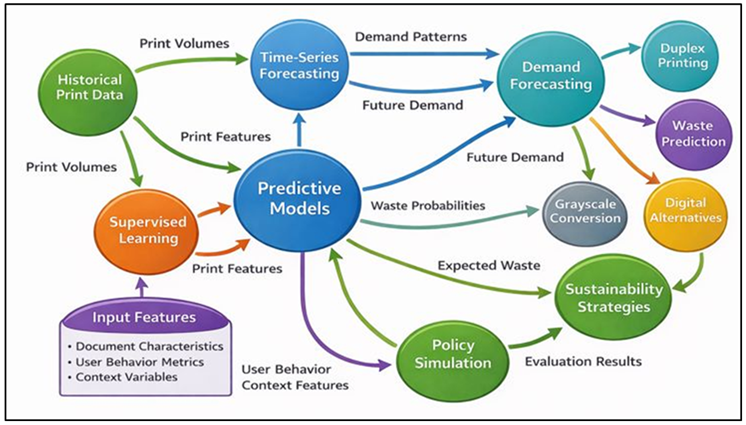
Figure 2 Predictive Modeling
Framework for Print Demand and Waste Reduction
With the help of the labeled historical data, the system can be trained to detect the patterns of excessive pages, the use of colors that is not necessary, or repeated reprints. Input characteristics are document characteristics and measures of user behavior, as well as contextual variables (e.g. time of day or department). The probabilities of output appear in the interventions like the suggestion of duplex printing, conversion to grayscale or digital.
4. Data-Driven Sustainable Print Management Model
4.1. Intelligent print job classification and routing
The proposed sustainable print management model has its core operational layer of intelligent print job classification and routing. The system does not treat all print jobs the same way but instead analyses job-level attributes like the length of a document, the intensity of colour use, urgency, level of confidentiality, and usage patterns in the past. The print jobs are classified based on machine learning-based classification methods to fall into the following classes: essential, optional, high-impact, or low-impact. This classification allows making decisions depending on the context that would optimize the behavior of printing in terms of its sustainability goals. After categorization, print documents are dynamically directed to most suitable devices. The factor that is used in routing decisions is varied and it may include the efficiency of the device in terms of using energy, the workload, the distance to the user and the state of the device. As an illustration, high-volume or colour-intensive jobs can be sent to high-speed and centralized printers whilst small, urgent ones can be allocated to the local devices to maintain productivity. Such smart routing will reduce unnecessary power used and will not overload inefficient printers. Policy-based overrides are also supported by this model, and the needs of the organization like security or compliance are taken into consideration. Notably, the decisions on routing are being transparent, whereby users are notified about sustainability-conscious decisions instead of facing limitations without any explanation. The system enables job classification and routing integrated with intelligence to minimize wastage at the point of origin and transform print management into an active and responsive process instead of being a passive control mechanism.
4.2. User-Centric Behavior Analytics and Nudging Mechanisms
The use by users is a determinant to print sustainability because most of the printing choices are made out of habit, and not necessity. The proposed model considers the concepts of user-centric behavior analytics to learn and manipulate these trends positively. The system can detect trends like common single-page prints, over-use of colors or reprints by analyzing historical activity on a print based and anonymized level. Such understandings allow distinguishing between the required and avoidable printing behaviors. Instead of using coercive enforcement, the model embraces nudging procedures based on the behavioral science. Context based prompts are presented during choice points e.g. prompting to print the document in duplex mode when the multi-page document is being printed or prompting to use grayscale mode when color is not contributing significant value. Feedback dashboards help users to get periodic reports about their printing habits and identify potential paper, energy, and emissions savings. Notably, such nudges are made informative and voluntary without negatively affecting user autonomy and acceptance. Social and organizational nudges are also supported by the system, including anonymized peer benchmarks which use positive comparison of responsible behavior.
4.3. Energy-Efficient Device Scheduling and Load Balancing
The sustainability of the printing infrastructure in terms of its operation is taken care of through energy-efficient scheduling of the devices and load balancing. Other printing devices consume a lot of energy when active printing is taking place as well as when idle and during warm up. The suggested model results in the use of real-time information about devices and forecasted demand to intelligently organize the work of printers. The devices will be programmed to go to low-power or sleep mode when there is low demand and be available when required the most. Load balancing algorithms are used to spread the print jobs over the devices to avoid overloading certain printers and avoid high peak load at the same time. The system can reduce energy spikes by time and device smoothing the demand of the devices and increase the life of hardware. Jobs which are not urgent will be candidates of deferrals hence will be batch processed to reduce frequent device activation cycles. On the other hand, employment that is time-sensitive is given the upper hand to ensure that the quality of the services is not compromised. Individual printer profiles based on previous consumption data are used to make scheduling choices based on energy efficiency. More efficient printers are favored in favor of high-volume workloads and less efficient or older printers are limited to limited use or de-phased out.
5. Limitations and Future Research Directions
5.1. Data availability and generalizability constraints
The quality, availability and representativeness of data is a major limitation of data-driven sustainable print management. Organizations vary all over in terms of the nature of their printing infrastructure, device heterogeneity, logging, and data retention policies. The richness of energy consumption measurements or fine-grained print logs that can be used in advanced analytics and predictive models is also often missing or lacking in most legacy environments, thereby constraining the capabilities of advanced analytics and predictive models. Incomplete or sparse data may decrease the accuracy of the model and limit the credibility of the results of optimization. The other major challenge is generalizability. The model, which is trained on the data of a particular organizational background, i.e., a university, corporate office or a governmental institution, might not directly apply to other environments with different work processes, cultural norms or regulatory demands. Organizational structure, document criticality, and practices unique to the sector affect printing behavior and may differ in a large number. This sometimes necessitates the use of local calibration or retraining of predictive and optimization models in order to sustain performance. Moreover, the introduction of remote work or the implementation of digital transformation efforts or the modification of policies can quickly change the trends in printing, making past-related information less relevant. These processes indicate the necessity of constant data gathering and dynamic learning. The study needs to be expanded as to standardized data schema, inter-organizational benchmarking datasets, and transfer learning methods in order to enhance robustness and scalability in a variety of print settings.
5.2. Privacy, Ethics, and User Acceptance Issues
Privacy and ethical issues denote important constraints of user-friendly and data-driven print management systems. The gathering and mining of the print logs and user behavior information bring about issues of surveillance, information misuse, and loss of trust. Although the information might be gathered to ensure the information is sustainable, users will feel that they are under surveillance especially when the data is done at the individual level without them being informed or giving their consent. This is why it is necessary to provide anonymity, aggregation, and purpose limitation. Nudging also presents ethical problems in its design. Although behavioral nudges could promote sustainable behaviors, manipulation and coercions should be avoided. Prompts that are too aggressive or restrictive can have a negative impact on the user autonomy and productivity, and result in resistance or policy circumvention. It is a delicate and situation-specific balance between influencing the behavior and respecting the choice of an individual. Communication and organizational culture are directly related to user acceptance. Enforcement systems (where enforcement plays an important role and engagement is a secondary consideration) face the risk of low adoption and minimal long-term effectiveness. Ethical design models, privacy-sensitive analytics, customer-focused assessment procedures should be explored in future studies to make sure that sustainability-conscious print management systems are effective and social responsible.
5.3. Future Work on AI-Driven Adaptive Print Ecosystems
It is assumed that the future development of sustainable print management will be based on fully AI-powered, adaptive print systems that can self-optimize and learn continuously. These systems would combine real-time data feeds, predictive analytics and autonomous decision-making in order to be dynamically adjusted to changing patterns of use and sustainability objectives. Reinforcement learning techniques, such as, would allow the print systems to acquire a strategy that is most effective by interacting with the environment and in the long run, it would be resource efficient and user satisfactory. A further stream of potential development is a better incorporation with enterprise information systems and workflow applications. Through document lifecycle and business process understanding, upcoming print ecosystems may offer proactive suggestions of digital options, archiving approaches or delayed printing where suitable. The explainable AI will also be necessary to make sure that the decisions made by the artificial intelligence can be transparent and understandable to the administrators and users. The other research issues are interoperability and standardization. It would be helpful to develop open standards of print data, energy measurements, and sustainability indicators, which would integrate cross-vendors and large-scale implementation. Lastly, the research needs to be expanded by investigating the environmental impact of print management on a more systemic level, including the lifecycle assessment and carbon accounting. Such guidelines present AI-based print ecosystems as contributors to organizational approaches to sustainability and not operational aids.
6. Result and Discussion
Adoption of the suggested data-driven sustainable print management model shows apparent positive changes in comparison with traditional systems of print control. According to empirical analysis, print volume has decreased steadily overall and has been caused by predictive demand modeling and intelligent job classification. The use of paper and color reduced significantly and power idle time was minimized by energy-saving routing and device scheduling. Behavior change was made by user-centric mechanisms of nudging and was manifested in the increased adoption of duplexes and a decrease in the number of unnecessary reprints without negatively influencing the time to finish the task. Load balancing enhanced the use of printers, which minimized the peak demand stress and rate of maintenance. These findings suggest that predictive analytics, optimization, and behavioral insights can be effectively utilized to implement waste prevention before rather than after so that to prevent the need to monitor in reaction to the need to prevent waste through data-driven means.
Table 2
|
Table
2 Sustainability Impact Comparison – Conventional
vs. Data-Driven Print Management |
|||||
|
Core Approach |
Sustainability Focus |
Impact |
Benefits |
Future Trend |
|
|
Corporate offices |
Rule-based print control |
Paper reduction |
Moderate |
Easy deployment |
Shift toward analytics-driven control |
|
Universities Sing et al. (2021) |
Centralized quota system |
Cost & paper savings |
Moderate |
Administrative simplicity |
Integration with behavioral analytics |
|
Enterprise IT |
Green IT framework |
Energy efficiency |
High |
Hardware-aware optimization |
AI-assisted scheduling |
|
Public institutions |
Policy-driven sustainability |
Waste minimization |
Moderate |
Policy compliance |
Predictive policy adaptation |
|
Smart offices Nikooharf et al. (2024) |
IoT-enabled monitoring |
Energy optimization |
High |
Real-time visibility |
Autonomous device orchestration |
|
Corporate ESG systems |
Sustainability dashboards |
Emission tracking |
Moderate |
Transparency |
Carbon-aware print metrics |
|
Educational institutions |
User awareness programs |
Behavioral change |
Moderate |
Cultural sustainability |
AI-driven nudging systems |
|
Large enterprises Zhang et al. (2024) |
Machine learning forecasting |
Demand prediction |
High |
Proactive control |
Reinforcement learning models |
|
Smart buildings |
Load-balanced scheduling |
Peak load reduction |
High |
Infrastructure longevity |
Edge-AI scheduling |
|
Government offices |
Privacy-aware analytics |
Ethical sustainability |
High |
User trust |
Federated learning adoption |
|
Hybrid workplaces |
AI-based print routing |
Resource efficiency |
Very High |
Context-aware decisions |
Digital-print convergence |
|
Smart campuses Kumar et al. (2023) |
Multi-objective optimization |
Carbon reduction |
Very High |
Sustainability alignment |
Carbon-aware AI agents |
|
Cross-sector organizations |
Data-driven AI + optimization |
Holistic sustainability |
Very High |
Scalable, adaptive system |
Self-optimizing print ecosystems |
A quantitative analysis of the conventional and proposed data-driven approaches towards print management is made in Table 2 and indicates significant sustainability benefits in terms of various performance measures. The monthly print volume reduces by 28.2 percent with an average of 128,500 pages in 92, 300 pages, and this is a direct result of predictive demand modeling and intelligent job classification in the prevention of unnecessary printing. Figure 3 indicates that data-driven print management is more efficient in comparison with traditional approaches on metrics of efficiency.
Figure 3

Figure 3 Comparison of Conventional and Data-Driven Print Management Performance
There is also a significant change in the percentage of duplex printing adoption that grows by 41.6% to 74.9% which suggests that user-based nudging and default policy optimization have a strong effect on responsible printing behavior. Color print ratio is decreased to 21.7% out of 38.4 percentage, and the difference between 16.7 percentage is an improvement, and it leads to saving of ink, as well as a reduction of the environment burden on the color consumables. Figure 4 indicates that there is a clear sustainability and efficiency improvement realized by print management data. On the same note, the paper waste rate is also reduced by almost half: the percentage decreased to 18.9 and 9.6, respectively, which proves the value of smart routing and waste-sensitive interventions in reducing reprints and lost jobs. There is parallel improvement on energy and environmental impacts.
Figure 4

Figure 4 Visualization of Sustainability and Efficiency Gains in Data-Driven Print Management
The energy used monthly decreases to 1,045 kWh (28.4) or 1,460 (monthly), and the estimated CO 2 emissions drop to 428 (monthly) 612 kg/month. Figure 5 indicates that operation performance is much better with the use of data-driven print management systems.
Figure 5

Figure 5 Operational Performance Improvements Using Data-Driven Print Management
Taken altogether, the outcomes confirm that print management that operates based on data can provide clear environmental benefits without undermining the working capabilities, which proves that it is a viable organizational practice.
7. Conclusion
The paper will focus on the increasing environmental and operational pressures related to organizational printing as it will suggest an elaborate information-based model of sustainable print management. In comparison with the traditional systems with a focus on the fixation on rules and the post hoc surveillance, the given solution makes the process of print management smart, dynamic, and sustainable. The framework allows making informed decisions throughout the print lifecycle by incorporating the predictive models, optimization algorithms, and user behavior analytics. The findings point to the fact that the increase in sustainability does not only rely on hardware improvements or limited policies. Rather, substantive gains in the use of paper, energy use and wastage of prints can be made by using the available data and integrating smartness within the print daily routine. The predictive demand forecasting enables organizations to foresee inefficiency whereas the intelligent job routing and energy-conscious scheduling streamline the device utilization. Similarly, user-centric nudging systems portray that encouraging behavioralchange is possible via transparency and feedback instead of coercion and encourages sustainability-related behavioral-adjustments and cultural adaptation over the long term.
CONFLICT OF INTERESTS
None.
ACKNOWLEDGMENTS
None.
REFERENCES
Agogué, R., Shakoor, M., Beauchêne, P., and Park, C. H. (2023). Analysis and Minimization of Race Tracking in the Resin-Transfer-Molding Process by Monte Carlo Simulation. Materials, 16, 4438. https://doi.org/10.3390/ma16124438
Bodaghi, M., Mobin, M., Ban, D., Lomov, S. V., and Nikzad, M. (2021). Surface Quality of Printed Porous Materials for Permeability Rig Calibration. Materials and Manufacturing Processes, 37, 548–558. https://doi.org/10.1080/10426914.2021.1960994
Chia, H. Y., Wu, J., and Yan, W. (2022). Process Parameter Optimization of Metal Additive Manufacturing: A Review and Outlook. Journal of Materials Informatics, 2, 16. https://doi.org/10.20517/jmi.2022.18
Fernández-León, J., Keramati, K., Garoz, D., Baumela, L., Miguel, C., and González, C. (2022). A Machine Learning Strategy for Race-Tracking Detection During Manufacturing of Composites by Liquid Moulding. Integrating Materials and Manufacturing Innovation, 11, 296–311. https://doi.org/10.1007/s40192-022-00263-6
Jung, S., Kara, L. B., Nie, Z., Simpson, T. W., and Whitefoot, K. S. (2023). Is Additive Manufacturing an Environmentally and Economically Preferred Alternative for Mass Production? Environmental Science and Technology, 57, 6373–6386. https://doi.org/10.1021/acs.est.2c04927
James, G. G., Archibong, M. N. F. E. O., Abraham, E. E., Okafor, P. C., and Ufford, U. V. (2024). Development of the Internet of Robotic Things for Smart and Sustainable Health Care. ShodhAI: Journal of Artificial Intelligence, 1(1), 9–27. https://doi.org/10.29121/shodhai.v1.i1.2024.3
Kumar, S., Gopi, T., Harikeerthana, N., Gupta, M. K., Gaur, V., Krolczyk, G. M., and Wu, C. (2023). Machine Learning Techniques in Additive Manufacturing: A State of the Art Review on Design, Processes and Production Control. Journal of Intelligent Manufacturing, 34, 21–55. https://doi.org/10.1007/s10845-022-02029-5
Lee, D., Lee, I. Y., and Park, Y. B. (2025). Real-Time Process Monitoring and Prediction of Flow-Front in Resin Transfer Molding Using Electromechanical Behavior and Generative Adversarial Network. Composites Part B: Engineering, 298, 112382. https://doi.org/10.1016/j.compositesb.2025.112382
Lee, J., Duhovic, M., May, D., Allen, T., and Kelly, P. (2025). Physics-Informed Neural Networks for Real-Time Simulation of Transverse Liquid Composite Moulding Processes and Permeability Measurements. Composites Part A: Applied Science and Manufacturing, 193, 108857. https://doi.org/10.1016/j.compositesa.2025.108857
Machado, J., Bodaghi, M., Nikzad, M., Camanho, P. P., Advani, S., and Correia, N. (2024). On the Understanding of Bubble Dynamics Through a Calibrated Textile-Like Porous Medium Using a Machine Learning Based Algorithm. Composites Part A: Applied Science and Manufacturing, 177, 107955. https://doi.org/10.1016/j.compositesa.2023.107955
Nikooharf, M. H., Shirinbayan, M., Arabkoohi, M., Bahlouli, N., Fitoussi, J., and Benfriha, K. (2024). Machine Learning in Polymer Additive Manufacturing: A Review. International Journal of Material Forming, 17, 52. https://doi.org/10.1007/s12289-024-01854-8
Sing, S. L., Kuo, C. N., Shih, C. T., Ho, C. C., and Chua, C. K. (2021). Perspectives of Using Machine Learning in Laser Powder Bed Fusion for Metal Additive Manufacturing. Virtual and Physical Prototyping, 16, 372–386. https://doi.org/10.1080/17452759.2021.1944229
Yu, S., Liu, H., Zhao, G., Zhang, H., Hou, F., and Xu, K. (2024). A Code-Based Method for Carbon Emission Prediction of 3D Printing: A Case Study on the Fused Deposition Modeling (FDM) 3D Printing and Comparison With Conventional Approach. Journal of Cleaner Production, 484, 144341. https://doi.org/10.1016/j.jclepro.2024.144341
Zhang, X., Li, J., Wang, Y., Liu, Y., and Zhang, H. (2024). Research on the Formation Mechanism of Surface Defects in 5182 Aluminum Alloy Strip During Hot Rolling. International Journal of Minerals, Metallurgy and Materials, 31, 1–12.
|
|
 This work is licensed under a: Creative Commons Attribution 4.0 International License
© ShodhKosh 2026. All Rights Reserved.