ShodhKosh: Journal of Visual and Performing ArtsISSN (Online): 2582-7472
|
|
Data-Based Aesthetics: Quantifying Beauty in Sculptural Forms
Sneha Mhatre 1
 ,
Sunita Naik 2
,
Sunita Naik 2 ,
Sanket Patil 3
,
Sanket Patil 3 ,
Ashwini Save 4
,
Ashwini Save 4 ,
Tatwadarshi P. Nagarhalli 5
,
Tatwadarshi P. Nagarhalli 5
1 Department
of Computer Engineering, Vidyavardhini’s College of Engineering and Technology,
University of Mumbai, Vasai, Mumbai, India
2 Department
of Computer Engineering, VIVA Institute of Technology, University of Mumbai,
Virar, Mumbai, India
3 Department of Computer Engineering, Vidyavardhini’s College of
Engineering and Technology, University of Mumbai, Vasai, Mumbai, India
4 Department of Computer Engineering, VIVA Institute of Technology,
University of Mumbai, Virar, Mumbai, India
5 Department of Artificial Intelligence and amp, Data Science,
Vidyavardhini’s College of Engineering and Technology, University of Mumbai,
Vasai, Mumbai, India
|
|
|
ABSTRACT |
|
|
Data-based
aesthetics is a new interdisciplinary paradigm, which aims to measure the
beauty of art by providing such computational descriptors that can be
quantified. Aesthetic judgment, in terms of sculptural forms, has always been
subjective, based on cultural, historical, and perceptual influences, as
well. The current paper suggests a systematic approach to measuring beauty in
the art of sculpture, a combination of geometric analysis of beauty,
mathematical theory of proportion, and aesthetic prediction with the use of
machine learning. The study proposes a systematic process of processing
sculptural objects which are represented by museum collections, digital
archives, high-resolution 3D scans to analyzable data formats. Major features
of sculpture are broken down into geometric, structural, and surface features
such as continuity of curvature, indices of symmetry, balance of masses,
alignment of center-of-gravity, and roughness of texture. A mathematical
concept of aesthetic beauty is created in order to combine the rules based on
proportions, like the golden ratio compliance, with statistical and learned
weights of features. Classical regression models, as well as deep learning
architectures (3D convolutional neural network and point-based neural model),
are used to predict sculptural features on continuous aesthetic scores. This
mixed method allows relating the aesthetic principles of handcrafting with
the learning of features based on data. It has been shown experimentally that
multi-level features representations are much stronger predictors than single
domain descriptors. |
|||
|
Received 11 September 2025 Accepted 08 December 2025 Published 17 February 2026 Corresponding Author Sneha
Mhatre, sneha.mhatre@vcet.edu.in DOI 10.29121/shodhkosh.v7.i1s.2026.7102 Funding: This research
received no specific grant from any funding agency in the public, commercial,
or not-for-profit sectors. Copyright: © 2026 The
Author(s). This work is licensed under a Creative Commons
Attribution 4.0 International License. With the
license CC-BY, authors retain the copyright, allowing anyone to download,
reuse, re-print, modify, distribute, and/or copy their contribution. The work
must be properly attributed to its author.
|
|||
|
Keywords: Computational Aesthetics, Sculptural Beauty
Quantification, 3D Shape Analysis, Machine Learning in Art, Digital Cultural
Heritage |
|||



1. INTRODUCTION
The aesthetic judgment has traditionally played the key role in the art and design theory and in the visual culture philosophy. The traditional sense of beauty in sculptural practice has always been an occurrent quality which is determined by form, proportion, material, balance and surface expression and subject to human perception and cultural setting. Although this interpretative richness has thus maintained artistry over the centuries, it has also made aesthetic judgment subjective in nature and hard to formalize and hard to analyze systematically. As more and more digital representations of works of art and technological progress in artificial intelligence, a new paradigm, data-based aesthetics, has started emerging promising the ability to quantify beauty by using quantifiable computational forms. The data aesthetic analysis is especially well adapted to sculptural forms since three dimensional geometry, space, and the quality of surfaces that can be explored by modern 3D scanning and modeling tools are all three dimensional Wu et al. (2024). Museums and cultural institutions, as well as digital heritage projects, currently maintain large collections of high-resolution meshes and volumetric scans of sculptures of all periods of human history and artistic cultures. These digital assets can be used to study sculptures as more than a symbolic or cultural object, but structured data objects, made of vertices, surfaces, and space. The change leads to new possibilities to investigate aesthetic properties mathematically and still maintain the artistic integrity. The reason to measure sculptural beauty is not to turn art into a numerical value, but its purpose is to augment the human eye with reproducible and interpretable knowledge Ding et al. (2024). Computer models are able to disclose latent patterns, which are hard to describe intuitively, perhaps subtle breaches of symmetry, proportional regularities, balance distributions that reoccur across works of aesthetic value. Data-based aesthetics, based on the transfer of sculptural properties into measurable terms, including the continuity of curvatures, the distribution of mass, the alignment of center-of-mass-location, and the gradient of surface texture, makes it possible to compare despite style, artist and author, historical period Ding et al. (2024). Figure 1 depicts multistage pipeline of quantification of sculptural beauty based on data-driven aesthetic. This analysis utility is especially useful when working with large collections of digital archives when it is not feasible to manually analyze such data.
Figure 1
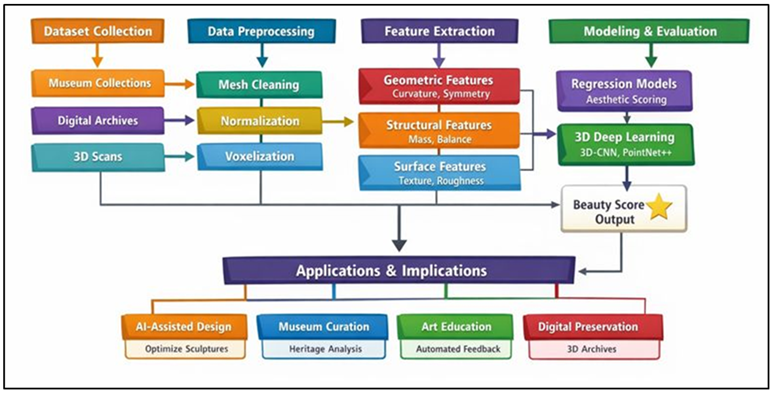
Figure 1 Multistage Pipeline for Quantifying Sculptural
Beauty in Data-Based Aesthetics
The recent advancement in machine learning and geometric deep learning also supports this method. The conventional aesthetic theories such as rules of proportions and principles of symmetry can be combined with the data-driven models, which are trained on the annotated data and learn aesthetic preferences. Continuous aesthetic scoring can be done using regression methods, and deep neural networks on meshes, voxels, or point clouds have the ability to extract descriptors of high-level forms automatically without specifying the individual features Orth et al. (2022). Combining the artisanal aesthetic measurements with the acquired representations results in a hybrid framework which balances between the interpretability and predictive capability. In addition to the theoretical input, the quantification of beauty in the form of sculpture has practical consequences in a variety of areas. Computational aesthetic feedback is used in the design of contemporary sculptures to aid artists in the exploration of form at an early stage, allowing the artist to be able to quickly assess balance, proportion and visual harmony Wu et al. (2022).
2. Related Work
2.1. Computational Aesthetics in Visual Arts and Design
Computational aesthetics has become a research field that is multidisciplinary, on the edges of computer vision, artificial intelligence, cognitive science and art theory. The initial research on this topic involved formalizing the aesthetic principles based on art and design theory, including symmetry, balance, contrast and proportion, into rule-based or heuristic models. These methods served to count the artistic ideas expressed in a qualitative way into quantifiable visual attributes that can be subjected to algorithm processing Dharmdas et al. (2023). Computational aesthetics has been used in the visual arts and graphics design in image quality assessment, layout evaluation, color harmony analysis, and in classification of styles. As machine learning became popular, studies were no longer developed by handcrafted rules but rather by data-driven approaches which are able to automatically learn the aesthetic preferences based on annotated datasets. The use of supervised learning models that were trained using human-rated images allowed the prediction of aesthetic attractiveness using both low-level features (color histograms, edge density) and mid-level composition features. Most recently, deep learning networks have exhibited high results in terms of automatically learning hierarchical representations of aesthetics on large scale visual data Patil et al. (2024). The models represent intricate relationships between the form, texture, and composition that are hard to represent explicitly. Computational aesthetics is applied in design fields to aid in automated content generation systems, recommendation systems and creative assistance systems.
2.2. Quantitative Models for Shape, Texture, and Form Evaluation
Based on the computational perspective of computer graphics and visual perception studies, quantitative analysis of shape, texture, and form has been a staple of these studies. The models of shape analysis are usually emphasized on geometric descriptors of curvature, smoothness, symmetry, and structural complexity. Differentiating geometry based curvature measures, spectral shape, and symmetry detection algorithms have become very popular to describe objects in 3D in a mathematically rigorous way Carrasco-López et al. (2024). These descriptors allow comparison of forms objectively and are independent of scale, rotation and translation. Models of texture evaluation create visual and tactile perception attributes over the surface. The use of statistical texture measures like gradient distributions, roughness indices, and frequency-domain measures has been used in order to determine material qualities and surface irregularities. In the study of sculpture, texture is very important in translating the themes of skill, materiality and expression. The quantitative texture modeling is therefore a valuable addition to the purely geometric analysis of shape. Form evaluation is the combination of shape and texture with a structural property like mass distribution, balance and alignment of center of gravity Chen et al. (2022). These structural measures are particularly applicable to the field of sculpture where physical stability and aesthetic balance are the direct contributors to artistic enjoyment.
2.3. Aesthetic Prediction in Architecture, Painting, and Product Design
The field of aesthetic prediction has been recently researched widely in the realms of creative arts, such as architecture, painting, and product design, where visual aestheticity greatly affects the user experience and culture. Computational models in architecture have been applied to judge the aesthetics of a facade, the space harmony, and the consistency of proportions through visual rhythm and the geometric composition. Crowd-sourced rating or expert-rated machine learning techniques can be used to provide a comparative assessment of architectural designs to aid in decision-making in earlier design phases. Aesthetic prediction models are generally used in the analysis of visual art and painting applications, and most of them can predict aesthetics, emotional response, or style of the painting, especially when the input is a digital image Czekaj (2022). Deep convolutional neural networks have shown that they can be trained on more complex aesthetic properties including color composition, brushstroke patterns and visual balance. These models are frequently tested on large scale data sets of human preferences with scores and correlations are found between the learned features and the perceptual answer. The product design research uses aesthetic prediction in determining the attractiveness of forms, the perception of usability and consumer preference Suhaimi et al. (2022). Table 1 depicts the approaches, data, measures, and results in aesthetics. Quantitative models are used to examine smoothness of shapes, transition of curvature and consistency of proportions to determine perceived quality of products. These systems are becoming more and more incorporated in computer aided design processes, allowing designers to test the results of the aesthetic work prior to actual prototyping.
Table 1
|
Table 1 Summary on Computational and Data-Based Aesthetic Analysis |
|||||
|
Domain |
Data Type |
Feature Type |
Methodology |
Learning Model |
Output Type |
|
Photography |
2D images |
Color, composition |
Handcrafted metrics |
SVR |
Aesthetic score |
|
Painting |
2D images |
Texture, brushstroke |
CNN-based |
Deep CNN |
Class label |
|
Graphic Design González Martínez (2022) |
Layouts |
Alignment, balance |
Rule-based |
Heuristic |
Quality rank |
|
Architecture |
2D/3D models |
Proportion, symmetry |
Statistical modeling |
Regression |
Aesthetic index |
|
Product Design |
CAD models |
Curvature, smoothness |
Shape descriptors |
Random Forest |
Preference score |
|
Sculpture |
3D meshes |
Curvature only |
Differential geometry |
No learning |
Form metric |
|
Cultural Heritage Kaube and Abdel Rahman (2024) |
3D scans |
Surface degradation |
Geometric analysis |
SVM |
Condition score |
|
Visual Art |
2D images |
Multi-level features |
Transfer learning |
CNN + SVR |
Aesthetic score |
|
Industrial Design |
3D models |
Shape complexity |
Feature fusion |
ANN |
Appeal rating |
|
Digital Sculpting |
Point clouds |
Local geometry |
Deep learning |
PointNet |
Feature embedding |
|
Art Education |
Student works |
Formal attributes |
Rubric mapping |
Regression |
Feedback score |
|
Museum Analytics |
Mixed media |
Style similarity |
Clustering |
Unsupervised ML |
Grouping |
|
Sculpture (This Work) Loos et al. (2022) |
3D meshes & voxels |
Geometric + structural +
surface |
Hybrid aesthetic modeling |
Regression + 3D DL |
Continuous beauty score |
3. Dataset Creation and Sculptural Feature Representation
3.1. Dataset Sources: Museum Collections, Digital Archives, 3D Scans
The aesthetic analysis in sculpture is based on data is rooted in the fact that it has high-quality and diverse datasets that accurately reflect three-dimensional forms of art. Current datasets creation projects and research rely more and more on museum collections, digital heritage archives, and direct 3D scanning projects. Some of the major museums and cultural institutions have started digitizing collections of their sculptures to facilitate preservation studies and accessibility by the general population. Such digital collections usually contain extensive information about the artists, historical era, material, size and style, which add context to aesthetic studies Carscadden et al. (2023). Culturally-organized digital collections of cultural heritage institutions and scholarly initiatives also increase the variety of datasets by adding sculptures in underrepresented regions and traditions. The archives can also be in uniform digital formats making it easier to conduct comparative analysis across collections. Further, 3D scanning technologies, including structured light scanning, laser scanning, photogrammetry, etc., allow building high-resolution meshes capable of capturing the fine geometric features and surface textures. The scans of such scans are used to conserve fine features such as tool impressions, erosion traces, and anatomical irregularities of materials that is vital to sculptural attractiveness.
3.2. Data Preprocessing: Mesh Cleaning, Normalization, Voxelization
Raw 3D sculptural data that has been captured in museums and the scanning operations would typically possess inconsistencies that require resolution prior to aesthetic interpretation. The preprocessing of the data is important in terms of the geometric accuracy, comparability and the computational efficiency. The first step necessary is mesh cleaning which entails noise removal, duplicate vertices, non-manifold edges and scanning artifacts. The Hole filling and surface smoothing methods are used to reconstruct the incomplete scans but maintenance of significant geometric elements which lead to aesthetical perception are considered. Mesh cleaning is followed by normalization in order to create consistency between datasets. Sculptures are diverse in the physical size and direction thus, it is challenging without standardization to directly compare them. The normalization process probably involves the scaling of models to fit onto a unit binding box, setting their center to a common origin is frequently used, and aligning the main axes through either the geometric moments or the principal component analysis. These measures are taken to make sure that features obtained are intrinsic form properties and not due to extrinsic size or pose variations. Voxelization can be used to convert continuous mesh representations to discrete volumetric grids, allowing them to be used in grid-based deep neural networks. The mass distribution and the occupancy in space can be studied in a systematic way by converting sculptures into voxel space Nagare et al. (2025).
3.3. Feature Categories
3.3.1. Geometric Features (curvature, smoothness, symmetry indices)
Geometric features are the fundamental features of the shapes, which have a strong impact on the visual perception of the sculptural beauty. Curvature measures are a description of local and global curvature, which continue form, of a surface as well as sharp edges and expressive intensity. Smoothness measures are used to measure how consistent the change in curvature is in the surface, differentiating smooth flowing shapes with jagged or disjointed shapes. Symmetry indices are used to measure reflective, rotational or translational symmetry of a sculpture, and is commonly equated with the concepts of harmony and balance in aesthetic theory. These geometrical descriptors are generally obtained with the help of a differentiation and spectral analysis, which allows characterisation that is scale-invariant, rotation-invariant. Together, the geometric properties give a mathematically justified description of the sculptural shape, which is a fundamental part of the computational aesthetic assessment.
3.3.2. Structural Features (Mass Distribution, Center of Gravity, Balance)
Structural features are characteristics which present the internal space structure and physical balance of a sculptural form. Mass distribution measures evaluate the amount of volume distributed in various areas, visual weight and compositional focus are on display. The calculations of the center-of-gravity provide information on the spatial point where the mass is in equilibrium and provide information on perceived stability and dynamism. Balance measures measure symmetry and asymmetry in the distribution of mass, whether a sculpture is grounded, is in a position or consciously unstable. These aspects are specifically applicable in three-dimensional pieces of art, the physical structure and visual balance are inextricably connected. Computational models can provide an approximate model of the intuitively perceived stability, tension and harmony in the visual object by measuring structural properties to connect physical form properties to aesthetic experience and predict it reliably.
3.3.3. Surface Features (Texture Gradients, Roughness Metrics)
Surface features consist of the tactile and material features that add a sculptural expressiveness and visual richness. Surface orientation changes and material transitions, usually representing tool marks, wear lines or intentional textual contrasts are measured by texture gradients. Roughness measures determine the microscopic or surface variation, the difference between polished surfaces and rough or raw finishes. These descriptors are commonly calculated based on local normal variations, the frequency-domain analysis or based on multi-scale texture operators. The treatment of surfaces is an important aspect in sculpture to express material authenticity, craftsmanship and tone of emotion. Aesthetic analysis is a quantitative modeling of surface characteristics, which can be represented at sensorial and material scales, and, therefore, through computational means, that provides a more comprehensive description of the beauty of sculpture.
4. Methodology: Quantifying Sculptural Beauty
4.1. Mathematical Formulation of Aesthetic Beauty
The measuring of sculptural beauty must have a formal mathematical expression which must incorporate the various dimensions of aesthetics into a single systematic of evaluation. Assume that a feature vector F ∈ ℝ3 is a representation of a sculpture S where each element is a normalized geometric, structure, or surface countenance. Aesthetic beauty is developed as a continuous scalar description which projects this multidimensional feature space to a perceptual score of beauty.
Overall aesthetic beauty score

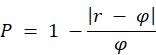
To model proportional harmony, we introduce a golden-ratio-based metric:
Proportion Alignment Score
Symmetry is captured using a normalized deviation measure:
Symmetry Index

4.2. Aesthetic Feature Engineering
4.2.1. Symmetry Ratio Calculation
One of such aesthetic principles is symmetry which helps to establish a sense of harmony, stability and coherence in the forms of sculpture. In aesthetic feature engineering, the calculus of symmetry ratios is the object of a quantitative measure of the similarity between the sculpture and the ideal geometric symmetry. It can be done through defining possible symmetry axes or planes, usually found by principal component analysis or defining moment based approaches on the geometry in three dimensions. After defining a candidate symmetry transformation, i.e. reflection across a plane or rotation about an axis, the sculpture is transformed to reflect that. Symmetry ratio is calculated between the original sculpture and the transformed sculpture by computing distance based similarity measures. Such methods as point-to-point Euclidean distance between similar vertices or surface-to-surface distance between meshes and point clouds are common methods. We then divide the cumulative deviation by the total geometric magnitude of the sculpture to give a ratio with zero-one dimensions. The ratios of ratios show a greater proportion of symmetrical structure and less proportion of asymmetry or intentional disproportion.
4.2.2. Proportion Metrics (Golden Ratio, Fibonacci Alignment)
Proportion metrics consider the relational harmony of the various spatial dimensions of a sculpture, that have long-run aesthetic theories of their own based on mathematics and the art history of the past. Of these, the golden ratio and the Fibonacci number have been reiterated in connection with pleasing compositions in artistic cultures. In computational aesthetic modeling, proportion measures are designed by recognizing important dimensional ratios in a sculptural object, such as the ratio between height and width, the ratios of limbs to the torso, or even relationship between spatial parts. The golden ratio measure is used to assess the difference between dimension ratios and the desired value ϕ=1.618. This deviation is brought to naught to obtain a proportion alignment score, smaller values approaching one being more adhered to. This is taken further by Fibonacci alignment, which studies whether spatial subdivisions or curvature progressions are approximations of Fibonacci intervals to represent rhythmic scaling patterns in the form. These measures do not suppose that the perfect proportional conformity is always the best; the measures indicate the levels of conformity with the classical proportion systems. Proportion metrics, combined with other aesthetic elements, lead to a harmonious depiction that does not violate traditional artistic ideals, as well as modern expressive diversity.
4.3. Machine Learning Pipeline
4.3.1. Regression Models for Aesthetic Scoring
The layer of aesthetics prediction pipeline is based on regression models that provide interpretable relationships between sculptural variables that have been engineered and the score of perceived beauty. It involves initial normalization and aggregation of all geometric, structural and surface descriptors into a feature vector of each sculpture. Continuous aesthetic scores are then predicted using classical regression methods such as linear regression, the ridge regression, and support vector regression. In Figure 2, the regression pipeline was used to predict the aesthetic scores based on sculptural characteristics. These models are especially useful to know the proportionate contribution of individual features since the learned coefficients are an immediate expression of the weights of aesthetic importance.
Figure 2

Figure 2 Regression-Based Pipeline for Aesthetic Scoring of
Sculptural Features
Some of the methods introduced to deal with non-linearity in aesthetic perception include using kernel-based regression, as well as the use of ensemble like random forest regression. These methods represent non-linear relationships among features, e.g. the overall effect of symmetry and balance on visual harmony.
4.3.2. Deep Learning for 3D Feature Extraction (3D-CNN, PointNet++)
Deep learning techniques take aesthetic modeling further and allow the automatic derivation of high-level sculptural information out of three dimensional data. The three-dimensional convolutional neural networks are applied to the voxelized representation of sculptures with the aim of learning spatial filters that represent the volumetric structure of mass distribution and composition of the global forms. The networks are especially efficient in the modeling of a structural balance and spatial hierarchy, since convolutional kernels are local-to-global geometric representations. PointNet++ is the other approach that does not voxelize or mesh point clouds, making it the processing of raw point clouds. PointNet++ is quite suitable with the geometries of complex sculptures with hierarchical feature learning, which is sensitive to local surface features and global shape features. The learned representations are fed using the fully connected layers to generate aesthetic inferences or compact features embeddings. Deep learning models are adaptive to data to learn aesthetic-relevant patterns compared to handcrafted descriptors, which minimize the use of predetermined rules. Deep feature extraction increases predictive performance and is more flexible than regression-based scoring when used in combination to create a powerful and scalable machine learning pipeline to quantify sculptural beauty.
5. Applications and Implications
5.1. AI-Assisted Sculpture Design and Optimization
AI sculpture design AI-assisted sculpture design is an approach in art history which uses computational aesthetic models to assist artists in the conceptualization, iteration and optimization of three-dimensional form. By constructing the aesthetic evaluation modules into digital sculpting and computer-aided design systems, artists can obtain the real-time feedback about the qualities of balance, symmetry, proportion, and surface coherence. Such feedback cannot determine the decisions made in creative, but it offers quantitative information that assists the artists to experiment with design options more effectively. Aesthetic scoring models allow very fast comparison between many variations of forms, and configurations that produce the desired aesthetic results without losing artistic intent can be found. Optimization methods also expand this functionality by proposing geometric changes that are applied in an incremental fashion to enhance particular aesthetic qualities like increased structure balance or reduced curvature transitions. Specifically, the tools are useful in large or structurally complicated sculptures, when it is expensive to physically prototype. Material optimization and structural stability AI-based optimization has the potential to provide the balance between aesthetics and practical requirements as well. Notably, these systems are planned to be collaborative support systems and not creative ones, so that the human creativity is kept at the heart of the matter.
5.2. Museum Curation and Digital Heritage Preservation
Data-based aesthetic analysis provides useful tools in the management and interpretation of large collections of sculptures in museum curation and digital heritage preservation. With the growing digitization of museums collections, curators are struggling with classification, organization and presentation of large three dimensional collections. Computational aesthetic models can be useful by offering quantitative descriptions that facilitate the analysis of similarity, stylistic classification and thematic classification. These tools help curators establish aesthetic connections between periods, materials or artistic movements that might be not easily noticed with the help of a manual inspection. Exhibition planning is also supported by aesthetic scoring and feature-based clustering to assist the curator in the choice of works that provide a visual harmony or contrast in gallery space. Digitized heritage In digital heritage, aesthetic features with quantifiable values are added to better metadata, making it easier to search and be recommended in online libraries. Surface and structural analysis also is of value to preservation, since computational models are able to find out subtle geometric decay, or erosion patterns, or asymmetries due to aging or damage. Museums can enhance the interpretive narratives through the use of aesthetic metrics and historical and material data thereby being scholarly. More significantly, these technologies do not substitute the expertise of the curators but complement it with the instruments of analysis that are well-scaled. The use of data based aesthetics therefore adds weight to digital technologies in maintaining, interpreting and spreading sculptural heritage to the coming generations.
5.3. Art Education and Automated Feedback Tools
Computational aesthetic models in art education allow the construction of automated feedback environments to supplement existing learning on the basis of critique. Objective evaluation of formal elements like proportion, balance and treatment of surfaces has been a major problem with sculpture students, who tend to be overly subjective and need teacher feedback to evaluate these elements. The aesthetic systems based on data offer the quantitative assessment that may assist students to comprehend how certain design decisions affect the perception of beauty. With visualized metrics of symmetry ratios, smoothness of the curves, and mass balance, learners obtain practical information about the practice of sculpture. Digital modeling can also be employed to provide formative evaluation of a sculpture or design course by way of automated feedback mechanisms built into the modeling platform during the course. Such systems promote the learning process of progressive refinement as the aesthetic coherence is pointed at the areas where refinement could be done, without dictating the outcome of the style. Aggregated metrics of aesthetics also allow instructors to monitor student progress over time to evaluate students more consistently and transparently.
6. Results and Analysis
This experimental analysis shows that a composite of geometric, structural and surface features provides a strong predication of aesthetics of sculptural shapes. Hybrid models combining engineered descriptors and deep 3D features are more associated with expert ratings than baselines and single features. Symmetry ratios and balance measures are always effective in creating a sense of harmony whereas smoothness of curvature and coarseness of textures enhances expressiveness. The embeddings of deep learning models represent global structure coherence and local details which enhance extrapolation between styles and materials. The analysis of errors demonstrates that the highly abstract works are limited, and the deliberate asymmetry opposes the established rules.
Table 2
|
Table 2 Performance Comparison of Aesthetic Prediction Models |
||||
|
Model Type |
MAE |
RMSE |
Pearson r |
Spearman ρ |
|
Linear Regression |
0.182 |
0.236 |
0.61 |
0.58 |
|
SVR (RBF) |
0.149 |
0.198 |
0.71 |
0.68 |
|
Random Forest |
0.131 |
0.176 |
0.77 |
0.74 |
|
3D-CNN |
0.118 |
0.161 |
0.82 |
0.79 |
|
PointNet++ |
0.112 |
0.154 |
0.84 |
0.81 |
The performance indicators of Table 2 indicate the steady increase in the prediction of sculptural beauty with models gradually changing to the modern deep learning ones. Figure 3 indicates that deep models perform better as compared to regression in predicting the aesthetic score. Linear Regression, though interpretable, has the lowest MAE of 0.182 and Pearson correlation of 0.61, which means that it is not capable of explaining nonlinear relationships between aesthetic features.
Figure 3

Figure 3 Comparative Performance of Regression and Deep
Models for Aesthetic Score Prediction (MAE vs. RMSE)
The Support Vector Regression (SVR) with an RBF kernel enhances the generalization and nonlinear modeling and decreases the MAE to 0.149 and raises the correlation metrics. Strong correlations represented in Figure 4 confirm aesthetic prediction model reliability. The Randem Forest also serves to increase predictive accuracy through the use of the ensemble learning and gets a Pearson r of 0.77 and a Spearman r of 0.74, which indicates greater harmonisation with human judgement.
Figure 4

Figure 4 Correlation Analysis of Aesthetic Prediction Models
Using Pearson and Spearman Coefficients
The best performance is demonstrated by the deep learning models of 3D-CNN and PointNet++, which is the best in terms of MAE (0.112) and r (0.84) and 0.81 in terms of rho. These models are superior to the others since they can learn spatial, structural and surface-level aesthetics directly on 3D data.
7. Conclusion
The current research contributes to the new area of data-based aesthetics by providing a form of a systematic and explainable system in the process of measuring beauty in sculptures. Combining geometric, structural and surface-level features, as well as machine learning-based models, the study is able to show that sculptural aesthetics can be analytically explored without simplifying the artistic expression into basic numerical protocols. The suggested methodology is a combination of classical aesthetics (symmetry, proportion, and balance), the use of modern computational intelligence, and allows to make aesthetic grading of the three-dimensional art reproducible and scalable. The results indicate the importance of hybrid modeling approaches based on the integration of handcrafted aesthetic characteristics with representations of deep learning. Engineered descriptors offer transparency and theory, whereas deep 3D models represent complex spatial relations, as well as expressive nuances, which are hard to formalize and describe explicitly. The combination of these methods provides better predictive consistency and concurrence with expert and viewer-related aesthetic judgments. Significantly, it is also reflected in the findings that there are limitations to the computational modelling and especially in the highly abstract or concept driven sculptures which demonstrates the still vital role of human interpretation and cultural context. The theoretical contribution is in addition to the fact that the research is widely applicable in the field of sculpture design, museum curation, the preservation of digital heritage, and the education of art.
CONFLICT OF INTERESTS
None.
ACKNOWLEDGMENTS
None.
REFERENCES
Carrasco-López, S., Herrera-Trejo, M., Castro-Román, M., Castro-Uresti, F., and Castro-Cedeño, E. I. (2024). Analysis of the Steelmaking Process Via Data Mining and Pearson Correlation. Materials, 17(11), 2786. Https://Doi.Org/10.3390/Ma17112786
Carscadden, K. A., Batstone, R. T., and Hauser, F. E. (2023). Origins and Evolution of Biological Novelty. Biological Reviews, 98(4), 1472–1491. https://doi.org/10.1111/brv.12963
Chen, Y.-C., Chang, A., Rosenberg, M. D., Feng, D., Scholl, B. J., and Trainor, L. J. (2022). “Taste Typicality” is a Foundational and Multi-Modal Dimension of Ordinary Aesthetic Experience. Current Biology, 32(8), 1837–1842.e3. https://doi.org/10.1016/j.cub.2022.02.039
Czekaj, R. (2022). Unity of Art in Adorno’s Aesthetic Theory. Art Inquiry, 24, 39–50. https://doi.org/10.26485/AI/2022/24/3
Dharmdas, A., Patil, A. Y., Baig, A., Hosmani, O. Z., Mathad, S. N., Patil, M. B., Kumar, R., Kotturshettar, B. B., and Fattah, I. M. R. (2023). An Experimental and Simulation Study of the Active Camber Morphing Concept on Airfoils Using Bio-Inspired Structures. Biomimetics, 8(2), 251. https://doi.org/10.3390/biomimetics8020251
Ding, M., Qin, H., Zhang, X., and Ma, L. (2024). Designing the Color of Electric Motorcycle Products Emotionally Based on the Dynamic Field Theory and Deep Learning. Displays, 81, 102584. https://doi.org/10.1016/j.displa.2023.102584
Ding, M., Sun, M., and Luo, S. (2024). Product Color Emotional Design Based on 3D Knowledge Graph. Displays, 81, 102622. https://doi.org/10.1016/j.displa.2023.102622
González Martínez, P. (2022). The “preservation by relocation” of Huizhou vernacular architecture: Shifting notions on the authenticity of rural heritage in China. International Journal of Heritage Studies, 28(2), 200–215. https://doi.org/10.1080/13527258.2021.1955728
Kaube, H., and Abdel Rahman, R. (2024). Art Perception is Affected by Negative Knowledge About Famous and Unknown Artists. Scientific Reports, 14, 8143. https://doi.org/10.1038/s41598-024-58697-1
Loos, S., van der Wolk, S., de Graaf, N., Hekkert, P., and Wu, J. (2022). Towards Intentional Aesthetics Within Topology Optimization by Applying the Principle of Unity-In-Variety. Structural and Multidisciplinary Optimization, 65, 185. https://doi.org/10.1007/s00158-022-03288-9
Nagare, S., Nair, R. R., and Sharma, B. (2025). Data-Based Aesthetics: Quantifying Beauty In Sculptural Forms. ShodhVichar: Journal of Media and Mass Communication, 1(1), 86-93. https://doi.org/10.29121/ShodhVichar.v1.i1.2025.56
Orth, A., Sampson, K. L., Zhang, Y., Ting, K., van Egmond, D. A., Laqua, K., Lacelle, T., Webber, D., Fatehi, D., Boisvert, J., et al. (2022). On-the-fly 3D Metrology of Volumetric Additive Manufacturing. Additive Manufacturing, 56, 102869. https://doi.org/10.1016/j.addma.2022.102869
Patil, A. Y., Kundu, T., and Kumar, R. (2024). Finite Element Analysis Megatrends: A Road Less Traveled. Computer Applications in Engineering Education, 32(2), e22721. https://doi.org/10.1002/cae.22721
Suhaimi, S. N., Kuys, B., Barron, D., Whitfield, T. W. A., and Rahman, Z. A. (2022). The Role of Typicality and Novelty in the Aesthetic Preference of Industrial Products: Product Value Transformation. Journal of Design, Business and Society, 8(1), 87–110. https://doi.org/10.1386/dbs_00034_1
Wu, F., Hsiao, S. W., and Lu, P. (2024). An AIGC-Empowered Methodology to Product Color Matching Design. Displays, 81, 102623. https://doi.org/10.1016/j.displa.2023.102623
Wu, F., Lu, P., and Lin, Y. C. (2022). Research on the Influence of Wheelsets on the Visual Imagery of City Bicycles. Sustainability, 14(5), 2762. https://doi.org/10.3390/su14052762
|
|
 This work is licensed under a: Creative Commons Attribution 4.0 International License
© ShodhKosh 2026. All Rights Reserved.