ShodhKosh: Journal of Visual and Performing ArtsISSN (Online): 2582-7472
|
|
AI-Enhanced Audience Experience in Modern Art Spaces
Bhagyashree Dharaskar 1
 ,
Pushpalatha P. 2
,
Pushpalatha P. 2 , Manisha Sagar Pawar 3
 , Gouri Moharana 4
 ,
Shikha Verma Kashyap 5
,
Shikha Verma Kashyap 5 ,
Pooja Nagargoje 6
,
Pooja Nagargoje 6
1 Department
of Computer Science and Engineering, Priyadarshini College of Engineering,
Nagpur, Maharashtra, India
2 Assistant
Professor, Meenakshi College of Arts and Science, Meenakshi Academy of Higher
Education and Research, Chennai, Tamil Nadu, 600108, India
3 Department of Engineering, Science and Humanities (Mechanical
Engineering), Vishwakarma Institute of Technology, Pune, Maharashtra, 411037,
India
4 Assistant Professor, School of Fine Arts and Design, Noida
International University, Noida, Uttar Pradesh, India
5 Professor, AAFT University, Raipur, Chhattisgarh-492001, India
6 Researcher Connect Innovation and Impact Pvt. Ltd, Nagpur,
Maharashtra, India
|
|
|
ABSTRACT |
|
|
Contemporary
art environments are becoming anticipated to provide immersive,
participatory, and personal experiences to the audience that goes beyond the
usual model of traditional static exhibition. To aid the process of
co-creative interaction, this paper will suggest an artificial
intelligence-based AI-enhanced framework of audience experience in modern art
spaces that combines multimodal sensing, artificial intelligence, and
adaptive interaction frameworks. The conceptualization of audience experience
is a multidimensional construct in the study which includes, cognitive
engagement, emotional resonance, behavioral participation and social
reflection. The paper introduces a layered system architecture and
co-creativity interaction model to demonstrate the way that AI mediates
between audience behavior and experience. A framework based on the
application of analytics provides the means of operationalizing experience
evaluation based on ethically regulated AI-based metrics. A pilot case study
illustrates the viability of the suggested solution, suggesting the
enhancement of sustainable attention, behavior of exploration, and immersion
in the mood in AI-mediated zones. The results of the research indicate the
possibilities of AI to complement the curatorial practice and the
significance of transparency, inclusivity, and ethical governance in the
intelligent art settings. |
|||
|
Received 15 September
2025 Accepted 19 December 2025 Published 17 February 2026 Corresponding Author Bhagyashree
Dharaskar, bdharaskar@gmail.com DOI 10.29121/shodhkosh.v7.i1s.2026.7097 Funding: This research
received no specific grant from any funding agency in the public, commercial,
or not-for-profit sectors. Copyright: © 2026 The
Author(s). This work is licensed under a Creative Commons
Attribution 4.0 International License. With the
license CC-BY, authors retain the copyright, allowing anyone to download,
reuse, re-print, modify, distribute, and/or copy their contribution. The work
must be properly attributed to its author.
|
|||
|
Keywords: Artificial Intelligence, Audience Experience, Modern
Art Spaces, Interactive Exhibitions, Co-Creativity, Human–Computer
Interaction |
|||



1. INTRODUCTION
There is a significant shift in the way modern art spaces are approached, especially within the framework of museums, galleries, and immersive exhibition experiences due to the development of digital technologies and shifting viewpoints of the audience. Modern consumers no longer want to consume art as a passive consumer but rather participate in art as a personalized, emotional, and participatory experience that must adapt to their interests, situations and kinds of engagement Ünal et al. (2022). This change has put more and more pressure on cultural institutions to no longer rely on the display paradigms, but on experience-based models that bring together technology, narrative and interactivity into the exhibition space. The conventional methods of audience interaction in art spaces are based to a great extent on predetermined curatorial discourse, predefined patterns of exhibition design, and impersonal modes of interpretation, including wall texts or audio-tapes. Although these solutions have been useful in the education and archiving field, they do not necessarily fit the needs of different visitors with different levels of art literacy, and the changing patterns of movement, attention, and emotional reaction Nukarinen et al. (2022). Consequently, interaction intensity, cognitive retention and affective attachment often tend to be unbalanced amongst audiences. The limitations are even intensified in large scale or dense exhibitions where mediation of curating becomes hard to personalise Brambilla et al. (2022). Artificial Intelligence (AI) has become a strong facilitator to redefine the experience of audiences in contemporary art spaces as shown in Figure 1. With the help of computer vision, machine learning, natural language processing and affective computing, AI systems have the ability to observe, analyze and react to audience behavior in real-time. This makes it possible to use adaptive strategies when performing mediation, such as customized content, contextual storytelling, and adaptive environmental modulation Browning et al. (2021). Instead of substituting the purpose of curation, AI serves as a smart mediator that actively orchestrates works of art, spatial arrangement, and explanatory stories with cognition and emotion of the audience.
Figure 1
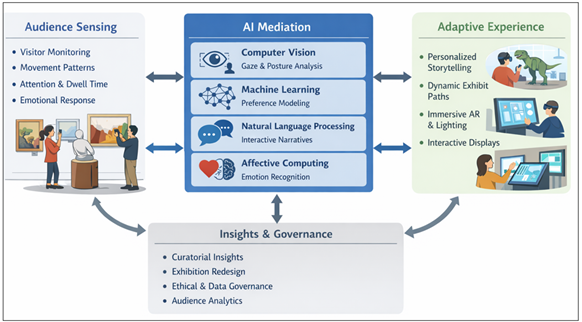
Figure 1 Concept Application of AI in Modern Art Spaces
The adding AI into art spaces is also in line with the general trends of human-computer interaction, experience design, and smart environments. With the help of AI-enhanced systems, one can switch to a one-to-one transmission of knowledge in favor of dialogic and co-creative models of engagement, in which audiences can modify their experiential trajectories Şansal et al. (2024). Meanwhile, these systems create high quality experiential data that may support curatorial decision-making, exhibition design and long term audience development strategies Diaz Ruiz and Nilsson (2022). It is on this backdrop that this paper explores the importance of AI in improving the audience experience in the contemporary art spaces. The purpose of the study is (i) to conceptualize the AI-based audience engagement frameworks, (ii) to investigate the system architectures and interaction models that preserve the adaptive experiences, and (iii) to study the implications of the cultural, ethical, and governance practices. The synthesis between the technological and experiential viewpoints makes the paper part of a systematic insight into how AI can transform the audience engagement in the current art setting.
2. Conceptual Foundations of Audience Experience in Modern Art Spaces
The experience of the audience in contemporary art spaces has changed into the primarily observative act to the multidimensional phenomenon that is influenced by the cognition, emotion, behavior, and social interaction. The previous object-oriented approaches involved the belief that meaning was contained mainly in the piece of art and that the audience could interact with it through passive reflection informed by predetermined curatorial discourse Serafini (2023). However, in the contemporary theory, experience is becoming more of an emergent process, which is co-produced as a result of the interaction of the viewer, the artwork, the space environment and the mediating technologies. This change is indicative of the larger changes in digital culture and participatory media where engagement, immersion and customization have emerged as the core aspects of cultural consumption Newman et al. (2024). Theoretically, the experience of the audience in the art setting is explicable in four dimensions that are interrelated, namely, cognitive engagement, emotional resonance, behavioral participation, and social-reflective interaction. Cognitive engagement is related to the processes of perception, interpretation, and learning, which are determined by attention, curiosity, and previous knowledge Simon (2024). Emotional resonance attracts affective reactions like immersion, empathy and aesthetic pleasure, which is key to formation and retention of memories. The behavioral participation lays stress on embodied interaction, such as movement pattern, intensity of exploration, and dwell time at exhibition spaces. Social and reflective add the aspects of experience that go beyond the individual, emphasizing on collective meaning-making, dialogue, and post-visit reflection Beckett and Yaseen (2023). These dimensions do not work as independent entities, but rather on the basis of each other, they will keep on creating and buttressing each other as audiences move in art spaces.
In order to render these abstract experiential constructs into forms of analytical tractability, there is need to determine measurable indicators that could be used to capture the interest of the audience on-site. New sensor and artificial intelligence capabilities allow us to observe and analyze the behavior of the audience on a scale and with the level of detail that has not been possible with other traditional ethnographic or survey-based approaches Pavlik (2023). The systematic correspondence between the key dimensions of the audience experience, their conceptual focus, and measurable indicators justified by AI-based evaluation methods is laid out in Table 1.
Table 1
|
Table 1 Mapping of Audience Experience Dimensions to Measurable Indicators in AI-Enhanced Art Spaces |
|||
|
Experience
Dimension |
Conceptual
Focus |
Measurable
Indicators |
AI
Measurement Methods |
|
Cognitive
Engagement |
Understanding,
interpretation, learning depth, curiosity |
Dwell
time per artwork, revisit frequency, content interaction rate |
Attention
tracking, interaction log analysis |
|
Emotional
Resonance |
Immersion,
affective connection, empathy |
Facial
affect cues, vocal tone variation, self-reported emotion |
Affective
computing, sentiment analysis |
|
Behavioral
Participation |
Physical
interaction, exploration, engagement intensity |
Movement
trajectories, interaction frequency, navigation diversity |
Pose
estimation, trajectory analytics |
|
Social
& Reflective Experience |
Shared
meaning-making, discussion, recall |
Dialogue
length, group clustering behavior, reflection prompts |
NLP-based
conversation analysis |
|
Experiential
Continuity |
Sustained
engagement across space and time |
Cross-zone
transitions, sequential exhibit engagement |
Multimodal
data fusion, temporal modeling |
In this way of operationalizing the experience of the audience, the table creates an important methodological bridge between the theory of experience and the code of computation. Notably, these parameters do not attempt to bring experience down to the mere quantitative numbers; instead, they offer the complementary evidence that could lead to the enhancement of the curatorial knowledge, adapting mediation strategy, and longitudinal audience study. This operationalization is further presented in terms of the Human-computer interaction theory, which focuses on an experience-oriented and reflective approach to interaction design rather than efficiency in the tasks Shi et al. (2019). Technology in art spaces serves as an interpretive mediator, as opposed to being an interface, so that the audiences interact dialogically with the art objects and still retain the intent of the curation. Placed in the context of the wider experience economy, AI-enhanced art spaces become ad hoc experiential ecosystems, i.e., can react in real time to the behavior of groups and individuals. Such adaptive experiences are the subject of investigation based on these conceptual foundations and are examined in terms of the particular AI technologies and models of interaction in the next section.
3. Artificial Intelligence in Art Spaces
Artificial intelligence has become a crucial technology around which the re-organization of the audience engagement, interpretation and experience of art in contemporary cultural conditions can be organized. In contrast to the previous digital tools that served mostly to aid the documentation process, the archiving process, or the statistic presentation of multimedia, AI facilitates adaptive, responsive, and context-aware interaction models. In contemporary arts environments, AI is not a complete system, but rather an intelligence layer, which constantly analyzes audience behavior and facilitates interaction among works, space environments and visitors Chang (2021). One of the most important applications of AI in an art space is a kind of computer vision perception of audience behavior. The movement patterns, postures, eye tracking and dwell patterns can be analyzed by the vision systems and used to determine the degree of concentration, curiosity and spatial interaction. These understandings give exhibitions a way out of homogeneous presentation tactics in favor of dynamic designs and content dissemination models Barath et al. (2023). In examples, the longer the dwell time or visitation frequency, the more profound the interpretive content may be stimulated; and the spatial modulation can be informed by the crowd-density analysis to make this space more comfortable and accessible. Natural language processing also enhances communication ability of art space because it makes them to be able to interact through conversations and narratives like in Figure 2. Conversational AI deployed at kiosks, mobile devices or ambient interfaces can enable audiences to have a conversation instead of one directional information retrieval Guo (2007). Such systems are able to accommodate different degrees of art literacy, facilitate multilingual communication, and promote the aspect of reflection questioning in order to promote deeper meaning-making. Notably, NLP-based systems can support art spaces to record qualitative data of engagement in the form of interpretive response and reflective commentary which would otherwise be hard to scale.
Figure 2

Figure 2 System Architecture for AI-Enhanced Audience
Experience in Art Spaces
The field of affective computing adds one more element of experience, as systems can detect and react to emotional conditions. Using the facial expression, vocal features, or dynamic interactions, AI models may be used to predict affective reactions like immersion, excitement, or disengagement Babbie (2004). These guesses take into consideration such minor environmental accommodations as lighting, soundscape, or narrative rhythm adjustment, so as to increase emotional engagement but not dictate audience behavior directly. This responsiveness is in line with the experience-centered design ideology that focuses on unobtrusive assistance rather than direct control. Importantly, the AI in art spaces is based on the multimodal data fusion and learning mechanisms that combine the sensory information, contextual metadata, and the historical patterns of interaction. Feedback loops suggest that machine learning models constantly improve the audience profiles and engagement mechanisms, which allows real-time adjustments but long-term curatorial understanding. Nevertheless, the success of such systems is conditioned by the keen correspondence to the intent of the curation and ethical management as well as cultural sensitivity. Artificial intelligence needs to add to artistic experience instead of crowdsourcing it, promoting plurality, interpretation, and contemplation Kumar (2024).
4. Data Ecosystem and Sensing Infrastructure
The key to achieving the AI-enhanced viewer experience in contemporary art space is a solid data infrastructure that is capable of capturing, relaying and contextualizing visitor experience without interfering with the aesthetic quality of the space. In comparison to traditional analytics in retail or web-based platforms, sensing in art spaces has to be limited to more stringent requirements of subtlety, privacy, interpretive neutrality. The use of a vision-based data capture is a fundamental part of the sensing layer, where cameras on the ceiling or other strategic points are used to approximate the number of feet that are walking, the density of the crowd, their movement patterns, and the rough attention profiles. The aim of an art space is not surveillance, rather experience conscious interpretation: how visitors navigate between the exhibits, on which they stop and how much time they spend interacting. In addition to vision, audio sensing represents the verbal inquiries, talking to the guides and signs of environment (e.g., applause, laughter or silence pattern in immiscible setups). The design of audio pipelines should be such that they prioritize the detection of intents and quality of the interaction with a minimum amount of the raw voice being retained by processing it on-device and using ephemeral buffering.
Figure 3

Figure 3 Co-Creativity Interaction Diagram Mapping in Art
Spaces
BLE beacons, RFID triggers, pressure mats and interactive surface logs are some of the technologies that are used to identify exhibit approach events, frequency of interaction, and navigation paths. The sensors offer very useful adaptive mediation clues, including activating exhibit-related stories, suggesting related works, or movement-dynamically assigning visitors to ensure fewer people visit. Contextual metadata also enhances sensing outputs by adding non-personal environmental and operating cues, such as the time of the day, exhibition timing, spatial zone density, lighting or temperature which in many cases cause variation in engagement more plausibly than behavior as shown in Figure 3. Combined these inputs provide a situational model of the exhibition that undergoes sound inference in the face of variation in real-world variability. Systems In the system perspective, data pipeline should provide real-time responsiveness with security and governance. Nonetheless, due to art engagement being subjective and mediated by culture, the sensing ecosystem should be accompanied by sensible data governance including consent mechanisms, transparency signals, retention boundaries, and bias audits, which will help to avoid the optimization of the art process at the expense of inclusivity and intent. By doing so, sensing infrastructure will not only provide a technical base of AI mediation, but also generate a key driver of trust, legitimacy, and interpretive integrity in intelligent artistic environments.
5. AI-Driven Interaction Models in Modern Art Spaces
The working center of the art spaces that are generated by AI modified interaction models effectively converts perceived audience behavior into a context of co-creation into meaningful experiences. The models promote adaptive, dialogic and context-sensitive engagement as opposed to the conventional mechanisms of interaction which are based on rigid exhibition patterns or fixed interpretive media. With constant feedback to audience behavior, tastes, and emotional signals, AI systems can facilitate active involvement by the visitor in creating their experience paths instead of being passive receivers of curatorial discourses. The central aspect of the AI-mediated interaction is personalization, which takes advantage of the behavioral information, including dwell time, diversity of the navigation, and the history of interaction, to deduce audience interests and the level of cognitive engagement. Personalization comes in the form of the depth of adaptive content, customized interpretive labels, and the suggestion of similar works of art or areas of the exhibition. Personalization in art spaces, however, is not intended to maximize efficiency or close preference predictability, but rather to maintain an interest in the work, invite exploration and allow reflective interpretation. This difference highlights the cultural sensitivity that is needed whenever recommending logic in artistic situations. Conversational agents enhance the use of personalization to a dialogic interaction by facilitating the use of natural language between the audience and the exhibition environment. With conversational queries, visitors may ask to be explained, give an interpretation, or make a thematic linkage among the works. Conversational guides based on AI adjust their answers to the knowledge level and language of visitors, as well as to conversational prompts, enabling the inclusion of all visitors without reducing the interpretive freedom. In addition to delivery of information, these agents bring reflective prompts that prompt the visitor to give emotional and conceptual answers, which strengthens co-creative meaning-making.
Table 2
|
Table 2 AI-Driven Interaction Models and Their Experiential Roles in Modern Art Spaces |
||||
|
Interaction
Model |
Primary
Audience Actions |
AI
Capabilities Involved |
Adaptive
System Responses |
Experience
Outcomes |
|
Personalization |
Explore
exhibits, pause, revisit works |
User
modeling, behavior analysis, recommendation learning |
Tailored
content depth, adaptive labels, artwork suggestions |
Enhanced
cognitive engagement, sustained curiosity |
|
Conversational
Agents |
Ask
questions, express interpretations |
Natural
language processing, intent detection, dialogue management |
Contextual
answers, reflective prompts, multilingual support |
Deeper
understanding, reflective meaning-making |
|
Adaptive
Ambience |
Navigate
space, respond emotionally |
Affective
computing, context inference, environmental control |
Dynamic
lighting, soundscape modulation, spatial cues |
Emotional
resonance, immersion, comfort |
|
Generative
Storytelling |
Interact,
choose paths, reflect |
Generative
AI, narrative synthesis, context-aware sequencing |
Dynamic
narratives, AR/projection augmentation |
Co-creative
engagement, memory recall |
|
Co-Creative
Feedback Loop |
Continuous
interaction and reflection |
Multimodal
fusion, reinforcement learning |
Real-time
adaptation across interaction models |
Experiential
continuity, participatory authorship |
As it is illustrated in Table 2, AI-based interaction models do not exist in a vacuum but are a self-organizing system where audience behaviors and AI reactions result in a feedback loop. As a combination of personalization, conversation, ambience modulation, and generative storytelling, adaptive co-creativity can make experiences develop dynamically with the curatorial intent in mind. The success of these models will eventually hinge on the quality of their results that can be quantified, perceived, and controlled a problem that has been discussed in the previous Adaptive ambience is an even more implicit interaction model, where AI is able to adjust environmental parameters to facilitate experience flow. These adaptations will be kept to a minimum, in keeping with experience-centered design principles which place more emphasis on atmosphere and continuity than on system visibility. The most form of co-creative interaction model is the generative storytelling. Through generative AI processes, art spaces can dynamically compile the narratives, visual augmentations, or interpretive sequences that will evolve based on the visitor movement, interaction, and reflection. Instead of having one canonical narrative, generative systems allow a variety of narrative paths so that an audience can shape the way that stories are unfolding in space and time.
6. Audience Experience Analytics and Evaluation
Success of AI-driven models of interaction in the current art spaces is ultimately contingent with the capacity to systematize analysis and evaluation of how the audience experience is progressively changing due to adaptive mediation. As compared to traditional performance measurement in transactional or productivity-based systems, assessment in art systems needs to consider subjective, interpretive and affective aspects of participation. As a result, the audience experience analytics is a hybrid model that combines both quantitative behavioral indicators and qualitative and inferential indicators caused by AI-driven analysis. At the first tier, analytics give attention to behavioral and attentional cues that are observable in the audience and that indicate engagement in the audience. The dwell time, interactions frequency, the variety of navigation, and revisit, which are some of the metrics, offer empirical data regarding the manner in which visitors engage with and respond to artworks and stories of an exhibition. Table 3 provides the summary of the core audience experience dimensions and their main analytics metrics, interpretive meaning, and time frame.
Table 3
|
Table 3 Mapping Audience Experience Dimensions to Core Analytics Metrics |
|||
|
Experience
Dimension |
Primary
Analytics Metrics |
Interpretive
Meaning |
Typical
Time Scale |
|
Cognitive
Engagement |
Dwell
time, content interaction rate, revisit frequency |
Depth
of attention and interpretive effort |
Per
exhibit / session |
|
Emotional
Resonance |
Interaction
pacing, affective variation, immersion duration |
Emotional
connection and aesthetic impact |
Moment-to-moment |
|
Behavioral
Participation |
Movement
diversity, interaction frequency, spatial coverage |
Active
exploration and embodied engagement |
Session-level |
|
Social
& Reflective Experience |
Group
interaction duration, dialogue frequency |
Shared
meaning-making and discussion |
Session
/ post-visit |
|
Experiential
Continuity |
Return
visits, cross-zone progression |
Sustained
engagement over time |
Multi-session |
At the same time as Table 3 determines the elements of experience assessed, successful analytics requires the capture and processing of these metrics. AI-assisted art spaces are based on a heterogeneous data ecosystem where various modalities of sensation provide subsidiary views of interaction. Table 4 matches the most important analytics measures with the data sources, sensing modalities and processing layers in the system architecture.
Table 4
|
Table 4 Analytics Metrics and Corresponding Data Sources |
|||
|
Analytics
Metric |
Primary
Data Source |
Sensing
Modality |
Processing
Level |
|
Dwell
Time |
Vision
tracking |
Camera
/ edge vision |
Edge
AI |
|
Navigation
Diversity |
Trajectory
logs |
Vision
+ proximity |
Edge
+ cloud |
|
Conversational
Depth |
Dialogue
transcripts |
Audio
/ text |
Cloud
NLP |
|
Emotional
Variation |
Facial/vocal
cues |
Vision
/ audio |
Edge
affective models |
|
Interaction
Frequency |
Touch/beacon
events |
Proximity
sensors |
Edge
aggregation |
|
Reflection
Indicators |
Prompt
responses |
Conversational
UI |
Cloud
analytics |
In addition to crude measurement, quality assessment needs analytic tools which may process multimodal signals to represent meaningful information to the curators and designers. The AI-based analytics systems such as attention modeling, affective inference, dialogue analysis, and temporal pattern mining allow learning more about how interaction models affect the experiential results. These techniques are not meant to be prescriptive of best experiences but they are designed to aid the reflective evaluation and progressive refinement. Table 5 connects the experience dimensions with AI analytics techniques and explains their purpose of evaluation and feedback on the design.
Table 5
|
Table 5 Experience Dimensions, AI Analytics Methods, and Evaluation Purpose |
|||
|
Experience
Dimension |
AI
Analytics Methods |
Evaluation
Purpose |
Design
Feedback Enabled |
|
Cognitive
Engagement |
Attention
modeling, sequence mining |
Assess
learning scaffolding |
Content
depth adjustment |
|
Emotional
Resonance |
Affective
inference, sentiment trends |
Evaluate
immersion quality |
Ambient
modulation tuning |
|
Behavioral
Participation |
Trajectory
clustering, interaction modeling |
Measure
exploratory richness |
Spatial
layout refinement |
|
Social
& Reflective |
Dialogue
analysis, group behavior modeling |
Assess
collective interpretation |
Prompt
and narrative redesign |
|
Experiential
Continuity |
Temporal
pattern mining |
Long-term
impact assessment |
Exhibition
evolution planning |
Combining Table 3–Table 5, it is possible to show that the abstract notions of experience of the audience can be operationalized into a logical analytics framework that is based on the AI-enabled sensing and interpretation. Notably, analytics, in this case, serve as decision support mechanisms, but not optimization engines. Ethical governance regarding the consent management, anonymization, monitor bias, and transparency have to be integrated along the evaluation pipeline so that analytics can result in trust and inclusivity. By so doing, analytics of audience experience become reflective tools through which the responsible development of intelligent, co-creative art spaces is led.
7. Future Research Directions
The future studies must further the AI-enhanced spaces of art past temporary optimization of engagement to culturally oriented systems, which are ethically regulated and co-creative systems. The development of inclusive audience modeling that takes into consideration cultural diversity, accessibility and diverse interpretive practices are key directions. Other possibilities of generative and co-creative AI could stimulate greater engagement of the audience in the process of forming stories and developing artworks and provoke critical issues related to authorship and curatorial authority. Also, longitudinal systems of evaluation are required to measure the long-term effects on learning, memory, and reiterative involvement. A system design incorporating the mechanisms of transparency, consent, and explainable AI will be needed to maintain the audience trust as intelligent art environments further develop.
8. Conclusion
This paper has explored the ways artificial intelligence can be used to improve the audience experience in contemporary art environments through adaptive, co-creative, and contextual interaction. With a combination of multimodal sensing, AI based interaction models, and reflective analytics, the suggested framework shows how the audience cognition, emotion, behavior, and social interaction may be facilitated without turning artistic experience into the set of instrumental metrics. The paper added a systematic structure architecture, a model of co-creativity interaction and model of analytics-based evaluation that, respectively completes experiential theory and computation. The results of the presented study, with the help of an illustrative pilot case study, imply that AI-mediated personalization, conversational interaction, adaptive ambience, and generative storytelling can be used in a responsible way and positively affect sustained attention, exploratory behavior, and emotional resonance. Technical, methodological and ethical obstacles can still be recognized, but this study makes AI not the alternative to curatorial practice, but rather an added layer, capable of helping to further enrich, make the process more inclusive and thought-provoking in the contemporary art setting.
CONFLICT OF INTERESTS
None.
ACKNOWLEDGMENTS
None.
REFERENCES
Babbie, R. (2004). The Practice of Social Research (10th ed.). Wadsworth Publishing.
Barath, C.-V., Logeswaran, S.,
Nelson, A., Devaprasanth, M., and Radhika, P. (2023). AI in Art Restoration: A Comprehensive Review of Techniques, Case
Studies, Challenges, and Future Directions. International Research Journal of
Modern Engineering Technology and Science, 5(3), 16–21.
Beckett, C., and Yaseen, Z. (2023). Generating Change: A Global Survey of what News Organizations are Doing with AI. London School of Economics and Political Science.
Brambilla, E., Petersen, E., Stendal, K., Sundling, V., MacIntyre, T. E., and Calogiuri, G. (2022). Effects of Immersive Virtual Nature on Nature Connectedness: A Systematic Review Protocol. Digital Health, 8, Article 20552076221120324. https://doi.org/10.1177/20552076221120324
Browning, M. H., Saeidi-Rizi, F., McAnirlin, O., Yoon, H., and Pei, Y. (2021). The Role of Methodological Choices in the Effects of Experimental Exposure to Simulated Natural Landscapes on Human Health and Cognitive Performance: A Systematic Review. Environment and Behavior, 53(7), 687–731. https://doi.org/10.1177/0013916520906480
Chang, L. (2021). Review and Prospect of Temperature and Humidity Monitoring for Cultural Property Conservation Environments. Journal of Cultural Heritage Conservation, 55, 47–55. https://doi.org/10.1016/j.culher.2021.02.004
Diaz Ruiz, C., and Nilsson, T. (2022). Disinformation and Echo Chambers: How Disinformation Circulates on Social Media Through Identity-Driven Controversies. Journal of Public Policy and Marketing, 42(1), 18–35. https://doi.org/10.1177/07439156221092364
Guo, J.-H. (2007). Research Methods in Social Behavior. Hung Yeh Publishing.
Kumar, S. S. (2024). Artificial Intelligence in Floater Motor Insurance: Simplifying Multi-Vehicle Claims. ShodhAI: Journal of Artificial Intelligence, 1(1), 150–158. https://doi.org/10.29121/shodhai.v1.i1.2024.16
Newman, N., Fletcher, R., Robertson, C. T., Arguedas, A. R., and Nielsen, R. K. (2024). Digital News Report 2024. Reuters Institute for the Study of Journalism.
Nukarinen, T., Rantala, J., Korpela, K., Browning, M. H., Istance, H. O., Surakka, V., and Raisamo, R. (2022). Measures and Modalities in Restorative Virtual Natural Environments: An Integrative Narrative Review. Computers in Human Behavior, 126, Article 107008. https://doi.org/10.1016/j.chb.2021.107008
Pavlik, V. J. (2023). Collaborating with ChatGPT: Considering the Implications of Generative Artificial Intelligence for Journalism and Media Education. Journalism and Mass Communication Educator, 78(1), 84–93. https://doi.org/10.1177/10776958221149577
Şansal, K. E., Şimşek, A. C., Aktan, S., Özbey, F., and Paksoy, A. (2024). Restorative Effects of Virtual Nature on the Emotional Well-Being of Community-Dwelling Older Adults. European Journal of Geriatrics and Gerontology, 6, 12–18. https://doi.org/10.4274/ejgg.galenos.2023.2023-3-2
Serafini, L. (2023). The Old–New Epistemology of Digital Journalism: How Algorithms and Filter Bubbles are (re)Creating Modern Metanarratives. Humanities and Social Sciences Communications, 10, Article 395. https://doi.org/10.1057/s41599-023-01805-y
Shi, K., Su, C., and Lu, Y.-B.
(2019). Artificial Intelligence: A Necessary Tool
for the Future Development of Museums. Science and Technology of Museums, 23,
29–41.
Simon, M. F. (2024). AI in the News: Retooling, Rationalizing, and Reshaping Journalism and the Public Arena. Tow Center for Digital Journalism.
Ünal, B., Pals, R., Steg, L., Siero, F. W., and van der Zee, K. I. (2022). Is Virtual Reality a Valid Tool for Restorative Environments Research? Urban Forestry and Urban Greening, 74, Article 127673. Https://Doi.Org/10.1016/J.Ufug.2022.127673
|
|
 This work is licensed under a: Creative Commons Attribution 4.0 International License
© ShodhKosh 2026. All Rights Reserved.