ShodhKosh: Journal of Visual and Performing ArtsISSN (Online): 2582-7472
|
|
Generative Art as Pedagogical Tool in Art Schools
Dr. Michelle Morales 1
 ,
Dr. Severino Morales Jr 2
,
Dr. Severino Morales Jr 2 ,
Dinesh Kumar Nayak 3
,
Dinesh Kumar Nayak 3
 ,
Dr. Purva Mange 4
,
Dr. Purva Mange 4 ,
Abhinesh Kumar Sahu 5
,
Abhinesh Kumar Sahu 5 , Pushpa Nagini Sripada 6
1 Northeastern
College, Philippines
2 Northeastern
College, Philippines
3 Assistant Professor, School of Fine Arts and Design, Noida
International University, Noida, Uttar Pradesh, India
4 Associate Professor, Symbiosis School of Planning Architecture and
Design, Nagpur Campus, Symbiosis International (Deemed University), Pune, India
5 Department of Data Science, Shri Shankaracharya Institute of
Professional Management and Technology, Raipur, Chhattisgarh, India
6 Professor, Meenakshi College of Arts and Science, Meenakshi Academy
of Higher Education and Research, Chennai, Tamil Nadu, 600105, India
|
|
|
ABSTRACT |
|
|
Generative art
has become a paradigm shift in the modern art education industry where it
provides a fresh way to explore creativity by means of algorithms and
human-artificial intelligence. The paper discusses generative art as a
pedagogical approach in art schools, highlighting its significance in
transforming an outcome-oriented production instructional approach in favor
of a process-based and reflective pedagogical approach of learning. It is
suggested to implement a more systematic pedagogical model that incorporates
methods of generative work into the studio-based curriculum by means of
progressive course design, inquiry-based exploration, and human-AI design
approaches to work. The paper also presents a curriculum- mapping scheme and
process-based framework of assessment that anticipates the advancement of
foreground iteration, conceptual articulation and reflective practice as the
major indicators of creative development. The paper based on rubric based
evaluation and illustrative visualization of analysis shows that learning
outcomes in generative art education can be evaluated longitudinally, not
using single points in form of artifacts. The results substantiate that the
generative art improves the systems thinking, metacognitive awareness, and
creative accountability as well as promotes the inclusive engagement of
various learner profiles. The paper ends by pinpointing future directions of
research that seeks to empirically validate and/or culturally responsive
AI-assisted studio design, and sustainable AI-assisted studio processes,
making generative art a central pedagogical initiative in the teaching of art
to next-generation students. |
|||
|
Received 15 September 2025
Accepted 19 December
2025 Published 17 February 2026 Corresponding Author Dr.
Michelle Morales, drmichellemorales@gmail.com DOI 10.29121/shodhkosh.v7.i1s.2026.7096 Funding: This research
received no specific grant from any funding agency in the public, commercial,
or not-for-profit sectors. Copyright: © 2026 The
Author(s). This work is licensed under a Creative Commons
Attribution 4.0 International License. With the
license CC-BY, authors retain the copyright, allowing anyone to download,
reuse, re-print, modify, distribute, and/or copy their contribution. The work
must be properly attributed to its author.
|
|||
|
Keywords: Generative Art, Art Education, Creative Pedagogy,
Human–AI Co-Creativity, Studio-Based Learning, Process-Oriented Assessment |
|||


1. INTRODUCTION
The accelerated convergence of computer technologies with creative practice has fundamentally redefined the modern understanding of art education developing the novel paradigms of pedagogical approaches that can no longer be limited to conventional studio teaching. One of these evolutions is that of generative art which has become one of the most influential techniques, defined by algorithmic procedures, rule systems and intelligent models to create visual, auditory, or interactive arts Al Darayseh (2023). Instead of defining technology as an execution tool, generative art redefines artistic practice as a collaboration and interaction between the intention of humans and the agency of a computation. This change is of great pedagogical importance in art schools, where it has been applied to teach students to approach creativity as an act of exploration, trial and error, and abstraction as well as the production of finished objects Sabzalieva and Valentini (2023). Traditional art pedagogy has traditionally focused on the control of technique, stylistic consistency and authorship, which favors the outcome-based models of assessment. Although these methods do not become irrelevant, they are becoming inadequate when it comes to handling the intricacy of modern creative ecosystems in the light of digital media, artificial intelligence, and interdisciplinary teamwork Bergdahl (2023). Generative art also offers a different teaching perspective by prefiguring systems thinking, procedural logic and uncertainty as part of creative learning. The manipulation of parameters, constraints, and probabilistic behaviors provides exposure to non-linear creative processes to the students, which provoke deterministic concepts of control and originality Sindermann (2021). This is similar to the constructivist and experiential learning theories whereby knowledge is actively built up through experimentation, reflection, and trial and error.
Figure 1
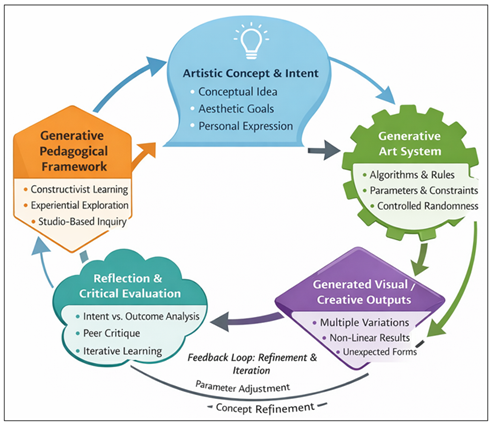
Figure 1 Conceptual Block Diagram Illustrating Generative Art
as a Process-Oriented Pedagogical Framework
Pedagogically speaking, gen art is not just a tool of expression, but it is also a thinking tool that externalizes the creative process of making decisions. Through encoding artistic purpose into algorithms or model specifications, learners must conceptualize aesthetic values, formal regulations and conceptual limits clearly and carefully Habib et al. (2024). The process enhances metacognitive awareness because the students critically assess this relationship between intent, system behavior and emergent outcomes as shown in Figure 1. Further, due to the variability nature inherent in generative systems, reflection on critically, discussions with peers and comparative analysis are encouraged, which encourages studio discourse and collaborative learning environments Millet et al. (2023). In art schools, generative art as an instructional practice is also in reaction to more general educational demands, such as digital literacy, interdisciplinary proficiency and ethical interaction with intelligent systems Chen and Ibrahim (2023). With more and more artists working in the creative-computational nexus, teaching generative practices in the curriculum provides students with the kinds of skills that are applicable to the modern setting. The paper will identify generative art as a revolutionary pedagogical system, its theoretical background, its integration in instruction, and its impact on the learning outcomes in art education.
2. Pedagogical Frameworks for Teaching Generative Art
Pedagogical models have to be developed to help teach generative art in art schools without giving up the spirit of studio learning but adding computational exploration and reflective system-building. Generative art pedagogy is best achieved when presented as a learning ecology where students move back and forth between conceptual intent, system design, interpretation of emergent output and critique-based refinement and correction Cascales (2023). Another perspective on learning is the instruction of traditional forms of digital art, which tend to focus on software proficiency or imitation of style rather than allowing students to explore the process of generating new works of art through this approach. This renders generative art to be inherently aligned with project-based learning, inquiry-based projects, and reflective models of practice that emphasize more on process, experimentation, and meaning-making rather than the predetermined outcomes. One may find a project-based structure especially appropriate since it enables the introduction of generative methods as instruments of creative work into real artistic issues instead of being the isolated technical training Epstein (2023). In this model as shown in Figure 2, students specify a theme, or conceptual question, e.g., identity, cultural memory, pattern language or environmental narratives and encode it as a generative system by use of rules, parameters, constraints, and datasets Leonard (2020). The pedagogical importance is the incessant linkage of the conceptual purpose to the procedural reasoning: students are pressured to explain what the system ought to be exploring on the aesthetic level and why. This encourages creative thinking at a higher level since students have to explain design logic, predict variability, and make aesthetic choices whenever the results are different between iterations of the generation.
Figure 2
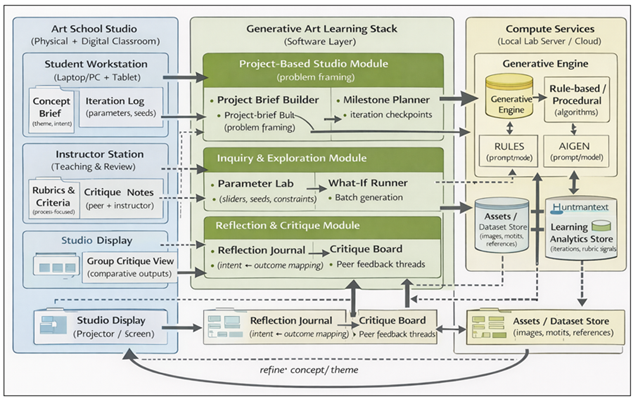
Figure 2 Deployment Framework for Teaching Generative Art
Generative art learning is further reinforced by inquiry-based studio practice where exploratory learning is promoted by experimentation of what-if scenarios. Parameters, seed values, constraints, and model prompts vary systematically to cause changes in aesthetic structures to appear and change. Instead of considering such unexpected results as an error, the instructor proposes them as fruitful deviations that can bring to light some of the suppressed assumptions in the concept or ruleset of the student Ansone et al. (2025). This practice helps to develop ambiguity tolerance and adaptive creativity, equipping learners with the skills of the modern art practice in which experimentation and uncertainty are the norm, and not the exception. This makes studio critique more fruitful as the surface appearance is no longer the main focus but rather the behavior that is underlying the system, why some forms are seen, what limitations led to it and how variations are infused with conceptual desire Wang et al. (2023). The third critical framework that will be essential is reflective practice, which will make sure that the teaching of generative art is not highly technical and novelty-focused. The process is operationalized as reflection in terms of process documentation, iteration logs, critique notes, and intentoutput mapping, which allows students to explain how their generative decision-making changed Choi et al. (2023). When learners justify their parameter selection and rule templates they are able to become more conscious of their creative thought process and become fluent in their ability to elucidate computational creativity using artistic language. Notably, assessment is also aided by reflective practice: the instructors can assess the learning based on signs of depth of exploration, conceptual clarity, quality of iteration, and the level of sophistication of critique based amendments as opposed to the final product only Oti and Doe (2025).
3. Computational Techniques for Generative Art in Classrooms
To implement generative art in art school, computational methods must be pedagogically scaffolded, and not too hard to learn creatively but also expressive enough to be used in rich conceptual work and stylistic variety. The overall goal of instruction in the classroom is not to educate students to become software engineers but to learn to think of computational systems as creative collaborators and to gain fluency in expressing artistic purpose in manipulable processes Bartlett and Camba (2024). This is why the computational approaches to generative art can be best understood in the context of a continuum between rule-based generators that can be interpreted as a rule and data-driven generators that can be interpreted as a data, with the two categories provided by different phases of the artistic development depicted in Figure 3. The rule-based and procedural generation methods can be characterized as a successful entry point since they reveal the cause-effect relationships. Students are able to use simple systems, like repetition, symmetry operations, tiling, noise functions and parametric curves, to make complex compositions with constraints and controlled variation Škiljić (2021). These methods facilitate early learning through the encouragement of learners to think using design rules, in which an artwork is made up of a series of transformations instead of a drawing. This becomes especially useful in studio setting where instructors evaluate clarity of the processes and conceptual justification besides visual performances.
Figure 3

Figure 3 Various AI Techniques Mapped to Learning Stages
A second computational pathway that is in excellent agreement with iterative studio pedagogy is provided by evolutionary and optimization-based techniques. Students can use genetic algorithms or interactive evolutionary computation to create population of designs and pick desired variants during many generations Pavlik (2023). Such an approach exposes learners to exploration in the presence of uncertainty, in which the process of selection is a creative one and the fitness functions may either be aesthetic (e.g., balance, contrast, novelty) or conceptual (e.g., resemblance to a theme). Although classroom deployment can be lightweight Classroom deployment as can be simple interfaces, which reveal mutation rates, cross over and selection pressure without any sophisticated coding. The pedagogical advantage is that it assists learners in the comprehension of variation as organized search and educates about the idea that creative development can be informed by evaluation and improvement and not solely by manual control Beckett and Yaseen (2023).
Another category of deep generative models, such as GANs, VAEs, diffusion models, and prompt-based image generators is becoming a third and more significant category in art education. Rich stylistic synthesis and fast ideation can be done using these models, so they are effective in exploring concepts, mood boards and (iterative) prototyping. Prompt engineering may be presented in a classroom setting as a skill of artistic articulation, i.e. it needs to have clarity of intent, clarity of constraint, and reflective adaptation in successive iterations. Equally, model fine-tuning or style-conditioning can be presented at the advanced stage to demonstrate how authorship can be expanded by using datasets that are curated and through controlled adaptation.
4. Human–AI Co-Creativity in Art Education
When generative systems are incorporated into art education, they completely redefine the creative interaction between the learner and the tool and create a model of human-AI co-creativity. Artificial intelligence is not placed in this paradigm as an independent maker or a passive tool, but as a partner in creativity, capable of responding to, changing and sometimes opposing human will. In the case of art schools, the pedagogical implications of this change are significant, since it promotes negotiation of authorship, agency, and decision-making in hybrid creative processes that are identified with the contemporary artistic practice. The approaches of human-AI co-creativity in education can be referred to as a conversational process. The process is initiated by learners expressing a concept, aesthetic direction, or exploratory question which is in turn operationalized using prompts, parameters, rules, or datasets as shown in Figure 4. The generative system reacts by giving the outputs, which might or may not be in line with the original purpose, or may be either prolonged or deviated. Such deviations are pedagogically important: they lead learners to ponder about the limits of their ideas, reevaluate assumptions and make their decisions related to the curatorial or corrective choices. Creativity therefore is not a matter of unilateral control but rather between an on-going interaction between the human judgment and the computational suggestion.
Figure 4

Figure 4 Co-Creativity Interaction Diagram Mapping Student
Actions and AI Responses
Learning In a learning sense, co-creative workflow foster a sense of critical thinking and metacognition. Learners have to critically analyze AI-created works, not take them at face value and develop the ability to do this by selecting, refining, and situating. This critical position strengthens the mission of the artist as a critic of possibilities, aesthetic value is created by reflection and critique and not automatic generation. Notably, another way human-AI co-creation restructures conventional ideas of authorship and originality at the core of art education is that co-creation promotes a more profound integration of knowledge and expertise. By recording their course of decisions, including the reasons behind the choice of some to be produced, edited, or discarded, students will show that they own the process in a creative way, based on transparency of the process. This corresponds to the modern pedagogical objectives which focus on reflective practice, awareness of ethics and responsible use of intelligent technologies.
5. Curriculum Design and Studio Integration
To teach generative art in art schools, it is necessary to design a specific curriculum that is focused on conceptual investigation, technical experimentation, and contemplation in the studio environment. Instead of making generative art a technical elective, it is more pedagogically effective when applied as a cross-cutting approach in the framework of existing studio-based courses and design laboratories, as well as interdisciplinary and cross-ideological modules. This will also guarantee that generative practices will uphold key artistic learning outcomes concept development, critical thinking, and expressive agency and expand on them with computational thinking and human-AI partnership. Generative art is best applied at the curriculum level through progressive introduction at study levels. Generative methods are exploratory tools, which aid visual literacy and formal experimentation in the early undergraduate programs. Basic rule based and procedural activities make students understand how complex shapes can be created with little to no instructions, and reinforced the basic fundamentals of rhythm, balance, repetition and variation. The greater the level of progression in learners the higher the generative systems become tools used in conceptual enquiry; they enable students to convert abstract themes into dynamic processes, as opposed to fixed compositions. This gradual assimilation state of affairs is such that the technical complexity is also expanded as the conceptual maturity is enhanced to avoid the subjugation of the artistic intent by the tools of computation.
Figure 5
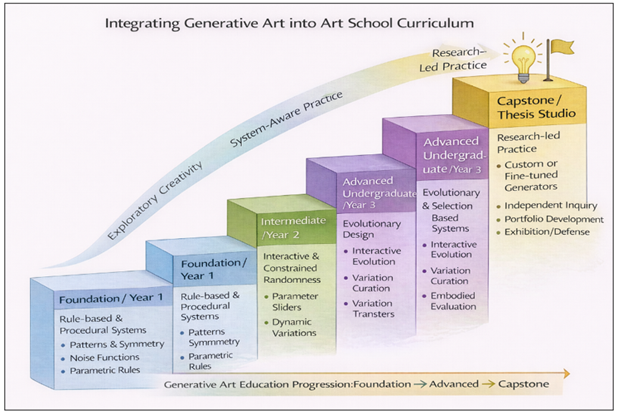
Figure 5 Curriculum Progression Diagram Visually Mapping
Foundation
Integration of studios can be further reinforced through the implication of generative workflow into critique based pedagogues as shown in Figure 5. Iteration records, prompt writing and version histories thereby emerge as some of the primary pedagogical resources that facilitate formative evaluation and reflective learning. Notably, such records allow an instructor to assess creative risk taking, conceptual clarification and decision-making proficiency, dimensions that tend to be missed in outcome-based grading models. The interdisciplinary integration is important in the curriculum design as well. Illiberal studios Collaborative studios that include computing, design, architecture or humanities courses expose students in art to a variety of perspectives with the preservation of artistic leadership in the framing of concepts and aesthetic judgment. Generative art in these contexts is a common creative language, which connects technical and cultural worlds and equips students with work in professional worlds where collaborative and hybrid practices are increasingly common.
6. Evaluation of Learning Outcomes and Creative Development
The assessment of learning outcomes in generative arts education needs assessment models which anticipate process, reflection and conceptual development as opposed to concentrating on final visual artifacts. Since generative art focuses on system design, repetition and co-creation between humans and AI, the traditional outcome-based grading models lack the ability to fully express the quality and breadth of the student learning experience. Instead, assessment in this regard needs to be consistent with the pedagogical logic that was developed in the previous sections, whereby the learning is manifested through the exploratory rigor, reflective articulation, and the capacity to make informed creative choices in computational systems. One of the main principles of evaluation of the generative art is the acknowledgement of creativity as a development. Learning outcomes hence involve the ability of the student to encode conceptual will into generative configurations, seeking to cope with the incert to experiment, and to be a critical evaluator of emergent products. The competencies can only be effectively evaluated using longitudinal evidence as opposed to single submissions. The records of iterations, the history of versions, and the journals of the parameters offer tangible evidences of the creative thought process and how the students are able to refine ideas and react to systems behavior and combine feedback throughout the time. These kinds of artifacts help instructors to assess not merely what students have created, but the manner and reasoning of such results.
Table 1
|
Table 1 Assessment Rubric for Evaluating Learning Outcomes in Generative Art Education |
||
|
Learning
Outcome |
Rubric
Indicators (What is Evaluated) |
Evidence
Types (What is Assessed) |
|
Conceptual
Articulation |
Clarity
of artistic intent; coherence between concept and generative strategy |
Concept
statements, project briefs, intent–outcome mapping documents |
|
Generative
System Design |
Appropriateness
of rules, parameters, prompts, or datasets; system transparency |
System
diagrams, code snippets (if applicable), prompt/rule documentation |
|
Exploratory
Iteration |
Breadth
of variation; meaningful parameter exploration; responsiveness to system
behavior |
Iteration
logs, version histories, comparative output sets |
|
Critical
Evaluation & Selection |
Justification
of selected outputs; aesthetic and conceptual reasoning |
Curated
portfolios, selection rationale reports, critique annotations |
|
Reflective
& Metacognitive Awareness |
Depth
of reflection; ability to explain learning trajectory and decision-making |
Reflection
journals, learning narratives, critique response statements |
|
Human–AI
Co-Creativity |
Balanced
agency between human judgment and AI contribution; ethical awareness |
Prompt
evolution logs, bias reflection notes, co-creation analysis |
|
Studio
& Peer Engagement |
Quality
of critique participation; constructive feedback and responsiveness |
Peer
critique records, discussion summaries, collaboration logs |
|
Creative
Development Over Time |
Evidence
of growth, refinement, and conceptual maturity |
Longitudinal
portfolios, milestone submissions, capstone documentation |
This rubric also has greater focus on process visibility, reflective reasoning and creative accountability and so that assessment strengthens generative pedagogy and does not limit experimentation. Reflective documentation is important to the visibility of creative development. Intentional reflection instructs, e.g., intention-result mapping, decision-making reasons, and commentary responses, ask the students to define their authorship in co-creative processes. The practice helps the process of metacognitive development as it asks the learners to analyze the correlation between human judgment and algorithmic persuasion. Reflectively, writing can be assessed as a means of determining the clarity of concepts, ethical sensitivity and critical thinking with the generative systems, especially in high level and postgraduate studio where AI-based tools are widespread.
7. Interpretation and Analysis of Findings
The findings and models provided in this paper show that integrating generative art into studio-based pedagogy affects the creative learning process by dramatically changing the way creative learning is organized, lived, and assessed in art schools. Analysis of the Curriculum design and assessment evidence shows that the students get the best of it when generative systems are placed as exploratory and reflective tools as opposed to automatic production tools. The noted focus on iteration records, reflective journals, and involvement in critique can be seen to indicate that, the generative art effectively externalizes the creative thought, and this aspect can enable the instructors to examine the learning processes that are traditionally tacit and hard to measure.
Figure 6
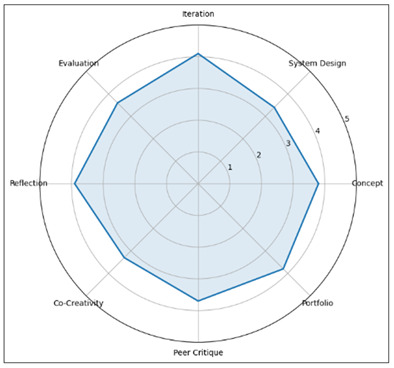
Figure 6 Rubric Profile of Learning Outcomes
The learning outcomes depicted in Figure 6 are the profile of a multidimensional rubric in the learning outcomes in generative art education with a balanced development of conceptual articulation, generative system design, iterative exploration, and reflective practice. The fact that the scores in iteration and reflection were relatively higher is good evidence that the students find it easier to work with exploratory workflows and exhibit an increasing sense of metacognitive awareness when using generative systems. On the contrary, more or less lower scores in system design and the co-creativity of humans and AI indicate that students are yet to be confident in the organization of generative processes and in the accomplishment of a common agency with intelligent aids. On the whole, radar profile helps to prove that the creative development in process-oriented pedagogy rests on holistic development and not technical or aesthetic specific skills. One of the most prominent analytical findings that can be made based on the rubric profiles and learning progression plots is the level of balanced development of conceptual reasoning and creative exploration. Although the students were significantly engaged in iterative experimentation and reflective articulation, comparatively mediocre results in the generative system design and human-AI co-creativity demonstrate a significant turning point in pedagogy.
Figure 7
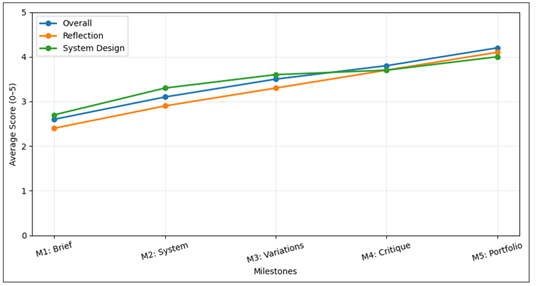
Figure 7 Learning Progression Across Milestones
This indicates that students need long-term scaffolding to negotiate with intelligent systems in a way that gives them confidence in their ability to do so and to acquire the ability to define authorship in co-creative practices. Notably, this does not constitute a weakness of generative pedagogy per se, but, instead, a form of transition in the creation of computational and critical literacy. Figure 7 shows the longitudinal movement of learning outcomes in the main course milestones and indicates a steady positive trend of overall performance, reflective capacity and competence in system design. The gradual development of conceptual stages into the final portfolio submission is a power indicator of the efficacy of iterative and critique-oriented pedagogy in assisting creative growth in the long term. It is also interesting to note that reflection scores are very close to the overall performance, which confirms the importance of reflective documentation as a learning process and an indicator of assessment. Such a tendency confirms that milestone-based assessment is applicable in the teaching of generative art, where learning progress and refinement serve as more valuable indicators of learning as compared to one-point evaluation.
Figure 8

Figure 8
Assessment Evidence
Contribution
Regarding an institutional level, the results indicate that generative art pedagogy is consistent with the current educational goals and targets, such as interdisciplinary fluency, ethical involvement with AI, and creative thinking adaptation. The only way to achieve that is, however, through curricular integration and not by adopting technology. As depicted in Fig 8, the proportional contribution of various types of evidence to summative assessment is very high, with process documentation and final creative outputs being central to it. The heavy weight given to a log of iteration and reflective journals is a result of purposeful transition to outcome-free evaluation to a more explicit and pedagogically oriented assessment system. Assigning assessment load to exploration, critique engagement, system documentation, and portfolio curation, the structure allows making sure that creative decision-making, learning patterns, and human-AI interaction are valued accordingly. This distribution helps to provide fair assessment on the generative art situations, in which creative insight is frequently generated via the iterative and joint creative systems rather than single arts. Altogether, the discussion confirms that generative art is pedagogically most useful as a conceptual and reflective practice, which supports the potential of generative art as a sustainable and transformative practice in art education.
8. Conclusion and Future Work
This paper has shown that generative art can be an effective pedagogical approach to art schools as a process-based, reflective, and collaborative practice. The proposed framework aims to change the focus of art education, where the production-based outcome-oriented approach is substituted by the exploratory approach in learning, systems thinking, and conceptual rigor. By introducing the idea of computational generative techniques into the studio-based learning processes, the proposed framework is supposed to shift the focus in art education toward a more exploratory approach in learning, systems thinking, and conceptual rigor. The curriculum design, evaluation rubric, and assessment procedures, described in this paper all reflect on iteration, reflective articulation, and human-AI cooperation as the key indicators of creative development. The results imply that generative art can also lead to improvement of technical fluency, as well as, metacognitive awareness, critical judgment, and creative accountability in learners. The next step in the work will be an empirical validation of the offered pedagogical and assessment framework in a variety of institutional settings and groups of learners. Further longitudinal studies involving more data can also look at how generative workflow correlates with a growth in creativity over time. Also, further studies can be conducted to inform cultures in generative models, generative AI tutors to support studio learning, and generative practices that are sustainability-sensitive to expand the educational benefits of generative art. These kinds of directions will empower the position of generative systems as responsible, inclusive and transformative agents in contemporary art education.
CONFLICT OF INTERESTS
None.
ACKNOWLEDGMENTS
None.
REFERENCES
Al Darayseh, A. (2023). Acceptance of Artificial Intelligence in Teaching Science: SCience Teachers’ Perspective. Computers and Education: Artificial Intelligence, 4, 100132. https://doi.org/10.1016/j.caeai.2023.100132
Ansone, Z., Zālīte-Supe, Z., and Daniela, L. (2025). Generative Artificial Intelligence as a Catalyst for Change in Higher Education Art Study Programs. Computers, 14(6), 154. https://doi.org/10.3390/computers14040154
Bartlett, K. A., and Camba, J. D. (2024). Generative Artificial Intelligence in Product Design Education: Navigating Concerns of Originality and Ethics. International Journal of Interactive Multimedia and Artificial Intelligence, 8(1), 55–64. https://doi.org/10.9781/ijimai.2024.02.006
Beckett, C., and Yaseen, M. (2023). Generating Change: A Global Survey of What News Organizations are Doing with AI. London School of Economics and Political Science.
Bergdahl, J., et al. (2023). Self-Determination and Attitudes Toward Artificial Intelligence: Cross-National and Longitudinal Perspectives. Telematics and Informatics, 82, 102013. https://doi.org/10.1016/j.tele.2023.102013
Cascales, R. (2023). Interpreting AI-generated art: Arthur Danto’s perspective on intention, authorship, and creative traditions in the age of artificial intelligence. Polish Journal of Aesthetics, 71, 17–29.
Chen, Y., and Ibrahim, Z. (2023). A Comprehensive Study of Emotional Responses in AI-Enhanced Interactive Installation Art. Sustainability, 15(20), 15830. https://doi.org/10.3390/su152015830
Choi, W., et al. (2023). Developing an AI-Based Automated Fashion Design System: Reflecting the Work Process of Fashion Designers. Fashion and Textiles, 10, 39. https://doi.org/10.1186/s40691-023-00360-w
Epstein, Z., et al. (2023). Art and the Science of Generative AI: A Deeper Dive (arXiv:2306.01321). arXiv.
Habib, S., Vogel, T., Anli, X., and Thorne, E. (2024). How Does Generative Artificial Intelligence Impact Student Creativity? Journal of Creativity, 34, 100072. https://doi.org/10.1016/j.yjoc.2023.100072
Leonard, N. (2020). Entanglement Art Education: Factoring ARTificial Intelligence and Nonhumans into Future Art Curricula. Art Education, 73(4), 22–28. https://doi.org/10.1080/00043125.2020.1746163
Millet, K., Buehler, F., Du, G., and Kokkoris, M. D. (2023). Defending Humankind: Anthropocentric Bias in the Appreciation of AI Art. Computers in Human Behavior, 143, 107707. https://doi.org/10.1016/j.chb.2023.107707
Oti, R. and Doe, V. A. (2025). Exploring The Effectiveness of Alternative Discipline Methods in Ghanaian Basic Schools: A Case Study of Selected Basic Schools Within the Greater Accra Region, Ghana., ShodhVichar: Journal of Media and Mass Communication. 1(1), 11-34. https://doi.org/10.29121/ShodhVichar.v1.i1.2025.7
Pavlik, V. J. (2023). Collaborating with ChatGPT: Considering the Implications of Generative Artificial Intelligence for Journalism and Media Education. Journalism and Mass Communication Educator, 78(1), 84–93. https://doi.org/10.1177/10776958221149577
Sabzalieva, E., and Valentini, A. (2023). ChatGPT e Inteligencia Artificial en la Educación Superior: Guía de inicio rápido. UNESCO.
Sindermann, C., et al. (2021). Assessing the Attitude Towards Artificial Intelligence: Introduction of a Short Measure in German, Chinese, and English Language. KI – Künstliche Intelligenz, 35(1), 109–118. https://doi.org/10.1007/s13218-020-00689-0
Škiljić, I. (2021). When Art Meets Technology or Vice Versa: Key Challenges at the Crossroads of AI-Generated Artworks and Copyright law. IIC – International Review of Intellectual Property and Competition Law, 52(10), 1338–1369. https://doi.org/10.1007/s40319-021-01119-w
Wang, S., Sun, Z., and Chen, Y. (2023). Effects of Higher Education Institutes’ Artificial Intelligence Capability on Students’ Self-Efficacy, Creativity, and Learning Performance. Education and Information Technologies, 28(5), 4919–4939. https://doi.org/10.1007/s10639-022-11338-4
|
|
 This work is licensed under a: Creative Commons Attribution 4.0 International License
© ShodhKosh 2026. All Rights Reserved.