ShodhKosh: Journal of Visual and Performing ArtsISSN (Online): 2582-7472
|
|
Intelligent Workflow Automation in Print Media Management
Sunil Damodar Rathod 1 , Harshini R. 2
 , Jyotsna
Suryavanshi 3
, Jyotsna
Suryavanshi 3 , Rashmi
Manhas 4
, Rashmi
Manhas 4 , Shreesha
Sharma 5
, Shreesha
Sharma 5 , Dr.
Haripriya H. Kulkarni 6
, Dr.
Haripriya H. Kulkarni 6
1 Associate
Professor, Department of Computer Engineering, Indira College of Engineering
and Management, Parandwadi, Pune, India
2 Assistant
Professor, Meenakshi College of Arts and Science, Meenakshi Academy of Higher
Education and Research, Chennai, Tamil Nadu 600100, India
3 Department of Engineering, Science and Humanities, Vishwakarma
Institute of Technology, Pune, Maharashtra, 411037, India
4 Assistant Professor, School of Business Management, Noida
International University, Greater Noida 203201, India
5 Department of Management Studies, Shri Shankaracharya Institute of
Professional Management and Technology, Raipur, Chhattisgarh, India
6 Electrical Engineering, Professor, Dr. D. Y. Patil institute of
Technology, Pimpri, Pune, India
|
|
|
ABSTRACT |
|
|
The print
media is ever getting pressurized to produce output of high quality,
customized output, shorter turn-around time, low operation cost and enhanced
sustainability. The customary procedures of print media management, which are
manualized in coordinating, fixed scheduling as well as fragmented data
disclosures are progressively insufficient to the requirements. The given
paper explores the implementation of intelligent workflow automation in the
management of print media using the combination of artificial intelligence,
machine learning, Internet of Things (IoT), and digital twin technologies. A
perception-cognition-action-based paradigm is suggested to be the structured
AI-driven workflow architecture to allow the adaptive data-driven
orchestration between pre-press, printing, post-press, and distribution
stages. Predictive quality control, dynamic scheduling, anomaly detection,
and resource optimization are performed with the help of machine learning and
decision-support models, whereas real-time physical-virtual synchronization
and scenario-based planning is performed with the help of digital twins. The
quantitative assessment indicates that there are great improvements in
turnaround time, schedule compliance, machine use, quality rework, downtime, material
waste, and energy usage. The findings reveal that intelligent workflow
automation has multidimensional benefits of efficient operations,
cost-saving, and sustainability, and maintains human controls by providing
supervisory decision-support interfaces. The research paper finds that
intelligent workflow automation is a strategic asset in the production
workflow of contemporary print media organizations that aim to have
resilient, efficient, and sustainable production systems. |
|||
|
Received 13 September 2025 Accepted 12 December 2025 Published 17 February 2026 Corresponding Author Sunil
Damodar Rathod, sunil6kr@gmail.com DOI 10.29121/shodhkosh.v7.i1s.2026.7093 Funding: This research
received no specific grant from any funding agency in the public, commercial,
or not-for-profit sectors. Copyright: © 2026 The
Author(s). This work is licensed under a Creative Commons
Attribution 4.0 International License. With the
license CC-BY, authors retain the copyright, allowing anyone to download,
reuse, re-print, modify, distribute, and/or copy their contribution. The work
must be properly attributed to its author.
|
|||
|
Keywords: Intelligent Workflow Automation, Print Media
Management, Machine Learning, Digital Twins, Internet of Things (IoT), Smart
Printing Systems |
|||



1. INTRODUCTION
Although media ecosystems are rapidly becoming digitized, the print media sector still remains significant in the information dissemination, commercial communication, packaging and publishing. Nevertheless, today the print media organizations have to work with the growing pressure of providing shorter turnaround time, increased personalization, uniform quality, economical cost and the maintenance of sustainability and regulatory standards. The classical workflows in traditional print media management (pre-press, printing, post-press, and distribution) are usually marked with the use of fragmented processes, manual effects, low levels of real-time visibility and reactive decision making Albizu-Rivas et al. (2024). These business inefficiencies limit the scalability of operations and lower competitiveness in a business landscape determined by fluctuating demand trends and narrow production margins. One way of resolving these issues has been to implement intelligent workflow automation to integrate artificial intelligence (AI), machine learning (ML), data analytics, and cyber-physical integration into the workflows of print media to meet these challenges Ali et al. (2024). In comparison to traditional automation, which is mostly concerned with mechanization and control with rules, intelligent workflow automation allows adaptive and data-driven orchestration of end-to-end print processes. The intelligent systems can optimize scheduling, resource allocation, error detection and throughput in real-time by constantly changing behavior based on production data, equipment behavior, job characteristics, and quality results. Such paradigm change of traditional workflows to smart, self-optimizing pipelines is the key step towards managing print media Al’Aref (2018).
Figure 1

Figure 1 Block Diagram Illustrating Intelligent Workflow
Automation in Print Media Management.
This transition has been further expedited by recent developments in sensing technologies, industrial Internet of things (IIoT) and digital production management systems. The contemporary print environments are producing large amounts of heterogeneous information, such as machine logs, color profiles, substrate characteristics, operator inputs, and logistics information Altun (2025). In combination with smart analytics and decision-support models, this data can be used to predict bottlenecks, reduce wastes, enhance quality consistency, and proactive maintenance strategies as represented in Figure 1. In addition, workflow automation becomes intelligent allowing to integrate human expertise and automated systems more closely as the operators and managers can concentrate on supervision, exception handling, and strategic planning instead of on routine coordination activities Altun et al. (2025). It is on this background that this paper explores the significance of intelligent workflow automation in the management of print media in terms of systems and operations. The research paper presents a systematic model integrating AI-based analytics and automated manufacturing process to make it more efficient, transparent, and sustainable throughout the lifecycle of print Beckett (2019). The paper will help advance the academic field and industry application of the changing field of intelligent print media systems based on the analysis of principles of architectural design, functional elements, and practical implementation considerations.
2. Print Media Management: Traditional Workflows and Operational Challenges
The historical development of print media management has been based on a sequential process-oriented production system that included, but was not limited to, preparation of pre-press, printing, finishing, and distribution of post-press Binlibdah (2024). Although this model has served to facilitate mass publishing, commercial printing, and packaging over the decades, it is now stretched to the limit by the modern market and operational environments. The traditional print processes are largely linear, departmentalized, and relied on manual coordination so are not suited to short print run, high product variability and tight delivery schedules environments. The pre-press operations in the traditional operation of print media like checking of files, legalizing layouts, color balancing, and proof-reading are usually performed semi-automatically or by hand Boretti (2024). Such activities are heavily dependent on the expertise and experience of the operators and very low level of system-level intelligence to predict the downstream constraints. Consequently, errors that have been made in the pre-press phase e.g. wrong file formats, color differences, or design discrepancies are often carried into subsequent steps and Srdjevic et al. (2024) result in rework, wastage of materials, and schedule slips. These inefficiencies are further heightened by the lack of built in feedback systems between pre-press and production Canavilhas (2022). Printing and after press procedures are characterized by comparable structural constraints. Production scheduling occurs through rule-based or experience-based activities based on inactive job queues and predetermined assignments of machines Chakraborti et al. (2020). These methods provide low flexibility to real-time fluctuations in machine availability, job priorities, or unforeseen machine maintenance. The quality assurance practices are also mostly reactive in nature where defects are identified after the printing process instead of being averted by anticipatory or in-process observations. All these traits limit the flexibility of operations and efficiency of equipment Gherheș et al. (2024).
Table 1
|
Table 1 Comparison of Traditional Print Media Workflows and Intelligent Workflow Automation |
||
|
Dimension |
Traditional Print
Media Workflows |
Intelligent Workflow
Automation |
|
Workflow Structure |
Linear, department-centric, sequential |
End-to-end integrated and adaptive |
|
Decision-Making Habib et al. (2025) |
Manual or rule-based, experience-driven |
Data-driven, AI-assisted, predictive |
|
Process Visibility |
Limited, siloed operational data |
Real-time, system-wide visibility |
|
Error Handling Hamzat et al. (2025) |
Reactive detection after printing |
Predictive and preventive quality
control |
|
Scheduling & Resource Use |
Static job queues and fixed allocation |
Dynamic scheduling and optimized
allocation |
|
Human Involvement |
High manual coordination |
Supervisory control and exception
handling |
|
Sustainability Impact |
Higher waste and energy consumption |
Reduced waste and improved efficiency |
End-to-end visibility and data fragmentation are also a problem with the traditional workflows of print media at the organizational level. Operational data like the performance of machines, job development, quality checks, and resource usage data are usually disconnected and are isolated in various departments or in independent systems. This fragmentation limits the managerial decision making and prevents proactive planning with regard to capacity utilization, cost optimization and sustainability efforts. To demystify such structural disparities. The shortcomings of the traditional management of print media, as Table 1 demonstrates, are not limited to isolated inefficiencies of the process but have a systemic nature with regard to visibility, flexibility, and smartness. The inefficiency of traditional workflows is also illustrated by the growing regulatory pressure, escalating material and energy prices, and the demand to be sustainable in production. These obstacles precondition the change to the approach to intelligent workflow automation where data-driven decision-making, adaptive control, and built-in human- machine cooperation become the core of the new print media management system. The next section expands this motivation by discussing the main ideas and facilitating technologies that intelligent workflow automation is based on.
3. Intelligent Workflow Automation
Smart workflow automation is a next-generation of traditional automation that brings data-driven intelligence, the ability to learn and change decisions into the workflow. When applied to print media management, it is the organized combination of artificial intelligence (AI), machine learning (ML), analytics, and cyber-physical technologies to allow automated, but flexible, end-to-end management of print operations. In contrast to traditional rule-based automation, which performs a fixed set of rules under fixed assumptions, intelligent workflow automation constantly analyzes operational information, adapts itself based on past trends, and adapts its behaviour with changed conditions of production. Three fundamental principles, which are perception, cognition, and action, form the basis of intelligent workflow automation at conceptual level. Perception entails the constant collection of information by various sources throughout the print production environment such as pre-press systems, printing machinery, post-press processes and logistics processes. Such data might include machine status reporting, job parameters, quality inspection reporting, operator interactions and environmental variables as shown in Figure 2. Cognition is described as the process of analyzing and drawing conclusions out of raw data to be put into action. The system is able to detect patterns, predict events like delays or quality deviations and assess other possible choices of operation using AI and ML models. Action relates to the automatic implementation of workflow decisions that are optimized to schedule jobs, assign resources, and activate corrective quality control, frequently in near real time.
Figure 2

Figure 2 High-Level Architecture Diagram Mapping Perception–Cognition–Action Layers
Intelligent workflow automation of print media is supported by a number of enabling technologies. The analytical core is based on artificial intelligence and machine learning and serves as a support to such functions as predictive scheduling, anomaly detection, quality prediction, and demand forecasting. Defect classification and quality assessment using supervised learning methods are most often used, but unsupervised and semi-supervised methods are also applicable in finding latent patterns of machine behavior and workflow performance. Algorithms that optimize are also a complement to learning models that transform predictions into workable and efficient production strategies under operational constraints. Industrial Internet of things (IIoT) is important in facilitating the transfer of physical print processes to the digital intelligences. Embedded controllers, sensors, and linked machines allow tracking the condition of the production process and the use of resources in it at any moment, forming the data background of intelligent automation. Parallel to this, the development of software tools in the production management domain and integration hubs enables interoperability of systems that were historically isolated, enabling information to be transferred fluidly between pre-press, press, post-press and the enterprise-level planning systems. Another necessary enabler is that of human-machine interaction technologies. Instead of removing the human element in workflow automation, the intelligent workflow automation redefines it by changing the role of the operators and managers to supervisory and decision-support roles. Explainable Artificial Intelligence interfaces and visualization dashboards, alerting systems and human users can learn to comprehend system recommendations, intervene in rare cases, and maintain accountability on strategic decisions.
4. AI-Driven Workflow Architecture for Print Media Management
The perception-cognition-action paradigm of the workflow architecture of print media management described in the section above is operationalized into a deployable end-to-end system. The main goal of this architecture is to facilitate the intelligent coordination of the print production processes through a close bondage of the data acquisition, decisions, and automated implementation in one architecture. The proposed architecture does not consider pre-press, press, post-press and distribution as independent functional units but considers print media management as a data driven and adaptive intelligence controlled workflow. The core of the architecture is the perception layer that is the interface of the system with the real world and its functioning. This layer consolidates various nonhomogeneous data streams that are created by printing devices, finishing devices, inspection systems, job management systems and environmental sensor devices.
The perception layer makes sure that operational data is always structured, time-oriented, and exposed to higher-level analytics by removing the silos of information that is typical of traditional print processes. The mental layer consists of the analytical and decision-making center of the architecture as given in Figure 3. The models of AI and machine learning within this layer convert raw data on production into actionable insights. To predict the job completion time, identify any quality deviations, predict equipment failures, predictive models are used based on historical and real time data. Optimization engines use these predictions to produce adaptive production schedules and balance machine loads as well as allocating resources within operational constraints including delivery times, setting up times and material availability.
Figure 3

Figure 3 AI Driven Print Media Workflow System and
Interfaces.
This layer is in direct communication with production control systems, pre-press automation equipment, quality control systems, and logistics systems. Processes like job re-sequencing, automated proof adjustments, dynamic press parameter adjustments or rerouting of post-press processes are carried out with little or no human intervention. The workflows are subsequently self-optimizing and can react dynamically to any disturbances by connecting the analysis to the execution providing the action layer. The supervisory and decision-support interfaces are integrated throughout the architecture as a result of human-machine interaction. Real-time dashboards are provided to operators and managers to visualize the status of the system, system performance, and recommendations provided by AI. Although common decisions get made independently, exceptions, strategy overrides, and policy settings are still within the reach of human users, and provide transparency and accountability. This joint design is efficient in automation and realistic operation control.
5. Machine Learning and Decision-Support Models in Print Operations
The analytical foundation of intelligent workflow automation in the management of print media is machine learning, and decision-support models. Their major use is to process the raw operational data into predictive insights and optimized decisions that influence the execution of workflow in the pre-press, printing, post-press, and distribution stages. Unlike the classical heuristic approach or rule-based approaches, machine learning-based models allow the shift of print operations to anticipatory and adaptive control, thus highlighting the efficiency, quality, and resource use in the changing production environment. In the print processes, the supervised learning models can be extensively used in the quality control and defect detection processes. Classifier training on historical data which includes print parameters, substrate properties, machine parameters, and inspection results can be used to predict the probability of defects, e.g., color variation, registration errors, or surface variations. When these models are incorporated into the working process, any possible quality defects can be detected at an early stage before the printing process has started and corrective measures can then be taken. This forecasting ability minimizes redundancy, scrap material, and downtime of production which are constant problems in traditional printing setting.
Figure 3

Figure 4 illustrating Machine Learning Based Pipeline Working flow
Unsupervised and semi-supervised learning methods are relevant in tracking machine behavior and workflow performance whereby labeled data can be scarce as shown in Figure 4. Clustering and anomaly detection models have the capability of revealing the latent patterns in machine logs, energy consumption patterns or production cycle times, which allows the early identification of abnormal operating conditions. These insights aid in predictive maintenance strategies, in which maintenance activities are planned according to data-driven indicators instead of set intervals, which increases the reliability of equipment and the overall equipment performance. In addition to prediction and classification, the optimization and decision support models are used in order to convert analytical understanding into practical workflow choices.
The problems in the scheduling and resource allocation in the print processes are complex by nature and entail numerous constraints that include machine availability, setup times, delivery deadlines and priorities of the jobs. Near-optimal schedules achieving a balance between throughput, cost, and service level goals are generated using mathematical optimization methods and in most cases with machine learning predictions. In such a hybrid, machine learning models are used to give an estimate of processing time, the probability of failure or quality results, and an optimization engine is used to calculate viable and efficient production strategies. Decision-support systems add these abilities by giving a human operator and manager some interpretable recommendations. Instead of black-box controllers, the modern decision-support models focus on their transparency and explainability enabling the user to see why certain scheduling changes or quality interventions are suggested. This especially matters in print media organizations, where expertise and responsibility in the domain are still very important. The ability to visualize the dashboard, scenario analysis tools and what-if simulations allow managers to test the alternative decisions prior to their implementation, reinforcing trust in intelligent automation systems.
6. Integration of IoT, Digital Twins, and Smart Printing Systems
It is a serious step toward the full intelligence and connectedness of print media operations through the integration of Internet of Things (IoT) technologies, digital twins, and print media smart system. It completes on top of the machine learning and decision-support models addressed in the preceding section, such that real-time coordination between the physical print processes and their digital manifestations is achieved, it turns print production into a responsive cyber-physical system. The print media organizations are able to attain a greater degree of operational visibility, predictability and resilience through continuous sensing, simulation and adaptive control. IoT is used as the underlying facilitator of connectivity in smart print environments. The emerging printing and finishing machinery is becoming progressively provided with sensors and embedded controllers that monitor and record data of fine grain concerning machine status, rate of production, ink usage, substrate handling, environmental conditions and energy consumption. This data is sent in an industrial communication scheme to either a centralized or edge-based platform where it is made available to analytics and control. The IoT infrastructure allows removing the blind spots of the traditional workflow and delivers the real-time data streams that can be utilized to implement intelligent automation by allowing continuous monitoring throughout the print lifecycle.
Figure 5

Figure 5 Digital Twin Physical–Virtual Synchronization
Digital twins are an expansion of the value of the IoT data that produces dynamic and virtual models of physical print systems. A digital twin of a printing press, say, can reflect both the state of the printing press, as well as its performance features and degradation mechanisms on a real-time basis. Digital twins in the management of print media assist in scheduling of jobs virtually, in maintenance planning, and quality optimization without interfering with the current production, as shown in Figure 5.
This is a very important ability as it saves experimentation cost and increases confidence in decision making. The close integration of IoT-based devices, digital twins, and AI-based control systems gives rise to smart printing systems. In this type of system, analytics and simulation results are provided back to control production layers and allow automated changes to press settings, workflow sequencing or post-press routing. As an example, when one of the digital twins anticipates a possible quality variation in the substrate because of a variation, the system can take actions in advance to reduce or modify ink density or printing speed to ensure the same output level. Likewise, the dynamism of logistics and distribution activities can be managed on the basis of real-time status of production, enhancing customer satisfaction and reliability of delivery. The human-machine cooperation is also supported by the integration of these technologies. Interaction with digital twins is performed by operators and managers via intuitive dashboards and visualization tools that provide operators and managers with real-time and predictive perspectives of print operations. Instead of using just infrequent reports or manually checking it, in place of the latter, decision-makers receive access to actionable information that helps them in strategic planning and immediate reaction when required.
7. Case Study—Intelligent Workflow Deployment in Print Media
This part provides a case study of a representative instance of how intelligent workflow automation can be implemented in a mid-sized commercial print media company. The case study is meant to show how the AI-based workflow architecture, machine learning models, and digital twin integration addressed in the previous parts can be converted into real-world benefits of operational enhancement. The chosen organization provides short to medium run commercial printing of marketing collateral, packaging inserts and tailored print products and works under the conditions of a variable demand, tightened delivery schedules and high quality standards. The organization used traditional ways of working and managing the workflow that included manual job scheduling, reactive quality inspection, and a lack of end-to-end visibility before the deployment.
The production statistics were disjointed between pre-press software, machine controllers, and post-press records, which limited the managers to predicting bottlenecks or being proactive to interrupts. Consequently, there was a high rate of schedule variance, high rework rates because of late stage detection of defects and unplanned machine downtime which adversely impacted on productivity and cost efficiency. The intelligent workflow automation system was implemented gradually to ensure that the operations were not interrupted. The initial step involved the implementation of IoT-based data collection devices together with the current printing and finishing systems to allow real-time monitoring of machine condition, output rates, quality parameters and power usage.
Table 2
|
Table 2 Case Study Results: Impact of Intelligent Workflow Automation on Print Media Operations |
|||
|
Performance Metric |
Before Deployment |
After Deployment |
Observed Improvement |
|
Average Job Turnaround Time (hours) |
26.5 |
19.2 |
↓ 27.5% |
|
Schedule Adherence (%) |
72.0 |
91.0 |
↑ 19.0% |
|
Quality Rework Rate (%) |
8.4 |
3.1 |
↓ 63.1% |
|
Machine Utilization (%) |
64.0 |
82.0 |
↑ 18.0% |
|
Unplanned Downtime (hours/month) |
41 |
18 |
↓ 56.1% |
|
Material Waste (%) |
6.7 |
3.9 |
↓ 41.8% |
|
Energy Consumption per Job (kWh) |
14.6 |
11.2 |
↓ 23.3% |
All of these information streams were aggregated into a centralized analytics environment where a digital representation of the print workflow was created to reflect the operational condition of most vital assets and jobs queues. The second stage involved the deployment of machine learning models to take up predictive quality control, processing time estimation, and anomaly detection. Supervised models were trained using historical production and inspection data and were used to predict defects, whereas unsupervised methods kept track of machine behavioral deviations signifying the early signs of developing maintenance problems. Predictive outputs of these models were then combined with a scheduling engine based on optimisation that dynamically modified job sequence and resource allocation to the prevailing real time shopfloor environment and delivery priorities. The last stage was on integration of operations and human-machine interface. Outputs of the systems were accessed by operators and managers via role-specific dashboards that offered real-time alerts and suggested intervention and scenario-based planning features.
Standard decisions (minor schedule changes, parameter tuning, etc. were automated and only the exceptions and strategic overrides were left to the human operators to ensure accountability and operational trust. Indeed, the implementation of smart workflow automation occurred as illustrated in Table 2 leading to a significant increase in a variety of performance aspects. Adaptive scheduling and real-time workflow visibility increased turnaround time and schedule adherence, whereas the rework rates reduced drastically because of predictive quality monitoring. The decreases in unplanned downtime and energy consumption are also a positive sign of the efficiency of the anomaly detection and data-based operational control. Notably, managerial decision-making has changed to responsive troubleshooting to proactive planning, which is facilitated by predictive decision-making and simulations with the help of digital twins. The use of intelligent workflow automation as a feasible and operational tool in print media settings is validated in this case study and empirically justified on a larger scale by the performance analysis in the following section.
8. Discussion—Operational Efficiency, Cost Reduction, and Sustainability Impacts
The empirical findings described in the former section give a solid argument that intelligent workflow automation is one of the fundamental changes that transform the management of the print media by improving efficiency, minimizing the cost, and maximizing the sustainability goals. Instead of providing a discrete performance boost, the improvements under observation are indicative of a fundamental change within a system, an overhaul as a result of information-based decision-making and adaptive control as well as the feedback between physical and cybernetic layers of the production space. In terms of the operational efficiency, the greatest effect is that brought about by the shift towards the static rule-based workflows to the adaptive intelligence-driven orchestration. The decreased turnaround time and schedule compliance suggest that predictive analytics and optimization-based scheduling allow predicting more effectively the bottlenecks and disturbances. The intelligent workflow can reduce idle time and limit the domino effect of delays that are common in the traditional print operations because of dynamically reallocating resources and resequencing jobs in real-time. Notably, the concurrent growth in the use of machines implies that there is an increase in efficiency without overloading assets hence ensuring stability in operations.
Figure 6

Figure 6 Core KPIs Before and After Intelligent Workflow Automation
This value presents the operational effects of the implementation on high-frequency production KPIs. The decreases in the average turnaround time and rework rate demonstrate that predictive quality control and adaptive scheduling minimized the errors dissemination at the later stages of the production process and the reprinting cycle. The reduction of cost is an immediate impact of enhanced predictability and quality control of the process as shown in Figure 6. The reduction in the rework rates was dramatic, which indicates the effectiveness of predictive quality models that have the ability to detect the possible defects prior to their occurrence on the press. Early intervention decreases the wastes of materials, labor reworking, and interrupts in production that are some of the causes of operating cost in print media set-ups. Likewise, the decrease of unscheduled outage indicates the economic value of anomaly detection and predictive maintenance mechanisms which transform the maintenance operations to planned rather than reactionary actions. All these mechanisms decrease cost volatility and improve budgetary control so that print organizations are able to operate at a tight margin without deteriorating the quality of service.
Figure 7

Figure 7 Percent change in key Performance Indicators after deployment
This plot is a summary of the directional change of individual KPI as shown in Figure 7 to reveal the general profile of performance of the intervention in a quick manner. The metrics that are supposed to decline in an optimized workflow (turnaround time, rework, downtime, waste, energy per job) change negatively and the service-level and productivity indicators (schedule adherence and utilization) change positively. The overall trend confirms the statement that the deployment enhanced operational reliability and efficiency of production, instead of sacrificing one goal to the other.
Figure 8
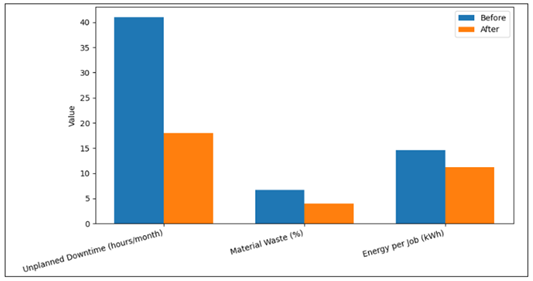
Figure 8 Reliability and Sustainability Indicators Before and After Deployment
This Figure 8 isolates the downtime, material waste and energy per job to underline the reliability-sustainability advantages of intelligent workflow automation. Reduced downtime is in line with the fact that anomaly detection and predictive maintenance logic mitigate unplanned stoppage. The third and more important aspect of intelligent workflow automation is sustainability impacts. Less material waste and less amount of energy used per work-unit, implies more effective utilization of resources throughout the print-life cycle. These will not be only incremental improvements but structural ones, due to the control of parameters, reduced reprint cycles and more stable operation of machines. Intelligent automation aligns operational performance with environmental responsibility by integrating sustainability aspects into the decision logic in workflow, e.g. by scheduling optimization to minimize setup wastes in process or by changing press settings to minimize wastes that require high energy consumption as part of rework. This correspondence is especially pertinent against the background of increasing regulatory requirements and client demands of sustainable production.
9. Conclusion
This paper discussed how intelligent workflow automation can change the management of print media by adding intelligent approaches of artificial intelligence, machine learning, digital twins and IoT-based systems to end-to-end print media production processes. The proposed solution will allow the flexible, data-driven coordination of pre-press, printing, post-press, and distribution steps by overcoming the concept of traditional structures based on the rules and manually organized processes. As the architectural structure and implementation model shown in this paper prove, the perception cognition action loops may be implemented into reality in print settings. The results of the case study and the performance analysis obtained through the use of the empirical data suggest that intelligent workflow automation can provide a consistent increase in the operational effectiveness, quality, reliability, and sustainability. The predictive analytics, optimization-based scheduling, and digital twin-driven decision support demonstrate the success of the reduction of turnaround time, rework, downtime, material waste, and energy utilization. Notably, these profits were gained without affecting human supervision, which in itself speaks volumes of the importance of a human-machine model of collaboration that is based on a balanced state of automation and managerial control and responsibility. In addition to short-term performance returns, the study realigns intelligent workflow automation as a strategic asset in the print media organizations whose cost pressures, increasing individualization needs, and rising sustainability expectations are mounting. Incorporating learning and flexibility into the control of work processes will enable the print enterprises to be more resilient, efficient with available resources, and capable of sustaining competitiveness in the fast-changing media environment. In general, the results indicate that smart workflow automation is a plausible and effective avenue of print media management modernization.
Further studies can build on this study with massive deployments, longitudinal study, and more intensive merging of sustainability measures, which would even more reinforce how the intelligent systems can be used in the development of print productions.
CONFLICT OF INTERESTS
None.
ACKNOWLEDGMENTS
None.
REFERENCES
Al’Aref, S. J. (2018). 3D Printing Applications in Cardiovascular Medicine. Elsevier.
Albizu-Rivas, I., Parratt-Fernández, S., and Mera-Fernández, M. (2024). Artificial Intelligence in Slow Journalism: Journalists’ Uses, Perceptions, and Attitudes. Journalism and Media, 5(4), 1836–1850. https://doi.org/10.3390/journalmedia5040111
Ali, M. S. M., Wasel, K. Z. A., and Abdelhamid, A. M. M. (2024). Generative AI and Media Content Creation: Factors Shaping User Acceptance in the Arab Gulf States. Journalism and Media, 5(4), 1624–1645. https://doi.org/10.3390/journalmedia5040101
Altun, F. (2025). Mechanical and Surface Properties of 3D-Printed Ti6Al4V Alloy Parts
Fabricated by Selective Laser Melting Under Extreme Conditions (Master’s
thesis). Wichita State University, Wichita, KS, United States.
Altun, F., Altuntas, G., Asmatulu, E.,
and Asmatulu, R. (2025). Additive Manufacturing of
Ti-6Al-4V: Influence of Cryogenic and Stress-Relief Heat Treatments on
Electrical Conductivity. In Proceedings of the 7th International Trakya
Scientific Research Congress (219–226), Edirne, Türkiye.
Beckett, C. (2019). New Powers, New Responsibilities: A Global Survey of Journalism and Artificial Intelligence. Polis, London School of Economics.
Binlibdah, S. (2024). Investigating the Role of Artificial Intelligence to Measure Consumer Efficiency Using Strategic Communication and Personalized Media Content. Journalism and Media, 5(3), 1142–1161. https://doi.org/10.3390/journalmedia5030073
Boretti, A. (2024). A Techno-Economic Perspective on 3D Printing for Aerospace Propulsion. Journal of Manufacturing Processes, 109, 607–614. https://doi.org/10.1016/j.jmapro.2023.12.044
Canavilhas, J. (2022). Artificial Intelligence and Journalism: Current Situation and Expectations in Portuguese Sports Media. Journalism and Media, 3(3), 510–520. https://doi.org/10.3390/journalmedia3030035
Chakraborti, T., Isahagian, V., Khalaf, R., Khazaeni, Y., Muthusamy, V., Rizk, Y., and Unuvar, M. (2020). From Robotic Process Automation to Intelligent Process Automation: Emerging Trends. In Lecture Notes in Business Information Processing (Vol. 393, 215–228). Springer. https://doi.org/10.1007/978-3-030-58779-6_15
Gherheș, V., Fărcașiu, M. A., and Cernicova-Buca, M. (2024). Are ChatGPT-Generated Headlines Better Attention Grabbers Than Human-Authored Ones? Journalism and Media, 5(4), 1817–1835. https://doi.org/10.3390/journalmedia5040110
Habib, M. A., Subeshan, B., Kalyanakumar, C., Asmatulu, R., Rahman, M. M., and Asmatulu, E. (2025). Current Practices in Recycling and Reusing of Aircraft Materials and Equipment. Materials Circular Economy, 7, 12. https://doi.org/10.1007/s42824-025-00165-w
Hamzat, A. K., Murad, M. S., Adediran, I. A., Asmatulu, E., and Asmatulu, R. (2025). Fiber-Reinforced Composites for Aerospace, Energy, and Marine Applications: Failure Mechanisms Under Chemical, Thermal, Oxidative, and Mechanical Loads. Advanced Composites and Hybrid Materials, 8, 152. https://doi.org/10.1007/s42114-024-01192-y
Srdjevic, B., Srđević, Z., Ilić, M., and Ždero, S. (2024). Enhancing Decision-Making in Water Resources Management: An Innovative Assessment of Expert Consistency and Competence. International Journal of Engineering Science Technologies, 8(2), 12–30. https://doi.org/10.29121/ijoest.v8.i2.2024.584
|
|
 This work is licensed under a: Creative Commons Attribution 4.0 International License
© ShodhKosh 2026. All Rights Reserved.