ShodhKosh: Journal of Visual and Performing ArtsISSN (Online): 2582-7472
|
|
Predictive Audience Engagement for Performing Arts
Dr. Shivaji Karbhari Dhage 1 , Naveen Jain 2
 ,
Dipti Ganesh Korwar 3
,
Dipti Ganesh Korwar 3 ,
Deepti Deshmukh 4
,
Deepti Deshmukh 4 , Amalakarthiga G. 5
 , Pooja Goel 6
1 Director, Kukadi
Education Society, Pimpalgaon Pisa Tal. Shrigonda, Ahilyanagar, 413703,
India
2 Department of Mechanical
Engineering, Shri Shankaracharya Institute of Professional Management and
Technology, Raipur, Chhattisgarh, India
3 Department of Engineering, Science and Humanities, Vishwakarma
Institute of Technology, Pune, Maharashtra, 411037, India
4 Bharati Vidyapeeth (Deemed to be) University, IMED, Pune, India
5 Assistant Professor, Meenakshi College of Arts and Science,
Meenakshi Academy of Higher Education and Research, Chennai, Tamil Nadu,
600096, India
6 Associate Professor, School of Business Management, Noida
International University, Greater Noida, 203201, India
|
|
|
ABSTRACT |
|
|
The primary
indicator of performing arts impact and sustainability is the audience
engagement, which is traditionally measured retrospectively and in
coarse-grain, as surveys, attendance statistics, and critical reviews. The
current paper suggests a human-oriented predictive audience engagement
framework incorporating cognitive theory, multimodal behavioral and emotive
predictors, and human-in-the-loop analytics into a real-time deployable
system framework. Engagement is conceptualized as a multidimensional and
temporal construct that is influenced by attentional, affective, interpretive
and social processes. Temporal predictive models with uncertainty-sensitive
inference are applied to multimodal audience data comprising of visual,
acoustic, and contextual cues to predict engagement trajectories and estimate
them over time. Key points in the process of human expertise are expert
annotation, interpretive validation and ethical oversight, being transparent
and having context validity. Experimental testing in a variety of performing
arts contexts shows that predictive models based on time and multi-modal
effects are superior to more basic predictive baselines in predicting
engagement dynamics, especially in the context of prominent changes of
performance. The expert evaluation of quality further ascertains the semantic
congruence of the patterns of engagement predicted and artistic intent. The
findings show that predictive analytics based on cognitive foundations and
supplemented by human judgment can deliver useful and interpretable
information to help in reflective practice, performance analysis, and
audience-conscious artistic development. |
|||
|
Received 12 September 2025 Accepted 09 December 2025 Published 17 February 2026 Corresponding Author Dr. Shivaji
Karbhari Dhage, dhage_shivaji@yahoo.com DOI 10.29121/shodhkosh.v7.i1s.2026.7091 Funding: This research
received no specific grant from any funding agency in the public, commercial,
or not-for-profit sectors. Copyright: © 2026 The
Author(s). This work is licensed under a Creative Commons
Attribution 4.0 International License. With the
license CC-BY, authors retain the copyright, allowing anyone to download,
reuse, re-print, modify, distribute, and/or copy their contribution. The work
must be properly attributed to its author.
|
|||
|
Keywords: Audience Engagement, Performing Arts, Predictive
Analytics, Human-in-the-Loop Systems, Multimodal Data Analysis, Cognitive
Modeling |
|||


1. INTRODUCTION
The engagement of an audience is an essential aspect of artistic impact and sustainability in performing arts, which involves the cognitive, emotional and behavioral reactions that the performance process causes. Historically, it has been considered that engagement can be inferred by use of post-event survey, attendance rates, critical reviews or qualitative feedback of the audience. Although such methods offer good insights, they are also inherently retrospective, coarse-grained and incapable of finding the dynamic and moment-to-moment variations that define audience experience when attending a performance Haque and Naebe (2023). With the increased convergence between performing arts and digital technologies and data-driven decision-making, there is a greater need to have computational frameworks that can model and predict audience engagement in a timely, interpretable, and human-oriented way. The recent progress in artificial intelligence and multimodal sensing has made possible collecting and analyzing audience-related signals in large numbers, such as visual attention patterns, acoustic reactions, physiological cues, and overt behavioral behaviors Kennedy et al. (2025). The affective states can be estimated and the audience reactions can be predicted in the entertainment, media and interactive systems with the help of machine learning models used on these streams of data. Nevertheless, there is a lack of literature on the use of predictive analytics in performing arts and specifically through the cognitive and humanism approach as presented in Figure 1. The current research tends to value the performance of the algorithm at the cost of the theoretical background of the engagement, the significance of the interaction between the performer and the audience, and the ethical considerations of the data-driven observation in live cultural settings Masood et al. (2019).
Figure 1

Figure 1 Conceptual
Overview of Human-Centered Predictive Audience
Engagement
In addition, it is not a fixed result but a momentary shifting creation of the audience interaction in performing arts due to the development of the narrative, performative expressivity, space, and expectations of the audience. Completely automated models that view engagement as an abstract signal are prone to falsely portray the experiential and contextual character of engagement Metal (2023). This constraint emphasizes the relevance of incorporation of human intuition and the cognitive theory and interpretability into predictive engagement systems, which would allow models not only to predict engagement rates but also to allow meaningful reflection and act of decision-making by performers and arts practitioners Opoz et al. (2024). To address these issues, this paper will present a proposal of a human-centered approach to predictive audience engagement in performing arts. The conceptualization of engagement in the study is that engagement is a multidimensional cognitive phenomenon that can be systematically mapped on behavioral and emotional indicators in predictive models in a human-in-the -loop fashion Richardson (2020). The main contributions of this work are: (i) cognitively based definition of audience engagement of performing arts, (ii) human-in-the-loop predictive modeling method that balances the automation and interpretability, and (iii) experimental validation of the viability of predictive engagement analysis in performance environments.
2. Cognitive Foundations of Audience Engagement
The processes that facilitate the attention, emotion, perception and meaning-making in a live performance or a mediated performance are the underlying basis of audience engagement in performing arts. As opposed to the passive consumption of content, the performance of the art implies temporally unravelling experiences whereby the viewer constantly assimilates sensory input, predetermines the plot progression, and engages in the emotional responses of the performers Ribeiro et al. (2021). Cognitively, involvement is a product of the interaction of attentional allocation, affective appraisal and higher-order cognitive evaluation creating a dynamic mental state but not a result. Attention is one of the major cognitive processes that form the basis of engagement. Performance of the performed arts requires selective and prolonged attention whereby the audience follows the visual motion, auditory feedback, rhythm and space format together with the expressive gestures Rizk et al. (2020). Modulation of attentional focus has been known to vary with tempo, intensity, novelty, and contrast and resulted in temporal variability in engagement. Cognitive psychology also postulates that attention is a scarce and Awasthi (2024) delicate resource to cognitive load; too complex or too monotonous can decrease engagement and too steady variation can support immersion Sönmez and Börekçi (2020). The presence of these attentional processes drives the purpose of trying to find observable measures that may be used to approximate the internal cognitive states in the course of performance Sturm (2020).
Emotion is a second important dimension of audience engagement. Performing arts are specifically aimed at creating the affective reactions of excitement, tension, empathy, or aesthetical pleasure. Cognitive-affective theories hypothesis that emotional involvement is a result of the process of appraisal where the audience measures expressive intent, narrative coherence and symbolic meaning Subeshan et al. (2024). Emotional resonance boosts memory encoding and sustained attention thus increasing engagement. Nonetheless, emotional experience has cultural background, previous exposure and individual sensitivity, therefore, involvement is always subjective and context-specific.
Table 1
|
Table 1 Mapping Cognitive Dimensions of Audience Engagement to Observable Indicators |
|||
|
Cognitive Dimension |
Description |
Observable Indicators |
Measurement Modality |
|
Attentional Engagement
Thomas (2022) |
Allocation and
sustainment of audience focus during performance |
Gaze direction, head
orientation, posture stability, reduced distraction |
Video-based attention
tracking, behavioral observation |
|
Emotional Engagement Wang et al. (2023) |
Affective response to
performative expressivity and narrative content |
Facial expressions,
applause intensity, vocal reactions, physiological arousal |
Computer vision, audio
analysis, physiological sensing |
|
Cognitive
Interpretation Yampolskiy et al. (2022) |
Meaning-making,
pattern recognition, and narrative comprehension |
Response latency,
synchronized reactions, post-performance reflections |
Behavioral timing
analysis, qualitative annotation |
|
Immersion and Presence |
Sense of absorption
and experiential involvement |
Reduced movement
variability, prolonged attentional fixation, silence patterns |
Motion analysis,
acoustic monitoring |
|
Social and Collective
Engagement |
Shared attention and
emotional alignment within the audience |
Group-level reactions,
applause synchronization, laughter contagion |
Crowd-level
audio–visual analytics |
As Table 1 indicates, there is no one observable signal that entirely describes the engagement of the audience, but it is through the combination of attentional, emotional, interpretive, and social cues that one can find engagement. The given multidimensionality supports the idea that the prediction of engagement should be done based on multimodal data and contextualized interpreting, not on single measurements. Notably, the mapping also reveals the reason why only automated inference may not be adequate, which prompts the consideration of human interpretation in the prediction loop. In addition to attention and emotion, cognitive engagement is an interpretive and reflective process because of which audiences create meanings. The audience takes the sensory information and combines it with the background information, cultural patterns, and personal principles to create meaning and solve uncertainty. In abstract or narrative based performances, the involvement is not only based on the level of sensory stimulation but also on the level of successful interpretation and cognitive correspondence with the performance. This interpretation aspect indicates why theoretically based mappings between the inner cognitive constructs and the outerly observable behaviors are needed. The two-way communication of performers and the audiences further influences the involvement in performing arts. The situation of live performance establishes feedback loops where the expressivity of the performers affects the audience response and the perceived audience response in turn affects the behavior of the performers. The cognitive theories of social presence and embodied cognition propose that the presence of this reciprocal awareness boosts the immersion and emotional congruence, which improves the collective engagement in the long run.
3. Human-in-the-Loop Engagement Modeling
Although behavioral and emotional measures are useful as proxies of audience engagement, such inferences may be made using full automation, which runs the risk of simplifying the complex, situational, and culturally contextual nature of performative experience. The performing arts are not merely influenced by the visible cues, but by interpretive textures, artistic purpose, and contextual information in the situation which are challenging to represent in explicitly encoded data-driven models. To overcome these shortcomings, this section presents a human-in-the-loop (HITL) engagement modeling paradigm which involves merging both computational analysis and human judgment expertise in order to achieve reliability, interpretability, and ethical soundness. The human-in-the-loop modeling perspective is realized because the problem of engagement prediction is not a technical issue but a socio-cognitive one.
Figure 2
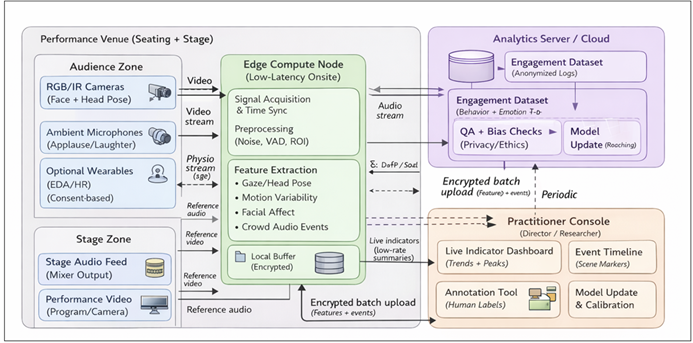
Figure 2 Deployment Diagram for Behavioral and Emotional Indicator Capture in Live Performing Arts
The automated models are quite efficient with determining patterns when working with large amounts of multimodal data, including temporal relationships between audience behaviour and performance dynamics. Nevertheless, these models can fail to read cues when it has no contextual knowledge as depicted in Figure 2. As an example, a low level of behavioral response can be a sign of a lack of interest in certain situations but deep reflection in other situations, especially in a genre of minimalism or cultural inhibition. By including the human factor, such ambiguities can get resolved based on an informed interpretation as opposed to a statistical inference. The human input in the proposed structure is presented in several points of the pipeline of engagement model. These annotations act as good quality supervisory cue information in the training and calibration of models. In contrast to the crowd-sourced labels, expert annotations contain artistic and contextual information which enhances the level of semantic congruency between the predicted engagement levels and the experience of living audiences.
The human input is also very critical in model validation and interpretation. The predictions of engagements made by machine learning models are shown in visual analytics interfaces, such that practitioners can explore trends with time, the confidence of the prediction, and the contribution of indicators. Through the analysis of timing and reasons why the engagement high and low points take place, professionals could evaluate the consistency of the model results with artistic intentions and experience expectations. This feedback loop of reflection facilitates the continuous improvement of a model whereby decisions can be made based on human judgment instead of the pure use of opaque optimization to refine the decisions made to do feature selection, weighting, or decision thresholds. The data collection and analysis of the audience is prone to issues associated with consent, privacy and misrepresentation. The ethical limitations, including the exclusion of sensitive signals, the legitimization of the anonymization process, and the avoidance of the engagement interpretation perpetrating cultural bias or reductive stereotypes, can be imposed with the help of human oversight. Human involvement in this respect is seen as a methodological and ethical protection.
4. Predictive Analytics for Audience Response
Since the cognitive and observable indicators and human-in-the-loop modeling principles, identified in the previous sections, have formed the foundations of the audience engagement problem, this section develops the audience engagement prediction as a problem of data-driven analytics. The goal of predictive analytics in performing arts is to approximate the time dynamics of the states of engagement, through learning correlations between multimodal indicators of audience, performance context, and previously observed engagement patterns. In contrast to descriptive analysis, which summarizes previous reactions of the audiences, predictive modeling allows forward-looking inference, which can be used to promote real-time adjustment, after-performance reflection and strategic decision-making. Modelling wise, the problem of audience engagement prediction can be formulated as a supervised or slightly supervised learning problem that relies on the availability of human annotations and their level of granularity. The engagement may be modeled as a continuous or discrete time-varying measure of attentional strength, emotional sympathies, or summative scores of engagement. Input features are obtained based on behavioral, emotional, and social signs obtained after passing through sliding temporal windows, which enable the models to extract both short-term dynamics and long-term trends as indicated in Figure 3. Temporal matching of events within the performance and the reaction of the audience is highly essential since the engagement signals tend to have a delayed or anticipatory effect in comparison to performative stimuli.
Figure 3

Figure 3 Human-in-the-Loop Workflow for Audience Engagement Modeling
This issue can be addressed using a variety of machine learning and deep learning methods. Regression-based predictors and ensemble models are classical models that are interpretable and robust in the low-data regime, whereas the sequential models, including recurrent neural networks, temporal convolutional networks, and attention-based models, are suitable to the engagement as a dynamic process. Notably, predictive accuracy is not the only guiding factor in selecting the model but transparency, stability, and compatibility with human-in-the-loop refinement are also considered. The importance of features, weight of attention with time or estimate of confidence are models that are especially useful in artistic settings, where interpretability is advantageous and reflective of application. Uncertainty estimation is one of the major elements of predictive engagement analytics. Since engagement is subjective and conditional, any prediction must be accompanied by some measure of confidence that expresses ambiguity in the data or that the model is limited. The predictions based on uncertainty allow discriminative human intervention, i.e., the model results are screened by specialists in moments of low assurance or unexpected results. Such a mechanism will make predictive analytics correspond with the HITL framework, so that automation will support, and not substitute human judgment. Predictive performance is not measured using traditional accuracy measures. Although such a quantitative measure as error rates or correlation with annotated engagement labels is required, it is also important to align with artistic intent and experience plausibility on a qualitative level. In turn, model assessment will involve both statistical verification and human expertise and investigate the association of the proposed engagement patterns with significant moments of the performance and consistent reactions of the audience. Summing up, audience response predictive analytics turns engagement into a temporally changing phenomenon, which could be drawn based on multimodal cues subject to human control.
5. Real-Time System Architecture and Deployment
This part outlines the overall system design that is required to realize predictive audience engagement analytics in live performing arts ecosystems. The main source of data, the Performance Venue, is a unification of audience sensing sources (e.g. cameras, ambient microphones, consent-based wearables) with performance context information sources (e.g. stage audio/video feeds and scene markers). The two-input nature is required by both temporal causality and interpretability: engagement patterns can be full of meaning, only when they are orchestrated according to performance events, like transitioning the scene, establishing a crescending, or a climax of a story. In order to have good alignment under real-world conditions (changing light, occlusion, crowd noise, etc.), each stream is stamped and synchronized at the ingestion phase before constructing features. The inference pipeline of Fig. 4 is accomplished by the Edge Inference Gateway. The incoming streams are subjected to a lightweight preprocessing (e.g. denoising, voice activity detection, ROI tracking) in order to stabilize the incoming streams and decrease the computational load. Extraction and fusion of features begins by sliding temporal windows and therefore features represent engagement as time-varying signal, as opposed to a time-independent summary. Most importantly, the edge layer will have uncertainty estimation, which will enable the system to highlight low-confidence margins and possible distribution drift. This mechanism promotes the reliability in operations since the selective review is provided instead of ongoing supervision with the help of human hands.
Figure 4
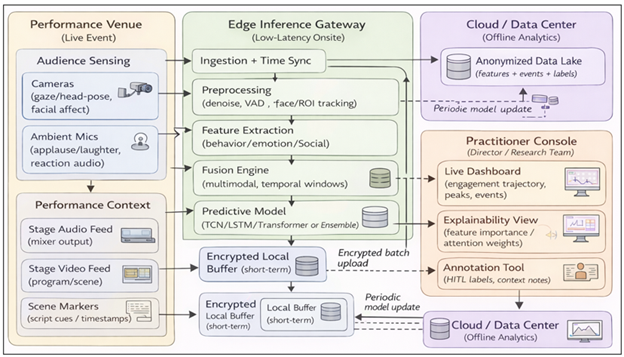
Figure 4 System Architecture for Predictive Audience Engagement Analytics
Real time outputs are presented on the Practitioner Console (Fig. 4), which contains (i) a live dashboard with engagement peaks, trends, and identified events and (ii) an explainability view enabling salient indicator contributions (e.g. feature importance or attention weights) and (iii) an annotation view to enable manual refinement by humans. The design focuses on the fact that predictive analytics is meant to assist reflective and adaptive decisions, but not to substitute human interpretation as indicated in Figure 4. As an example, in the case of rehearsals, or controlled deployments of pilots, practitioners can label portions of drop predictions that align with premeditated artistic pauses so that a correction can be made, and artistic validity is not compromised. The system does not continuously stream raw data; instead, the priorities are given to encrypted uploads of the derived features and event summaries in batches to reduce the risk, as well as bandwidth needs. The periodic model updates are then pushed back to the edge layer by controlled registry mechanism and stable deployment and traceable model evolution is ensured by performance context.
6. Experimental Design and Validation
This section will provide the experimental design that will be used to authenticate the suggested human-centered predictive audience engagement framework. The analysis plan is expected to measure predictive validity, temporal consistency, and interpretive soundness in performing arts scenarios to real-life situations, but it should be congruent to the cognitive, as well as human-in-the-loop principles outlined in previous sections.
6.1. Datasets and Performance Scenarios
Live and semi-controlled performing arts settings were selected as datasets to run experiment using and covering a variety of genres and different venue layouts. The acquisition of data was in line with the deployment architecture as in Section VI where the effects were ascertained with the acquisition of the audience facing video, the ambient audio, and the context of the performance information. Recordings are made of different audience sizes, spatial layouts, and performance styles to provide generalizability because the artistic environment of the real world is heterogeneous.
Table 2
|
Table 2 Summary of Datasets and Performance Scenarios |
|||||
|
Dataset ID |
Performance Type |
Venue Type |
Audience Size |
Modalities Captured |
Duration (hrs) |
|
D1 |
Live Music Concert |
Indoor Auditorium |
120–180 |
Video, Audio |
2.5 |
|
D2 |
Contemporary Dance |
Studio Theatre |
60–90 |
Video, Audio |
1.8 |
|
D3 |
Theatrical Play |
Proscenium Stage |
200–300 |
Video, Audio, Context
Cues |
3.0 |
|
D4 |
Rehearsal Session |
Controlled Studio |
30–40 |
Video, Audio |
1.2 |
As Table 2 indicates, the datasets recorded both the diversity of performance and variance of scale, which allowed them to be evaluated in expressive genres and conditions of engagement. The existence of rehearsal data also helps to control the engagement dynamics analysis in conditions of lower environmental variation. Since the nature of the interaction with audience is subjective and context-specific, ground truth labels were built on a human-in-the-loop annotation protocol. Instead of using automated heuristics and self-reported survey only, expert annotators were presented with time synchronized recordings, engagement visualizations, and context of performance to label engagement over fixed time periods. Table 3 is the description of the annotation strategy, which includes the scale of labels, the annotator profile, the agreement evaluation, and conflict resolution methods that guarantee the consistency and interpretive validity.
Table 3
|
Table 3 Human-in-the-Loop Ground Truth Annotation Strategy |
|
|
Aspect |
Description |
|
Annotation Unit |
Fixed temporal windows
(e.g., 5–10 s) |
|
Engagement Scale |
Continuous score (0–1)
or ordinal levels (Low / Medium / High) |
|
Annotator Profile |
Performers, directors,
trained researchers |
|
Annotation Inputs |
Audience video, audio
reactions, performance context |
|
Agreement Measure |
Inter-annotator
agreement (e.g., κ or correlation) |
|
Conflict Resolution |
Discussion-based
consensus or averaged labels |
Expert annotators are also used in order to make the labels of engagement not only indicative of observable responses but also artistic intent and contextual complexity. The inter-annotator agreement measures were observed to determine reliability, and disagreements were discussed by a structured discussion which increased the validity of the supervisory signal as indicated in Table 3. A cross-validation strategy was used to evaluate predictive models but it maintains the temporal structure which means that there is no leakage between training and testing sections.
Table 4
|
Table 4 Evaluation Metrics for Predictive Audience Engagement |
||
|
Metric Category |
Metric |
Evaluation Objective |
|
Prediction Accuracy |
MAE / RMSE |
Quantify deviation
from human-labeled engagement |
|
Temporal Alignment |
Peak detection
accuracy |
Assess correctness of
engagement transitions |
|
Correlation |
Pearson / Spearman |
Measure agreement with
expert annotations |
|
Uncertainty Quality |
Calibration error |
Evaluate confidence
reliability |
|
Qualitative Validation |
Expert review |
Assess semantic and
artistic plausibility |
Engaging prediction was done on sliding temporal windows to obtain both short term fluctuations and long-term trends. Comparison between baseline models and temporal and uncertainty-aware predictors was done and ablation studies were performed to estimate the contribution of various indicator groups to overall performance. Based on Table 4, assessment goes beyond the aspect of numerical precision to the temporal consistency and interpretation consistency with expert judgement. This multi-level validation approach makes sure that the predictive outputs are not created in a statistically consistent manner, but it is also meaningful in artistic and cognitive terms.
7. Results and Interpretation
This part describes the practical findings of the suggested predictive audience engagement model and offers an interpretative discussion based on the cognitive theory and the practice of performing arts. The assessments are based on predictive accuracy, temporal consistency, strong performance context robustness and the practical interpretability of the model results in the same breath when applied with human-in-the-loop feedback. In any dataset, the temporal models were available at all times to better predict audience engagement trajectories than the non-temporal ones. The sequential predictors had a smaller prediction error and better correlation with the engagement labels annotated by experts, which affirms the significance of modeling the engagement as a time-varying feature instead of a time-invariant aggregate as presented in Figure 5. The increase was more noticeable when it came to the performance transitions and emotionally salient sections, where the levels of engagement varied quickly. The results are consistent with the cognitive definition of engagement as changes dynamically defined by shifts in attention, emotional peaks, and storylines.
Figure 5

Figure 5 Engagement
Trajectory vs Ground Truth (with Uncertainty Band)
This Figure 5 represents time-varying engagement to demonstrate or not whether the model represents peaks, dips, and transitions that align with prominent performance moments. By comparing the expert-labeled ground truth to the model prediction no cumulative errors in time are present, allowing reviewers to check that the model is faithful to the underlying data, and the uncertainty band indicates to the reviewer when the model is making less accurate predictions, which protest the HITL assertion that human review is most beneficial in low-confidence regions. Temporal alignment analysis indicated that the suggested models reflected well the peaks of engagement in relation to major performance climactic moments, including musical passages, choreographic moments or dramatic narrative turns. The interpretively aspect of this latency is cognitively plausible because the audience assessment and the general audience response usually occurs after the stimulus is presented and not immediately. This implies that the models are effective in temporal encoding, since the models are able to represent delay without much smoothing.
Figure 6

Figure 6 Model Comparison Bar Chart (MAE and RMSE)
This Figure 6, gives a mini-comparison of prediction accuracy of candidate models (e.g., baseline regression, ensemble, LSTM/TCN/Transformer). It is also convenient to report both MAE and RMSE as they are both easily interpretable by the reviewer since MAE measures average deviation, and RMSE rewards high magnitude errors- this is useful in justifying the final model to be used during deployment. The complementary functions of behavioral and emotional indicators were also proved by ablation studies. Multimodal feature models performed better than single indicator category models and this result has been obtained to support the multidimensional engagement framework presented above. Behavioral cues were especially useful with regard to distributed attentional involvement whereas emotional and group audio cues played an important part in identifying surges of engagement in the short term. This finding supports the theoretical claim according to which engagement is the outcome of the interaction between attentional, affective, and social processes and not merely the isolated signal.
Figure 7
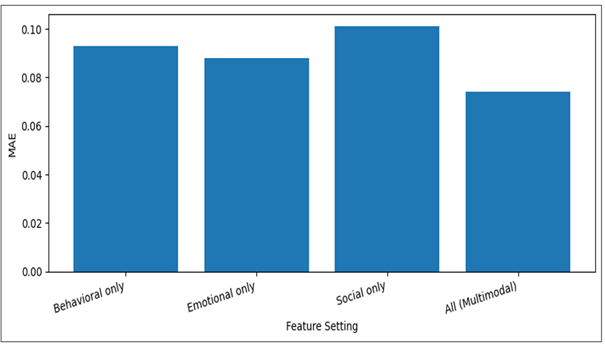
Figure 7 Ablation
Analysis Showing the Contribution of Behavioral,
Emotional, and Social Indicators to Prediction Accuracy.
The following plot, provided in Figure 7, proves the main argument of the paper that engagement is multidimensional. Comparing the results when models are driven by behavioral signals, by emotional signals, by social/ collective signals, and by all the combinations, the figure shows whether or not multimodal fusion produces measurably better results. Predictions based on uncertainty were useful to implementation. The high predictive confidence periods were associated with the high inter-annotator agreement, and the low ones were associated with the ambiguous or stylistically unorthodox performance segments. Human-in-the-loop review in such instances assisted in making predictions contextual, so that audience behavior that was subdued did not give the impression that they were not engaged. This communication identifies the purpose of uncertainty estimation in the directive process of making selective human intervention and not ongoing manual control. Qualitative expert analysis endorsed that the expected engagement patterns were semantically appropriate as well as artistically intentional in the majority of cases. It was reported that visualized engagement patterns were useful in supporting reflective analysis when it came to rehearsals and post-performance evaluation and not in the prescription of prescriptive real-time control. The result of this discussion highlights the interpretive and not predictive nature of predictive analytics in the creative world.
8. Conclusion
The paper described a human-based model of predictive audience engagement in performing arts that combines the cognitive theory, multimodal behavioral and emotional predictors, and human-in-the-loop analytics into a system architecture that is deployable. Through the description of engagement as a temporally changing and multidimensional concept, the suggested way goes beyond the retrospective evaluation and allows future-looking and interpretable engagement foresight in line with artistic practice. The outcomes of experiments under varying performance conditions showed that multimodal and temporal predictive models are superior to and more effective in modeling engagement dynamics in comparison to their respective static baselines especially when there is a salient change in performance. The contextual interpretation of uncertainty-aware inference and expert control were vital factors in reducing the misclassification in any ambiguous or stylistically-sensitive passages. The results are a confirmation that predictive analytics will be useful in reflective and adaptive decision-making in performing art without shrinking engagement to simplistic numerical proxies. Instead of automated control being prescribed, the framework places engagement prediction as an interpretive resource to supplement human ability in terms of analyzing rehearsal, post-performance reflection, and audience-aware artistic development. To summarize, this piece of work shows the practicality and usefulness of predictive audience engagement modeling, based on the cognitive basis, and led by human judgment. The next step of the research could be to expand this framework by studies across more cultures, more affections, and adaptive feedback, which enhances the dialogue between performing arts practice and computational intelligence even more.
CONFLICT OF INTERESTS
None.
ACKNOWLEDGMENTS
None.
REFERENCES
Awasthi, A., (2024). Use OF Indian Traditional Folk Arts IN Interior Designing ShodhShreejan: Journal of Creative Research Insights,1(1), 7-10, https://doi.org/10.29121/shodhshreejan.v1.i1.2024.4
Haque, A. N. M. A., and Naebe, M. (2023). Tensile Properties of Natural Fibre-Reinforced FDM Filaments: A Short Review. Sustainability, 15, Article 16580. https://doi.org/10.3390/su152416580
Kennedy, S. M., Wilson, L. A., and Rb, J. R. (2025). Natural Fiber Filaments Transforming the Future of Sustainable 3D Printing. MethodsX, 14, Article 103385. https://doi.org/10.1016/j.mex.2025.103385
Masood, A., and Hashmi, A. (2019). Cognitive Robotic Process Automation. In Cognitive Computing Recipes ( 225–287). Apress. https://doi.org/10.1007/978-1-4842-4106-6_5
Metal AM. (2023). The Convergence of Additive Manufacturing and Artificial Intelligence: Envisioning a Future That is Closer Than You Think. Shrewsbury, Uk: Metal Am.
Opoz, T. T., Burgess, A., Ahuir-Torres, J. I., Kotadia, H. R., and Tammas-Williams, S. (2024). Effect of Surface Finish and Post-Processing on Mechanical Properties of 17-4 PH Stainless Steel Produced by Atomic Diffusion Additive Manufacturing. International Journal of Advanced Manufacturing Technology, 130, 4053–4066. https://doi.org/10.1007/s00170-024-12949-6
Ribeiro, J., Lima, R., Eckhardt, T., and Paiva, S. (2021). Robotic Process Automation and Artificial Intelligence in Industry 4.0: A Literature Review. Procedia Computer Science, 181, 51–58. Https://Doi.org/10.1016/j.procs.2021.01.104
Richardson, S. (2020). Cognitive Automation: A New Era of Knowledge Work? Business Information Review, 37(4), 182–189. https://doi.org/10.1177/0266382120974601
Rizk, Y., Isahagian, V., Boag, S., Khazaeni, Y., Unuvar, M., Muthusamy, V., and Khalaf, R. (2020). A Conversational Digital Assistant for Intelligent Process Automation. Lecture Notes in Business Information Processing, 393, 85–100. https://doi.org/10.1007/978-3-030-58779-6_6
Sturm, L. D. (2020). Cyber-Physical Security for Additive Manufacturing Systems. Blacksburg, VA: Virginia Tech.
Subeshan, B., Atayo, A., and Asmatulu, E. (2024). Machine Learning Applications for Electrospun Nanofibers: A Review. Materials Science, 59, 14095–14140. https://doi.org/10.1007/s10853-024-09994-7
Sönmez, Ö. E., and Börekçi, D. Y. (2020). A Conceptual Study on RPAs as of Intelligent Automation. Advances in Intelligent Systems and Computing, 1029, 65–72. https://doi.org/10.1007/978-3-030-23756-1_10
Thomas, D. J. (2022). Advanced Active-Gas 3D Printing of 436 Stainless Steel for Future Rocket Engine Structure Manufacture. Journal of Manufacturing Processes, 74, 256–265. https://doi.org/10.1016/j.jmapro.2021.12.037
Wang, W., Wang, P., Zhang, H., Chen, X., Wang, G., Lu, Y., Chen, M., Liu, H., and Li, J. (2023). A Real-Time Defect Detection Strategy for Additive Manufacturing Processes Based on Deep Learning and Machine Vision. Micromachines, 15(1), Article 28. https://doi.org/10.3390/mi15010028
Yampolskiy, M., Bates, P., Seifi, M., and Shamsaei, N. (2022). State of Security Awareness in the Additive Manufacturing Industry: 2020 Survey. Progress in Additive Manufacturing, 7, 192–212. https://doi.org/10.1520/STP164420210119
|
|
 This work is licensed under a: Creative Commons Attribution 4.0 International License
© ShodhKosh 2026. All Rights Reserved.