ShodhKosh: Journal of Visual and Performing ArtsISSN (Online): 2582-7472
|
|
AI-Powered Music Therapy for Education
Dr. Vikrant Nangare
1 , Tanveer Ahmad Wani 2, Ashutosh Kulkarni 3
 , Dr. Neeta Karhadka 4
 , Vinit Khetani 5, Pushpa Nagini Sripada 6
1 Assistant Professor, Bharati Vidyapeeth
(Deemed to be University), Institute of Management and Entrepreneurship
Development, Pune, 411038, India
2 School
of Sciences, Noida International University, Greater Noida-203201, India
3 Department of Desh, Vishwakarma Institute of Technology, Pune,
Maharashtra, 411037, India
4 Assistant Professor, Department of E&TC Engineering, Nutan
Maharashtra Institute of Engineering and Technology, Talegaon Dabhade, Pune, India
5 Researcher Connect Innovation and Impact Pvt. Ltd, Nagpur,
Maharashtra, India
6 Professor, Meenakshi College of Arts and Science, Meenakshi Academy
of Higher Education and Research, Chennai, Tamil Nadu, 600090, India
|
|
|
ABSTRACT |
|
|
The artificial
intelligence (AI) has offered new possibilities to improve the sphere of
music therapy as the means of adaptive support within the educational
settings. The traditional music therapy methods are useful but very stagnant
and cannot be scaled and personalized. This paper suggests an adaptive music
therapy program that will be driven by AI and will help individuals regulate
their emotions, maintain engagement, and be ready to learn in classroom,
inclusive education, and online classes. It is a closed-loop architecture
based on the uniting framework of multimodal learner sensing, affective
computing, cognitive state modeling, music information retrieval, and
reinforcement learning. Experimental assessment shows that adaptive music
interventions based on AI are more effective than no-music and stable music
interventions in reducing the stress proxy, enhancing long-term engagement,
and increasing the ability to re-engage with learning activities in learners.
The results indicate the relevance of individualized and context-based
therapeutic intervention based on the learning and psychological theory. The
research paper confirms that AI-driven music therapy is a scalable and
emotionally intelligent tool of educational support, and it provides both practical
and theoretical contributions to the affective learning systems. |
|||
|
Received 11 September 2025 Accepted 07 December 2025 Published 17 February 2026 Corresponding Author Dr.
Vikrant Nangare, vikrant.nangarepatil@gmail.com DOI 10.29121/shodhkosh.v7.i1s.2026.7089 Funding: This research
received no specific grant from any funding agency in the public, commercial,
or not-for-profit sectors. Copyright: © 2026 The
Author(s). This work is licensed under a Creative Commons
Attribution 4.0 International License. With the
license CC-BY, authors retain the copyright, allowing anyone to download,
reuse, re-print, modify, distribute, and/or copy their contribution. The work
must be properly attributed to its author.
|
|||
|
Keywords: Artificial Intelligence, Music Therapy, Affective
Computing, Adaptive Learning, Educational Technology, Emotional Regulation,
Reinforcement Learning |
|||



1. INTRODUCTION
Music therapy has been acknowledged as a successful pedagogical intervention and therapeutic intervention to help children in the cognitive development process, emotional regulation, attention control, and social interaction during school. Its use is found in the early childhood education sector, special education, inclusive class rooms, and in the field of higher education whereby structured musical stimulus is applied to influence the state of readiness to learn, memory consolidation, motivation and emotional wellbeing Bhandarkar et al. (2024). Yet, traditional methodologies of music therapy in education are largely therapist-led, manually edited and restricted in ability to scale, customize and respond in an environmentally dynamic manner to the ever-changing cognitive and emotional conditions of learners Chen and Huang (2022). Such restrictions are especially acute in any heterogeneous classroom, digitally mediated classroom and in large-scale system of education where individualized therapeutic treatment is hard to maintain. The recent developments in artificial intelligence (AI) can provide a revolutionary solution to these limitations, allowing data-driven, adaptive, and personalized music therapy systems to be used in an educational environment Dai and Ding (2021). AI-based music therapy represents a combination of computational models of emotion, cognition, and learning with intelligent music analysis and generation methods that are used to provide responsive therapeutic engagement in relation to the real-time needs of learners. Using multimodal sources of data, including audio-cues, behavioral interactions, physiological responses, and contextual learning data, AI systems will be able to learner’s affective and cognitive state and dynamically control musical parameters to achieve optimal therapeutic and educational results Gandolfo and Hugues (2021).
Figure 1

Figure 1 Conceptual Framework of AI-Powered Music Therapy for Education
The effectiveness of learning in educational settings depends on the emotional regulation and cognitive preparedness in educational contexts. Knowledge acquisition and retention can be greatly affected by stress, anxiety, lack of attention, and dysregulation of emotions Jiang (2022). The AI-based music therapy systems have the potential to be operating as intelligent support layers, continuously tracking the states of the learners, and offering adaptive interventions through music to stabilize the emotions, lessen the cognitive load, and boost engagement. Since artificial intelligence-based systems use learning algorithms, unlike fixed playlists or pre-determined therapeutic methods, they can change their intervention plan over time, thus facilitating personalization in the long term and long-lasting effects Johnels et al. (2023). Moreover, the overlap of AI and music therapy is also consistent with the new paradigms of the learner-centered and emotional education. The intelligent tutoring systems, remote learning and digital classroom may incorporate adaptive music therapy systems, which can offer therapeutic scaffolding, albeit non-invasive and effectively. These systems are especially applicable in the context of inclusive learning, where the learner with diverse cognitive, emotional, and sensory needs needs adjusted support systems. Through automating assessment, personalization, and intervention aspects, AI-based music therapy eliminates the need to have constant human supervision and, nevertheless, upholds therapeutic fidelity Kobus et al. (2022).
The paper is an inquiry into design, implementation, and evaluation of AI-based music therapy systems in a learning context. It seeks to formalize a groundwork of the incorporation of intelligent music-based therapeutic interventions in learning settings, examine their pedagogical and emotional effects, and define issues, as well as, challenges of ethics, privacy, and accessibility. By way of this investigation, the research paper establishes AI-based music therapy as an adaptive, scalable, and transformative music therapy tool to improve well-being and Sikri et al. (2024) educational performance among learners in contemporary learning ecosystems.
2. Background and Related Work
Music therapy is a field of investigation that has had very much research in the support area both in education and even in the clinical fields with a lot of evidence to support that music therapy has been effective in enhancing attention, emotional control, memory, motivation, and even social interaction among learners Lee and Liu (2021). Music therapy has been used in educational levels in early childhood education, special education, and inclusive classes and in higher education in which musical stimuli are used as a non-verbal aid to achieve emotional stability and cognitive preparedness. Conventional methods are usually therapist guided and either through structured listening, improvisation or guided musical exercise. Although these approaches are pedagogically useful, they are very reliant on the expert facilitation, subjective evaluation, and manual adaptation of the data, limiting both scalability and consistent individualization of musical features in various learner populations in the music technology field, music information retrieval and machine learning have allowed automated analysis of musical features in relation to tempo, rhythm, harmony, timbre and expression of emotion Li et al. (2021). Deep learning models have been effectively used to recognize music emotion, classify moods and model user preferences, and generative AI methods have been used to compose adaptive music and recommend it. The applications of these developments have been prolific in entertainment and wellness applications but translation into organized educational music therapy has been very haphazard and of limited scope Sampaio (2023).
Table 1
|
Table 1 Comparative Overview of Music Therapy Approaches in Educational Contexts |
|||
|
Dimension |
Traditional Music
Therapy |
AI-Assisted Music
Systems |
Adaptive AI-Powered
Music Therapy |
|
Mode of Intervention Sciancalepore et al. (2022) |
Therapist-led sessions
using pre-designed musical activities and guided listening |
Semi-automated systems
using curated playlists or rule-based music selection |
Fully automated and
adaptive therapeutic interventions driven by AI inference and learning models |
|
Personalization Level Tramontano et al. (2021) |
Limited
personalization based on therapist observation and experience |
Moderate
personalization using user preferences or basic behavioral data |
High-level
personalization using real-time cognitive, emotional, and behavioral state
modeling |
|
Adaptability Venugopal and Madhusudan (2017) |
Static or manually
adjusted over time |
Partially adaptive
with predefined rules or thresholds |
Continuously adaptive
through learning algorithms and feedback-driven optimization |
|
Data Utilization Williams et al. (2020) |
Qualitative
observations and session notes |
Audio features and
basic interaction data |
Multimodal data
including audio, behavioral logs, physiological signals, and contextual
learning data |
|
Scalability in
Education Xu (2022) |
Low scalability due to
dependence on trained professionals |
Moderate scalability
for digital and remote learning environments |
High scalability
across classrooms, online platforms, and inclusive education settings |
Traditional music therapy, as it is presented in Table 1, focuses on human knowledge and sensitivity to context but cannot be scaled and needs to be responsive in the real-time. The music systems supported by AI have certain elements of automation and personalization through preferences, but they are mostly fixed and not related to cognitive and emotional changes in learners Yang et al. (2022). In comparison, adaptive AI-enabled music therapy is a paradigm shift through the incorporation of affective computing, learner modeling, and adaptive music intelligence in a closed loop system. These systems keep on learning based on multimodal data, which allows them to maintain personalization and be aligned to therapeutic and educational goals. Although the interest in the use of AI in therapeutic applications has increased, most current research is based on clinical rehabilitation or mental health support as opposed to integrating AI in education Zheng and Dai (2022). In addition, ethical aspects, privacy protection, accessibility, and inclusivity are usually regarded as secondary issues. The above gaps show that there is a need to have a coherent, learner-based system that integrates AI-driven music therapy into the learning ecosystems.
3. Theoretical Foundations of Music-Based Therapeutic Learning
Architectural specifics of AI-based music therapy education apparatuses rely on the priori learning, psychological, and neuroscientific concepts, which elaborate on the effects of music on cognition, emotion, and conduct. Music acts as an effective controller of attention, arousal, memory and affect, and therefore, it is effective in the use of therapy of learning interventions. These principles, together with artificial intelligence, can be implemented into dynamically responsive data-driven components of the system that adjusts to the dynamically changing cognitive and emotional conditions of learners. This part is a summary of the main theoretical cornerstones and their connection to the functional aspects of the suggested AI-driven music therapy framework. There is music-based therapeutic learning that is based on Cognitive Load Theory (CLT). CLT highlights that to facilitate effective learning, intrinsic, extraneous and germane cognitive load must be balanced. During learning, learning and memory may be affected by the increased level of stress or anxiety, thus overwhelming working memory. Manipulation of tempo, harmony, and rhythm in therapeutic music has the potential to decrease extraneous information processing through soothing learners and ensuring focus. Continuous state inference, which is part of an AI-based system, facilitates the adaptive adjustment of musical aspects to assist in the learning process without the introduction of new cognitive loads. Theories of emotional processing, especially the Arousal-Valence Model, also describe the effect of music on learning. This model is a reflection of the emotional states in the dimensions of arousal and valence, in which the optimal learning would take place on the moderate arousal and positive affect. Music inherently influences emotional conditions, whereas affective computing using AIs enables real-time identification of emotions of learners. The AI-based music therapy can improve emotional regulation and engagement by matching musical treatment with the desired arousal-valence states.
Figure 2
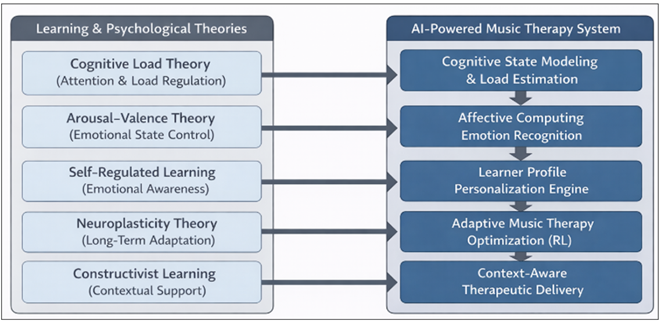
Figure 2 Mapping of Learning and Psychological Theories to AI-Powered Music Therapy System Components
Lastly, the Self-Regulated Learning (SRL) theory is used to inform the framework as it focuses on the ability of learners to observe and manage their mental and emotional activities. Music therapy aids SRL in enhancing emotional awareness, regulation of stress and motivation. Similar feedback loops powered by AI enable the response to therapeutic interaction to be continuously adapted to, and self-regulation scaffolding can be personalized without requiring cognitive effort. Based on the system design premises of these complementary theories, AI-based music therapy is no longer ad hoc or entertainment focused but rather a scientifically informed educational intervention. The formalization of the correspondence between theory and system architecture can guarantee a high level of pedagogical validity, enhance the interpretability, as well as reinforce the argument in favor of including adaptive music therapy into the current educational ecosystems.
4. Adaptive Music Therapy Strategies in Educational Settings
The artificial intelligence-based adaptive music therapy is an engaging learner-centered intervention, which is context-dependent, meaning it dynamically reacts to cognitive and emotional needs in educational environments. Based on the system architecture and algorithmic pipeline, AI-assisted music therapy is operationalized in three main settings, including classroom learning, inclusive and special education, and online or distance learning. In all the settings, the idea is to increase learning preparedness, self-control, and involvement without interfering with the learning process. Adaptive music therapy is applied as a non-intrusive ambient or micro-intervention in a classroom setting. Strategies are also developed over time in order to fit the teaching styles and classroom dynamics. Adaptive music therapy is very individual in an inclusive and special education setting. Constant observation and profiling of learners allows intervention to be done individually with consideration of the sensitivities of the learners to tempo, rhythm and complexity. They facilitate anxiety reduction, attention control, and emotional self-control as an assistant tool that supplements the human-centred support without undermining the accessibility and autonomy. In remote and online learning, adaptive music therapy deals with disengagement, exhaustion and isolation. Based on interaction data on the online platforms, the system provides personalized music-based micro-breaks or soundscapes and adjusts both intervention timing and nature in response to time to maintain focus and emotional regulation.
Figure 3
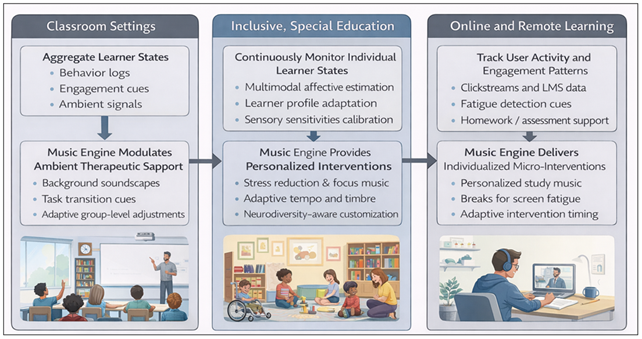
Figure 3 AI Model Taxonomy for Therapeutic Music Intelligence
In every teaching context, ethical and pedagogical protection is part of adaptive music therapy strategy development. The constraints of interventions are an attempt to avoid excessive use, distract less, and cultural and contextual appropriateness. The music therapy does not stand as an alternative to the instruction or human support but as a smart layer of scaffolding that facilitates an emotional situation to learn. Transparency and controllability are ensured because educators and learners can increase or decrease the intensity of interventions, may choose to stop when they wish and receive aggregated responses about the performance of the system. Altogether, the presented adaptive strategies prove the idea that AI-assisted music therapy can be easily incorporated into diverse learning systems. The framework allows the scaling of the intervention as well as its therapeutic applicability because, by structuring the granularity of interventions along with the contextual needs, i.e., ambient support in the classroom, personalized assistance in inclusive education, and individualized control in online learning, the framework is scalable. This versatility makes AI-based music therapy an effective and viable instrument of education of the emotionally intelligent.
5. System Architecture for AI-Powered Music Therapy
The proposed AI-driven music therapy system is a closed, learner-focused system that will constantly monitor learner state, predict cognitive, emotional states, and provide live adaptive music-based interventions to improve learning preparedness, interest, and emotion management. In contrast to fixed playlist strategies, the system realizes the cognitive load regulation, arousal-valence management, self-regulated learning, and long-term personalization, using modular, theory-based elements. Interactions of learners and context are recorded so that interventions should be context-sensitive and less intrusive. These signals are preprocessed and converted to stable multimodal features which promote real time inference. The cognition load, attention stability and emotional state are estimated by the AI inference layer relying on behavior and affective indicators, whereas a learner profiling module allows personalization, relying on previous responses.
Figure 4

Figure 4 AI Powered Music Therapy System Design
A music intelligence layer is derived to generate therapeutic decisions, and it chooses or customizes music according to perceived needs of the learner and pre-established intervention policies. Close loop adaptation process re-establishes strategies as time progresses with response of the learners which can be optimized through time with safety and pedagogical limitations. Lastly, the music-based feedback is provided by non-disruptive means, and optional reflective prompts and aggregated analytics are provided to the educators. The architecture described in general offers a scalable and decipherable channel to apply AI-based music therapy to the education system.
6. Experimental Design and Evaluation Methodology
The evaluation methodology is designed in such a way that it evaluates not only the therapeutic outcomes, including emotional regulation and engagement stability, but also educational support outcomes, including learning readiness and task persistence. In order to achieve ecological validity, experiments are carried out in the classroom and inclusive education and online learning conditions based on multimodal data on learners and longitudinal assessment models. The experimental testing is based on the multimodal data that is gathered during pilot deployments and controlled learning. The data sources aim to identify the non-intrusive behavior of learners, their affective conditions, and contextual learning. The data of behavioral interaction are obtained on the basis of classroom interfaces and learning management systems where the interaction dynamics and the course of the tasks are recorded. It makes the inference of the affective signals based on the audio based features and the physiological indicators are introduced as optional when they are available. Contextual data give situational awareness that is required in the selection of adaptive interventions.
Table 2
|
Table 2 Dataset Composition and Data Sources |
|||
|
Data Category |
Data Source |
Examples of Features |
Role in System |
|
Behavioral Interaction
Data |
LMS logs, classroom
interfaces |
Response latency,
inactivity duration, error patterns, task transitions |
Cognitive load
estimation, engagement modeling |
|
Audio-Based Affective
Data |
Microphone / ambient
audio |
Pitch variance, energy
contours, rhythm stability |
Arousal–valence
emotion inference |
|
Physiological Signals
(Optional) |
Wearable sensors |
Heart rate
variability, electrodermal activity trends |
Stress and arousal
proxy estimation |
|
Contextual Learning
Data |
Course metadata,
session logs |
Task type, learning
phase, learning modality |
Context-aware
intervention selection |
As it can be seen in Table 4, the dataset design focuses on multimodal complementarity which enables the system to make reliable predictions of the learner state when some of the modalities are missing. There are ethical protection measures such as informed consent, anonymization and access control which are practiced during the data collection and storage. An evaluation is based on comparative mixed-method protocol, which involves within-subject and between-group analysis. There are three experimental conditions to which learners are subjected to, namely, (i) no music-based intervention, (ii) static or rule-based music support, and (iii) fully adaptive AI-powered music therapy. Such circumstances are used to similar learning activities in order to separate the impact of adaptive music interventions. Different educational situations have different protocols to indicate context constraints and learning interactions. Classroom research gives more attention to patterns at the group level, inclusive education to individualized paths, and experiment research in online learning at long-term asynchronous behavior.
Table 3
|
Table 3 Experimental Protocols Across Educational Scenarios |
|||
|
Educational Scenario |
Experimental Design |
Intervention
Conditions |
Evaluation Duration |
|
Classroom Learning |
Group-level,
session-based comparison |
No music, static
music, adaptive AI music therapy |
Multiple classroom
sessions |
|
Inclusive / Special
Education |
Individual-level,
longitudinal |
Personalized adaptive
therapy vs baseline support |
Extended multi-session |
|
Online / Remote
Learning |
Individual,
asynchronous evaluation |
Adaptive
micro-interventions vs static playlists |
Longitudinal
self-paced study |
The design of the protocols makes sure that the pedagogical practices are consistent between conditions and that it is possible to reliably attribute the effects that are observed to the adaptive music therapy and not to instructional variance. Measures of evaluation are chosen to address the two-fold aims of therapeutic efficiency and academic assistance. The metrics of engagement and affective measures are used to measure the stability of attention and consistency of interactions and emotional regulation and stress recovery, respectively.
Table 4
|
Table 4 Consolidates the Evaluation Metrics Used in the Study and Their Corresponding Objectives. |
|||
|
Metric Category |
Metric Name |
Description |
Objective |
|
Engagement Metrics |
Attention stability,
inactivity reduction |
Measures sustained
learner engagement |
Learning readiness |
|
Affective Metrics |
Arousal stability,
stress proxy reduction |
Estimates emotional
regulation effectiveness |
Therapeutic impact |
|
Learning Support
Metrics |
Task recovery time,
readiness indicators |
Reflects ability to
resume learning |
Educational support |
|
Personalization
Metrics |
Policy convergence
time |
Measures speed of
adaptive optimization |
Long-term
effectiveness |
|
System Performance
Metrics |
Inference latency,
intervention frequency |
Evaluates deployability and intrusiveness |
Real-world feasibility |
Combined, Table 4 give a clear and well-organized summary of the experimental system, allowing it to be reproduced and allows a reviewer to understand. This evaluation model is supported by longitudinal analysis and baseline comparisons, making it possible to make an inflexible evaluation of AI-based music therapy as an adjusting, emotionally intelligent assistance tool in school settings.
7. Discussion
The findings reveal that adaptive AI-based music therapy is always better in improving the engagement of the learners, lowering the stress levels, and increasing the readiness to learn, compared to no-music and static music therapies. These results prove that music therapy use in educational institutions is the most effective when it is dynamically adjusted to both the cognitive and emotional condition of learners but not as a background factor. In theory, the identified gains are consistent with the provisions of the Cognitive Load Theory and Self-Regulated Learning. Adaptive music interventions seem to help decrease extraneous cognitive load by regulating emotional arousal, as well as alleviating stress proxies, so that learners are able to maintain attention and better cope with task difficulty. Emotion-sensitive nature of the musical features in the system promotes the best arousal-valence conditions, which justifies the importance of affective regulation as the condition of successful learning. The decrease in the level of stress and the growth of the involvement emphasize the capacity of the system to balance between calmness and alertness, which is a crucial need in school. Moreover, the positive changes in learning preparedness imply that adaptive music therapy promotes the resiliency of learners and their ability to resume their work, especially in an inclusive and online classroom where emotional pressures tend to be higher. Longitudinal adaptation is important as demonstrated by the system perspective of the effectiveness of the closed-loop personalization and reinforcement-based optimization. Its outcomes also indicate that this adaptive intelligence can be implemented in real-time, which does not involve a lot of unnecessary computational cost, hence being useful at scale. In general, the results place AI-based adaptive music therapy in a promising perspective as a theoretically informed method of providing educational assistance, which is emotionally intelligent. Although there are limitations associated with affective measures that use proxies and cultural differences, the findings are a solid basis of future large-scale and longitudinal research.
8. Conclusion and Future Scope
This paper provided a systematic design of the adaptive music therapy based on AI in teaching environments, implementing learning theory, affective computer, music recognitions, and closed loop optimization as the part of the single system architecture. The proposed approach argued benefits over the traditional and static music interventions through systematic design and experimental testing and showed clear benefits on enhancing learner engagement, decreasing stress, and increasing learning readiness in classroom-based, inclusive education, and online learning settings. The results attest to the fact that music therapy is most effective as a means of education when it is context-observant, individualized and responds dynamically to the cognitive and emotional conditions of learners. This is achieved by basing system elements on the proven theoretical frameworks including the Cognitive Load Theory, Arousal-Valence modeling, and Self-Regulated Learning, which can transform music therapy into a supportive background intervention rather than an emotive learning scaffold. The findings further indicate that adaptive music interventions can be implemented in real time at a cost that does not interfere with pedagogical flow and this makes the framework viable in a practical manner to modern learning ecosystems. In the future, there are many directions that can provide promising prospects to res arch. There is a need to conduct large-scale longitudinal studies to measure long-term learning outcomes and change behavior. Affective inference could also be improved by integration with neuroadaptive interfaces, e.g. EEG or advanced biosensors. Also, responsive music modeling and interpretable AI systems would increase inclusivity, trust and adoption. In general, AI-based music therapy is one of the most promising and scalable directions of emotionally intelligent and learner-oriented education.
CONFLICT OF INTERESTS
None.
ACKNOWLEDGMENTS
None.
REFERENCES
Bhandarkar, S., Salvi, B. V., and Shende, P. (2024). Current Scenario and Potential of Music Therapy in the Management of Diseases. Behavioural Brain Research, 458, Article 114750. https://doi.org/10.1016/j.bbr.2023.114750
Chen, B., and Huang, L. (2022). A Systematic Review of Multimodal Interaction in Artificial Intelligent Systems Supporting Children to Learn Music. In Human-Computer Interaction: Theoretical Approaches and Design Methods (pp. 125–140). Springer. https://doi.org/10.1007/978-3-031-05311-5_38
Dai, D., and Ding, B. (2021). Artificial Intelligence Technology Assisted Music Teaching Design. Scientific Programming, 2021, Article 9141339. https://doi.org/10.1155/2021/9141339
Gandolfo, G., and Hugues, M. (2021). The Use of Music in Therapy Through the Ages. Journal of Interdisciplinary Methodological Issues in Science, 10, Article 9324. https://doi.org/10.18713/JIMIS-210121-10-01
Jiang, Q. (2022). Application of Artificial Intelligence Technology in Music Education Supported by Wireless Network. Mathematical Problems in Engineering, 2022, Article 2138059. https://doi.org/10.1155/2022/2138059
Johnels, L., Vehmas, S., and Wilder, J. (2023). Musical Interaction with Children and Young People with Severe or Profound Intellectual and Multiple Disabilities: A Scoping Review. International Journal of Developmental Disabilities, 69(4), 487–504. https://doi.org/10.1080/20473869.2021.1940628
Kobus, S., et al. (2022). Music Therapy Supports Children with Neurological Diseases During Physical Therapy Interventions. International Journal of Environmental Research and Public Health, 19(3), Article 1492. https://doi.org/10.3390/ijerph19031492
Lee, L., and Liu, Y. S. (2021). Training Effects and Intelligent Evaluated Pattern of the Holistic Music Educational Approach for Children with Developmental Delay. International Journal of Environmental Research and Public Health, 18(19), Article 10064. https://doi.org/10.3390/ijerph181910064
Li, K., Weng, L., and Wang, X. (2021). The State of Music Therapy Studies in the Past 20 Years: A Bibliometric Analysis. Frontiers in Psychology, 12, Article 697726. https://doi.org/10.3389/fpsyg.2021.697726
Sampaio, A.-D. S. C. (2023). Music-Based Interventions in Rehabilitation of Children and Adolescents with Chronic Diseases: Sharing an Experience from a Brazilian Public Hospital. Frontiers in Rehabilitation Sciences, 4, Article 1116914. Https://Doi.Org/10.3389/Fresc.2023.1116914
Sikri, A., Sikri, J., and Gupta, R. (2024). AI-Powered Dentistry: Revolutionizing Oral Care. ShodhAI: Journal of Artificial Intelligence, 1(1), 1–8. https://doi.org/10.29121/shodhai.v1.i1.2024.2
Sciancalepore, F., et al. (2022). Computer-Based Cognitive Training in Children with Primary Brain Tumours: A Systematic Review. Cancers, 14(15), Article 3879. https://doi.org/10.3390/cancers14153879
Tramontano, M., et al. (2021). Music-Based Techniques and Related Devices in Neurorehabilitation: A Scoping Review. Expert Review of Medical Devices, 18(8), 733–749. https://doi.org/10.1080/17434440.2021.1954050
Venugopal, K., and Madhusudan, P. (2017, July). Feasibility of Music Composition Using Artificial Neural Networks. In Proceedings of the International Conference on Computing Methodologies and Communication (ICCMC) (pp. 524–525). IEEE. https://doi.org/10.1109/ICCMC.2017.8282520
Williams, D., Hodge, V. J., and Wu, C. Y. (2020). On the Use of AI for Generation of Functional Music to Improve Mental Health. Frontiers in Artificial Intelligence, 3, Article 497864. https://doi.org/10.3389/frai.2020.497864
Xu, Z. (2022). Construction of Intelligent Recognition and Learning Education Platform of National Music Genre Under Deep Learning. Frontiers in Psychology, 13, Article 843427. https://doi.org/10.3389/fpsyg.2022.843427
Yang, J., Min, C., Mathur, A., and Kawsar, F. (2022, May). SleepGAN: Towards Personalized Sleep Therapy Music. In Proceedings of the IEEE International Conference on Acoustics, Speech and Signal Processing (ICASSP) (pp. 966–970). IEEE. https://doi.org/10.1109/ICASSP43922.2022.9747033
Zheng, H., and Dai, D. (2022). Construction and Optimization of Artificial Intelligence-Assisted Interactive College Music Performance Teaching System. Scientific Programming, 2022, Article 3199860. https://doi.org/10.1155/2022/3199860
|
|
 This work is licensed under a: Creative Commons Attribution 4.0 International License
© ShodhKosh 2026. All Rights Reserved.