ShodhKosh: Journal of Visual and Performing ArtsISSN (Online): 2582-7472
|
|
Adaptive Learning Platforms for Performing Arts
Jyoti M. Shinde 1 , Swati Chaudhary 2
 , Amol
Bhilare 3
, Amol
Bhilare 3 , Rajendra
Subhash Jarad 4
, Rajendra
Subhash Jarad 4 , Anitha
K. 5
, Anitha
K. 5 , Shubhangi
Sunil Satav 6
, Shubhangi
Sunil Satav 6
1 Department
of Computer Engineering, Dr. D. Y. Patil Institute of Technology Pimpri, Pune,
India
2 Assistant
Professor, School of Business Management, Noida International University, Greater
Noida 203201, India
3 Assistant Professor, Department of Computer Engineering, Vishwakarma
Institute of Technology, Pune, Maharashtra, India
4 MBA, Neville Wadia Institute of Management Studies and Research, Pune
Affiliated to Savitribai Phule Pune University, (SPPU), Pune, India
5 Professor and HOD, Meenakshi College of Arts and Science, Meenakshi
Academy of Higher Education and Research, Chennai, Tamil Nadu, India
6 Department of Computer Engineering, Bharati Vidyapeeth's College of
Engineering, Lavale, Pune, Maharashtra, India
|
|
|
ABSTRACT |
|
|
The performing
arts education practices are changing with the emergence of abstract learning
platforms, which allow individualized, data-driven, and responsive learning
environments, which resonate with individual learners and their artistic
skills and developmental paths. Conventional performing arts pedagogy has
been based on the studio-based teaching approach and the master/apprentice
paradigm that has had difficulties in scaling, objectively measuring skill
development as well as dynamically addressing the needs of various learners.
In this study, the researcher suggests an adaptive learning model in
performing arts to combine learning theories with multimodal data acquisition
and artificial intelligence in improving the skill learning process in the learning
of music, dance and theatre. The platform is based on the constructivist and
experiential learning paradigms, and it implies the cognitive, emotional, and
embodied aspects of artistic learning, focusing on practice, feedback, and
reflective iteration. The suggested framework will include profiling of
learners, modeling skills, and curriculum sequencing engines, which
dynamically adjust the instructional material. Multimodal cues such as motion
capture, pose detection, audio rhythm detection and visual gesture
recognition are used to capture the subtle elements of performance such as
timing, expressiveness, posture, and coordination. Machine learning
(including supervised and unsupervised skill evaluation methods and
reinforcement learning methods to schedule adaptive practice) allow the
personalization of the process and provided feedback to be constantly
adjusted and performance-sensitive. Deep learning models also contribute to
the discussion of complex movement patterns, sound features and expressive
gestures in the arts. |
|||
|
Received 11 September 2025 Accepted 08 December 2025 Published 17 February 2026 Corresponding Author Jyoti M.
Shinde, jyotimanishshinde@gmail.com DOI 10.29121/shodhkosh.v7.i1s.2026.7081 Funding: This research
received no specific grant from any funding agency in the public, commercial,
or not-for-profit sectors. Copyright: © 2026 The
Author(s). This work is licensed under a Creative Commons
Attribution 4.0 International License. With the
license CC-BY, authors retain the copyright, allowing anyone to download,
reuse, re-print, modify, distribute, and/or copy their contribution. The work
must be properly attributed to its author.
|
|||
|
Keywords: Adaptive Learning, Performing Arts Education,
Multimodal Learning Analytics, Artificial Intelligence, Skill Assessment,
Personalized Curriculum |
|||



1. INTRODUCTION
Traditionally, the education of performing arts, including music, dance, and theatre, has been based on studio-based learning, embodied learning, and a close relationship between the teacher and the student. These types of pedagogy are based on imitation, repetition, sensory awareness and expression refinement, and are thus highly personal and situation-specific learning processes. Although these practices have led to the creation of generations of high-caliber performers, they are proving difficult in the modern educational settings. The heterogeneity of learners, lack of access to the most skilled teacher, the need to access remote and flexible learning frameworks and an increasing number of demands on scalability, consistency, and personalized feedback in traditional performing arts pedagogy reveal such limitations. The playing field of performing art has slowly seen the infiltration of digital technologies in the form of video tutorials, web based master classes and learning management systems. Nevertheless, the majority of digital platforms that are currently in place are relatively passive, where they provide a consistent series of content and provide only a limited level of responsiveness to the progress of an individual learner. As opposed to theoretical subjects, where evaluation can be conducted by a test or a problem set, learning in the performing arts case requires complex body movement, time coordination, expressive emotion, and creative understanding. Consequently, traditional e-learning tools tend to miss the embodied and experiential aspect of an artistic practice and become less effective in pedagogy. Personalized, data-driven and context-aware learning Adaptive learning platforms offer a promising paradigm shift in performing arts education, by providing a means to perform educational activities. Adaptive systems are dynamically adjusted to adjust instructional material, practice plans, and policies of providing feedback, which are then continuously evaluated against the performance of learners. Within the framework of performing arts, this flexibility can be especially useful, as students do not develop in a linear fashion and have extremely individual strengths, weaknesses, and expressiveness. Adaptive platforms can enable more efficient skill building with the help of custom exercises, repertoire, and feedback to the evolving profile of the learners without sacrificing artistic individuality. The recent developments in the fields of artificial intelligence (AI), machine learning, and multimodal sensing technologies have rendered modeling and analyzing the complex artistic behaviors more possible.
Motion capture and pose estimation allow a minute level of body positioning, balance and movement dynamics in dance and theatre. Audio signal processing aids in evaluating the precision of pitch, the regularity of rhythm, the rate of tempo, and the expression of subtlety in music performances. Gesture recognition as well as visual expression also makes it possible to interpret facial expressions, hand movements and stage presence which are vital elements of theatrical and dance performance. Together, these multimodal inputs will offer a very rich account of the performance of the learner that is far much deeper than the traditional modes of assessment. Online learning environments in performing arts are also very parallel to the modern day learning theories. Constructivist views on knowledge construction accentuate active knowledge building by practice and reflecting, whereas experience learning theories emphasize on embodied experience, feedback and iteration. In the education of performing arts, learning manifests itself in the form of action, perception, evaluation, and refinement. These theoretical ideas are operationalized in adaptive systems that constantly monitor the actions of the learner, analyze results on performance information, and modify the learning directions accordingly. The techniques of reinforcement learning also allow platforms to balance the schedule and the difficulty of practice in order to maintain motivation and interest. In addition to the personal development of skills, adaptive learning platforms have a larger implication in the areas of accessibility and inclusivity in performing art education.
2. Theoretical Foundations and Related Work
2.1. Learning theories underpinning adaptive systems (constructivism, experiential learning)
Learning theories that are based on active engagement, personalisation, and contextual meaning-making form the basis of adaptive learning systems. Constructivism assumes that learners are not passive receivers of knowledge, but rather they actively generate meanings by means of interaction, exploration and reflection. In adaptive systems, the principle is implemented through ongoing modification of the content difficulty, sequence, and feedback depending on the responses of learners, previous knowledge, and developing competencies. Constructivist-inspired adaptive platforms also permit learners to construct knowledge in small steps, reassessing concepts and skills when necessary and creating individual learning trajectories in place of imposing a linear curriculum. The experiential learning also enhances the theoretical base of adaptive systems, especially via cyclic model of concrete experience, reflective observation and abstract conceptualization and active experimentation. Adaptive platforms assist in this cycle through allowing repetitive practice, real-time feedback, and data-driven reflection. Students perform and get real-time feedback on their performance, evaluate the results, and improve on their behavior in the next cycles. It is particularly a great way of learning, particularly in skills areas, where practice makes mastery come out and not memorization. Assessment is not a terminal evaluation; instead, assessment is incorporated in the adaptive learning atmosphere. Machine learning algorithms process the interaction between learners in order to estimate cognition and misconception states, as well as, readiness to advance.
2.2. Cognitive and Embodied Learning in Performing Arts (Music, Dance, Theatre)
Performing art learning is not limited to cognition processing but rather embodies senses and affectivity. Cognitive learning in music, dance and theatre entails the learning structure, rhythm, timing, story, and technique. Yet, these mental factors cannot be separated and connected with physical doing, seeing, and feeling. Embodied learning theories suggest that knowledge is based on physical experience in which movement, posture, sensory feedback create understanding and skill acquisition. Under dance, learning is done through repetition of the body, space, balancing and kinesthetic memory. Fine motor control, auditory perception and temporal coordination are also important in musicians and muscle memory and sensory feedback is essential. In theatre, the learning involves combining cognitive perception and physical representation, the elements of vocal control, gesture, facial expression, and the space, thus involving cognition and physical expression. In these spheres, the learning process is non-linear, iterative and highly individualized, and therefore, the standardized instruction methods are not adequate. Cognitive and embodied learning can be well supported through adaptive learning platforms which are able to capture performance information which indicates both mental and physical activity. Motion, sound, and visual indicators can give understanding about the coordination of learners, their expressiveness and consistency of performance.
2.3. Review of Digital Learning Platforms for Arts Education
Online art education platforms have also developed dramatically in the last 10 years and include both video-based lessons and virtual masterclasses to more interactive learning management systems. These platforms have increased access to professional learning, past performances, and learning networks, especially among the learners who are not in the institutional learning environment. Nevertheless, the vast majority of the existing systems are based on the old models of delivering content and provide minimal personalization and responsiveness to the progress of the specific learners. A lot of platforms focus on learning through demonstration where students watch professional performances and then set to replicate the techniques on their own. Although successful in exposure and inspiration, these methods do not offer much objective evaluation or adaptive advice. The feedback is also usually slow, subjective, or not offered at all, which diminishes the possibility of the platform to facilitate the long-term skills development. Besides, traditional digital technologies are unable to record the embodied elements of the performance, i.e. position, time accuracy, or expressiveness. Table 1 indicates gradual transition towards AI-based, multimodal and highly adaptive arts learning software. New studies have started to incorporate sensing technologies, analytics dashboards and AI-driven feedback in the arts education platforms. To increase interactivity, the experimental systems include motion tracking, audio analysis and the simplest performance scoring.
Table 1
|
Table 1 Comparative Review of Related Work on Adaptive and Digital Learning Platforms for Performing Arts |
|||||
|
Art Domain |
Learning Approach |
Data Modalities Used |
AI / Analytics Technique |
Key Contribution |
Limitations |
|
Music |
E-learning |
Audio |
Rule-based analysis |
Online music skill tutorials |
No personalization |
|
Dance |
Blended learning |
Video |
Manual annotation |
Video-based dance
instruction |
Subjective feedback |
|
Theatre |
Digital pedagogy |
Video, Text |
Descriptive analytics |
Remote acting workshops |
No skill modeling |
|
Music |
Adaptive learning |
Audio |
Supervised ML |
Pitch and rhythm assessment |
Limited expressiveness |
|
Dance |
Intelligent tutoring |
Motion |
K-means clustering |
Movement pattern analysis |
No real-time adaptation |
|
Music |
Smart practice system |
Audio |
Deep CNN |
Automated performance
scoring |
Single modality |
|
Theatre |
Online rehearsal tools |
Video |
Gesture recognition |
Gesture-based feedback |
Scalability issues |
|
Dance |
Personalized training |
Motion |
LSTM networks |
Temporal movement modeling |
High computational cost |
|
Music |
Adaptive tutoring |
Audio, Rhythm |
Reinforcement learning |
Optimized practice
scheduling |
Data-hungry models |
|
Dance |
Multimodal learning |
Motion, Video |
Deep multimodal fusion |
Expressive movement analysis |
Limited pedagogy integration |
|
Theatre |
Intelligent learning |
Video, Audio |
Attention-based DL |
Emotion-aware feedback |
Interpretability concerns |
|
Music & Dance |
AI-assisted learning |
Audio, Motion |
Hybrid ML + RL |
Skill-aware content
adaptation |
Early-stage validation |
|
Music, Dance, Theatre |
Adaptive learning |
Motion, Audio, Visual |
DL + RL + Multimodal AI |
End-to-end adaptive,
theory-driven platform |
Requires long-term trials |
3. Adaptive Learning Platform Architecture for Performing Arts
3.1. System overview and modular design
A versatile learning environment in performing arts needs a flexible, scalable system with the capability to unite multiple streams of information, analytical frameworks, and instructional processes. On a high level, the system is structured into interdependent modules that handle data acquisition, learner modeling, content management, analytics and delivery of feedback separately. Such a modular design is what provides flexibility, scalability, and simple integration with new sensing technologies and AI models in the fields of music, dance, and theatre education. Figure 1 demonstrates modular, data-oriented architecture with personalized and scalable, adaptive performing arts education. The platform usually starts with a user contact layer that empowers the learners and educators with web or cell phone interfaces.
Figure 1
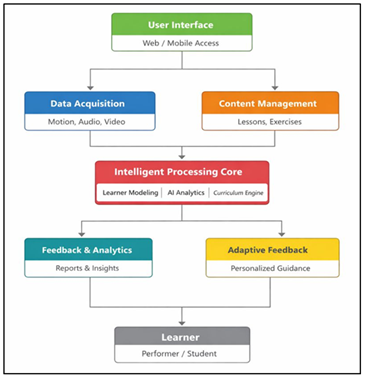
Figure 1 Modular Architecture Flowchart of the Adaptive
Learning Platform for Performing Arts
This layer facilitates the practice sessions, recording, visualisation of feedback and reflection. Below this interface is the data acquisition module which is tasked with the responsibility of identifying multimodal data i.e. motion data, audio signal, and visual expression. These unfinished materials are normalized and sent to analysis units using safe data channels. The architecture is centered around the intelligence layer, which contains machine learning models that could be used to analyze performance, profile learners, and make decisions that are adaptive. All models are autonomous services, which makes it possible to update or replace them without interfering with the whole system.
3.2. Learner Profiling and Skill-Level Modeling
Learner profiling is an essential element of adaptive learning platforms in performing arts that will allow individualized learning, that is, teaching according to personal skills, learning rate, and expressive specifics. The adaptive platforms also create dynamic learner models based on ongoing performance analysis as opposed to traditional profiles that are based on demographics or self-reported data. Such profiles describe cognitive knowledge, technical skills, consistency, and quality of expression at artistic areas. Skill-level modeling is a technique of measuring complex performance attributes with interpretable measures. In music, this can be in terms of pitch, rhythm, tempo, and expressiveness. In dance and theatrical performances, posture, movement fluidity, spatial orientation and gesture understanding are some of the important indicators. The machine learning methods interpolate the past performance data to detect patterns, learning curves, and repeated difficulties, which enables the system to make an approximation of the present level of proficiency and maturity to advance. It is also essential that learner profiles are dynamic categorizations which change as the learner practises.
3.3. Content Adaptation and Curriculum Sequencing Engine
The content adaptation and curriculum sequence engine actualizes individualization in adaptive learning engines in performing arts. Its major usage is to dynamically choose, adjust and prioritize instructional resources according to the profile of learners, skill tracks, and pedagogical goals. Content adaptation is the process of modifying the difficulty, speed, complexity and expressive focus of the exercises to fit the current abilities of the learner. As an example, a learner of rhythm who has problems with rhythmic consistency can be provided with simplified patterns at reduced tempos, whereas a more skilled learner can be given some expressive variation or complicated phrasing. In dance and theatre, the adaptations can focus on isolated movement exercises, polishing of expressive gestures, or entire sequence practices basing on the perceived requirements in the performance. Curriculum sequencing is used to establish the best sequence and timing of learning activities. Rule-based pedagogical constraints can be used along with reinforcement learning to provide a balance between repetition, novelty and mastery. The engine is used to ensure that the prerequisite skills are being reinforced before the introduction of more advanced content and prevent stagnation which can inhibit motivation.
4. Data Acquisition and Multimodal Inputs
4.1. Motion capture and pose estimation data
Embodied performance analysis in adaptive learning platforms of performing arts is based on motion capture and pose estimation. These technologies allow detail the monitoring of body motions, angles of the joints, spatial paths, and time coordination, which are essential in assessing the technique of dances, theatrical movement and instrumental posture. Contemporary systems use either a camera-based pose estimation, depth sensors or wearable inertial units to record skeletal data in real time without limiting the movement of performers. The raw motion data are converted to organized transformations, i.e. joint coordinate trails, motion patterns and conformity quantifiers. Such characteristics enable the platform to measure balance, symmetry, range of motion, smoothness and consistency among repetitions. The temporal segmentation methods also break down performances into meaningful movement phases that allow detailed feedback regarding transitions, timing and emphasis on expressiveness. Notably, pose estimation can be used to perform comparative analysis between the learner performances and reference models, to detect deviation, and to tolerate stylistic variation. Pedagogically, motion capture data allows objective evaluation of the embodied skills that traditionally were assessed in subjective terms by the instructors. This information, when incorporated into adaptive systems, contributes to the provision of individual feedback, specific exercises, and the introduction of increased difficulty.
4.2. Audio, Rhythm, and Tempo Analysis
Adaptive learning platforms in music and rhythmic-based performing arts are based on audio analysis that gives information about timing accuracy, expressive nuance and technical control. Digital signal processing algorithms yield information about features including pitch contours, onset timing, tempo stability, dynamics of loudness, as well as spectral properties. These characteristics enable accurate review of musical quality as well as intentionality in vocal and instrumental music. The rhythm and tempo are aimed to analyze the alignment of the performed notes/beats with reference structures in terms of time. Tempo estimating and beat tracking algorithms determine the derogations in timing, tropical patterns and rhythmic coherence. This analysis is especially useful to the learners who are building metrical consciousness and rhythmical coordination. In addition to the correctness, the expressive timing differences are also modelled, which allows the system to differentiate between the deliberate artistic interpretation and the technical errors. In the long run, aggregate audio information helps to model skills and optimize practice based on the persistent difficulties or plateau stages.
4.3. Visual Expression and Gesture Recognition
Gesture recognition and visual expression provide the communicative and affective aspects of performing arts that are not limited to the movement mechanics and sound. In theatre, dance and expressive music performance, the facial expression, the movement of hands, posture, and spatial orientation are very important. The vision recognition systems consider video streams and determine the patterns of emotional intensity, storytelling and viewer interest. Facial landmarks, gaze direction, hand movement, and body orientation are some of the features obtained through computer vision methods. Gesture recognition models categorize expressive movements, transitions and symbolic movements, which allows one to evaluate clarity, consistency, and the intent behind symbolic movements. Temporal modeling also tracks that development of expression through time, and how performers develop emotional arcs and highlight major points in an act. Visual expression analysis is used in adaptive learning systems to complete information on motion and audio to develop a complete picture of performance quality. The areas of feedback could include limited expressiveness, overblown gestures or lack of body-emotional fit.
5. Machine Learning and AI Techniques
5.1. Supervised and unsupervised learning for skill assessment
Self-guided and guided learning methods are the key elements in the objective evaluation of the performance skills in the adaptive learning platform on the performing arts. Training Supervised learning models are trained on annotated datasets on which expert teachers label performances based on proficiency level, technical accuracy or expressiveness. These models are trained to give mappings between the features that have been extracted, e.g. motion stability, pitch accuracy or gesture consistency, and the predefined categories of assessment. Consequently, the system is able to offer reliable and repeatable assessments that can supplement human judgment that is subjective in nature. Learning without supervision is especially useful in the arts where it is costly, subjective or style varied to label. Figure 2 demonstrates combined supervised and unsupervised models which allow objective and adaptive skill assessment. Latent patterns in performance data are identified by clustering and dimensionality reduction methods and learners grouped around similarities in the dynamics of their movements, time-based behavior, or expressions.
Figure 2
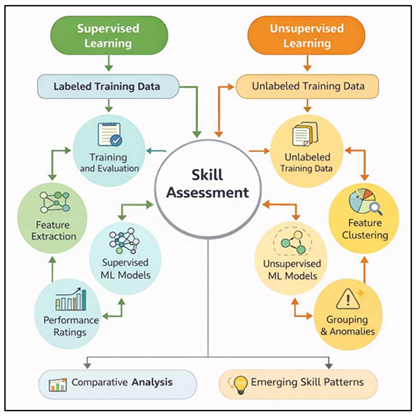
Figure 2 Flowchart of Supervised and Unsupervised
Learning–Based Skill Assessment in Performing Arts
This allows new skill profiles and learning styles to be discovered without the use of strict evaluative criteria. The anomaly detection methods are also used to determine irregularities or deviations in the performance and this assists in differentiating between experimentation and technical difficulty. In combination, the method of supervised and non-supervised instruction assists a composite evaluation plan. Guided models give guided benchmarks that are in agreement with curricular objectives, whereas unsupervised models maintain artistic variability and are used to encourage exploratory learning.
5.2. Reinforcement Learning for Adaptive Practice Scheduling
Reinforcement learning (RL) provides an effective model to use in the optimization of practice schedules in adaptive performing arts education. In contrast to fixed schedules, RL systems view the process of learning as a step-by-step decision-making mechanism where the platform chooses which practice activities, levels of difficulties, and feedbacks to test and when the best learning outcome is achieved is through long-term skill development and learner interaction. The results of the performance and behavioral reactions of the learner serve as the feedback data which is used to plan in the future. Here, the learning environment determines the states of the learner that reflect current skills profile, level of fatigue, and recent development tendencies. Actions are aligned to the choices of instructions, i.e. giving a particular exercise, changing the tempo, or adding expressive variation. Performance improvement, gaining of consistency, and continued engagement all provide rewards. The RL agent over time develops policies that find a balance between repetition and novelty, challenge, and mastery and avoids stagnation and cognitive overload. The reinforcement learning is specifically best applicable in performing arts, where learning is non-linear, and the best practice strategies differ significantly across the learners. As an example, dancers who lack coordination might experience shorter and more concentrated exercises whereas a skilled dancer might need more complicated sequencing to keep progressing.
5.3. Deep Learning Models for Movement, Sound, and Expression Analysis
The learning processes in performing arts can be analyzed by using deep learning models that can process high-dimensional, temporally intense data provided in the learning environment. CNNs have been in application to perform spatial analysis of visual stimuli including pose detection, gesture detection, and facial expression detection. The models include the complex spatial associations and movement patterns, which are hard to encode manually. The temporal convolutional models along with recurrent and long short-term memory networks also aid in analyzing motion sequences and expression change over time. Deep neural networks have been applied to pitch dynamics, rhythm, timbre change and expressive dynamics in audio analysis. Spectrogram-based CNNs and combined temporal models allow one to effectively evaluate musical precision and musical interpretation in different acoustical settings. Multimodal deep learning networks involve audio/visual/motion features, and they are learnt to represent the combined nature of performance.
6. Results and Discussion
Through the experimental observations, it is established that adaptive learning platforms can be of great use in improving the level of engagement, efficiency in practice and Pažin (2024)measurable skill development among learner with regard to performing arts education. Students who obtained adaptive content sequencing and multimodal feedback had a higher improvement in timing accuracy, movement consistency, and expressive coherence than did the students who obtained the learning pathways in a static manner. The practice timing system based on reinforcement learning minimized plateaus in performance through dynamism in balancing repetition and challenge. Multimodal analytics also enhanced objectivity of the assessment, helping instructors with information-based insights without violating the artistic uniqueness.
Table 2
|
Table 2 Comparative Learning Outcomes Before and After Adaptive Platform Adoption (%) |
|||
|
Performance Metric |
Traditional Learning (%) |
Adaptive Platform (%) |
Improvement (%) |
|
Technical Accuracy |
68.4 |
86.9 |
18.5 |
|
Rhythm / Timing Consistency |
65.7 |
88.2 |
22.5 |
|
Movement Precision |
66.1 |
87.4 |
21.3 |
|
Expressive Quality |
70.3 |
89.1 |
18.8 |
|
Practice Efficiency |
62.8 |
84.6 |
21.8 |
Table 2 points out the difference in the learning outcomes obtained under the conventional learning methods and the suggested adaptive learning platform in performing arts. The adaptive platform shows significant progress across every performance parameter, which stresses the usefulness of personalization and data-driven feedback. Figure 3 indicates that adaptive learning is always performing better than traditional approaches on the important KPI measures. Technical accuracy indicates a 18.5% improvement meaning that adaptive feedback mechanisms assist the learners to correct the errors more effectively as compared to traditional teaching.
Figure 3
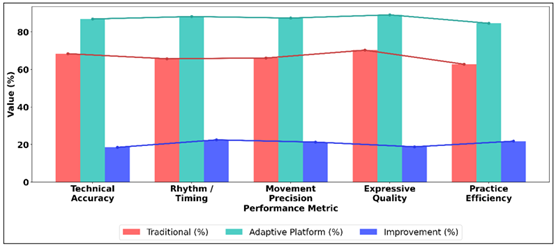
Figure 3 Adaptive Learning Performance Comparison
Rhythm and timing consistency (22.5%), which can be seen as the effect of real-time audio analysis and adaptive practice scheduling on temporal control are the most remarkable. The accuracy of motion increases by 21.3, which gives an indication that body tracking and pose estimation is an important contributor to the enhancement of embodied skills. There is also a 18.8 percent increase in expressive quality, which proves that adaptive systems may be helpful not only to render technical correctness but also to interpret art works and convey emotions.
Table 3
|
Table 3 Impact of AI-Driven Adaptation Techniques on Performing Arts Training (%) |
||||
|
AI Technique Applied |
Skill Mastery Rate (%) |
Error Reduction (%) |
Retention Rate (%) |
Motivation Index (%) |
|
Static Digital Content |
64.9 |
58.2 |
61.4 |
66.1 |
|
Supervised ML-Based Feedback |
78.6 |
71.8 |
74.3 |
79.2 |
|
Multimodal Performance
Analytics |
83.9 |
76.5 |
81.6 |
84.7 |
|
Reinforcement Learning
Scheduling |
88.4 |
82.1 |
86.9 |
89.3 |
Table 3 presents the enhancement effects of AI-based adaptation methods on the results of performing art training. The lowest performance in all indicators is obtained with the use of the static digital content, which indicates the restrictions of the non-personalized and one-directional learning environment. Figure 4 demonstrates that sophisticated AI methods have a considerable positive effect on mastery, retention, motivation, and reduction in errors. The presentation of supervised machine learning-based feedback is of crucial importance in mastering the skill and minimizing error, which explains the importance of data-informed assessment in directing the improvement of the learner.
Figure 4
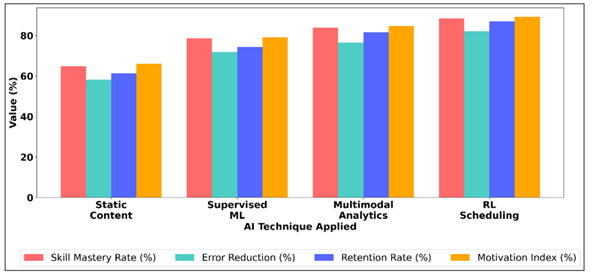
Figure 4 Performance Impact of AI Techniques
Multimodal performance analytics also improve the results by combining the data of motion, audio, and visuals, which leads to the increased retention rates and motivation. This means that learners get the advantage of the holistic feedback that represents embodied and expressive aspects of performance. The greatest profits are noted on the reinforcement learning-based scheduling, which has reached a 88.4 percent skill mastery and an 82.1 percent rate of error reduction. Figure 5 presents the comparison of AI techniques between several learning outcomes and demonstrates their effectiveness. The implications of these findings are that adaptive practice sequencing is useful in the balancing of repetition, challenge and engagement.
Figure 5
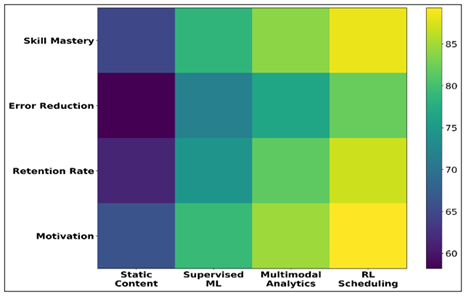
Figure 5 AI Technique Effectiveness Matrix
In general, one can see that the table presents a natural development: the more adaptive and aware of a learner AI techniques, the greater the training efficiency is. This supports the fact that intelligent adaptation strategies are important in achieving long-term learning, motivation, and skill lingerence in performing arts education.
7. Conclusion
Adaptive learning platforms are an innovative breakthrough into the field of performing arts teaching through the combination of pedagogical theory, multimodal data collection, and artificial intelligence into a single, learner-focused system. The classical studio-based training is also needed to help in artistic mentorship and cultural transmission, but it is not usually very scalable, objectively evaluated, and constantly personalized. The given adaptive methodology handles all of these shortcomings through dynamic modeling of learner abilities, the analysis of embodied and expressive performance information, and real-time modification of teaching directions. Adaptive platforms also closely correspond to the iterative and practice-oriented approach to the development of artistic skills since the system design is based on constructivist and experiential theories of learning. The use of multimodal inputs, such as motion capture, audio analysis, and visual expression recognition, allow capturing the holistic representation of performance with references to cognitive, physical, and affective aspects of learning. The use of machine learning can aid in more delicate skill evaluation, whereas reinforcement learning helps to optimize the practice planning to maintain engagement and improve the acquisition of skills faster. The deep learning models also increase the ability of the system to comprehend multi-level patterns of movement, sound and expression with feedback that is accurate and pedagogically valuable. Notably, adaptive learning systems are not meant to substitute human teachers, but to supplement their knowledge.
CONFLICT OF INTERESTS
None.
ACKNOWLEDGMENTS
None.
REFERENCES
Aljehani, S. B. (2024). Enhancing Student Learning Outcomes: The Interplay of Technology Integration, Pedagogical Approaches, Learner Engagement, and Leadership Support. Educational Administration: Theory and Practice, 30(4), 418–437. https://doi.org/10.53555/kuey.v30i4.1485
Anurogo, D., La Ramba, H., Putri, N. D., and Putri, U. M. P. (2023). Digital Literacy 5.0 to Enhance Multicultural Education. Multicultural Islamic Education Review, 1(2), 109–179. https://doi.org/10.23917/mier.v1i2.3414
Chaudhry, S., Tandon, A., Shinde, S., and Bhattacharya, A. (2024). Student Psychological Well-Being in Higher Education: The Role of Internal Team Environment, Institutional, Friends and Family Support, and Academic Engagement. PLOS ONE, 19(1), e0297508. https://doi.org/10.1371/journal.pone.0297508
El-Sabagh, H. A. (2021). Adaptive E-Learning Environment Based on Learning Styles and its Impact on Developing Students’ Engagement. International Journal of Educational Technology in Higher Education, 18, Article 53. https://doi.org/10.1186/s41239-021-00289-4
Gligorea, I., Cioca, M., Oancea, R., Gorski, A.-T., Gorski, H., and Tudorache, P. (2023). Adaptive Learning Using Artificial Intelligence in E-Learning: A Literature Review. Education Sciences, 13(12), 1216. https://doi.org/10.3390/educsci13121216
Joseph, G. V., Athira, P., Thomas, M. A., Jose, D., Roy, T. V., and Prasad, M. (2024). Impact of Digital Literacy, Use of AI Tools and Peer Collaboration on AI-Assisted Learning: Perceptions of University Students. Digital Education Review, 45, 43–49. https://doi.org/10.1344/der.2024.45.43-49
Kim, T. W. (2023). Application of Artificial Intelligence Chatbots, Including ChatGPT, in Education, Scholarly Work, Programming, and Content Generation and its Prospects: A Narrative Review. Journal of Educational Evaluation for Health Professions, 20, Article 38. https://doi.org/10.3352/jeehp.2023.20.38
Mahmoud, M. H., and Othman, R. (2023). Performance Management System in Developing Countries: A Case Study in Jordan. Journal of Public Affairs, 23(4), e2864. https://doi.org/10.1002/pa.2864
Mahmoud, M. H., and Othman, R. (2024). Effects of New Public Management Reforms on Human Resource Practices: A Case Study in Jordan. Management and Labour Studies, 49(2), 149–176. https://doi.org/10.1177/0258042X231185216
Maier, U., and Klotz, C. (2022). Personalized Feedback in Digital Learning Environments: Classification Framework and Literature Review. Computers and Education: Artificial Intelligence, 3, 100080. https://doi.org/10.1016/j.caeai.2022.100080
Obaid, T. (2020). Factors Driving E-Learning Adoption in Palestine: An Integration of Technology Acceptance Model and IS Success Model (SSRN Working Paper). SSRN. https://doi.org/10.2139/ssrn.3686490
Pažin, L. (2024). Using Platforms and Tools to Create Business Intelligence. *ShodhAI: Journal of Artificial Intelligence, 1*(1), 68–75. https://doi.org/10.29121/shodhai.v1.i1.2024.10
Radif, M. (2024). Artificial Intelligence in Education: Transforming Learning Environments and Enhancing Student Engagement. Educational Sciences: Theory and Practice, 24(1), 93–103.
Rahman, M. M., and Watanobe, Y. (2023). ChatGPT for Education and Research: Opportunities, Threats, and Strategies. Applied Sciences, 13(9), 5783. https://doi.org/10.3390/app13095783
Sajja, R., Sermet, Y., Cikmaz, M., Cwiertny, D., and Demir, I. (2024). Artificial Intelligence-Enabled Intelligent Assistant for Personalized and Adaptive Learning in Higher Education. Information, 15(10), 596. https://doi.org/10.3390/info15100596
Wang, M., and Guo, W. (2023). The Potential Impact of ChatGPT on Education: Using History as a Rearview Mirror. ECNU Review of Education. https://doi.org/10.1177/20965311231189824
|
|
 This work is licensed under a: Creative Commons Attribution 4.0 International License
© ShodhKosh 2026. All Rights Reserved.