ShodhKosh: Journal of Visual and Performing ArtsISSN (Online): 2582-7472
|
|
AI-Generated Learning Resources for Creative Fields
Dr. Kunal Dhaku Jadhav 1 , Ananta Narayana 2
 , Leena Bharat Chaudhari 3
 , Monisha J. 4, Vishal Ambhore 5
 , Ganesh Chandrabhan Shelke 6
1 Department
of Lifelong Learning and Extension, University of Mumbai, Maharashtra, India
2 Assistant
Professor, School of Business Management, Noida International University, Greater
Noida 203201, India
3 Department of Electronics and Telecommunication Engineering, Bharati
Vidyapeeth's College of Engineering, Lavale, Pune, Maharashtra, India
4 Assistant Professor, Meenakshi College of Arts and Science, Meenakshi
Academy of Higher Education and Research, Chennai, Tamil Nadu 600089, India
5 Assistant Professor, Department of E and TC Engineering Vishwakarma
Institute of Technology, Pune, Maharashtra, 411037, India
6 Department of Information Technology, Vishwakarma Institute of
Technology, Bibwewadi, Pune - 411037, Maharashtra, India
|
|
|
ABSTRACT |
|
|
With the rapid
development of artificial intelligence, the production and distribution of
educational material have changed, especially in such creative industries as
art, design, music, media, and architecture. The paper explores how
AI-generated learning tools can be used to improve creative education through
offering adaptive, multimodal, and personalized teaching resources. In
contrast to more conventional tools of a static nature, generative AI systems
have the capability to create tutorials, design prompts, visual exemplars,
musical exercises, and reflective critiques in a dynamic fashion based on the
profile of a specific learner. The article can be seen to provide a
well-developed conceptual framework based on the advances in artificial
intelligence in education, generative models, and creativity-support tools to
describe how AI may support the development of technical skills as well as
creative exploration. A system architecture that is modular is suggested,
which includes creative knowledge repositories, model training/fine-tuning
pipelines, and personalization mechanisms that occur based on the learner
behavior and performance data. The methodology specifies the combination of
quantitative measures of learning effectiveness and creativity with the
qualitative user studies with the involvement of students and educators
associated with various creative fields. The need to compare results shows
that the engagement, conceptual knowledge, and efficiency of practice have
increased and can be measured when AI-generated resources are used in
addition to traditional teaching resources. Nevertheless, it is also possible
to note that the study critically analyzes such issues as the alignment of
the pedagogy, its quality assurance, the cultural bias, and the threat of
over-reliance on the auto-generation of the content. |
|||
|
Received 09 September 2025 Accepted 05 December 2025 Published 17 February 2026 Corresponding Author Dr. Kunal
Dhaku Jadhav, jdkunal@mu.ac.in DOI 10.29121/shodhkosh.v7.i1s.2026.7080 Funding: This research
received no specific grant from any funding agency in the public, commercial,
or not-for-profit sectors. Copyright: © 2026 The
Author(s). This work is licensed under a Creative Commons
Attribution 4.0 International License. With the
license CC-BY, authors retain the copyright, allowing anyone to download,
reuse, re-print, modify, distribute, and/or copy their contribution. The work
must be properly attributed to its author.
|
|||
|
Keywords: Artificial Intelligence in Education, Generative AI,
Creative Learning Resources, Personalized Learning, Multimodal Content
Generation, Creative Pedagogy |
|||



1. INTRODUCTION
Introduction of artificial intelligence (AI) in education has brought a radical change in the way knowledge is generated, communicated and used. Outside traditional spheres of science, engineering, and other language-related subjects, AI continues to penetrate creative process or creative arts, such as art, design, music, media studies, and architecture. These subjects are historically based on experientialism, mentoring, practice and trial and error, and subjectivity which are difficult to scale and individualize in formal education systems. The creation of AI based learning materials is an exciting solution to these issues that will allow the creation of dynamic, adaptable and learner-focused educational material designed to support creative practices. New developments in generative AI, including large language models, image synthesis systems and audio generation systems, have enabled the automatic generation of tutorials, design briefs, visual references, musical exercises and constructive critiques Chandrasekera et al. (2025). The AI-generated resources do not require as much time and effort as traditional textbooks or recorded lectures because they can react immediately to inputs made by learners, their creative intentions, and skills. Such flexibility is especially useful within creative education, as students usually need more individual attention, discovery questions, and situational feedback as opposed to prescriptive teaching. Consequently, AI-based learning tools can improve technical skills and creative assurance. Education that is creative also has access, diversity, and consistency issues in the access and instructional consistency Tsidylo and Chele (2023). Intermediate-level mentorship and studio learning environments are commonly taxing in terms of resources and are also limited by geography. Scalable on-demand learning tools that are generated by AI can therefore democratize creative education by offering support to learners in various cultural, linguistic, and socioeconomic conditions Epstein and Hertzmann (2023). Figure 1 demonstrates a scalable AI structure that can be used to create creative learning resources that are personalized and multimodal. As an example, potential designers or musicians can be exposed to AI-produced training content, stylistic inspiration, and feedback systems, without having to rely on the availability of instructors all the time. This transition is congruent to larger purposes of education such as inclusivity, life long learning, and digital economy skills development.
Figure 1

Figure 1 Architecture of AI-Generated Learning Resources for
Creative Fields
Regardless of these prospects, there are pedagogical and ethical issues associated with the introduction of AI-generated learning resources in creative disciplines. Creativity is a human phenomenon, which exists culturally and is driven by emotions, and AI systems are based on learning patterns and statistical inferences. There is still a worry of originality, creative reliance, cultural prejudice in the training information, and the danger of homogenizing artistic expression Alzubi et al. (2025). Moreover, the aspects of efficiency or automatization will not be sufficient to gauge the educational effectiveness; the compliance with the learning goals, the development of creativity, and the ability to think critically are to be considered. All of these issues require a systematic analysis of how AI-generated resources must be created, reviewed, and incorporated into creative courses. This paper will discuss these problems by providing a full framework of AI generated learning resources in creative disciplines Chen (2025). It discusses artificial intelligence conceptual frameworks in learning and generative AI studies, placing them in the context of pedagogical needs of creative fields Chi et al. (2025).
2. Conceptual Foundations and Related Work
2.1. Artificial intelligence in education (AIED)
Artificial Intelligence in Education (AIED) is a research field that is interdisciplinary in nature and involves designing, developing and testing AI-based systems to assist with teaching, learning, and making educational decisions. There were early AIED systems that focused on rule-based tutoring, intelligent tutoring system, and adaptive testing, which focused on simulating human instruction by using preset pedagogical rules Gasaymeh et al. (2024). As machine learning and data analytics have evolved, more modern AIED systems are becoming based on personalization, learner modeling, and predictive analytics (data-driven) to customize content, pacing, and feedback to learners. AIED changes the way creative education operates, where knowledge transmission is substituted with facilitating exploration, experiment, and reflective practice Habib et al. (2024). Adaptive learning environment can study interactions of learners, creative decisions, and performance patterns and suggest individualized learning trajectories and materials. The AI-driven feedback mechanisms can serve as the source of formative feedback, define areas of weakness, and stimulate a cycle of improvement, which is the core part of the studio-based and practice-based learning. Similar studies in the field of AIED also emphasize the significance of pedagogical integrity via learner-centered design, explainability, and human-in-the-loop. The research highlights that AI systems must be used to supplement a teacher but not to substitute him or her in the evaluation and guidance aspect Caporusso (2023).
2.2. Generative AI Models for Content Creation
Generative AI models constitute a substantial innovation in the field of artificial intelligence providing the machine with the ability to generate content instead of just interpreting the existing one. Examples of these models are large language models to generate text, diffusion and generative adversarial networks generated images and visual artifacts and the neural audio synthesis system generated music and sound. Being trained on large-scale multimodal data, generative models can learn patterns, styles, and structures underlying them, enabling it to generate coherent and contextually relevant outputs Zheng et al. (2024). Generative AI has been used in educational settings where automatic content (generation of explanations, quizzes, examples, and feedback) can be generated. Generative systems are dynamic, unlike the static digital resources, they can be configured to change outputs in response to prompting by the learner, level of difficulty or any other creative goals. It is of special importance to creative education, where frequently open-ended questions, stylistic variability, and refinement in responses are needed by the learners. Connected studies emphasize the importance of fine-tuning and timely engineering in order to include generative outputs with pedagogical goals Oc et al. (2024). Generative models can be used to create content that has no instructional or cultural sensitivity without proper constraints.
2.3. Creative Fields: Art, Design, Music, Media, and Architecture
Experience and experimentation Aesthetics and technical skill Experiential learning and practice are features of creative disciplines, which include art, design, music, media, and architecture. Traditionally, education in these areas is based on the studio, instruction, and critique and project-based evaluation. Although they are efficient, these methods are resource-consuming and usually not very scalable and accessible. Learners also develop at varied creative and technical rates and therefore standardised learning becomes ineffective Kanont et al. (2024). Similar research on creative education has put forth the significance of exploration, originality and reflective practice. Correctness is not the only measure of learning outcomes but it is expressed in terms of quality, conceptual clarity and innovation. Consequently, technologies in arts and other creative disciplines have to be flexible and have many correct answers. Earlier online technologies, like design programs and music creation websites, were more concerned with the implementation than the education Hazzan-Bishara et al. (2025). With the advent of AI-created learning materials, the concept behind this new paradigm of creating guidance, feedback, and inspiration is entrenched directly into creative processes. Table 1 is a comparison of earlier AI practices, fields, techniques, results, and the research gaps. Learning studies show that engagement and learning ability are increased when students get contextual cues, visual allusions or practice activities within the context of their creative intention.
Table 1
|
Table 1 Comparative Analysis of Related Work on AI-Generated Learning Resources for Creative Fields |
||||
|
Creative Domain |
AI Technique Used |
Type of Learning Resource |
Evaluation Method |
Limitations |
|
Design Education |
Rule-Based ITS |
Text tutorials |
Pre/Post Tests |
Limited creativity support |
|
Music Learning Hsiao and Tang (2025) |
RNN |
Audio exercises |
Performance accuracy |
Style rigidity |
|
Visual Arts |
CNN |
Image exemplars |
Expert review |
Dataset bias |
|
Media Studies |
NLP Models |
Automated feedback |
User surveys |
Shallow critique depth |
|
Architecture |
GAN |
Concept visualization |
Design rubrics |
Lack of explainability |
|
Creative Writing Cheng (2023) |
Transformer |
Prompt generation |
Creativity scoring |
Risk of imitation |
|
Art Education |
Diffusion Models |
Style exploration |
Peer assessment |
Cultural bias concerns |
|
Music Composition |
VAE |
Melody generation |
Expert evaluation |
Limited emotional nuance |
|
Graphic Design Kim et al.
(2025) |
Multimodal AI |
Visual + text content |
Engagement analytics |
High computational cost |
|
Media Production |
GAN + NLP |
Storyboard creation |
Task completion rate |
Quality inconsistency |
|
Performing Arts |
Reinforcement Learning |
Adaptive exercises |
Retention analysis |
Complex system tuning |
|
Design & Art Cheng (2024) |
LLM + Diffusion |
Personalized tutorials |
Mixed-method study |
Over-reliance risk |
|
Multi-Creative Fields Chahal et al.
(2025) |
Generative Multimodal AI |
Text, Image, Audio Resources |
Quantitative + Qualitative |
Requires educator oversight |
3. AI Techniques for Generating Learning Resources
3.1. Text-based generation (tutorials, critiques, prompts)
Generative AI methods that use text play one of the primary roles in creation of instructional and reflective learning materials in creative learning. The large language models can also create structured tutorials, step-by-step instructions, design briefs, creative prompts, and contextual critiques using inputs of learners. These systems combine linguistic patterns, domain knowledge and stylistic conventions to produce content which is compatible with particular creative disciplines, e.g. visual arts, creative writing, design theory, or media studies. When applied in learning settings, AI-generated tutorials can be made more basic and detailed based on the level of the learner, allowing new learners to get basic instructions and more experienced learners to get into conceptual or theoretical debates. Creative industries have been the most effective in terms of the value of critique generation because learners are offered with formative feedback that identifies their strengths, provides feedback to improve, and fosters the process of reflection. AI-generated critiques have the ability to make references to compositional principles, stylistic consistency, or conceptual coherence, advocating creative development in progression. Immediacy also promotes creativity as it provides a wide range of initial situations, limitations or themes that trigger exploration.
3.2. Image and Visual Content Generation (Illustrations, Concept Art)
The ability to generate images and visual content has greatly extended the opportunities of the learning materials in creative subjects of a visual nature. Illustrations, diagrams, concept art and stylistic variations can be generated using generative models like diffusion-based image synthesis systems as a result of a textual description or reference image. They are also especially valuable in education in art, design, media and architecture, where visual exemplifiers are very important in the study of form, composition, use of color, and space. Visual results can be compared and analyzed by visual alternatives of the design or historical styles, as well as conceptual interpretations, and it is possible to use AI to show multiple variants of the visual work. Generative models may be used within architectural and design education to visualize ideas, space, or materials at an early stage, ideate, and solve problems. In the case of art education, students do not need to perform a lot of manual rendering to learn how to handle the stylistic changes or the changes in composition. The literature indicates that visual generation tools are best applied in the context of pedagogical processes instead of being applied as independent creative engines. The ethics and reference datasets as well as educator-defined constraints can assist in originality and cultural sensitivity.
3.3. Audio and Music Generation for Learning and Practice
Audio and music generating methods allow developing dynamic learning tools in music education, sound design, media production, and performance training. Both audio synthesis and symbolic music generation AI models may generate melodies, rhythms, harmonies, and sound textures in ways that respond to the tastes of the learner, or to his or her abilities or learning objectives. Trained on large musical and acoustic input, these systems have the ability to learn the patterns of style, to learn temporal structure, as well as the expressive subtleties. Figure 2 indicates that AI-based audio generation assists with adaptive practice and individual learning of music. AI-generated audio can be used in the educational setting by encouraging practice by customizing exercises, creating accompaniment pieces, or changing the tempo of a performance.
Figure 2
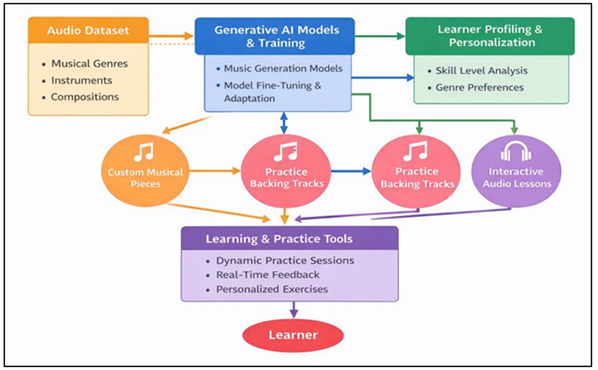
Figure 2 AI-Based Audio and Music Generation for Learning and
Practice
Adaptive backing tracks enable learners to rehearse, learners can explore different variations of musical phrases, or generated pieces of music to learn theoretical concepts like harmony and rhythm. Generative audio tools can be used as a means to experiment with sound effects and ambient textures as well as vocal samples in the study of sound design in the field of sound design education. The corresponding studies point out the significance of the interactive control and feedback systems, which allow students to adjust the parameters and listen to the sound results. Other ethical issues such as authorship, originality and cultural representation are also important in music generation. As a learning resource, AI-generated audio systems offer an opportunity to explore and support learning and increase listening capacities, technical abilities, and creative experimentation without downgrading human musical expression and interpretative agency.
4. System Architecture and Framework Design
4.1. Data sources and creative knowledge repositories
The usefulness of AI generated learning tools in creative areas is significantly influenced by the quality, diversification, and sequence of data input sources and knowledge storage areas. Such repositories combine diverse data, such as textual instructions, design manuals, artistic reviews, musical masterpieces, audio files, visual works, architectural plans as well as multimedia case studies. AI models are given contextual background based on curated datasets obtained in educational institutions, cultural archives, and open creative platforms. Creative knowledge repositories do not concern themselves with immobile information; process-oriented information such as design process, design revisions, and annotated design choices is also present. Such contextual information enables AI systems to model final outcomes, but it is necessary to model creative processes, which are important in educational use. Style, genre, cultural context, and difficulty level metadata are yet another tool that promotes pedagogical alignment and content generation on a targeted basis. Other related architectural designs are interoperable and modular repositories that can be updated as the creative practices change. The metadata that is important to the ethical use and originality is version control, provenance, and licensing. The teacher role in dataset curation is beneficial to reduce the bias and make sure that the objectives of the curriculum are met.
4.2. Model Training, Fine-Tuning, and Customization
The key focus of the alignment of the generative AI systems with the pedagogical and creative needs of the educational contexts is model training and fine-tuning. Ready-trained models provide general linguistic, visual, or auditory, but in practice, they are not sensitive to domain (in order to be useful in creative education). The curated creative datasets can be fine-tuned to make models internalize instructions, styles, and terms used in a discipline, stylistic rules, and patterns of instruction applicable to art, design, music, media, and architecture. Some of these customization strategies are supervised fine-tuning, educator-feedback reinforcement learning, and prompt conditioning. These strategies make it possible to make generative behavior adapt to curriculum objectives, the level of learner proficiency, and institutional conventions. As an example, the models may be trained to produce the tutorials that are friendly to beginners, the conceptual criticism, or the culturally contextualized prompts. To generate pedagogical coherence and conform to ethical standards, constraint based generation and content filters are usually included. Associated literature emphasizes the need to engage in lifelong learning and refinement in which the outputs of models are assessed and updated as the learners interact and as the educator reviews the results of the interactions and assessment of the educator.
4.3. Personalization and Learner Profiling Modules
Learner profiling modules and personalization allow the AI-generated learning materials to dynamically be adjusted to the creative learner. These modules gather and process the information concerning the preferences of the learners, their interactions, the development of skills, as well as creative outputs. Building learner profiles will allow AI systems to propose the use of appropriate learning material, varying levels of difficulty, and create individualized prompts or feedback in accordance with a creative objective of a learner. In creative education, learner profiling is no longer achieved in terms of cognitive measures, but through stylistic inclinations, expressive preferences, and learning preferences. As an example, a learner with an experimental design inclination can be given open-ended questions, and a learner with an interest in technical mastery can be taken through a structured drill. Adaptive feedback loop enables the system to improve recommendations as learners change to enable a long term process of developing skills. Other studies related to the field highlight the ethical principles of data privacy, transparency, and learner autonomy. The mechanisms of profiling must be readable and modifiable so that learners and educators could comprehend and impact personalization policies.
5. Challenges and Limitations
5.1. Quality control and pedagogical alignment
A large challenge of the implementation of AI-generated learning resources in the creative domain is how to maintain a consistent quality and pedagogical alignment. The generative models can generate stylistically attractive but pedagogically inconsistent, over-generic or against the particular purpose of learning. Creative education takes the form of a content that is both instructive and free when compared to structured subjects with clear correct answers and hence quality assurance is more intricate. Pedagogical alignment requires AI-generated tutorials, prompts, and feedbacks to be based on curriculum objectives, student level of proficiency and evaluation requirements. The AI systems can give false guidance or wrong examples because of the lack of educator-imposed limitations and validation systems. Similar studies put forward the importance of human-in-the-loop models in which instructors are reviewing, curating, and contextualizing AI-generated content. Human judgment cannot be replaced by automated validation methods, including rubric alignment test and rule-based filters, but they can help. The other one is maintaining consistency within the learning sessions. Unpredictability in the generative outputs can be confusing to the learners when there is a shift in instructional strategies or terminologies. Control of versions, tagging of content and standardized templates of pedagogy are thus very crucial. To tackle the issue of quality control and alignment, a more collaborative method will be needed that incorporates AI potentials with the knowledge of education so that AI-generated materials would be used as a supplement to the formal learning experience without compromising the discovery-driven aspect of creative learning.
5.2. Bias, Originality, and Cultural Sensitivity
The ethical and creative issues associated with AI-generated learning resources are bias, originality, and cultural sensitivity. Generative models are learned with huge amounts of data which can be biased towards cultural majorities, preferences of style, or historical disproportions. Subsequently, AI-generated content can inadvertently favor the interests of some forms of art, design, or music and discriminate against the other ones. Such bias in creative education may restrict the exposure to different ways of thinking and uphold homogenized creative standards. Another issue is that of originality where generative models learn based on the patterns of the existing works. The learners might not be able to differentiate between inspiration and imitating, or they may question the issue of authorship and ownership of creativity. Unless directed towards the right path, AI-generated examples and prompts might promote imitation, instead of critical inquiry and exploration. Similar literature emphasises the need to deal with such problems by having curated datasets that are diverse and having clear practices of attribution. The supervision of AI is crucial to put AI outputs into a cultural and historical context. Moreover, the learners are to critically think about the AI-generated content, its limitations, and assumptions. In teaching original methods, the attentive attitude towards bias, creativity and cultural sensitivity can help educational systems to produce responsible AI-use, which contributes to diversity, ethical creativity and inclusive learning conditions instead of limiting artistic identity.
5.3. Over-Reliance on AI-Generated Content
Excessive use of AI-based learning materials is a great threat to the emergence of creative thinking and problem-solving abilities. Although AI tools can be helpful in offering effective advice, suggestions, and feedback, overuse can squash learner motivation to experiment, struggle, and reflect all of which are core components of creative development. In creative areas, learning has a tendency to come out of ambiguity, trial-and-error and personal interpretation and this cannot be completely automated. It is also possible that learners can use AI-generated outputs as authoritative and discourage critical judgment and independent decision-making. This force may also weaken trust and reduce the importance of human mentorship, peer criticism, and team learning. Teachers can also have issues with the introduction of AI products that may be seen as replacements instead of aids to teaching. Related studies propose the idea of balanced integration approaches that make AI-generated resources scaffolding resources as opposed to end-solutions. Clear pedagogical and reflective exercises, as well as assessment designs, may persuade learners to consider AI outputs and challenge assumptions, as well as form their own creative voice. The solutions to the preservation of agency and authenticity are human-in-the-loop models and the intentional bankruptcy of automation. The over-reliance issue needs to be solved through the focus on AI literacy, creative autonomy, and reflective practice to make sure that AI-enhanced education will not weaken creative capacity but, on the contrary, reinforce it.
6. Result and Discussion
The findings indicate that AI made learning resources can greatly contribute to engagement, flexibility, and creative practice in art, design, music, media and architecture education. AI-aided learners demonstrated a better conceptual grasp, more rapid skill development and a greater level of consistency in practice than traditional media. Individualized prompts, customizable tutorials and multimodal feedback led to long term motivation and greater exploratory behavior. Teachers said they had better and more flexible instructional capacity, especially in delivering formative feedback. Nevertheless, the inconsistency of content quality and the necessity of the pedagogical control were observed. It is pointed out in the discussion that AIs could be most useful as part of organized curricula and managed by teachers as tools to aid creativity and should not take the place of an instructor.
Table 2
|
Table 2 Impact of AI-Generated Learning Resources on Learning Effectiveness (%) |
|||
|
Learning Metric |
Traditional Resources (%) |
AI-Generated Resources (%) |
Improvement (%) |
|
Conceptual Understanding |
68.2 |
87.6 |
19.4 |
|
Skill Acquisition Rate |
65.9 |
86.3 |
20.4 |
|
Practice Efficiency |
62.7 |
84.8 |
22.1 |
|
Learner Engagement |
66.4 |
88.9 |
22.5 |
|
Retention of Concepts |
64.1 |
82.7 |
18.6 |
Table 2 outlines the quantitative effects of AI-generated learning materials on the effectiveness of learning on various pedagogical facets. The largest gains concern the learner engagement (22.5) and practice efficiency (22.1) showing that adaptive and interactive AI-oriented materials can effectively stimulate the continuous involvement and diminish the time of unproductive practice. Figure 3 points to a better level of engagement, efficiency, and acquisition of skills with the help of AI-generated resources. Individualized tutorials, prompt cues, and on-the-fly feedback probably lead to these improvements through the customization of learning tasks in regards to personal abilities and creative outcomes.
Figure 3
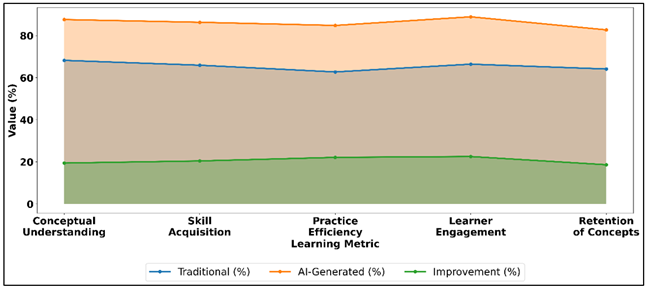
Figure 3 Learning Performance Trends with AI-Generated
Resources
The rate of improvement in the skills (20.4 percent) is significant and indicates that the learners who had the support of AI-generated resources enhanced their skills faster in the transition between the conceptual and practice application. This is more so in the creative industries where repeated trial and error and practice are critical. Figure 4 is a comparative study of traditional and AI learning, and it indicates a steady improvement in all metrics.
Figure 4
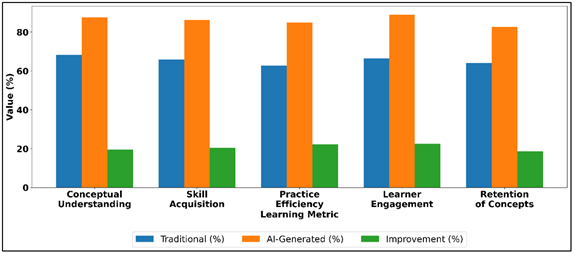
Figure 4 Comparison of Learning Metrics: Traditional vs
AI-Generated
The increase in the conceptual knowledge (19.4%) is an indication that dynamically created explanations and examples are more effective in enabling the learners to understand abstract creative principles than the static ones. In spite of the fact that compared to other metrics the retention of concepts (18.6%) has somewhat less improvement, the gain is still quite significant, which is due to the contribution of adaptive reinforcement and revision strategies.
Table 3
|
Table 3 Creative Performance Outcomes with AI-Generated Learning Support (%) |
|||
|
Creative Performance
Indicator |
Without AI (%) |
With AI (%) |
Gain (%) |
|
Idea Diversity |
69.3 |
88.1 |
18.8 |
|
Originality Score |
71.6 |
86.9 |
15.3 |
|
Conceptual Coherence |
73.4 |
89.5 |
16.1 |
|
Expressive Quality |
70.8 |
90.2 |
19.4 |
|
Iterative Improvement Rate |
67.9 |
91.4 |
23.5 |
Table 3 shows how AI-generated learning support affects the indicators of main creative performance. The greatest increase is in the iteration rate of improvement (23.5%), which illustrates how sustained and iterative feedback and prompts provided by AI promote repetitive refinement and reflective practice. Figure 5 illustrates the fact that AI assistance has a large boost on creativity, iteration, and expressive quality. This observation fits into the iterative characteristics of creative learning where development can be seen to be achieved through trial and error cycles.
Figure 5

Figure 5
Creative
Performance Enhancement with AI
The improvements in the quality of expressiveness (19.40), the variety of ideas (18.80) mean that AI-generated prompts, visual suggestions, and illustrations are efficient in encouraging the discussion of new ideas and expression options. Students are subjected to greater innovation opportunities, and they are not obsessed with one answer. The increase in conceptual coherence (16.1) shows that AI-supported instructions can assist learners to organize and present their creative concepts in a better manner. In the meantime, the improvement in originality score (15.3%), albeit at lower levels, is significant and shows a compromise between inspiration and an independent creative decision.
7. Conclusion
This paper discussed the application of AI-generated learning materials to creative subjects, with a focus on how these materials are likely to change the approaches to teaching and learning art, design, music, media, and architecture. Using the developments in artificial intelligence and learning applications such as AI-driven systems can create adaptive, multimodal, and personalized learning content responsive to the needs and creative intentions of individual learners. The presented framework shows how the structured data repositories, model training that is tailored to the specifics of the learner, and the learner profiling modules contribute to the creation of effective creative learning processes. The results suggest that AI-created materials might be used to increase the level of engagement, conceptual understanding, and efficiency of practice, especially when the learners are provided with prompts related to context, visual cues, and adaptive responses. Critically, the findings also confirm the fact that creativity is not a case that can only be minimized to automated production. The role of human educators, peer interaction and reflective practice can still play a relevant role in the development of originality, cultural awareness and critical thinking. Such issues as quality assurance, biasness, originality, and over reliance reveal the importance of responsible and transparent system design. When AI-generated outputs are promoted to be critically discussed by the learners, these systems may become the drivers of exploration instead of imitation.
CONFLICT OF INTERESTS
None.
ACKNOWLEDGMENTS
None.
REFERENCES
Alzubi, A. A. F., Nazim, M., and Alyami, N. (2025). Do AI-Generative Tools Kill or Nurture Creativity in EFL Teaching and Learning? Education and Information Technologies, 30, 15147–15184. https://doi.org/10.1007/s10639-025-13409-8
Caporusso, N. (2023). Generative Artificial Intelligence and the Emergence of Creative Displacement Anxiety: A Review. Research in Psychology and Behavior, 3, Article 10795. https://doi.org/10.53520/rdpb2023.10795
Chahal, J., Dagar, V., and Shoukat, M. H. (2025). Sustainable Entrepreneurship: Examining Stimulus–Organism–Response to the Nexus of Environment, Education, and Motivation. Management Decision, 63(6), 1391–1416. https://doi.org/10.1108/MD-04-2024-0845
Chandrasekera, T., Hosseini, Z., and Perera, U. (2025). Can Artificial Intelligence Support Creativity in Early Design Processes? International Journal of Architectural Computing, 23(1), 122–136. https://doi.org/10.1177/14780771241254637
Chi, Y. N., Chi, O., & Ngo, C. (2025). Exploring Public Views on Oceanic and Shoreline Ecosystem Threats Through Machine Learning. ShodhAI: Journal of Artificial Intelligence, 2(1), 10–26. https://doi.org/10.29121/shodhai.v2.i1.2025.27
Chen, L. (2025). Unlocking the beat: How AI Tools Drive Music Students’ Motivation, Engagement, Creativity, and Learning Success. European Journal of Education, 60, Article e12823. https://doi.org/10.1111/ejed.12823
Cheng, Y.-M. (2023). How Different Categories of Gamified Stimuli Affect Massive Open Online Courses Continuance Intention and Learning Performance? Mediating Roles of Internal Experiences. Social Science Computer Review, 41(2), 495–527. https://doi.org/10.1177/08944393221111928
Cheng, Y.-M. (2024). What Makes Learners Enhance Learning Outcomes in MOOCs? Exploring the Roles of Gamification and Personalization. Interactive Technology and Smart Education, 21(3), 308–330. https://doi.org/10.1108/ITSE-05-2023-0097
Epstein, Z., and Hertzmann, A. (2023). The Investigators of Human Creativity: Art and the Science of Generative AI. Science, 380(6650), 1110–1111. https://doi.org/10.1126/science.adh4451
Gasaymeh, A.-M. M., Beirat, M. A., and Abu Qbeita, A. A. (2024). University Students’ Insights of Generative Artificial Intelligence (AI) Writing Tools. Education Sciences, 14(10), Article 1062. https://doi.org/10.3390/educsci14101062
Habib, S., Vogel, T., Anli, X., and Thorne, E. (2024). How Does Generative Artificial Intelligence Impact Student Creativity? Journal of Creativity, 34, Article 100072. https://doi.org/10.1016/j.yjoc.2023.100072
Hazzan-Bishara, A., Kol, O., and Levy, S. (2025). The Factors Affecting Teachers’ Adoption of AI Technologies: A Unified Model of External and Internal Determinants. Education and Information Technologies, 30, 15043–15069. https://doi.org/10.1007/s10639-025-13393-z
Hsiao, C.-H., and Tang, K.-Y. (2025). Beyond Acceptance: An Empirical Investigation of Technological, Ethical, Social, and Individual Determinants of GenAI-Supported Learning in Higher Education. Education and Information Technologies, 30, 10725–10750. https://doi.org/10.1007/s10639-024-13263-0
Kanont, K., Pingmuang, P., Simasathien, T., Wisnuwong, S., Wiwatsiripong, B., Poonpirome, K., Songkram, N., and Khlaisang, J. (2024). Generative AI, a Learning Assistant? Factors Influencing Higher Education Students’ Technology Acceptance. Electronic Journal of e-Learning, 22(6), 18–33. https://doi.org/10.34190/ejel.22.6.3196
Kim, M., Kim, J., Knotts, T. L., and Albers, N. D. (2025). AI for Academic Success: Investigating the Role of Usability, Enjoyment, and Responsiveness in ChatGPT Adoption. Education and Information Technologies, 30, 14393–14414. https://doi.org/10.1007/s10639-025-13398-8
Oc, Y., Gonsalves, C., and Quamina, L. T. (2024). Generative AI in Higher Education Assessments: Examining Risk and Tech-Savviness on Students’ Adoption. Journal of Marketing Education, 47(2), 138–155. https://doi.org/10.1177/02734753241302459
Tsidylo, I. M., and Chele, E. S. (2023). Artificial Intelligence as a Methodological Innovation in the Training of Future Designers: Midjourney Tools. Information Technologies and Learning Tools, 97(5), 203–214. https://doi.org/10.33407/itlt.v97i5.5338
Zheng, Y., Chang, C.-H., Huang, S.-H., Chen, P.-Y., and Picek, S. (2024). An Overview of Trustworthy AI: Advances in IP Protection, Privacy-Preserving Federated Learning, Security Verification, and GAI Safety Alignment. IEEE Journal on Emerging and Selected Topics in Circuits and Systems, 14(4), 582–607. https://doi.org/10.1109/JETCAS.2024.3477348
|
|
 This work is licensed under a: Creative Commons Attribution 4.0 International License
© ShodhKosh 2026. All Rights Reserved.