ShodhKosh: Journal of Visual and Performing ArtsISSN (Online): 2582-7472
|
|
Generative AI in Political Art and Social Commentary
Dr. Maroti V.
Kendre 1
 ,
Sakshi Singh 2
,
Sakshi Singh 2 ,
Tushar Jadhav 3
,
Tushar Jadhav 3 ,
Prapti Pandey 4
,
Prapti Pandey 4 , Gayathri B. 5
 , Amit Kumar Singh 6
1 Assistant
Professor, School of Liberal Arts, Pimpri Chinchwad University Pune, Maval
(PMRDA), Pune-412106, Maharashtra, India
2 Assistant
Professor, School of Fine Arts and Design, Noida International University,
Noida, Uttar Pradesh, India
3 Professor, Department of E&TC Engineering, Vishwakarma Institute
of Technology, Pune, Maharashtra, 411037, India
4 Department of Computer Science and Engineering, Shri Shankaracharya
Institute of Professional Management and Technology, Raipur, Chhattisgarh,
India
5 Assistant Professor, Meenakshi College of Arts and Science,
Meenakshi Academy of Higher Education and Research, Chennai, Tamil Nadu,
600112, India
6 School of Legal Studies, CGC University, Mohali-140307, Punjab,
India
|
|
|
ABSTRACT |
|
|
Generative
artificial intelligence is taking on a new form of visual representation,
commentary on the political arena, and engagement with society in novel ways,
through the facilitation of new forms of visual expression, criticism and
civic participation. In this paper, the authors discuss the integration of
generative AI models such as GANs, diffusion models and transformer-based
multimodal systems into political art practices to build the narratives of
resistance, satire, and ideological reflection. The paper is based on the
critical theory and cultural studies, and the conceptualization of
AI-generated political art as a socio-technical assemblage in which the
algorithmic aesthetics collide with power, representation, and cultural
memory. It employs a qualitative-computational approach, which is a visual
analysis of AI-created artworks along with the analysis of datasets based on
protest images, media archives, and activist visual cultures. The analysis of
text-to-image generation, style transfer, and prompt engineering as symbolism
amplification, emotion, and politics message mechanisms is presented in the
study. Case studies showcase how AI can be used to create protest posters,
political memes and satirical caricature in a short period of time, as well
as expose the issues of authorship, authenticity and ideological bias. The
results demonstrate that generative AI democratizes the process of creating
political art and extends the sphere of participatory visuality, but at the
same time, it creates risks in the fields of misinformation, aesthetic
homogenization, and algorithmic manipulation. |
|||
|
Received 19 September 2025 Accepted 22 December
2025 Published 17 February 2026 Corresponding Author Dr. Maroti V. Kendre, drmarotivkendre@gmail.com DOI 10.29121/shodhkosh.v7.i1s.2026.7072 Funding: This research
received no specific grant from any funding agency in the public, commercial,
or not-for-profit sectors. Copyright: © 2026 The
Author(s). This work is licensed under a Creative Commons
Attribution 4.0 International License. With the
license CC-BY, authors retain the copyright, allowing anyone to download,
reuse, re-print, modify, distribute, and/or copy their contribution. The work
must be properly attributed to its author.
|
|||
|
Keywords: Generative AI, Political Art, Social Commentary,
Algorithmic Aesthetics, Visual Culture, Digital Activism |
|||



1. INTRODUCTION
Political art has traditionally served as an effective means of resistance, dissent, and critical conversation, to render the complex realities of the socio-political into visual spectacles, to make people think and take action. Political art exists in the confluence of aesthetics, ideology and social discourse, or in other words revolution-themed posters and satirical caricatures to the recent digital memes. Over the past few years, this field has gone through a profound change as generative artificial intelligence (AI) has come into existence and offered algorithmic systems that can generate images, symbols, and narratives that interact directly with political message and social commentary. This change is not only a technological breakthrough, but also a radical restructuring of visual cultural production, distribution, and argumentation of political meaning. The generative AI models, including generative adversarial networks, diffusion models and multimodal transformer-based systems, allow artists, activists and designers to effortlessly create politically charged visuals by using a large amount of image, text and cultural artifact databases. The systems enable the users to convert abstract ideological stances, emotional undertones, or protest scripts into a persuasive visual output by natural language prompts and stylistic constraints Wang et al. (2022). This means that art production concerning politics is no longer confined to the individuals who are trained or institutional actors, but it is made more accessible, scalable, and participatory. The freeing up of creative tools has far-reaching implications on civic participation, civil activities, and the transmission of counter-hegemonic discourses. Simultaneously, the adoption of generative AI in political art provokes the most important questions of authorship, authenticity, and power. Political art has long been appreciated in the sense of its intentionality of humans, experience and situated critique Theodosiou and Read (2023). The locus of agency is spread out amongst human creators, datasets and computational processes when algorithms are used to mediate or partially automate decisions of a creative nature. This questions traditional conceptions of art property and aesthetic accountability especially in situations where the AI-generated images are used to sway the general opinion or political mood. Figure 1 presents theoretical framework between generative AI political art commentary. Besides, the data used to train generative models can include historical biases, majoritarian ideologies and unequal media coverage, and those elements can quietly influence the political connotations of AI-generated art Dakalbab et al. (2022).
Figure 1
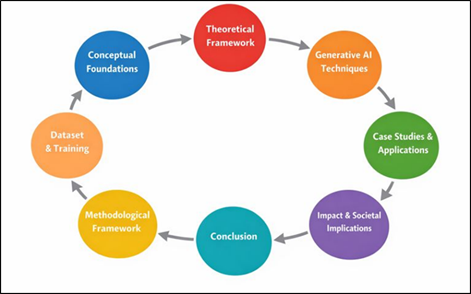
Figure 1 Conceptual Block Diagram of Generative AI in
Political Art and Social Commentary
In addition to the empowerment of creativity, the generative AI poses new threats to the political visual culture. Propaganda, misinformation, and emotionally manipulative work can be created through the same methods as the creation of protest art or satirical comment. Artificial intelligence-created political images may complicate the distinction between criticism and manipulation and are particularly hazardous in the context of an environment overwhelmed with digital media and high-speed information streams Rotaru et al. (2022).
2. Conceptual Foundations
2.1. Political art as a medium of resistance, critique, and dialogue
Traditionally, political art is a powerful tool of resistance, dissent, and discussion, which allows artists to oppose the existing power systems and express another vision of society. Throughout various historical events, such as the revolutionary movements, anti-colonial movements, civil rights movements and modern day protests, visual art has served to highlight the injustice, rally the masses and challenge the ideological beliefs. Its strength is not just in representation, but also in the ability to reduce the complicated political arguments to emotionally appealing symbols that can be disseminated on a mass scale and comprehended across linguistic and cultural borders without much difficulty Vassilakopoulou et al. (2023). Political art as a critique mode questions authority, inequality and social contradictions, by revealing the invisible power relations. Satire, poster, symbolism, metaphor are often used to disrupt the official accounts and make them think critically. Political art in contrast to strictly informational political communication encourages, and even demands, active participation by the audience and discourages passive receivership of messages. This dialogic nature enables a political art to serve as a negotiation environment, where various views are present and war on meaning. Notably, political art does not exist within institutional galleries or elite spaces of culture Hung et al. (2020). Street art, protest posters, graffiti and digital images are used in the public and semi-public space that addresses a variety of viewers, and allows participatory interaction.
2.2. Social Commentary in Visual Culture and Media
Social commentary in visual culture can refer to artistic and media practices that comment, critique, and understand the state of the society, norms and struggles. The visual media which include photography and illustration, film, digital graphics and online meme is at the center of the perception and understanding of social realities. With the aid of selective framing, symbolism, and aesthetics, visual commentary may emphasize the voices of the marginal, challenge the cultural norms, and attract attention to the structural inequalities within the realm of everyday life Huang et al. (2020). Visual social commentary is likely to work via affect and immediacy, unlike textual critique. When it comes to influencing a crowd, pictures can be used to inspire sympathy, outrage, or irony in a matter of seconds and hence they are highly effective. In mass and digital media space, images often become the center of attention that social discussion forms, disseminates, and develops around them. The examples of political cartoons, photojournalism, and viral pictures are the examples of how visual culture mediates the shared awareness of events, i.e., protests, humanitarian disasters, or policy choices. Visual social commentary has increased in pace and magnitude due to the emergence of the digital platforms. Viewers have ceased to be mere consumers but have become producers and are active in remixing and sharing images and recontextualizing them [8]. This collaborative relationship erases the distinctions between art, media, and activism to enable the social commentary of the decentralized and grassroots settings.
2.3. Generative AI Technologies (GANs, Diffusion Models, Transformers)
Generative artificial intelligence technologies can be considered a major change to the visual content generation process, as machines can be used to autonomously create images, styles, and multimodal representations. Generative adversarial networks (GANs), diffusion models, and transformer-based models can be listed among the most influential ones. Although technically different, these models are similar in the way they can learn the ability to read intricate visual patterns given huge amounts of data and recombine them into new information that can often resemble artworks that are created by human beings. GANs are trained using an adversarial mechanism where a generator creates images and a discriminator measures their realism, so the output of the generator is progressively more realistic Danielsson and Uthemann (2023). This model has been extensively applied towards stylistic experimentation, visual abstraction and the creation of symbolic imagery. Diffusion models, in turn, are produced by a sequential denoising process, which is more stabilized, more detailed, and presents more semantic control. They are highly impactful in modern inventive activities due to their skill in rendering text messages into holograms of visual images. Transformer-based models build upon such capabilities by including language, vision, and context so that they can produce multimodal generation in a nuanced manner and coherent narratives. These technologies serve as creative partners as opposed to passive tools, both in artistic and political realms Aliabadi et al. (2023). Table 1 presents comparative research of generative AI in political art. They interfere with esthetic choices, encode cultural assumption based on the training data, and react to human cues that inculcate ideological purpose. Therefore, the generative AI systems are not neutral tools; they are actively involved in the meaning-making.
Table 1
|
Table 1 Related Work on Generative AI in Political Art and Social Commentary |
|||||
|
Research Focus |
AI Technique Used |
Data Source |
Political Domain |
Limitations |
Relevance to Present Study |
|
AI and visual political communication |
GANs |
Political posters |
Protest art |
Limited ideological analysis |
Establishes technical baseline |
|
Computational creativity in art [11] |
GANs |
Digital art datasets |
Conceptual art |
Not politically focused |
Supports creativity framework |
|
Digital activism and media |
Rule-based + ML |
Social media images |
Activist media |
No generative models |
Contextual grounding |
|
Text-to-image generation |
Transformer models |
Captioned images |
Political illustration |
Limited cultural critique |
Prompt-based generation relevance |
|
AI ethics in media [12] |
GANs |
News imagery |
Political communication |
No artistic focus |
Ethical implications |
|
Political memes and satire [13] |
GANs |
Meme datasets |
Satirical media |
Narrow dataset |
Meme-based case studies |
|
Diffusion models in art |
Diffusion models |
Art archives |
Visual art |
Non-political scope |
Technical advancement |
|
AI in protest cultures |
GANs + NLP |
Protest photos |
Social movements |
Regional focus |
Dataset strategy |
|
Algorithmic aesthetics |
Generative models |
Mixed art data |
Digital aesthetics |
Lacks case studies |
Theoretical grounding |
|
AI-generated propaganda |
Multimodal models |
Political media |
Propaganda analysis |
Focus on misuse only |
Risk assessment |
|
Prompt engineering |
Diffusion + Transformers |
Text–image pairs |
Creative AI |
Limited political depth |
Ideological prompt control |
|
Cultural bias in AI art [14] |
GANs |
Museum archives |
Cultural representation |
No activism focus |
Representation analysis |
|
Civic engagement art [15] |
Multimodal AI |
Campaign visuals |
Digital campaigns |
Short-term evaluation |
Civic art applications |
|
Deepfakes and democracy |
Diffusion + GANs |
Political videos |
Media ethics |
Focus on video only |
Societal implications |
3. Theoretical Framework
3.1. Critical theory and cultural studies perspectives
The cultural studies and the critical theory offer indispensable approaches to understanding political art as a place of ideological conflict, social bargaining and symbolic power. The critical theory is based on the traditions of analyzing capitalism, hegemony, and cultural domination and focuses on the issue of how art can reflect and challenge structural inequalities. Political Artworks are not only perceived as aesthetic objects but as an intervention in the larger socio-political structure that constructs consciousness, identity and consent Gautam and Srinath (2024). In this respect, visual culture is a space where dominant discourses are echoed or challenged using the means of representation, symbolism and affect. Cultural studies goes a step further by preempting the daily practices, media circulation, and viewing by the audience. It acknowledges the meaning as not a production of the artist by team but shared by the viewers in a particular cultural and historical context. Political art thus functions in a dialogic way, its meaning is created in relation to the interpretation, appropriation and argument among the multiple publics. Such a practice is specifically applicable to the digital field where photos are constantly recontextualized and repurposed Leavy et al. (2020). As applied to generative AI, such views underline the fact that algorithm systems are enclosed in cultural power relations. Political art created by AI is based on datasets that rely on historical exclusions, media biases, and visual regimes of predominance.
3.2. Algorithmic Aesthetics and Computational Creativity
The analysis of algorithmic aesthetics focuses on the visual expression of control over a computer algorithm and the difference in style and meaning of a visual expression both as a purpose of human agency and as a logical expression of machine reasoning. In generative art systems, the aesthetic choices are in part entrusted to the algorithms, which study the patterns, styles, and compositional principles on the data of large scale. This questions the conventional theories of creativity as a solely human characteristic and coins the term computational creativity as a third party interaction between data, models, and human involvement. Computational creativity theory is a theory that considers artificial intelligence (AI) systems as creative agents that can be used to generate novelty, variability, and surprise within a set of constraints. Instead of substituting human artists, generative models can be viewed as co-workers that provide an increase in the range of potential visual consequences. New artistic procedures of manipulating algorithmic behavior emerge through prompt engineering, setting parameters, and model choice. The aesthetics that it creates are frequently marked by a conflict between statistical predictability and expressive purpose that produce images that are both recognisable and surprising at the same time. Algorithms aesthetics obtains a new meaning in the context of political art. Figure 2 represents algorithmic aesthetics that allows computational creativity in political systems of art. The aesthetic forms produced by artificial intelligence are hyperrealism, abstraction, surrealism, or symbolic hybridity, all of which influence the perception and processing of political messages. The mechanization of style has the power to increase some visual tropes and eclipse others, forming an ideological meaning in a subtle way.
Figure 2

Figure 2 Algorithmic Aesthetics and Computational Creativity
in Political Art
Computational creativity therefore poses important questions regarding authorship, originality and intentionality especially when it involves algorithms combining politically charged imagery. The analysis of algorithmic aesthetics is the key to providing an understanding of how generative AI can reshape the visual language and expressive limits of political art.
3.3. Power, Ideology, and Representation in AI-Generated Art
The triad of analysis of AI-generated political art includes power, ideology, and representation, which make up a central set. The representation is never neutral, visual representations of social actors, institutions and conflicts are already biased by ideological assumptions whose effects affect the ways power relations are comprehended. These assumptions are encoded in human prompts, training datasets, model architecture, and optimisation objective of AI-generated art as well. Consequently, the generative systems have the capacity to regurgitate hegemony ideologies, and appear neutral or technologically objective. Theoretically, AI-generated imagery has the potential to reinforce power by making certain visual narratives seem normal, e.g. stereotyped depictions of protest, authority, or marginal communities, and leave others out. On the other hand, in its critical deployment, the generative AI may also disrupt the hegemonic representations reimagining symbols, making more or less emphasis on contradictions, or revealing unacknowledged biases within visual culture. This twofold ability places AI as a location of ideological replication, as well as a possible instrument of criticism. Generative models are even more opaque, which makes power issues more difficult. In the instance when political images are generated in the process of complex calculations, responsibility to ideological content diffuses.
4. Generative AI Techniques for Political Art
4.1. Text-to-image and multimodal generation systems
The translation of linguistic concepts, ideological stances, and affective hues into the visual domain has become a staple of the current political art with text-to-image and multimodal generation systems being one of the primary tools to achieve it. Through these systems, a user can produce politically charged images by prompting their natural language to the systems, which will then learn to match textual descriptions with visual characteristics. To artists and activists, it provides a potent tool of expressing abstract political ideas: of resistance, injustice, solidarity, or surveillance, into vividly understandable and emotionally appealing images. Multimodal systems go further to add text, images and occasionally audio or contextual metadata to make the construction of the narrative rich. Descriptive prompts are not the only means of shaping political messages: it is possible to mention some historical event, some symbol of culture or a style. It can be used to prototype protest posters and conceptual artworks and satirical artworks quickly in response to any given event of the time. The pace and universal nature of production greatly changes the temporal dynamics of political art, which brings the production of visuals more in line with rapid-paced political discourse. Nevertheless, the systems also mediate the meaning based on training data and constraints of the model. The generated visual readings can favoured prevailing iconographies or the simplified description of political contestation.
4.2. Style Transfer and Visual Symbolism Amplification
The techniques of style transfer help separate and recycle visual content and aesthetics, and as such, political imagery can be converted to styles linked to particular movements in art history, historical eras, or cultural identities. This method is used in political art as an extreme amplification of symbolism, in which common political scenes or figures are re-presented in the language of visuals which have different ideological and emotive connotations. As an illustration, the application of the style of revolutionary posters or expressionism art to the current protest can enhance the effect of influence and historical relevance. Style transfer makes visual tone manipulation by artists to be strategically utilized by abstracting stylistic elements, including the color palette, texture, and composition style. It may be applied in order to create urgency, irony, nostalgia or critique, depending on the aesthetic reference chosen. Such transformations are enabled in digital political culture to make the visual remixing and reinterpretation possible, which underscores the dialogic quality of political art. The symbols are more flowing, able to transcend temporal, cultural and ideological territories by mediation by algorithms. Meanwhile, the exaggeration of symbolism by the means of automated style calls forth serious doubts. Excessive dependence on some of the visual tropes may result in aesthetic homogenization or superficiality of symbols without any relation to realities of political life.
4.3. Prompt Engineering for Ideological and Narrative Control
Prompt engineering is the conceptualized act of manipulating textual inputs in order to steer generative AI systems to produce visual, thematic, and ideological results that are desirable. Prompt design is an essential location of creative and ideological authority in the political art, as it allows artists to construct some form of narrative, structure power dynamics, and encode politics into the AI-generated images. With adequate play around with words, voice and other contextual indicators, prompts may control composition, symbolism, emotional valence and representational emphases. This procedure makes the authorship of artworks an iterative dialogue between the will of man and deterministic interpretation. Minor wordplays can produce vastly different visual images, and this gives visual creators the opportunity to experiment with different political interpretations of the same issue. Experimentation with satire, critique, and counter-narratives can be therefore assisted by Prompt engineering, and visual strategies can be tested at a rapid rate in terms of persuasion or reflection. In activism, it allows the imagery to be matched to particular ideological purposes, including pointing out injustice, organizing solidarity or confronting authority. Nonetheless, there is also the exposure of the limits of control in prompt engineering. Prompts can be interpreted by generative models unexpectedly because of the biases on training data or probabilistic generation mechanisms.
5. Methodological Framework
5.1. Research design and qualitative–computational approach
The methodology of the given work is a qualitative-computational approach, which combines critical visual examination with the experimentation of generative AI. This hybrid architecture understands political art as both cultural object and a computational product, which needs interpretation strategies and technical review. The qualitative analysis is used to address symbolism, frame the narratives, emotional coloring, and ideological placement in AI-generated art. These readings are based on visual semiotics, discourse analysis, and cultural studies to understand the creation and communication of meaning with help of algorithmically generated images. To further supplement this interpretive aspect, the systematic systemic generation, manipulation, and comparison of the political artworks between the various AI models and parameter configurations are carried out through the use of computational techniques. Manipulated experiments are performed by changing prompts, style and dataset to monitor the effect of algorithmic decisions on representational results. That allows one to distinguish common visual patterns, biases and aesthetic preferences related to particular generative techniques. The research design is based on the interaction of qualitative interpretation and computational experimentation, which proceeds in a transitional manner. The results of a visual analysis enlighten the next model parameters, and the results of the computations give rise to new theoretical consideration.
5.2. Dataset Sources: Political Imagery, Protest Art, Media Archives
Data sets serve as a base upon which the visual and ideological features of the productions of generative AI are formed. The paper utilizes a range of sources of data, including images of political protest, collections of protest art, and media archives to be representative and relevant to the context. The political imagery includes campaign images, historical propaganda, editorial cartoons and symbolic images of power and governance. The protest art data sets consist of photos of protests, posters, graffiti, banners and graphics circulated digitally by activists that represent political expression of the grassroots across various cultural settings. Media archives offer one more visual layer containing the photojournalism, broadcast pictures and online news images describing political events and social movements. Such archives are especially useful in the capture of temporally determined narratives, as well as dominant visualizations of political conflict. In order to reduce bias, the datasets are filtered based on geographical diversity, ideological diversity and time periods so that there is no single political topic or aesthetics that prevails in training content. Preprocessing and dataset selection is guided by the ethical considerations.
5.3. Model Training, Fine-Tuning, and Evaluation Criteria
Baseline systems are pre-trained generative models, which take advantage of large-scale visual knowledge and comes at a lower cost in terms of computation. Then, domain specific political and protest imagery is used to fine-tune the models with politically concerned visual characteristics, symbols and style clues. It is through this process that the models can produce contextually based output that has got creative flexibility. The parameters of training are well managed to represent a balance between fidelity and diversity. One tries to avoid overfitting to achieve repetitive or overly literal representations, and underfitting is alleviated by being exposed to enough diverse political imagery. Fine-tuning that is prompt-conditioned is also investigated to become more responsive to ideological and narrative cues. During the training, the issues of transparency and reproducibility are considered, and the model configurations and data preprocessing steps are documented in detail. The assessment categories are technical, aesthetic and critical. Image quality, diversity, and prompt alignment are tested quantitatively, whereas symbolic clarity, emotional resonance and ideological coherence are tested qualitatively.
6. Case Studies and Applications
6.1. AI-generated protest posters and activist visuals
The posters produced by AI and activist art show the way generative models are finding their applications in the modern social and political change movements. Historically, protest posters have been based on either manual illustration, print making or graphic design prowess that could slow the response to current political developments. Generative AI changes this balance by making activists make visually appealing posters based on text-based prompts that easily combine text-based slogans, symbols, and emotional incentives.
Figure 3
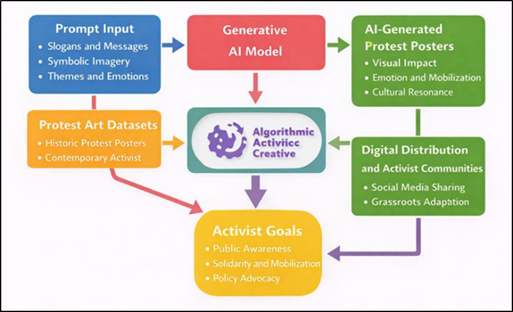
Figure 3 AI-Generated Protest Posters and Activist Visuals
With this pace, political images can develop in real time close to the demonstrations, policy statements, or social disasters. It demonstrates that the models can enhance the messages of opposition, solidarity, and urgency based on case studies of AI-generated protest visuals. Figure 3 is the protest poster generated by AI and used in the support of the activism and visual opposition. Using visual references to past protest art, revolutionary iconography, and contemporary trends of graphic design, AI systems are developed to create emotional resonant posters that are at the same time accessible to a creator not specializing in design. These kinds of images can be spread digitally via social media, being shared, remixed, and localized by other communities, which strengthens the sense of group identity and involvement.
6.2. Satire, Caricature, and Political Memes Using Generative Models
Examples of the most prominent use of generative AI in political art include satire, caricature and political memes. These are based on exaggeration, parody, and visual manipulation which are used to challenge authority, reveal the contradictions, and stimulate the discussion of the common people. The generative models are specifically applicable in this genre, as they can quickly generate variations of faces, symbols and scenes that enhance the absurdity or bring forth ideological conflicts. In the creation of glitch art, creators have the ability, through quick-response generation, to experiment with a variety of satirical ways to frame political figures or events with little technical difficulty. The political memes produced by AI extensively spread over the digital environment, where humor and visual immediacy are central to the formation of political opinion. According to case studies, the AI-aided satire is frequently mixed with the photorealism and surreal or exaggerated elements, which raises its viral potential. The styles of caricature can be produced algorithmically with exaggeration in a sharp visual critique, which will attract online users who are already accustomed to the idea of remix culture. Meanwhile, AIs create satire and pose complicated moral and political dilemmas. Automation of a caricature is prone to overstepping boundaries of misinformation, defamation, or dehumanization especially when realism is blurred with fabrication. Lack of proper authorship may also make it difficult to hold any accountable about harmful or misleading information. However, when applied with criticism and visibility, generative AI increases the repertoire of political satire, making it more powerful as a means of dissent and structuring it to fit digital media ecosystems in the present Gourikeremath and Hiremath (2025).
6.3. AI in Digital Campaigns and Civic Engagement Art
Generative AI is finding more applications in online political campaigns and civic engagement art to generate images that educate, convince and act. AI based on image is being utilized by campaign organizations and advocacy groups to customize messages to different demographics, platforms, and political situations. Text to image systems are initiatives which allow quick creation of posters, banners and social media graphics, which match visual aestheics, narrative of a campaign, emotional coloring and ideological placement. This flexibility improves the uniformity of the messages but gives room to creativity. In the context of civic engagement, the AI-generated art is applied to the processes of raising awareness about the voter, social engagement, and discussion. Generative visuals are used in interactive installations, online campaigns, and participatory art projects that turn the citizens into passive participants and active contributors. These kinds of applications show ways that AI can be used to facilitate inclusive and participatory political expression through reduction of barriers to creative participation. Nevertheless, the AI use in campaigns also escalates issues regarding the manipulation and persuasion. Optimized images can be used to address emotional responses or support the echo-chamber, which is disastrous to a deliberative democracy. Disclosure of AI participation and ethics of design thus becomes the critical factor between civic participation and the insidious control. According to case studies, AI-generated campaign art can be used to improve communication, access, and engagement when done responsibly. But its increasing role highlights the necessity of regulatory and cultural frameworks that secure the values of democracy and acceptance of the creative drive of political visual culture.
7. Impact and Societal Implications
7.1. Influence on public opinion and political discourse
Generative AI is a major factor affecting the opinion of the general population and political discourse specifically as it transforms the visual production, distribution, and perception of political messages. In modern media spaces, images are given an important place, and they tend to influence perception more quickly and more emotionally than the arguments presented in the text. The protest posters, as well as the satirical memes generated by AI, can create an amplified emotional response, reduce the complexity of a particular issue, and restructure the narratives to affect the attitudes of people. Such visuals are well synchronized with the dynamics of real-time political communication because of the quick creation and platform adaptation. The influence of the images created by AI is in its ability to combine reality with the symbolism and make the political messages seem credible and emotionally evoking. These images can strengthen dominant frames when popular on online sites, disrupt the official narrative, or enlist the general online opinion in support of a particular cause. Meanwhile, the effect of algorithmic personalization allows personalizing political imagery to specific audiences that may increase selective exposure and polarization of ideologies. This power brings significant questions to deliberation and democratic discourse.
7.2. Democratization of Political Art Production
Democratization of political art production is one of the most influential changes in society as a result of generative AI. In the past, the production of effective political visuals needed training in art, access to materials or institutional outlets. Generative AI reduces these obstacles by allowing people and groups with little technical or artistic capacity to create visually engaging political art with easy to use interfaces and natural language prompts. This change increases the involvement in the visual political discourse and empowers the actors on the ground to present their voices. Democratization contributes to diversity in political expression through allowing the presence of many stories, styles and perspectives in digitalized spaces. Activists are now able to create localized imagery quickly, change messages to cultural conditions, and experiment with symbolism without the needs of professional designers. This allows decentralized kinds of political participation and enhances the sense of collective identity in social movements. Generative AI, in this respect, becomes a driver of activist visual culture, bringing creative production closer to the principles of democracy, i.e. inclusion and voice.
8. Conclusion
Generative AI is transforming the face of political art and social commentary through the addition of algorithmic systems to the process of visual criticism, resistance, and civic communication. This paper has demonstrated that generative models are not only technical instruments but living cultural participants and agents in the production of a political meaning, symbolism, and discourse. AI increases the expressive possibilities of political art by allowing it to generate images more quickly, transforming their stylistic features, and telling stories in more multimedia forms, as well as changing the conditions of its production, circulation, and reception. The analysis shows the two-sidedness of generative AI use in political situations. On the one hand, it democratizes creative engagement, reduces the barriers to visual production and enables the grassroots actors to express political identities and demands. Examples of using algorithmic creativity to empower the voices of the marginalized and develop participatory visual cultures are protest posters developed with the help of AI, satirical memes, and artworks of civic engagement. Conversely, the same affordances pose ethical or societal threats, such as aesthetic homogenisation, ideological bias, misinformation and manipulation by deepfakes. The transparency and generalizability of AI systems make issues of authorship, responsibility, and distrust in democratic communication difficult. This study will focus on why generative AI should not be considered as the neutral product of critical theory, cultural studies, and computational creativity, but instead as the product of power relations. The meaning is created as a result of the interaction between datasets, algorithms, prompts, and socio-political contexts.
CONFLICT OF INTERESTS
None.
ACKNOWLEDGMENTS
None.
REFERENCES
Aliabadi, R., Singh, A., and Wilson, E. (2023). Transdisciplinary AI Education: The Confluence of Curricular and Community Needs in the Instruction of Artificial Intelligence (arXiv:2311.14702). arXiv. https://arxiv.org/abs/2311.14702
Dakalbab, F., Abu Talib, M., Abu Waraga, O., Bou Nassif, A., Abbas, S., and Nasir, Q. (2022). Artificial Intelligence & Crime Prediction: A Systematic Literature Review. Social Sciences & Humanities Open, 6, 100342. https://doi.org/10.1016/j.ssaho.2022.100342
Danielsson, J., and Uthemann, A. (2023). On the Use of Artificial Intelligence in Financial Regulations and the Impact on Financial Stability (arXiv:2310.11293v5). arXiv. https://arxiv.org/abs/2310.11293
Dent, K. (2020). Ethical considerations for AI Researchers (arXiv:2006.07558). arXiv. https://arxiv.org/abs/2006.07558
Gautam, S., and Srinath, M. (2024). Blind Spots and Biases: Exploring the Role of Annotator Cognitive Biases in NLP (arXiv:2404.19071). arXiv. https://arxiv.org/abs/2404.19071
Georgieff, A., and Hyee, R. (2022). Artificial Intelligence and Employment: New Cross‑Country Evidence. Frontiers in Artificial Intelligence, 5, 832736. https://doi.org/10.3389/frai.2022.832736
Gourikeremath, G., and Hiremath, R. (2025). Institutional Repositories in Karnataka Universities: Status Assessment, AI-Assisted Framework Development and Future Research Directions. ShodhAI: Journal of Artificial Intelligence, 2(1), 63–75. https://doi.org/10.29121/shodhai.v2.i1.2025.48
Huang, J., Gates, A. J., Sinatra, R., and Barabási, A.-L. (2020). Historical Comparison of Gender Inequality in Scientific Careers Across Countries and Disciplines. Proceedings of the National Academy of Sciences of the United States of America, 117, 4609-4616. https://doi.org/10.1073/pnas.1914221117
Hung, M., Lauren, E., Hon, E. S., Birmingham, W. C., Xu, J., Su, S., Hon, S. D., Park, J., Dang, P., and Lipsky, M. S. (2020). Social Network Analysis of COVID‑19 Sentiments: Application of Artificial Intelligence. Journal of Medical Internet Research, 22, e22590. https://doi.org/10.2196/22590
Leavy, S., O'Sullivan, B., and Siapera, E. (2020). Data, Power and Bias in Artificial Intelligence (arXiv:2008.07341). arXiv. https://arxiv.org/abs/2008.07341
Murdoch, B. (2021). Privacy and Artificial Intelligence: Challenges for Protecting Health Information in a New Era. BMC Medical Ethics, 22, 122. https://doi.org/10.1186/s12910-021-00687-3
Park, C. W., Seo, S. W., Kang, N., Ko, B. S., Choi, B. W., Park, C. M., Chang, D. K., Kim, H., Kim, H., Lee, H., et al. (2020). Artificial intelligence in health care: Current Applications and Issues. Journal of Korean Medical Science, 35, e379. https://doi.org/10.3346/jkms.2020.35.e379
Rotaru, V., Huang, Y., Li, T., Evans, J., and Chattopadhyay, I. (2022). Event‑Level Prediction of Urban Crime Reveals a signature of Enforcement bias in US Cities. Nature Human Behaviour, 6, 1056-1068. https://doi.org/10.1038/s41562-022-01372-0
Schiff, D. (2021). Out of the Laboratory and into the Classroom: The Future of Artificial Intelligence in Education. AI & Society, 36, 331-348. https://doi.org/10.1007/s00146-020-01033-8
Theodosiou, A. A., and Read, R. C. (2023). Artificial Intelligence, Machine Learning and Deep Learning: Potential Resources for the Infection Clinician. Journal of Infection, 87, 287-294. https://doi.org/10.1016/j.jinf.2023.07.006
Vassilakopoulou, P., Haug, A., Salvesen, L. M., and Pappas, I. O. (2023). Developing Human/AI Interactions for Chat‑Based Customer Services: Lessons Learned from the Norwegian Government. European Journal of Information Systems, 32, 10-22. https://doi.org/10.1080/0960085X.2022.2096490
Velarde, G. (2020). Artificial Intelligence and its Impact on the Fourth Industrial Revolution: A Review (arXiv:2011.03044). arXiv. https://arxiv.org/abs/2011.03044
Wang, T., Zhang, Y., Liu, C., and Zhou, Z. (2022). Artificial Intelligence Against the First Wave of COVID‑19: Evidence from China. BMC Health Services Research, 22, 767. https://doi.org/10.1186/s12913-022-08146-4
|
|
 This work is licensed under a: Creative Commons Attribution 4.0 International License
© ShodhKosh 2026. All Rights Reserved.