ShodhKosh: Journal of Visual and Performing ArtsISSN (Online): 2582-7472
|
|
AN EXPERIMENTAL INVESTIGATION OF ANIMATED VIDEO BASED VISUAL LEARNING IN SPORTS EDUCATION
Sourabh Chhatiye 1
 ,
Harmanpreet Kaur 2
,
Harmanpreet Kaur 2 ,
Pradeep Turukmane 3
,
Pradeep Turukmane 3 ,
Siddharth Sagre 4
,
Siddharth Sagre 4 , Ravinder
Pal Ahlawat 5
, Ravinder
Pal Ahlawat 5 ,
Rupika Nanda 6
,
Rupika Nanda 6
1 Department
of Physical Education, Lovely Professional University, Punjab, India
2 Department
of Physical Education, Lovely Professional University, Punjab, India
3 Department of Physical Education Pedagogy, Lakshmi bai National
Institution of Physical Education, Gwalior, Madhya Pradesh, India
4 Department of Physical Education, Major Dhyan Chand Sports University,
Meerut, India
5 Department of Physical Education and Sports, Central University of
Haryana, Haryana, India
6 Department of Fashion Designing, Lovely Professional University,
Punjab, India
|
|
|
ABSTRACT |
|
|
The purpose of
this study was to examine the effect of animated video-based visual learning
on student athletes enrolled in sport education programs. A pre-test and
post-test control group experimental design was utilized for this study.
Eighty (80) student-athletes (ages 18-24) enrolled in B. P. Ed. programs were
selected for participation and were equally divided between an experimental
(n = 40) and control Groups (n = 40). Sports education was measured by a
30-items Exercise Physiology Questionnaire, developed previously with CVR
ranging from 0.62 to 1.00. The experimental group received an intervention
consisting of eight (8) weeks of animated video-based visual learning with
structured lessons covering the important information about Exercise Physiology
while the control group did not receive any such intervention. To determine
differences in pre and post-test scores within each group, dependent t-tests
were conducted, and independent t-tests were conducted to compare post-test
scores between the two groups. Statistically significant improvement in
sports education was shown among student-athletes who received animated
video-based visual learning as compared to those who did not (p <.01).
Statistically significant differences were also shown between groups in
student-athletes, in that the experimental group outperformed the control
group. Results from this study indicate that animated videos are an effective
way to increase conceptual understanding in sports education through visual
learning. |
|||
|
Received 20 January 2025 Accepted 26 February 2026 Published 28 March 2026 Corresponding Author Sourabh Chhatiye, sourabhchhatiye@gmail.com DOI 10.29121/shodhkosh.v7.i2s.2026.7035 Funding: This research
received no specific grant from any funding agency in the public, commercial,
or not-for-profit sectors. Copyright: © 2026 The
Author(s). This work is licensed under a Creative Commons
Attribution 4.0 International License. With the
license CC-BY, authors retain the copyright, allowing anyone to download,
reuse, re-print, modify, distribute, and/or copy their contribution. The work
must be properly attributed to its author.
|
|||
|
Keywords: Animated Videos, Student-Athletes, Exercise
Physiology, Sports Education |
|||



1. INTRODUCTION
Student-athletes are frequently faced with the challenge of balancing academic responsibilities with athletic performance. Although physical education programs aim to develop both sports skills and theoretical knowledge, many student-athletes may find it difficult to grasp theoretical concepts due to factors such as time constraints, fatigue, or cognitive overload. These factors may negatively affect overall learning outcomes and understanding of theoretical concepts, which are important for success in both athletics and academics Thompson et al. (2024).
Recent advances in educational technology have demonstrated the potential for animated videos to serve as effective instructional tools Höffler and Leutner (2007). Animated videos can present complex or abstract information in a visual and engaging format, reduce difficulties in understanding complex theoretical concepts, and enhance retention of learned materials Liu and Elms (2019). Animated videos provide opportunities for self-paced learning, repeated practice, and interactive engagement, making animated videos especially suitable for student-athletes who need flexibility and efficiency in learning Chao et al. (2025).
Despite growing interest in visual and multimedia learning, there is limited empirical evidence systematically examining the effectiveness of animated videos as an instructional approach for student-athletes learning in physical education programs Kao and Luo (2020). Most quantitative studies in this area have focused on general student populations in traditional academic subjects and have provided limited evidence related to intervention studies for the distinct learning demands of student-athletes Heo and Toomey (2020).
Learning interventions are essential for assisting student-athletes as they navigate the conflicting demands of performing in sport and academics Novan et al. (2024). Conventional pedagogical approaches largely rely on lectures and textbooks. While this approach has value, it often fails to actively engage student-athletes or integrate diverse learning styles Huang (2005). Alternatively, instructional videos that leverage multimedia tools and animation can communicate complex constructs and ideas in a visual, interactive, and engaging manner Lin and Dwyer (2010).
Animation can illustrate complex topics simply, can highlight common themes and terms, and can demonstrate processes that would be hard to explain through the printed word Sun et al. (2025). Student-athletes benefit from a self-directed learning approach that encourages repetition and sustained engagement, which can again aid retention and understanding. Furthermore, while travelling for competitions, student-athletes often seek to utilize their time efficiently, and learning videos allow them to study without disruption. Student-athletes are always interested in utilising their time as efficiently as possible, and learning videos afford the opportunity to learn without delay and maximise those student-athletes’ time that they have. In addition, animated learning videos encourage participation, engender engagement, and consider differing learning styles Urquiza-Fuentes and Velázquez-Iturbide (2013). For student-athletes who are often bound by a heavy training regimen, learning videos afford student-athletes flexibility and efficiency to build and strengthen their understanding of concepts while honouring their commitment to their sport. Overall, the integration of multimedia and animation into learning interventions not only improves student-athletes’ overall academic performance but addresses the holistic development needs of student-athletes Thomas et al. (2025).
While animated videos have received significant attention in the general education context, there is very limited research directly examining students’ learning experiences, including preferred learning styles and learning environments in physical education settings given the unique challenges such as limited time for study, intensive training schedules, and extensive traveling for competitions. This highlights the need for experimental studies that evaluate the effectiveness of animated learning videos in strengthening conceptual understanding among student-athletes, bridging the gap between theoretical knowledge and practical sports training Ulfah et al. (2025), Barak et al. (2011).
The objective of this study is to evaluate the effectiveness of self-constructed animated video–based learning in sports education. It aims to determine whether these videos can strengthen the conceptual understanding of student-athletes Comeaux and Harrison (2011). Additionally, the study examines whether the animated videos convey complex theoretical concepts to student-athletes more effectively than traditional instructional methods Vacharathit et al. (2015). It is anticipated that animated learning videos will positively influence the conceptual understanding of student-athletes Cakiroglu and Yilmaz (2017). Those who use these videos are likely to perform better in grasping complex theoretical concepts compared to student-athletes taught through traditional methods Saeed and Zaman (2024). Thus, the use of animated learning videos can potentially promote desirable learning outcomes among student-athletes Osman and Lee (2014).
2. METHODOLOGY
This was an experimental study to investigate the effect of animated video–based visual learning in sports education. The total sample of the study was 80 student-athletes aged 18 to 24 years from the B. P. Ed (Bachelor of Physical Education) program at Lovely Professional University, Phagwara, Punjab and Guru Nanak Dev University, Amritsar, Punjab. The sample was equally divided into experimental (N = 40) and control groups (N = 40). Participants had to be enrolled in sports education programs and had to compete at the national-level sports competitions.
The intervention consisted of a self-constructed animated video module delivered to B. P. Ed. student-athletes over 8 weeks, with 16 sessions conducted over two months. Each session lasted 30 minutes, and videos elaborated on key concepts in exercise physiology subjects using animated examples, demonstrations, and practical scenarios as shown in Table 1. The videos were structured to gradually develop conceptual understanding, starting with foundational topics and progressing to more complex applications over the two months. The experimental group received instruction through self-constructed animated video–based visual learning modules developed specifically for sports education concepts as shown in Figure 1. The video demonstrating the construction process is accessible online.
Figure 1
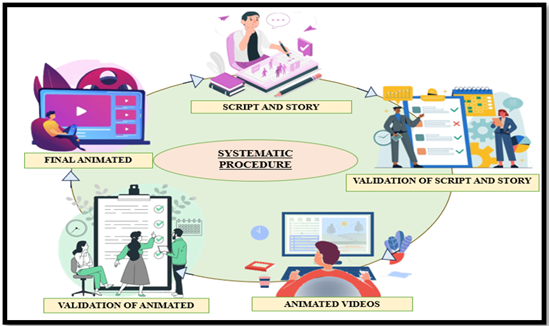
Figure 1 A Systematic Procedure for Developing Animated
Videos (Click here).
Source: Developed by the Authors.
The sports education of participants was measured using self-developed Exercise Physiology Questionnaire (EPQ) for B. P. Ed. student-athletes. Questionnaires were evaluated for face and content validity by a panel of 10 Physical Education experts. Content validity was assessed using Lawshe’s Content Validity Ratio (CVR), retaining only items with CVR ≥ 0.62. For the EPQ, all retained 30 items had CVR values ranging from 0.62 to 1.00, resulting in a Content Validity Index (CVI) of 0.93. These validated questionnaires provide reliable and expert-approved measures of sports education in exercise physiology.
Table 1
|
Table 1 Animated Video Intervention Program. |
||||
|
Week |
Session |
Duration (min) |
Topic covered |
Video description |
|
1 |
1 |
30 |
Meaning
of exercise physiology |
Elaborate meaning and
definition with animated examples |
|
1 |
2 |
30 |
Importance
of Exercise Physiology |
Elaborate on the Importance and
benefits of Exercise Physiology with animated characters |
|
2 |
3 |
30 |
Skeletal
system |
Describing the role of Skeletal
system and bones in sports with animated video presentation for better
understanding |
|
2 |
4 |
30 |
General
Structure of the bone |
Different types of bones, and
their important functions in sports with animation views |
|
3 |
5 |
30 |
Joints
and their Structure |
Demonstrate different types of
joints and their movement with Animated visuals. |
|
3 |
6 |
30 |
Meaning
and structure of muscles |
Elaboration various types of
muscles and their functions with animation visuals |
|
4 |
7 |
30 |
Contractions
of Muscles |
Understanding the types of
muscles during sports activity Easy understand with gym videos |
|
4 |
8 |
30 |
Structure
of digestive tract |
An animated video with vibrant
colours and the camera zooms in to reveal a human figure representing an
athlete |
|
5 |
9 |
30 |
Digestion
of food |
Action of various enzymes on
food, and how it relates to sports with colourful animated depiction of the
human digestive system |
|
5 |
10 |
30 |
Digestion of food, action of
various enzymes on food |
Breakdown of food and enzyme
action, including amylase, pepsin, trypsin, and lipase, in different
digestive organs |
|
6 |
11 |
30 |
Structure of respiratory organs |
Anatomy of the respiratory
system, including the lungs, trachea, bronchi, and alveoli, using labelled 2D
animations and real-life breathing visuals |
|
6 |
12 |
30 |
Internal and external
respiration |
Processes of gas exchange,
highlighting oxygen and carbon dioxide movement in internal (cellular level)
and external (lungs and blood) respiration |
|
7 |
13 |
30 |
Circulatory System |
Heart structure and blood
circulation animation |
|
7 |
14 |
30 |
Blood and Its Components |
Blood cells and their functions
through animation |
|
8 |
15 |
30 |
Energy Systems in Sports |
Aerobic and anaerobic energy
systems visualized |
|
8 |
16 |
30 |
Fatigue and Recovery |
Recovery processes and fatigue
mechanisms using animation |
3. RESULTS AND DISCUSSION
This section provides results of the study that looked at the impact of animated video-based visual learning on student-athletes’ sports education. To compare the change in scores from pre-test to post-test for each group, dependent t-tests were applied within groups. Independent t-tests were used to compare the average post-test scores of the experimental and control groups.
Table 2
|
Table 2 Shows the Effect of Animated Videos on the Sports Education of Student-Athletes in the Experimental Group |
|||||
|
Experimental
Group |
N |
Mean |
S. D. |
df |
t |
|
Pre-Test |
40 |
11.28 |
4.08 |
|
|
|
Post-Test |
40 |
22.60 |
4.08 |
39 |
9.42** |
Figure 2
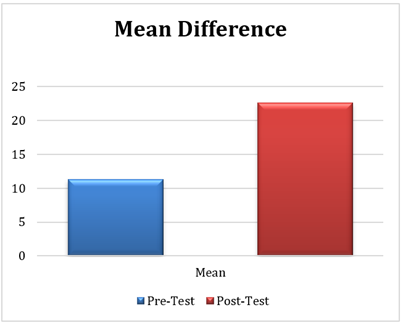
Figure 2 Shows the Mean Values of Student-Athletes in the Experimental Group
Table 2 and Figure 2 Show the effect of the animated videos on the sports education of student-athletes of experimental group. In the pre-test mean score of sports education (exercise physiology) of student-athletes from experimental group was 11.28 out of 30 marks with a standard deviation of 4.08, while in the post-test mean score was 22.60 out of 30 marks with a standard deviation of 4.08. The t-test shows significant difference of (t = 9.42). The result was statistically showed highly significant at 0.01 level. The result was showed that the animated videos substantially improved the sports education (exercise physiology) of B.P.Ed. student-athletes, with an increase of 11.32 marks from pre-test to post-test.
Table 3
|
Table 3 Shows the Effect of the Animated Videos on the Sports Education of Student-Athletes from Control Group. |
|||||
|
Control Group |
N |
Mean |
S. D. |
df |
t |
|
Pre-Test |
40 |
11.50 |
4.20 |
|
|
|
Post-Test |
40 |
15.45 |
4.45 |
39 |
3.82** |
Figure 3
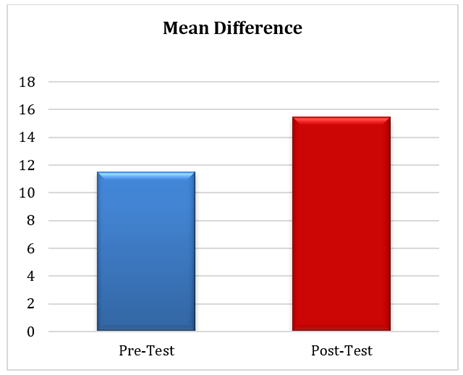
Figure 3 Shows the Mean Values of Student-Athletes in the Control
Group
Table 3 and Figure 3 Show the effect of the animated videos on the sports education of student-athletes of control group. In the pre-test mean score of sports education (exercise physiology) of student-athletes from control group was showed 11.50 out of 30 marks with a standard deviation of 4.20, while in the post-test mean score 15.45 out of 30 marks with a standard deviation of 4.45. The t-test shows significant difference of (t = 3.82). The result was statistically showed significant at 0.01 level, indicating that conventional teaching methods led to a modest improvement in sports education. However, the magnitude of improvement was considerably lower than that observed in the experimental group.
Table 4
|
Table 4 Shows the Difference in the Post-Test of Sports Education Between Student-Athletes of Experimental and Control Groups |
|||||
|
Group |
N |
Means |
S. D. |
df |
t |
|
Experimental |
40 |
22.60 |
4.08 |
|
|
|
Control |
40 |
15.45 |
4.45 |
78 |
7.26** |
Figure 4
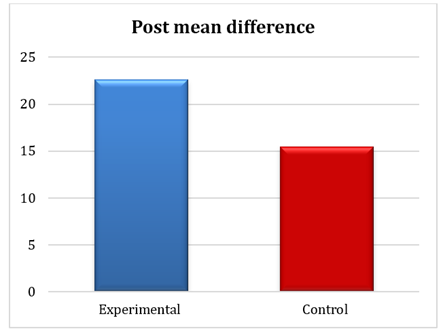
Figure 4 Shows the Post-Test Mean Values of Experimental and Control
Groups
Table 4 and Figure 4 Show the difference in the post-test of sports education (exercise physiology) between student-athletes of experimental and control groups enrolled in the B. P. Ed. program. In the post-test mean score of conceptual understanding of the experimental group was showed 22.6 (75.33 %) out of 30 marks with a standard deviation of 4.08, while in the post-test mean score of conceptual understanding of control group 15.5 (51.66 %) out of 30 marks with a standard deviation of 4.45. The independent t-test shows significant difference of (t = 7.26). The result was statistically showed highly significant at 0.01 level (table value = 2.71). The results showed that the animated learning videos substantially improved the conceptual understanding of experimental group as compared to control group B.P.Ed. student-athletes, with an increase of 7.15 marks (23.67 %) from post-test of experimental group. This clearly indicates that the animated videos are effective in enhancing sports education (exercise physiology).
The findings of this study demonstrate that the animated videos significantly enhanced the sports education (exercise physiology) of student-athletes. Animated videos are helpful because they simplify complex concepts into clear visual sequences, capture learners’ attention, and enhance memory retention Utaminingsih et al. (2024). For student-athletes who often struggle to balance demanding training schedules with academic studies, animated videos provide an engaging and less stressful way to understand theoretical content, which ultimately leads to better learning outcomes Ifenatuora et al. (2024), Maulana (2024). In comparison to study on the effectiveness of using animation media on understanding meaning through the implementation of contextual learning, the pre-test score on Arabic learning was 67.51 and post-test 77.91, the score was increased by 10.40. This comparison indicates that the animated learning videos produced substantial measurable effects in the present study, with a larger absolute change observed in conceptual understanding among student-athletes compared to the improvement in adaptive behaviour Febriani et al. (2024).
The experimental group of student-athletes showed better improvement in their sports education. The animated videos explained the concepts in an easy, step-by-step manner, which helped the learners to remember and apply the knowledge more effectively. Student-athletes usually face difficulties in managing time for study because of their training schedules, but the animated lessons made learning more engaging and less stressful Lamban et al. (2025). This extra support created interest and clarity, which reflected in their higher post-test scores. On the other hand, the control group did not receive any such support and therefore their performance remained comparatively low. The difference between the two groups highlights the importance of animated learning videos in making learning simple, interesting, and effective. Thus, animated learning videos also help in managing the dual career performance of elite student-athletes by supporting both their academic achievements and sports excellence. Many athletes often struggle with low conceptual understanding due to their rigorous training schedules, national camps, and international competitions. Since adequate educational facilities are generally not provided by the government during these camps, their studies suffer alongside sports commitments. By integrating animated learning videos, athletes can simultaneously manage their conceptual understanding with their sporting responsibilities, ensuring balanced growth in both areas. In comparison to the study on the effect of using animation media on students’ physics learning outcomes in linear motion material, where the experimental class improved from a mean increase from pre 6.88 to post 10.24 with an increase of 3.36 score (42.2%), while the control group mean of pre 6.57 to post 7.2 with an increase of 0.63 score, which supports to the present study on student-athletes reported higher conceptual understanding Nurnaifah et al. (2024).
4. CONCLUSION
This study concludes that animated videos have significant value in enhancing conceptual understanding for student-athletes. The results, obtained through validated instruments and statistical analysis, showed that the intervention had a significant positive effect on sports education in the academic area of exercise physiology. The animated videos provided a structured, visually rich way of clarifying concepts in a way that enabled learners to make connections between the theory and their sporting practice.
The study demonstrates the value and importance of introducing technology-enhanced instructional media into sports education, especially when teaching students who need to juggle their rigorous athletic training and competition with challenging academic workloads. Animated videos can not only support student-athletes in understanding complex concepts but also engage them in a deeper and more meaningful learning experience that can lead to long-term understanding.
This study illustrates the value of utilizing innovative digital learning resources to improve academic outcomes for student-athletes. Thus, a pathway exists for educators and curriculum developers to explore using a similar approach to create individualized learning experiences that make the learning process of conceptual development more structured, interesting, and ultimately consequential for future cohorts of student-athletes.
CONFLICT OF INTERESTS
None.
ACKNOWLEDGMENTS
None.
REFERENCES
Barak, M., Ashkar, T., and Dori, Y. J. (2011). Learning Science via Animated Movies: Its Effect on Students’ Thinking and Motivation. Computers and Education, 56(3), 839–846. https://doi.org/10.1016/j.compedu.2010.10.025
Cakiroglu, U., and Yilmaz, H. (2017). Using Videos and 3D Animations for Conceptual Learning in Basic Computer Units. Contemporary Educational Technology, 8(4), 390–405. https://doi.org/10.30935/cedtech/6207
Chao, Y.-H., Wu, H.-Y., and Chang, T.-H. (2025). Development and Evaluation of Animated Instructional Materials and Collaborative Learning for Nursing Research Courses: An Action Research Study. Nurse Education Today, 155, 106854. https://doi.org/10.1016/j.nedt.2025.106854
Comeaux, E., and Harrison, C. K. (2011). A Conceptual Model of Academic Success for Student-Athletes. Educational Researcher, 40(5), 235–245. https://doi.org/10.3102/0013189X11415260
Elbadiansyah, Masyni, and Maulana, A. (2024). Improving Junior High School Students’ Response and Science Learning Outcomes in Special Sports Classes Through Animated Learning Media. Jurnal Penelitian Pendidikan IPA, 10(7), 4294–4300. https://doi.org/10.29303/jppipa.v10i7.7378
Febriani, S. R., Wicaksono, M. A., Mela, D. A., and Nursyahida. (2024). Effectiveness of Using Animation Media on Understanding Meaning Through the Implementation of Contextual Learning. Thariqah Ilmiah: Jurnal Ilmu-Ilmu Kependidikan dan Bahasa Arab, 12(2), 11578. https://doi.org/10.24952/thariqahilmiah.v12i2.11578
Heo, M., and Toomey, N. (2020). Learning With Multimedia: The Effects of Gender, Type of Multimedia Learning Resources, and Spatial Ability. Computers and Education, 146, 103747. https://doi.org/10.1016/j.compedu.2019.103747
Huang, C. (2005). Designing High-Quality Interactive Multimedia Learning Modules. Computerized Medical Imaging and Graphics, 29(2–3), 223–233. https://doi.org/10.1016/j.compmedimag.2004.09.017
Höffler, T. N., and Leutner, D. (2007). Instructional Animation Versus Static Pictures: A Meta-Analysis. Learning and Instruction, 17(6), 722–738. https://doi.org/10.1016/j.learninstruc.2007.09.013
Ifenatuora, G. P., Awoyemi, O., and Atobatele, F. A. (2024). A Conceptual Framework for Professional Upskilling Using Accessible Animated E-Learning Modules. International Journal of Advanced Multidisciplinary Research and Studies, 4(6), 2417–2423. https://doi.org/10.62225/2583049X.2024.4.6.4377
Kao, C.-C., and Luo, Y.-J. (2020). Effects of Multimedia-Assisted Learning on Learning Behaviors and Student Knowledge in Physical Education Lessons: Using Basketball Game Recording as an Example. International Journal of Emerging Technologies in Learning, 15(1), 119–139. https://doi.org/10.3991/ijet.v15i01.11393
Lamban, C., Perez, C., Albarando, J., Sabate, J., Ygot, K. J., and Datulio, J. (2025). Juggling the Clock: Exploring Time Management Strategies Among Student-Athletes. Psych Educ Multidisciplinary Journal, 33(1), 16–26. https://doi.org/10.70838/pemj.330102
Lin, H., and Dwyer, F. M. (2010). The Effect of Static and Animated Visualization: A Perspective of Instructional Effectiveness and Efficiency. Educational Technology Research and Development, 58, 155–174. https://doi.org/10.1007/s11423-009-9133-x
Liu, C., and Elms, P. (2019). Animating Student Engagement: The Impacts of Cartoon Instructional Videos on Learning Experience. Research in Learning Technology, 27(1), 1–31. https://doi.org/10.25304/rlt.v27.2124
Novan, N. A., Mulyana, B., Syihab, S. F., Kumalasari, I., Nuryadi, N., Saputra, M. Y., Mulyana, M., Gumilar, A., and Purnomo, E. (2024). Multivariate Analysis of Academic and Sport Performance Among Indonesian University Student-Athletes. Retos, 61(12), 1298–1305. https://doi.org/10.47197/retos.v61.109820
Nurnaifah, I. I., Akhfar, M., and Said, S. (2024). The Effect of Using Animation Media on Students' Physics Learning Outcomes in Linear Motion Material. Jurnal Ilmiah Pendidikan Fisika, 8(1), 136–144. https://doi.org/10.20527/jipf.v8i1.11530
Osman, K., and Lee, T. T. (2014). Impact of Interactive Multimedia Module With Pedagogical Agents on Students’ Understanding and Motivation in the Learning of Electrochemistry. International Journal of Science and Mathematics Education, 12, 395–421. https://doi.org/10.1007/s10763-013-9407-y
Saeed, F., and Zaman, S. (2024). Effect of Animated Instructions on Elementary Students’ Conceptual Knowledge in Science. The Critical Review of Social Sciences Studies, 2(2), 1759–1769. https://doi.org/10.59075/xhtdkz63
Sun, T., Wu, T., Martin, F., and Westine, C. (2025). Effects of Multimedia-Based Education on Learning Outcomes: An Evidence Gap Map Analysis and a Second Order Meta-Analysis. Journal of Educational Multimedia and Hypermedia, 32(1), 57–95. https://doi.org/10.70725/798356qwfmej
Thomas, S. V., McKenzie, J., Smith, A., and Gilbert, J. E. (2025). User-Centered Design for Career and Academic Motivation in Student-Athletes. In B. K. Smith and M. Borge (Eds.), Learning and Collaboration Technologies. HCII 2025 (Lecture Notes in Computer Science, Vol. 15806, 1–15). Springer. https://doi.org/10.1007/978-3-031-93564-0_11
Thompson, F., Rongen, F., Cowburn, I., and Till, K. (2024). A Longitudinal Mixed Methods Case Study Investigation of the Academic, Athletic, Psychosocial and Psychological Impacts of Being a Sport School Student Athlete. Sports Medicine, 54, 2423–2451. https://doi.org/10.1007/s40279-024-02021-4
Ulfah, W. A., Subagyo, S., Santoso, N., Putranto, D., and Ramadan, G. (2025). Application of Video Animation to Increase Students’ Interest and Physical Skills in Primary School Physical Education. Retos, 66, 766–772. https://doi.org/10.47197/retos.v66.113
Urquiza-Fuentes, J., and Velázquez-Iturbide, J. Á. (2013). Toward the Effective Use of Educational Program Animations: The Roles of Student's Engagement and Topic Complexity. Computers and Education, 67, 178–192. https://doi.org/10.1016/j.compedu.2013.02.013
Utaminingsih, S., Machfud, Santosa, and Kassymova, G. K. (2024). Development of Learning Management With Animated Video to Increase Motivation and Learning Outcomes. Journal of Advanced Research in Applied Sciences and Engineering Technology, 41(2), 31–42. https://doi.org/10.37934/araset.41.2.3142
Vacharathit, V., Newman, J. H., and Pettepher, C. C. (2015). Design and Effectiveness of an Animated Module That Integrates Basic and Clinical Pulmonary Mechanics for Medical Students. Medical Science Educator, 25, 13–18. https://doi.org/10.1007/s40670-014-0063-9
|
|
 This work is licensed under a: Creative Commons Attribution 4.0 International License
© ShodhKosh 2026. All Rights Reserved.