ShodhKosh: Journal of Visual and Performing ArtsISSN (Online): 2582-7472
|
|
Creative Blockchain Traceability: A Deep Learning AI Framework for Source Authentication in Digital Design and Media
Hemlata Kosare
1 , Dr. Amol Zade 2
1 Ph.D.
Scholar, Department of Computer Science and Engineering, GHRU Amravati, India
2 Assistant
Professor, Department of Computer Science and Engineering, GHRU Amravati, India
|
|
|
ABSTRACT |
|
|
The rapid
expansion of digital design and media has intensified challenges related to
authorship, authenticity, and source attribution within creative ecosystems.
In response to these concerns, this study proposes a creative blockchain
traceability framework supported by deep learning–based artificial
intelligence for real-time source authentication in digital design and media
practices. The framework repositions blockchain technology as a cultural
infrastructure that safeguards creative ownership, while deep learning models
enable intelligent analysis of visual patterns and content provenance. By
integrating AI-driven visual recognition with decentralized traceability
mechanisms, the proposed approach enhances transparency and trust across
digital creative platforms. The study conceptually demonstrates how this
framework can support diverse creative domains, including graphic design,
digital art, media production, and interactive visual communication. Emphasis
is placed on preserving creative integrity without constraining artistic
expression or design innovation. This interdisciplinary research contributes
to emerging discussions on digital authorship and creative rights by bridging
visual arts, design management, and intelligent technologies. The findings
offer strategic insights for designers, artists, cultural institutions, and
digital platforms seeking resilient solutions for authenticating creative
content in an increasingly decentralized and algorithm-driven media
landscape. |
|||
|
Received 10 January 2025 Accepted 05 April 2025 Published 10 December 2025 Corresponding Author Hemlata
Kosare, patilhema5@gmail.com DOI 10.29121/shodhkosh.v6.i1s.2025.6977 Funding: This research
received no specific grant from any funding agency in the public, commercial,
or not-for-profit sectors. Copyright: © 2025 The
Author(s). This work is licensed under a Creative Commons
Attribution 4.0 International License. With the
license CC-BY, authors retain the copyright, allowing anyone to download,
reuse, re-print, modify, distribute, and/or copy their contribution. The work
must be properly attributed to its author.
|
|||
|
Keywords: Creative Blockchain Traceability, Deep Learning,
Digital Authorship, Source Authentication, Visual Content Provenance, Digital
Design and Media, Creative Ownership, Decentralized Creative Ecosystems |
|||



1. INTRODUCTION
The rapid digitalization of the process of creative activity has radically altered the production of design and media content, delivery and consumption of the latter on the global platforms. The digital design, in visual art, multimedia practice and interactive communication, have become dispersed within highly networked eco systems wherein the creative outputs are distributed in rapid and unprecedented numbers and shared and re-mixed, and redistributed. Despite the fact that this transformation has ensured that the expression of creativity has become more democratic and the accessibility has been extended, it has also rendered aspects concerning the establishment of the authorship, authenticity and source attribution more complicated. As digital spaces have emerged in which the replication of information and the dissemination takes an algorithmic form and the production of new work is relatively unchallenged it has meant that creative works circulate without their original creators, and the process of creating ownership, securing intellectual and efforts to gain some sort of credibility within creative economies is increasingly becoming less attainable. These issues are particularly pertinent to the designers and artists whose professional value is closely linked with uniqueness, believability, and status in the competitive online marketsplace. The need of effective, technologically endowed machines that had to prove the foundations of the creativity, rather than restrain the artistic liberty has, in turn, become the pressing concern of the contemporary design, as well as the topic of the media discourse.
The existing policies on the management part of digital right management and the management of the issue of copyright have largely been founded on the centralized services, law enforcement or watermarking techniques, which are reactionary, jurisdiction-based or manipulated. The traditional copyright frameworks are generally not suitably transformed to the dynamism of the digital creativity, especially in the decentralized dimensions of the digital world whereby writing gets to slice across mediums, territory, and community. Moreover, the implementation of strict enforcement procedures has the unintended effect of prompting creativity by virtue of placing administrative constraints that are counter to the exploratory and trial-and-error carried out in practices of design. The innovative economy In the more open innovation and production formats of creative industries, innovative solutions that can find a path between protection and flexibility require is sought. This has compelled researchers and practitioners to review new technologies that can redefine the way through which ownership and authenticity of creative endeavors can be identified and maintained within the Digital world.
Blockchain technology is one of the tools of that regard since it has the decentralized and immutable structure such that it becomes transparent. Besides financial provenance, blockchain is also being envisaged as a form of digital and cultural infrastructure capable of fulfilling provenance, ownership and the histories of transaction in a tamper-resistant manner. The blockchain has the potential to offer a ledger of the chronicle of the electronic property by their creation or editing, sharing and re-utilizing without the assistance of the centralized authority in such artistic areas. The blockchain of Web 3 can support new systems of creative responsibility and rights management that can be compatible with the decentralized nature of digital media ecologies. However, blockchain, even though having the potential to securely store metadata and records of ownership, does not have the algorithmic capacity to understand creative works per se and does not scan whether a specific digital object is a registered object.
The latter limits the importance of introducing the concept of artificial intelligence, namely, deep learning, into blockchain-based systems of tracing. Deep learning algorithms have already managed to be excellent in recognizing complex visual patterns, semantic characteristics and hidden distinctions in images, videos and multimedia materials. Digital design and media such models can be trained to analyse stylistic cues, compositional framework and visual fingerprints which in most cases are unique to individual creators or production procedures. Having introduced a deep learning healthcare visual recognition system to a blockchain system, it is possible to change the paradigm of a fixed registration strategy into a dynamic and real-time source identification strategy. The creative content that can be stored using that synergy is not only stored in a decentralized registry but can also be intelligently verified against the original visual and style qualities of the work, and substantiate the provenance claims.
Both deep learning and blockchain gravitation are too much of a shift towards more intelligent governance in creative ecosystems. This hybrid organization is not an external control but rather an enabling mechanism which encourages the development of creative integrity and simultaneously preserves the artistic autonomy. The freedom of control, both over the attribution and provenance of their work, and the provision of open and verifiable attribution systems, can be availed by designers and artists to the platforms and cultural institutions. It is worth noting that, this strategy recognizes creativity as the economic and cultural endowment, and involves the systems in the air that are conscious of the values of originality, experimentation and expression. Locating the idea of blockchain as a cultural infrastructure and folklore deep learning as an interpretation, this paper locates technological innovation in the socio-cultural contexts of the digital creative practice.
It is on this background that this research paper proposes a new blockchain traceability model that will be strengthened with artificial intelligence supported by deep learning that will be conducted during the digital design and media. It is conceptual in nature, and interdisciplinary in its domain that cuts across the visual arts, design management, and intelligent technologies. It aims to demonstrate the promise of decentralized traceability systems alongside AI-driven visual analysis to precipitate more transparency, trust, and accountability in different areas of innovation such as graphic design, digital art, media production, and interactive visual communication. Such research will be significant to new arguments over digital authorship, creative rights and how design will co-exist in the future under the guidance of algorithms, as authorship and authenticity has always been a perennial problem, not chaining creative innovations.
2. Methodology
The purpose of the proposed strategy is to create and evolve a comprehensive supply chain management system that would lead to improvement of supply of products to the end-users in terms of efficiency, transparency and safety. This system also entails modular functions to manage the major leaders of the supply chain process which consist of the manufacturers, distributors, retailers, and customers.
To solve the most frequent problems fraudulent products, the impossibility to track goods, and unsafe information transfer, the system is implementing blockchain-based product tracking and security attack detection and correction modules. All these will help determine and address the evil supply chain manipulations and guarantee items inalterable tracking.
To date, in the development process, modules are implemented in order to support:
Product management involves addition, modifications, and elimination of product information.
Manufacturer Management: It gives the manufacturer the contact and location of manufacturers.
Forming connection with distribution, retailing and manufacturing is known as stakeholder mapping.
Security testing also implies using MICV (Multi-Integrated Chain Verification) that is implemented to simulate and detect cyberattacks and MDMC (Multi-domain monitoring and control) protocol to fight them.
Figure 1

Figure 1 Interface for Inventory Control and Supply Chain Monitoring
This picture displays a software interface made for inventory control and supply chain monitoring.
Table 1
|
Table 1 Manufacturer Data |
|||
|
Manufacturer ID |
Name |
Contact |
Details |
|
3 |
Samsung |
9874563210 |
Japan |
|
4 |
Apple |
One Infinite Loop |
California |
|
5 |
Motorola |
9874563210 |
California |
|
6 |
Google |
9874563210 |
USA |
|
7 |
New Manufacturer |
9874563210 |
New Details |
|
8 |
Sonali 1 |
123456789 |
Sonali 1 |
|
9 |
SCM |
SCM Details |
2000 |
|
10 |
Boat |
Aman Gupta |
9966332211 |
|
11 |
T1 |
T1 |
T1 |
|
12 |
HP |
1025364555 |
India |
|
13 |
Meghana Traders |
4512361198 |
Delhi |
|
14 |
Madhu Electronics |
23456897 |
Mumbai |
Figure 2
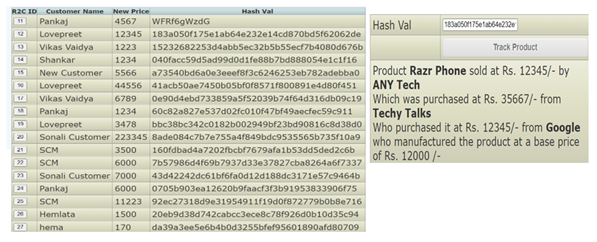
Figure 2 Interface of Product Tracing Via Block-Chain and
Generated Hash Value
Cryptographic hash functions like SHA-256 are most likely used to generate the hash value in this case.
A hash is a fixed-length alphanumeric code created from input data, such as 183a050f175e1ab64e232e14cd870bd5f62062de.
· It serves as that data's digital fingerprint.
· A slight alteration to the input will result in an entirely different hash.
In a blockchain product-tracking system like the one shown, the hash is usually generated from transaction details, for example:
Customer Name + Product Name + New Price + Timestamp + Previous Hash
Lovepreet + Razr Phone + 12345 + 08-12-2025 10:30:15 + <previous block's hash>
Hash is Generated by using following procedure:
"LovepreetRazrPhone1234508-12-2025183a050f175e1ab64e232e14cd870bd5f62062de"
Pass this string into a cryptographic hash function like SHA-256.
SHA-256 always returns a 64-character hexadecimal string.
Example pseudocode:
import hashlib
data = "LovepreetRazrPhone12345"
hash_val = hashlib.sha1(data.encode()).hexdigest()
print(hash_val)
The purpose of hashes in blockchain
Security tracking: Data cannot be changed without being detected thanks to the hash.
Integrity: Any manipulation breaks the chain by altering the hash.
Uniqueness: Even when the facts of a transaction are similar, each transaction has its own hash.
Chaining: To create the blockchain, the hash of each block is combined with the hash of the block before it.
Here's why blockchain matters in this situation:
Immutable Records: The hash of every transaction guarantee that, once entered, the information cannot be changed without also altering the hash.
Traceability: Anyone can find out the product's origin, seller, and price.
Transparency: No covert intermediaries or price manipulations are overlooked.
Fraud Prevention: Because each step is recorded, it stops the selling of fake goods.
Figure 3
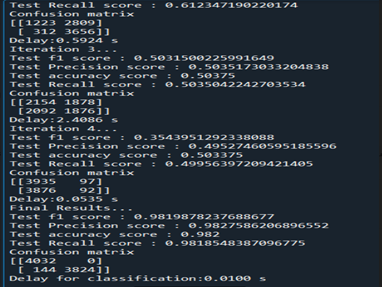
Figure 3 Calculating the Accuracy of Source Tracing
The accuracy of early iterations was about 50%, which is almost random guessing (perhaps from training or testing on a less-optimized model).
The final findings showed a 98%+ accuracy rate, suggesting a very accurate model for determining the product's origin.
Because of the extremely low delay (0.01s), the model is ideal for real-time tracing.
Pertinence to Blockchain Product Monitoring:
In the context of blockchain monitoring, this machine learning model could be used to:
· Classify transactions or determine whether a product source claim is genuine or fake.
· Metrics are used to guarantee high trace accuracy, and the trained model is precise and quick enough to be implemented in an actual supply chain setting.
The Following methods are used for Source tracing:
Figure 4
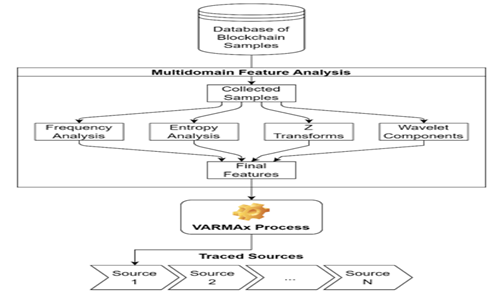
Figure 4 Design of the Proposed Model for Source Tracing
Operations
This figure illustrates a blockchain tracing methodology that makes use of the VARMAx procedure and multidomain feature analysis. Let me dissect it in detail:
1) Blockchain
Sample Database:
It begins with a database on which one can find an example of blockchain transactions. The raw data that represents these samples includes as transactions, blocks or wallet activity that should be examined during tracing.
2) Analysis
of Multidomain Features
Analysis Multidimensional analysis techniques will be used in collecting the samples in order to make informative features on blockchain data. They are examined in terms of various areas:
· The frequency analysis will focus on the search of the pattern sequence of transactions and skyrocketing actions (repeated payment, address, etc.).
· The entropy analysis is the practicality of recognizing irregularities or fraud of an operation since the analysis is used to show the unpredictability or abnormality of dealings.
· Z-Transforms: Mathematically equalizes the data to allow other processing of the data by stabilizing or normalizing it.
· Wavelet Components: Splits the information in the various frequency bands to extract the frequency and timing characteristics of the blockchain activity.
· Final Features The sum of the findings out of all these inquiries.
3. Conclusion and Future Work
The associated development of digital design and media has not merely transformed the nature of creative ecosystems, but it has also given fresh possibilities of expressing the art in new forms, and also posed fresh challenges in regards to authorship authorship, authenticity, and source attributions. As demonstrated in this paper, the issue of authenticating the sources of creative processes at the digital level in real-time is a challenge that can be adequately met by using both blockchain technology and the artificial intelligence application of the deep learning. The proposed model will enable monitorable provenance, safeguard creative property, and instill trust with digitally distributed platforms with the assistance of decentralized and hashed ledger of blockchain and visual recognition sent by AI. Importantly, the methodology balances between security and artistic freedom providing the designers and artists with their freedom of expression and benefits the advantage of technologically-based authenticity and accountability actions. Hypothetically, the framework addresses a systemic gap within current systems of copyright and rights management, offering a more moving and smart system of work-that can be reacted to the patterns of the digital creativity activities nowadays. This combination of deep learning models enables augmenting the capacity to identify unique visual models and stylistic signatures, and blockchain as one provides a secure system to document and justify the deal with inspiration. This strategy alongside these measures will enable the culture aware, open, and strong administration of digital creative assets.
The proposed framework can be developed in several ways in the future through further research in the field. The pilot tests involving designers, artists, and digital platforms will be needed as an initial measure in order to conclude the practicability, accuracy, and practicability of AI-assisted blockchain authentication. Second, a researcher can explore the scalability and interoperability of it, talking about the principles of the framework operation with the assistance of different forms of platforms, file formats, and media one of which may be video, animation, and interactive content. Third, additional use of sophisticated AI models such as generative models and explainable AI can be added with the purpose to enhance the interpretability and flexibility of the approaches of detecting subtle patterns of authorship and stylistic consistency. Fourth, decentralization of creative authentication social and legal studies need further exploration particularly in issues of policy making, copyright issues and ethical issues on decisions made through algorithms. Finally, researchers may be interested in a new study direction in the future in which hybrid frameworks based on combining blockchain, AI, and emerging technologies such as edge computing or the metaverse may support collaborative, immersive, and distributed global creative practice. By these directions, the proposed model can be the multi-dimensional, interdisciplinary solution that ensures the integrity of creativity, yet permits invention to flourish and guarantee creativeness in the rapidly changing landscape of digital design and media.
CONFLICT OF INTERESTS
None.
ACKNOWLEDGMENTS
None.
REFERENCES
Alsharabi, N., Ktari, J., Frikha, T., Alayba, A., Alzahrani, A. J., Jadi, A., and Hamam, H. (2024). Using Blockchain and AI Technologies for Sustainable, Biodiverse, and Transparent Fisheries of the Future. Journal Of Cloud Computing, 13(135). https://doi.org/10.1186/s13677-024-00735-2
Doshi, S., Jangir, S., and Gohil, P. (2024). Role of Blockchain Technology in Enhancing Supply Chain Traceability, Transparency and Efficiency. Journal of Experimental Agriculture International, 46(5), 419. https://doi.org/10.9734/jeai/2024/v46i52419
Ellahi, R. M., Wood, L. C., and Bekhit, A. E.-D. A. (2023). Blockchain-Based Frameworks for Food Traceability: A Systematic Review. Foods, 12(16), 3026. https://doi.org/10.3390/foods12163026
Fernandez-Carames, T. M., Blanco-Novoa, O., Froiz-Miguez, I., and Fraga-Lamas, P. (2024). Towards an autonomous Industry 4.0 warehouse: A UAV and Blockchain-Based System for Inventory and Traceability Applications in Big Data-Driven Supply Chain Management. Robotics and Computer-Integrated Manufacturing, 89, 102596. https://doi.org/10.1016/j.rcim.2023.102596
Fernández-Caramés, T. M., Blanco-Novoa, O., Froiz-Míguez, I., and Fraga-Lamas, P. (2024). Towards an Autonomous Industry 4.0 warehouse: A UAV and Blockchain-Based System for Inventory and Traceability Applications in Big Data-Driven Supply Chain Management. arXiv. https://doi.org/10.1016/j.rcim.2023.102596
Jumani, F., and Raza, M. (2025). Machine Learning for Anomaly Detection in Blockchain: A Critical Analysis, Empirical Validation, and Future Outlook. Computers, 14(7), 247. https://doi.org/10.3390/computers14070247
Kosare, H., and Zade, A. (2024). Blockchain-Based Source Tracing System Using Deep Learning: A Review. In Proceedings of ICCIML 2022 (Lecture Notes in Electrical Engineering, Vol. 1106). Springer. https://doi.org/10.1007/978-981-99-7954-7_27
Lin, D., Zheng, Z., Wu, J., Yang, J., Lin, K., Xiao, H., Song, B., and Zheng, Z. (2025). Track and Trace: Automatically Uncovering Cross-Chain Transactions in the Multi-Blockchain Ecosystems. IEEE. [Conference or journal name missing]
Lin, X., Huang, L., and Zhang, J. (2025). AI-Enhanced Forensic Frameworks for Cross-Chain Transaction Tracing. Future Generation Computer Systems, 155, 180–192. https://doi.org/10.1016/j.future.2025.04.010
Manisha, N., and Jagadeeshwar, M. (2023). A Blockchain-Driven Iot-Based Food Quality Traceability System for Dairy Products using a Deep Learning Model. High-Confidence Computing, 3(3), Article 100121. https://doi.org/10.1016/j.hcc.2023.100121
Mounnan, O., Manad, O., Boubchir, L., El Mouatasim, A., and Daachi, B. (2024). A Review on Deep Anomaly Detection in Blockchain. Blockchain: Research and Applications, 5(4), Article 100227. https://doi.org/10.1016/j.bcra.2024.100227
Palaiokrassas, G., Bouraga, S., and Tassiulas, L. (2024). Machine Learning on Blockchain Data: A Systematic Mapping Study. arXiv Preprint Arxiv:2403.17081. https://doi.org/10.48550/arXiv.2403.17081
Perumalsamy, S., and Kaliyamurthy, V. (2025). Blockchain Non-Fungible Token for Effective Drug Traceability System with Optimal Deep Learning on Pharmaceutical Supply Chain Management. Engineering, Technology and Applied Science Research, 15(1), 19261–19266. https://doi.org/10.48084/etasr.9110
Shafay, M., Ahmad, R. W., Salah, K., Yaqoob, I., Jayaraman, R., and Omar, M. (2022). Blockchain for Deep Learning: Review and Open Challenges. Cluster Computing, 26(2), 197–221. https://doi.org/10.1007/s10586-022-03582-7
Simonyan, K., and Zisserman, A. (2014). Very Deep Convolutional Networks for Large-Scale Image Recognition. arXiv preprint arXiv:1409.1556. https://arxiv.org/abs/1409.1556
Ul Hassan, M., Rehmani, M. H., and Chen, J. (2022). Anomaly Detection in Blockchain Networks: A Comprehensive Survey. IEEE Communications Surveys and Tutorials, 25(1), 289–318. https://doi.org/10.1109/COMST.2022.3205643
|
|
 This work is licensed under a: Creative Commons Attribution 4.0 International License
© ShodhKosh 2025. All Rights Reserved.