ShodhKosh: Journal of Visual and Performing ArtsISSN (Online): 2582-7472
|
|
|
Special
Issue on AI-Driven Creativity and Intelligent Practices in Visual Arts Dr.
Krishna Sankar Kusuma 1 1 Professor, AJK Mass Communication Research Centre, Jamia Millia
Islamia, New Dehli, India 2 Assistant Professor (Cybersecurity), Department of Math, CS &
IT, Lindenwood University, USA 3 Adjunct Professor of Machine Learning, Woxsen
University, Hyderabad, India 4 Professor,
Department of Computer Science Ladoke Akintola University of Technology Ogbomoso, Nigeria 5 Professor & Head in the Department of Artificial Intelligence
& Data Science, Prestige Institute of Engineering Management &
Research, Indore, M.P., India |
|
|
|




Dear Readers and Contributors,
It is with great pleasure that we present
this special issue of ShodhKosh: Journal of Visual
and Performing Arts titled “AI-Driven Creativity and Intelligent Practices
in Visual Arts.” This special issue addresses a significant shift in
contemporary visual arts, where artificial intelligence, intelligent design
tools, and data-driven creative systems are reshaping the ways art is
conceived, produced, taught, curated, and managed.
The visual arts domain is undergoing a
profound transformation as AI-powered graphic design platforms, intelligent
portfolio systems, sentiment-based color analytics,
chatbot-assisted learning environments, and algorithmic creativity increasingly
complement traditional artistic processes. Artistic practice today extends
beyond manual skill and intuition, embracing computational intelligence as a
collaborative creative partner.
The papers selected for this special issue
collectively demonstrate how AI is redefining artistic creation, visual
communication, pedagogy, exhibition practices, and creative management. The
contributions reflect a strong interdisciplinary convergence of visual arts,
computer intelligence, emotion analytics, education technology, and design
management. Together, they position visual arts at the forefront of digital
innovation while maintaining a critical engagement with aesthetic values,
cultural contexts, and human creativity.
A recurring focus across the contributions is
the balance between technological advancement and artistic integrity. Several
studies explore how intelligent systems enhance creative workflows, personalize
learning experiences, support design decision-making, and enable new forms of
artistic expression, while also addressing ethical considerations, authorship,
transparency, and human-centered design principles.
The call for papers attracted diverse
submissions from scholars, educators, designers, and creative technologists
working at the intersection of art and artificial intelligence. All manuscripts
underwent a rigorous peer-review process to uphold the academic standards of ShodhKosh. The resulting collection offers a curated body
of research that documents, analyzes, and critically
evaluates emerging paradigms in AI-driven visual arts practice.
We extend our sincere gratitude to the
authors for their scholarly contributions, to the reviewers for their
thoughtful and constructive evaluations, and to Granthaalayah Publications
and Printers for their continued support in promoting interdisciplinary
research in the visual and performing arts. Their commitment has been
instrumental in the successful realization of this special issue.
We hope this volume stimulates critical reflection, inspires future research, and contributes meaningfully to ongoing discussions on the role of artificial intelligence in shaping the future of visual arts. May it serve as a valuable academic resource for scholars and practitioners navigating the evolving relationship between creativity, intelligence, and technology.
Sincerely,
|
|
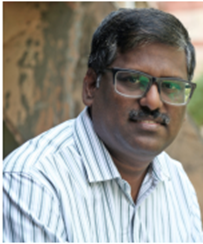
Dr. Krishna Sankar Kusuma is a Professor at the A.J.K. Mass
Communication Research Centre, Jamia Millia Islamia, New Delhi, and a
distinguished scholar in media studies, cinema, and digital communication.
With academic training from the University of Hyderabad and a Ph.D. from Jamia
Millia Islamia, he brings over two decades of teaching, research, and
creative practice to the field. His expertise spans South Indian cinema,
critical media theory, communication research, digital media, media law,
inclusive communication, and mobile filmmaking. Dr. Kusuma has contributed
extensively to national and international conferences and has published
influential work on cinema, media technology, protest movements, MOOCs,
community journalism, and immersive storytelling. His research also explores
Dalit and minority representation, interactive documentary practices, and
emerging digital tools such as AR, VR, and AI in media production. A practitioner‑scholar, he has
worked on documentaries, television formats, and innovative
mobile‑based storytelling, making him a leading voice in contemporary
media education and research. |
|
|
Dr. Naresh Kshetri is a full‑time faculty member in the Department of Cybersecurity, Golisano College of Computing and Information Sciences, Rochester Institute of Technology (RIT), New York, USA. He holds a Ph.D. in Computer Science from the University of Missouri–St. Louis, along with advanced degrees in Cybersecurity, Computer Applications, and Computer Science. With extensive academic and professional experience across the United States and India, Dr. Kshetri has served in roles including Assistant Professor, Adjunct Instructor, Graduate Research Assistant, and Lecturer in computer science and cybersecurity domains. His research spans AI ethics, machine ethics, autonomous systems, cyber defense strategies, online crime, and blockchain security, reflecting a strong interdisciplinary foundation in emerging digital‑security challenges. Dr. Kshetri is also an active software developer with expertise in multiple programming languages, operating systems, and development frameworks. He maintains a
robust scholarly presence through ORCID, Google Scholar, SSRN, ResearchGate,
Scopus, and Web of Science profiles, contributing significantly to
cybersecurity research and education. |
|
|
Professor Dr. Gabriel Kabanda is an internationally recognized
computer scientist, AI researcher, and digital‑transformation expert,
currently serving as Adjunct Professor of Machine Learning at Woxsen University, Hyderabad, India. With an illustrious
career spanning more than 38 years, he has made significant contributions to
artificial intelligence, machine learning, cybersecurity, digital innovation,
and ICT for development. Dr. Kabanda has supervised over 20
doctoral theses and 200 master’s dissertations, shaping generations of
researchers and practitioners in computing and digital technologies. His
scholarly output includes numerous publications in international refereed journals,
reflecting his deep engagement with emerging technologies and their societal
impact. A recipient of multiple international
awards, Dr. Kabanda is widely respected for his leadership in digital
transformation, research excellence, and capacity‑building initiatives
across Africa and beyond. His work continues to influence policy, innovation
ecosystems, and the global discourse on AI‑driven development.
|
|
|
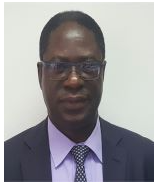
Professor Stephen Olatunde Olabiyisi is a distinguished scholar and
senior academic serving in the Department of Computer Science, Ladoke
Akintola University of Technology (LAUTECH), Ogbomoso, Nigeria. He holds
B.Tech., M.Tech., and Ph.D. degrees in Applied
Mathematics from LAUTECH, along with an M.Sc. in Computer Science from the
University of Ibadan. Beginning his academic career as a
Graduate Assistant in 2000, he rose steadily through the ranks to become a
Professor of Computer Science in 2013. His research spans computational and
software complexity, performance modelling, simulation, soft computing,
machine learning, and scientific computing. Professor Olabiyisi has an
exceptional academic footprint, having supervised 42 Ph.D. candidates, 47
master’s students, and over 400 undergraduates, and has authored more than
189 peer‑reviewed publications. He has also co‑authored several
books and served in major administrative roles, including Head of Department,
Dean of Student Affairs, and Director of the LAUTECH ICT Centre |
|
|
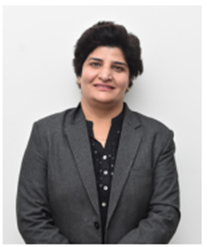
Dr. Dipti Chauhan is a Professor and Head of the
Department of Artificial Intelligence and Data Science at the Prestige
Institute of Engineering Management & Research (PIEMR), Indore, Madhya
Pradesh, India. She holds a Ph.D. from Maulana Azad National Institute of Technology
(MANIT), Bhopal, and has received a prestigious MHRD fellowship during her
doctoral research. A certified IPv6 Gold and Silver
Network Engineer from the IPv6 Forum, University Sains Malaysia, Dr.
Chauhan’s expertise spans Next‑Generation Networks, Wireless
Communication, IPv6 Migration, IoT, Machine Learning, and Data Mining. She
has published extensively in reputed journals, including Scopus‑indexed
works on 6G challenges, IPv6 tunneling, IoT energy
efficiency, and machine learning applications. As an academic leader, she has
contributed significantly to curriculum development, research supervision,
and collaborative projects in emerging technologies. Her active presence on
ORCID, Google Scholar, ResearchGate, and Scopus reflects her strong research
footprint and commitment to advancing AI‑driven innovation in
engineering education. |


|
|
 This work is licensed under a: Creative Commons Attribution 4.0 International License
© ShodhKosh 2024. All Rights Reserved.