ShodhKosh: Journal of Visual and Performing ArtsISSN (Online): 2582-7472
|
|
Predictive Market Trends in Printing and Photography
Vibhor Mahajan 1
 ,
Chaitanya Joshi 2, Pooja Goel 3
,
Chaitanya Joshi 2, Pooja Goel 3 , Karthik K 4
 , Dipali Kapil Mundada
5
, Dipali Kapil Mundada
5 , Dr. Dolly Misra 6
1 Centre
of Research Impact and Outcome, Chitkara University, Rajpura- 140417, Punjab,
India
2 Assistant
Professor, Department of Film and Television, Parul Institute of Design, Parul
University, Vadodara, Gujarat, India
3 Associate Professor, School of
Business Management, Noida International University, Greater Noida, Uttar
Pradesh, India
4 Assistant Professor, Department of
Computer Science and Engineering, Aarupadai Veedu
Institute of Technology, Vinayaka Mission’s Research Foundation (DU), Tamil
Nadu, India
5 Department of Engineering, Science and
Humanities, Vishwakarma Institute of Technology, Pune, Maharashtra, 411037
India
6 Assistant Professor Grade -II, Department
of Management, Aarupadai Veedu Institute of
Technology, Vinayaka Mission’s Research Foundation (Du), Tamil Nadu, India
|
|
|
ABSTRACT |
|
|
The printing
and photography sectors are changing very fast due to digitalization,
automation and using data to make decisions. The analysis of market trends
which can be predicted as a key to the analysis of the demand fluctuations,
the technological use, and the changing preferences of consumers in such
visual-oriented sectors. This paper will examine the predictive market trends
in printing and photography by using a combination of economic indicators,
technological drivers and behavioral data into a single analysis tool. To
capture both the macroeconomic and the micro-level market dynamics, the study
uses heterogeneous sources of data, which are industry reports, sales
records, online platforms, and social media trend signals. Premature
preprocessing and feature engineering are used to derive temporal, economic
and behavioral cues to express pricing frameworks, production expenses,
personalization demand, sustainability inclinations, and transformations in
visual culture. Several different predictive modeling approaches will be
considered, including classical time-series like ARIMA, SARIMA, Prophet, or
machine learning models like regression, random forest, and gradient boosting
or deep learning models like LSTM, GRU, or transformer-based predictors. Comparative
analysis reveals that hybrid, as well as deep learning models, are strong in
terms of capturing non-linear trends and long term
dependencies of creative markets. |
|||
|
Received 14 June 2025 Accepted 28 September 2025 Published 28 December 2025 Corresponding Author Vibhor
Mahajan, vibhor.mahajan.orp@chitkara.edu.in
DOI 10.29121/shodhkosh.v6.i5s.2025.6919 Funding: This research
received no specific grant from any funding agency in the public, commercial,
or not-for-profit sectors. Copyright: © 2025 The
Author(s). This work is licensed under a Creative Commons
Attribution 4.0 International License. With the
license CC-BY, authors retain the copyright, allowing anyone to download,
reuse, re-print, modify, distribute, and/or copy their contribution. The work
must be properly attributed to its author.
|
|||
|
Keywords: Predictive Analytics, Printing Industry, Photography
Market, Time-Series Forecasting, AI-Driven Market Trends |
|||



1. INTRODUCTION
Printing and photography industries have experienced a major role in visual communication, cultural documentation, advertising, education, and expression. These industries have undergone radical structural transformation in the last 20 years with enormous technological progress, evolving consumer demands and augmented economic insecurity. Digital printing technologies, high-resolution digital imaging, cloud-based production pipelines and automated post-processing systems have increasingly been taking the place of or complementing traditional analog workflows. Consequently, the behavior of the market in printing and photography has turned out to be more active, competitive, and data-related, which has led to a high demand to have effective means of predicting the future tendencies and contributing to the process of strategic decisions. The analysis of market trends in advance has thus become a very important aspect of organizations that are aiming at keeping pace with the change and surviving in this dynamic environment McLellan et al. (2022). The modern printing and photography industry is conditioned by a complicated combination of technological, economical, and behavioral forces. The invention of inkjet and laser-based digital printing, artificial intelligence-based image optimization, automated page layout creation, and smart color control have greatly shortened the production time, and have made it more unique and higher quality. Simultaneously, the approach to distributed production, cooperation, and scalable content delivery has been made possible by cloud workflows and services based on the platform. The changes have seen the cost structure being changed, less barriers to entry of small and medium enterprises and increased global competition Muehlenfeld and Roberts (2019). This leads to the market demand patterns being no longer linear or stable, but rather seasonal, volatile and quickly changing in response to the diffusion and adoption of technology by consumers. Market complexity is also brought about by economic and business forces. Changes in the prices of raw materials, energy price, and logistics have a direct impact on printing activities, and subscription-based software, equipment leasing systems, and on-orders services transform printing revenue streams in the photography industry.
Figure 1
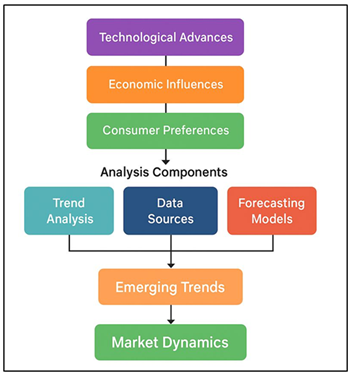
Figure 1 Multilayer Architecture for Market Trend Analysis in
Printing and Photography
The field of supply chains across the world and disparities in the economy across localities also affect the choice of investments and consumption patterns. Within this kind of environment, it is becoming more and more inadequate to use only historical averages or intuition of the expert. Figure 1 presents multilayer architecture with the capability to analyze the trends in printing, photography. Predictive models that are based on data provide the capacity to quantify uncertainty, sense early indications of change and predict market directions more accurately. Changes in consumer behavior and visual culture are also important Rajput et al. (2022). Market trends have changed due to the increasing need to have a custom made product, print run and on command, environmentally friendly materials, and sustainable manufacturing. With photography, consumption trends, image aesthetics, and the monetization model have changed with the emergence of social media, image-sharing systems, and mobile photography. The visual trends are now changing at a very quick pace, based on the metrics of engagement on the internet, algorithmic exposure, and cultural trends Raina et al. (2021). To capture these behavioral indicators, non-conventional data sources like social trends of media, online reviews, and platform analytics have to be incorporated in the market forecasts models.
2. Related Work
The predictive market trends in printing and photography have been investigated in the past by researchers that fall under various disciplinary areas: industrial economics, technology management, data analytics, and artificial intelligence. The initial research in the printing sector was mainly based on the econometric and statistical forecasting models used to predict the demand of the printed media, advertising volumes, and publication circulation. The common classical time-series models that had been used extensively to model seasonal demand fluctuations in the newspapers, commercial printing and packaging industries included autoregressive (AR), moving average (MA) and ARIMA models Husbands et al. (2021). Although these gave an effective short term forecasting in stable conditions, the linear assumptions that these methods used restrained their capacity to transform to quickly changing technological conditions. As digital printing and computer-based imaging systems have grown, scholars started using multivariate regression and panel data analysis to determine how technological adoption, pricing strategies and manufacturing costs affect market performance. A number of studies investigated the process of offset to digital printing transition, noting the importance of customization, the decrease in the print run and minimum cost of set-up in transforming the market demand. Market-oriented research on the economic role of digital cameras, stock photography systems and subscription-based licensing systems in photography, typically based on descriptive analytics and trend extrapolation methods Biswas et al. (2021). Recent studies have added more and more machine learning approaches to enhance the predictive accuracy and non-linear market behavior. The models used to predict the demand of printing, equipment use, and sales performance with the help of past sales data and macroeconomic indicators have been random forest, support vector regression, and gradient boosting models. Simultaneously, photography market research has been using the information of online platforms, including image downloads, user engagement, and search trends, to forecast the popularity of content and trends in revenues Gul et al. (2018). Table 1provides an overview of the predictive models that examine the market trends in printing and photography. These models were found to be more resistant to noise and heterogeneous than the traditional statistical techniques. Market prediction research has been further advanced with the development of deep learning.
Table 1
|
Table 1 Summary on Predictive Market Trends in Printing and Photography |
|||||
|
Domain Focus |
Data Sources Used |
Prediction Method |
Key Variables Considered |
Key Findings |
Limitations |
|
Commercial Printing |
Sales reports, GDP |
ARIMA |
Demand volume, seasonality |
Effective short-term demand
recall |
Poor non-linear modeling |
|
Digital Photography Alshebly et al, (2021) |
Camera sales data |
Regression |
Pricing, tech adoption |
Identified price sensitivity trends |
Limited behavioral factors |
|
Print Media |
Industry reports |
SARIMA |
Cyclic demand, costs |
Captured seasonal patterns
well |
Weak during disruptions |
|
Online Photography Market Aldawood (2023) |
Platform analytics |
Random Forest |
User engagement, downloads |
Improved trend detection |
Model interpretability |
|
Personalized Printing |
CRM, sales logs |
Gradient Boosting |
Customization demand |
Strong non-linear prediction |
Requires tuning |
|
Imaging Services |
Market intelligence |
SVR |
Cost indices, pricing |
Robust to noisy data |
Scalability issues |
|
Printing Supply Chain Kumar et al. (2021) |
Logistics data |
XGBoost |
Lead time, inventory |
Reduced forecast error |
Data dependency |
|
Stock Photography |
Image downloads |
LSTM |
Temporal usage trends |
Captured long-term patterns |
High computation cost |
|
Visual Content Market Yousuf et al. (2020) |
Social media data |
GRU |
Engagement momentum |
Early trend identification |
Platform bias |
|
Digital Print Services |
Sales + online trends |
Hybrid ML |
Pricing, demand signals |
Improved mid-term forecasts |
Complex pipeline |
|
Photography Platforms |
User analytics |
Deep Ensemble |
Content popularity |
High robustness |
Data-intensive |
|
Printing and Imaging Goo et al. (2020) |
Sales + social data |
Hybrid DL |
Tech, economic factors |
Best overall performance |
Interpretability challenges |
3. Market Dynamics and Influencing Factors
3.1. Technological drivers: digital printing, AI imaging, automation, and cloud workflows
The major driver in the printing and photography sector is technological innovation that is dictating the market. The use of digital printing technologies such as the advanced inkjet and laser systems has changed production in that it supports shorter run, variable data printing, and turn around time. These features enable mass customization, on-demand manufacturing, less inventory and wasted materials and expand the scope of usage like customized wrappings, photo books and advertising materials Ahmed et al. (2021). Simultaneously, AI-based imaging technologies have brought up the image processing processes with considerable advancement in terms of automated image processing, noise reduction, color correction, and style adaptation, making the photographic work process more productive and visually high. Automation also helps in the efficiency of operations by simplifying the prepress, press and post-processing procedures. Smart scheduling and robotization in handling, as well as automated quality control, minimize human involvement and errors and reduce labor expenses. Automation is used in photography as a means of batch processing, metadata tagging, and content recommendation to allow managing extensive repositories of images in a scalable manner Ntouanoglou et al. (2018). The use of workflows by a cloud-based solution is an expansion of these advantages since it allows remote collaboration, distributed production, and scalable resources used in storage and computing. The print service providers and photography studios are opening up to the cloud to combine the design, production, and delivery process across geographically distributed workforce.
3.2. Economic and Business Factors: Pricing, Cost Structures, and Supply Chains
In printing and photography, economic and business factors are important determinants of predictive market trends. The strategies of pricing in these enterprises are becoming more complicated depending on the changing costs of raw materials, energy, labor as well as investment in technology. In printing, changes in the costs of paper, ink and substrate have a direct impact on profit margins, whereas in photography changes in operational expenses are redefined by subscription-based software, equipment depreciation and platform service fees. The threat of competitive pricing by digital-first and online service providers only continues to squeeze the margins, compelling businesses to minimize their costs and implement data-driven pricing models..
Figure 2
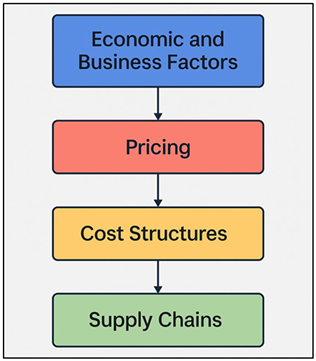
Figure 2 Flowchart of Economic and Business Drivers in Printing
and Photography Markets
The use of digital and automated technologies has resulted in a substantial change in the cost structures. Figure 2 depicts economic and business driver flowchart which have an influence in printing and photography markets. As much as starting capital outlays may be large to buy high-tech printers, AI, and cloud infrastructure, the operational expenses in the long term may be lower due to increased efficiency, reduced wastage, and enhanced resource utilization. Business models based on platforms and outsourcing also change the cost distributions and shift some risks of operation to the third-party service providers.
3.3. Consumer Behavior Trends: Personalization, Sustainability, and Visual Culture Shifts
The consumer behavior has changed at a very high rate and it has become a determinant in the printing and photography market. The phenomenon of personalization has become a leading tendency as people are seeking unique, tailor-made items and experiences. Personalized photo products, variable data printing, and customized visual content are all ways that businesses can focus on the individual preferences at a scale. The desire of consumers to have unique approaches to editing, curated visuals, and influenced content suggestions is becoming more important in photography, shaping the demand trends and business model. The market expectations have also been transformed through sustainability considerations. The increase in environmental awareness has driven consumers and corporate customers towards using materials that are eco-friendly, production processes that are energy efficient in their use, and responsible in their sourcing procedures. Such tastes affect the decisions to purchase and brand loyalty that leave market signals that can be predicted and incorporated into predictive models. Variations in the visual culture also play a role in changing the demand patterns. The short-lived aesthetic trends, social media platforms, and mobile devices make visual content lifecycle faster.
4. Data Sources and Preprocessing
4.1. Industry reports, sales records, and market intelligence datasets
The combination of organized and credible sources of data is required to provide reliable predictive modeling of market trends in the printing and photography industry. The trade association, consulting firms and market research agencies issue industry reports that give high level of remembered insights into the market size, growth rates, adoption of technology, and the demand patterns in the region. Such reports commonly cover historical trends, future projects and business model and application, segmentation, so that they can be used to place predictive results. The main quantitative data to use in demand forecasting and revenue analysis are sales records of printing companies, photo studios, equipment distributors, online service providers. These records usually have time stamped volumes of transactions, categories of products, prices and customers profiles. Market intelligence data also enhances the analysis by adding macroeconomic indicators, trade data and competitive benchmarking data.
4.2. Online Platforms, Social Media, and Image-Sharing Trend Data
Besides conventional industry data, online platforms and social media offer deep and high-frequency signals, which reflect new trends in printing and photography. Online picture-sharing sites, e-commerce sites, and content platform communities produce copious amounts of consumer-created data that indicate consumer interest, value inclinations, and usage habits. Indicators of demand on individual visual styles, formats and services, in real time (image uploads and downloads, likes, shares, comments, and search queries) provide the metrics. They are used to make predictions regarding the popularity cycles of photographs, genres and editing styles in photography, and on trends of personalized products, merchandise and promotions in printing. The social media platforms also provide contextual and behavioral data in the form of hashtags, activity of influencers, and campaign engagement. The analysis of text and visual content may be performed to determine the sentiment, new keywords used and visual patterns that relate to market growth or downfall. Online data processing includes noise filtering, bot or spam problem, as well as platform-specific biases. Timing is very important, since there is a tendency of the online cues to be ahead of actual buying actions.
4.3. Feature Engineering: Temporal, Economic, and Behavioral Indicators
A key process that is involved is the feature engineering which converts the raw data into useful predictors to evaluate the market trends. Temporal characteristics represent characteristics of time-varying patterns that include seasonality, cyclical demand, growth rates, and lag effects. This can be monthly sales trend, quarterly sales trend, year to year growth ratio, moving averages to smooth short-term fluctuations. These characteristics are especially valuable in printing and photography where the demand tends to have a seasonal trend that can be associated with advertising campaigns, festivals, and event based photography. Economic indicators are constructed in such a way as to represent more encompassing market conditions and cost pressures. The demand variability is put in context by such factors as inflation-adjusted prices, material cost indices, prices of energy and disposable income levels. The terms of interaction between the economic and sales variables can be used to capture the non-linear effects, e.g. the sensitivity to price changes in economic downturns. The results of behavioral measures based on online sources are the intensity of engagement, trend momentum, the levels of sentiment, and indices of visual style popularity. These characteristics measure consumer interest and cultural changes that affect the purchasing decisions. The methods used to normalize, scale and reduce dimensions are used to achieve numerical stability as well as avoiding dominance of large-valued features.
5. Predictive Modeling Framework
5.1. Time-series forecasting models: ARIMA, SARIMA, Prophet
The lower layer of predictive analysis of printing and photograph markets consists of time-series forecasting models, whose historical data of demand and revenue have time dependencies. ARIMA models are popular tools in the stationary time-series, which are used to model autoregression, moving average and differencing components of time-series in order to capture linear relationships. ARIMA can be applied in the short-term forecasting when the historical patterns are rather stable, and the level of noise is moderate. Figure 3 depicts time-series predictive models of the trends of market demands.
Figure 2
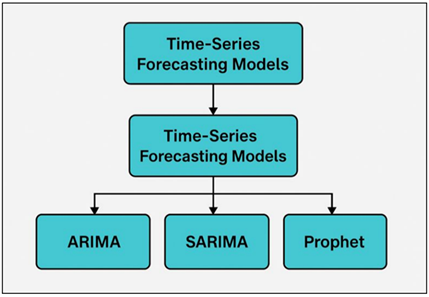
Figure 3 Architecture of Time-Series Forecasting Models for Market
Demand Prediction
Nevertheless, printing and the photography industry tend to exhibit seasonal changes due to advertisement cycles, festive demand, and the event photography. Prophet is a time-series forecasting model that is decomposable which has become popular because of its ability to accommodate flexibility and tolerance to missing data and outliers. It explicitly breaks down time-series into trend, seasonality and holiday effects and thus is especially applicable to markets with irregular effects and promotions. Prophet enables the inclusion of domain knowledge, e.g. major industry events or policy changes that can have a profound influence on demand, to be added in an intuitive manner.
5.2. Machine Learning Approaches: Regression, Random Forest, Gradient Boosting
Machine learning methods improve the predictive modeling by the capture of a non-linear relationship between market demand and various influencing variables. Linear and regularized forms of traditional regression models are frequently regarded as interpretable benchmarks which take into account economic indicators, price determinants, and technological adoption rates. Even though regression is limited to modeling complicated interactions, it is more transparent and can be used as a reference point to more sophisticated ways. Ensemble learning models like random forest models are better predictors because they combine the results of various decision trees trained on random data and feature sets. This is a good method to use heterogeneous market data because it can deal with non-linearity, multicollinearity and missing values. Random forests have been used in the printing and photography markets to make predictions on the amount of sales, customer churn and pattern of technology acceptance. The measures of feature importance based on such models can also provide the knowledge of central drivers in the market. Gradient boosting models like the XGBoost and LightGBM also improve the performance by continuously updating errors in prediction in an additive tree structure. These techniques are effective in the measurement of complicated interactions and delicate signal of trends by high-dimensional datasets.
5.3. Deep Learning Models: LSTM, GRU, and Transformer-Based Predictors
Deep learning models are the highest level of the predictive framework that is the most effective in complicated and highly dynamic market conditions. The LSTM networks were created to deal with the long-range temporal dependencies by addressing the vanishing gradient problem associated with the traditional recurrent neural networks. LSTMs are effective in printing and photography markets in order to predict long term demand patterns, seasonal variations and slow adaptation to technology or economic fluctuations. GRU networks provide an alternative to the LSTMs with reduced parameters, but the performance of these models is similar. GRUs particularly come in handy when there is a dearth of information or forecasting is needed in real-time. Transformer-based predictors have recently been the focus of attention as they possess self-attention mechanisms that enable models to learn the global dependencies over time and do not require sequential processing. These models can incorporate different features such as temporal, economic and behavioral indicators in a single architecture. Transformers are better than other models in market predictions since abrupt change in trends and complicated interplay influenced by the dynamics of online interactions and visual culture are better explained by transformers.
6. Challenges and Limitations
6.1. Data availability, bias, and market uncertainty
Availability and quality of data is one of the main factors in forecasting the trends in the market of printing and photography. Although large organizations might have large sales records and customer analytics, small and medium enterprises might not necessarily have the systemized data collection practices which lead to fragmented and incomplete datasets. Industry reports and market intelligence sources can be updated less frequently hence they can not be used to forecast in the short run. In comparison, data on online and social media are rich and noisy, prone to platform predictions, and no longer reflect real buying activity. Such differences make it harder to integrate the data and create doubt about the inputs in the models. Another important issue is bias, which is caused by unrepresentative samples, regional imbalances, or excessive use of digital platforms, which prefer certain demographics. Social media trends can be used as an example where younger and urban consumers are overrepresented and the traditional print markets are underserved. The antique market structures can also be coded in historical data, and thus models continue to reproduce past trends, which are no longer relevant. These difficulties are further increased by market uncertainty where an economic shock, change of policies, or technological shocks can invalidate history very quickly.
6.2. Model Interpretability and Generalization Issues
Interpretability is a limitation that comes up as predictive models continue to grow in complexity, in both cases when using ensemble methods and when using deep learning architectures. The stakeholders within the printing and photography sector usually need clear explanations of projections in order to make sound strategic planning in the decision making regarding investment, prices, and capacity planning. LSTM networks and transformer-based predictors are black-box models that are both highly accurate but lack deep understanding of the effect of particular factors on the predicted outcome. Such a deficiency in transparency can also lessen trust and adoption, particularly to the business settings where accountability and explainability are stored. The issue of generalization is another problem since models that have been trained using past information in particular regions, product category, or time might fail when applied to new situations. The market behavior of printing and photography in different geographies, cultural environment, and business models are largely different and it is not easy to come up with predictors that are universal. Extrapolation to historical trends is also one more factor that diminishes resilience in the face of market regime shifts.
6.3. Ethical and Economic Implications of AI-Driven Predictions
Important ethical and economic issues are expressed by the implementation of AI-based predictive models in the field of printing and photography. Ethically, there are issues of privacy, consent, and ownership of data when consumer information, especially that of online sources and social media are used. Behavioral data in aggregate form can be sensitive information about preferences and consumption patterns, which requires appropriate data management and adherence to the requirements of data protection regulations. They need to be transparent in data collection and utilization so that there is trust among consumers and the stakeholders in the industry. Economic implications should also be paid close attention to. Organizations that have more access to data and computational resources, which is likely to give them competitive advantages due to highly accurate predictive models, may further increase the disparity between large and small enterprises. The automated forecasting systems would be able to affect the investment, workforce planning, and pricing strategies and have unintended consequences like market consolidation or lower employment in a specific segment. Algorithms are also likely to harm innovation and human discretion in visual sectors in which creative experimentation is encouraged.
7. Results
The predictive modeling framework shows that the advanced machine learning and deep learning models are more effective in explaining the intricate market dynamics within the printing and photography industry compared to the traditional time-series models. ARIMA and SARIMA models are time-series models that are useful in determining the seasonal demand patterns but lack confidence in sudden market changes. Comparatively, gradient boosting and random forest models enhance forecasts accuracy by using economic and behavioral reports. Deep learning models especially LSTM and transformer-based predictors give the best predictive consistency through modeling long-term and non-linear interactions.
Table 2
|
Table 2 Comparative Performance of Predictive Models for Market Demand Forecasting |
||||
|
Model Type |
MAE |
RMSE |
MAPE (%) |
Forecast Accuracy (%) |
|
ARIMA |
8.42 |
11.36 |
15.8 |
78.4 |
|
SARIMA |
7.15 |
9.84 |
13.2 |
82.6 |
|
Prophet |
6.48 |
9.02 |
12.1 |
84.9 |
|
Linear Regression |
5.96 |
8.74 |
11.4 |
86.2 |
|
Random Forest |
4.21 |
6.18 |
8.6 |
90.7 |
|
Gradient Boosting |
3.84 |
5.62 |
7.9 |
92.1 |
|
LSTM |
3.29 |
4.97 |
6.8 |
94.3 |
The efficacy of various predictive models used in forecasting market demand in printing and photography industry is compared in Table 2. Conventional models of statistics demonstrate relatively worse results.
Figure 4
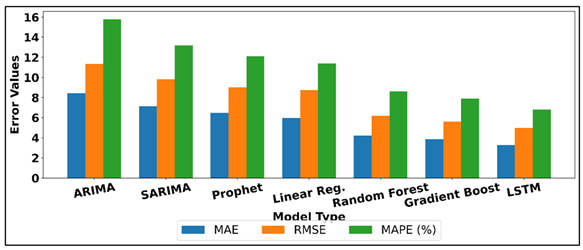
Figure 4 Comparative Bar Analysis of Forecasting Error
Metrics Across Models
Figure 4 indicates a comparative bar analysis of forecasting error measures of models. The ARIMA experiences the most errors, as their MAE is 8.42 and their RMSE is 11.36 and their forecast accuracy is only 78.4 percent meaning that it is hard to model non-linear demand changes. SARIMA also works better as it takes into account the seasonness and makes the MAE smaller (7.15) and the accuracy greater (82.6). Prophet also optimizes the trend handling and irregular event modeling with MAE of 6.48 and forecast accuracy of 84.9%. There is a significant improvement in machine learning approaches. Comparison of MAE, RMSE, and MAPE is given in Figure 5 between forecasting models.
Figure 5

Figure 5 Comparison of MAE, RMSE, and MAPE Across Forecasting
Models
Linear regression minimizes MAE 5.96 and maximal accuracy 86.2 but more progress cannot be achieved due to the linear assumptions. Random Forest has a great improvement in prediction ability and reduces the RMSE to 6.18 and it has a magnitude of 90.7 percent accuracy because it considers intricate interactions among the market variables.
Figure 6
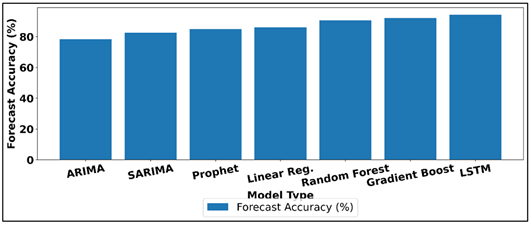
Figure 6 Forecast Accuracy Comparison Across Time-Series
Models
Gradient Boosting also displays a better performance with a MAE of 3.84, RMSE of 5.62, and a forecast accuracy of 92.1, which indicates its capability to correct the errors during the iterative process. Figure 6 presents the comparison of accuracy of forecasts made by different time-series prediction models. The best overall results are of LSTM, which has the lowest MAE (3.29), RMSE (4.97), and MAPE (6.8 percentage) and the highest accuracy of 94.3 percent. This validates the applicability of deep learning with regard to modeling the long-term temporal dependencies and volatile market dynamics.
8. Conclusion
The present study is a thorough analysis of predictive market trends within the sphere of printing and photography, where the use of data-driven forecasting is becoming more significant in the context of visual orientation and fast-paced and changing markets. The proposed framework will help to capture both structural and non-structural traits of the behavior of the markets by systematically incorporating industry reports, transactional sales data, and online behavioral signals. The comparative analysis of time-series, machine learning, and deep learning models show the advantages and drawbacks of both models, showing that the hybrid and deep learning-driven predictors are especially effective when it comes to dealing with non-linear dynamics, seasonality, and abrupt changes in demand. In addition to predictive performance, the research highlights the role of strategic significance of market forecasting in operational planning, investment decision-making and innovation management. Proper forecasts of the demand can be used to assist organizations make the most out of inventory, match production capacity with market demands and anticipate the changes in the consumer preferences and visual culture. Meanwhile, the knowledge gained on the basis of model interpretability and feature importance analysis allows the stakeholders to learn about the major forces of the market development, which include technological adoption, sensitivity to price and demand driven by sustainability.
CONFLICT OF INTERESTS
None.
ACKNOWLEDGMENTS
None.
REFERENCES
Ahmed, A., Arya, S., Gupta, V., Furukawa, H., and Khosla, A. (2021). 4D Printing: Fundamentals, Materials, Applications and Challenges. Polymer, 228, 123926. https://doi.org/10.1016/j.polymer.2021.123926
Aldawood, F. K. (2023). A Comprehensive Review of 4D Printing: State of the Arts, Opportunities, and Challenges. Actuators, 12, 101. https://doi.org/10.3390/act12030101
Alshebly, Y. S., Nafea, M., Mohamed Ali, M. S., and Almurib, H. A. F. (2021). Review on Recent Advances in 4D Printing of Shape Memory Polymers. European Polymer Journal, 159, 110708. https://doi.org/10.1016/j.eurpolymj.2021.110708
Biswas, M. C., Chakraborty, S., Bhattacharjee, A., and Mohammed, Z. (2021). 4D Printing of Shape Memory Materials for Textiles: Mechanism, Mathematical Modeling, and Challenges. Advanced Functional Materials, 31, 2100257. https://doi.org/10.1002/adfm.202100257
Goo, B., Hong, C. H., and Park, K. (2020). 4D Printing Using Anisotropic Thermal Deformation of 3D-Printed Thermoplastic Parts. Materials and Design, 188, 108485. https://doi.org/10.1016/j.matdes.2020.108485
Gul, J. Z., Sajid, M., Rehman, M. M., Siddiqui, G. U., Shah, I., Kim, K. H., Lee, J. W., and Choi, K. H. (2018). 3D Printing for Soft Robotics: A Review. Science and Technology of Advanced Materials, 19, 243–262. https://doi.org/10.1080/14686996.2018.1431862
Husbands, P., Shim, Y., Garvie, M., Dewar, A., Domcsek, N., Graham, P., Knight, J., Nowotny, T., and Philippides, A. (2021). Recent Advances in Evolutionary and Bio-Inspired Adaptive Robotics: Exploiting Embodied Dynamics. Applied Intelligence, 51, 6467–6496. https://doi.org/10.1007/s10489-021-02275-9
Kumar, S. B., Jeevamalar, J., Ramu, P., Suresh, G., and Senthilnathan, K. (2021). Evaluation in 4D Printing: A Review. Materials Today: Proceedings, 45, 1433–1437. https://doi.org/10.1016/j.matpr.2020.07.335
McLellan, K., Sun, Y. C., and Naguib, H. E. (2022). A Review of 4D Printing: Materials, Structures, and Designs Towards the Printing of Biomedical Wearable Devices. Bioprinting, 27, e00217. https://doi.org/10.1016/j.bprint.2022.e00217
Muehlenfeld, C., and Roberts, S. A. (2019). 3D/4D Printing in Additive Manufacturing: Process Engineering and Novel Excipients. In 3D and 4D Printing in Biomedical Applications (1–25). Wiley-VCH. https://doi.org/10.1002/9783527813704.ch1
Ntouanoglou, K., Stavropoulos, P., and Mourtzis, D. (2018). 4D Printing Prospects for the Aerospace Industry: A Critical Review. Procedia Manufacturing, 18, 120–129. https://doi.org/10.1016/j.promfg.2018.11.016
Raina, A., Haq, M. I. U., Javaid, M., Rab, S., and Haleem, A. (2021). 4D Printing for Automotive Industry Applications. Journal of the Institution of Engineers (India): Series D, 102, 521–529. https://doi.org/10.1007/s40033-021-00284-z
Rajput, G. S., Vora, J., Prajapati, P., and Chaudhari, R. (2022). Areas of Recent Developments for Shape Memory Alloy: A Review. Materials Today: Proceedings, 62, 7194–7198. https://doi.org/10.1016/j.matpr.2022.03.407
Yousuf, M. H., Abuzaid, W., and Alkhader, M. (2020). 4D Printed Auxetic Structures with Tunable Mechanical Properties. Additive Manufacturing, 35, 101364. https://doi.org/10.1016/j.addma.2020.101364
|
|
 This work is licensed under a: Creative Commons Attribution 4.0 International License
© ShodhKosh 2025. All Rights Reserved.