ShodhKosh: Journal of Visual and Performing ArtsISSN (Online): 2582-7472
|
|
Integrating AI Art Tools in National Education Policy
Baliram N. Gaikwad 1 , Palak Patel 2
 ,
Shubhansh Bansal 3
,
Shubhansh Bansal 3
 ,
Swati Chaudhary 4
,
Swati Chaudhary 4 , Mamta Thakur 5
 ,
Hashmat Fida 6
,
Hashmat Fida 6 ,
Vijay Itnal 7
,
Vijay Itnal 7
1 Department of Lifelong Learning and Extension, University of Mumbai, Maharashtra, India
2 Assistant Professor, Department of Fashion Design, Parul Institute of Design, Parul University, Vadodara, Gujarat, India
3 Centre of Research Impact and Outcome, Chitkara University, Rajpura 140417, Punjab, India
4 Assistant Professor, School of Business Management, Noida International University, India
5 Assistant Professor, Department of Mathematics, Chaitanya Bharathi Institute of Technology, Gandipet, Hyderabad, India
6 Assistant Professor, Department of Computer Science and Engineering, Presidency University, Bangalore, Karnataka, India
7 Department of Mechanical Engineering, Vishwakarma Institute of
Technology, Pune 411037, Maharashtra, India
|
|
|
ABSTRACT |
|
|
The fast
development of artificial intelligence has brought potent tools of
creativity, which are changing the visual arts education all over the world.
The implementation of AI art tools into the concept of the National Education
Policy (NEP) is a strategic chance to coordinate technological innovation
with the innovative goals of creativity orientation, competency focus, and
experiential learning. The paper discusses the ways in which AI-driven
artistic software (including generative models or intelligent imaging systems
or style transfer or AI-assisted critique systems) can be effectively
integrated into the formal education process without sacrificing human
creativity, cultural identity, and pedagogical integrity. Based on the
constructivist theory of learning, the paradigms of the experiential
education model, and the human-AI co-creation and learning paradigms, the
study conceptualizes AI as the supplementary partner to artistic practice,
which promotes ideation, reflections, personalization, and skill building.
The framework proposed aligns AI art tools to NEP priorities, such as
multidisciplinary learning, creative thinking, digital literacy and inclusive
education. This paper introduces a multi-layered architectural design, which
includes infrastructure, data, intelligence and application layer to
facilitate creative classrooms. The paper also provides policy-level
recommendations on the design, assessment, and ongoing evaluation of the
curriculum, and stage-by-stage implementation of the process at a national
level in terms of teacher training, institutional preparation, and deployment
of infrastructure in stages. The key issues that concern data privacy,
copyright, ambiguity of authors, algorithmic bias, and cultural sensitivity
are discussed in detail with the focus on the protection of indigenous and
traditional art forms. |
|||
|
Received 20 June 2025 Accepted 04 October 2025 Published 28 December 2025 Corresponding Author Baliram
N. Gaikwad, gaikwadbn@gmail.com DOI 10.29121/shodhkosh.v6.i5s.2025.6907 Funding: This research
received no specific grant from any funding agency in the public, commercial,
or not-for-profit sectors. Copyright: © 2025 The
Author(s). This work is licensed under a Creative Commons
Attribution 4.0 International License. With the
license CC-BY, authors retain the copyright, allowing anyone to download,
reuse, re-print, modify, distribute, and/or copy their contribution. The work
must be properly attributed to its author.
|
|||
|
Keywords: Artificial
Intelligence in Art Education; National Education Policy, Human–AI
Co-Creation, Creative Pedagogy, AI Art Tools, Ethical AI in Education |
|||


1. INTRODUCTION
The introduction of Artificial Intelligence (AI) in education can be considered a revolutionary process that disrupts the way in which knowledge is produced, transferred, and evaluated in various fields. The creative arts, as a part of the wider paradigm change, hold a special place of precariousness and pertinence in that they are closely intertwined with the human expression, cultural identity, and experiential learning. The National Education Policy (NEP) highlights multiple development, learning that is multidisciplinary, creativity, critical thinking, and being digital literate as the pillars of education systems in the future. In this respect, the technological modernization of NEP by incorporating AI art tools can be seen as a strategic pedagogical intervention that reinvigorates creativity, its nurturing, evaluation, and maintenance in the form of formal education. The AI art tools, which include generative adversarial networks and diffusion-based image synthesis, as well as intelligent style transfer, automated critique systems and adaptive creative learning systems, are quickly being integrated into the contemporary artistic practice. The technologies allow learners to test out visual forms, materials and aesthetics on levels and speeds never before possible and facilitate exploratory learning and design thinking Albar Mansoa (2024). With an appropriate approach to integration into the educational process, AI tools may act as innovative partners and provide feedback, inspiration, and customization without undermining the agency of a learner and his artistic purpose. This is much in line with the NEP vision of learner centred education which embraces creativity and the cognitive and technical skills. The NEP espouses experience, inquiry and competency-based learning methods that go beyond rote learning. The field of art education, which is traditionally studio-based and mentor-based, may gain a lot with AI-based augmentation. Reflective learning can be facilitated by intelligent systems, which can be based on automated critique, portfolio analytics and process-based assessment where students are not only able to see the results of their creative work but also the creative process Rodrigues and Rodrigues (2023). Furthermore, the AI-based personalization enables the learning paths to be tailored to personal levels of skills, style, cultural background, and expressive preferences, which creates inclusivity and equity in creative education.
Figure 1

Figure 1 Policy-Aligned Integration Framework for AI Art Tools in National Education Systems
Simultaneously, introducing AI into the educational process of art raises very complicated theoretical, ethical, and cultural issues that have to be discussed on the policy level. Figure 1 illustrates policy consistent framework of integrating AI art tools on a national level. The ambiguity of authorship, the rights to the copyright, the privacy of data, the bias of the algorithms, and the cultural homogenization are especially relevant in artistic circles. Devoid of a harmonious policy structure, uncontrolled AI tools uptake has the likelihood to erode artistic integrity, sideline indigenous and conventional art, and cause inequalities in access to creative technologies. The NEP thus serves as one of the most important instruments in identifying guardrails that make the use of AI in art education responsible, ethical, and culturally sensitive Balcombe (2023). The paper advocates the use of AI art tools as facilitators of creative empowerment as opposed to human creativity. The research proposes a middle ground between tradition and innovation by basing AI incorporation on constructivism and experiential theories of learning and acknowledging that human-AI co-creation is an acceptable pedagogical paradigm. The given view proposes that artistic education should not go beyond cultural heritage, emotional intelligence, and critical reflection despite adopting computational creativity Ning et al. (2024).
2. Literature Review
2.1. Global trends in AI-augmented art education
The past few years have seen the acceleration of AI-enhanced art education as a phenomenon that indicates a more significant overlap between technology and creativity. Educational establishments of the higher learning institutions around the world have started incorporating the generative AI tools into the curriculum of arts and thus offering a chance to students to explore machine-aided creative procedures. Studies of AI use in visual arts, music composition and multimedia design have grown, and include the role of machine learning methods such as generative adversarial networks (GANs), neural style transfer, and interactive smart systems to assist ideation, exploration, and critique Demartini et al. (2024). Elective AI art courses and research laboratories now exist in a few universities in North America, Europe, and Asia where students learn to co-create dynamic generative processes involving human intuition and computational generative systems. Research findings show that AI tools can enable more people to experience the world of art, through decreasing technical barriers to access and allowing individuals who have not engaged in mainstream training in traditional arts to engage in creative making in a productive way. Teachers claim such gains as improvement in creativity, iterative learning, cross-disciplinary collaboration Ivanova et al. (2024). Nevertheless, it is also true that literature finds obstacles, including the need of new pedagogical approaches that would be more balanced between algorithmic support and real creative agency.
2.2. National Education Policy (NEP) Perspectives on Technology, Creativity, and Experiential Learning
The National Education Policy (NEP) is a plan that spells out a bold vision of how the education system of India should be transformed to become future based, learner-oriented, and creativity-oriented. The philosophical idea of the NEP is to integrate technology in all the field to improve learning, teaching, and assessment. The policy emphasizes on digital literacy as a skill base since it supports the use of ICT (Information and Communication Technology) tools to enhance both educational experiences and access gaps. Notably, the NEP supports experiential learning and discovery learning, which encourages pedagogies that transcends the memorization approach of learning into critical thinking, teamwork and creativity Wang and Yang (2024). Under the arts education, the NEP focuses on multidisciplinary education whereby students are given room to learn various areas such as arts, sciences and technology. Such approach makes creative subjects not the additional elements of the curriculum but a part of holistic education. Project-based activities, community engagements, and real-world problem solving are all aspects of the NEP that could be seen as the vision of experiential learning and all of which find well-being in interactive, tool-mediated creative practices De Winter et al. (2023). The wide scope of the policy in adopting technology, nurturing creativity, and learner agency is also a rich platform upon which AI-enhanced artistic pedagogies take root although the policy fails to give a direct mention to AI art tools.
2.3. Gaps in Current Policy Regarding AI-Enabled Artistic Pedagogies
Although NEP sets out the progressive framework in which technology, creativity and experiential learning are glorified, there are evident gaps as far as the explicitly referring to AI-enabled artistic pedagogies is concerned. The first example is the lack of specific recommendations on how to incorporate the latest AI applications, including generative models, intelligent critique systems, and adaptive creative platforms, into the curricula of art education Hamal et al. (2022). The fact that the policy refers to digital literacy in general is too ambiguous to explain how teachers should choose, apply, and evaluate AI tools in a manner that does not affect the development of art and its cultural specifics. The other area of gap is teacher preparedness. The NEP identifies the necessity of professional growth and digital skills in teachers at large but does not specify how art educators can be armed with the pedagogical expertise and technical skills necessary to support the involvement of AI in the learning process of creative work Holmes (2024). The synthesis of the studies on the implementation of AI art tools into educational policy settings is summarized in Table 1. The use of AI effectively requires to be trained in creative practice as well as in algorithmic literacy that is not explicitly specified in the current policy provisions.
Table 1
|
Table
1 Related Work on Integrating AI Art Tools in
Education and Policy Contexts |
||||
|
Educational
Context |
AI
Technology Used |
Art
Domain Focus |
Pedagogical
Framework |
Policy
/ Ethical Insights |
|
Higher
Education |
GANs,
Style Transfer |
Visual
Arts |
Constructivist
Learning |
Highlighted
authorship ambiguity |
|
Art
& Design Schools |
Neural
Style Transfer |
Painting,
Design |
Experiential
Learning |
Need
for curriculum flexibility |
|
Conceptual
/ Theory Williamson et
al. (2020). |
Computational
Creativity |
Multimodal
Art |
Human–AI
Co-Creation |
Ethical
boundaries of AI creativity |
|
K–12
Education |
AI
Tutoring Systems |
Arts
& Media |
Personalized
Learning |
Equity
and access concerns |
|
Digital
Media Education |
Generative
Algorithms |
New
Media Art |
Cultural
Analytics |
Cultural
bias in datasets |
|
School
Education |
Adaptive
AI Systems |
Creative
Subjects |
Learner-Centered
Pedagogy |
Data
privacy implications |
|
University
Studios Ouyang, and
Jiao (2021). |
GANs,
Evolutionary AI |
Visual
& Sound Art |
Co-Creative
Systems |
Transparency
in AI roles |
|
Global
Policy |
AI
in Education |
Arts
& Humanities |
Experiential
Learning |
Ethical
AI governance |
|
Museums
& Academies |
AI
Curation Tools |
Cultural
Heritage Art |
Inquiry-Based
Learning |
Preservation
of heritage |
|
Higher
Education Epstein et al.
(2023) |
Diffusion
Models |
Digital
Illustration |
Studio-Based
Learning |
IP
ownership challenges |
|
National
Systems |
Educational
AI Platforms |
Creative
Education |
Competency-Based
Learning |
Regulatory
readiness gaps |
|
Indian
Education Chen and
Ibrahim (2023). |
AI
Creative Tools |
Visual
& Folk Art |
NEP-Aligned
Pedagogy |
Indigenous
art protection |
|
EU
Education |
Responsible
AI Tools |
Arts
Education |
Ethical-by-Design |
Cultural
inclusivity policies |
|
Art
Institutions |
AI
Critique & Analytics |
Fine
Arts |
Reflective
Learning |
Need
for national guidelines |
3. Theoretical Foundations
3.1. Constructivist and experiential learning models for AI-based creativity
The theory of constructivist and experiential learning provides a robust pedagogical base on the concept of introducing AI in learning art. Constructivism focuses on a learner as a person who actively constructs knowledge by interacting, reflectively, and meaning-making in context instead of receiving information. Creativity In AI-based creativity, learners interact with generative systems, visual synthesis systems, and intelligent feedback to provide an interactive environment within which artistic knowledge is created through experimentation. AI devices enable students to test ideas, alter parameters and see visual results in an iterative way, thus, facilitating construction of knowledge by exploration and autodidactical inquiry. This alignment is further reinforced by experiential models of learning especially those that are based on learning-by-doing. The traditional elements of art education have historically been based on studio work, critical writing, and reflection that are processes which naturally align with AI-enabled creative processes. AI systems have the capability to scale experiential learning by recreating various artistic situations, providing immediate feedback, and facilitating the creation of prototypes at a fast rate.
3.2. Human–AI Co-Creation Paradigms
Creativity is redefined as a co-generation of human intention and computational generation with the help of human-AI co-creation paradigms. Instead of making AI an independent innovator, modern thought assumes that AI is a creative collaborator that enhances human imagination. The algorithm does not create the creative value by itself but it is the interaction of human decision-making and machine-generated possibilities. Co-creation models emphasize interactive engagement, which undergoes the process of iteration, prompting, refining, and criticizing AI outputs, building higher-order creative capabilities of evaluation, synthesis, and judgment. This communication helps metacognitive awareness because students should be able to express desires, evaluate results, and esthetic judgments. Figure 2 indicates the conceptual model of human-AI co-creation in art education. Such paradigms are associated in the education sphere with the notion of learner-centered pedagogy and the focus on creativity, critical thinking, and interdisciplinary exploration and exploration implemented in the NEP.
Figure 2

Figure 2 Conceptual Model of Human–AI Co-Creation in Art Education
The inclusivity promoted by Human-AI co-creation is also associated with reduced technical barriers so that learners with different levels of skills can be engaged in a meaningful artistic practice.
3.3. Ethical, Cognitive, and Cultural Frameworks in AI Art Learning
The AI art learning must be based on ethical, cognitive, and cultural frameworks of responsible and context-sensitive pedagogy. AI poses important issues concerning authorship, originality, ownership of data, and copyright, ethically. The school systems neglect to mention the necessity of educating learners on the importance of ethical consciousness, so that learners are aware of attribution, consent, and responsible usage of training data. This kind of awareness is in line with policy objectives of creating responsible citizenry in the digital world and educational honesty. Cognitively, AI art tools affect the perception of learners concerning the creativity, effort, and skill development. Cognitive learning frameworks emphasize active engagement, problem solving and reflection so that one is not over-reliant on automated generation. AI must be used to spur imaginative thought and not to substitute it, learners need to think of analyzing, critiquing, and putting outputs in context and not blindly accept them. Cultural frameworks manage the threat of homogenization and bias of AI systems trained on the dominant visual data. To preserve cultural diversity, indigenous practices and local artistic identities is important in art education.
4. Role of AI Art Tools in Contemporary Education
4.1. AI for visual ARTS’ creation: imaging, generative models, style transfer
The creation of visual arts using AI art tools has greatly revolutionized the creation process of visual art by increasing the visual and technical abilities that the learner has at his disposal. Computer vision-based imaging technologies can help the student to learn about composition, color harmony, perspective and form by automated analysis and visual feedback. Deep generative models, such as GAN, diffusion models, and transformer-based, allow learners to experiment with complex visual forms, create new visual images, and experiment with abstract and representational forms not just in the traditional studio restrictions. These tools are used to aid ideation with a high level of speed in generating a series of visual alternatives, which promotes exploratory creativity and refinement. The techniques of style transfer have a specifically important role in art education because they enable students to analyze and reinterpret artistic styles in a historical, cultural, and contemporary context. Manipulation of style, the learners get to understand texture, brushwork and aesthetics and can have conceptual control over the material. AI therefore turns into an art inquiry but not a way out to completed art. In learning, the use of AI-based creation and production is compatible with experiential and project-based models of learning by focusing on the process, experimentation, and reflection. Students participate in dialogic generation, in which human intuition directs the algorithmic generation. Notably, the tools help reduce barriers to entry that allows beginner learners to see the ideas that otherwise could not be accessed because of technical barriers.
4.2. AI for Curation, Critique, and Reflective Learning
In addition to creation, AI art devices are also important in curation, critique and reflective learning, which are key constituents of art development. Artificial intelligence can be used to arrange student artworks into thematic collections, understand the stylistic development, and monitor the skill development over time. These capabilities facilitate learning by portfolios and allow educators to evaluate development based on evidence-based knowledge and not alone results. AI based critique systems provide feedback of the form; composition, colour balance, contrast, and visual coherence. Although these systems cannot substitute the human critique, they can offer objective feedback which is immediate and contributes to the iterative improvement and self-regulated learning. Students will be invited to juxtapose AI with student and teacher feedback and reasoning critically and aesthetically. Reflective learning is further developed with natural language processing applications that interpret artist statements, process journals and visual narratives. AI is able to detect recurrence of themes, conceptual layers and emotional expression that challenges the learner to explain his/her intent and critique creative choices. This is in line with experiential learning models which place a central role of reflection in the building of knowledge.
5. Proposed Integration Framework with National Education Policy
5.1. Alignment of AI art tools with NEP competency-based learning goals
The National Education Policy focuses on competency-based learning that focuses more on skills, imagination, critical thought and practical application rather than cramming of material. The AI art tools can be strategically aligned to these objectives by re-conceptualizing the artistic outcomes of learning in terms of visible skills of visual literacy, creative problem-solving, aesthetic judgment, and reflective thinking. In place of evaluating creative processes, experimentation patterns, and improvement patterns at the end of a creative process, AI-enabled learning environments enable a continuous evaluation of these processes, which is a direct benefit of competency-based evaluation models. AI tools are applicable to NEP competencies on several levels. At the lowest level, imaging and analysis tools enable the learner to develop simple visual skills like harmony of color, proportion, and composition. On its more advanced forms, AI-based critique and portfolio analysis can help learners to express originality, cultural sensitivity, and professional preparedness. This alignment also justifies the fact that NEP focuses on multidisciplinary education since the AI art tools tend to incorporate the ideas of computer science, mathematics, design, and cultural studies.
5.2. Multi-Layer Architecture for AI-Enabled Creative Classrooms
There is need to have a multi-layer architecture to implement the systematic integration of AI art tools in creative classrooms within the National Education Policy. The infrastructure layer (at the bottom layer) is a collection of hardware devices, internet connection, and cloud-edge computing infrastructure to guarantee accessibility, scalability, and reliability at varying educational settings. This layer helps in fair access and especially in the institutions that are resource-deprived. On top of this, data layer handles visual dataset, student portfolio, interaction history, and reflective data and implements privacy, security, and ethical data management. Figure 3 has a layered system architecture that facilitates the use of AI in art education. Effective data management guarantees the adherence to the national regulations, as well as the development of trust between learners and educators.
Figure 3

Figure 3 Layered System Architecture for AI-Driven Art Education
The heart of the architecture is the intelligence layer which includes machine learning models to generate images and transfer styles as well as critique, personalizing and analytics. These models have to be transparent, interpretable and flexible to pedagogical requirements. AI tools are made available at the application layer in user-friendly interfaces like creative studios, critique dashboards, portfolio systems, and learning analytics systems. These interfaces facilitate group work, reflection and mentorship as opposed to the use of individual tools. Lastly, a pedagogical integration layer superimposes the system, matching the AI functionality with the curriculum goals, assessment rubrics and instructional strategies. This tiered structure makes sure that the AI integration is modular, policy adherent, and pedagogical-based and that the adoption to the schools, colleges, and art schools can be developed sustainably.
5.3. Policy-Level Guidelines for Curriculum Design, Implementation, and Evaluation
To implement AI art tools in the NEP, it is necessary to have clear policy-level guidelines, which would translate vision to practice. In the case of curriculum design, the policies should stipulate the integration of AI literacy into art education with the focus on conceptual knowledge, ethical consciousness, and creative utilization instead of the training with specific tools. Education systems should have a balanced approach to traditional artistry and introduction of AI skills, that is, continuity with the culture and handcrafting. There should be implementation guidelines on the gradual adoption whereby the institutions can introduce AI tools progressively depending on their readiness, infrastructure, and capacity of teachers to use them. It should be a policy that professional development programs that prepare the art educators with pedagogical and technological skills should be given priority. In theories, the utilization of open-source platforms and creation of partnerships between the government and business may be stimulated to minimize expenses and encourage innovation. Evaluation frameworks should be shifted to process-oriented and competency-based evaluation as opposed to the output-focused approach to evaluation. The use of AI analytics in formative assessment should be supported but the decision should remain with humans in summative assessment. There should be explicit guidelines regarding data privacy, copyrighting, authorship, and reduction of bias that is to be incorporated in evaluation procedures.
6. Implementation Strategies
6.1. Teacher training, digital literacy, and pedagogical readiness
The implementation of AI art tools in the National Education Policy requires the appropriate level of teacher readiness and pedagogical readiness to be successful. The educators of art should be given the authority not only to have technical knowledge but also conceptual knowledge of how AI can contribute significantly to learners of art. The teacher training programs must then involve background AI literacy, practical use of generative and analytical tools of art, and pedagogical methods of co-creation between humans and AI. This training helps educators to objectively assess the output of AI, facilitate a reflective discussion and preserve the goal of artistry in technological mediated processes. Digital literacy programs need to go past the use of basic tools and encompass ethical consciousness, data accountability as well as critical interpretations of algorithmic actions. Teachers need to be trained to deal with bias, authorship, and originality in the classroom discussion, and provide responsible creative work to the learner. The long-term skill improvement may be assisted by the continuous professional development models, such as workshops, online certifications, peer-learning communities. Instructional mindset also needs to change to provide pedagogical readiness. Educators will have to move away from instructions and adopt a facilitative mentorship model in which AI assists students in exploration as teachers give those learning a cultural and emotional context.
6.2. Infrastructure Requirements: Devices, Platforms, and Cloud/Edge Solutions
AI art tools apply on a large scale need strong and comprehensive infrastructure to be deployed in schools. On the device level, the schools and colleges need to have access to relevant computing equipment like tablets, laptops, devices with stylus and digital display systems that encourage creative interaction. Such devices should be expandable and fit different institutional environments such as rural and under-resourced ones. Centralized learning management systems connected to AI creative tools at the platform level can support the content delivery, portfolio management, critique, and analytics. Interoperable and open-source platforms are of great value especially in cost reduction and flexibility. These platforms need to be multilingual with accessibility options to accommodate the realizations of inclusive education. Cloud and edge computing solutions are imperative in achieving some balance between the effectiveness of computation, latency, and privacy of data. Generative models and large data can be processed on the cloud with scalable processing, whereas low-latency interactions and local data processing can be supported with edge solutions. Hybrid architectures enable the institutions to achieve the best performance and comply with the regulations of national data governance. The cybersecurity, data storage, and maintenance provisions should also be included in the infrastructure planning.
6.3. Phased National Adoption Roadmap for Schools, Colleges, and Art Institutions
The gradual implementation plan of AI art tools in education guarantees a gradual and sustainable adoption of the program by all tiers of education. The first stage must be dedicated to pilot applications in chosen schools, colleges, and art schools, as it is important to focus on experimentation, feedback gathering, and adaptation to situations. These pilots aid in the identification of good practice, technical issues and pedagogical conclusion or implication prior to mass implementation. The second step focuses on the capacity increase, and the successful models are scaled by the regional clusters and the digital resource hubs. Teachers training courses, standard modules of curricula, and common AI platforms can be implemented to help provide uniform implementation. The policy mechanisms at this stage must be used in a way that there is equitable access especially among rural and marginalized groups. The last stage focuses on institutionalization and the ongoing improvement. AI art tools are ingrained in the national curriculums, assessment systems and accreditation. The evaluation of the impact on creativity, engagement, and outcomes of learning can be observed continuously through the implementation of both qualitative and quantitative measures. Technological developments, policymakers, and institutions are supported with feedback loops to aid in refining.
7. Challenges and Ethical Considerations
7.1. Data privacy, copyright, and authorship ambiguity
Referring to the application of AI art tools in education, the implementation of this technology also brings up serious issues of data privacy, copyright, and ambiguity of authorship. AI systems usually work with big data that could include student works, personal writings and history of their interactions, posing threats of unauthorized data usage or disclosure. To make sure that the safety of the data is not violated in the country, clear data collection, storage, consent, and access control policies are necessary. Schools need to set up clear systems of data governance that will allow maintaining the privacy of learners and conduct meaningful data analysis. The problem of copyright and intellectual property is especially problematic in AI-generated art. The problem of ownership and originality is unclear when creative products are the result of the collaboration between humans and AI. Students can have a problem with realizing whether AI-generated contents are derivative or original works. Such vagueness may jeopardize scholarity and artistic self-esteem unless there are clear policies outlining it. Authorship attribution also makes it difficult to assess and recognize. The content generated by AI can confuse the effort of the student and the input of the algorithm. Educational models should, therefore, focus more on disclosure, reflective reporting and process evaluation.
7.2. Bias, Cultural Sensitivity, and Preservation of Indigenous Art Forms
Figure 4
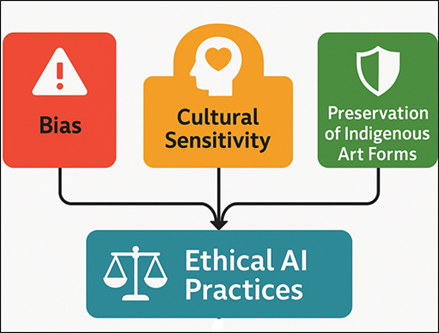
Figure 4 Flowchart of Bias Mitigation and Cultural Preservation in AI Art Education
The tools of AI art are vulnerable to cultural bias since the datasets they are trained on tend to display more popular styles of art and globalized aesthetics. This discrimination has the effect of marginalizing indigenous, regional and traditional modes of art, which results in homogenization of creativity. Such prejudice in the academic setting has a threat of weakening cultural diversity and distorting local artistic identities. Figure 4 demonstrates the mitigation of bias and cultural preservation process in AI art education.
Ethical sensitivity in AI-enabled art learning is thus a significant area of concern that should be considered culturally. It is important to make students look critically at the way in which AI systems reproduce cultural motifs, symbols, and styles and identify limitations and distortions. Unless they are aware of it, learners can inadvertently create biased or culturally inappropriate works. To maintain the art forms of indigenous communities, targeted incorporation of culturally representative data, community knowledge, and interpretation of surroundings are required. There should be educational policies in favor of cooperation with local artists, cultural institutions and heritage organizations in order to avoid disrespectful representation.
7.3. Mitigation Strategies for Responsible and Equitable AI Usage
To improve the mitigation of the associated ethical risks of AI art tools, they will involve a multi-pronged approach, incorporating policy, pedagogy, and technological design. On the policy level, some strict rules on data protection, copyright attribution, transparency, and accountability should be developed. These rules ought to require informed consent, ethical source of data, and the reveal of the AI involvement in the creative outputs. Pedagogically, AI literacy (ethically) is to be part of art education. Learners and teachers should be prepared to understand AI outputs critically, identify bias and ponder over creative responsibility. The focus on process documentation, reflective statements, and human decision-making will facilitate the creative integrity. Responsible AI design is technologically comprised of bias auditing, explainability, and customizable models that enable educators to model tools to cultural and educational settings. Equity can be encouraged through an open-source and public-interest AI platform because it will diminish reliance on proprietary systems. Fair access should also be encouraged by supporting infrastructure, designing inclusively, and underserved communities. Adaptive governance is guaranteed by continuous monitoring, feedback of stakeholders and interdisciplinary collaboration.
8. Conclusion
The extensive application of AI art tools in the context of the National Education Policy poses a valid chance to repackage art education in the digital age without losing touch with human imagination and creativity, cultural legacy, and ethical duty. As this paper has shown, AI can become a potent pedagogical facilitator, such as assisting with visual creation, criticism, reflection, and individualized education and learning, but not an artistic skill or human imagination substitute. In combination with the focus on learning competency-based, experiential, and multi-disciplinary learning discussed by NEP, AI art tools can enhance creative activities and increase the access to high-quality art education in a variety of educational settings. To make AI adoption pedagogically significant and coherent at the national level, it is crucial to consider adapting AI to the organized integration framework, which is maintained by multi-layer technological architecture and clear policy guidance. There is also the urgent necessity to invest in teacher training, development of the infrastructure and gradual implementation, taking into consideration institutional readiness and regional diversity. In the absence of such systemic support, AI tools will become partial innovations and not transformative educational tools. Another point that is highlighted in the paper is that AI integration should still be based on ethical and cultural considerations. The problem of data privacy, authorship, bias in algorithms and the display of cultural representations require active regulation and ethics in the field of art education. With the introduction of responsible AI practices and culturally responsive design, the educational system can preserve the indigenous art forms and the freedom of creators and still enjoy the benefits of technological progress.
CONFLICT OF INTERESTS
None.
ACKNOWLEDGMENTS
None.
REFERENCES
Albar Mansoa, P. J. (2024). Artificial Intelligence for Image Generation in Art : How Does It Impact on the Future of Fine Art Students ? Encuentros, 20, 145–164.
Balcombe, L. (2023). AI Chatbots in Digital Mental Health.
Informatics, 10, Article 82. https://doi.org/10.3390/informatics10040082
Chen,
X., and Ibrahim, Z. (2023). A Comprehensive Study of Emotional Responses
in AI-Enhanced Interactive Installation Art. Sustainability, 15, Article 15830.
https://doi.org/10.3390/su152115830
De Winter, J. C. F., Dodou, D., and Stienen, A. H. A. (2023).
ChatGPT in Education : Empowering Educators through Methods for Recognition and
Assessment. Informatics, 10, Article 87. https://doi.org/10.3390/informatics10040087
Demartini,
C. G., Sciascia, L., Bosso, A., and Manuri, F. (2024). Artificial
Intelligence Bringing Improvements to Adaptive Learning in Education: A Case
Study. Sustainability, 16, Article 1347. https://doi.org/10.3390/su16031347
Epstein, Z., Hertzmann, A., Herman, L., Mahari, R., Frank, M. R., Groh, M., Schroeder, H., Smith, A., Akten, M., Fjeld, J., et al. (2023). Art and the Science of Generative AI: A Deeper Dive. arXiv.
Hamal,
O., El Faddouli, N. E., Alaoui Harouni, M. H., and Lu, J. (2022). Artificial
Intelligent in Education. Sustainability, 14, Article 2862. https://doi.org/10.3390/su14052862
Holmes, W. (2024). AIED—Coming of Age ? International Journal of
Artificial Intelligence in Education, 34, 1–11. https://doi.org/10.1007/s40593-023-00358-1
Ivanova, M., Grosseck, G., and Holotescu, C. (2024).
Unveiling Insights : A Bibliometric Analysis of Artificial Intelligence in
Teaching. Informatics, 11, Article 10. https://doi.org/10.3390/informatics11010010
Ning,
Y., Zhang, C., Xu, B., Zhou, Y., and Wijaya, T. T. (2024). Teachers’ AI-TPACK
: Exploring the Relationship between Knowledge Elements. Sustainability, 16,
Article 978. https://doi.org/10.3390/su16030978
Ouyang, F., and Jiao, P. (2021). Artificial Intelligence in Education
: The Three Paradigms. Computers and Education: Artificial Intelligence, 2,
Article 100020. https://doi.org/10.1016/j.caeai.2021.100020
Rodrigues, O. S., and Rodrigues, K. S. (2023). A Inteligência Artificial na Educação: Os Desafios do ChatGPT. Texto Livre, 16, e45997.
Wang,
Y., and Yang, S. (2024). Constructing and Testing AI International Legal
Education Coupling-Enabling Model. Sustainability, 16, Article 1524. https://doi.org/10.3390/su16041524
Williamson, B., Bayne, S., and Shay, S. (2020). The Datafication of
Teaching in Higher Education : Critical Issues and Perspectives. Teaching in
Higher Education, 25, 351–365. https://doi.org/10.1080/13562517.2020.1748811
|
|
 This work is licensed under a: Creative Commons Attribution 4.0 International License
© ShodhKosh 2025. All Rights Reserved.