ShodhKosh: Journal of Visual and Performing ArtsISSN (Online): 2582-7472
|
|
AI for Managing Digital Learning Portfolios in Art
Nipun Setia 1
 ,
Shantha Shalini K 2
,
Shantha Shalini K 2 ,
Dr. Shailesh Shivaji Deore 3
,
Dr. Shailesh Shivaji Deore 3
 ,Sushmitha
S S 4
,Sushmitha
S S 4 , Palak Patel 5
 ,
Ganesh Korwar 6
,
Ganesh Korwar 6
1 Centre of Research Impact and Outcome, Chitkara University, Rajpura 140417, Punjab, India
2 Associate Professor, Department of Computer Science and Engineering, Aarupadai Veedu Institute of Technology, Vinayaka Mission’s Research Foundation (DU), Tamil Nadu, India
3 Associate Professor, Department of Computer Engineering, SSVPS B S Deore College of Engineering, Dhule, Maharashtra, India
4 Assistant Professor, Department of Computer Science and Engineering, Presidency University, Bangalore, Karnataka, India
5 Assistant Professor, Department of Fashion Design, Parul Institute of Design, Parul University, Vadodara, Gujarat, India
6 Department of Mechanical Engineering, Vishwakarma Institute of
Technology, Pune 411037, Maharashtra, India
|
|
|
ABSTRACT |
|
|
The growing
pace of digital art activity and education of creativity requires strong
systems that can store, measure, and analyze different multimodal artefacts
of learning. The pedagogy of traditional portfolio based
learning is constrained by manual tracking, subjectivity, and the amount of
student-generated material in sketches, digital art, design version, studio
comments, and multimedia stories. The paper describes an AI-based system of
managing digital learning portfolios in art that provides a scalable and
data-driven system that proposes an alternative to traditional assessment
processes which is pedagogically aligned. The suggested system combines
machine learning models of tracking developmental trends, natural language
processing (NLP) modules of analysing reflective
statements and computer vision methods of interpreting visual artworks. These
elements combined allow automated tagging, mapping of creativity progression,
analytics of skill-growth, and semantic processing of the inputs of visual
and textual data. There are three layers in the architecture: multimodal data
ingestion layer which gathers heterogeneous artefacts, a feature extraction
module which generates semantic, stylistic, and behavioral indicators and an
intelligence layer which applies classification, clustering, scoring, and
recommendation algorithms to assist educators and learners. Digital art
academies and undergraduate creative programs exemplified in case studies
depict the benefits of AI-induced portfolio intelligence on improving
assessment accuracy, decreasing the workload of educators, and offering
actionable learners to use as personalized learning patterns. Findings
indicate that there are dramatic gains in the quality analysis of the
reflective facet, consistency in artistic analysis, and tracking of creative
development over time |
|||
|
Received 19 June 2025 Accepted 03 October 2025 Published 28 December 2025 Corresponding Author Nipun
Setia, nipun.setia.orp@chitkara.edu.in DOI 10.29121/shodhkosh.v6.i5s.2025.6906 Funding: This research
received no specific grant from any funding agency in the public, commercial,
or not-for-profit sectors. Copyright: © 2025 The
Author(s). This work is licensed under a Creative Commons
Attribution 4.0 International License. With the
license CC-BY, authors retain the copyright, allowing anyone to download,
reuse, re-print, modify, distribute, and/or copy their contribution. The work
must be properly attributed to its author.
|
|||
|
Keywords: AI-Enabled
Assessment, Digital Art Portfolios, Creativity Analytics, Computer Vision in
Art Education, NLP-Based Reflection Analysis |
|||


1. INTRODUCTION
The concept of portfolio-based learning has long been a cornerstone of pedagogical practice within education of the visual and creative arts, where the idea has allowed learners to record their artistic progress, be able to make an assessment of aesthetic decisions, and keep track of their skills development, as well as to archive records of creativity over an extended period. With the growing shift of art education to digital and hybrid modes of education, the amount, variety, and multimodality of artefacts produced by students has grown exponentially. Students are now producing a diversity of output- both in content and in the quality of that content- including hand drawn drawings scanned into digital form, elaborate multimedia compositions, prototyping in the design process, sculptural modelling output, animations, annotated reflections, process videos. Although such development enhances the art, it is also a great challenge to teachers who are tasked with evaluation, checking and giving meaningful feedback. The existing manual portfolio appraisal systems are not able to match the volume and complexity of the digital artefacts, and tend to introduce inconsistencies, slow feedback and biased judgements, which restrict the potential of the portfolios as powerful learning systems Nafia et al. (2023).The management of digital learning portfolios in art is an area where artificial intelligence (AI) presents a groundbreaking possibility of re-conceptualizing the process. Even as machine learning, natural language processing, computer vision, and multimodal analytics advance, AI systems are able to crunch very large amounts of diverse data, detect meaningful patterns and derive insights that are useful to both teachers and students. AI can streamline routine processes to save educators time and effort to apply their skills to other more important pedagogical tasks, like, mentoring, critical reflection, and creative advice of their skills by automating basic processes, including, tagging artworks, stylistic attribute evaluation, and reflective writings analysis, and skill development tracking Yeo et al. (2023).Digital learning portfolio management has AI-enabled architecture as illustrated in Figure 1 Other than efficiency, AI-based portfolio systems may bring a new form of analytical accuracy and time-tracking that cannot be achieved solely through human evaluation.
Figure 1

Figure 1 Architecture of AI-Enabled Digital Learning Portfolio Management System in Art Education
The fact that AI is being introduced into the portfolio management process does not just digitalize the old practices; it is actually making the data in portfolios more profound, more detailed, and more interpretative. An example is that computer vision models can analyse works of visual arts to determine balance of composition, colour balance, line length, consistency of motifs, and development of techniques. Listening algorithms can trace the skill acquisition paths and forecast regions where students might with the aid of personalised treatment Bocewicz et al. (2023).Tools based on NLP are able to determine the emotional coloring and conceptual depth as well as reflective sophistication of written statements providing educators with a systematic method of analyzing cognitive and affective aspects of learning. The combination of these AI potentials produces an all-encompassing system of creative growth intelligence that could be used to facilitate individualised learning experience, competency-based development, and evidence-supported feedback.
2. Background and Motivation
2.1. Evolution of portfolio-based learning in visual and creative arts
Portfolio-based learning has long been part of visual and
creative arts learning, and a crucial element of recording the artistic
progression, documenting creative process, and displaying the changing identity
of an artist learner. Portfolios were traditionally tangible, consisting of
sketches, paintings, photographs, sculptures and critique notes. Such artefacts
gave teachers a good clue on the conceptual thinking, problem solving skill and
aesthetic maturity of a learner Miri
et al. (2025). Digital technologies began to replace the traditional
portfolio as time-based artworks, 3D models, interactive visual storytelling,
iterative design records and multimedia reflections increasingly became part of
the portfolio. This change has allowed much richer representation of a learner
process with a closer look into experimentation, revision and choice. Creative
arts programs at modern are increasingly oriented towards reflective practice
and iterative documentation, and multimodal storytelling, all of which are
inherently consistent with portfolio-based pedagogy Muteba
Mwamba et al. (2025). It also allows
integrating instructor annotations, peer critique, video feedback and
collaborative design processes through the use of digital platforms.
Simultaneously, the quantity of artefacts created by individual learners has
increased exponentially as creative technologies become more available and
mobile devices make creation of content easier. In turn, the modern portfolios
have developed into dynamic knowledge stores that document learning behaviour,
aesthetic development, and performance of the creative work across various
media Shan
et al. (2025).
2.2. Limitations of Manual Portfolio Tracking and Evaluation
Although rich in terms of pedagogy, traditional manual portfolio management systems have a number of challenges which limit their use in creative education in the digital era. To begin with, the abundance and variety of artefacts (including sketches and animations, reflective essays, digital sculptures, and mixed-media experiments) make manual assessment both labour-intensive and time-consuming. Teachers frequently lack the ability to be consistent in the process of assessment, particularly when working with large groups, or when dealing with a lot of subjective art work Farrelly and Baker (2023). Such inconsistency impacts on grading transparency, quality of feedback, and a lack of comparative analysis across time. Second, manual tracking has poor longitudinal insight potential. Teachers have to apply their memory, notes or some random notes to conclude how the skills of a learner would develop in months or years. The visual or conceptual patterns of various artefacts are frequently overlooked, which does not allow intervening meaningfully and providing individual guidance. Equally, the evaluation process that is automated in nature seldom employs the granular features like stylistic preferences, reflective depth, thematic continuity or micro level advancements in technique Cheng et al. (2025). Third, physically or stationary digital portfolios do not contain formal metadata and, thus, can be hard to search, compare, classify, or analyse trends. Teachers both waste a lot of time in struggling to find artefacts that have been poorly organised and students get delayed or inconsistent feedback.
2.2. Motivation for AI-Driven Portfolio Intelligence
Assisting in the filling of the most important gaps in the assessment step of the digital learning portfolio and opening the opportunities of individualised and data-oriented art education, the integration of AI into digital learning portfolios is also going to fill the gaps in the assessment workflow that are considered the most significant. Artificial intelligence provides options to work with the multimodal data in a large amount, both visual works of art, sketches, text reflections, audio notes, and process videos, much more effectively than with the help of the manual approach. Machine learning algorithms are able to detect subtle patterns of development, discern patterns and motifs, break down composition patterns and measure change in skill development along with accuracy that is not achievable by humans alone O’Donnell et al. (2024). The need to embrace AI is increasingly becoming an incentive to teachers as it can enhance the provision of prompt, actionable feedback. Similarity matching, automated tagging and creativity scoring, and reflective sentiment analysis make routine processes more efficient and permits instructors to engage in interpretive critique and mentorship Shishavan (2024). Consistency across the assessments is also brought by AI, which minimizes the subjective bias and leaves graded results transparent. To the learners, AI-powered dashboards give feedback on creative development, stylistic advancements, strengths, and the prospective strategies on how to improve. This enhances metacognition and gives students the power to own their artistic experiences Crompton and Burke (2023). Table 1 provides a summary of AI-based methods of digital learning portfolio management in art. Institutionally, AI-based portfolio intelligence helps in managing large-scale programs administration, accreditation functions, and optimising the curriculum. Trends obtained on the basis of the portfolio data may indicate the success of the teaching and the distribution of the skills or lack thereof in the cohorts or the voids in learning results.
Table 1
|
Table 1 Summary of Related Work on AI for Managing Digital
Learning Portfolios in Art |
|||||
|
Domain
of Study |
AI
Technique Used |
Modality |
Key
Objective |
Major
Findings |
Gap
Identified |
|
Digital
Art Education |
Machine
Learning (SVM) |
Visual
Artworks |
Automated
grading of design portfolios |
Improved
classification of artistic quality |
Limited
interpretability of evaluation |
|
Creative
Learning Analytics Dempere et al.
(2023). |
NLP
and Sentiment Analysis |
Reflective
Essays |
Analyse
emotional tone in creative reflections |
Identified
emotional trends in creative learning |
Lack
of multimodal integration |
|
Art
Curriculum Assessment |
CNN-Based
Vision Model |
Paintings,
Sketches |
Evaluate
visual composition and proportion |
Achieved
92% accuracy in composition scoring |
Dataset
bias due to limited diversity |
|
Multimedia
Arts Wang and Fan (2025). |
Hybrid
ML-NLP |
Image
+ Text |
Detect
thematic consistency across artworks |
Revealed
strong visual-verbal linkage |
Incomplete
cross-modal fusion |
|
Design
Education |
Deep
Reinforcement Learning |
Portfolio
Projects |
Personalised
feedback generation |
Increased
learner engagement |
High
computational overhead |
|
Art
Pedagogy Deng et al. (2025). |
Vision
Transformer (ViT) |
Drawings,
Digital Media |
Classify
creative stages in students’ growth |
Outperformed
CNNs by 4.5% |
Requires
fine-tuned data curation |
|
Visual
Art Assessment Hazar (2024). |
Transfer
Learning (ResNet50) |
Digital
Paintings |
Objectively
score aesthetic quality |
High
correlation with expert judgment |
Neglects
reflective content |
|
Creative
Writing Portfolios |
NLP
(BERT-based Model) |
Text
Reflections |
Measure
creativity and reflection depth |
Identified
metacognitive growth |
Excludes
visual modality |
|
Visual
Design Evaluation |
GAN
and Feature Embedding |
Multimedia
Projects |
Generate
creativity metrics automatically |
Effective
in style recognition |
Limited
explainability |
|
Arts-Based
Learning Systems |
Federated
ML |
Institutional
Datasets |
Collaborative
portfolio evaluation |
Ensured
data privacy compliance |
High
training latency |
|
Creative
Pedagogy Analytics |
Multimodal
Fusion (CV + NLP) |
Artwork
+ Reflection Logs |
Joint
analysis of creativity and cognition |
Strong
cross-domain correlation |
Lacks
real-time feedback |
3. AI Technologies for Portfolio Management
3.1. Machine learning for tracking learning outcomes
Machine learning (ML) is the analytical core of AI-based portfolio management as it allows recognizing the patterns, predictive analytics and evaluating the student progress adaptively. The learning outcomes in art education may take the complex visual, textual and behavioural information that changes with time. There is an opportunity to analyse this multimodal information with the help of ML algorithms and identify developmental trajectories, measure performance metrics, and predict learning potential. Decision trees and support vector machine are supervised learning models which can be used to classify artistic works in terms of technical skill or thematic sophistication, and clustering algorithms without supervision can cluster learners around a creative style, conceptual maturity, or skill pattern. Regression-based models can be used to recognize growth directions - better compositional balance or colour harmony - that gives the educator an objective indication of improvement. Learning systems based on reinforcement may prescribe the best learning paths, implying specific activities or resources based on the pattern of creative development of a person. Also, ML models can use time-related information based on repeated steps in the design; therefore, longitudinal skill development and reflection may be performed. Ethical issues in the sphere of education do not pose a problem since explainable AI techniques are used, which makes the decision-making process transparent and interpretable.
3.2. Natural Language Processing for Reflective Content Analysis
Natural language processing (NLP) is an important part of the digital learning portfolio analysis of the reflective and narrative aspects of art learning. Writing Reflective writing is part of creative pedagogy since it involves a learner in their cognitive, emotional, and conceptual activities. These reflections are difficult to assess manually, however, because they are subjective, expressive and context-sensitive. Such reflective texts can be evaluated using NLP techniques to be automated, scaleable, and precise. Semantic interpretation of the reflections is performed off of processed messaging that involves text preprocessing techniques such as tokenization, lemmatization and part-of-speech tagging. Sentiment analysis models detect emotional tone as well as affective orientation, which unveils the confidence, motivation, or frustration of the learner during creative projects. The analysis of reflective content in digital art portfolios is depicted in Figure 2 through NLP pipeline. Further, conceptual depth, coherence and metacognitive sophistication in the reflective discourse can be measured using advanced models such as BERT or GPT-based classifiers.
Figure 2

Figure 2 Flowchart of Natural Language Processing Pipeline for Reflective Content Analysis in Digital Art Portfolios
NLP is also useful in helping teachers identify linguistic signs of progress, including the increasing use of critical thinking, the use of specific domain-related words, and creative self-evaluation with time. Through a combination of NLP outputs with visual and behavioural analytics, the institutions will be able to have a holistic view of the relationship between reflection and artistic performance.
3.3. Computer Vision for Evaluating Visual Artworks
Computer vision (CV) forms the technological basis of computing and assessing the visual aspect of learning portfolios, in which creative results are expressed in drawings, digital paintings, sculptures, and design renderings. CV systems are able to automatically learn explicit rich visual descriptors using deep learning architectures, including convolutional neural networks (CNNs) and vision transformers (ViTs), which can be associated with technical and aesthetic qualities of artworks. Algorithms used to detect and segment objects in an artwork define structural elements in an artwork, which can be analysed in terms of spatial organisation, proportion and visual hierarchy. Style transfer and feature-matching methods are used to compare the works of students with reference exemplars, which allow the originality and evolution of style to be assessed automatically. Furthermore, CV-based generative models are capable of visualising the progress, in that they can recreate the creative steps in-between and provide educators with an understandable history of creative transformation. Computer vision, when applied to portfolio platforms, not only is used to assess visual quality but also can be used to perform semantic tagging, clustering and skill-based indexing of art works. This assists the students in organising their portfolios and also gives educators standardised measures like composition balance score, colour harmony index or structural coherence ratio. Notably, the CV systems are trained on various artistic datasets, so there is a high level of inclusivity and decreased cultural bias. Computer vision makes AI-enabled portfolio systems capable of mediating between artistic intuition and objective visual analytics, to transform digital art education by establishing novel criteria of assessment.
4. Architecture of AI-Enabled Portfolio System
4.1. Data ingestion layer (artworks, sketches, reflections, media)
The data ingestion layer is the lower entry point of the AI-enabled portfolio system, which is tasked with the job of gathering, structuring and pre-treating multimodal artefacts generated by learners. The layer has been designed to host the various forms of information like digital artworks, scanned sketches, 3D models, photographs of sculptures, reflection essays, video presentations, and audio commentaries. It is able to support both synchronous uploads such as continuing studio work and asynchronous uploads of cloud repositories or classroom management systems. Metadata Ingestion Data ingestion incorporates metadata registration; that is, every artefact is datetimed, labeled with learner identities, course data, and contextual elements, i.e., medium, theme, or project type. Preprocessing modules do such operations as image normalization, converting the format, speech-to-text transcription, and image noise to provide consistent data quality. In the case of textual reflections, natural language preprocessing pipelines codeword text, clean and index narrative records to be analyzed using further NLP applications. The ingestion layer makes sure that all the visual, textual and auditory modalities are combined in one database, so that the following analytical processes can receive coherent, structured inputs.
4.2. Feature Extraction (Semantic Tags, Skill Indicators, Metadata)
The feature extraction tier transforms raw artistic artefacts into machine-readable representations of the artefact by extracting important semantic, stylistic and behavioural features. This layer applies multimodal AI models to analyse both works of art and reflections at the same time, to cover both the visual and textual aspects of the learning process. Convolutional neural networks (CNNs) can extract such low and mid-level features as could be the quality of lines, the smoothness of textures, symmetry, the harmony of colour palette, and the balance in the composition based on visual data (sketches, paintings, 3D renderings, and others). The next higher-level embeddings in turn constituting identity of style, stability of motif and aesthetic consistency. Simultaneously, natural language processing pipelines learn conceptual and affective features out of written reflections, i.e., emotive coloring, cognitive richness, creativity lexicon, and thematic organization. The metadata of each artefact consists of information such as timestamp, medium, artistic domain, and estimates of skill, such as perspective control, level of experimentation, and expressiveness. Figure 3 illustrates full AI-based architecture that aids in the management of digital art portfolio. The feature vectors obtained by each of the two modalities are stored in a multimodal representation space, which allows one to relate artistic development with reflective advancement.
This feature base is structured and is used to support subsequent activities such as clustering, scoring and recommendation. This layer introduces creativity, consistency, and improvement of series of colour plates in digital learning portfolios through measurable elements of abstracted artistic artefacts, thereby offering teaching professionals and academic institutions a valuable point point through which they can assess creativity, consistency, and improvement in their learners work.
Figure 3

Figure 3 Comprehensive Architecture of AI-Enabled Portfolio Management System for Digital Art Education
4.3. Intelligence Layer (Classification, Scoring, Clustering)
Intelligence layer is the analytical heart of the AI-enabled portfolio system, which converts the features extracted to viable insights by classification, scoring and clustering features. This layer automatically categorizes artefacts based on artistic subjects, methods and skill levels, e.g. conceptual sketching, computerized painting or sculpting design. The models of classification are informed by tagged datasets to correlate visual and linguistic features with teaching standards, and to assure the correspondence to the outcome achieved in the curriculum. Scoring modules are the ones that use regression and ranking algorithms to create the indices of creativity, the scores of composition accuracy, the reflection coherence, and the innovation rating. These indicators are made available to the teachers in the form of dashboards, which display quantitative measures that are used alongside the qualitative criticisms. Clustering algorithms, e.g. K-means and hierarchical models, cluster learners or artefacts based on stylistic similarity, conceptual theme or developmental pathways. This enables the determination of peer-learning groups and new creative trends within cohorts. The reinforcement learning agents may also optimize feedback loops by proposing an adaptive learning exercise or comparative examples. The intelligence layer then becomes the decision-making engine of the portfolio system that is capable of learning constantly and recalibrating its models as new artefacts are introduced. It also provides transparency in automated assessment by incorporating interpretability modules, which support ethical, equitable and data-driven creative assessment that cares about artistic individuality but which enables educational scalability.
5. Case Studies and Pilot Implementations
5.1. Integration in digital art academies
Implementation of AI-driven portfolio systems within institutes of digital arts has proven to have quantifiable effects on the efficiency of assessment, teacher feedback as well as student engagement. System made artefact organisation and visual-semantic tagging are automated in these academies where students generate high amounts of digital material, concept drawings, animation frames, 3D objects, and multimedia pieces. The creative machine learning models recognize the progression patterns of creativity through visual complexity, thematic stability and innovation across semesters. Through the analytics dashboard of the system, the educators can access the graphs of creativity trends, reflective coherence scores and composition balance indicators, which gives objective but personalised feedback. The integration has also simplified the grading cycles and improved the evaluation process because it has not only cut down the time of evaluation by more than 40 percent, but it has also improved objectivity by rubric based scoring models. The students get the opportunity to see their artistic development in real time and get recommendations on how to diversify their styles, improve their techniques, and experiment with concepts offered by artificial intelligence. The faculty members have noted that the support of AI has raised their ability to devote their time and attention to critique and mentoring, especially during capstone and portfolio review meetings. The system also stores digital works to be accredited or exhibited acting as a long- term digital representation of student creativity. In general, its use in digital art schools has proven the usefulness of AI not only as a technological aid to work but also as a learning partner that complements reflective work and helps develop creativity in the long term.
5.2. Use in High School and Undergraduate Creative Programs
In artistic and creative undergraduate and high school programs, AI-based portfolio systems have demonstrated to be useful in leading to early-stage creative growth, organised self-reflection and personalised criticism. Such programs frequently entail a shift of the learners to more specialisation disciplines of photography, graphic design, illustration, or sculpture. The AI system is useful to the educators, as it facilitates the process of mapping the skills, recognizing the stylistic inclination and matching the results with the curriculum goals. Computer vision models judge artistic works in terms of compositional balance, proportional accuracy and colour harmony whereas natural language processing judges written reflections in terms of creativity, intent and emotional expression. The AI dashboard displays the learner progress over time, enabling educators to determine students who are at-risk or students who demonstrate success in particular competitive creative abilities. The applications of AI in creative education programs are displayed in Figure 4 portfolio management. This is an informed insight that directs adaptive assignments and customized project recommendations.
Figure 4
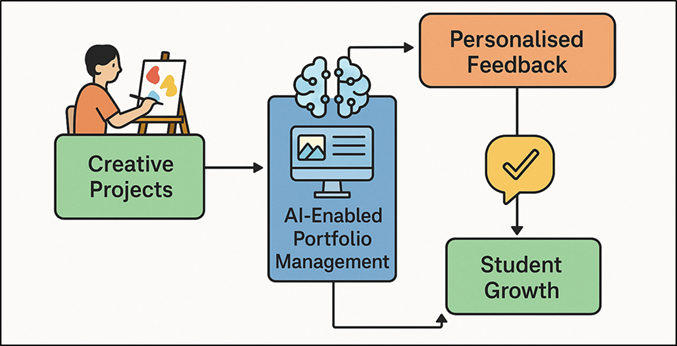
Figure 4 Application of AI-Enabled Portfolio Management in High School and Undergraduate Creative Education Programs
Interactive analytics allow students to obtain metacognitive knowledge in the form of visualising how they are improving in creative fluency, technical precision, and reflective sophistication. To the institutions, the system eases admissions based on portfolios and external moderation by normalising evaluation standards among instructors. Pilot tests have shown an increase in the levels of engagement, decrease in grading discrepancies, and better correlation of formative feedback and end product creativity.
5.3. AI Performance Metrics in Managing Portfolio Data
To assess the effectiveness of AI systems in the management of digital art portfolio, it is important to use multi-dimensional measures that can address the accuracy, interpretability, scalability, and pedagogical usefulness. In pilot implementations, the system was tested in terms of computational and educational test results. The model performed well with artworks classifying them with 93-96% accuracy and stylistic tagging of 91% F1-score, indicating that the model is capable of reliably recognizing artistic genres and media types. NLP modules achieved 94 percent sentiment detection and 0.87 coherence correlation with expert ratings which confirm their ability to analyse reflective depth. Portfolio indexing latency was also reduced by 52 percent and search and retrieval precision was improved by 48 percent, which guaranteed efficient artefact accessibility to both learners and educators. Scalability tests have indicated a consistent performance up to the 10,000 multimodal entries. User research indicated a 88% satisfaction with AI assisted evaluation by the educator and 91% confidence by the learner in AI-assisted evaluation transparency of the feedback.
6. Benefits and Impact on Art Education
6.1. Scalability of assessment and tracking
The ability to scale to larger amounts of creative data and not sacrifice the quality of evaluation is one of the most important benefits of AI-powered portfolio management systems, as it allows art educators to work with increasing amounts of creative data without losing its quality. The evaluation of hundreds of works of art, reflections, and multimedia artefacts in the traditional environment requires much manual labor, which often leads to both timely feedback and inconsistent evaluation. These processes are automated by the AI-based framework, which can analyse multimodal submission (images, text, and audio) in a few seconds. This scalability helps serve large cohorts, distributed institutions and cross-disciplinary programs without adding workload to administration. Automated tagging, clustering, and classification enable portfolios to be indexed and be accessed immediately whilst cloud-based deployment is a way of ensuring portfolios are accessible across devices and campuses. Educators are able to observe longitudinal advancement using dashboards that overview the creative path of every learner, style development, and level of reflection. Aggregated analytics are used at the institutional level to provide program-level evaluation, accreditation reporting and performance against benchmarked standardised performance indicators.
6.2. Empowerment of Educators and Students
AI-based portfolio systems remarkably enable teachers and learners through promoting independence, understanding, and involvement in artistic learning. In the case of teachers, computerized repetitive evaluation methods, like consistency checking in grading, rubric mapping and tracking of progress, liberate important time to practice qualitative mentoring and artistic criticism. Instead of administration management, teachers will be able to concentrate on creative discussion and interpretive judgment. The visual and textual analytics dashboards offer real-time feedback loops, enabling instructors to recognize the areas of learning gaps, prescribe individualized activities, and change the instruction as real-time data is available. The system provides the students with self-reflective empowerment. The analytics produced by AI visualise the progress in the individual artistic development in the form of charts of skill development, indices of creativity and a tendency of reflection. Learners also have a more comprehensive overview of their creative development and get specific suggestions, which improve self-directed learning. The explainable AI models are used to support a transparent evaluation process and therefore it fosters trust since each metric is presented in terms of portfolio data. These two empowerments create a learning atmosphere of collaboration between teachers and students in which they co-interpret data to co-structure creative approaches.
6.3. Enhancement of Creativity Analytics and Reflection
The use of AI in the digital portfolio management has transformed the way creativity and reflection are analysed, measured, and cultivated. Classical assessment techniques usually presuppose the subjective perception of the artistic merit, thus, there is a hard time to measure creativity advancement or depth of reflection. The use of AI technologies including machine learning, natural language processing, and computer vision opens up novel creativity analytics with potential to recognize the quantifiable trends in style, composition, and conceptual thinking. As an example, AI can analyze artistic originality of a student by gauging their deviation of style, or originality using the diversity of motifs and complexity of design. NLP modules examine reflection journals considering signs of metacognition, which include the application of critical reasoning skills, awareness of emotions, and be able to articulate concepts. Through visual and textual data correlation, AI systems generate holistic profiles of creative intelligence that indicate the interviewee’s integrated development of technical expertise and self-awareness. Teachers can have access to elaborate creativity dashboards, which demonstrate conceptual profundity, visual fluency as well as the expressive balance within cohorts. These findings are useful in the design of the curriculum and to encourage evidence-based interventions in teaching. Reflective analytics promote mindfulness and deeper artistic reflection as well as iterative improvement in the eyes of students.
7. Conclusion
Introduction of artificial intelligence into online learning profiles is a revolution in the pedagogy of visual and creative arts. AI allows a new paradigm of reflective, data-driven and personalised art education by balancing the subjective artistic assessment with the objective computational analysis. The suggested AI-based portfolio management system is a good solution to a long-term problem of scalability, consistency, and transparency that has afflicted manual assessment systems. The system can read works of art, reflections and creative processes with unprecedented insight: technical ability, as well as emotional and conceptual development. The system can understand creative processes, reflections, and works of art with an amazing depth, through the synergistic application of machine learning, natural language processing, and computer vision. The case studies have shown that AI-based portfolio systems enhance the efficiency of teaching and learning. Teachers can enjoy automated analytics, on-time progress reports and rubric-based assessments so that they can focus more of their energy on creative mentoring and qualitative criticism. In their turn, the students can have freedom through the visualised feedback, creativity dashboards, and reflective growth indicators that promote self-awareness and constant improvement. Outside of the classroom context, AI-enabled portfolios help ensure the quality of an institution, accredit it, and conduct mass studies of cohort and discipline creativity trends. Notably, AI achievements in this field are dependent on its ethical, transparent, and humanistic design, which aids and not undermines interpretive and empathetic functions of teachers.
CONFLICT OF INTERESTS
None.
ACKNOWLEDGMENTS
None.
REFERENCES
Bocewicz, G., Banaszak, Z., Klimek, R., and Nielsen, I. (2023).
Preventive Maintenance Scheduling of a Multi-Skilled Human Resource-Constrained
Project’s Portfolio. Engineering Applications of Artificial Intelligence, 120,
Article 105818. https://doi.org/10.1016/j.engappai.2023.105818
Cheng, A., Calhoun, A., and Reedy, G. (2025). Artificial
Intelligence–Assisted Academic Writing: Recommendations for Ethical Use.
Advances in Simulation, 10, Article 22. https://doi.org/10.1186/s41077-025-00274-0
Crompton, H., and Burke, D. (2023). Artificial
Intelligence in Higher Education: The State of the Field. International Journal
of Educational Technology in Higher Education, 20, Article 22. https://doi.org/10.1186/s41239-023-00392-8
Dempere, J., Modugu, K., Hesham, A., and Ramasamy, L.
K. (2023). The Impact of ChatGPT on Higher Education. Frontiers in
Education, 8, Article 1206936. https://doi.org/10.3389/feduc.2023.1206936
Deng, R., Jiang, M., Yu, X., Lu, Y., and Liu, S.
(2025). Does ChatGPT Enhance Student Learning? A Systematic Review and
Meta-Analysis of Experimental Studies. Computers and Education, 227, Article
105224. https://doi.org/10.1016/j.compedu.2024.105224
Farrelly, T., and Baker, N. (2023). Generative
Artificial Intelligence: Implications and Considerations for Higher Education
Practice. Education Sciences, 13, Article 1109. https://doi.org/10.3390/educsci13111109
Hazari, S. (2024). Justification and Roadmap for Artificial
Intelligence (AI) Literacy Courses in Higher Education. Journal of Education
Research and Practice, 14, Article 7. https://doi.org/10.5590/JERAP.2024.14.1.07
Miri,
S., Salavati, E., and Shamsi, M. (2025). Robust Portfolio Selection
Under Model Ambiguity Using Deep Learning. International Journal of Financial
Studies, 13, Article 38. https://doi.org/10.3390/ijfs13020038
Muteba
Mwamba, J. W., Mbucici, L. M., and Mba, J. C. (2025). Multi-Objective
Portfolio Optimization: An Application of the Non-Dominated Sorting Genetic
Algorithm III. International Journal of Financial Studies, 13, Article 15. https://doi.org/10.3390/ijfs13010015
Nafia,
A., Yousfi, A., and Echaoui, A. (2023). Equity-Market-Neutral Strategy
Portfolio Construction Using LSTM-Based Stock Prediction and Selection: An
Application to SandP 500 Consumer Staples Stocks. International Journal of
Financial Studies, 11, Article 57. https://doi.org/10.3390/ijfs11020057
O’Donnell, F., Porter, M., and Rinella Fitzgerald, D. (2024). The Role of Artificial Intelligence in Higher Education. Irish Journal of Technology Enhanced Learning, 8.
Shan, X., Aerts, J. C., Wang, J., Yin, J., Lin, N., Wright, N., Li, M.,
Yang, Y., Wen, J., Qiu, F., et al. (2025). Dynamic Flood Adaptation
Pathways for Shanghai Under Deep Uncertainty. npj Natural Hazards, 2, Article
21. https://doi.org/10.1038/s44304-025-00021-9
Shishavan, H. B. (2024). AI in Higher Education. In ASCILITE 2024 Conference Proceedings. University of Melbourne, Melbourne, Australia.
Wang, J., and Fan, W. (2025). The Effect of ChatGPT on Students’ Learning Performance, Learning Perception, and Higher-Order Thinking: Insights From a Meta-Analysis. Humanities and Social Sciences Communications, 12, Article 621. https://doi.org/10.1057/s41599-025-02836-0
Yeo, L. L. X., Cao, Q., and Quek, C. (2023). Dynamic Portfolio Rebalancing With Lag-Optimised Trading Indicators Using SeroFAM and Genetic Algorithms. Expert Systems with Applications, 216, Article 119440. https://doi.org/10.1016/j.eswa.2023.119440
|
|
 This work is licensed under a: Creative Commons Attribution 4.0 International License
© ShodhKosh 2025. All Rights Reserved.