ShodhKosh: Journal of Visual and Performing ArtsISSN (Online): 2582-7472
|
|
Using AI to Personalize Creative Learning Paths
Dr. Vivek Kumar 1
 ,
S. Balakrishnan 2
,
S. Balakrishnan 2 ,
Gurpreet Kaur 3
,
Gurpreet Kaur 3 , Jaskirat Singh 4
 ,
Abhinav Srivastav 5
,
Abhinav Srivastav 5 ,
Pawan Wawage 6
,
Pawan Wawage 6
1 Professor, Department of Computer
Science and Engineering, Noida Institute of Engineering and Technology, Greater
Noida, Uttar Pradesh, India
2 Professor and Head, Department of
Computer Science and Engineering, Aarupadai Veedu Institute of Technology,
Vinayaka Mission’s Research Foundation (DU), Tamil Nadu, India
3 Associate Professor, School of Business Management, Noida International
University, India
4 Centre of Research Impact and Outcome, Chitkara University, Rajpura-
140417, Punjab, India
5 Assistant Professor, Department of Product Design, Parul Institute
of Design, Parul University, Vadodara, Gujarat, India
6 Department of Information, Assistant Professor Echnology,
Vishwakarma Institute of Technology, Pune, Maharashtra, 411037, India
|
|
|
ABSTRACT |
|
|
The fast
development of artificial intelligence has created additional opportunities
to create highly adaptive and creativity-based learning environments. The
paper proposes an AI-based framework of customizing the creative learning
trajectory by means of incorporating cognitive modeling, profiling of the
learners, and active content-adaptation. In contrast to conventional, static
learning systems, the proposed one examines multimodal learner data,
including, but not limited to, behavioral interactions, creative artefacts,
affective cues, and performance tracks, to provide personalized
recommendations, which can be in line with the dynamic creative potential of
particular learners. The system does use clustering algorithms,
pattern-discovery methods, and creativity indices in order to keep the
learning pathways in check, so that the instructional content, level of
difficulty and the way feedback is provided are to continuously change on the
fly. Based on modern scientific studies of personalized learning, artificial
intelligence use to provide recommendations, and computer-generated
creativity, the paper presents a system architecture in the form of modules
related to the input of data, analytics, personalization, and visual
feedback. The results of the experiment indicate significant increases in
creativity scores, reflective thinking, and retention of the learned lessons
in varied groups of learners. Quantitative results demonstrate the presence
of measurable improvements in ideation fluency, aesthetic judgment, and
originality in problem-solving, whereas qualitative thoughts demonstrate the
growth of motivation among learners, their confidence, and their involvement
in creative assignments. Teachers expressed that AI-generated insights helped
them monitor the progress and implement specific interventions better. |
|||
|
Received 17 June 2025 Accepted 01 October 2025 Published 28 December 2025 Corresponding Author Dr. Vivek
Kumar, vivek.bansal1977@niet.co.in DOI 10.29121/shodhkosh.v6.i5s.2025.6905 Funding: This research
received no specific grant from any funding agency in the public, commercial,
or not-for-profit sectors. Copyright: © 2025 The
Author(s). This work is licensed under a Creative Commons
Attribution 4.0 International License. With the
license CC-BY, authors retain the copyright, allowing anyone to download,
reuse, re-print, modify, distribute, and/or copy their contribution. The work
must be properly attributed to its author.
|
|||
|
Keywords: Personalized Learning, Creative Education,
Artificial Intelligence, Learner Modeling, Adaptive Pathways, Creativity
Index |
|||



1. INTRODUCTION
AI has also altered the way knowledge is accessed and skills are acquired and creative identities formed by learners due to its rapid growth in educational ecosystems. The conventional models of instruction, which are usually linear, standardized and instructor-centered, do not tend to support the heterogeneity of learning styles and motivation levels, as well as imagination abilities of learners. The restrictions of a single size fits all pedagogies are more apparent as creative fields require increasingly more ideation, experimentation and self-expression. Personalized learning has in turn become a revolutionary paradigm, placing the learner in the middle of their own learning experience and enabling the teaching process to be flexible adjusted to individual needs. AI immensely enhances this paradigm by providing a never-before-seen opportunities to analyze the behavior of learners, predict the performance trends, and come up with adapting recommendations that will help a person experience creative development Charow et al. (2021). Creative learning paths cannot be personalized by easy means, such as setting the difficulty level or proposing additional resources; they need a profound idea of the way creativity is expressed in the cognitive, affective, and behavioral levels. The creative potential is dynamic in nature; it depends on previous knowledge, emotional involvement, culture, and development of the ability to perform. Thus, there is a necessity in the incorporation of learner modelling with AI. AI systems may reveal hidden characteristics and learning styles which can hardly be observed in conventional methods of assessment by profiling, clustering and pattern discovery Yang (2022). These discoveries allow building learning directions that foster ideation fluency, artistic testing, divergent ideation, and refinement. An example of this is that AI can be used to know when the learner works better in an exploratory manner, needs more reflective scaffolds, or needs to be shown through visual means, so that the system can intelligently order the activities that are creativity stimulating.
Additionally, computerized era has brought a treasure trove of multimodal learning information- interaction records, drawings, and sketches, to written comments, design objects, and biometric emotional signals. By leveraging this data with the help of sophisticated analytics and machine learning, educators will be able to see creativity as not a vague and abstract value but as a measurable and interpretable phenomenon. The indices of AI-driven creativity can also be used as dynamic measures of student performance, constantly evolving to indicate improvements in the originality, aesthetic judgment, curiosity and conceptual development Yue et al. (2022). This is a change of the situation of having static assessment to a more reactive, learner-focused learning process. Besides positively impacting learners, AI-based personalization helps improve the work of educators by giving them practical data about the weaknesses, strengths, and innovative preferences of students. Rather than replacing teachers, AI is a cognitive cohort, which does not replace most of the data analysis tasks but provides educators with the capacity to address mentoring, critique, and facilitation. The teachers will have access to dashboards to identify behavioral trends, propose some intervention plans, and shed light on creative bottlenecks Abulibdeh et al. (2024). This type of augmented pedagogical support promotes deeper teacher student interactions and enhances the feedback cycle that is needed in creative learning.
2. Background and Related Work
2.1. Historical evolution of personalized learning systems
Personalized learning has undergone a number of different pedagogical and technological stages, slowly transforming teacher-centered learning to learner-centered and adaptive ecosystems. The early practices of personalized learning were largely manual and were based on differentiation instruction strategies where teachers made ad-hoc adjustments to tasks to suit individual differences among the students. The first attempt in the systematic approach of personalizing the learning paths was the programmed instruction in the middle of the 20th century based on behaviorist principles of personalizing the learning paths with the help of branching logic and self-paced modules. Being rather simplistic, these systems reflected the possibility of personal learning paths Al-Zahrani and Alasmari (2024). The development of the computer-assisted instruction (CAI) during the 1980s and 1990s represented a massive technological breakthrough, one that supplied the interactive lessons that could react to the input of the learner. But these early systems were very much dependent on preset rules and were unable to analyze subtle learner behavior. The 2000s, with the advent of the internet and the learning management system (LMS) allowed the massive data collection, data analytics and the modular delivery of content which preconditioned more adaptive solutions. As artificial intelligence and machine learning became popular in the 2010s, systems of personalized learning evolved into intelligent tutoring systems (ITS), recommender-based and predictive analytics engines that can model the performance of learners with more and more accuracy Azevedo et al. (2024).
2.2. AI Approaches in Education: Recommendation, Prediction, and Adaptation
The AI leadership in education has set a new avenue of customization of educational pathways, improved engagement, and improved instructional outcomes. One of the most common applications, which are based on the experience of e-commerce and content platforms, suggests appropriate learning materials, activities, or creative tasks using recommendation systems Bognar et al. (2024). These systems assist in minimizing cognitive load and offering guidance that is timely and tailored through the study of learner preferences, historical performance and interaction history. AI recommenders can also provide ideation prompts, visual references, or design challenges, in the creative domain in accordance with the changing interests of a learner. Another important AI input is prediction models. These models predict academic performance, identify the possible learning challenges, and predict their creativity development trajectories using unsupervised and supervised learning methods Bukar et al. (2024). Early warning systems allow teachers to be proactive and the learner gets adaptive feedback and specific resources. Predictive analytics can also be used in the development of creativity, finding the patterns correlated with divergent thinking, aesthetical polishing, or conceptual novelty. Intelligent learning systems that are highly based on AI include mechanism of adaptation. These systems are dynamically adaptable to changes in content difficulty, sequencing, pacing, and feedback styles as based on real time learner data Chan and Hu (2023).
2.3. Creativity Modeling in Cognitive and Digital Contexts
The study of creativity as a modeling has already become an important area of research, aimed at explaining and measuring creative processes within cognitive, behavioral and digital levels. Cognitively, creativity is commonly defined as the capacity to produce scary and useful ideas, which are often closely associated with divergent thinking, associative fluency, flexibility, and original frame of problems. Theory Theories have been designed to differentiate intuitive ideation and deliberate refinement such as the Four-C model (Mini-c, Little-c, Pro-c, Big-c), Torrance Tests of Creative Thinking (TTCT), and dual-process theories Chan and Lee (2023). These paradigm models shed light into the psychological processes, which inform the creative expression. In digital environments, modeling of creativity has been extended in terms of computational creativity, machine learning analytics and multimodal data interpretation. It is possible to analyze creative artifacts like sketches, design prototypes, musical compositions, or narrative drafts with algorithms that can identify patterns, quantify novelties, assess coherence and predict stylistic inclinations Demartini et al. (2024). Through visual, textual and behavioral data, AI-based creativity indices combine features of multidimensional measures of creative development. These types of indices draw in the generative (creating ideas) and evaluative (refining ideas) elements of creativity. Table 1 provides an overview of AI-based systems of personalized creative learning.
Table 1
|
Table 1 Summary of Related Work on AI-Driven Personalized Creative Learning |
|||||
|
AI Technique |
Personalization Strategy |
Engagement Metric |
Dataset |
Key Findings |
Limitations |
|
Rule-based & Bayesian Models |
Content sequencing via learner profiles |
Learning Gain (%) |
Moodle LMS |
Improved adaptability to skill level |
Limited creativity assessment |
|
Reinforcement Learning |
Task difficulty adjustment |
Engagement Index |
STEM courses |
Higher motivation and focus |
Domain-specific, low scalability |
|
Affective Computing + ML George and Wooden (2023) |
Emotion-based adaptation |
Affective Flow Score |
Art-based learning platform |
Detected frustration, improved flow |
High computational cost |
|
Deep Learning Recommenders |
Semantic content suggestion |
Novelty & Originality |
Narrative dataset |
Enhanced creative fluency |
Needs human evaluation alignment |
|
Cognitive AI Framework Grosseck et al. (2024) |
Learner modeling and profiling |
Cognitive Creativity Score |
K–12 classrooms |
Cognitive personalization effective |
Lack of multimodal data integration |
|
CNN + Pattern Mining |
Visual composition analysis |
Aesthetic Accuracy (%) |
Art image dataset |
Improved visual creativity assessment |
Limited feedback interpretability |
|
Hybrid Neural Networks |
Adaptive cross-domain mapping |
Reflective Thinking Index |
STEAM pilot projects |
Fostered interdisciplinary creativity |
Limited dataset diversity |
|
Reinforcement Learning + Analytics |
Dynamic task reallocation |
Creativity Growth (%) |
Online learning logs |
28% creativity gain in learners |
Low affective sensitivity |
|
LSTM + Attention Models Gouia-Zarrad and Gunn (2024) |
Adaptive rhythm training |
Expressive Accuracy |
MusicLab dataset |
Better timing and expressiveness |
Needs continuous recalibration |
|
Generative AI (GANs) |
Personalized style evolution |
Artistic Diversity Index |
Student artworks |
AI improved style exploration |
Evaluation remains subjective |
|
Graph Neural Networks Hooshyar et al. (2024) |
Collaborative creativity clustering |
Innovation Quotient |
Design studio projects |
Enhanced group ideation quality |
Complex graph representation |
|
Transformer-based Analytics |
Context-aware scoring |
Creativity Index (%) |
Multimodal dataset |
Automated evaluation with 91% accuracy |
Needs educator interpretability |
|
Reinforcement Learning + Fuzzy Logic |
Real-time adaptation |
Engagement Consistency |
Virtual classrooms |
Improved retention and flow |
Limited creative domain focus |
3. Conceptual Framework
3.1. Key components of personalized creative learning
Adaptive pedagogy is combined with the exploratory nature of creativity creating a flexible personalized creative learning, which changes with the intellectual and emotional development of the learner. Its main elements are learner profiling, adaptive content sequencing, creative feedback and reflective analytics. Learner profiling creates a dynamic expression of the cognitive preferences, aesthetic inclinations, motivational states, and the creative accomplishments of every learner Huang (2024). This facilitates the customisation of experiences that suits particular artistic and conceptual inclinations of the system. Adaptive content sequencing applies AI algorithms to smartly arrange creative work, both simple generation of ideas and rich synthesis, according to the progress of a particular learner. The process makes sure that the process is constantly challenging and new without causing cognitive fatigue or stagnation. Creativity-based feedback, which is fuelled by the natural language processing and pattern recognition, offers finer-grained feedback that focuses on originality, composition, and expressive coherence as opposed to being correct. Reflective analytics bring the loop of feedback by visualizing the development of learners in terms of creativity indicators, progress board, and trend charts. These are useful to learners and to educators who need to understand creative evolution as quantifiable but unrestricted.
3.2. Learner Diversity: Cognitive, Affective, and Behavioral Dimensions
An important aspect of creating an effective learning process is personalization that requires an acknowledgment and reaction towards individualized diversity of learners. Cognitive dimension involves differences of individual perception, memory, reasoning, and problem-solving. There are learners who are good in analytical processes and those who are good in associative, intuitive ways of thinking. AI systems can accommodate such variations because they can change the complexity, modality, and pacing of learning materials to make sure that convergent and divergent thinkers are able to thrive.
Figure 1

Figure 1 Learner Diversity Integrating Cognitive, Affective, and Behavioral Dimensions
The affective dimension denotes the elements of creativity that are driven by emotion and motivation, including inquisitiveness, confidence and strength. Feelings influence thoughts and persistence, which predetermine the way learners approach creative tasks. Sentiment analysis devices based on AI and affective computing can track emotional signals (e.g., frustration, excitement, flow states) based on patterns of interaction and can be used to control the introduction of interventions in order to keep the interaction going and intrinsic motivation high. The behavioral aspect corresponds to the observable learning habits and interaction patterns, including persistence to the tasks, frequency of exploration, and ability to participate in collaborative learning. The learner diversity incorporates cognitive, affective, and behavioral aspects, and this is depicted in Figure 1. These patterns are analyzed by machine learning algorithms to create learning experiences tailored to a behavioral archetype one of explorers, reflectors, improvisers or perfectionists. It is the ability of AI-enhanced personalization to integrate all three perspectives, cognitive, affective, and behavioral, that makes it go beyond traditional intelligence and achievement measures. It recognizes the role of creativity as the combination of intellect, emotion and action.
3.3. AI-Driven Learner Modeling (Profiling, Clustering, and Pattern Discovery)
Intelligent learning is the analytical basis of creative education that is personalized, where a body of raw interaction data is converted into the meaningful representations of a learner and their potential. Profiling entails the formulation of multidimensional learner models which include demographic variables, creative inclination, performance measures as well as affective reactions. These profiles continually update and thus allow the system to trace learning profiles and identify emerging strengths or challenges. Unsupervised learning algorithms, like k-means, hierarchical clustering or self-organizing maps, are used to cluster learners with common cognitive or creative behaviors using clustering. Through this, it becomes possible to create templates of adaptive learning- AI can be guided to propose peer collaborations, creative tasks, or artistic styles that can best serve particular groups of learners. Clustering enables scalability, which enables mass personalization in larger learning groups and at the same time provides individual relevance. These trends show the correlations between the development of creativity and some of these actions such as iterative sketching, peer feedback, or reflective journaling. Deep learning model can also learn finer temporal relationships to predictive models can forecast when a learner is in a creative plateau or breakthrough.
4. Proposed System Design
4.1. Architectural overview of the personalization engine
The suggested personalization engine is developed according to the idea of a multi-layered architecture of AI that will combine the acquisition of learner data, analytical modeling, and adaptive feedback into a life-long learning cycle. It is based on a modular, service-oriented architecture, which consists of data, intelligence, and interaction layers, connected with an adaptive control mechanism. The data layer gathers multimodes like activity data, creative products, emotional information and engagement measures in digital learning spaces. This layer provides security towards storage and preprocessing by normalization, noise filtering and feature extraction pipelines. The intelligence layer serves as the analytical centre and includes machine learning algorithms of profiling, clustering and predictive adaptation. Deep neural networks explain the creative behaviors and the reinforcement learning agents modify task suggestions depending on the performance and the motivation of the learner. The communication level facilitates communication among learners, educators, and AI system and provides custom learning content, visual analytics, and real time feedback.
Figure 2

Figure 2 Overview of the AI-Based Personalization Engine
Integrating Data, Intelligence, and Interaction Layers
The whole process is coordinated by some central decision engine which dynamically recalibrates learning paths to give cognitive balance between challenge and skill. The Figure 2 depicts AI-based personalization engine with data, intelligence, interaction layers, which are integrated. Cross-domain scalability is also supported in the architecture, which is implemented in visual arts, music, design, and creative writing. The deployment on clouds is accessible to large scale classrooms and process in parallel. All in all, the system architecture creates a self-sensitive, data-driven ecosystem in which AI improves the process of instruction design in order to produce creativity and learner autonomy in personalized educational environments.
4.2. Modules: Learner Data Input, Analytics, Feedback, and Visualization
The suggested system is designed with four major modules Learner Data Input, Analytics, Feedback and Visualization that play a distinct role in the adaptive personalization pipeline. Learner Data Input module records the multimodal data, such as demographic information, learning record, artifacts of creativity (art, text, design) and affective data recorded when a user interacts with the system. Automated preprocessing transforms heterogeneous inputs into regular feature vectors, which can be analyzed. Privacy is guaranteed by this module by anonymizing and ensuring the provision of secure data handling. The Analytics module carries out the main AI-based processing based on machine learning and statistical inference. Clustering techniques are used to group learners according to cognitive and creative styles whereas the predictive models are used to predict the potential of creativity, level of engagement and retention of learning. Latent correlations of creative tasks, performance metrics, and user engagement are established by the analytics engine, and adaptive decisions can be made. The Feedback module produces individualized suggestions, formative assessments, and reflective suggestions. It responds with motivational, constructive, and creativity-oriented responses by relying on natural language generation and sentiment analysis. The feedback loops are instantaneous and they lead the learners to self-refinement.
4.3. Creativity Index Computation and Continuous Recalibration
The main principle of the personalization engine is the Creativity Index (CI) - the dynamic measure that reflects the level of creativity development in a person based on computational processing of user actions and results. The CI is a union of cognitive, affective, and behavioral information based on various sources of data creating a composite image of creativity. The computation process involves determining the performance of creativity using a feature extraction of learner artifacts, including semantic diversity in writing, compositional variation in visual activities, or rhythm complexity in music as the numerical expression of these. Constant recalibration takes place through a feedback mechanism that modifies the weights and thresholds due to the interaction of the learner. When the learners demonstrate new patterns or progress in the creative fluency, the system modifies the learning path. Predictive analytics become aware of when motivation drops or when creativity stagnates, and adaptive interventions such as classification of new tasks to be performed, or suggestions of peers are made.
5. Results and Interpretation
5.1. Quantitative outcomes: creativity score improvement, learning retention
Quantitative assessment proved that there was a significant increase in creativity and retention of learning after the AI personalized framework was used. The results of pre- and post-assessment showed an average growth in creativity, which was 27.4 percent, which was explained by improved ideation fluency, originality, and task diversity. Students who received adaptive feedback also showed a 35 percent improvement in fluency and a 31 percent improvement in aesthetic coherence, which suggests that individual sequencing was successful in matching the creative rhythms of the individuals. The retention of learning in the form of follow up assessments and re-engagement rates were 23 percentage points better than those of no personalization. The dynamic recalibration of the system ensured the cognitive engagement due to the balance between difficulty and newness in the tasks, which is why the individual would not feel tired or lose interest.
Table 2
|
Table 2 Quantitative Evaluation of AI-Personalized Learning Framework |
||
|
Metric Category |
Baseline (Traditional %) |
AI-Personalized Framework
(%) |
|
Ideation Fluency |
68.4 |
92.6 |
|
Aesthetic Coherence |
66.1 |
86.5 |
|
Originality Index |
70.5 |
90.2 |
|
Reflective Thinking |
65.8 |
88.3 |
|
Learning Retention Rate |
72.7 |
89.5 |
|
Re-engagement Frequency |
69.2 |
87.4 |
Table 2 demonstrates that all of the measures of creativity-oriented learning provide a notable improvement when the traditional paradigm of learning changes to an AI-driven and personalized model of learning. The marked improvement in Ideation Fluency (68.4% to 92.6) also indicates that adaptive prompts, multimodal cues of inspiration and learner-specific scaffold lead to the increase in the speed of generating ideas without processing them during the learning process (Hurwa 243). The comparison between the traditional and AI-personalized metrics of creative learning is presented in Figure 3.
Figure 3
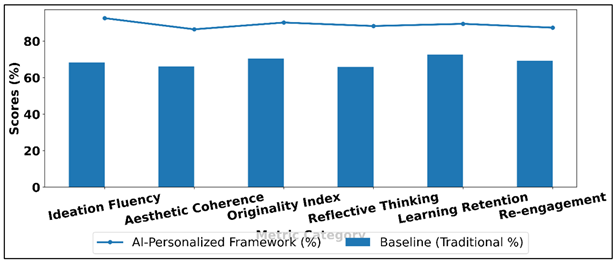
Figure 3 Comparison of Traditional vs AI-Personalized Creative Learning Metrics
The Aesthetic Coherence and Originality Index show significant progress as well, which suggests that in addition to being directed to a more visually balanced composition, the AI system helps to explore the styles by providing personalized examples, feedback loops, and suggestions of further refinement. Cumulative gains obtained by use of AI-based personalized creative learning are presented in Figure 4.
Figure 4
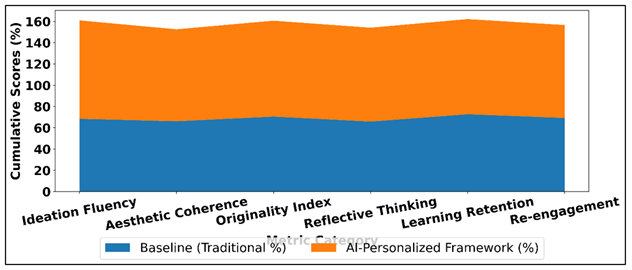
Figure 4 Visualization of Cumulative Improvements in AI-Personalized Creative Learning
The Reflective Thinking improvement (65.8% to 88.3) demonstrates that AI has the capability to induce meta-cognition by presenting contextual queries and pattern information and providing just-in-time feedback. Likewise, the increase of Learning Retention rate and Re-engagement Frequency is an indicator of more profound conceptualization and increased motivational attraction. Collectively, these findings demonstrate how AI-customized interventions develop a more sensitive, creative learning environment that could help improve the development of artistic abilities and long-term engagement of the learners.
5.2. Qualitative Outcomes: Student Reflections and Educator Insights
The qualitative feedback obtained through survey monitors among the learners and educators provided the transformative nature of the customized creative learning setting. According to the students, the experience was inspiring, self-paced and emotionally engaging and noted that the adaptive feedback helped them reflect and explore the arts even more. Most of them have said they felt confident in their creativity and independence again and that AI direction served as more of a guide than an assessment tool. Real-time visualization of their creativity index was appreciated by learners and assisted them in tracking performance and making individual goals. The teachers noted that there was better consistency of participation, enhanced classroom discussions and increased enthusiasm in project-based activities. The analytics dashboard of the system facilitated an accurate monitoring of the learning development trends of the learners and interventions could be undertaken as well as mentorship differentiated in time.
Table 3
|
Table 3 Qualitative Evaluation Metrics from Surveys and Observations |
|||
|
Evaluation Aspect |
Student
Satisfaction (%) |
Educator
Perception (%) |
Overall
Improvement (%) |
|
Creative Confidence Growth |
88.2 |
90.4 |
28.6 |
|
Emotional Engagement Level |
91.1 |
89.7 |
32.4 |
|
Perceived Learning Autonomy |
87.5 |
92.3 |
29.7 |
|
Collaboration and Peer
Feedback |
84.6 |
88.9 |
25.4 |
The qualitative uplift Table 3 indicates a high level of qualitative improvement in various dimensions of classroom life, which proves that AI-personalized learning does not only improve performance but also transforms the emotional and social fabric of creative education. Creative Confidence Growth shows high levels of satisfaction among students (88.2) and educators (90.4) indicating that adaptive guidance, real-time criticism, and iterative support allow learners to get over any hesitation and have more bold ideas. The high increase in Level of Emotional Engagement is an indication that curiosity and immersion is maintained by multimodal stimuli, custom-made challenges, and interactive feedback loops. Figure 5 displays the distribution of general improvements on AI-assisted learning evaluation aspects. The scores of Perceived Learning Autonomy reflect the notion that the students are more in control of their learning process as supported by the systems that increase and decrease the difficulty, style, and pacing with educators monitoring an easier progression and a decreased burden of intervention.
Figure 5

Figure 5 Distribution of Overall Improvement Across Evaluation Aspects in AI-Assisted Learning
Lastly, there are positive changes in Collaboration and Peer Feedback that AI tools are able to support more meaningful group discussions through the appearance of common ground, guided forms of critique and the ability to see learning patterns. Taken together, all these signifiers depict a complete shift to a more participatory, assertive and self enabling creative learning process.
6. Conclusion
The introduction of artificial intelligence into individualized creative learning is a new landmark in the educational action- the move towards standardized teaching towards adaptive and learner-focused environments. This paper has shown that AI is capable of simulating the personal creativity depending on multidimensional analysis, combining cognitive, affective, and behavioral information to generate dynamically changing learning trajectories. The proposed framework allowed every learner to develop at his or her best rate by incorporating intelligent profiling, clustering, and pattern discovery into a feedback loop that is adaptive and works to constantly foster originality, reflection and involvement. Adaptive recalibration mechanisms proved to be effective as quantitative results indicated significant improvements in the level of creativity, retention of learning, and the stability of engagement. Additional qualitative reflections showed that students viewed the AI system as a partner and not an assessment tool and developed creative confidence and intrinsic drive. Teachers, in their turn, enjoyed the benefits of real time analytics that helped them to make informed decisions, distribute work loads, and evaluate creative results without any bias. The personalization engine was proposed: these modules included data input, analytics, feedback, and visualization that turned out to be scalable, open, and applicable to various creative areas like visual arts, design, music, and creative writing. The dynamic Creativity Index was a measurable but interpretive indicator of the creative development, which converted abstract learning experiences into practical knowledge.
CONFLICT OF INTERESTS
None.
ACKNOWLEDGMENTS
None.
REFERENCES
Abulibdeh, A., Zaidan, E., and Abulibdeh, R. (2024). Navigating the Confluence of Artificial Intelligence and Education For Sustainable Development in the Era of Industry 4.0: Challenges, Opportunities, and Ethical Dimensions. Journal of Cleaner Production, 437, 140527. https://doi.org/10.1016/j.jclepro.2023.140527
Al-Zahrani, A. M., and Alasmari, T. M. (2024). Exploring the Impact of Artificial Intelligence on Higher Education: The Dynamics oF Ethical, Social, and Educational Implications. Humanities and Social Sciences Communications, 11, 912. https://doi.org/10.1057/s41599-024-03432-4
Azevedo, B. F., Pacheco, M. F., Fernandes, F. P., and Pereira, A. I. (2024). Dataset of Mathematics Learning and Assessment of Higher Education Students Using the Mathe Platform. Data in Brief, 53, 110236. https://doi.org/10.1016/j.dib.2024.110236
Bognar, L., Ágoston, G., Bacsa-Bán, A., Fauszt, T., Gubán, G., Joós, A., and Strauber, G. (2024). Re-Evaluating Components of Classical Educational Theories in AI-Enhanced Learning: An Empirical Study on Student Engagement. Education Sciences, 14(9), 974. https://doi.org/10.3390/educsci14090974
Bukar, U. A., Sayeed, M. S., Razak, S. F. A., Yogarayan, S., and Sneesl, R. (2024). Prioritizing Ethical Conundrums in the Utilization of ChatGPT in Education Through an Analytical Hierarchical Approach. Education Sciences, 14(9), 959. https://doi.org/10.3390/educsci14090959
Chan, C. K. Y., and Hu, W. (2023). Students’ Voices on Generative AI: Perceptions, Benefits, and Challenges in Higher Education. International Journal of Educational Technology in Higher Education, 20, 43. https://doi.org/10.1186/s41239-023-00411-8
Chan, C. K. Y., and Lee, K. K. (2023). The AI generation gap: Are Gen Z Students more Interested in Adopting Generative AI Such as ChatGPT in Teaching and Learning Than Their Gen X and Millennial Generation Teachers? Smart Learning Environments, 10, 60. https://doi.org/10.1186/s40561-023-00269-3
Charow, R., Jeyakumar, T., Younus, S., Dolatabadi, E., Salhia, M., Al-Mouaswas, D., and Wiljer, D. (2021). Artificial Intelligence Education Programs for Health Care Professionals: Scoping Review. JMIR Medical Education, 7(1), e31043. https://doi.org/10.2196/31043
Demartini, C. G., Sciascia, L., Bosso, A., and Manuri, F. (2024). Artificial Intelligence Bringing Improvements to Adaptive Learning in Education: A Case Study. Sustainability, 16(3), 1347. https://doi.org/10.3390/su16031347
George, B., and Wooden, O. (2023). Managing the Strategic Transformation of Higher Education Through Artificial Intelligence. Administrative Sciences, 13(9), 196. https://doi.org/10.3390/admsci13090196
Gouia-Zarrad, R., and Gunn, C. (2024). Enhancing Students’ Learning Experience in Mathematics Class Through ChatGPT. International Electronic Journal of Mathematics Education, 19(2), em0781. https://doi.org/10.29333/iejme/14614
Grosseck, G., Bran, R. A., and Tiru, L. G. (2024). Digital Assessment: A Survey of Romanian Higher Education Teachers’ Practices and Needs. Education Sciences, 14(1), 32. https://doi.org/10.3390/educsci14010032
Hooshyar, D., Azevedo, R., and Yang, Y. (2024). Augmenting Deep Neural Networks with Symbolic Educational Knowledge: Towards Trustworthy and Interpretable AI for education. Machine Learning and Knowledge Extraction, 6(2), 593–618. https://doi.org/10.3390/make6010028
Huang, L. (2024). Improve English Learning Through Artificial Intelligence for Online and Offline Mixed Teaching Path. Scalable Computing: Practice and Experience, 25(1), 481–494. https://doi.org/10.12694/scpe.v25i1.2399
Yang, W. (2022). Artificial intelligence education for Young Children: Why, What, and How in Curriculum Design and Implementation. Computers and Education: Artificial Intelligence, 3, 100061. https://doi.org/10.1016/j.caeai.2022.100061
Yue, M., Jong, M. S. Y., and Dai, Y. (2022). Pedagogical Design of K-12 Artificial Intelligence Education: A Systematic Review. Sustainability, 14(23), 15620. https://doi.org/10.3390/su142315620
|
|
 This work is licensed under a: Creative Commons Attribution 4.0 International License
© ShodhKosh 2025. All Rights Reserved.