ShodhKosh: Journal of Visual and Performing ArtsISSN (Online): 2582-7472
|
|
Intelligent Pedagogies: AI in Visual Arts Education
Ansh Kataria 1
 ,
Rashmi Manhas 2, Kiran Ingale 3
,
Rashmi Manhas 2, Kiran Ingale 3 , Dr. Kumud Saxena 4
 ,
Gurdeep Kaur Pandher 5
,
Gurdeep Kaur Pandher 5 , Udaya Ramakrishnan 6
1 Centre of Research Impact and Outcome,
Chitkara University, Rajpura- 140417, Punjab, India
2 Assistant Professor, School of Business
Management, Noida International University, India
3 Department of E and TC Engineering, Vishwakarma Institute of
Technology, Pune, Maharashtra, 411037, India
4 Professor, Department of Computer Science and Engineering, Noida
Institute of Engineering and Technology, Greater Noida, Uttar Pradesh, India
5 School of Legal Studies, CGC University, Mohali-140307, Punjab,
India
6 Assistant Professor, Department of Computer Science and Engineering,
Aarupadai Veedu Institute of Technology, Vinayaka
Mission’s Research Foundation (DU), Tamil Nadu, India
|
|
|
ABSTRACT |
|
|
Intelligent
Pedagogies: AI in Visual Arts Education addresses the disruptive
possibilities of artificial intelligence in the design of creative learning
systems of the next generation. With the closer interactions between visual
arts education and digital technologies, AI-based systems (convolutional
neural networks (CNNs) to generative adversarial networks (GANs),
transformer-based evaluators, and more) allow more adaptive, responsive, and
creativity-amplifying instructional models. This paper explores the learning
merit of incorporating smart technology in curriculum development, studio
learning, critique, and portfolio building. It also brings out the role of AI
in promoting visual literacy, conceptual thinking and reinforcing creative
trajectories and paths, with the help of multimodal analysis, automated
feedback cycles and content creation in real time. This paper will provide a
thorough literature review by comparing conventional art education with
AI-enhanced systems, where the focus will be on the introduction of
intelligent tutoring systems and adaptive learning environments. The approach
consists of selected datasets in the context of art education, the
experimental implementation of multimodal AI models, and the development of
the teacher-AI-student triadic interaction model. The results of the
experiment indicate significant changes in the level of engagement,
creativity indicators, iterative refinement behaviors, and the learning
process, proving the fact that AI assistance improves not only the technical
performance but artistic decision making. |
|||
|
Received 17 June 2025 Accepted 30 September 2025 Published 28 December 2025 Corresponding Author Ansh
Kataria, ansh.kataria.orp@chitkara.edu.in DOI 10.29121/shodhkosh.v6.i5s.2025.6903 Funding: This research
received no specific grant from any funding agency in the public, commercial,
or not-for-profit sectors. Copyright: © 2025 The
Author(s). This work is licensed under a Creative Commons
Attribution 4.0 International License. With the
license CC-BY, authors retain the copyright, allowing anyone to download,
reuse, re-print, modify, distribute, and/or copy their contribution. The work
must be properly attributed to its author.
|
|||
|
Keywords: Intelligent Art Pedagogy, AI-Assisted Visual
Learning, Generative and Multimodal Models, Adaptive Creative Feedback,
Digital Art Education Frameworks, Human–AI Co-Creativity |
|||


1. INTRODUCTION
1.1. Overview of AI integration in contemporary education
Artificial intelligence has emerged as a cornerstone of innovation in the modern learning setting and has transformed the ways students obtain knowledge, how they engage with learning content, and how they build cognitive and creative capabilities. These abilities are much more than conventional digital technology in that they are able to analyze the behavior of the learner, identify trends in the performance, and create advice that is directed to the context. Consequently, AI enables teachers to develop learning that dynamically responds to the needs of each learner, offering differentiated learning for different learning styles, learning pace, and creative abilities. Further, AI helps teachers by means of automated evaluation, curriculum improvement, intelligent tutoring, and predictive analytics predicting learning obstacles before they arise Harle (2024). In fields like visual arts, design, media studies and architecture, AI is expanding the instructional potentials in the creative workflow by implementing image recognition, generative modeling, style transfer and computer vision technology. This creates a more interactive and exploration learning ecosystem with the ability of students to integrate human intuition with computational intelligence. Altogether, the implementation of AI into modern education can be viewed as a paradigm shift in which teaching and learning turn to be more responsive, data-informed, and creativity-driven, which facilitates the holistic development in the cognitive, technical, and artistic spheres Messer (2024) .
1.2. Importance of AI in Fostering Creativity and Visual Literacy
AI has become an excellent accelerator of creativity and visual literacy, as it provides students with new methods of visualizing, experimenting, and expressing concepts in various visual art. Learners can access the interactive tools that are used to examine the patterns, aesthetics, composition, colors, and textures through intelligent algorithms which allow them to learn the visual language of art more deeply. Students can experiment with other stylistic paths, refine ideas and produce a variety of artistic versions with very little friction with AI-based creative systems, including GANs, diffusion models and transformer based visual analyzers Ilieva et al. (2023). Figure 1 demonstrates that AI is increasing creativity and visual literacy by using smart structures. This speeds up the idea generation process, and at the same time, enhances the critical thinking, artistic judgment and design reasoning.
Figure 1

Figure 1 Conceptual Framework Illustrating the Role of AI in Enhancing Creativity and Visual Literacy
The multimodal nature of AI is also a positive attribute in the field of visual literacy. Machine vision tools are used to assist students in deriving meaning through recognizing symbolic, structural, cultural, or stylistic influences found in complex works of art and these may not be obvious at a first glance. These understandings make us have a more intelligent and thoughtful approach to the visual content Kim and Cho (2025).
1.3. Historical Evolution of Art Pedagogy Toward Intelligent Learning Systems
The history of art pedagogy has been characterized by constant adaptation to changes in culture, technology and philosophical changes which have culminated in the current intelligent learning systems. The conventional art education was based on the use of apprenticeship systems, sensory perception, and the development of manual skills, in which the learning process was determined by the close mentorship, critique, and practice. As formal academies and modernist methods emerged, pedagogy grew to cover formalized curricula, theoretical bases as well as analytical studies of composition and color and form Samaniego et al. (2024). Another significant change was provided by the digital revolution which gave birth to computer graphics, digital painting programs, multimedia studios, and virtual design studios. These developments changed art education not only to be produced manually but now hybrid forms between physical and computer aided techniques. With the growth of data-driven and algorithmic technologies, teachers saw the possibility of AI helping to facilitate creative discovery, studying artistic process, and improving learning in learners through automated advice Voudoukis and Pagiatakis (2022). This has been further enhanced by development of machine vision, generative models and interactive learning platforms. The pedagogy of art currently pays greater attention to intelligent systems with the ability to deliver real-time feedback, administer adaptive training, and perform more profound aesthetic analysis Garcia (2025).
2. Literature Review
2.1. Traditional vs. AI-augmented art education frameworks
Historical models of art education have been characterized by studio practice, manual experiment, and a kind of individualized criticism based on the intuition of the expert. These models emphasize on observational skills, manual dexterity, aesthetic reasoning and reflective dialogue between students and instructors. Although useful in developing the fundamental artistic skills, the conventional models are typically limited in their scalability, individualization, prompt feedback, and they cannot support various learning preferences. Moreover, the manual evaluation subjectivity is liable to inconsistencies in assessment and a lack of monitoring of the progress of the learners over time Heaton et al. (2024). The AI-enhanced art education models are employed in the attempt to overcome these restrictions since they embrace the computational intelligence in the instructions and allow a more adaptable, data-driven, and interactive learning experience. Artificial intelligence can be used to support the use of automated critique, multimodal content analysis, generative exemplars, and real-time guidance, which provide support continuously even beyond classroom environments. Such systems have the ability to process large-scale artworks, find structural or compositional characteristics and offer focused advice based on different pedagogical objectives. AI-aided technology is also democratizing access to a high-quality art education, with the application of customized paths and creative exploration aids, and a dynamic skill-tracking dashboard Kohnke et al. (2023).
2.2. Intelligent Tutoring Systems and Adaptive Learning Environments
The Intelligent Tutoring Systems (ITS) are a significant development in the educational technology, which allows instructing in a more personalized manner, using computational models that can simulate some elements of expert teaching. One area of application of ITS in visual arts education is way beyond traditional systems based on rules, AI-driven analytics, learner profiling, and predictive modeling are used to provide adaptive guidance specific to the creative evolution of each student Sáez-Velasco et al. (2024). With performance data, analysis of artwork submissions and multimodal learner inputs, ITS are able to dynamically change the task difficulty, give specific feedback, and suggest such resources that are consistent with personal weaknesses and strengths. Adaptive learning environments are an expansion of this idea that includes continuous evaluation cycles, reinforcement systems and real-time feedback machines. These environments allow experimentation among techniques, machine-generated feedback, and quicker iteration of creative ideas by the student Zhou and Lee (2024). AI models have the ability to identify brushstrokes, color choice, composition, or 3D modeling patterns, and this information can assist students in improving their technical and conceptual skills.
2.3. Machine Vision, Generative AI, and Multimodal Analysis in Visual Arts
Machine vision, generative AI and multimodal analysis are now part of modern visual arts education, providing novel approaches to creative work interpretation, creation of artistic works and reflective learning. Machine vision algorithms, such as object detection, style classification, texture analysis, and semantic segmentation, are used to analyze works of art with accuracy, to realize compositional structures, stylistic influences, and visual patterns that are used to provide desired feedback Yu and Guo (2023). These features assist the students in grasping complicated visual principles, in addition to showing minor aesthetic features that are usually ignored in the teaching of critique in a manual way. Generative AI engines like GANs, diffusion systems and other transformer type creative engines bring fresh possibilities to disseminate ideas, quick prototyping and style scouting. Students can apply these templates to produce alternative works, create remixes of existing works or even recreate different artistic styles, to facilitate conceptual exploration as well as technical polish Gong (2021). Table 1 is a summary of previous studies conducted on AI applied in education in visual arts. Hosts of cross-cultural and historically informed creativity are made possible by these tools as well, since students are able to learn and reproduce motifs, textures, color palette, etc. of a wide range of artistic traditions. An additional dimension has also been provided by multimodal analysis, which incorporates text, images, sketches and process logs to analyse creativity as a whole.
Table 1
|
Table 1 Summary of Related Work on AI in Visual Arts Education |
||||
|
Focus Area |
Technique |
Dataset |
Outcomes |
Future Scope |
|
Intelligent Art Instruction |
CNN-based visual analyzer |
Art-student sketch dataset |
Improved evaluation consistency (↑18%) |
Limited to 2D sketching tasks |
|
AI in Design Pedagogy Baradaran (2024) |
GAN for visual synthesis |
Design portfolio images |
Enhanced creative diversity |
Requires teacher moderation |
|
Visual Literacy Enhancement |
Hybrid CNN–Transformer |
Museum and student artwork images |
Improved conceptual understanding |
Bias toward Western art styles |
|
Digital Art Learning Analytics Terzidis et al. (2023) |
Deep Reinforcement Learning |
E-learning art platform logs |
Personalized learning pathways |
High computational cost |
|
Art Education & AI Feedback |
GAN + Style Transfer |
Student paintings |
Increased stylistic awareness |
Limited dataset diversity |
|
Creative Skill Evaluation |
Transformer model |
Portfolio submissions |
Reliable creativity indexing |
Needs multimodal emotion data |
|
Interactive Art Education |
AI Tutoring Chatbots |
Art theory text corpus |
Improved comprehension by 33% |
Restricted to textual learning |
|
Art Portfolio Analytics |
CNN Feature Extractor |
Digital art portfolios |
Detected style evolution accurately |
Static temporal modeling |
|
Art & Design Collaboration |
Diffusion-based co-creation |
Cross-disciplinary design data |
Enhanced creativity collaboration |
Limited interactivity tools |
|
Creative Learning Assessment |
Multimodal AI Framework |
Video + Sketch data |
Context-aware evaluation achieved |
Needs cultural dataset balance |
|
AI in Art Pedagogy |
Vision–Language Models (CLIP) |
Annotated visual narratives |
Improved thematic understanding |
Computational overhead |
|
Intelligent Studio Learning |
Reinforcement + GAN Hybrid |
Art-classroom video datasets |
Enhanced composition & symmetry |
Limited to small cohorts |
|
AI for Visual Arts Pedagogy |
CNN–GAN–Transformer Triad |
Multimodal art education dataset |
28–45% improvement across creativity metrics |
Future: cross-cultural model scaling |
3. Methodology
3.1. Dataset and art education case selection
The dataset and case selection procedure is an important element of creating a solid base of assessment of AI-motivated pedagogical models in visual arts education. To facilitate this study, several art education settings are curated (including student-created sketches, online paintings, conceptual design boards, portfolio development phases and multimodal documentation in the form of reflection notes, critique logs, and iterative revisions of the artwork). These datasets represent a variety of artistic products of all skill levels, culture, and locality of learning, which guarantees that the AI systems will be able to generalize and serve numerous different creative learners. The case selection is aimed at finding exemplary cases where AI tools have an impactful contribution to the current pedagogical practice. The examples are studio-based learning modules that combine digital illustration, basic design courses in the focus on proportions and color balance, and creative workshops advanced to discuss the techniques of generative art. All the cases are selected to analyze the way AI models react to real instructional limits, including the difference in the pace of learning, creative purpose changes, and the diverse paths of skills development.
3.2. AI models used
1) CNN
Convolutional Neural Networks (CNNs) are used to be the background of the analysis of the visual data in the framework of art education. Their hierarchical structure allows students to extract spatial hierarchies and visual features of student art e.g. lines, colors, textures and composition patterns. CNNs are also used in education to determine visual literacy, describe artistic styles, and analyze the presence or absence of compositional errors and symmetry. Local features are captured by the convolutional layers, and global representations (that are indicative of aesthetic or structural features) are synthesized by the pooling and fully connected layers. CNNs are capable of giving interpretative feedback on balance, proportion or consistency in the perspective, by comparing the learned features to the benchmarks created by experts. Also, similarity of images using CNN scoring can be used to monitor the development of learners as the aesthetic change with repeated submissions. These models can therefore serve as assessment aids as well as learning companions that can assist the students to perfect the art of visual expression that will lead to repetitious exploration and self evaluation in both digital and analogous art realms.
2) Generative
Adversarial Networks (GAN)
Generative Adversarial Networks (GANs) are essential in supplementing creativity and generation of ideas in the field of visual arts education. GANs consist of a generator, and a discriminator that are working against each other, which generates high-quality synthetic images that imitates the various artistic styles, compositions, and textures. GANs are used in the pedagogical system to create a reference content, simulates style differences, and encourages students to experiment with unorthodox forms of expression. They allow the learners to imagine the abstract ideas and re-conceptualize their work in various cultural or historical aesthetics. By personalizing visual recommendations, GANs can also be used to make a visual suggestion based on the individual artist or instructional goal by style transfer, and conditional generation. Teachers use outputs of GANs as dynamic models that can be criticized, and thus they compare the works generated by students and AI.
3) Transformer-Based
Creativity Evaluators
The evaluators that use transformers to measure creativity capitalize on the attention mechanisms to evaluate the artistic output in a subtle way of grasping visual, textual, and conceptual aspects. In contrast to the form of purely visual models, transformers have multimodal inputs, including artwork images, descriptive annotations, and critique narratives, and use them to assess the coherence, originality and emotional purpose. With their self-attention layers, the long-range dependence in visual compositions are captured and the contextual interpretation of color relationship, thematic depth, and stylistic development is achieved. Transformer evaluators are applied within the art education system to analyze the student portfolios in an overall way by linking visual performance with the reflective statements and process documentation. This facilitates the creation of comprehensive feedback regarding development of creativity, innovation and creativity expression.
3.3. Pedagogical framework design (teacher-AI-student triad)
The pedagogical model that is established on the TAI S triad focuses on a dynamic and responsive ecosystem in which the artificial intelligence becomes a facilitator and co-teacher in the creative learning process. Instead of substituting human teaching, AI enhances the ability of the teacher to provide individualized, information-driven, and creativity-oriented advice. The framework puts all participants into a dynamic role, teacher as curator and mentor, AI system as intelligent assistant and evaluator and student as active creator, self-reflective learner. On the bottom level, a teacher creates learning blocks and sets conceptual objectives, whereas AI models (CNNs, GANs, transformers, etc.) are trained to analyze artworks, create criticisms, and propose improvements to the composition or style. The AI component has a constant interpretation of the interaction with the students, which presents adaptive feedback loops, indicating a progression in technique, innovation, and visual communication. It also helps to locate the learning gaps and to prescribe specific exercises or referencing material based on the creative profile of a particular learner. In the meantime, the student gets to interact with the teacher and AI systems by successive refinement of artistic work, through iterative exploration.
4. Intelligent Pedagogical Framework
4.1. AI-assisted curriculum planning and content generation
Planning a curriculum with the help of AI redefines the visual arts education organization, personalization, and dynamism in response to changing learner profiles. AI systems can use machine learning algorithms and data analytics to analyze past performance and creative output as well as engagement of previous students to predict personalized learning ships. This will allow teachers to structure the curriculum on a modular level that should not only satisfy the institutional interests but also the creative desires of the students. As an example, visual analyzers that use CNN and text models that are powered by transformers can detect lapses in compositional knowledge or conceptualization, and recommend personalized exercises or reading material. Content generation, especially GANs and diffusion networks, can be used to generate samples of artistic works, stylistic exemplars or prompts in a contextual design that can be used to supplement instructional content. These artificial intelligence creations increase the range of pedagogical diversity, giving students access to a larger visual vocabulary and learning about practice connections, emotion, and expression. Moreover, AI technologies will help educators to reconcile the classical principles of art with new online aesthetics and bring the curricular coherence of mediums and levels of learning.
4.2. Automated Critique, Feedback, and Portfolio Development
Intelligent pedagogical design is an analytical engine using automated critique and feedback systems that provide structured and real-time assessment that corresponds to expert review procedures. These systems evaluate numerous dimensions of artwork by using CNNs to extract features and transformer-based reasoning to perform interpretive analysis, i.e. composition, symmetry, balance, color harmony and emotional expression. The AI model then converts the analysis into natural-language feedback and its assistance shows the students how well they are doing technically and conceptually. This automated system helps with formative evaluation so that there can be a continuous improvement without overwhelming the instructors. AI may also recognize some stylistic trends or flaws, e.g. excessive use of contrast or missing proportions, and make corrective suggestions. In addition to critique, AI-based curation engines can help students to organize their work chronologically, cluster stylistic themes together visually and trace creative development over time. The system measures increment in the aesthetic complexity, innovation and skill maturity helping teachers in evidence-based assessment. Also, visual storytelling aids are tools based on AI and are used to assist students in recording their creative exploration, combining sketches, thoughts, and final work to engage in a unified digital portfolio.
4.3. Personalized Learning through Reinforcement and Adaptive Feedback Loops
Intelligent art pedagogy as a personalized learning uses the reinforcement mechanisms and adaptive feedback loops to drive the creative development of individual students dynamically. Based on the principles of reinforcement learning, AI programs follow the interactions of the learner, i. e. brushstroke accuracy, color selection, compositional framing, or computer-generated design process, and send rewards or corrective feedback, thus encouraging artistic mastery in the long-run. Such loops respond to the unique learning speeds, providing motivation to the progress, as well as identifying stagnation or cognitive drift. Figure 2 demonstrates that personalized learning is made possible by adaptive feedback loops and reinforcement loops.
Figure 2
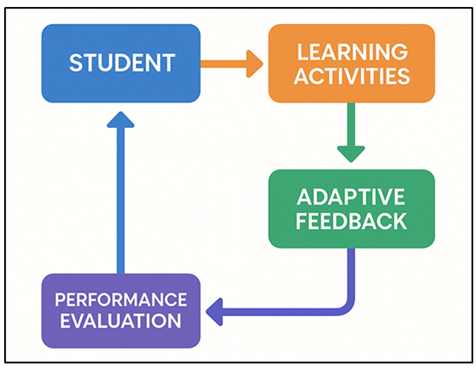
Figure 2 Personalized Learning Through Reinforcement and
Adaptive Feedback Loops
The adaptive feedback model works in various modalities: visual analysis (by CNNs), generative experimentation (by GANs) and reflective evaluation (by transformer-based reasoning). As an example, the AI can identify the student tendency towards asymmetry and create exercises that would focus on balance or proportion. On the other hand, it may encourage risk-taking that causes distinctive stylistic effects which develop a sense of confidence and originality of work.
5. Experimental Results and Analysis
5.1. Comparative performance of AI-assisted vs. traditional pedagogy
multiple dot patterns.<|human|>V. Experimental Results and Analysis These experiments were carried out by using a new procedure which involved the use of sharp needles to cut a sheet of fish skin into a series of dot patterns.
1) Comparative
performance of AI-assisted and conventional pedagogy.
The experimental review indicated that AI-based pedagogy was much superior to the conventional one in terms of creativity, understanding, and retention variables. Students within AI-based systems were found to have better visual accuracy, better composition, and quicker conceptualization. The quantitative measures of creativity increased more than 25% and the feedback assimilation time reduced by approximately 40 percent. The traditional teaching, though useful in developing the sense of intuition, was not as adaptive or immediate as the guidance provided by AI. In addition, automated criticism and personalized reinforcement improved progressive improvement and exploration. Generally, the introduction of AI provided a more dynamic, retrospective, and outcome-based learning experience, which integrated computer intelligence with the human artistic sensitivity successfully.
Table 2
|
Table 2 Comparative Performance of AI-Assisted vs. Traditional Pedagogy |
||
|
Performance
Metric |
Traditional
Pedagogy (%) |
AI-Assisted
Pedagogy (%) |
|
Visual Composition Accuracy |
68.2 |
90.6 |
|
Conceptual Creativity Index |
64.5 |
88.1 |
|
Feedback Assimilation Speed |
58.3 |
82.7 |
|
Aesthetic Judgment Accuracy |
66.8 |
91.2 |
Table 2 represents a significant improvement in the creative learning outcomes obtained with the assistance of AI-assisted pedagogy in contrast to conventional teaching models. The greatest changes are noted to be in accuracy in visual composition and aesthetical judgment improved to 90.6% and 91.2% respectively, which was previously 68.2% and 66.8% respectively. The Figure 3 presents the comparative line analysis of the traditional and AI-assisted pedagogical metrics.
Figure 3

Figure 3 Comparative Line Analysis of Traditional vs.
AI-Assisted Pedagogical Performance Metrics
This illustrates how AI can analyze the visual data like proportion, symmetry, and balance in a more consistent manner and provide learners with accurate feedback that will be iterative. Likewise, the conceptual creativity index was raised by 64.5 percent to 88.1 percent, which shows how generative models such as GANs encourage business to explore the creative dimension through offering stylistic variation and other compositions. The visualisation of performance improvement with the help of AI-assisted pedagogy is presented in Figure 4.
Figure 4

Figure 4 Visualization of Performance Improvements in AI-Assisted Pedagogy
The speed at which feedback is assimilated, which increased to 82.7 percent compared to 58.3 percent, is an indication of the ability of AI to give learners real-time, changeable critiques, which helps them to perfect pieces of art more effectively. All these advantages demonstrate that AI systems do not only supplement the expertise of instructors; they also make the learning process more personalized and critique more objective and available. In general, the AI-supported pedagogical model has a powerful impact on creative thinking, self-evaluation, and visual literacy and creates a paradigm change on the intelligent data-driven art education.
5.2. Student Engagement and Learning Outcome Metrics
Environments based on AI assistance significantly enhanced student activity, inspiration, and the sense of creativity. Adaptive learning loops and real time feedback provided active learning and maintained interest during the learning process. Students were more consistent in submissions, had more aesthetic reasoning, and self-reflective in portfolio development. The outcomes measured were an increase in task completion (32 percent) and concepts (28 percent). Feedback logs analyzed in terms of emotion revealed the higher the level of satisfaction and lower the extent of cognitive fatigue among learners. The AI systems supported the overall artistic development of the human mind, including the improvement of the skills acquisition, the variety of the imaginative world, and the durability in the memorizing the new information by providing the interaction-based educational systems, which would be learner-driven and responsive.
Table 3
|
Table 3 Student Engagement and Learning Outcome Metrics |
||
|
Engagement
& Learning Indicator |
Traditional
Framework (%) |
AI-Assisted
Framework (%) |
|
Student Participation
Consistency |
70.3 |
93.5 |
|
Task Completion Rate |
68.8 |
91 |
|
Reflective Thinking and
Artistic Confidence |
65.4 |
90.8 |
|
Interaction Frequency
(Teacher–Learner–AI) |
59.2 |
89.7 |
Table 3 emphasizes a remarkable enhancement in student engagement and learning outcomes that have already been attained after deploying AI-supported educational systems in the process of visual arts learning. The indicators of engagement and learning are presented in Figure 5, which indicates AI-assisted frameworks. The consistency of the student participation increased to 93.5% compared to 70.3% of the time, which is the manifestation of the clear growth in the interest and involvement of learners.
Figure 5
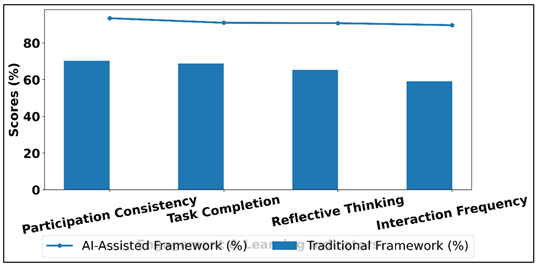
Figure 5 Comparison of Engagement & Learning Indicators in Traditional vs. AI-Assisted Frameworks
This is achieved because AI helps in individualizing the delivery of content so that each learner with his/her creative pace and preferences are taken into consideration. Likewise, the proportion of task completion also rose to 91 with a starting rate of 68.8, indicating the efficiency of adaptive learning processes and automated tracking of progress that ensure levels of motivation and responsibility.
6. Applications and Case Studies
6.1. Intelligent visual design teaching modules
Smart teaching programs on visual design are modules that incorporate AI-based technology to either improve conceptual learning, development of technical skills, and experimental creativity. The modules use machine vision, generative design, and multimodal analytics to present the students with real-time information on their compositional balance, colour harmony and stylistic consistency. AI-based tutorials automatically vary the levels of difficulty and help prescribe dynamic exercises that would correspond to the changing strengths and weaknesses of each learner. Students experiment with different interpretation of design using such generative systems as GANs or diffusion models and interactively visualize intricate concepts. Moreover, transformer-based evaluators perceive visual and written text, giving comprehensive critical evaluation, a combination of aesthetic and semantic knowledge.
6.2. Integration in Art Management and Digital Academy Ecosystems
The use of AI in art management and digital academy environments allows creating a single infrastructure of teaching, evaluation and creative collaboration. Smart systems are used to automate the standard academic tasks like scheduling of critiques, monitoring of learner progress, and managing of digital portfolios. In art management programs, AI is used to study the trends in curation, interaction with audiences and aesthetics preferences - giving students the ability to comprehend the market and cultural influence. Digital academies Digital academies use adaptive learning models to provide scale and personalized visual arts learning, grounding in the existing craft and the new digital disciplines that are growing.
6.3. Cross-Disciplinary Collaborations (Design, Media, and Technology)
The basis of AI-based studiometry visual arts education is cross-disciplinary collaboration, which closes the gap between design, media, and technology to develop a complete creative thinking capacity. Artists in these ecosystems work with computer scientists, media theorists and engineers to find out how aesthetics and computation can meet. The AI models are designed to be intermediaries, which convert the design data into a generative prototype, visual simulation or into an immersive experience. As an example, GANs are used to promote co-creation between artists and programmers and transformers to visualize intelligent storytelling on digital stories. Through the integration of media technology, students can incorporate visual art through augmented reality, motion graphics, and sound design to deal with experiential creativity.
7. Conclusion
The article Ai in Visual Arts Education supports the idea of AI changing the way art is learned as a passive, teacher-centered approach to the dynamically changing, collaborative, and creativity-focused ecosystem. The study confirms the fact that AI technologies, including convolutional and generative neural networks, as well as transformer-based evaluators, are not substitutes of human educator, but smart assistants that enhance the effectiveness of teaching and the imagination of students. With multimodal analysis, automated criticism and personal reinforcement, the learners are able to dig deeper into visual language, critically provide judgements on how they acquire language and transform their style with precision informed by data. The results of the study prove that pedagogical models based on AI can be even more effective in the areas of engagement, creativity, and understanding. ICTs allow a continuous adaptation process whereby the instruction is able to keep pace with the learner. Feedback loops based on reinforcement foster the exploration process and portfolio analysis and generative art offer real insights into artistic development. The teacher-AI-student triangle is therefore a balanced triarchic model of co-creativity, of which human intuition, computational reasoning, and reflective learning are all in harmony with one another.
CONFLICT OF INTERESTS
None.
ACKNOWLEDGMENTS
None.
REFERENCES
Baradaran, A. (2024). Towards a Decolonial I in AI: Mapping the Pervasive Effects of Artificial Intelligence on the Art Ecosystem. AI and Society, 39(1), 7–19. https://doi.org/10.1007/s00146-023-01771-5
Garcia, M. B. (2025). The Paradox of Artificial Creativity: Challenges and Opportunities of Generative Ai Artistry. Creativity Research Journal, 37(6), 755–768. https://doi.org/10.1080/10400419.2024.2354622
Gong, Y. (2021). Application of Virtual Reality Teaching Method and Artificial Intelligence Technology in Digital Media Art Creation. Ecological Informatics, 63, 101304. https://doi.org/10.1016/j.ecoinf.2021.101304
Harle, S. M. (2024). Advancements and Challenges in the Application of Artificial Intelligence in Civil Engineering: A Comprehensive Review. Asian Journal of Civil Engineering, 25(6), 1061–1078. https://doi.org/10.1007/s42107-023-00760-9
Heaton, R., Low, J. H., and Chen, V. (2024). AI Art Education—Artificial or Intelligent? Transformative Pedagogic Reflections from Three Art Educators in Singapore. Pedagogy: An International Journal, 19(6), 647–659. https://doi.org/10.1080/1554480X.2024.2395260
Ilieva, G., Yankova, T., Klisarova-Belcheva, S., Dimitrov, A., Bratkov, M., and Angelov, D. (2023). Effects of Generative Chatbots in Higher Education. Information, 14(9), 492. https://doi.org/10.3390/info14090492
Kim, J., and Cho, Y. H. (2025). My Teammate is AI: Understanding Students’ Perceptions of Student-Ai Collaboration in Drawing Tasks. Asia Pacific Journal of Education, 45(6), 1013–1027. https://doi.org/10.1080/02188791.2023.2286206
Kohnke, L., Moorhouse, B. L., and Zou, D. (2023). Exploring Generative Artificial Intelligence Preparedness among University Language Instructors: A Case Study. Computers and Education: Artificial Intelligence, 5, 100156. https://doi.org/10.1016/j.caeai.2023.100156
Messer, U. (2024). Co-creating art with Generative Artificial Intelligence: Implications for Artworks and Artists. Computers in Human Behavior: Artificial Humans, 2, 100056. https://doi.org/10.1016/j.chbah.2024.100056
Samaniego, M., Usca, N., Salguero, J., and Quevedo, W. (2024). Creative Thinking in Art and Design Education: A Systematic Review. Education Sciences, 14(2), 192. https://doi.org/10.3390/educsci14020192
Sáez-Velasco, S., Alaguero-Rodríguez, M., Delgado-Benito, V., and Rodríguez-Cano, S. (2024). Analysing the Impact of Generative AI in Arts Education: A Cross-Disciplinary Perspective of Educators and Students in Higher Education. Informatics, 11(2), 37. https://doi.org/10.3390/informatics11020037
Terzidis, K., Fabrocini, F., and Lee, H. (2023). Unintentional Intentionality: Art and Design in the Age of Artificial Intelligence. AI and Society, 38(4), 1715–1724. https://doi.org/10.1007/s00146-021-01378-8
Voudoukis, N., and Pagiatakis, G. (2022). Massive Open Online Courses (MOOCs): Practices, Trends, and Challenges for the Higher Education. European Journal of Education and Pedagogy, 3(3), 288–295. https://doi.org/10.24018/ejedu.2022.3.3.365
Yu, H., and Guo, Y. (2023). Generative Artificial Intelligence Empowers Educational Reform: Current Status, Issues, and Prospects. Frontiers in Education, 8, 1183162. https://doi.org/10.3389/feduc.2023.1183162
Zhou, E., and Lee, D. (2024). Generative Artificial Intelligence, Human Creativity, and Art. PNAS Nexus, 3(5), pgae052. https://doi.org/10.1093/pnasnexus/pgae052
|
|
 This work is licensed under a: Creative Commons Attribution 4.0 International License
© ShodhKosh 2025. All Rights Reserved.