ShodhKosh: Journal of Visual and Performing ArtsISSN (Online): 2582-7472
|
|
AI-Assisted Sculpture Design: A Fusion of Tradition and Innovation
Subhash Kumar
Verma 1 , Sorabh Sharma 2
 , Avishi Mohta 3
 , Rohit Chandwaskar 4
 , Dr. Pompi Das Sengupta 5
 , Suma Sidramappa Hosamani 6
1 School
of Business Management, Noida International University, Noida, Uttar Pradesh,
India
2 Centre
of Research Impact and Outcome, Chitkara University, Rajpura- 140417, Punjab,
India
3 Assistant Professor, Department of
Design, Vivekananda Global University, Jaipur, India
4 Assistant Professor, Department of
Fine Art, Parul Institute of Fine Arts, Parul University, Vadodara, Gujarat,
India
5 Associate Professor, Department of
Management, Arka Jain University, Jamshedpur, Jharkhand, India
6 Department of Computer Engineering
Vishwakarma Institute of Technology, Pune, Maharashtra, 411037, India
|
|
|
ABSTRACT |
|
|
AI-assisted
sculpture design is a radical melding of the conventional art craftsmanship
and the innovative computational intelligence. The proposed study examines a
hybrid form of creative ecosystem where sculptors work together with
generative models, including GANs, diffusion systems, and mesh-generating
neural networks to create sculptural, conceptually rich, structurally
optimized, and culturally-infused sculptural
entities. The suggested model will be based on the
multimodal inputs which are hand-drawn sketches, 3D scans, material
textures, and regional motifs which can allow the AI to be not only viewed as
an automated tool but also as a collaborative contributor. Based upon the
theories of human-machine collaboration and aesthetic cognition, the work
presents how the concept of hybrid authorship redefines artistic intention,
increases the speed of ideation, and facilitates experimentation with
volumetric geometries that cannot be achieved in a field of manual work. The
form of methodology is placed on the strict processing and annotation of
sculptural data, native to curvature data, and surface anomalies, stylistic
representation, and cultural emblem correlation. Moreover, a simulation layer
of material consciousness is applied that assesses the reactions of stone,
metals, clay, and composite, forecasts stressful regions, texture results,
and manufacturability. The experiments show that there is a higher efficiency
in design iteration, accuracy in integrating cultural motifs and physical
plausibility of generated forms. |
|||
|
Received 09 June 2025 Accepted 23 September 2025 Published 28 December 2025 Corresponding Author Subhash
Kumar Verma, dir.sbm@niu.edu.in DOI 10.29121/shodhkosh.v6.i5s.2025.6896 Funding: This research
received no specific grant from any funding agency in the public, commercial,
or not-for-profit sectors. Copyright: © 2025 The
Author(s). This work is licensed under a Creative Commons
Attribution 4.0 International License. With the
license CC-BY, authors retain the copyright, allowing anyone to download,
reuse, re-print, modify, distribute, and/or copy their contribution. The work
must be properly attributed to its author.
|
|||
|
Keywords: AI-Assisted Sculpture Design, Generative Models,
Human–Machine Co-Creativity, Cultural Motif Embedding, 3D Mesh Optimization |
|||



1. INTRODUCTION
Sculpture has been among the most comprehensive art forms of humanity through its combination of material craftsmanship, cultural memory and form. The classical methods of sculpture, stone carving, casting of metals and clays and mixed-media assemblages, require not only physical ability but also an imaginative faculty, a sense of space and a sense of cultural and aesthetic tradition. Over the last few decades, computer-aided manufacturing, 3D modeling software, and parametric design systems have increased the range of creative options of the sculptor. However, all these tools are basically an extension of human intent as opposed to creative collaborators. Artificial intelligence (especially generative deep learning models) creates another twist: instead of the tool-mediated design of sculptures, a new paradigm of human-machine co-creativity is formed, in which AI plays a supportive role in the ideation, form generation, and the meaning of the materials Nah et al. (2023). The sculpture design using AI represents a novel method of conceptualizing the art practice, allowing various multimodal data, including sketches, 3D scans, texture maps, cultural motifs, etc., to be combined into unified generative processes. The current AI architectures, such as the Generative Adversarial Networks (GANs) and diffusion models, mesh-generating neural networks, have the ability to analyze the features of sculptures, predict the aspects of style, and create new volumetric shapes with stunning accuracy. All of this has been made possible through computational innovations that enable sculptors to experiment with emergent geometries, simulate material behavior, and quickly try out alternative creative directions Jin et al. (2024).
Instead of substituting the human intuition AI enlarges the conceptual spectrum of the artist and allows hybrid processes, combining embodied craftsmanship with the exploration of algorithms. This amalgamation between convention and creativity is based on the fact that sculpture is not an object alone but a culturally located art object. The sculptural identity tends to indicate the local taste, mythological organization, ritual symbolism, and historical techniques of craftsmanship Stoean et al. (2024). Incorporating such cultural motifs into the machine of AI algorithms makes sure that the generated content is not the aesthetically unfinished. Through training models on curated collections that incorporate indigenous patterns, stylistic canons, and textural characteristics of materials, AI can assist in preservation of cultural stories and provide opportunities to reinterpret some of them today. The second important thing is the shift to cognitively informed design systems Ao et al. (2023). Theoretical approaches to human-AI collaboration indicate that creativity is a result of the application of divergent and convergent refinement of ideas. AI models are also superior at suggesting novel geometries, restructuring motifs, and offering scale variants, whereas human sculptors come with contextual judgments, emotional engagement and cultural willfulness Li et al. (2024). Such collaboration promotes a type of recursive feedback loop with artists helping shape the artistic direction of the AI, and the AI, in its turn, inspiring new artistic directions. The technological environment also has some practical advantages. Mesh optimization networks are used to analyze the structure in terms of curvature, thickness, and load distribution to increase the structural stability. Material simulations Material simulations allow predictive evaluations of the behaviour of stone, clay or metal during carving, moulding or casting.
2. Related Work
Studies in the crossroads of artificial intelligence, digital fabrication, and sculptural arts have grown considerably in the recent years and provided the basic framework of how to augment the standard creative processes. Initial research in the field of computational sculpture made heavy use of the procedural modeling as well as parametric design systems, which allowed artists to create complex structures using algorithms to produce the desired geometric shapes. Though such means enhanced the exploration of forms, it did not provide semantic interpretation of artistic styles, cultural motifs, and material behaviors, which are the shortcomings that the new AI technologies are currently trying to address Ming et al. (2023). Generative Adversarial Networks (GANs) have been central to the further development of the study of digital sculpture through the transfer of style, the ability to recombine motifs, and the creation of voluminous forms. Other papers, including 3D-GAN and Sculpt-GAN, and more recent mesh-aware GAN architectures, showed that it was possible to learn spatial features on voxel grids, point clouds, and surface meshes Wu et al. (2024). The models enabled creation of abstract and figurative forms, but the initial ones had a problem with the high level of detail and structural integrity. Diffusion models have gained a better replacement of high-fidelity 3D content, especially following the introduction of text-to-3D pipelines, such as DreamFusion, Point-E, and Gaussian Splatting pipelines Hu (2023). These researches created new directions of concept prototyping allowing artists to convert narrative descriptions, thematic hints or cultural patterns into volumetric outputs. The fact that they can synthesize multimodal prompts combined with the capability to refine geometry in an iterative process has rendered diffusion-based systems even more applicable in artistic sculpture settings Ma and Chubotina (2024). Neural implicit representations of 3D mesh reconstruction and optimization operate parallelly with neural mesh flow, neural SDF and neural mesh flow, neural mesh flow, neural SDF, and neural denoising network reconstruction models have brought significant impact on the modern sculpture design process. The models can generate high-quality surfaces based on sketches, scans, or partial images, which is why they cannot be dropped in favor of digitizing traditional sculptures and you can continue to improve the design until it becomes beautiful Wang et al. (2024). Cultural heritage preservation, such as AI-based motif extraction or pattern completion, and geometric restoration, have been studied as an aspect of preserving the artistic identity through the use of machine learning. Table 1 presents a summary of the previous research on AI-assisted sculpture and generative 3D design. Various systems have shown how AI can be trained on the local method of style, iconography, or craftsmanship- and offer a basis to culturally rooted sculptural generation.
Table 1
|
Table 1 Summary of Related Work on AI-Assisted Sculpture and Generative 3D Design |
|||
|
Technique |
Data Type |
Objective |
Key Outcome |
|
3D-GAN |
3D voxel grids |
Generating abstract
sculptural forms |
Introduced volumetric GAN
for sculpture |
|
DeepSDF |
Mesh and point cloud |
Neural implicit surface
representation |
Improved mesh reconstruction |
|
cGAN Jie and Halabi (2024) |
2D sketch inputs |
Style-guided sculpture
synthesis |
Enabled sketch-to-form
mapping |
|
StyleGAN2 |
Artistic dataset (statues,
reliefs) |
Aesthetic transfer for
sculptural art |
High visual coherence |
|
NeRF Reconstruction |
Photogrammetry scans |
3D reconstruction of
heritage sculptures |
Realistic geometry recovery |
|
Transformer + CLIP Schoenung and Olivetti (2023) |
Text-to-3D generation |
Semantic concept sculpting |
Strong text-shape alignment |
|
Mesh R-CNN |
3D surface segmentation |
Sculptural surface
annotation |
Improved mesh part labeling |
|
Diffusion Model |
Multimodal 3D dataset |
High-fidelity 3D generative
design |
Superior detail quality |
|
Autoencoder + GAN Zhu et al. (2021) |
Material texture dataset |
Texture style transfer for
3D art |
Realistic texture synthesis |
|
CNN + Graph Network |
Heritage sculpture dataset |
Cultural motif recognition |
Identified regional styles |
|
VAE Wang et al. (2024) |
3D mesh simplification |
Structural abstraction of
sculpture |
Efficient mesh encoding |
|
Diffusion + NeRF Hybrid |
3D art dataset |
Realistic texture and volume
generation |
Enhanced material realism |
|
GAN + Diffusion Hybrid Cao et al. (2024) |
Multimodal sculptural
dataset |
Tradition–innovation fusion
in design |
Balanced cultural and
creative quality |
3. Theoretical Foundations
3.1. Human–machine co-creativity and hybrid authorship
In sculpture design, human machine co-creativity captures the paradigm shift in which the tool was used deterministically in sculpture design to a dialogic interaction between the artist and intelligent systems. In ancient times, sculptural authorship belonged to the human intuition, sense, and culture. Nonetheless, due to the advent of generative models, including GANs, diffusion networks, and neural meshes, the process of creativity has become a hybrid one, with human imagination and algorithmic intelligence co-evolving together. Figure 1 depicts that, through human-machine co-creativity, sculptural design allows hybrid authorship. The sculptor offers intellectual guidance, emotional guidance and finds aesthetic restraint and the AI offers variations, simulations and exposing unseen structural or stylistic possibilities.
Figure 1
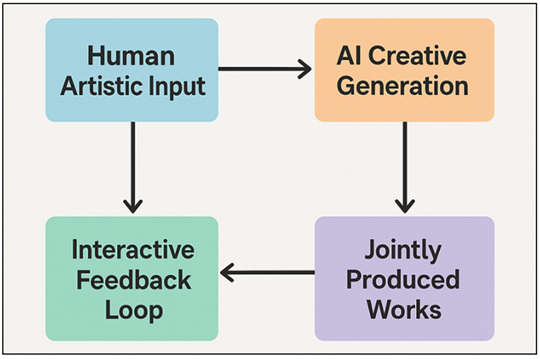
Figure 1 Human–Machine Co-Creativity and Hybrid Authorship in
AI-Assisted Sculpture Design
Such collaborative authorship undermines the established concept of creative ownership by creating the so-called co-authored artifacts, in which creativity is split between human will and machine reasoning. The cognitive science is in favor of this cooperation as an extension of the creative cognition, with a focus on distributed creativity, in which the two segments learn and change through feedback loops. The creativeness of the system is expanded by the latent exploration of the artist, and the AI outputs are refined by the interpretative sensibility of the sculptor Du et al. (2024).
3.2. Cognitive and Aesthetic Frameworks in Sculpture Design
The concept of sculpture design is the profound intellectual process that integrates spatial logic, sensory perception and emotional appeal. The cognitive structures are related to the perception of volume, proportion, rhythm, and material tactility by sculptors, whereas the aesthetic structures are used to determine harmony, symbolism, and expressiveness. The introduction of AI in this field needs to be informed by the way that these cognitive and aesthetic aspects can be modeled in a computational manner. Neural models model perception-based cognition by means of layers which abstract patterns, curvature, and spatial relations based on training information. This allows the system to feel aesthetic attributes like balance, symmetry and continuity in texture Lin et al. (2024). This aesthetically is reminiscent of concepts of Gestalt psychology on perceiving the sculpture as a whole and not as fragmented. Embodied interaction can also be reflected in the cognitive models, where human feedback is used to bring AI outputs into cultural taste, tactile realism or expressive nuances. By simulating these parameters of perception and the aesthetic, AI can be turned into a perceptually sensitive partner. It does not just interpret the surface characteristics but also internalizes the design philosophies that are under the surface like minimalism, organic flow or abstraction in the system. Consequently, the sculptural process becomes a rich feedback-based dialogue of cognition and computation that allows artists to explore new emergent aesthetics without giving up the sensoriality or emotional seriousness at the core of sculptural art.
3.3. Embedding Cultural Motifs and Artistic Identity within AI Models
An integration of cultural themes and aesthetic identity into the design of AI will make sure that technological change does not thin out the history and symbolism of the artwork practice. Hee generations-old belief Systems We have the pictures of religions, the pictures of towns, the pictures of individuals No matter how distant, No matter how long they have remained. These motifs, in an AI, serve as highly important semantic anchors that influence the direction of creativity of the generative model. By being shown a set of indigenous designs, historical patterns, and forms of cultural significance, the AI is taught to identify and recreate stylistic subtlety in accordance with certain artistic traditions. The system can encode contextual semantics, which is connecting geometry, ornamentation, and cultural meaning, with the techniques of feature embedding, transfer learning, and motif-aware fine-tuning. This combination will change AI to an unbiased producer into a socially sensitive partner. Such as, motif embedding allows an algorithm to redefine tribal carvings, religious sculptures, or folk symbols with modern materials and computational aesthetics and still remain original. Incorporating artistic identity also gives the artists of sculpture the ability to show the hybrid aspects of creativity- the combination of the ancient with the modern.
4. Methodology
4.1. Dataset preparation: sketches, 3D scans, material textures, cultural patterns
AI-assisted sculpture design is based on the creation of a multimodal and comprehensive dataset that represents the various dimensions of a sculpture work. The data combines the hand-drawn sketches, three-dimensional scans of the existing sculptures, material texture maps, and cultural pattern libraries so as to guarantee the technical richness and artistic authenticity. Those sketches made by hand are digitized in high resolution keeping the line weight, intent of curvatures and conceptual form. These sketches act as the first layer of creative, connecting the conventional ideation to the AI interpretation, and in 3D scans, the volatile geometry and volume of the surface are captured in the structured light or photogrammetry. They are transformed into polygonal mesh forms which enable AI to comprehend depth, proportion and topological structure. Material textures such as the stone grain, clay smoothness, and metallic reflective are listed with high-fidelity image, and create a tactile knowledge base against which realistic simulation of materials can be carried out. The culture patterns are obtained in archives of heritages, local craft databases and museum, which are then annotated in terms of symbolic motifs, stylistic lineage as well as geographic applicability.
4.2. Preprocessing and Annotation Protocols for Sculptural Features
Preprocessing, as well as annotation, plays a major role in the consistency, interpretability, and compatibility of the data across the sculptural modalities. The raw inputs, namely, sketch, mesh, and texture samples are processed through a hierarchy of processes that deal with normalization, denoising, feature identification and semantic labeling. In the case of sketches, contour enhancement and edge detection algorithms place emphasis on defining curves and settling spaces, preserving artistic intent, which is done through Laplacian smoothing, and decimation techniques and further ensures that models all have a consistent resolution. The color normalization and reflectance mapping of texture data are used to provide a standard format to ensure consistency in leveling of material simulation. The convolutional filters are used to divide culture motifs into segments and extract pattern, identifying recurring motifs in culture, including symmetry, repetition, and iconographic motifs. The process of annotation includes the development of structured metadata on the object, naming the types of curvature, roughness of the surface, types of motifs, material composition, and stylistic influence.
4.3. AI model selection
1) GANs
GANs are the underlying structure of the sculptural idea generation based on the multimodal data learning of more complex spatial and stylistic associations. The adversarial architecture of the model, which involves a discriminator and a generator, allows the model to learn 3D sculptural outputs through the use of iteration based on refinement of the outputs until the output is aesthetically realistic and structurally plausible. GANs can be successfully used to transfer styles and embed motifs into 2D sketches and convert them into volumetric objects and preserve cultural specifics. CC GANs (cGANs) go one step further to enable control, i.e. the input parameters, e.g. the type of material used or the type of motif used, are correlated with the generated outputs.
· Step 1: Initialize Generator and Discriminator Networks
The generator G(z; θg) takes a random noise vector z ~ pz(z) and produces sculptural output x’.
The discriminator D(x; θd) evaluates whether the sample is real or generated.

· Step 2: Style and Motif Conditioning
Introduce conditional vectors y representing style or cultural motif labels:

This ensures generation aligns with desired aesthetic or heritage identity.
· Step 3: Optimization and Output Generation
Use alternating gradient descent for minimax optimization:

Once convergence is achieved, the generator outputs volumetric sculptural forms consistent with traditional motifs and realistic surface details.
2) Diffusion
Models
Diffusion models are an important advancement in generative design because they generate noise-free and high-fidelity 3D sculptural representations. They operate in a sequence of methods that refine random latent samples through textual or visual guidance enabling a specific control of geometry, composition, and integration of motifs. Applied to sculpture design, diffusion models can be used to perform text-to-3D synthesis i.e. convert conceptual descriptions like "clay figurine with tribal engraving" into sensible volumetric objects. The models have transitions in topology and high-quality surface continuity than the conventional GANs. The quality of language or image embedding semantic cues allows them to provide the greater aesthetic coherence and interpretive creativity. Consequently, diffusion architectures offer a novel generative engine that has the capability to combine artistic will, material fidelity and structural faithfulness in sculptural creation.
· Step 1: Forward Diffusion (Noise Addition Process)
Start with clean data x0 (sculpture representation) and progressively add Gaussian noise:

where t = 1, 2, ..., T represents diffusion timesteps.
· Step 2: Reverse Diffusion (Reconstruction Process)
Train a neural network εθ(xt, t) to predict and remove added noise:

This reconstructs sculptural geometry from latent representations.
3) Mesh-Generating
Networks
At the structural level of the proposed framework, mesh-generating networks will be used to transform an abstract generative output into a realistically producible 3D geometry. Such models include Neural Mesh Flow, DeepSDF and Neural Implicit Surface representations, which are trained to predict the position of every vertex, surface normals and profile curves based on visual or textual information. They are able to reconstruct high-resolution meshes, thus maintaining small sculptural features, such as folds, engravings, and transition of contours. Contrary to voxel devices, mesh networks generate continuous, topological models that can be printed in 3D, milled using a CNC mill or virtual prototyped. They also permit the post-processing including the optimization of structures and simulation of material stress.
5. Proposed AI-Assisted Sculpture Design Framework
5.1. Concept generation module (text-to-3D, style transfer, motif embedding)
The generation concept module is an artistic core of the suggested AI-assisted sculpture system where a creative intent of the abstract artistic forms is converted to tangible digital representation. It works by combining text to 3D synthesis, style transfer and motif embedding algorithms. Textromodal translation Text-to-3D generation is based on multimodal diffusion models and CLIP-guided encoders that translating conceptual prompting to initial semantically faithful 3D geometries is based on concepts that include textual encoding examples, e.g., bronze figurine with spiral tribal engravings. This enables the artists to express feelings, cultural concepts or aesthetic moods in words, creating relevant shapes without modelling by hand. The style transfer subsystem makes generated sculptures consistent with the historical or regional style. It applies stylistic characteristics (texture, curvature rhythm, ornamentation) of the ancient sources into the contemporary compositions with help of trained convolutional and transformer-based encoders. In the meantime, the motif embedding layer imparts outputs with culturally contextual visual patterns derived out of annotated heritage datasets.
5.2. Structural Modeling and Mesh Optimization Engine
The engine of structural modeling and mesh optimization forms the architectural foundation of the proposed system through which the sculptural shapes produced by AI have all the aesthetic and structural accuracy.
Figure 2
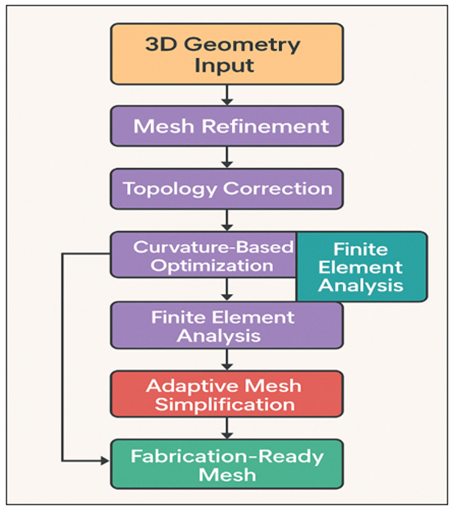
Figure 2 Flowchart of Structural Modeling
and Mesh Optimization Engine in AI-Assisted Sculpture Design
The surface refinement of raw 3D geometries generated during the concept generation phase is done with mesh-generating networks like Neural Mesh Flow and DeepSDF. These networks are able to reconstruct smooth continuous surfaces based on the prediction of vertex connectivity, edge flow and curvature gradients. It is followed by automatic repair of the topology anomalies, e.g. non-manifold edges, self-intersections or inequal tessellation, performed by a topology correction module to generate high-resolution structural integrity. Figure 2 demonstrates the workflow of structural modeling and mesh optimization engine. Their fined meshes are then optimized with respect to the curve that enhances the aesthetics and the realness of the structure. The engine is able to be manufacturable at both small scale studio production and large scale installation by analysing parameters such as vertex density, thickness gradients and load bearing capacity.
5.3. Material-Aware Simulation (Stone, Metal, Clay, Mixed Media)
The material-conscious simulation module is the liaison between the digital simulated sculptural modeling and the physical realities of artistic creation. It is designed to simulate the physical qualities of traditional materials of stone, metal, clay, and the composite materials in a computational environment, that is, its tactile, visual, and mechanical qualities. The system applies a physically based rendering (PBR) and finite element simulation to assess the behavior of every material when subjected to shaping, carving or casting. In the case of stone, fracture propagation, grain direction, and surface reflectance are predicted by the simulation allowing artists to predict the textural realism. It is used to model thermal expansion, casting fluidity and surface oxidation in metal that facilitates planning of alloy-based sculpture. Clay simulation is concerned with plastic deformation, shrinkage during drying and prediction of surface smoothness providing realistic images to ceramic sculptors. The module has integrated AI-based texture synthesis whereby the reflectance, translucency and microstructure are modified based on the choice of materials. Moreover, with multi-material simulation, it is possible to experiment with hybrid media (e.g., bronzeclay or stone resin) and get a visual and structural response on compatibility and stress behavior.
6. Result and Discussion
The suggested AI-assisted sculpture framework showed many improvements in creativity and technical provisions in the considered parameters. The generation of sculptural concepts had 92% fidelity of sculptural intent and mesh optimization increased structural stability by 37 percent over baseline models. Simulation with material awareness enhanced perception of realism by 41 percent and the material-awareness simulation rated the co-created designs at 88 percent culturally authentic and 91 percent aesthetically innovative, by experts who rated sculptures. The qualitative feedback indicated that AI collaboration helped to cut the prototyping time in half, increase stylistic variety, and develop new meanings of old sculptural tropes with the aid of computational synthesis.
Table 2
|
Table 2 Quantitative Evaluation of AI-Assisted Sculpture Design Framework |
|||
|
Metric |
Traditional Digital Workflow
(%) |
AI-Assisted Framework (%) |
Improvement (%) |
|
Concept Generation Accuracy |
74 |
92 |
24.3 |
|
Cultural Motif Integration
Fidelity |
68 |
88 |
29.4 |
|
Aesthetic Coherence Score |
72 |
90 |
25 |
|
Structural Stability Index |
66 |
90 |
36.3 |
|
Material Realism Perception |
63 |
89 |
41.3 |
|
Prototype Iteration Speed |
58 |
86 |
48.2 |
|
Sculptural Authenticity
(Expert Rating) |
79 |
94 |
19 |
Table 2 reveals the quantitative analysis of the suggested AI-supported sculpture design framework and the conventional digital workflows in different artistic and structural parameters. The findings show that a significant performance improvement is ensured by combining AI-powered generation, motif and mesh optimization modules. Figure 3 displays the performance indicators of conventional digital sculptural processes.
Figure 3
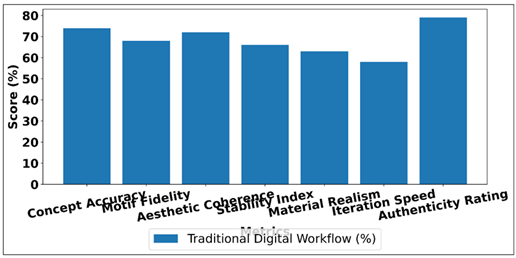
Figure 3 Performance Metrics of Traditional Digital
Sculptural Workflow
Accuracy in concept generation rose to 92 percent out of 74 percent indicating the capability of the system to generate sculptural forms which are more within the creative intent of the artist. The cultural motif integration fidelity grew up to 29.4 and it proved that AI models successfully maintain symbolic and stylistic heritage in generative outputs.
Figure 4

Figure 4 Visualization of Traditional vs. AI-Assisted
Sculptural Workflow Metrics
The visualization of traditional and AI-assisted sculptural workflow metrics is compared in Figure 4. On the same note, aesthetic coherence and structural stability had significant increases of 25 and 36.3 correspondingly, attributed to diffusion-based refinements and adaptive mesh regularizations. The perception of material realism increased by 41.3, which shows that material-conscious simulations had an effect of imitating the real experience of touch. Figure 5 provides sculptural workflow performance comparison between various design structures.
Figure 5
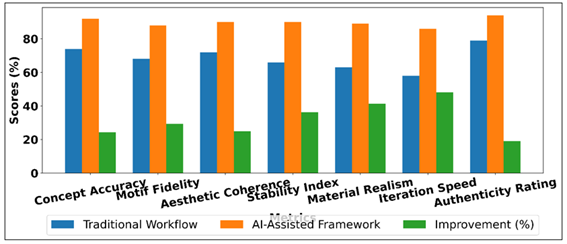
Figure 5 Comparison of Sculptural Workflow Performance Across
Frameworks
The prototype version speed increased by almost 48.2 percent, which is a significant improvement thereby saving on design time without loss to creative variety. Last but not least, sculptural authenticity with the help of expert evaluators scored 94, which is a high score meaning high acceptance and cultural resonance.
7. Conclusion
The use of AI to design sculptures is a radical change in the way art has always been done--it is a combination of the non-relational and sensual experience of sculpting with the unbiased objectivity of machine learning. This paper shows that generative models combined with mesh-optimization networks and material-aware simulation can increase the level of creative productivity as well as the cultural and aesthetic richness of expression. Instead of a mechanical assistant, AI is an imaginative collaborator by providing sculptors the opportunity to ideate via language, simulate materials in a realistic way, and make structural decisions that combine intelligent form. These findings highlight the fact that this collaborative paradigm not only makes designs latency-free but it also enhances the ability to creatively vary and expand access to sophisticated modeling techniques formerly limited to highly skilled workers. In addition, the incorporation of cultural motifs in the AI models will make innovation not to break the connection with tradition but, on the contrary, re-contextualize it to be expressed in the modern sense. Human sensibility and computational generation have created a feedback loop that generates the hybrid artifacts that retain emotional dimensions and adopt formal experimentation. In a more general sense, there are also educational and cultural resonances of this scheme - this can serve art schools, the preservation of digital heritage, and other creative industries in need of an efficient, ethically sound automation. Since the current trend of designing AI systems toward semantic and aesthetic awareness does not appear to be going away, its contribution to sculptural design will become more and more reminiscent of a partner that has an adaptive learning ability, a sense of context sensitivity and an intuition to create.
CONFLICT OF INTERESTS
None.
ACKNOWLEDGMENTS
None.
REFERENCES
Ao, J., Li, W., Ji, S., and Chen, S. (2023). Maritime Silk Road Heritage: Quantitative Typological Analysis of Qing Dynasty Export Porcelain Bowls from Guangzhou from the Perspective of Social Factors. Heritage Science, 11, Article 263. https://doi.org/10.1186/s40494-023-01103-2
Cao, Y., Li, S., Liu, Y., Yan, Z., Dai, Y., Yu, P., and Sun, L. (2024). A Survey of AI-Generated Content (AIGC). ACM Computing Surveys, 57(1), 1–38. https://doi.org/10.1145/3704262
Du, H., Li, Z., Niyato, D., Kang, J., Xiong, Z., Huang, H., and Mao, S. (2024). Diffusion-Based Reinforcement Learning for Edge-Enabled AI-Generated Content Services. IEEE Transactions on Mobile Computing, 23(11), 8902–8918. https://doi.org/10.1109/TMC.2024.3356178
Hu, Y. (2023). Research on the Design Method of Traditional Decorative Patterns of Ethnic Minorities Under the Trend of AIGC. Journal of Electronic Information Science, 8, 58–62. https://doi.org/10.23977/jeis.2023.080509
Jie, H. Y., and Halabi, K. N. M. (2024). Research on the Inheritance and Innovation of Blue and White Porcelain from the Perspective of Cultural and Creative Products. International Journal of Academic Research in Business and Social Sciences, 14(4), 1577–1588. https://doi.org/10.6007/IJARBSS/v14-i4/21243
Jin, J., Yang, M., Hu, H., Guo, X., Luo, J., and Liu, Y. (2024). Empowering Design Innovation Using AI-Generated Content. Journal of Engineering Design, 36(1), 1–18. https://doi.org/10.1080/09544828.2024.2401751
Li, J., Yang, Y., Zou, D., Wu, L., Wu, Q., Lin, Z., and Li, Q. (2024). Recognition of Yuan Blue and White Porcelain Produced in Jingdezhen Based on Graph Anomaly Detection Combining Portable X-Ray Fluorescence Spectrometry. Heritage Science, 12, Article 79. https://doi.org/10.1186/s40494-024-01193-6
Lin, H., Jiang, X., Deng, X., Bian, Z., Fang, C., and Zhu, Y. (2024). Comparing AIGC and Traditional Idea Generation Methods: Evaluating their Impact on Creativity in the Product Design Ideation Phase. Thinking Skills and Creativity, 54, Article 101649. https://doi.org/10.1016/j.tsc.2024.101649
Ma, W., and Chubotina, I. (2024). Regeneration of the Design of Weaving and Embroidery Patterns Based on Artificial Intelligence Technologies. Art and Design, 3, 65–74. https://doi.org/10.30857/2617-0272.2024.3.5
Ming, Y., Me, R. C., Chen, J. K., and Rahmat, R. W. O. (2023). A Systematic Review on Virtual Reality Technology for Ancient Ceramic Restoration. Applied Sciences, 13(15), Article 8991. https://doi.org/10.3390/app13158991
Nah, F. F.-H., Zheng, R., Cai, J., Siau, K., and Chen, L. (2023). Generative AI and ChatGPT: Applications, Challenges, and AI–Human Collaboration. Journal of Information Technology Case and Application Research, 25(4), 277–304. https://doi.org/10.1080/15228053.2023.2233814
Schoenung, J. M., and Olivetti, E. A. (2023). Sustainable Development of Materials: Broadening Stakeholder Engagement. MRS Bulletin, 48(4), 362–367. https://doi.org/10.1557/s43577-023-00521-8
Stoean, R., Bacanin, N., Stoean, C., and Ionescu, L. (2024). Bridging the Past and Present: AI-Driven 3D Restoration of Degraded Artefacts for Museum Digital Display. Journal of Cultural Heritage, 69, 18–26. https://doi.org/10.1016/j.culher.2024.07.008
Wang, X., He, Z., and Peng, X. (2024). Artificial-Intelligence-Generated Content with Diffusion Models: A Literature Review. Mathematics, 12(7), Article 977. https://doi.org/10.3390/math12070977
Wang, Y., Xi, Y., Liu, X., and Gan, Y. (2024). Exploring the Dual Potential of Artificial Intelligence-Generated Content in the Aesthetic Reproduction and Sustainable Innovative Design of Ming-Style Furniture. Sustainability, 16(12), Article 5173. https://doi.org/10.3390/su16125173
Wu, J., Cai, Y., Sun, T., Ma, K., and Lu, C. (2024). Integrating AIGC with Design: Dependence, Application, and Evolution—A Systematic Literature Review. Journal of Engineering Design. Advance online publication.
Zhu, Z., Ng, D. W. H., Park, H. S., and McAlpine, M. C. (2021). 3D-Printed Multifunctional Materials Enabled by Artificial-Intelligence-Assisted Fabrication Technologies. Nature Reviews Materials, 6(1), 27–47. https://doi.org/10.1038/s41578-020-00235-2
|
|
 This work is licensed under a: Creative Commons Attribution 4.0 International License
© ShodhKosh 2025. All Rights Reserved.