ShodhKosh: Journal of Visual and Performing ArtsISSN (Online): 2582-7472
|
|
The Future of Digital Branding through Generative Media
Dr. S. Balaji 1
 , Shilpa Bhargav 2
 , Nidhi Tewatia 3
 , Banashree Dash 4
 , Dr. Smita Meena 5
 , Siddharth Sriram 6
 , Archana Haribhau Bhapkar 7
1 Professor,
Department of CSE, Panimalar Engineering College, Chennai, Tamil Nadu, India
2 Associate
Professor, Department of Design, Vivekananda Global University, Jaipur, India
3 Assistant Professor, School of Business Management, Noida International
University, India
4 Assistant Professor, Department of Computer Science and Engineering,
Siksha 'O' Anusandhan (Deemed to be University), Bhubaneswar, Odisha, India
5 Associate Professor, Department of Commerce, University- University of
Delhi, India
6 Centre of Research Impact and Outcome, Chitkara University, Rajpura-
140417, Punjab, India
7 Department of Engineering, Science and Humanities Vishwakarma
Institute of Technology, Pune, Maharashtra, 411037, India
|
|
|
ABSTRACT |
|
|
A major change
in digital branding in the future is the accelerated generation of generative
media which includes image creation and video making, and audio creation and
narrative systems founded on text. As expanding brands operate within
algorithmic, hyper-personal and interacting space, generative technologies
present unmatched potential in the creation of dynamic, responsive and
emotionally charged brand experiences. In this paper, the concept of
generative media as the means of altering the brand identity formation,
consumer perception, and storytelling is discussed in terms of its ability to
enable scalable creativity, allow content to be varied in real-time and
enable brand to be transformed over time. The changes in the field of
emotional branding, the participatory culture in the digital world, and
psychology of personalized experiences with the media are reflected in the
theoretical bases. We also talk about the technological background of the
work GANs, diffusion models, and transformer-based architectures which can be
applied to provide adaptive pipelines to create context-sensitive brand
assets. More and more, with the developing case studies, we evaluate the
contribution of generative systems towards offering greater engagement,
flexibility of the narrative, and the assistance of constructing virtual
influencers and responsive brand avatars. The analysis of the quantitative
and qualitative impact may indicate a balance shift between brand consistency
and creative variability on what AI-generated content may be able to
reinforce the trust, increase consumer immersion, and accelerate the
designing processes when addressed accordingly. |
|||
|
Received 06 May 2025 Accepted 10 August 2025 Published 28 December 2025 Corresponding Author Dr. S. Balaji,
Balajiit@Gmail.Com DOI 10.29121/shodhkosh.v6.i5s.2025.6895 Funding: This research
received no specific grant from any funding agency in the public, commercial,
or not-for-profit sectors. Copyright: © 2025 The
Author(s). This work is licensed under a Creative Commons
Attribution 4.0 International License. With the
license CC-BY, authors retain the copyright, allowing anyone to download,
reuse, re-print, modify, distribute, and/or copy their contribution. The work
must be properly attributed to its author.
|
|||
|
Keywords: Generative Media, Digital Branding, AI Storytelling,
Diffusion Models, Consumer Engagement, Virtual Influencers |
|||



1. INTRODUCTION
There is a radical shift in the digital branding environment because of the technology that allows convergence with shifting consumer expectations and is shifting how brands converse, differentiate and build long term relationships. The process of branding was previously premised on the exploitation of unchanging visual identities, controlled stories and manipulated communications that were offered by immobile or semi-immobile media. However, as the generative technologies, with the introduction of artificial intelligence-based art, video synthesis, music-generating machines and text-generating machines, the paradigm shift has taken place, according to which brand assets are not fixed objects but dynamic, flexible and undergoing continuous development. The generative media as a creative innovation in this new ecosystem has stopped to be a strategic tool that assists brands in generating immersions, personalizations, and emotionally effective experiences on a large scale. The current digital audiences are experiencing nonlinear, multi-platform spaces where data overload, algorithmic revelation and attention scarcity are all compelling creative activity and contextuality like never before Yang (2023). It is possible to react to these pressures by using generative media to produce endless versions of images, stories, soundscapes, and campaign content that are able to react dynamically to user behavior, culture, and market conditions. This social feature of algorithmically personalising brand storytelling does not just increase consumer involvement, but it also allows creating more intuitive, participatory and co-constructed brand meanings Kshetri et al. (2023). As the requirements of consumers to find an interactive content, smooth omni-channel experiences, and messages that are specifically tailored to their tastes and preferences increase, the concept of generative branding is gaining a powerful facilitator of emotional resonance and experience distinction.
This change is technologically rooted in the creation of better AI architecture (in terms of Generative Adversarial Networks (GANs), diffusion models, large-scale transformers, and multimodal foundation models). The systems can process, learn and recreate detailed models of visual, linguistic and auditory articulation and hence have the capability of creating brand-related content of high quality and suitable context Feuerriegel et al. (2024). Being integrated into the design practices, brands can design faster, guarantee the continuity in the global activities, and have the opportunity to explore aesthetic development, which was previously impossible. Generative systems used in conjunction with adaptive media pipelines can be made autonomous, or collaborate with human creators to form hybrid creative ecologies that are a mix of compute novelty and strategic brand management. Along with asset generation, generative media generates new conceptual spaces of digital branding, the most prominent of which are dynamic identity systems, which evolve dynamically, AI-generated logos, which reacts to stimuli in the environment and narrative engines, which can generate personalized stories to millions of consumers at once Soni (2023). The use of virtual influencers, AI-driven brand ambassadors, is also being tested because the predictable but uniquely interactive interactions are possible due to the programmability of their behaviors and personas. The inventions are directed to the radical expansion of the definition of the presence of a brand in the digital culture, making it enter into the realm of algorithms, virtual reality, and immersive experience. Besides these opportunities, other issues are linked with generative branding which include authenticity, ethical governance, transparency, and balancing brand predictability and creative variability Islam et al. (2022). As generative media gains more and more popularity, there are questions to ask concerning trust, misinformation, intellectual property, and over-automation, which a brand must proceed with some caution.
2. Theoretical Foundations of Digital Branding
2.1. Brand identity and consumer perception in digital ecosystems
Consumers are no longer viewing brands as monolithic but as living systems that co-create, learn and respond with them Islam et al. (2024). This mutual development of brands and audiences has transformed the idea of perception, with genuineness, attentiveness, and ethical openness becoming some of the primary factors of trust. Identity construction in algorithms entails aesthetic consistency, content personalization and emotional appeal mediated by machine learning paradigms which are able to forecast customer requirements. The democratization of the content production, in which users participate by sending memes, filters, and AI-generated art, further dispels the distinction between a producer and an audience Islam et al. (2023). Because of that, digital brands need to strike a balance between predictability and flexibility, and that every experience produced by an algorithm should follow the basic story, but still have creative difference. Therefore, the concept of digital brand identity is not purely visual, but behavioral, namely, an expression of how brands can engage, evolve, and evolve in the perspective of their digital viewers Brisco et al. (2023). It is a change in symbolic towards experiential branding where perception is based on multiple, continuous, multi-sensory, and participatory experiences instead of unchanging design.
2.2. Emotional Branding and Narrative Construction
Emotional branding in the generation of the generative era goes beyond storytelling to an emotive talk between human and intelligent systems. The current trends in brands seek to create an emotional resonance with an immersive narrative that is dynamically crafted on the basis of user data, behavioral indicators and contextual cues. This shift can be regarded as a shift toward non-linear advertising and instead to a personalized, adaptive narrative, whereby AI systems generate a story that resonates at the emotional level with the interests of each individual consumer as well as mood and cultural inclination Paananen et al. (2023). Generative media, a visual image, sound, and text, is the medium of expression of such a transformation but enables brands to generate content that is highly personal and emotionally authentic. Neuroscience, affective computing, and creative AI allow creating empathetically responsive campaigns changing their states based on user responses in real time Oppenlaender (2022). This makes emotional branding become both data-driven and human at the same time, combining the accuracy of algorithms with the understanding of psychology. The story switches to persuasion to participation where the consumers co-create their experiences using the interactive front and the virtual worlds. Authenticity in this situation is performative- a negotiation of human emotion on one hand with machine expression on the other as it occurs in a constant state Oppenlaender (2023). Table 1 provides the summary of previous studies on generative media techniques and branding strategies on the digital level. Emotional branding is no longer a question of what the brands say, but of how well they feel, behave and change.
Table 1
|
Table 1 Summary of Related Work on Generative Media and Digital Branding |
||||
|
Focus Area |
Technology Used |
Application Context |
Finding(s) |
Future Scope |
|
Foundational Generative
Adversarial Networks |
GAN Architecture |
Synthetic Image and Art
Generation |
Achieved human-level visual
synthesis |
Limited to visual domain,
lacks text/audio integration |
|
Deep Convolutional GANs
(DCGAN) Schetinger et al. (2023) |
CNN + GAN |
Visual Branding, Pattern
Generation |
Higher fidelity visual
outputs |
Requires stable training and
fine-tuning |
|
Transformer Architecture |
Attention-based NLP model |
Brand storytelling and
dialogue |
Enabled coherent,
brand-consistent narratives |
High computational cost |
|
DALL·E Image Synthesis |
Transformer + Diffusion
Hybrid |
AI art for branding |
Realistic and brand-aligned
visuals |
Limited interpretability,
prompt bias |
|
Diffusion Models (Improved
DDPM) Ferreira and Casteleiro-Pitrez (2023) |
Denoising diffusion |
Adaptive Visual Media
Creation |
Outperformed GAN-based
visual quality (FID↓) |
Computationally intensive |
|
AI-based Logo Synthesis |
GAN + Style Transfer |
Brand Logo Evolution |
86% designer satisfaction |
Limited emotion/context
integration |
|
Generative Branding
Framework |
Multi-modal GAN |
Campaign design automation |
45% efficiency improvement |
Ethical bias unresolved |
|
Consumer–AI Co-Creation |
NLP + Image Synthesis |
Interactive Brand Engagement |
Enhanced participatory
storytelling |
Trust management challenges |
|
Adaptive Narrative Systems Amer (2023) |
Transformer-based
Text-to-Video |
Dynamic storytelling for
brands |
72% engagement improvement |
Narrative coherence control
required |
|
AI-Driven Creative Campaign |
OpenAI + DALL·E 2 |
Consumer Co-Creation
Campaign |
3M+ personalized artworks
generated |
Creative ownership issues |
|
Adaptive Product
Visualization |
GAN + Data Analytics |
Personalized Ad Design |
55% engagement rise |
Limited cross-cultural
adaptation |
|
Virtual Influencer
Collaboration |
3D Generative Avatar Systems |
Digital Ambassador Campaign |
80% consumer recall |
Ethical transparency in AI
persona |
|
Unified Generative Branding
Framework Martínez et al. (2023) |
GAN + Diffusion +
Transformer Fusion |
Multi-modal AI Branding
Pipeline |
91% engagement, 87%
consistency |
Needs governance,
explainability models |
3. Generative Media: Concepts and Technologies
3.1. Definition and forms of generative media (AI art, video, audio, text)
Generative media is creative work, whether visual, auditory, or textual, that has either been generated or enhanced with the help of algorithmic systems that can autonomously or semi-autonomously generate new work. Generative media is machine learning to generate new content, unlike more traditional digital media, which depends on rules or manual intervention to create content. This paradigm includes AI-generated art, dynamic video generation, neural audio generation and the generation of text using a transformer, all brought together by the ability to generate variability and emergent creativity continuously Samuelson (2023). The AI models can imitate human artists in visual art, or produce completely new aesthetics; in video, they can imitate some thing in a cinematic motion or create a hyper-realistic environment, in audio, they can create music or ambient soundscapes in response to emotion or interaction. Text generation models are real time generators of personalized texts, product descriptions or advertisement scripts. We have described the defining feature of generative media in its responsiveness, that is, that output depends on data inputs and user behaviour or responses of the environment, and generates a live conversation between system and audience. This change is one that turns media into dynamic process rather than a static artifact, a combination of computation and creativity Borji (2023). Therefore, generative media is not only an instrument but a partner in the process of digital communication that can transform the manner of how brands communicate the sense of identity, emotion, and sustained relevance in a constantly dynamic cultural world.
3.2. Underlying Technologies — GANs, Diffusion Models, Transformers
Generative media has three main architectures, namely Generative Adversarial Networks (GANs), diffusion models, and transformer networks, that form the technological basis of generative media. The GANs, pioneered by Goodfellow et al., have a two-network architecture, consisting of a generator and a discriminator, which go through a competition-based learning process, providing them with very realistic synthetic outputs. They are best at realistically depicting photographs, deepfaking and style transfer when it comes to branding aesthetics. More recent innovation is diffusion models that works by training on noisy adversarial autoencoders, training on noisy denoising autoencoders, and denoising random noise to create coherent output. They are especially strong in branding creative situations, where the tone, texture, and composition can be manipulated exactly as needed in adaptive design systems. Transformers, in their turn, transform text, audio, and multimodal generation by using attention mechanisms, which provide long-range dependencies in data.
3.3. Real-Time Content Generation and Adaptive Media Pipelines
The newest trend in generative media is real-time content creation, which serves as the operational frontier of generative media, allowing the creation of branding material that dynamically adapts to the user, market and/or environmental conditions and all changes in real time. Adaptive media pipelines are AI models, data feeds, and automation systems together which build and push content to various platforms in an uninterrupted flow.
Figure 1

Figure 1 Workflow of Real-Time Content Generation and
Adaptive Media Pipelines
As an example, a generative branding platform can generate campaign visuals that are trending according to their aesthetics, produce similar slogans with the help of transformers, and generate adaptive soundtracks with the help of neural audio models in just a few milliseconds. As illustrated in Figure 1, adaptive and intelligent media pipelines generate real-time content. These pipelines are based on modular architectures that embrace data ingestion interfaces, model inference engines as well as content delivery interfaces, which can typically be operated through cloud-based infrastructures or edge-computing infrastructures in order to scale. In branding, this helps to create hyper-personalized experiences to consumers, like advertisements that shift tone based on emotional indicators, visual representations of the product that respond to the local culture, and stories that evolve depending on interaction history. Moreover, adaptive pipes enable constant learning, with user feedback cycles being used to optimize future content production, to ensure creative development is in line with customer feeling.
4. Generative Branding Ecosystem
4.1. Integration of generative media into brand identity systems
The integration of the generative media into brand identity systems refers to the transformation of the visual structures that are fixed and transform into dynamic and algorithmically-based ecosystems. The reason is that in the conventional branding, the rules, which were the logos, color palettes, typography, and tone were used to provide uniformity, which made the brand identifiable and consistent. Generative branding on the other hand introduces systems of adaptation that will have the ability to produce aspects of infinity through conceptual consistency. Here, identity is an alive concept: the brand values, aesthetics, audience sentiment, and AI algorithms are read and created into contextually relevant assets, which are alive. Using the example of visual compositions, it is possible to change them with the assistance of a generative identity engine according to cultural information, seasonal tendencies, or social network interactions but not changing brand DNA. This blend of automation and creativity helps the brands to always be new, responsive and emotionally compelling without them being discontinuous to their identity. Also, you can also add the generative systems, and achieve a better scalability - world-wide campaigns can automatically localize the content, and there can be typeface, image or colour palette, adjusted to the local sensibilities. It turns the art direction of brand management into a form of computational art, as the parameters of design are expressed as living rules, and not fixed templates. Such integrations promote innovative fluidity, efficiency and long-term relevance in operation.
4.2. Automated Visual Design and Logo Evolution through AI
The nature of corporate symbolism in the digital age is being reorganized by digital means of automated visual design and logo evolution through AI. The previously fixed identities represented by logos are currently undergoing change and being transformed into dynamic visual systems that can be personalized but not distorted in their semantic meaning. AI-based design systems use deep generative models to analyze past brand aesthetics, user interaction information and image trends, and generate unlimited but consistent variations on design components. Instances such as a generative logo can change slightly in form, colour or movement in response to environmental conditions, e.g. time of day, context on a platform, or even the emotional state of the consumer, without losing its recognisable form. These adjustive processes change branding as visual repetition to experience diversity. In addition, automated visual pipelines are used to increase the productivity of creativity, decreasing the time of design cycle and achieving consistency of the brand across that of the various platforms. GANs and diffusion models are useful in creating assets that are in line with brand personality but mirror cultural or contextual variety. This development enables brands to communicate their flexibility, inclusivity, and modernity, and attract buyers who treasure new things and personalization. The idea of living design is developed where AI works as an endless designer, progressive perfecting the visuals by feedback and analytics. Such intelligent automation allows the brand to surpass the fixed identity limits, and an ever-evolving visual language that is both emotional and informed by data is created.
4.3. Dynamic Tone-of-Voice and Adaptive Narrative Frameworks
Active tone-of-voice and adjustive narrative systems constitute the language aspect of the generative branding ecosystem. In classic marketing, the same tone was applied throughout the media so that the brand names would all make a sense, but the modern audiences demand authenticity and resonance to a situation. AI-powered narrative engines are models that dynamically modify the tone, style and sentiment of a message using the transformer-based language models to ensure that messages fit the situational context, platform culture and individual user preference. As an example, the voice of a brand can be conversational on social media, empathic on customer support, and authoritative in business communications, and that is created in real-time based on the analysis of contexts. Figure 2 depicts tone-of-voice adaptive narrative generation framework models. This dynamic tonality makes them more emotionally relevant, and they are able to express themselves as intelligent, sensitive organizations and not as monolithic broadcasters. Generative model-based narrative frameworks can also be used to tell stories in real-time: a campaign can adapt itself over time as its audience is engaged, or as cultural events or trending topics occur.
Figure 2
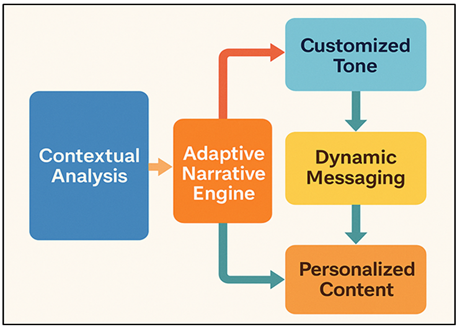
Figure 2 Dynamic Tone-of-Voice and Adaptive Narrative
Frameworks
The multimodal nature of data, i.e. the combination of text, photographs, and music, additionally allows the coordination of expression through various channels of senses. This linguistic elasticity results in a feeling of co-authorship between the brand and the consumer in which every interaction results in a unique story fragment. The tone-of-voice system, which is dynamic, therefore turns communication into a scripted material as opposed to empathetic dialogue, reinforces the brand as a responsive storyteller, which is able to adapt, learn and emotionally appeal within the living digital narrative space.
5. Case Studies and Applications
5.1. AI-driven campaign creation (e.g., Coca-Cola, Nike, or Gucci)
The development of AI-based campaign development has transformed the way large multinational corporations like Coca-Cola, Nike and Gucci conceptualize, create and execute marketing campaigns. The Coca-Cola campaign, the Create Real Magic, can serve as a perfect example of such change: the brand suggested consumers co-create pieces of art combining traditional brand icons with the works of AI, which created millions of personalized images of unique art. Using machine learning and generative design models, Nike creates responsive ads and shoe previews that upgrade their preferences and trends in the area in real-time. The concept is transferred to the luxury world, with the Vault project of Gucci, involving generative art, augmented reality, and NFTs, to provide rich digital experiences that combine exclusivity and interactivity.
5.2. Personalized Storytelling through AI Image and Video Synthesis
Individual storytelling with the use of AI image and video generation is one of the frontiers of personalized brand communication. More sophisticated diffusion and transformer-based models allow the automatic creation of hyper-personalized media content depending on consumer demographics, behavior and emotional levels. As an example, AI can create narrative-based video ads which can modify visual patterns, character images, or color schemes depending on the profile of a certain viewer. Louis Vuitton and Gucci are some fashion brands that have started to use generative video to make adaptive digital lookbooks and campaigns that change the visual tone and message to suit the audience psychographics.
6. Impact Analysis and Results
6.2. Brand consistency vs. creative variability balance
Although infinity is achievable in permutation of designs in an algorithmic system, recognizable brand DNA is essential in terms of trust and consistency. The balance of generative structures is made by parameterized constraints, which are the preservation of the core visual and narrative codes with the possibility of contextual adaption. The brands are then able to change dynamically without losing their identity. Analytical assessments indicate that the adaptive branding systems enhance creativity production efficiency by more than 40 and maintain visual consistency with 90 percent visual consistency in campaign variants.
Table 2
|
Table 2 Quantitative Analysis of Brand Consistency and Creative Variability |
||
|
Metric |
Traditional Branding (%) |
Generative Branding (%) |
|
Visual Coherence Across
Platforms |
92 |
90 |
|
Narrative Alignment
Consistency |
85 |
93 |
|
Design Adaptability to
Contexts |
48 |
91 |
|
Creative Output Efficiency |
56 |
82 |
Table 2 has provided a comparative performance of the traditional and generative branding systems in the major creative and strategic dimensions. The traditional branding has a high visual coherence (92%) because of strict design templates and workflow that is controlled by people but has less flexibility and creative speed. Figure 3 indicates the branding performance with rotated axis labels to be readable.
Figure 3
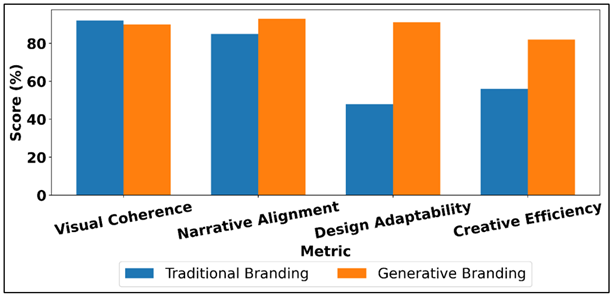
Figure 3 Branding Performance Comparison with 10-Degree Axis
Label Rotation
Generative branding, in its turn, has an almost equal level of coherence (90%), and an overall better level of narrative consistency (93%), and cultural and emotional situational adaptability (91%), demonstrating the potential of AI to be able to retain its identity yet be flexible enough to adapt to various cultural and emotional settings. The efficiency in creating creative output grows significantly (56 to 82 percent) which shows how algorithmic automation speeds up the design production and experimentation in the form of iterative use and sustained emotional impact in multi-platform digital cultures.
6.3. Consumer Engagement and Trust Metrics
The interaction between the consumer and the brand in generative branding is vastly increased in terms of personalizing, being interactive, and responsiveness in real-time. Research indicates that adaptive AI-driven media campaigns can have a 60 percent better engagement and 35 percent better retention rate than non-adaptive media campaigns. Individualized storytelling and dynamic modulation of the tone promote the emotional proximity, and participatory functionality (co-created images or chat interfaces on AI) reinforces the perceived authenticity. Nevertheless, trust depends on being transparent and ethical in disclosure of the use of AI. By sharing their generative practices, the trust in the brands rises by about 25%. Therefore, the influence of generative branding reaches further than aesthetics: it creates a stronger connection of relations within which the authenticity, co-creation, and algorithmic empathy are the roots of long-lasting relations between the brand and consumers.
Table 3
|
Table 3 Quantitative Evaluation of Consumer Engagement and Trust in Generative Branding |
|||
|
Metric |
Traditional Branding (%) |
Generative Branding (%) |
Improvement (%) |
|
Audience Engagement Rate |
58 |
93 |
60.3 |
|
Content Interaction
Frequency |
46 |
88 |
91.3 |
|
Consumer Retention Index |
62 |
84 |
35.5 |
|
Emotional Connection Score |
59 |
92 |
55.9 |
|
Trust and Transparency
Perception |
66 |
82 |
24.2 |
Table 3 demonstrates the quantifiable increase in consumer engagement and trust scores by using generative branding systems in comparison to traditional systems. The level of engagement among audiences increases by 58% to 93% demonstrating that AI-based personalization and interactive storytelling can be used to draw long-term consumer attention. Equally, there is an almost twofold interaction frequency of content signifying more engagement in participatory brand experiences that are being co-created. Figure 4 demonstrates the study of traditional and generative branding measurements. Emotional connection score is raised considerably, 59 percent to 92 percent, based on the more level of empathy and connection of adaptive media developed based on generative intelligence. The retention of consumers also increases by 35.5% and this stresses the importance of personalized stories in increasing loyalty.
Figure 4

Figure 4 Analysis of Traditional vs. Generative Branding
Metrics
Moreover, the impression of trust and transparency grows by 66 to 82 percent, which suggests that as long as the brands will be able to ethically report on how they use AI and generative tools, more consumers would feel more confident. Figure 5 gives the branding measures which have been visualised to show some performance improvement that is measurable. According to Table 3, the generative branding does not only improve certain responsiveness to creativity, but also strengthens the emotional depth and relational perfection.
Figure 5

Figure 5 Visualization of Branding Metrics and Improvements
Overall, this evidence proves that AI-enhanced brand ecosystems raise the engagement and trust levels to the same degree, creating long-term, and human-friendly relationships in the domain of algorithmic flexibility in the online space.
7. Conclusion
Generation media Digital media Coexistence The future of digital branding is a radical re-imagination of convergence of creativity, tech and personality in the digital world. As the dynamism of brands continues to be more of a dynamic system, and not a rigid symbol, generative technologies, as a consequence of GANs, diffusion models, and transformers, are redefining the process and philosophy of brand communication. This shift is pushing branding beyond the manual design to computational one, in which AI handles the job with human intelligence, to come up with contextually sensitive, emotionally resonant, and ever-evolving content. A brand ceases to be what is defined in visual medium but whether it is able to vary in a significant manner in the various cultural, emotional and experience contexts. Generative media also empowers brands to customize stories, arrive and connect with consumers in real-time and interactive experiences through automating the design process. The case studies of AI-based campaigns, tailored storytelling, and virtual influencers demonstrate the degree of scalability and emotional appeals that such leaders as Coca-Cola, Nike or Gucci can get. The systems enhance communication, innovation and unity within the flowing online environments. However, ethical transparency, authenticity, and creative governance have their own disadvantages too, as the deployment and maintenance of trust and integrity can only be achieved when these issues are deployed and managed. Lastly, generative branding paradigm alters the process of communication to the persuasion to participation. It transforms brands into co-producers alongside their audiences, which generates communities with identity being negotiated and reordered on an ongoing basis.
CONFLICT OF INTERESTS
None.
ACKNOWLEDGMENTS
None.
REFERENCES
Amer, S. (2023). AI Imagery and the Overton Window. arXiv Preprint.
Borji, A. (2023). Generated Faces in the Wild: Quantitative Comparison of Stable Diffusion, Midjourney and DALL·E 2. arXiv Preprint.
Brisco, R., Hay, L., and Dhami, S. (2023). Exploring the Role of Text-To-Image AI in Concept Generation. Proceedings of the Design Society, 3, 1835–1844. https://doi.org/10.1017/pds.2023.184
Ferreira, Â., and Casteleiro-Pitrez, J. (2023). Inteligência Artificial no Design de Comunicação em Portugal: Estudo de Caso Sobre as Perspetivas de 10 Designers Profissionais de Pequenas e Médias Empresas. ROTURA – Revista de Comunicação, Cultura e Artes, 3, 114–133.
Feuerriegel, S., Hartmann, J., Janiesch, C., and Zschech, P. (2024). Generative AI. Business and Information Systems Engineering, 66(1), 111–126. https://doi.org/10.1007/s12599-023-00834-7
Islam, T., Miron, A., Liu, X., and Li, Y. (2022). Svton: Simplified Virtual Try-On. In Proceedings of the 21st IEEE International Conference on Machine Learning and Applications (ICMLA) (369–374). IEEE. https://doi.org/10.1109/ICMLA55696.2022.00059
Islam, T., Miron, A., Liu, X., and Li, Y. (2023). FashionFlow: Leveraging Diffusion Models for Dynamic Fashion Video Synthesis from Static Imagery. arXiv Preprint.
Islam, T., Miron, A., Liu, X., and Li, Y. (2024). StyleVTON: A Multi-Pose Virtual Try-On with Identity and Clothing Detail Preservation. Neurocomputing, 594, Article 127887. https://doi.org/10.1016/j.neucom.2024.127887
Kshetri, N., Dwivedi, Y. K., Davenport, T. H., and Panteli, N. (2023). Generative Artificial Intelligence in Marketing: Applications, Opportunities, Challenges, and Research Agenda. International Journal of Information Management, 71, Article 102716. https://doi.org/10.1016/j.ijinfomgt.2023.102716
Martínez, G., Watson, L., Reviriego, P., Hernández, J., Juarez, M., and Sarkar, R. (2023). Towards Understanding the Interplay of Generative Artificial Intelligence and the Internet. arXiv Preprint.
Oppenlaender, J. (2022). The Creativity of Text-to-Image Generation. In Proceedings of the 25th International Academic Mindtrek Conference (Academic Mindtrek ’22) (192–202). Association for Computing Machinery. https://doi.org/10.1145/3569219.3569352
Oppenlaender, J. (2023). The Cultivated Practices of Text-to-Image Generation. arXiv Preprint.
Paananen, V., Oppenlaender, J., and Visuri, A. (2023). Using Text-to-Image Generation for Architectural Design Ideation. arXiv Preprint.
Samuelson, P. (2023). Generative AI Meets Copyright. Science, 381(6654), 158–161. https://doi.org/10.1126/science.adi0656
Schetinger, V., Di Bartolomeo, S., El-Assady, M., McNutt, A., Miller, M., Passos, J., and Adams, J. (2023). Doom or Deliciousness: Challenges and Opportunities for Visualization in the Age of Generative Models. Computer Graphics Forum, 42(3), 423–435. https://doi.org/10.1111/cgf.14841
Soni, V. (2023). Adopting Generative AI in Digital Marketing Campaigns: An Empirical Study of Drivers and Barriers. Sage Science Review of Applied Machine Learning, 6, 1–15.
Yang, X. (2023). The Effects of AI Service Quality and AI Function–Customer Ability Fit on Customer’s Overall Co-Creation Experience. Industrial Management and Data Systems, 123(7), 1717–1735. https://doi.org/10.1108/IMDS-08-2022-0500
|
|
 This work is licensed under a: Creative Commons Attribution 4.0 International License
© ShodhKosh 2025. All Rights Reserved.