ShodhKosh: Journal of Visual and Performing ArtsISSN (Online): 2582-7472
|
|
Management of Printing Curriculum in AI Era
Anchal Gupta 1
 ,
Ujwalla Gawande 2
,
Ujwalla Gawande 2 , Rohit Chandwaskar 3,
Nuzhat Ahmad Yatoo 4
, Rohit Chandwaskar 3,
Nuzhat Ahmad Yatoo 4 ,
Richa Srivastava 5
,
Richa Srivastava 5 ,
,
Pooja Abhijeet Alone 6
1 Centre
of Research Impact and Outcome, Chitkara University, Rajpura, 140417, Punjab,
India
2 Professor
and Dean R and D, Department of Information Technology, Yeshwantrao Chavan
College of Engineering, Nagpur, Maharashtra, India
3 Assistant
Professor, Department of Fashion Design, Parul Institute of Design, Parul
University, Vadodara, Gujarat, India
4 Assistant
Professor, Department of Computer Science and Engineering, Aarupadai Veedu
Institute of Technology, Vinayaka Mission’s Research Foundation (DU), Tamil
Nadu, India
5 Associate
Professor, School of Business Management, Noida International University, India
6 Department
of Engineering, Science and Humanities, Vishwakarma Institute of Technology,
Pune, Maharashtra, 411037, India
|
|
|
ABSTRACT |
|
|
The rapid
adoption of Artificial Intelligence (AI) in printing technologies is changing
the work of industries and the educational paradigm. This research paper
explores the manner in which the printing curriculum can be efficiently
managed and re-engineered in order to address the changing needs of
AI-powered production space. It follows the development of printing education
throughout history and determines how AI can transform design, workflow, and
quality management, and suggests a competency-based structure in which
curriculum is redesigned. The study is based on the international
case-studies that indicate that those institutions which integrate AI-enabled
technologies, including predictive analytics, computer vision, and generative
design, can attain the quantifiable efficiency, student engagement, and
creative innovation. It discusses the necessity of the faculty development,
modernizing the infrastructure, and the robust industry-academic partnership
to guarantee the topicality and sustainability of the curriculum.
Socio-technical and ethical aspects are also tackled in order to encourage
responsible AI usage in education. The results bring in a strategic
representation of creating adaptive, information-based and innovation-driven
printing programs that fulfill the technological progress with the capacity
to be creative and ethically accountable. |
|||
|
Received 13 June 2025 Accepted 27 September 2025 Published 28 December 2025 Corresponding Author Anchal
Gupta, anchal.gupta.orp@chitkara.edu.in DOI 10.29121/shodhkosh.v6.i5s.2025.6888 Funding: This research
received no specific grant from any funding agency in the public, commercial,
or not-for-profit sectors. Copyright: © 2025 The
Author(s). This work is licensed under a Creative Commons
Attribution 4.0 International License. With the
license CC-BY, authors retain the copyright, allowing anyone to download,
reuse, re-print, modify, distribute, and/or copy their contribution. The work
must be properly attributed to its author.
|
|||
|
Keywords: AI in
Education, Printing Technology, Curriculum Management, Digital
Transformation, Generative Design, Adaptive Learning |
|||



1. Introduction
The
printing business that used to be based on the artisan and mechanical focus and
accuracy is currently experiencing a paradigm shift with the introduction of
Artificial Intelligence (AI), automation, and data-driven processes. With the
world entering Industry 5.0, printing is not limited to operations of
conventional presses anymore but it has become a smart, connected ecosystem
that incorporates digital creation, smart production, and responsive workflow
operations. This change requires a subsequent adjustment in the education
systems especially in handling printing courses to equip students with the
requirements of the AI-enhanced work environment Southworth et al. (2023). Both
technical and creative skills needed by graduates in the field are being
redefined by the development of machine learning, robotics and predictive
analytics into printing processes. Traditionally, printing education focused on
manual skills (calibration by color, composition of layout, maintenance of a
press, etc) Soliman et al. (2024). Although
these competencies are still pertinent, the contemporary printing world demands
other skills in algorithmic intelligence, data visualization, process
optimization, and sustainable utilization of materials.
Figure 1
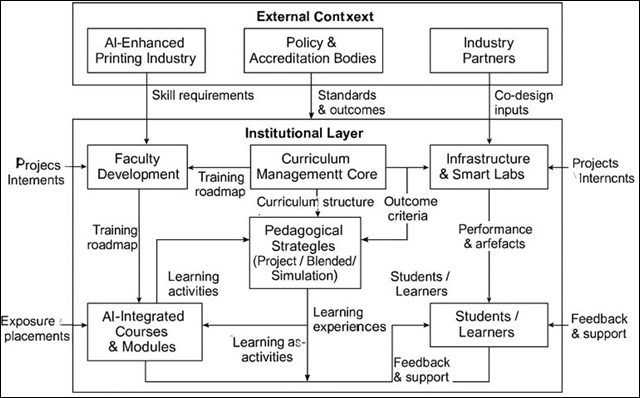
Figure 1 Conceptual Framework for AI-Integrated Printing Curriculum Management
From
the advent of intelligent prepress systems, self-checking quality and computer
vision to inspect defects are only some of the examples of how AI is changing
the working process. This has forced schools and colleges to reform their one
to include both traditional education as well as computational intelligence as
shown in figure 1 and consequently, schools must also design a curriculum that
will not just impart craft knowledge to students but they must also impart
technological literacy and innovation oriented attitudes Wang (2022). The printing
curriculum management during the AI age would not simply be reduced to the
introduction of new courses. It consists of methodical restructuring which
comprises pedagogical orientation, staffing, modernization of infrastructure
and continuous industry partnership. As the high paced technological changes
continue to change, institutions ought to adopt flexible and outcome based
structures that easily conform to the changes. Curriculum management with AI
also enables making decisions by data, which will enhance the educators to
monitor the advances of learners, determine the skill deficiencies, and deliver
individual learning experiences using smart learning systems. Moreover, the
adoption of academic-industry partnerships is also used to ensure that
education programs are not out of touch with practice and emerging skills that
are required in the real world Tlili et al. (2023)
In
its turn, the current research paper is aimed at studying how the principles of
AI integration may be applied in a systematic fashion in order to modernize and
manage the printing curriculum in an efficient way. The gap in the traditional
and AI-enabled production environment will be addressed in the paper through
discussion of the history of printing technologies, methods of teaching, and
use of practical examples to develop a holistic framework that could enhance
the comprehension and allow bridging the gap between the traditional and modern
printing environment. The ultimate target of the research is to achieve a
creative and future-oriented learning environment whose role balance is between
creativity, technology, and sustainability in the printing sector.
2. Historical Evolution of Printing Education
The
history of printing education resonates with overall technological and cultural
changes that have influenced the communication and manufacturing sectors. In
early days of its development, printing was rather a manual art based on the
art of typesetting, lithography, bookbinding, and operation of the press.
Precision, discipline and material knowledge were the main features of
apprenticeship models Solimanb et al. (2025).
Late 19th and
early 20th century educational institutions incorporated new workshop-based
pedagogies in which learners were taught by repetition and by solving
mechanical problems. The curriculum was based on process efficiency, color
accuracy and quality control skills that were important in the early
development of the industrial printing industry Zawacki-Richter et al. (2019). But, as the
digital revolution in the late 20th century, the range of printing education
started to enlarge to cover not physical processes but digital prepress and
computer-aided design and workflow automation.
Figure 2
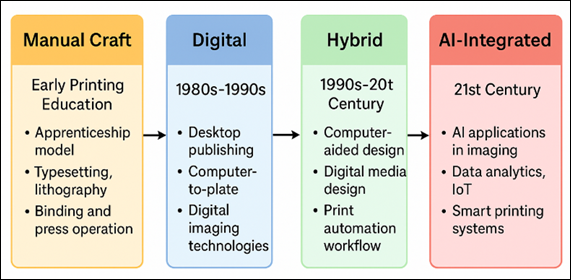
Figure 2 Evolutionary Trajectory of Printing Education
In
the 1980s, with the advent of desktop publishing (DTP), and in the 1990s, with
the advent of digital imaging technologies, the idea of curriculum began to
change. The computer-to-plate and computer-to-print systems were becoming
increasingly popular to replace traditional presses thus making it mandatory
that institutions learn to incorporate digital literacy and software
proficiency into their curriculum as shown in Figure 2 .The area of
pedagogical orientation changed to the innovative design thinking and digital
management Scuotto et al. (2017),De Bernardi et al. (2019). Higher
education institutions started to introduce classes on digital color theory,
learning on the art of vector graphics, typography automation and print media
design. This shift also resulted in an interdisciplinary overlap of
communication design, information technology, and print engineering which
formed the basis of the hybrid educational ecosystem that is experienced today.
With the advent of Industry 4.0, which is the smart manufacturing, robotics,
and Internet of Things (IoT) in the 21st century, automation and scale data
analytics were implemented in the printing sector. Printers turned into smart
systems that could self-calibrate and predictively maintain themselves along
with cloud-based workflow synchronization Altun et al. (2025),Habib et al. (2025). However, the
curricula tended to be behind this industrialization and most curriculums had
traditional modules on print mechanics and not data-driven operations.
Realizing this void, some of the first institutions started to offer courses in
AI application in imaging, machine-learner print defect detection and print
design with the help of augmented reality Hamzat et al. (2025)
3. AI Transformation in Printing Technologies
The
use of Artificial Intelligence (AI) in printing technologies has changed the
manner in which it is applied in the production process, design process and
quality control. The traditional printing was usually done manually on
calibration and matching of the colors manually and inspecting manually to
identify defects. The convergence of machine learning and computer vision with
intelligent automation has however transformed these operations to data-driven
agile ecosystems. AI-based printing systems can now learn by its own with input
data on production, streamline processes in real time and predict system
problems before they occur, bringing in a new age of accuracy, speed and
sustainability. The most important aspect of this revolution is a smart prepress
automation, according to which using a computer program, digital artwork is
measured to maximize colors, layout positioning or ink position Subeshan, B., Atayo, A., and
Asmatulu, E. (2024),
Altun (2025). These systems
employ predictive analytics that modify settings in real-time and ensure that
they reduce waste and do not need to print a test repeatedly. Similarly,
computer vision and deep learning models can also be used to carry out quality
assurance. High-resolution images of printed materials are captured and
analyzed by cameras fitted in the printing units and the microscopic defects of
the printed materials, including variation in color, streaking, or
misalignment, are detected. The system will automatically recalibrate or
shutdown production, which maintains the same quality with a minimum of human
interventions as shown in Figure 3. Another
important development is AI-based workflow management that combines the process
of job scheduling, machine use, and material logistics into a single digital
system. The reinforcement learning algorithms consider various variables that
include print volume, type of paper, drying time and the workload of the
operator to create the best production sequences Altun (2025). This has
increased the efficiency in the operations and also reduced downtimes between
commercial printing systems. Moreover, AI is changing predictive maintenance
whereby sensors can be used to detect the vibration, temperature, and the flow
of ink and even tell when a potential breakdown will occur before it disrupts
production. The above predictive models are directly associated with cost
saving and sustainability in terms of extending the life of the machines and
minimizing resource wastage Al’Aref (2018).
Figure 3
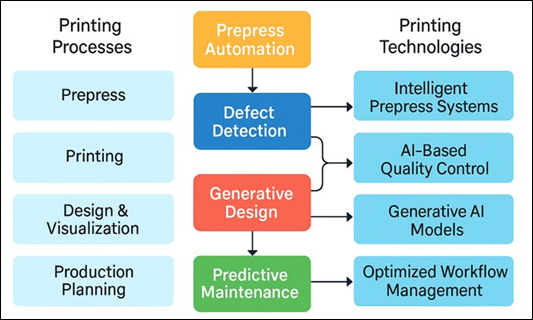
Figure 3
AI
Transformation Map in Printing Processes
The
use of generative AI models has brought about new opportunities in the sphere
of print design and visualization in the artistic world. The tools, which are
grounded on diffusion models, GANs, and transformer-based architecture, enable
the designers to create complex and personalized compositions using natural
language prompts. Individualized packaging or marketing content that is created
by the use of variable data printing systems using AI can serve an example. On
the same note, AI application combined with augmented and virtual reality
(AR/VR) would allow displaying a design in three-dimensional forms before
printing it on paper, increasing efficiency and interaction with clients Al’Aref (2018). All these
inventions have reinvented the skill pool in the printing industry. The
contemporary printing specialist is not just a specialist in materials and
equipment, he/she should be a fluent reader of analytics dashboard, a user of
trains artificial intelligence, an ethical operator of automatic tools. In
turn, the use of AI in the printing technologies will serve as the foundation
of the re-imagination of the curriculum design that will force teachers to
consider the concept of computational literacy, data interpretation, and
sustainability as the part of the printing education systems in the future.
4. Curriculum Design for AI-Integrated Printing Education
The
AI era in the field of printing presupposes the development of an effective
curriculum that can be designed only through a comprehensive reorganization of
learning outcomes, learning content and evaluation systems. This transformation
entails the integration of AI principles into the main printing topics, the
introduction of new interdisciplinary courses, and the matching of the outcomes
with the requirements of the industry and accreditation systems. The principle
of AI-based curriculum design is to use competency mapping determining the
technical, cognitive, and ethical skills needed in future printing careers Thomas (2022). Cognitive
competencies revolve around thinking critically, solving problems in an
adaptive manner, and making innovation design-driven, whereas ethical
competencies surround responsible practices with AI, knowledge of intellectual
property, and environmental awareness Boretti (2024). These
competencies mapped are to be used in the sequencing of subjects, project-based
learning modules, and evaluation rubrics in order to balance theory and
application.
Figure 4

Figure 4 Framework for AI-Integrated Printing Curriculum
Design
To
realize these competencies, the curriculum designers can use a three-level
model. The Foundational Modules level is the introductory level that teaches
learners about the basics of digital printing, the basics of computer vision
and machine learning in imaging Metal (2023). The next
layer is the Applied Intelligence Modules, which involve the implementation of
AI tools in production planning, workflow optimization, and design automation,
which allows students to use algorithms in real-world scenarios as shown on Figure 4. The third is
Capstone and Research Projects tier, which is the most innovative and involves
interdisciplinary teamwork, during which learners engage in creating
prototypes, like an intelligent quality control system or a generative design
software to package. This is progressive to ensure that the learning process
begins with theoretical knowledge that brings about the practical
implementation. Besides, the curriculum must emphasize on the experiential and
adaptive learning. With the help of AI-based simulation environments, the
models of digital twin, and even virtual print laboratories, students will be
able to be exposed to the real-time visualization and simulation of production
scenarios. Personalized learning analytics based on AI have the ability to
track the performance patterns, provide adaptive feedback, and recommend
learning resources that are guided by the strengths and weaknesses of a
particular student. Such systems can transform the teaching approaches into a
dynamic feedback system, which enhances the degree of engagement and retention.
There is also the necessity to collaborate with the industry and research
centers, which is institutional. Co-designed modules, joint certifications, and
AI-oriented internships will aid in ensuring that the curricular relevance is
achieved and that employability is created. The accreditation agencies will
also be combined, which will guarantee both compliance with the education
standards, and the flexibility of innovation. Lastly, the curriculum must be not
only infused with the technical competencies but also with the mentality of
innovation which enables the graduates to lead the revolution in the printing
industry by being innovative, ethical and technologically proficient.
5. Pedagogical Strategies and Learning Models
The
implementation of the Artificial Intelligence (AI) in the sphere of the
printing education presupposes the paradigm shift of the teaching process: it
is not the teacher-oriented, but the learner-oriented, information-driven and
adaptive approaches. Pedagogical strategies will be forced to transform to
incorporate experiential learning, critical thinking, interdisciplinary
learning in such a way that students are prepared to work in a rapidly evolving
print ecosystem that is a blend of automation, creativity and sustainability.
The key secret to successful management of the printing curriculum in the AI
age is thus to not only redesign the content, but also reinvent the learning
process itself. One of the main approaches is the project-based and experiential
learning, according to which students can use AI technologies in real-life
printing situations. Using real world projects like creating smart quality
inspection systems or predictive maintenance dashboards the learners interact
with the industry grade tools as they work on their practical issues. These
experiences enhance the conceptual knowledge and facilitate self-directed
learning. These projects may also be used as personalized learning datasets,
when they are filled with AI analytics where an educator can assess competency
development and detect skill deficiencies over time. Similarly relevant is the
existence of learning environment through simulation as shown in Figure 5. These systems
embrace trial and error and feedback which are similar to the actual industrial
setting. As an example, a student will be able to visualize the influence of
machine learning parameters on the ink flow, print density, or defect frequency
in real-time and develop a better understanding based on the experiential
reinforcement.
Figure 5
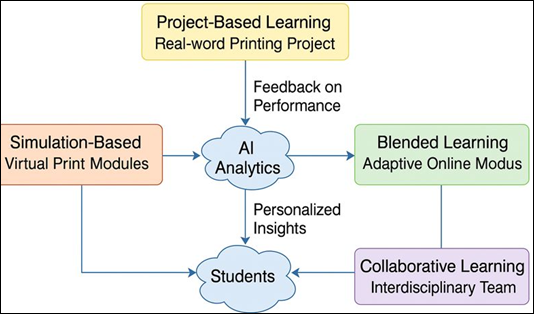
Figure 5 AI-Enabled Pedagogical Ecosystem for Printing Education
Another
important dimension provided by blended learning models is the integration of
face-to-face learning and online learning modules which are supported by AI.
Adaptive platforms have the ability to process the data about each learner,
e.g. engagement time or quiz scores or error rates, and dynamically change the
complexity of the content. This form of continuous feedback guarantees
differentiation instruction that is consistent with the advancement and
cognition type of each learner. In addition, AI-based tutoring systems can be
used to complement faculty support by providing immediate clarifications,
computerized simulations, or contextual materials depending on their
interactions with learners. Through interdisciplinary teamwork, co-creation
between designers and engineers, and virtual tools of collaboration, students
are able to acquire the valuable soft skills in addition to the technical
skills. The AI tools can also improve collaboration even further, by monitoring
the group dynamics, making sure that everyone is equally active, and offering
analytics on the balance of communication efficiency or creative output.
Lastly, there should be an ethical and reflective pedagogy that should go hand
in hand with these innovations. Since AI technologies are becoming the part of
creative decision-making, educators need to develop awareness regarding the
transparency of algorithms, intellectual property, and cultural representation.
Integrating reflective debates and design ethics workshops is a guarantee that
the technological literacy would be developed concurrently with the ethical
sensitivity.
6. Faculty Development and Institutional Readiness
The
integration of AI in the field of printing education is largely reliant on the
readiness of the members of the faculty and on the institutional ecosystem,
which underpins them. Although technological innovation is transforming the
learning environment, human skill is the main ingredient of successful
curriculum implementation. Thus, it is vital to prepare teachers with the
essential digital, analytical, and pedagogical skills so that the shift to
AI-driven education does not mentioned in vain and can be maintained.
Development of faculty in this regard is not restricted to technical training
but it is a complete change in instructional roles. To integrate AI tools and
be more creative and engaging in the learning process, teachers will need to
change into more than mere providers of information, data interpreters, and
co-learners. There are three broad areas to which structured professional
development programs should be targeted:
1)
AI and information literacy, which allows teachers to learn and
apply the concepts of machine learning to real-life print situations;
2)
Innovation in pedagogy, in which they will create interactive and
AI-assisted teaching programs;
3)
Ethical and socio-technical awareness to equip them to deal with
bias, authorship, and automation anxiety in the classroom.
In
addition, a culture of ongoing improvement and joint experimentation may be
cultivated in peer learning communities and interdepartmental hubs of
innovation on a university campus.
Figure 6

Figure 6
Institutional
Readiness Model for AI-Integrated Printing Education
On
an institutional level, preparedness implies the strategic alignment of policy,
leadership vision and infrastructure. Smart laboratories that have intelligent
printing solutions, cloud-based analytics software, and digital simulations
should be invested in institutions. Those facilities will be used as living
laboratories where both students and faculty may learn about applied AI methods
in design, workflow automation and quality optimization. At the same time, the
administrative schemes should be re-organized to accommodate the data-driven
decision-making processes as shown in figure 6, dynamic curriculum revision,
and teacher performance analytics. The institutional policies need to promote
innovation where the contributions made by faculty in teaching research based
on AI and the participation in technology based pedagogical research should be
rewarded. Industry collaboration is also another important issue of
institutional readiness. Co-designing curriculum, sharing of resources, and
internships in real-world industrial environments can be made possible by
alliances with printing technology companies, scientists of AI solutions, and
professional associations. These interactions are beneficial as they keep
educators abreast of the new AI tools, predictive models and sustainability
models that are currently being implemented in practice.
7. Case Studies of AI Implementation in Printing Programs
The
introduction of Artificial Intelligence (AI) into the field of printing has
already started to change the academic programs of universities and training
wards all over the world. Such applications will be informative in terms of how
AI-based technologies and pedagogical innovations may transform the process of
curriculum delivery, improve results, and keep education abreast with the
changes in the industry. The case studies below can demonstrate how AI-enabled
printing programs can be applied practically, proving various approaches in an
academic and industrial setting.
Case
Study 1: Smart Printing Laboratory Initiative – Finland Polytechnic Institute
Finland
Polytechnic Institute, in the Department of Media Technology, introduced a
Smart Printing Laboratory which has AI-enabled digital presses, computer vision
modules, and predictive analytics systems. The project was meant to educate
students on intelligent production processes and management of materials
sustainably. The AI models were applied by the students to study print quality,
optimize the use of ink, and predict the need of maintenance.
Table 1
|
Table 1 Smart Printing Laboratory
Initiative – Finland Polytechnic Institute |
||||
|
Parameter |
AI Tool / Technique Used |
Observed Improvement (%) |
Learning Outcome |
Remarks |
|
Print Quality Optimization |
Computer Vision + CNN-based Defect Detection |
30 |
Students achieved higher accuracy in color
calibration and print alignment |
Demonstrated real-time quality analytics |
|
Material Efficiency |
Predictive Analytics for Ink and Paper Usage |
25 |
Enhanced understanding of sustainable printing
processes |
Reduced waste across lab projects |
|
Workflow Automation |
Reinforcement Learning Scheduler |
40 |
Students learned process sequencing and job
optimization |
Improved production turnaround |
|
Machine Health Prediction |
Sensor Data + Regression Models |
20 |
Exposure to predictive maintenance concepts |
Increased equipment uptime and reliability |
|
Faculty Training Impact |
AI Literacy Workshops |
Faculty gained technical and pedagogical AI
competence |
Supported integration across courses |
|
The
program also cited a decline in material waste by a factor of 25, as well as
the workflow efficiency that had improved by 40 percent. Educators who had
undergone ongoing AI upskilling trainings incorporated these tools in their
education practices and this created a balance between technical skills and
environmental awareness.
Case
Study 2: AI-Driven Curriculum Redesign – Indian Institute of Printing
Technology
Indian
Institute of printing technology (IIPT) adopted an AI based curriculum
management system in order to customize learning journeys. The platform tracked
progress of students, and suggested adaptive learning modules, using machine
learning analytics, and based on performance data.
Table 2
|
Table 2 AI-Driven
Curriculum Redesign – Indian Institute of Printing Technology (IIPT) |
||||
|
Curriculum Component |
AI System Functionality |
Measured Impact |
Quantitative Indicator |
Outcome Description |
|
Adaptive Learning Platform |
Machine Learning–Based Performance Prediction |
Enhanced student engagement |
+35% engagement rate |
Personalized content and pacing for each learner |
|
Assessment Analytics |
NLP-Based Essay Evaluation |
Improved grading accuracy |
+22% scoring consistency |
Automated rubric alignment and reduced evaluation
bias |
|
Skill Gap Monitoring |
Bayesian Knowledge Tracing |
Early identification of weak learners |
-18% failure rate |
Allowed proactive remedial sessions |
|
Industrial Collaboration |
Real-Time Data Integration APIs |
Strengthened academia–industry interface |
+3 new partnerships |
Improved relevance of practical modules |
|
Faculty Decision Support |
AI Dashboards for Class Analytics |
Improved curriculum agility |
Updated every semester |
Data-driven course redesign cycles |
The
system was also used to predict student successes in particular technical
fields whereby instructors could intervene. The institute found higher
participation rates among the students (by 35 percent) and better completion
rates (by 20 percent) in advanced courses of digital printing in two academic
cycles. In addition, partnership with local printing companies offered students
with access to real time industrial information which enhanced
academia-industry relationships.
Case
Study 3: Generative Design and Print Innovation – Tokyo University of Art &
Technology
The
application of generative AI models including diffusion-based visual synthesis
tools to print design education was first made by Tokyo University School of
Design. Students experimented with innovative automation, creating complicated
textures, patterns and layouts of packaging and digital art prints.
Table 3
|
Table 3 Generative
Design and Print Innovation – Tokyo University of Art & Technology |
||||
|
Creative Domain |
AI Technique Applied |
Evaluation Metric |
Student / Faculty Feedback |
Innovation Outcome |
|
Print Design |
Diffusion Models for Pattern Generation |
Creative Diversity Index = 0.87 |
84% of students reported increased design
exploration |
Introduced cross-disciplinary AI art module |
|
Typography |
Transformer-Based Style Adaptation |
Consistency Score = 0.91 |
78% of faculty noted precision improvement |
Enhanced design coherence in print layout |
|
Packaging |
GAN-Based Visual Enhancement |
Visual Appeal Rating = 8.6 / 10 |
81% of students preferred AI-assisted design |
Enabled real-time prototyping |
|
Cultural Integration |
AI Semantic Embedding for Aesthetics |
Cultural Authenticity Score = 0.82 |
Strong acceptance from art departments |
Bridged cultural heritage with computational
creativity |
|
Learning Experience |
Interactive AI Feedback Interface |
Engagement Uplift = +28% |
Faculty noted improved interdisciplinary dialogue |
Reinforced innovation-oriented pedagogy |
The
course combined computational creativity and cultural aesthetics, whereby the
ownership of AI-generated art has an ethical basis. According to the surveys,
82 percent of students said they felt more confident in their creativity, and
the faculty said there was better collaboration between design and engineering
departments, which were now cross-disciplinary.
All
these case studies point to one conclusion that the adoption of AI in the
printing programs does not only result in more effective technical operations,
but also in the re-invention of creativity, pedagogy, and collaboration. The
major lessons learned are that institutional readiness is important, faculty
flexibility is important, and unremitting collaboration with industry
ecosystems as shown in Figure 7. The results
show that an AI-driven curriculum produces innovation-driven professionals who
have both analytical and creative intelligence that can enable them to succeed
as leaders in the changing printing industry. Figure 7 is a comparative radar
analysis of the outcomes in implementing AI in three institutions. The Finland
Polytechnic Institute has a high efficiency and sustainability level which can
be explained by the fact that it manages to streamline its working processes
and minimize waste of materials by using AI-based processes.
Figure 7
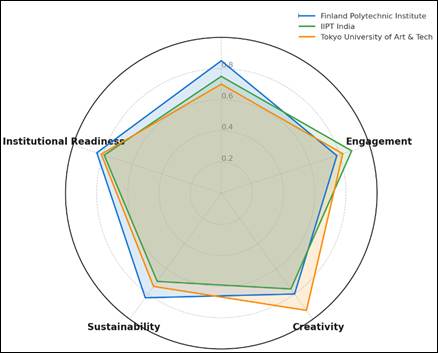
Figure 7 Comparative Overview of AI Implementation
Case Studies
8. Discussion
This
study reveals that the printing curriculum management in the AI age needs
paradigm shift in the contents and delivery. Embracing Artificial Intelligence
in the entire printing operations that have started with automating prepress,
up to generative design have changed the skills and competency required in the
current printing workforce. The findings of the case studies demonstrated that
AI-driven pedagogical practices can be implemented in the institutions that
will experience the apparent benefits in terms of efficiency, engagement and
innovation, which explains the need to systematic redesign of the curriculum.
The relationship between technological integration and pedagogical innovation
is one of the patterns that are also similar in all the implementations and is
a symbiotic relationship. The AI-powered personalization tools help to enhance
the learning process, and the data analytics enable educators to be able to
track the progress and dynamically adjust the content. The results suggest the
importance of capacity building of faculty and institutional capacity to uphold
such reform. Particularly, the success of the Finnish Polytechnic and IIPT also
show that successful curricula need the well-developed faculty and strong
digital communities, yet Tokyo University is also concerned with the new uses
of AI, and it is an indicator of the even greater divide between the technology
and design education. The other notable implication is the strengthening of
industry-academia cooperation as a main factor of relevance of the curriculum.
Collaborations with AI solution vendors and printing companies will mean that
the students will receive a practical learning experience on how things work in
the real-life scenario, closing the gap between the educational experience and
the industry. Nevertheless, it still has difficulties especially in the ethical
fronts regarding the biasing of data, the fear of automation and intellectual
property in AI-created print materials. In general, the discussion highlights
that the management of an AI-infused printing curriculum needs to be balanced
as the person needs to improve technical expertise in it, creative expression,
and moral consciousness. The introduction of adaptive and data-driven,
interdisciplinary models within institutions will place those institutions in
the best position to produce a new generation of professionals who will
spearhead the smart revolution of the printing industry across the globe.
9. Conclusion
The
reconfiguration of printing education in the sphere of AI age will be the
significant turn to the paradigm of off-the-shelf craftsmanship to the
framework of smart-based, information-driven, and multipolar learning. The
existing curriculum management is based on how well the AI technologies are
implemented in design, production, and pedagogical systems to present the
automated, adaptive, and creative environment to the industry to the students.
The case findings and analysis of the study indicate that the AI-enabled tools
adoption in the institutions can make visible considerable efficiency,
engagement, and innovation yield, which can reveal the real-life advantages of
the digital transformation in the education sector. The long-term success
though is to be attained through the faculty readiness of holistic
preparedness, the robust infrastructure and the current practice of partnership
with the industrial partners. The use of the generative and predictive AI
systems also requires the use of ethics and cultural sensitivity. With the
education of printing being advanced, the universities ought to have a balance
between the use of technology and the human creativity and responsibility. What
lies ahead of the printing curriculum is the best ability to create adaptive,
ethically focused as well as futuristic professionals who will be in a position
to project the industry to a viable as well as intelligent future.
CONFLICT OF INTERESTS
None.
ACKNOWLEDGMENTS
None.
REFERENCES
Altun, F. (2025). Mechanical and Surface Properties of 3D-Printed Ti6Al4V Alloy Parts Fabricated by Selective Laser Melting under Extreme Conditions (Master’s thesis, Wichita State University, Wichita, KS, USA).
Altun, F., Altuntas, G., Asmatulu, E., and Asmatulu, R. (2025). Additive Manufacturing of Ti-6Al-4V: Influence of Cryogenic and Stress-Relief Heat Treatments on Electrical Conductivity. In Proceedings of the 7th International Trakya Scientific Research Congress, 219–226.
Altun, F., Bayar, A., Hamzat, A. K., Asmatulu, R., Ali, Z., and Asmatulu, E. (2025). AI-Driven Innovations in 3D Printing: Optimization, Automation, and Intelligent Control. Journal of Manufacturing and Materials Processing, 9(10), 329. https://doi.org/10.3390/jmmp9100329
Al’Aref, S. J. (2018). 3D Printing Applications in Cardiovascular Medicine. Elsevier. https://doi.org/10.1016/C2016-0-01941-6
Boretti, A. (2024). A Techno-Economic Perspective on 3D Printing for Aerospace Propulsion. Journal of Manufacturing Processes, 109, 607–614. https://doi.org/10.1016/j.jmapro.2024.01.063
De Bernardi, P., Bertello, A., and Shams, S. M. (2019). Logics Hindering Digital Transformation in Cultural Heritage Strategic Management: An Exploratory Case Study. Tourism Analysis, 24, 315–327. https://doi.org/10.3727/108354219X15511864843867
Habib, M. A., Subeshan, B., Kalyanakumar, C., Asmatulu, R., Rahman, M. M., and Asmatulu, E. (2025). Current Practices in Recycling and Reusing of Aircraft Materials and Equipment. Materials Circular Economy, 7(12). https://doi.org/10.1007/s42824-025-00112-6
Hamzat, A. K., Murad, M. S., Adediran, I. A., Asmatulu, E., and Asmatulu, R. (2025). Fiber-Reinforced Composites for Aerospace, Energy, and Marine Applications: An Insight into Failure Mechanisms under Chemical, Thermal, Oxidative, and Mechanical Load Conditions. Advanced Composites and Hybrid Materials, 8, 152. https://doi.org/10.1007/s42114-025-00652-9
Metal AM. (2023). The Convergence of Additive Manufacturing and Artificial Intelligence: Envisioning a Future That Is Closer Than You Think. Metal AM.
Scuotto, V., Santoro, G., Bresciani, S., and Del Giudice, M. (2017). Shifting Intra- and Inter-Organizational Innovation Processes towards Digital Business: An Empirical Analysis of SMEs. Creativity and Innovation Management, 26, 247–255. https://doi.org/10.1111/caim.12221
Soliman, M., Ali, R. A., Khalid, J., Mahmud, I., and Ali, W. B. (2024). Modelling Continuous Intention to Use Generative Artificial Intelligence as an Educational Tool among University Students: Findings from PLS-SEM and ANN. Journal of Computer Education, 12, 1–32. https://doi.org/10.1007/s40692-024-00278-3
Soliman, M., Ali, R. A., and Noipom, T. (2025). Unlocking AI-Powered Tools Adoption among University Students: A Fuzzy-Set Approach. Journal of Information and Communication Technology, 24, 1–28.
Southworth, J., Migliaccio, K., Glover, J., Glover, J., Reed, D., McCarty, C., Brendemuhl, J., and Thomas, A. (2023). Developing a Model for AI across the Curriculum: Transforming the Higher Education Landscape via Innovation in AI Literacy. Computers and Education: Artificial Intelligence, 4, 100127. https://doi.org/10.1016/j.caeai.2023.100127
Subeshan, B., Atayo, A., and Asmatulu, E. (2024). Machine Learning Applications for Electrospun Nanofibers: A Review. Materials Science, 59, 14095–14140. https://doi.org/10.1007/s10853-024-09432-1
Thomas, D. J. (2022). Advanced Active-Gas 3D Printing of 436 Stainless Steel for Future Rocket Engine Structure Manufacture. Journal of Manufacturing Processes, 74, 256–265. https://doi.org/10.1016/j.jmapro.2021.12.032
Tlili, A., Shehata, B., Adarkwah, M. A., Bozkurt, A., Hickey, D. T., Huang, R., and Agyemang, B. (2023). What If the Devil Is My Guardian Angel: ChatGPT as a Case Study of Using Chatbots in Education. Smart Learning Environments, 10(15). https://doi.org/10.1186/s40561-023-00237-x
Wang, N. (2022). Application of Artificial Intelligence and Virtual Reality Technology in the Construction of University Physical Education. In Proceedings of the 3rd International Conference on Electronic Communication and Artificial Intelligence (IWECAI) (pp. 343–346). https://doi.org/10.1109/IWECAI55315.2022.00075
Zawacki-Richter, O., Marín, V. I., Bond, M., and Gouverneur, F. (2019). Systematic Review of Research on Artificial Intelligence Applications in Higher Education: Where Are the Educators? International Journal of Educational Technology in Higher Education, 16(39). https://doi.org/10.1186/s41239-019-0171-0
|
|
 This work is licensed under a: Creative Commons Attribution 4.0 International License
© ShodhKosh 2025. All Rights Reserved.