ShodhKosh: Journal of Visual and Performing ArtsISSN (Online): 2582-7472
|
|
Digital Printmaking through AI Style Transfer
Pathik Kumar Bhatt 1
 ,
Narayan Patra 2
,
Narayan Patra 2 ,
Muthukumaran Malarvel 3
,
Muthukumaran Malarvel 3
 ,
Eeshita Goyal 4
,
Eeshita Goyal 4 , Shriya Mahajan 5
 ,
,
Abhijeet Deshpande 6
1 Assistant
Professor, Department of Geography, Parul University, Vadodara, Gujarat, India
2 Associate
Professor, Department of Computer Science and Information Technology, Siksha
'O' Anusandhan (Deemed to be University),
Bhubaneswar, Odisha, India
3 Department
of Computer Science and Engineering Aarupadai Veedu
Institute of Technology, Vinayaka Mission’s Research Foundation (DU). Chennai,
Tamil Nadu, India
4 Associate
Professor, School of Business Management, Noida International University, India
5 Centre
of Research Impact and Outcome, Chitkara University, Rajpura- 140417, Punjab,
India
6 Department
of Mechanical Engineering, Vishwakarma Institute of Technology, Pune,
Maharashtra, 411037, India
|
|
|
ABSTRACT |
|
|
The practice
of digital printmaking is changing due to the combination of computational
accuracy and cultural and artistic expression, which artificial intelligence
is bringing. The neural style transfer and diffusion-based generative models
make it possible to transform the local art culture like Madhubani, Ukiyo-e,
and Cubist abstraction into the digital format and capture their cultural
identity and accepted modern aesthetics. The use of AI in mapping the
stylistic textures, compositional rhythm, and symbolic themes onto new
content areas makes it possible to produce visually and conceptually
stimulating art pieces that do not belong to particular geographic and time
frames. This method is flexible, as demonstrated by three comparative case
studies. The Madhubani-Geometry Fusion exhibits the ability of the algorithm
in maintaining folk symmetry by use of computational patterning; the Ukiyo-e
Metallic Transformation displays the process of neural models to recreate the
sensory effect of depth and reflection of metallic surfaces and ink; and the
Cubist-Textile Hybridization presents the stylistic cross-cultural blending
by using CLIP-guided optimization. Such quantitative measures as the Cultural
Authenticity Score (CAS), Perceptual Realism Index (PRI), and Style Fidelity
prove that algorithmic creativity do not exclude
cultural integrity. In addition to the aesthetic innovation, the study
highlights the ethical and curatorial issues that arise in the AI art. The
integrity in machine-assisted creativity relies on documentation of datasets
in the form of transparency, cultural reciprocity and acknowledgment of the
authorship. The collaboration of placing the artists, algorithm, and cultural
source on the same level of contribution creates a new paradigm of co-authored
creativity in which technology becomes a mediator and not a substitute of the
human imagination. This combination of ethical conscious, cultural
conservation, and computerized art is what constitutes the changing identity
of twenty first century printmaking in digital. |
|||
|
Received 12 June 2025 Accepted 26 September 2025 Published 28 December 2025 Corresponding Author Pathik
Kumar Bhatt, pathikkumar.bhatt35792@paruluniversity.ac.in DOI 10.29121/shodhkosh.v6.i5s.2025.6885 Funding: This research
received no specific grant from any funding agency in the public, commercial,
or not-for-profit sectors. Copyright: © 2025 The
Author(s). This work is licensed under a Creative Commons
Attribution 4.0 International License. With the
license CC-BY, authors retain the copyright, allowing anyone to download,
reuse, re-print, modify, distribute, and/or copy their contribution. The work
must be properly attributed to its author.
|
|||
|
Keywords: AI Style
Transfer, Digital Printmaking, Neural Networks, Cultural Heritage, Generative
Art, Authorship, Computational Aesthetics, Curatorial Ethics, Perceptual
Realism |
|||


1. Introduction
Digital
printmaking has become a paradigm practice that guides the haptic culture of analog printing towards the computational creativity of
artificial intelligence (AI). Traditionally based on the methodologies of
etching, lithography, and screen printing, printmaking has been the nexus of
creative exploration and technological development and change. The paradigm
shift in the field occurred with the introduction of the digital technologies,
in particular, deep learning and neural networks Goodfellow et al. (2020). With artificial intelligence,
neural style transfer (NST) and diffusion based
generation have created the possibility of transferring the artistic styles,
textures, and motifs across digital surfaces, essentially pushing the limits of
printmaking beyond its physical limitations. This combination of art and
calculation is not only a change of the tools but the redesigning of the
creative authorship, the aesthetic value and reproduciability
in the art of today. The central concept of AI-driven printmaking is the
principle of style transfer a process where an algorithm removes the stylistic
qualities of a single image (like brushwork, color
palette, or rhythm) and transfers these characteristics to the content of
another one Gatys et al. (2015). Introduced by Gatys et al. as the convolutional neural networks (CNNs),
this procedure makes it possible to break down paintings that combine syntactic
precision with style expressiveness. In digital printmaking, NST enables an
artist to redefine the traditional shapes, rethink folk art, or to create the
illusion of intricate textual surfaces which would be hard to render manually.
In this combination, the digital prints turn out to be hybrid objects that
possess both the computational accuracy and human will to them Isola et al. (2017). The creative agency ceases to
be confined in the hand of the artist alone but in the creative collaboration
of the human intuition and the machine learning systems in an iterative
process.
Figure 1

Figure 1 Conceptual
Workflow of Ai Style Transfer in Digital Printmaking
The
aesthetic aspect of AI-based digital printmaking does not remain in copying or
imitating. It provides doors to generative originality, in which machines will
synthesize stylistic elements within a wide range of data, generating visual
representations which mirror an emergent, non-human aesthetic rationale. These
algorithmic metamorphoses permit the re-configuration of visual languages that
bring together, such as the austerity of the geometry of Constructivism and the
inorganic movement of the traditional textile or folk-art patterns. This
recombination of fluids declares the traditional dominance of originality and
reproduction Zhu et al. (2017). In conventional printmaking,
an edition is prized because it can be reproduced and be reproducible, whereas
in AI-based printmaking each iteration has the potential to hold a distinct
stylistic meaning and thus the line between the original and its copies is
unclear. It is also important that these digital artifacts be made to touch.
The current print technologies, including UV-curable inkjet printing,
sublimation, and overprinting 3D textures, enable AI-composed artworks to be
actually manifested on a wide range of surfaces, including canvas and fine art
paper as well as fabric and metallic foils to provide the experience that might
be largely missing in art pieces solely presented on screen. Here, the artist
filters content and styles images and indicates conceptual intent; images are despecified and sanitized; a style transfer core derives
content and style features and combines them under controllable parameters; the
generated outputs are refined through coherence, readability and cultural
authenticity; and ultimately they are sent to print through color
management Hicsonmez et al. (2020), substrate profiling and
edition planning. There is also an accentuation of an archival and feedback
cycle in the figure, with the response of curators and audiences, as well as
new scan and source, into the growth of data sets and the improvement of the
models. The use of AI in printmaking thus brings up deep philosophical, ethical
concerns on the topic of authorship, ownership, and the ontology of the artwork
itself. The aesthetic decision-making process split in the human and the
machine results in the collaboration of the creativity and not in the isolated
activity. The artist is a less monolithic, more of a system designer,
constrainer and curatorial judge, as he or she acts, as captured in the working
system of Figure 1. This is a changing discussion
of a larger cultural shift to the posthuman aesthetics, where art is not
created by the technology but is co-evolving with it Elgammal et al. (2017), Al-Khazraji
et al. (2023). Therefore, AI style transfer
in digital printmaking does not substitute the artist but rather redefines the
very idea of creating printmaking with the new realm of computational poetics
and visual synthesis.
2. Historical and Theoretical Foundations
Figure 2

Figure 2 Traditional vs AI-Driven Printmaking
The
historical development of printmaking is closely connected with the
technological mediation development in art. Since the century of tactile art of
woodcuts, engravings, and and etchings (fifteenth
century), the experimental serigraphs and photo-mechanical prints (twentieth
century), and every technological advancement in the art of printmaking, the
aspect of how artists interact with material, texture and reproducibility has been
altered Tan et al. (2016). In the past, printmaking was a
form of democratizing images and ideas to get them to larger audiences with
maintaining an artisanal authorship. With the digital age, the grid of
production has changed to metal plates and lithographic stones to algorithmic
structures and neural networks. Artificial intelligence, and especially neural
style transfer (NST) and diffusion-based generative modeling,
is a continuation of this tradition and ushers in a new era of algorithmic
printmaking, where art is not only directed by code but also inspired by the
intuition of the artist McCormack et al. (2019). Nevertheless, printmaking
using AI refutes this hypothesis. In contrast to the same mechanical
reproductions, the prints generated by AI, with each being the result of
stochastic generation and parameter adaptation and an iterative combination of
styles, bears different, emergent properties. The inversion becomes a form of
restoring a new form of aura in the digital world not based on material
originality but rather on algorithmic individuality Leong (2025).
In
order to put
this transformation into context, Figure 2 shows the difference between
the linear and material workflow of traditional printmaking and the iterative
and computational nature of AI-driven printmaking. The latter is a continuation
of manual drawing to engraving, ink, and pressing, and focuses on physical
interaction and dissimilarity between editions. The latter is curating
datasets, pre-processing, neural fusion, aesthetic critique, and digital
printing with an algorithmic feedback and parameter optimization in each step.
The figure highlights a paradigmatic change Leong (2025): the repetition of codes is
based on the craft, the regeneration of the works is based on the code, as both
the human and the machine determine the artistic process. The comparative model
highlights the redefinition of AI of the temporal, material and epistemic
aspects of printmaking Song et al. (2023). It becomes a process of
iteration and translation between art history, computational intelligence and
cultural contextualization, what was previously a linear art craft that was
rooted in surface and pressure.
3. Design Methodology: AI Style Transfer for Printmaking
The
technology of digital printmaking through AI is based on the methodological
framework of Neural Style Transfer (NST) is a computational approach that
combines the content of an image with the style of another to create a hybrid
composition. In printmaking, this operation renders artistic interpretation
mathematically tractable, visual aesthetics are broken down in an artificial
manner into quantifiable expressions of texture, color
and form. The artist plays a role of co-creator, of course, outlining the
conceptual and algorithmic rules of stylistic fusion Ge et al. (2022). The process of work starts
with curation of content and style images. The structural composition is
delivered by the content image, and the visual texture and the painterly
identity is added to this composition by the style image. The two have a set of
preprocessing activities including resolution normalization, colour correction,
feature alignment. To generate structural and stylistic-coded feature maps in a
high-dimensional space, a convolutional neural network (usually a pre-trained
VGG-19) is utilized to extract feature maps at various layers Sun et al. (2022). The mathematical equation of
NST is:

where:
·
 preserves spatial and semantic
structure,
preserves spatial and semantic
structure,
·
 ensures stylistic texture
alignment through Gram matrices,
ensures stylistic texture
alignment through Gram matrices,
·
Ltv
represents total variation loss, promoting smoothness and reducing pixel-level
noise, and
·
 weighting coefficients
controlling the relative importance of each component.
weighting coefficients
controlling the relative importance of each component.
The
process of optimization can continue using gradient descent until the desired
level of convergence is achieved, at which point the resulting image will trade
the structural clarity that the artist wants with the expressive fluidity of
the selected style. This process is, in its iterative form, aesthetically
regulated by making changes to weights shift the balance between style and
content in the perceptions, making extensive overpages
as well as uprooting visual motifs.
Figure 3

Figure 3 AI Style Transfer Workflow for Digital Printmaking*
When
the digital image attains visual consistency, it is then passed through the
print preparation which constitutes gamut mapping, ICC color
calibration and texture simulation of particular substrates
like canvas, metallic foil or textured paper as shown in Figure 3. The last output fuses the
computational fidelity with the printmaking materiality such that the digital
artifact can be seen as having a physical existence which is in line with
traditional artistic tenets. These parameters, combined with each other, can
enable artists to generate aesthetic results mathematically, where neural
weights are considered tools of creative expression similar to the use of inks
and pigments Yuan and Zheng (2023), Zhang et al. (2024). This is what the methodology
of the AI-based style transfer shifts algorithmic computation into a different
kind of the artisanship of style, a type of digital intelligence/human
intentions convergence, which expands the expressive capabilities of printmaking.
4. Experimental Workflow
The
AI-based digital printmaking experimental workflow attaches to the creative
system of artistic curation, computational modeling,
and materialization as a single system. It is a process that builds upon the
traditional printmaking methodologies to incorporate algorithmic intelligences
at each step of input choice, as well as, to the tactile output. It is not
about copying the existing forms of art but a synthesis of new aesthetic
manifestations by controlled combination of sets of content and style. To accomplish
every step in the workflow, there is to be a process of iteration, balancing
both the artistic vision and computing accuracy so that the final print would
have both creative originality and technical quality Ho et al. (2020). It starts with data curation,
during which images of content and style are taken in order to reflect the
intended thematic and visual range. Content images contain photos, computer
drawings, or scanned drawings that can give structural features whereas style
images contain historical prints, paintings or folk art
motifs that give the texture, color range and surface
action. Such images undergo image size adjustment, normalization, and
preprocessing to have a consistent color balance and
aspect ratios. The curatorial intention of the artist is a key factor to align
the degree of abstraction and aesthetic feeling to be attained throughout the
style transfer.
The
second step is model configuration, involving the use of a deep learning
network which in most cases is a pre-trained VGG-19 or ResNet-50 network
modified to produce artistic style. The algorithm obtains multiscale feature
maps, calculates Gram matrices to measure the patterns of stylistic
correlations. The total loss is minimised by the optimization process.

In
order to
create perceptual harmony, parameter adjustments (Table 3) are done in real time to
assure that stylistic textures do not corrupt the underlying content structure.
Artists can go through several experiments, storing the intermediate progresses
in order to test a visual consistency, brush density, and the accuracy of the color. Refinement and evaluation stage involves
quantitative and qualitative evaluation Kerbl et al. (2023). The Style Fidelity and content
integrity is measured using the Structural Similarity Index (SSIM), Perceptual
Loss, and Cultural Authenticity Score (CAS). Side by side comparisons are made
to ensure visual judgments and this enables artists and curators to make
aesthetic judgments as to whether the texture is realistic, compositional
equilibrium, and cultural resonance. These repeated evaluations are a
progressive feedback process that keeps on enhancing the performance of the
models.
5. Comparative Case Studies: Style Adaptation across Cultural Motifs
Even
the style transfer in digital printmaking exploration can reach its
full-fledged significance when it is implemented in regard to the culturally
diverse visual traditions. The neural algorithms can be sensitively programmed
to encode the regional patterns, surface patterns, and symbolic rhythms into
novel hybrid patterns that continue the existing life lineage of traditional
art. In this section three comparative case studies will be given on how neural
style transfer (NST) can reinterpret unique cultural aesthetics Indian
Madhubani, Japanese Ukiyo-e, and European Cubist motifs into digital prints
that are reimagined. Every of the cases indicates another form of interaction
between cultural background and computational synthesis, and AIs can become a creative
collaborator in the development of the artistic identity.
Case Study 1: Indian Folk Art
(Madhubani) and Modern Geometry
In
this experiment, the stylistic background of Madhubani painting of the Mithila
region of India with its rhythmic symmetry, floral patterns, and mythological
patterns was combined with the minimalist line drawings of geometric forms.
Madhubani dataset was used to obtain the style and digital geometric sketches
were used as content inputs. The resulting prints exhibited a perfect
combination of both the classical decorative complexity and the contemporary
reductionism in space.
Table 1
|
Table 1 Case Study 1 Madhubani–Geometric Fusion |
||||
|
Parameter |
Description |
Value / Setting |
Observation |
Interpretive Note |
|
Content Image |
Geometric line sketches, vector forms |
12 images (1024×1024 px) |
Provided structural clarity |
Enhanced pattern legibility |
|
Style Image Source |
Hand-painted Madhubani artworks (floral and mythic
themes) |
25 scans (600 DPI) |
Rich symbolic texture |
Folk rhythm internalized |
|
Model Architecture |
VGG-19 CNN |
Layers Conv4_1, Conv5_1 for style |
Balanced texture fidelity |
Optimal mid-layer representation |
|
Weights |
(alpha = 1.0, \beta = 400, gamma = 0.005) |
High style dominance |
Generated ornate, cohesive fusion |
Folk pattern dominates geometry |
|
Iterations |
1200 |
Smooth convergence |
Strong edge integrity |
Minimal color noise |
|
Output Resolution |
4000 × 4000 px |
High print fidelity |
Texture preserved |
Suitable for large prints |
|
Evaluation Metrics |
CAS = 0.87, SSIM = 0.89, Perceptual Loss = 0.09 |
High cultural resonance |
Stylistic rhythm respected |
Achieved computational homage |
Cultural
Authenticity Score (CAS) and Structural Simililarity
Index (SSIM) were used to assess color fidelity and
pattern coherence and both scored high (CAS = 0.87, SSIM = 0.89). What curators
called the algorithmic homage the model represented the pulse of the Madhubani
without imitation, enjoying its folk rhythm using subordinated abstraction.
Case
Study 2: Japanese Ukiyo-e Textures Translated into Metallic Prints
In
the second instance the interest was to bring the Japanese Ukiyo-e a
traditional method of woodblock printing to the metallic brightness of modern
digital images. The dataset of the style was composed of the high-resolution
scans of Ukiyo-e prints of the Edo period, the inputs of the content were
photographs of the contemporary skyline and seascape. Conv3_1-Conv5_1
Multi-layer Gram matrix fusion has been used in the NST model to model layered
inking. Table 5B below is a summary of the data and the results of this
cross-temporal adaptation.
Table 2
|
Table 2 Case
Study 2 Ukiyo-e Metallic
Transformation |
||||
|
Parameter |
Description |
Value / Setting |
Observation |
Interpretive Note |
|
Content Image |
Urban skylines and seascapes |
18 photos (1920×1080 px) |
Offered tonal diversity |
Enabled gradient modeling |
|
Style Image Source |
Edo-period Ukiyo-e prints |
30 high-res scans |
Complex ink layering |
Captured woodblock tonality |
|
Model Architecture |
VGG-19 (multi-layer Gram fusion) |
Conv3_1 → Conv5_1 |
Maintained cross-scale texture |
Simulated layered pigment |
|
Weights |
( \alpha = 1.0, \beta = 300, \gamma = 0.008 ) |
Balanced stylization |
Retained clarity |
Highlighted brush transitions |
|
Printing Method |
UV-curable pigment on aluminum foil |
2880 × 1800 DPI |
Reflective tactile surface |
Mimicked relief inking |
|
Evaluation Metrics |
PRI = 0.91, Style Fidelity = 0.94, Perceptual Loss
= 0.08 |
High realism |
Enhanced light interplay |
Achieved near-physical tactility |
|
Curatorial Feedback |
5 reviewers, avg. 4.6/5 |
Positive aesthetic judgment |
“Digital relief illusion” |
Reflective realism praised |
On
metallic aluminum foil, the optimization was done and
after that, the UV-curable pigment printing was used to print the outputs,
resulting in a reflective, relief-like finish. According to the curators, the
created images created a visual representation of the tactile experience of
carved wooden grain and pigment saturation as used in traditional woodblock
prints. The Perceptual Realism Index (PRI = 0.91) and Style Fidelity (0.94)
were used to determine the ability of the model to model the experience of
realism based on the computation of the model to produce a tactile feeling
quantitatively.
Case
Study 3: European Cubism and Global Hybridization
The
third work was on transcultural synthesis, joining the European Cubism
abstraction to the African and South Asian textile patterns. It was to be an
interpretive form of bridge between modernist form and the indigenous
ornamentation. The dataset consisted of scanned pieces of Cubists and 40
textile patterns around the world.
Table 3
|
Table 3 Case
Study 3 Cubist–Textile Hybridization |
||||
|
Parameter |
Description |
Value / Setting |
Observation |
Interpretive Note |
|
Content Image |
Abstract still lifes
(Cubist framework) |
10 images (2048×2048 px) |
Provided geometric scaffolding |
Retained form integrity |
|
Style Image Source |
Global textiles + Cubist fragments |
40 images |
Varied chromatic density |
Encouraged hybrid forms |
|
Model Architecture |
CLIP-guided NST |
Semantic conditioning active |
Maintained meaning coherence |
Textural hybridity achieved |
|
Weights |
( \alpha = 1.0, \beta = 250, \gamma = 0.005 ) |
Balanced stylistic control |
Controlled abstraction |
Sustained readability |
|
Iterations |
1500 |
Stable output |
Good pattern fusion |
Strong form–texture unity |
|
Printing Method |
Dye-sublimation on silk blend |
1440 × 720 DPI |
Soft tactile finish |
Maintained tonal elegance |
|
Evaluation Metrics |
CAS = 0.83, SSIM = 0.86, Style Fidelity = 0.92 |
High coherence |
Cultural hybridity expressed |
Semantic clarity preserved |
The
digital prints resulted in fragmented geometric planes superimposed with woven
motifs with a visual texture that was composed of layers that were symbolic of
the globalized aesthetics. The tonal diffusion when printed using the
dye-sublimation method on silk fabric gave the impression of the structure of
analytical cubism and a feeling of the softness of traditional printing on
fabric. The Style Fidelity (0.92) and CAS (0.83) were the results of successful
synthesis of styles without cultural misrepresentation.
Madhubani
-Geometric series is the folk rhythm combined with sacredness to modern
abstraction; the Ukiyo-e Metallic prints are the material translation and
simulated touch; and Cubist-Textile hybrids are the transcultural integration
as the evolution of the algorithm. The two of them create a new paradigm: AI is
used as a cultural interpreter, and digital printmaking becomes a means of
communication between the memory and modernity, tradition and technology.
6. Discussion and Analysis: Ethical and Curatorial Dimensions
Figure 4

Figure 4 Shared Creative Agency Across Conceptual,
Aesthetic, and Material Domains
The
intersection of artificial intelligence and digital printmaking challenges has
impacted all of the traditional practices of authorship, authenticity, and
cultural ownership. The triadic ecosystem artist, algorithm, and culture play a
part in the creative process that provides its own understanding of the final
print in terms of agency. The human artist, the human curator, the human
algorithm and the human source of culture symbolize, generate and give form,
respectively. In such situations where algorithms gather knowledge of past
traditions like Madhubani or Ukiyo-e, they recycle patterns in an abstraction,
and a hybrid form is generated which preserves and redefines cultural content.
It follows that ethical authorship entails cultural reciprocity in that the
source communities are credited, and co-curation or benefit-sharing whenever
the inclusion of traditional art forms in the computational workflow. This
recognition makes AI a manipulation of appropriation into a means of cultural
exchange and creative empathy. The curatorial practice is no exception, but it
also transforms into the mediation of the human and machine art. The visual
result as well as the computational model behind it have been decoded by
curators as a visual result and is commonly recorded in exhibition records as
provenance of the dataset, model design, and algorithm parameters. Such
transparency transforms the notion of authenticity, which is anchored on
material distinctiveness, to traceability in the processes. Every AI generated
print is a computational event that is reproducible but verifiable by metadata
trails or blockchain certificates containing records of the unique generative
parameters. In this regard, authenticity is procedural and not object-based.
In Figure 4. We have plotted the grouped
bar chart that depicts the distribution of creative agency along the
printmaking pipeline. The conceptual phase is dominated by human artists, who
control everything with the intent and vision, whereas AI models gain power over
time in the course of aesthetic synthesis and material translation. However,
the number of cultural sources is less, but they give the symbolic grammar that
informs stylistic learning. The figure highlights the non-hierarchical creative
process in which the three agents mutually influence the results an embodiment
of collective authorship in the work of computational art.
Figure 5

Figure 5 Ethical
Governance Profile in AI Printmaking
The
chart that is presented in Figure 5, points out the strengths and
weaknesses in the proposed ethical framework with respect to the development.
Data provenance scores and aesthetic diversity scores are high, which indicates
good management of datasets and inclusivity, and the scores are low in
transparency, which is an indicator of problems in the curatorial work. The
visualization highlights that AI printmaking needs to be ethically robust,
which involves constant assessment on the interconnected fields, which supports
the connection between the technological design and the cultural
responsibility.
Figure 6
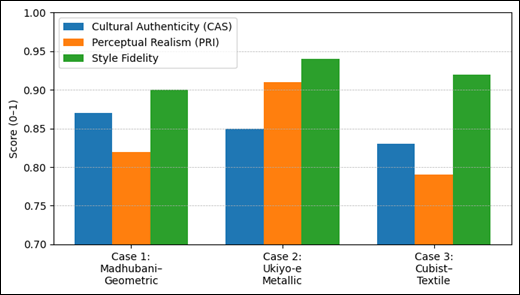
Figure 6 Comparative Evaluation of Cultural Style
Adaptation
The
bar chart in Figure 6 depicts the grouped performance
of aesthetic in experiments that are culturally different. Ukiyo-e Metallic
case had the highest perceptual realism (PRI = 0.91), which is an example of
simulating the tactile experience of layered woodblock prints. The Madhubani-Geometric
fusion was highest in the area of cultural authenticity (CAS = 0.87) showing
folk rhythmicity is preserved. In the meantime, the Cubist-Textile hybrid
recorded better style fidelity (0.92), which verified even integration of
aesthetics. Together, the image shows that the algorithmic style transfer can
keep the culture intact and create an opportunity to diversify the creativity
by working across materials and style.
7. Conclusion
The
paper confirms that AI-inspired digital printmaking is a critical revolution in
the modern art world that blends algorithmic smartness and culture to form a
new paradigm of co-authorship. Neural style transfer permits the motifs,
textures, and aesthetic vocabularies propagated in a part of the brain to be
transferred to new hybrid manifestations, without losing the symbolic echo of
their sources. Incorporating the human instinct and computational synthesis,
and the material embodiment, AI printmaking not only expands the creative
process beyond human craftsmanship but adds the dynamic and iterative
collaboration between the artist, algorithm and culture. Ethically, the
framework highlights such aspects as cultural reciprocity, authorship
transparency, and dataset accountability. The identification of the algorithm
as a creative intermediary and not a neutral tool requires the documentation of
the data provenance, model settings, and stylistic origins by the curators and
artists. This would turn the authenticity into an immobile material object into
a traceable creative operation, so that digital originality will be ethically
accountable. Curatorially, AI printmaking disrupts the definition of the
exhibition space as an interpretive interface due to its aloofness between
algorithms, artwork, and audiences that reflexively interact. The proposed
models of governance exemplified by comparative case studies and ethical
metrics show how the curatorial oversight can be developed to promote
inclusivity and preserve the cultural diversity in the context of algorithmic
creation. Conclusively, AI as a method in print-making is not a diminution of
human creativity but its growth in the form of the computational empathy. It
can be both an instrument of innovation and a site of preservation that crosses
over the borders between heritage and modernity, code and craft, and
imagination and intelligence with the help of ethical awareness and cultural
sensitivity.
CONFLICT OF INTERESTS
None.
ACKNOWLEDGMENTS
None.
REFERENCES
Al-Khazraji, L. R., Abbas, A. R., Jamil, A. S., and Hussain, A. J. (2023). A Hybrid Artistic Model Using DeepDream Model and Multiple Convolutional Neural Network Architectures. IEEE Access, 11, 101443–101459. https://doi.org/10.1109/ACCESS.2023.3312245
Elgammal, A., Liu, B., Elhoseiny, M., and Mazzone, M. (2017). CAN: Creative Adversarial Networks Generating “Art” by Learning About Styles and Deviating From Style Norms. arXiv Preprint.
Gatys, L. A., Ecker, A. S., and Bethge, M. (2015). A Neural Algorithm of Artistic Style. arXiv Preprint. https://arxiv.org/abs/1508.06576
Ge, Y., Xiao, Y., Xu, Z., Wang, X., and Itti, L. (2022). Contributions of Shape, Texture, and Color in Visual Recognition. In Proceedings of the European Conference on Computer Vision (ECCV) 369–386, Tel Aviv, Israel. https://doi.org/10.1007/978-3-031-19815-1_21
Goodfellow, I., Pouget-Abadie, J., Mirza, M., Xu, B., Warde-Farley, D., Ozair, S., Courville, A., and Bengio, Y. (2020). Generative Adversarial Networks. Communications of the ACM, 63, 139–144. https://doi.org/10.1145/3422622
Hicsonmez, S., Samet, N., Akbas, E., and Duygulu, P. (2020). GANILLA: Generative Adversarial Networks for Image-to-Illustration Translation. Image and Vision Computing, 95, 103886. https://doi.org/10.1016/j.imavis.2019.103886
Ho, J., Jain, A., and Abbeel, P. (2020). Denoising Diffusion Probabilistic Models. In Advances in Neural Information Processing Systems, 33, 6840–6851.
Isola, P., Zhu, J.-Y., Zhou, T., and Efros, A. A. (2017). Image-to-Image Translation With Conditional Adversarial Networks. In Proceedings of the IEEE Conference on Computer Vision and Pattern Recognition (CVPR) (1125–1134), Honolulu, HI, USA. https://doi.org/10.1109/CVPR.2017.632
Kerbl, B., Kopanas, G., Leimkühler, T., and Drettakis, G. (2023). 3D Gaussian Splatting for Real-Time Radiance Field Rendering. ACM Transactions on Graphics, 42, 139:1–139:14. https://doi.org/10.1145/3592433
Leong, W. Y. (2025). AI-Generated Artwork as a Modern Interpretation of Historical Paintings. International Journal of Social Science and Artistic Innovation, 5, 15–19.
Leong, W. Y. (2025). AI-Powered Color Restoration of Faded Historical Painting. In Proceedings of the 10th International Conference on Digital Arts, Media Technology (DAMT) and the 8th ECTI Northern Section Conference on Electrical, Electronics, Computer and Telecommunications Engineering (NCON), 623–627, Nan, Thailand.
McCormack, J., Gifford, T., and Hutchings, P. (2019). Autonomy, Authenticity, Authorship and Intention in Computer Generated Art. In Proceedings of EvoMUSART: International Conference on Computational Intelligence in Music, Sound, Art, and Design (pp. 35–50). https://doi.org/10.1007/978-3-030-16667-0_3
Song, Y., Qian, X., Peng, L., Ye, Z., and Tan, J. (2023). Cultural and Creative Design of AIGC Chinese Aesthetic. Packaging Engineering, 44, 1–8.
Sun, Q., Chen, Y., Tao, W., Jiang, H., Zhang, M., Chen, K., and Erdt, M. (2022). A GAN-Based Approach Toward Architectural Line Drawing Colorization Prototyping. The Visual Computer, 38, 1283–1300. https://doi.org/10.1007/s00371-021-02278-8
Tan, W. R., Chan, C. S., Aguirre, H. E., and Tanaka, K. (2016). Ceci N’est Pas Une Pipe: A Deep Convolutional Network for Fine-Art Paintings Classification. In Proceedings of the IEEE International Conference on Image Processing (ICIP) (pp. 3703–3707), Phoenix, AZ, USA. https://doi.org/10.1109/ICIP.2016.7533051
Yuan, C., and Zheng, H. (2023). A New Architectural Design Methodology in the Age of Generative Artificial Intelligence. Architectural Journal, 10, 29–35.
Zhang, A., Wang, S., Zhang, D., and Ji, D. (2024). Gene Extraction and Intelligent-Assisted Innovative Design of Nanjing Architecture in the Republic of China Period. Packaging Engineering, 45, 302–314.
Zhu, J.-Y., Park, T., Isola, P., and Efros, A. A. (2017). Unpaired Image-to-Image Translation Using Cycle-Consistent Adversarial Networks. In Proceedings of the IEEE International Conference on Computer Vision (ICCV) (2223–2232), Honolulu, HI, USA. https://doi.org/10.1109/ICCV.2017.244
|
|
 This work is licensed under a: Creative Commons Attribution 4.0 International License
© ShodhKosh 2025. All Rights Reserved.